 Save
A mild soap bath is a safe starting point for many everyday rings, necklaces, bracelets, and earrings, especially when the dullness comes from surface film and grime. The best method depends on what the piece is made of, since treated gems and pearls can require special care. This guide shows how to check the piece, clean it gently, dry it well, and know when to stop.
Step 1: Identify the jewelry type before wetting it
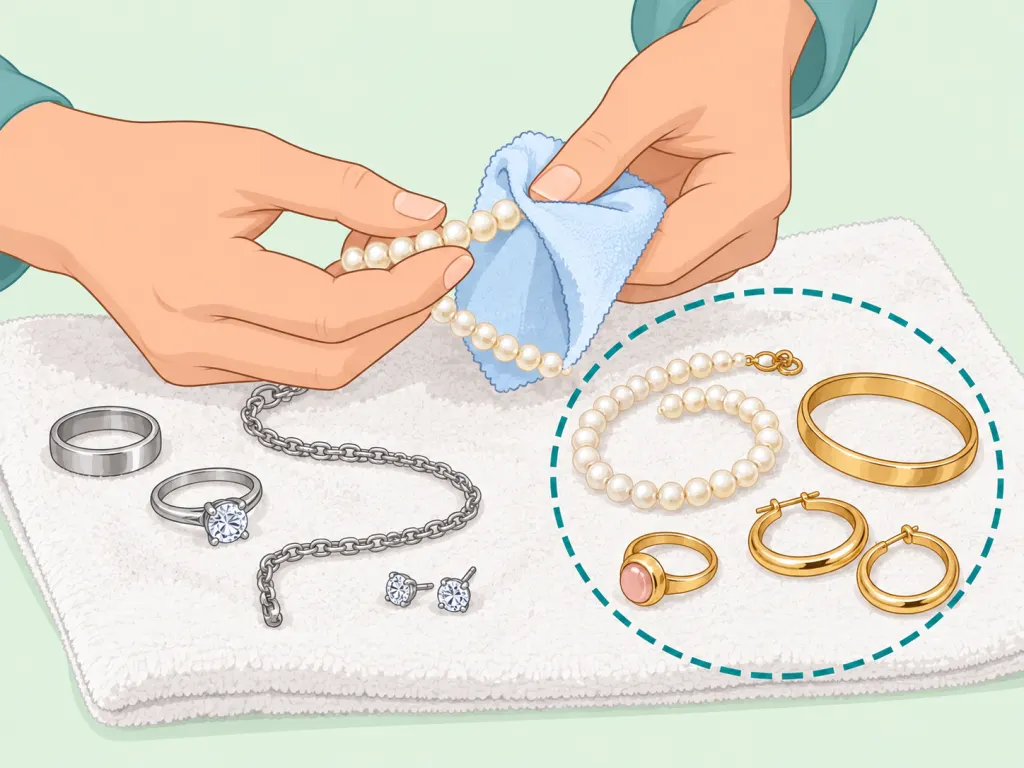
Check whether the piece is solid gold, sterling silver, platinum, plated metal, pearl, or gemstone before you clean it. The FTC notes that gold-plated layers can wear over time, and treated gems may need special care, so use the gentlest method when you are unsure.
Step 2: Check for loose stones and fragile settings
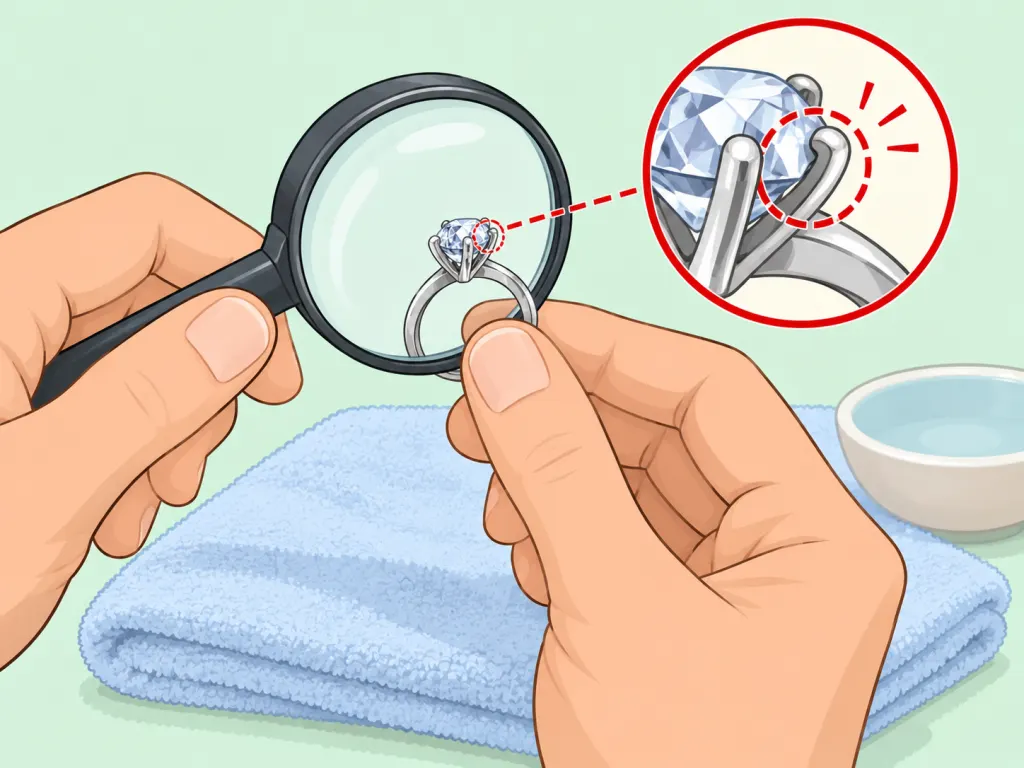
Hold the jewelry over a towel and look closely at prongs, clasps, and glued areas. If anything wiggles, bends, or looks cracked, skip scrubbing and take it to a professional; GIA cautions that fragile settings should not be brushed vigorously.
Step 3: Mix a mild soap bath
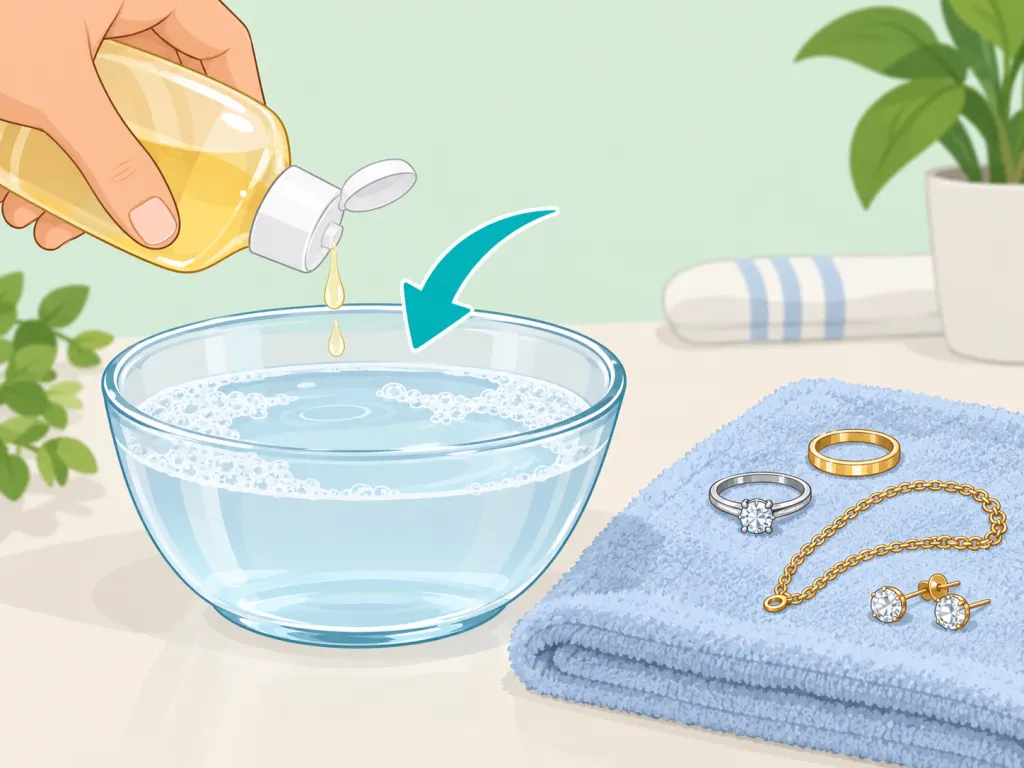
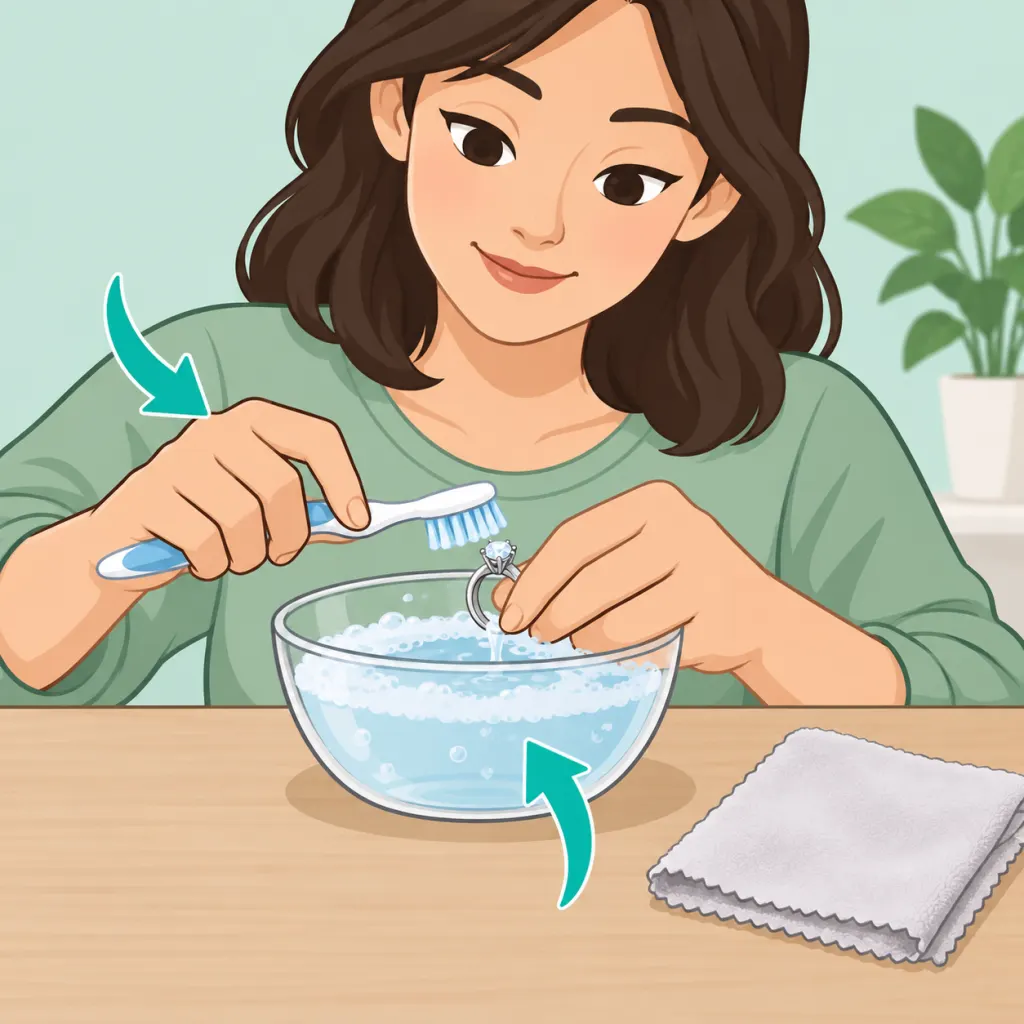
Fill a small bowl with lukewarm water and add a few drops of mild dish soap. GIA describes warm water, mild dish soap, and a soft brush as an easy cleaning method for many colored gems, and the same gentle bath works well for many sturdy everyday pieces.
Step 4: Soak sturdy pieces briefly
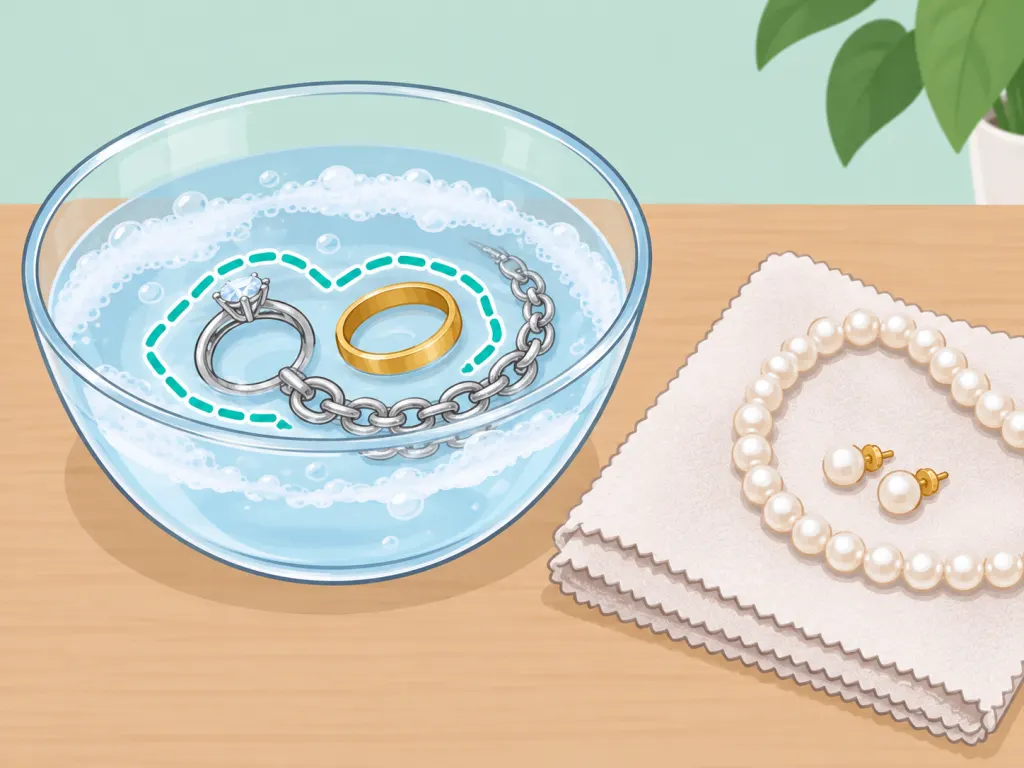
Place sturdy rings, chains, or earrings in the bowl and let them sit just long enough for film and grime to loosen. Do not soak pearl strands, glued stones, watches, or pieces with unknown treatments; GIA explains that pearls are soft and easily scratched.
Use a new extra-soft toothbrush or a clean makeup brush to sweep around prongs, chain links, and the back of stones. Keep the pressure light, because the goal is to lift loosened grime rather than polish the metal by force.
Step 6: Rinse in a separate cup of clean water
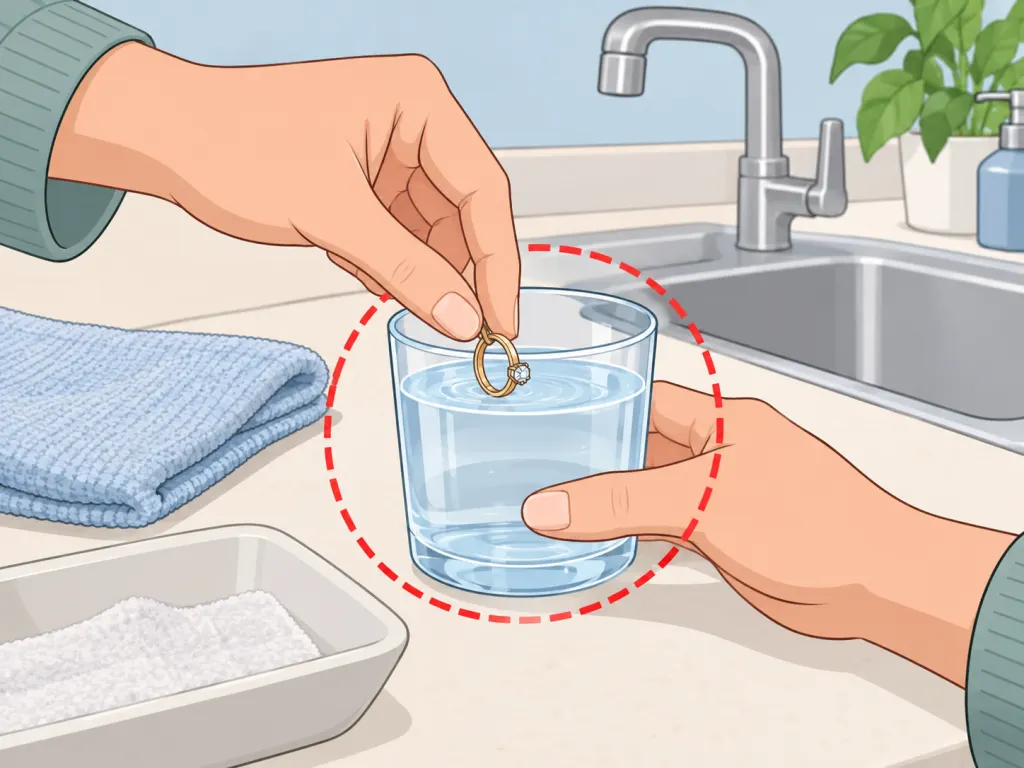
Lift the piece from the soap bath and rinse it in a separate cup or bowl of clean lukewarm water. GIA recommends rinsing jewelry in a glass of water instead of directly over the sink, because small stones or entire pieces can be lost near an open drain.
Step 7: Dry and air out the piece completely
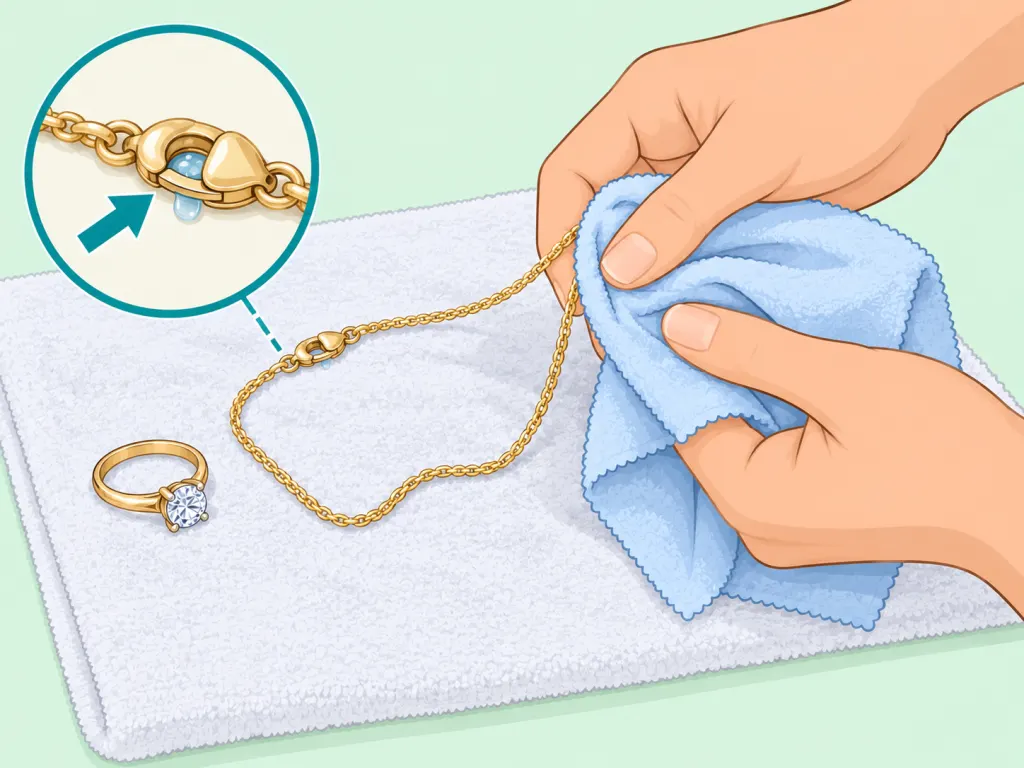
Pat the jewelry dry with a soft lint-free cloth, then leave it on a clean towel until no moisture remains in links, settings, or stringing. This matters especially for pearls, since GIA says strung pearls should be completely dry before wearing.
Step 8: Store the jewelry so the shine lasts
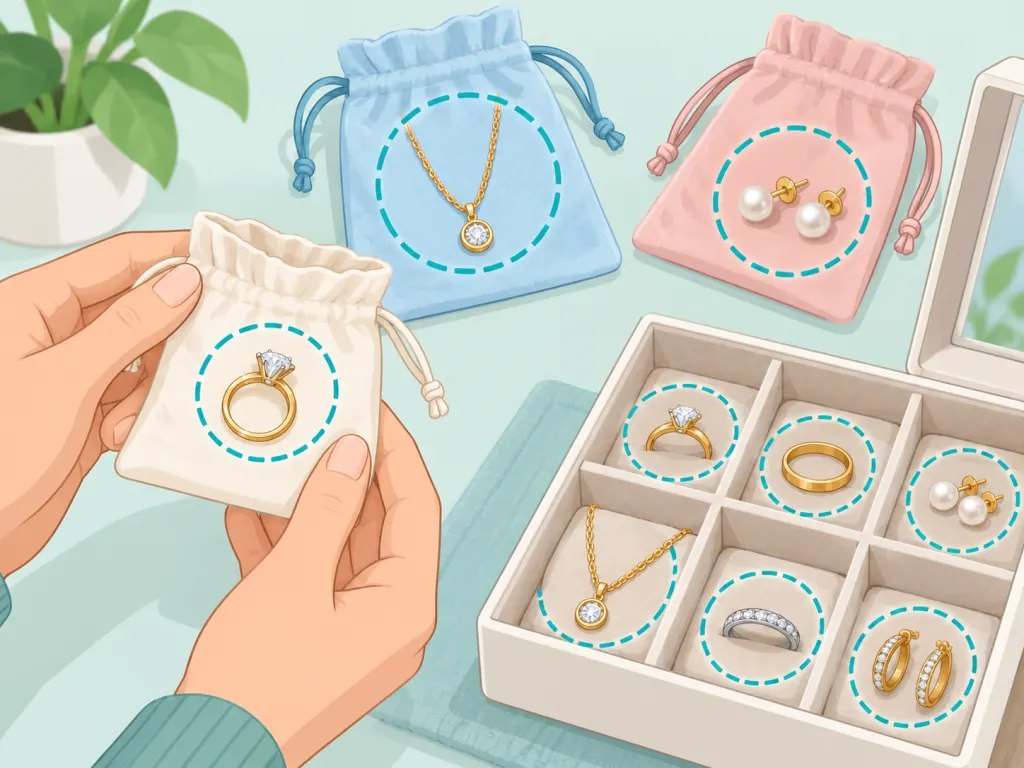
Put each clean piece in its own pouch, box slot, or soft-lined section instead of tossing everything together. GIA advises separate storage to help avoid scratches and damaged gems, and sterling silver benefits from an anti-tarnish bag or cloth.
Wrap-Up
The bottom line: identify the piece first, use a gentle soap bath for sturdy jewelry, brush lightly, rinse away residue, and dry it completely. Store pieces separately afterward so the shine lasts longer.
Frequently Asked Questions
- → Can I use this method on diamond jewelry?
Yes, for many diamond pieces. GIA recommends a gentle bath of water with a few drops of mild dish soap, followed by a soft, clean toothbrush and a lint-free cloth for drying.
- → Is the soap bath safe for pearls?
Pearls need a very gentle touch. GIA says warm, soapy water is safe for occasional thorough cleaning, but pearls should not go in steam or ultrasonic cleaners, and strung pearls must dry completely before wearing.
- → What if my silver still looks dark afterward?
A soap bath removes surface film, but it may not remove deeper tarnish. If the piece has gems, plating, or an older setting, stop after the gentle wash and ask a jeweler before using stronger products.
- → Can I use toothpaste or baking soda on jewelry?
It is better to skip abrasive pastes and powders. GIA warns that abrasives can scratch gold and other metals, so a soft brush and mild soap are a safer first choice.
- → How often should I clean jewelry at home?
Clean often-worn sturdy pieces when they start looking dull. Diamond jewelry worn frequently may handle regular gentle cleaning, while pearls, treated gems, plated pieces, and antiques should be cleaned only as needed.
- → When should I take jewelry to a jeweler instead?
Take it in if a stone feels loose, a prong looks bent, the piece is antique, the gem has a known treatment, or the shine does not return after gentle cleaning. Professional inspection is also wise before using ultrasonic cleaning.
References
This content was developed and refined using reliable sources.
- https://www.gia.edu/gia-news-research-tips-caring-jewelry
- https://www.gia.edu/gia-news-research-secrets-keep-diamond-sparkling
- https://www.gia.edu/pearl-care-cleaning
- https://consumer.ftc.gov/articles/buying-gemstones-diamonds-and-pearls
- https://consumer.ftc.gov/articles/buying-platinum-gold-and-silver-jewelry