 Save
A sharp lawn mower blade gives grass a cleaner cut and helps the mower work more smoothly. This guide walks you through the safe, basic way to remove, sharpen, balance, and reinstall a rotary mower blade. Always follow your mower owner’s manual for model-specific directions and torque specifications.
Step 1: Check the grass tips and blade condition
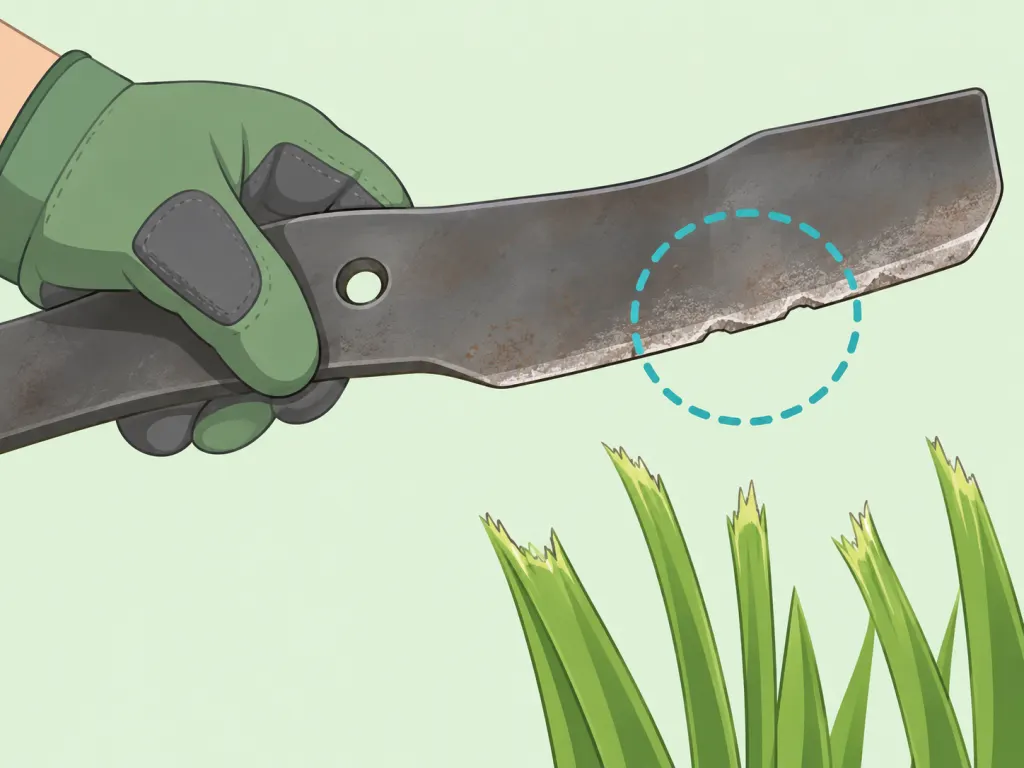
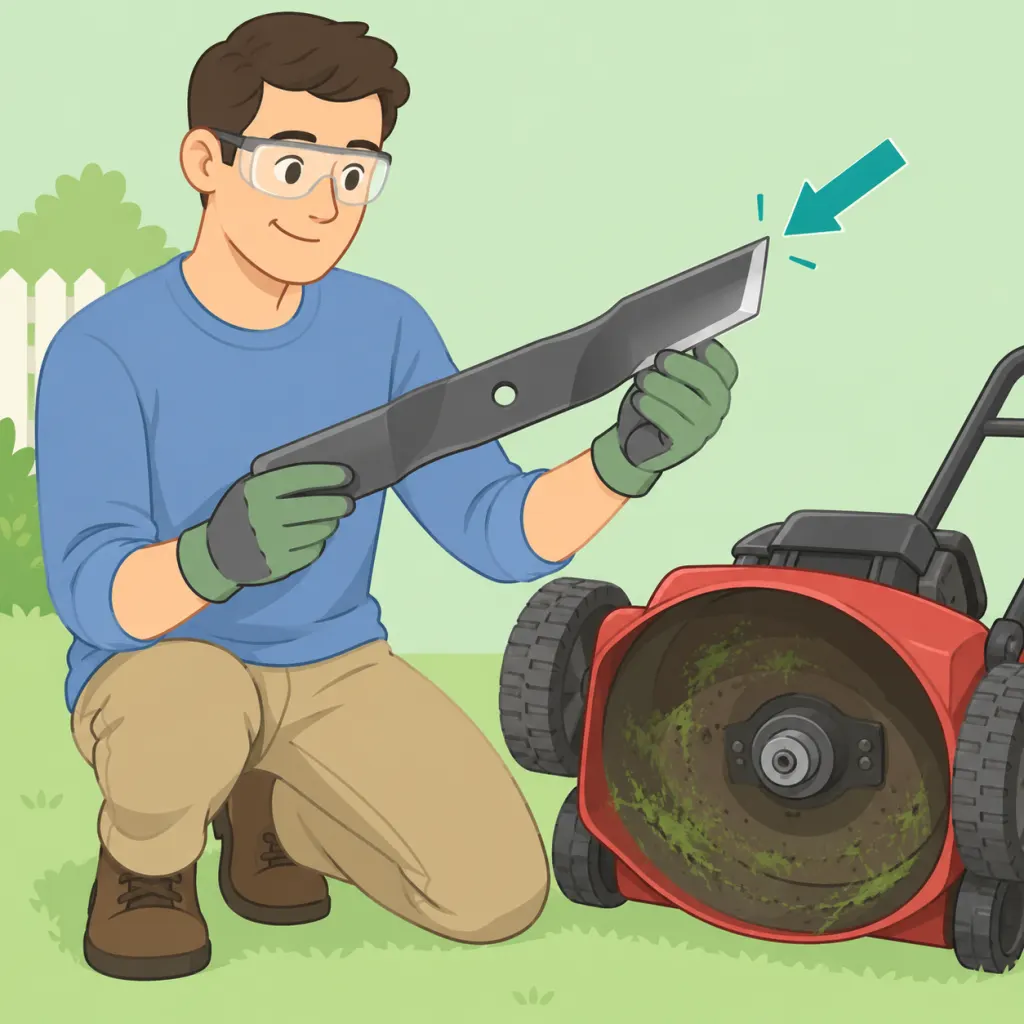
Look at the lawn after mowing, especially the cut tips of the grass. Iowa State University Extension notes that dull blades tear grass ends and can leave the turf looking whitish, while University of Minnesota Extension recommends sharp mower blades for clean cutting. If the blade is cracked, bent, or missing large chunks, replace it instead of sharpening it.
Step 2: Disconnect the mower before touching the blade
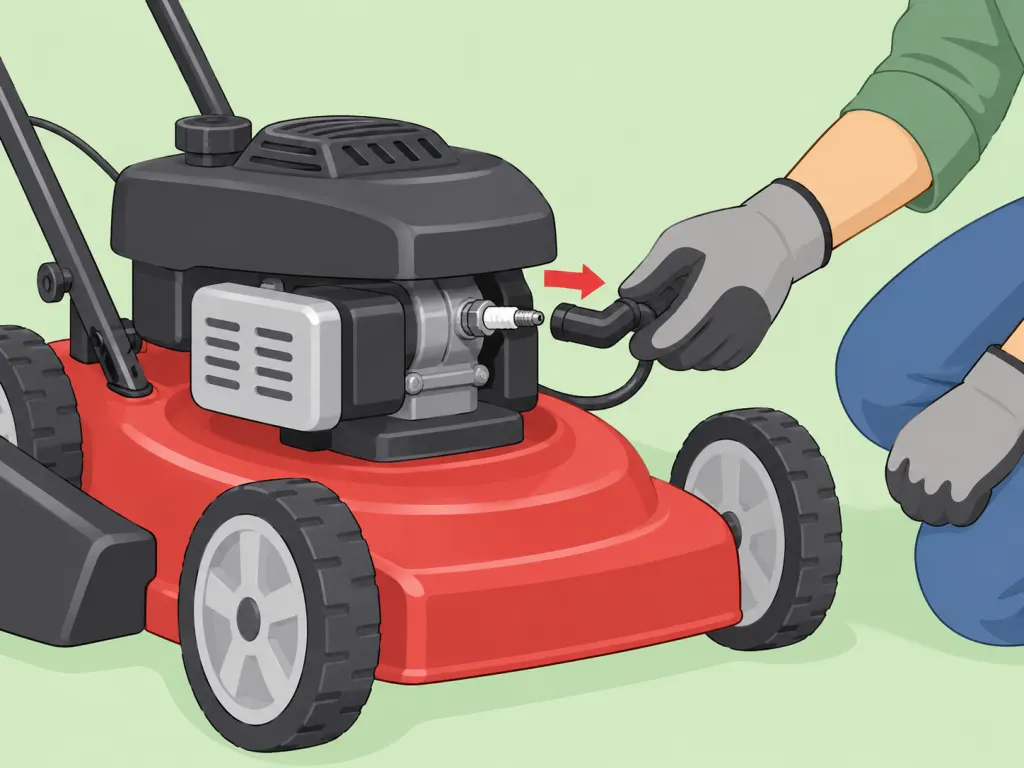
Turn the mower off, let all moving parts stop, and make it unable to start. For a gas mower, disconnect the spark plug wire; for a battery mower, remove the battery; for a corded mower, unplug it. The U.S. Consumer Product Safety Commission advises disconnecting the spark plug before mower maintenance or repairs.
Step 3: Remove the blade carefully
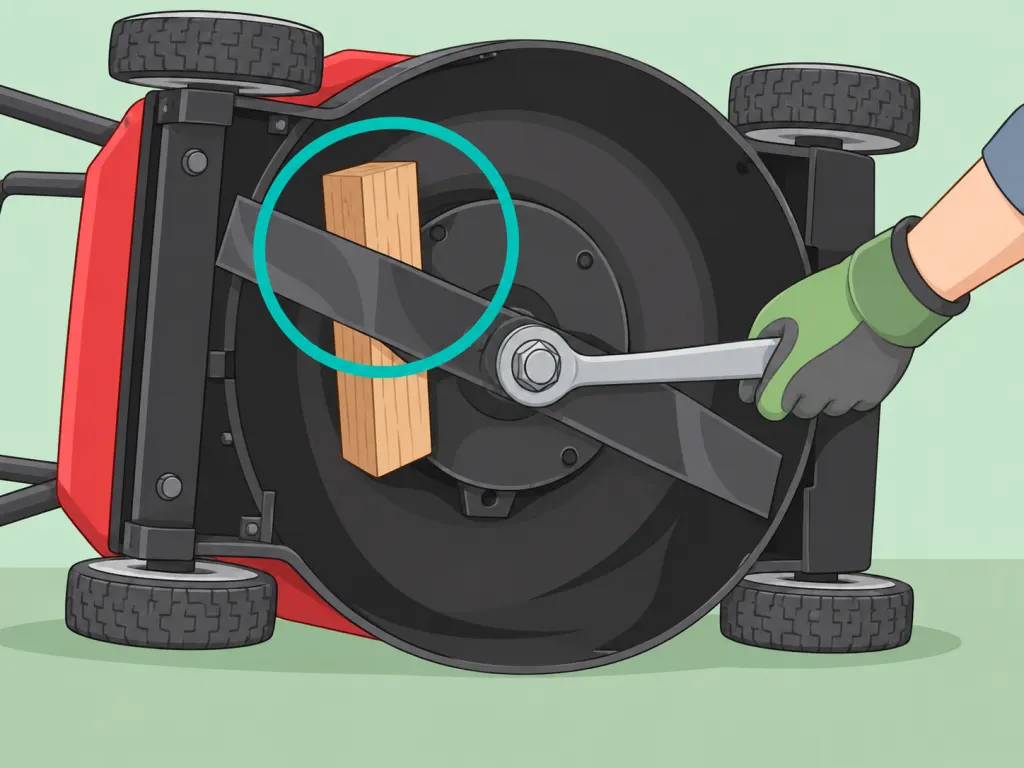
Tip or access the mower only as your owner’s manual directs, then wedge a block of wood between the blade and deck to keep the blade from turning. Loosen the blade bolt with the correct wrench or socket, and note which side of the blade faces down before you remove it. If the bolt will not move with steady pressure, stop and use penetrating oil or a repair service rather than forcing the mower into an unstable position.
Step 4: Clamp the blade and put on protection
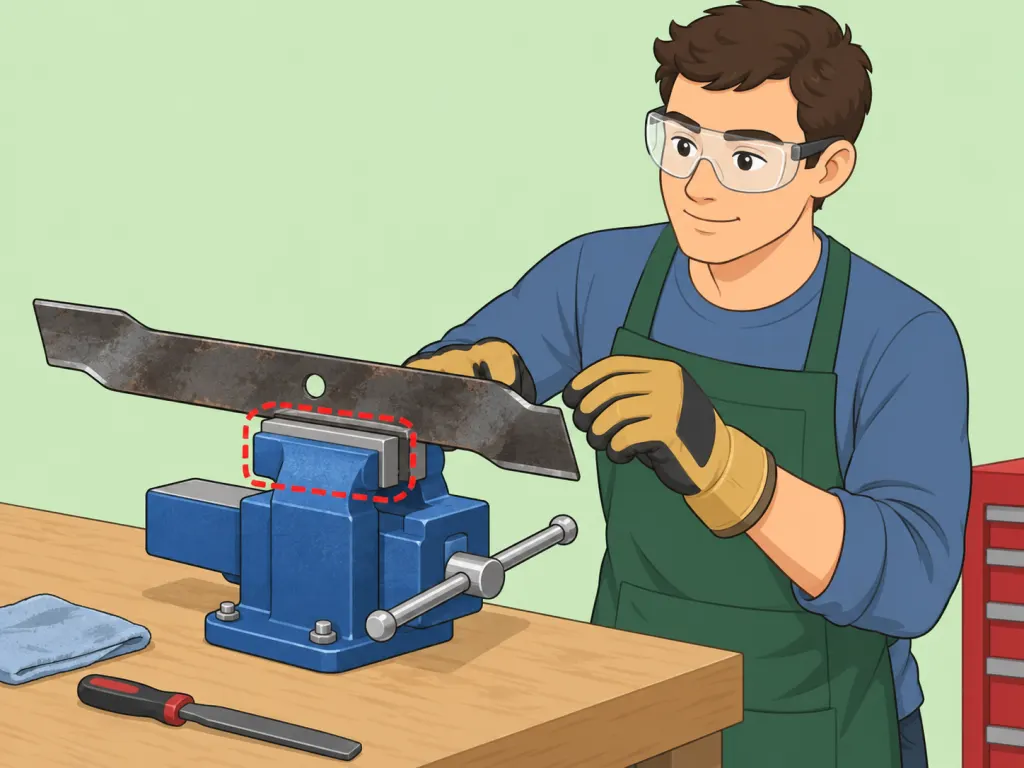
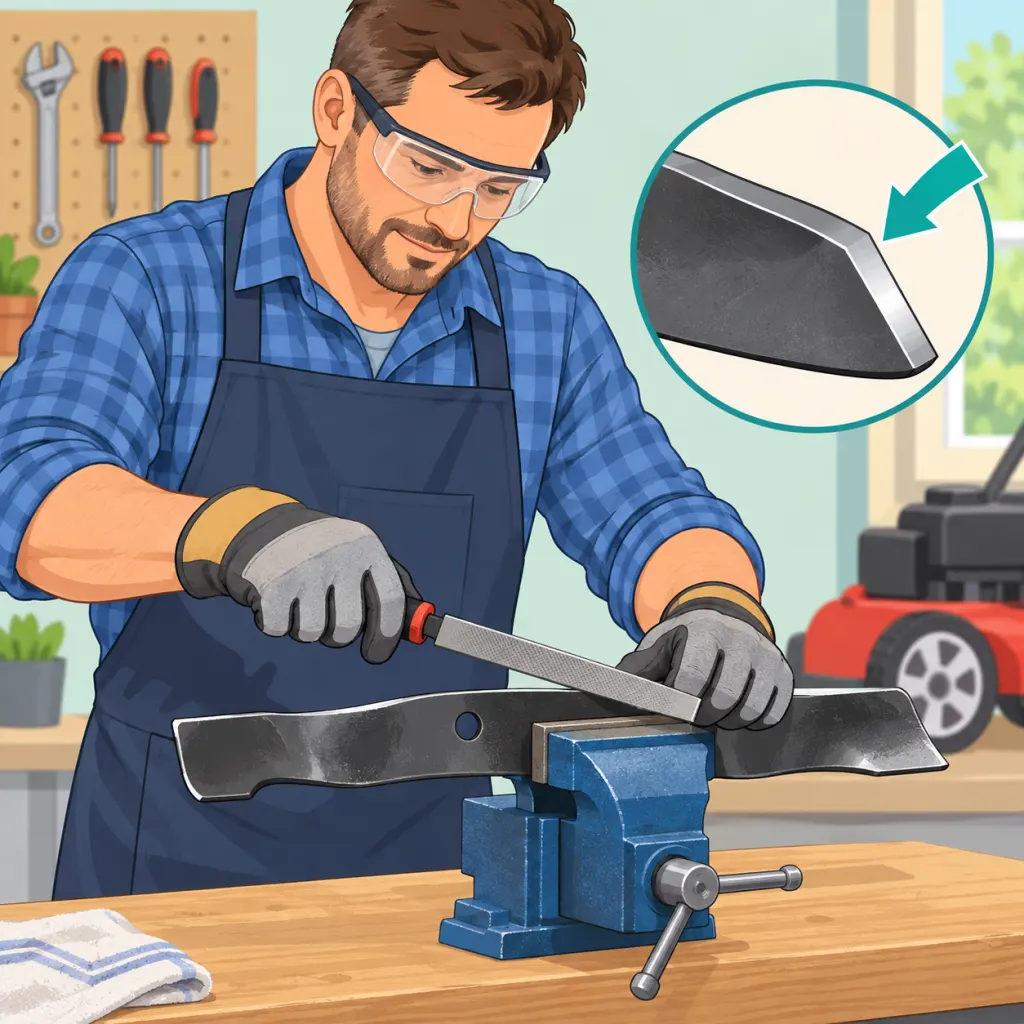
Secure the blade in a vise or with strong clamps so it cannot slip while you file. Wear eye protection and heavy gloves, since UGA Extension recommends eye protection, gloves, and a clamp or vise when sharpening bladed garden tools. Face the cutting edge away from your body whenever possible.
Push a mill file or whetstone along the existing cutting angle in smooth strokes, working away from your body. Do the same number of light passes on both cutting ends so you remove metal evenly, and avoid grinding into the curved lift fin behind the edge. UGA Extension’s sharpening guidance recommends maintaining the original blade angle and using long strokes in one direction.
Step 6: Remove burrs and balance the blade
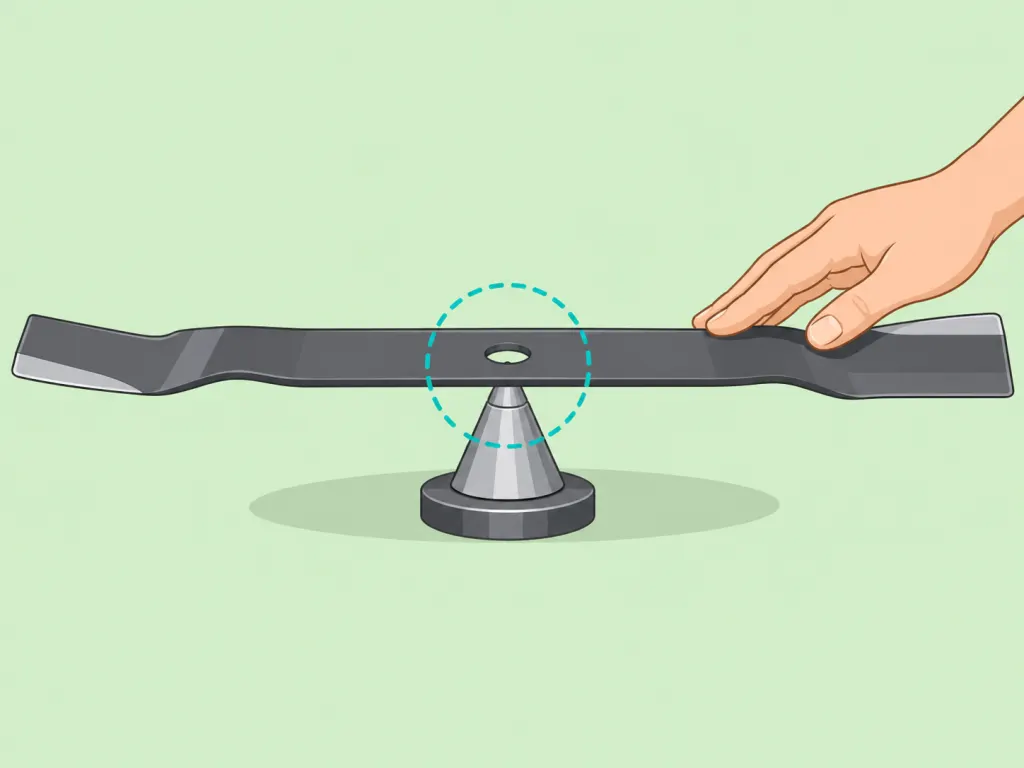
Turn the blade over and lightly file or sand off any burr raised on the back of the edge. Then place the center hole on a blade balancer or a stable cone-style balancer; if one end drops, file a little more from that heavy end and check again. Virginia Cooperative Extension explains that cut quality depends on blade sharpness and balance.
Step 7: Reinstall the blade in the right direction
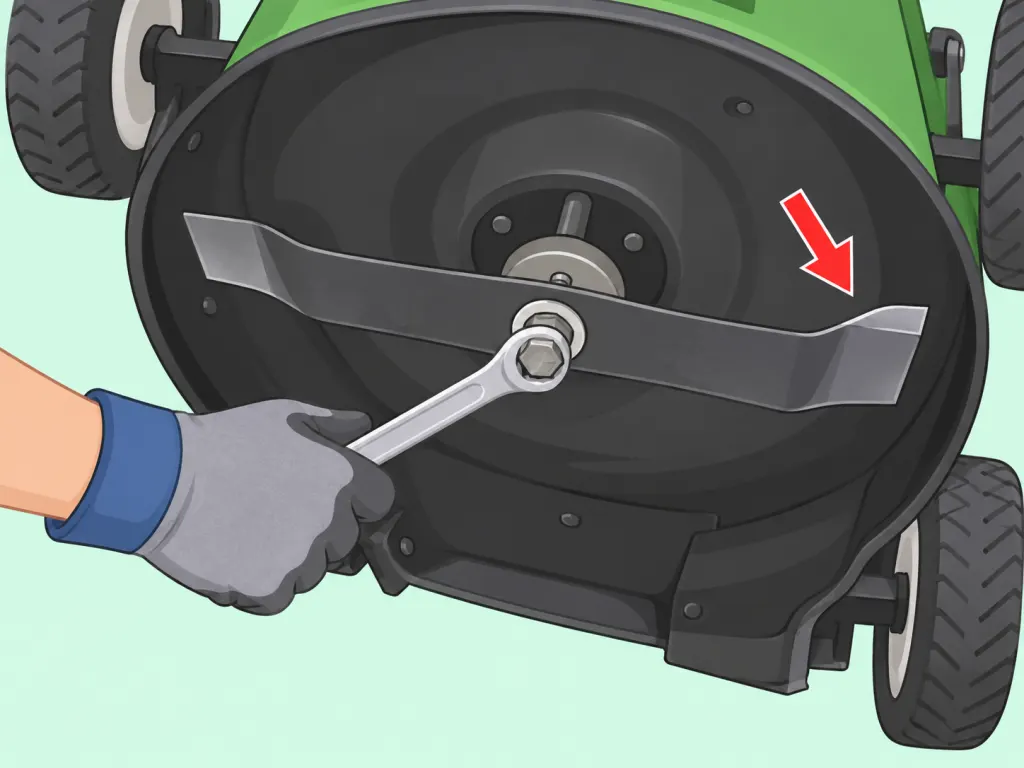
Put the blade back in the same orientation, with the cutting edges and lift fins facing the way your manual shows. Tighten the hardware to the mower manufacturer’s torque specification, then reconnect the spark plug wire, battery, or cord only after the blade is fully secured. Before mowing, make sure any guards, shields, and discharge parts are back in place, since CPSC mower safety guidance warns not to remove safety guards and shields.
Step 8: Test the mower and know when to get help
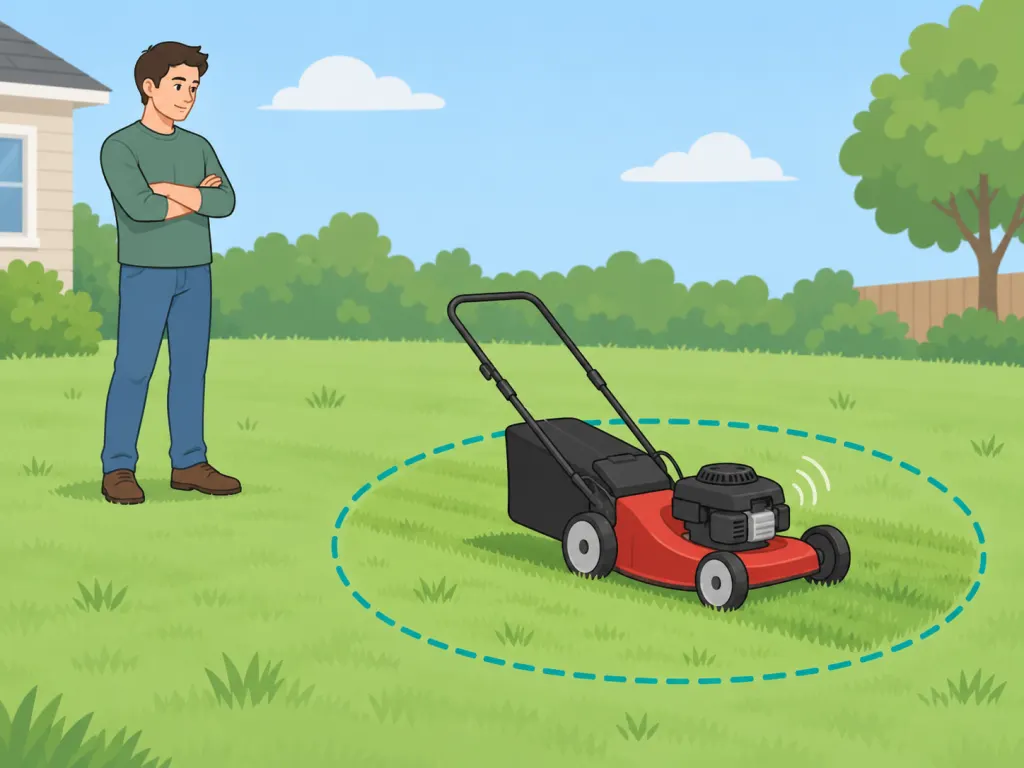
Start the mower on a clear, level area and listen for unusual vibration before you mow normally. Stop immediately if the mower shakes, sounds different, or cuts unevenly, and have the blade, spindle, or deck checked by a qualified repair service. If sharpening causes a deep cut, severe bleeding, numbness, or debris in the eye, follow MedlinePlus cut-care guidance or MedlinePlus eye-injury guidance and seek urgent medical help when those sources recommend it.
Wrap-Up
The bottom line: make the mower unable to start, remove the blade carefully, sharpen only the existing bevel, balance the blade, and reinstall it in the same orientation. Stop and get professional help if the blade is bent, cracked, badly worn, or the mower vibrates after reassembly.
Frequently Asked Questions
- → How often should I sharpen lawn mower blades?
- Many home lawns do well with sharpening at the start of the mowing season and again as needed. Check the grass tips after mowing; ragged, shredded tips are a practical sign that the blade is dull.
- → Can I sharpen a mower blade without removing it?
- It is safer and usually more accurate to remove the blade first. Removing it lets you clamp it securely, keep the original bevel, clean off burrs, and check balance before reinstalling.
- → Should a lawn mower blade be razor sharp?
- No. Aim for a clean, sturdy cutting edge, not a thin razor edge. A very thin edge can nick or dull quickly when it hits normal lawn debris.
- → What tool should I use to sharpen the blade?
- A mill file or whetstone works well for a basic homeowner sharpening job. A grinder can work faster, but it removes metal quickly, so use light passes and keep the original bevel.
- → How do I know if the blade should be replaced instead of sharpened?
- Replace the blade if it is cracked, deeply bent, missing large sections of metal, or worn so far that sharpening would change its shape. A damaged blade is not a good candidate for a simple sharpening.
- → Why does the blade need to be balanced?
- A balanced blade helps the mower cut evenly and reduces vibration. If one side drops on a blade balancer, remove a small amount of metal from the heavy end and check again.
References
This content was developed and refined using reliable sources.
- https://extension.umn.edu/garden-and-home/yard-and-garden/lawns-and-landscapes-in-minnesota/mowing-practices-for-healthy-lawns
- https://yardandgarden.extension.iastate.edu/article/2010/4-14/mowing.html
- https://www.cpsc.gov/Newsroom/News-Releases/2012/CPSC-Issues-Safety-Tips-For-Rotary-Power-Mowers
- https://site.extension.uga.edu/forsyth/how-to-take-care-of-garden-tools
- https://www.pubs.ext.vt.edu/content/pubs_ext_vt_edu/en/BSE/BSE-47/BSE-47.html
- https://www.medlineplus.gov/ency/article/000043.htm
- https://www.medlineplus.gov/ency/article/000054.htm