 Save
A sharp lawn mower blade cuts grass cleanly instead of tearing it, which helps the lawn look better after mowing. This guide shows a simple home method for sharpening a rotary mower blade with a file, while keeping safety and blade balance at the center of the job. If you have a reel mower, a badly damaged blade, or a mower design you are unsure about, use the owner’s manual or a repair shop instead.
Step 1: Check whether the blade actually needs sharpening
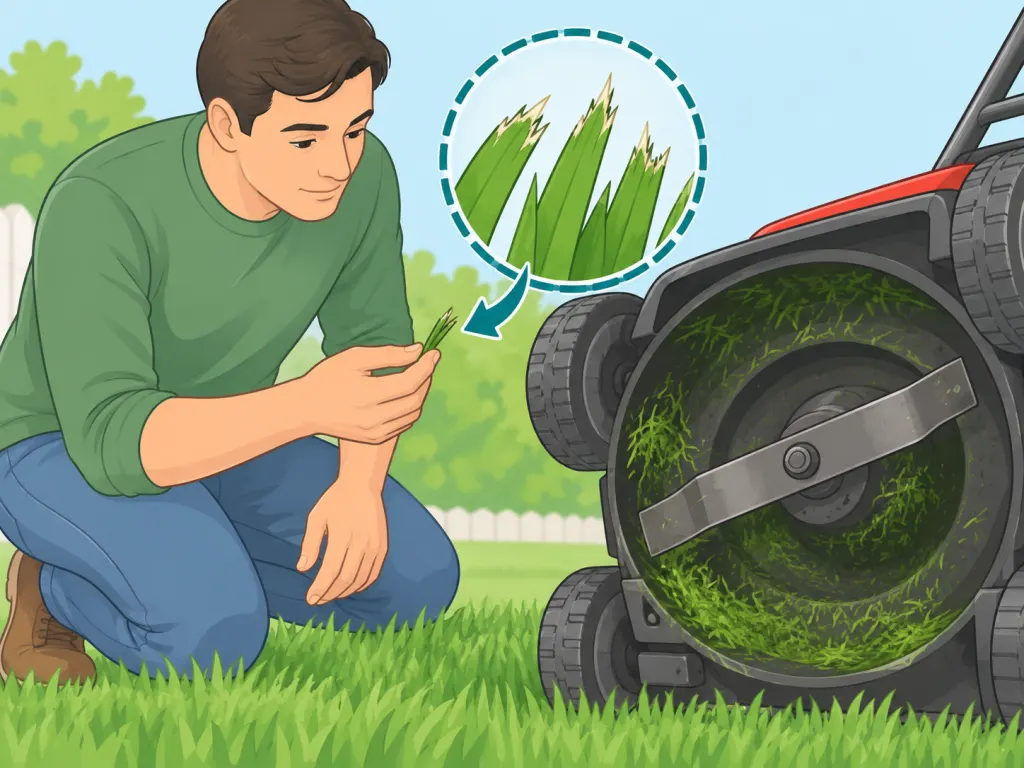
Look at the grass after mowing: a dull blade often leaves torn, ragged tips, while a sharp blade makes a cleaner cut. University lawn guidance notes that dull mower blades leave jagged grass edges, and the University of Florida says sharpening is one of the better maintenance jobs you can do for a mower and lawn. If the mower is cutting poorly or the blade has gone through a long mowing season, plan to sharpen it before the next cut.
Step 2: Make the mower unable to start
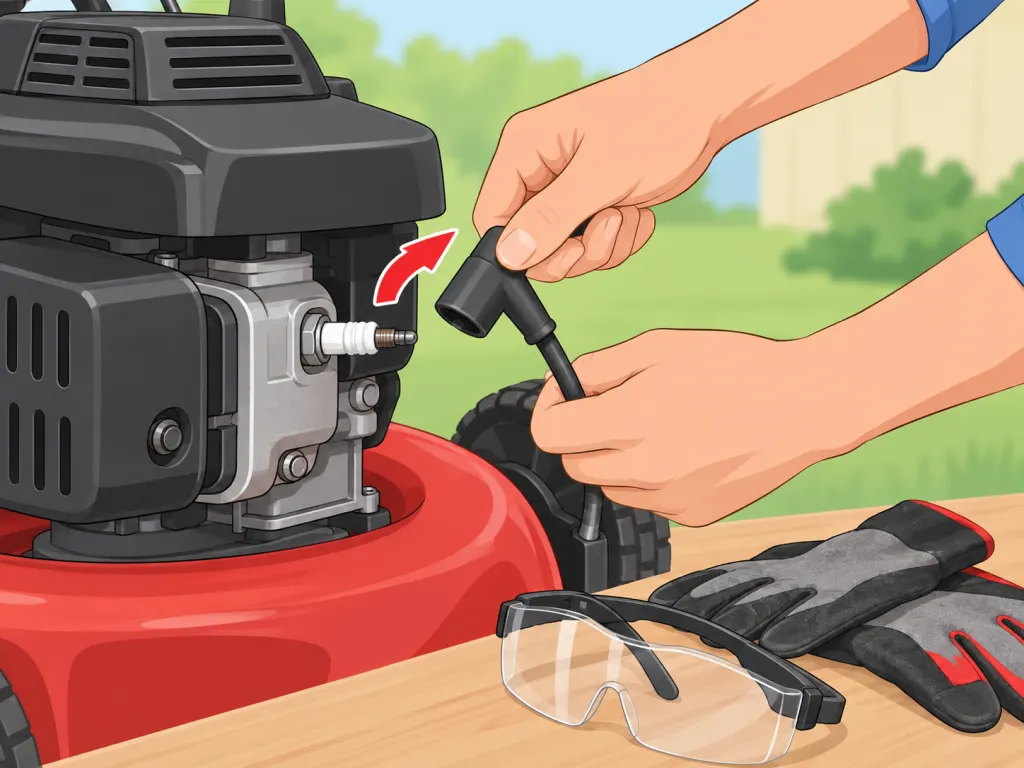
Turn the mower off, let all moving parts stop, and work on a flat surface. For a gas mower, disconnect the spark plug wire; for an electric mower, remove the battery or disconnect power before your hands go near the blade. The U.S. Consumer Product Safety Commission advises disconnecting the spark plug before mower maintenance or repairs.
Step 3: Remove the blade with a block for bracing
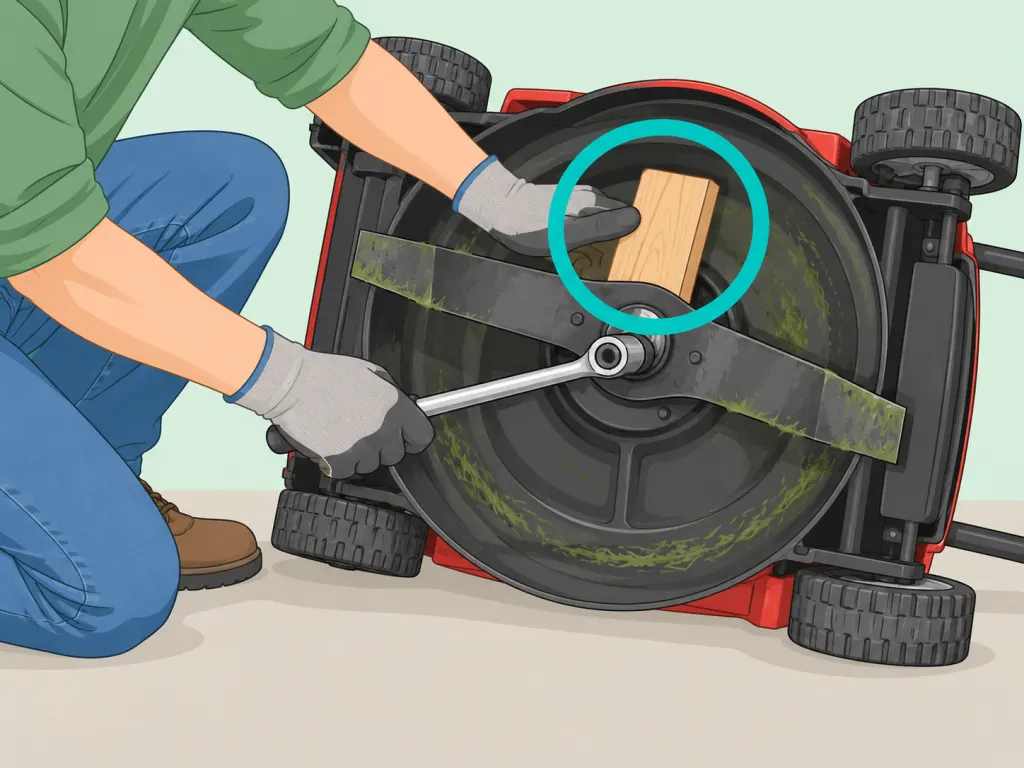
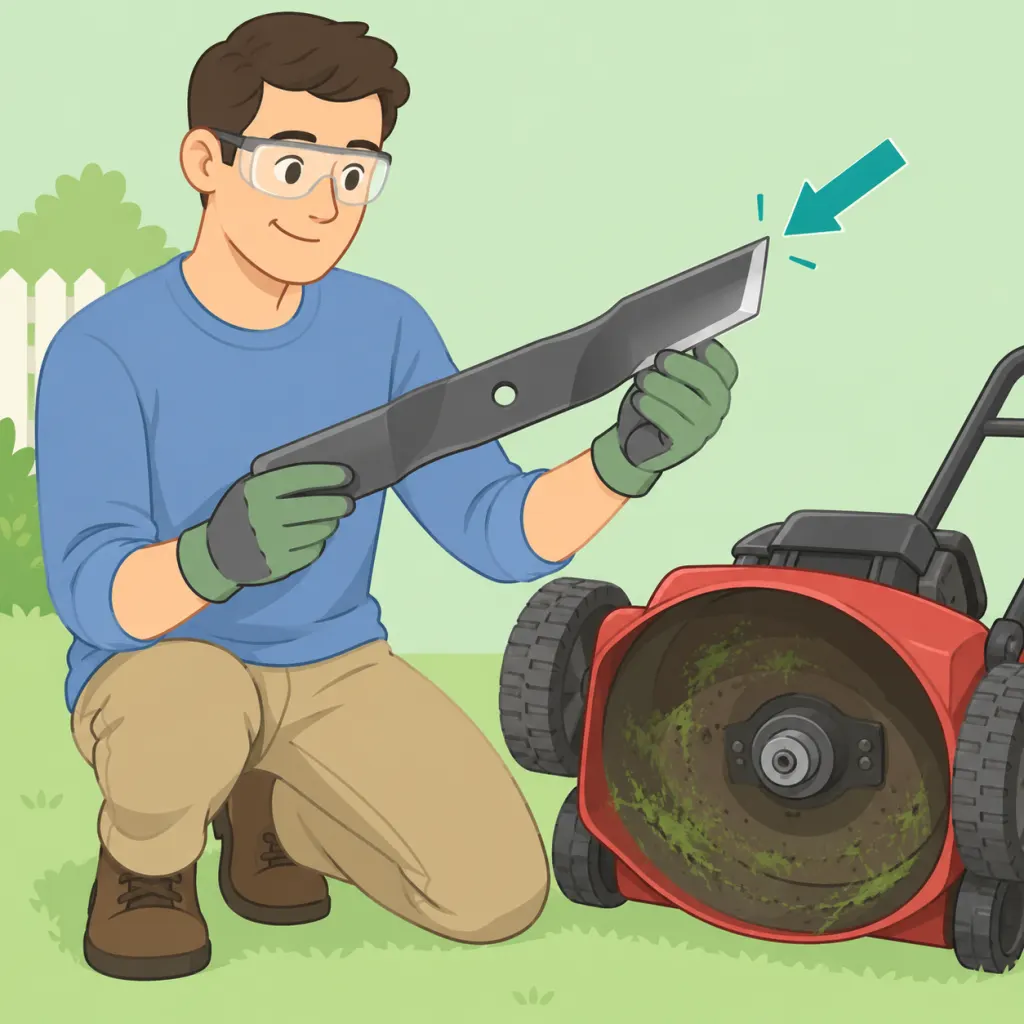
Tip or position the mower only as the owner’s manual allows, then wedge a scrap wood block against the blade so it cannot spin. Mark which side of the blade faces down, loosen the center bolt with the correct socket, and remove the blade. Illinois Extension recommends bracing the blade before removing the bolt and using the manual for mower-specific maintenance details.
Step 4: Clamp and clean the blade before filing
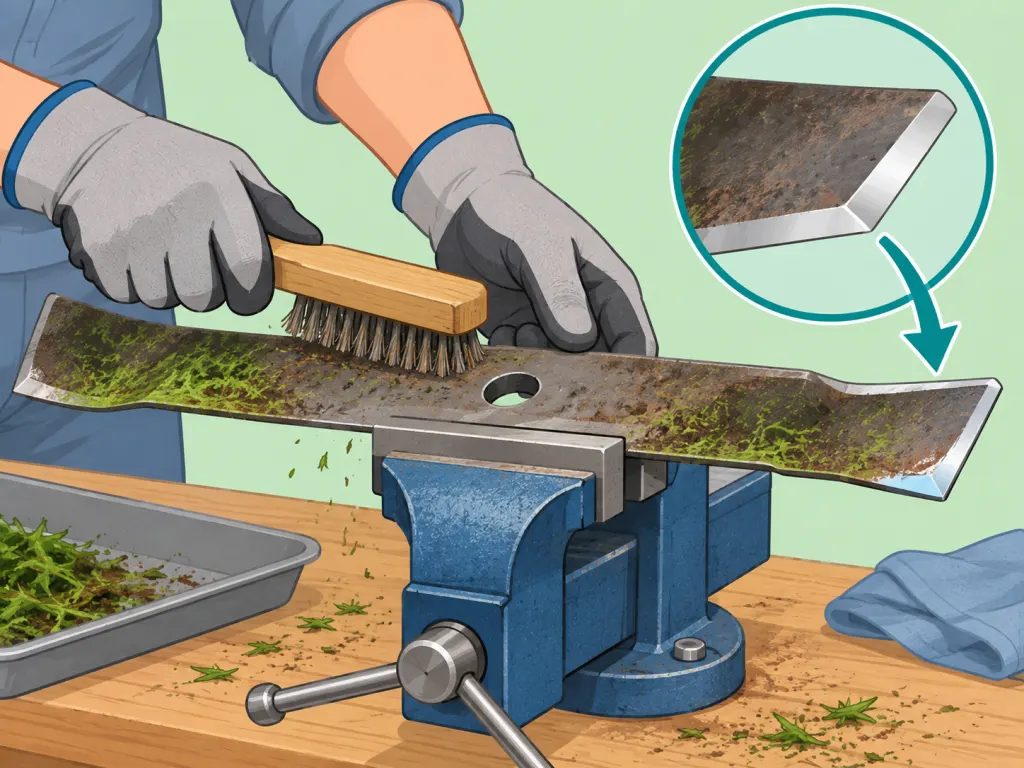
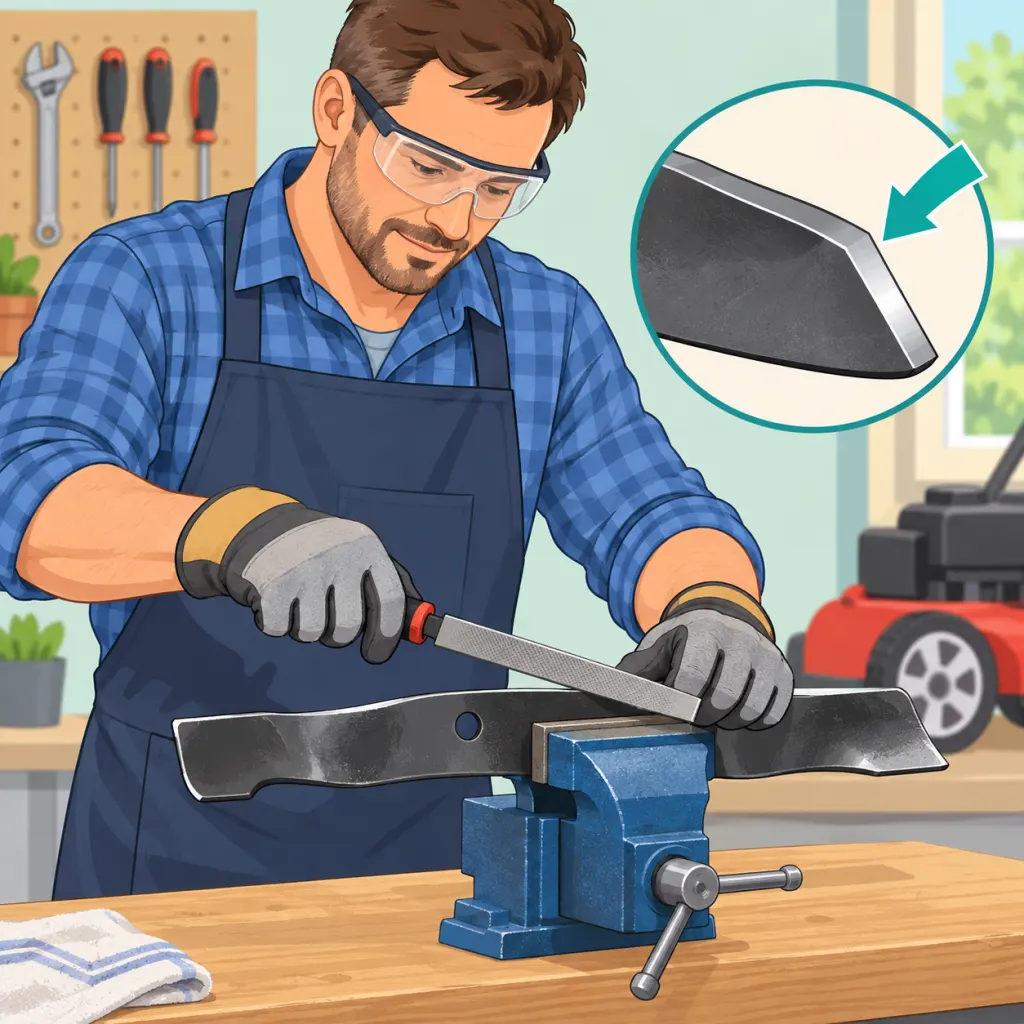
Secure the blade in a vise or sturdy clamp with one cutting edge exposed. Brush away packed grass, dirt, and loose rust so you can see the existing bevel clearly. UF/IFAS tool-sharpening guidance lists protective eyewear, gloves, a file, and a clamp or bracing system as useful sharpening equipment.
Hold a flat mill file against the factory bevel and push the file toward the cutting edge in smooth, even strokes. Work the same number of strokes on both cutting ends so you remove metal evenly. University of Idaho Extension advises homeowners to follow the original bevel and move the file toward the cutting edge when sharpening a mower blade.
Step 6: Remove burrs and check the balance
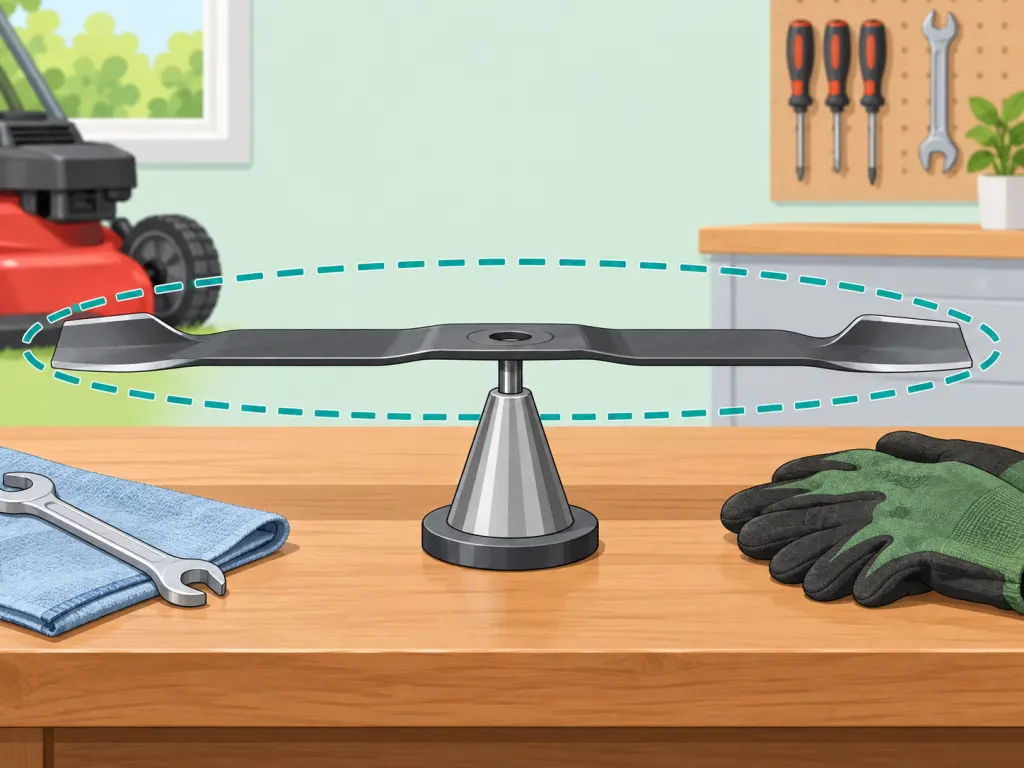
After filing, lightly smooth the back side of the cutting edge to remove burrs without changing the blade shape. Hang the blade on a cone balancer or place a screwdriver through the center hole and see whether it stays level. If one side drops, remove a little metal from the heavier side until the blade balances; Illinois Extension warns that an unbalanced blade can strain the mower and cut unevenly.
Step 7: Reinstall the blade in the correct direction
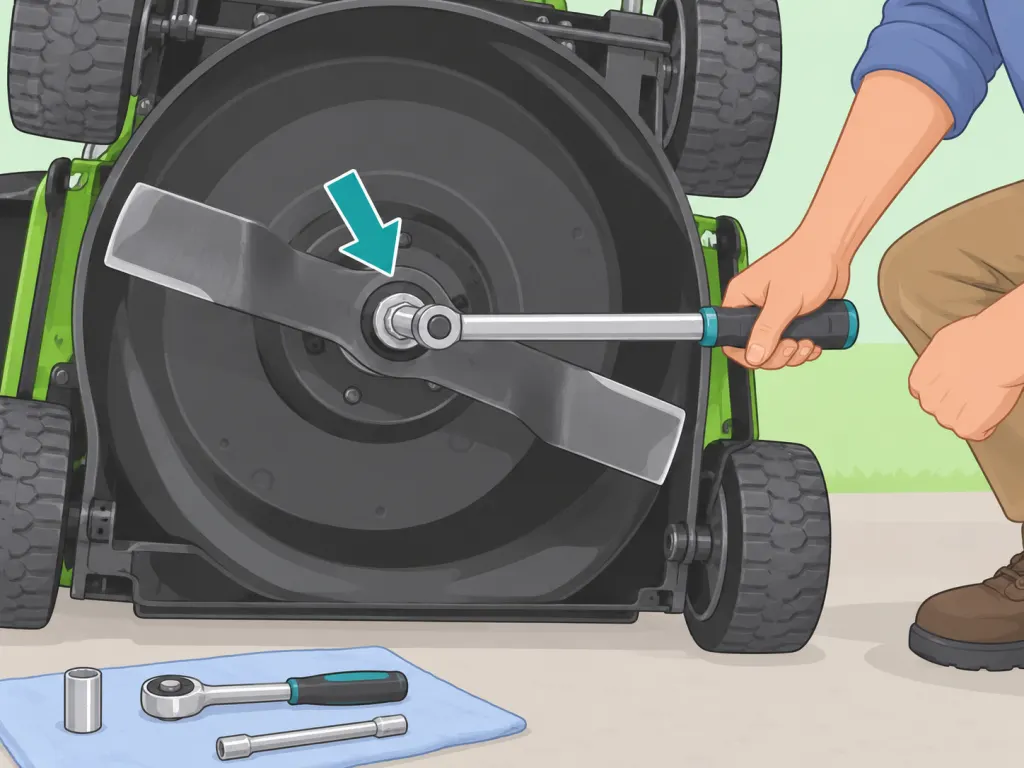
Put the blade back on with the same side facing down as before, then start the bolt by hand so it does not cross-thread. Tighten it with a torque wrench to the specification in your mower’s manual, because Illinois Extension recommends using the listed torque specification when reinstalling the blade. Reconnect the spark plug wire or battery only after the blade is secure and your tools are clear.
Step 8: Test the mower and inspect the cut
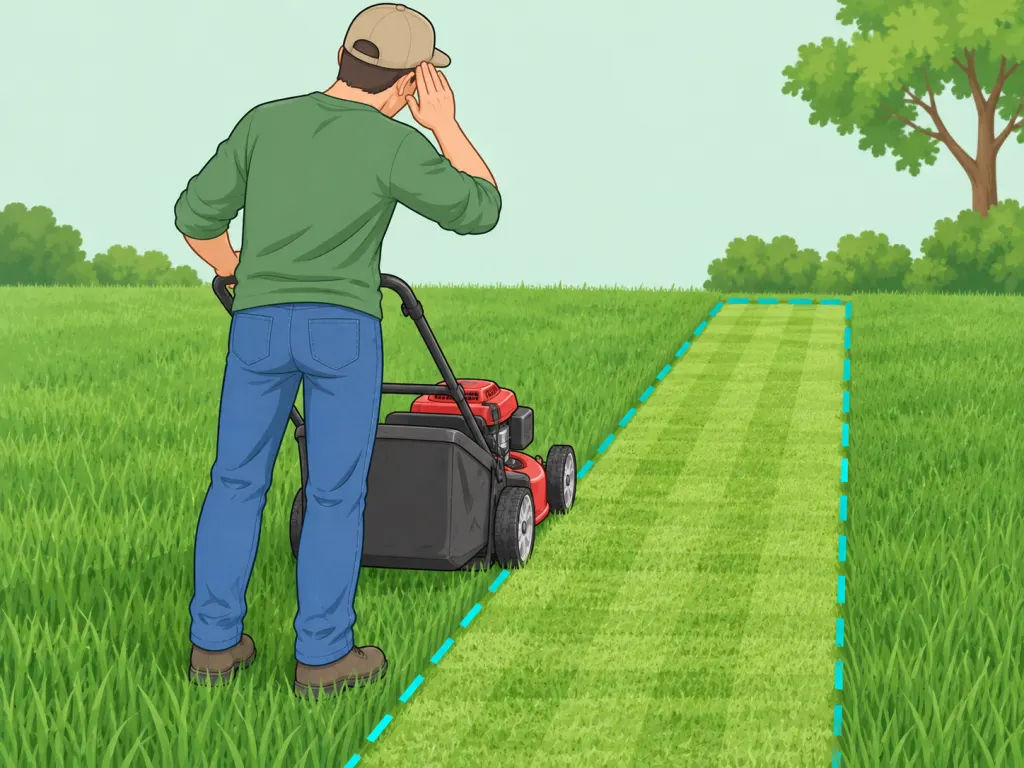
Start the mower in an open area and listen for unusual vibration before mowing a small patch. Stop and disconnect power again if the mower shakes, sounds wrong, or leaves uneven strips. If the cut looks clean and the mower runs smoothly, your sharpening job is ready for normal mowing.
Step 9: Stop and get help when the job is not routine
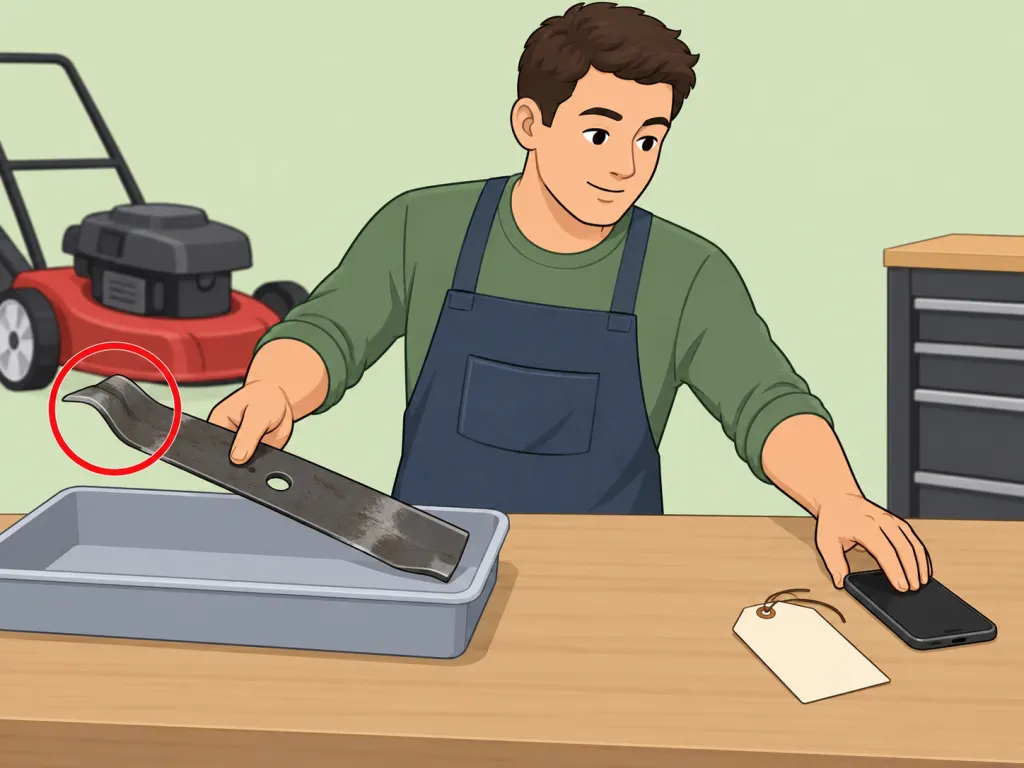
Use a repair shop for reel mower blades, badly bent blades, cracked blades, or any mower you cannot secure and reassemble confidently. UF/IFAS notes that reel mower blades are best sharpened by a professional mower repair service. If someone is cut, struck in the eye, or hurt during mower work, stop the task and contact a doctor or qualified health professional for personal medical advice.
Wrap-Up
The bottom line: the best lawn mower blade sharpening hack is a careful, repeatable routine. Make the mower unable to start, remove and clamp the blade, follow the factory bevel with a file, balance the blade, and reinstall it according to the manual.
Frequently Asked Questions
- → How often should I sharpen a lawn mower blade?
For many home lawns, sharpening at least twice a year is a reasonable baseline. If you mow often, hit sandy soil, or see ragged grass tips, sharpen sooner.
- → Can I sharpen the blade without removing it?
It is safer and more accurate to remove the blade first. Removing it lets you clamp it securely, follow the bevel, and check the balance before reinstalling.
- → Should a mower blade be razor sharp?
No. Aim for a clean, even cutting edge that follows the original bevel, not a thin razor edge. An overly thin edge can wear quickly during mowing.
- → What is the easiest tool for a beginner?
A flat mill file is usually the simplest choice because it removes metal slowly and gives you control. A grinder works faster but can remove too much metal if you rush.
- → Why does blade balance matter?
An unbalanced blade can wobble, stress the mower, and leave an uneven cut. Check balance before reinstalling and remove a little more metal from the heavier side if needed.
- → When should I replace the blade instead of sharpening it?
Replace the blade if it is cracked, badly bent, deeply gouged, or worn thin. A damaged blade is not a good candidate for a home sharpening shortcut.
References
This content was developed and refined using reliable sources.
- https://extension.illinois.edu/lawns/mower-maintenance
- https://gardeningsolutions.ifas.ufl.edu/care/tools-and-equipment/lawn-mower-care-and-safety
- https://www.uidaho.edu/extension/horticulture/landscapes/lawn
- https://www.cpsc.gov/Newsroom/News-Releases/2012/CPSC-Issues-Safety-Tips-For-Rotary-Power-Mowers
- https://gardeningsolutions.ifas.ufl.edu/care/tools-and-equipment/sharpening-your-tools
- https://extension.umn.edu/garden-and-home/yard-and-garden/lawns-and-landscapes-in-minnesota/mowing-practices-for-healthy-lawns