 Save
Freezer ice can shrink storage space, block airflow, and make the appliance harder to keep organized. A careful warm-water method is a simple, low-chemical way to loosen frost without using sharp tools or harsh cleaners. This guide shows you how to defrost the ice safely, protect your food, and restart the freezer properly.
Step 1: Move frozen food into a cooler
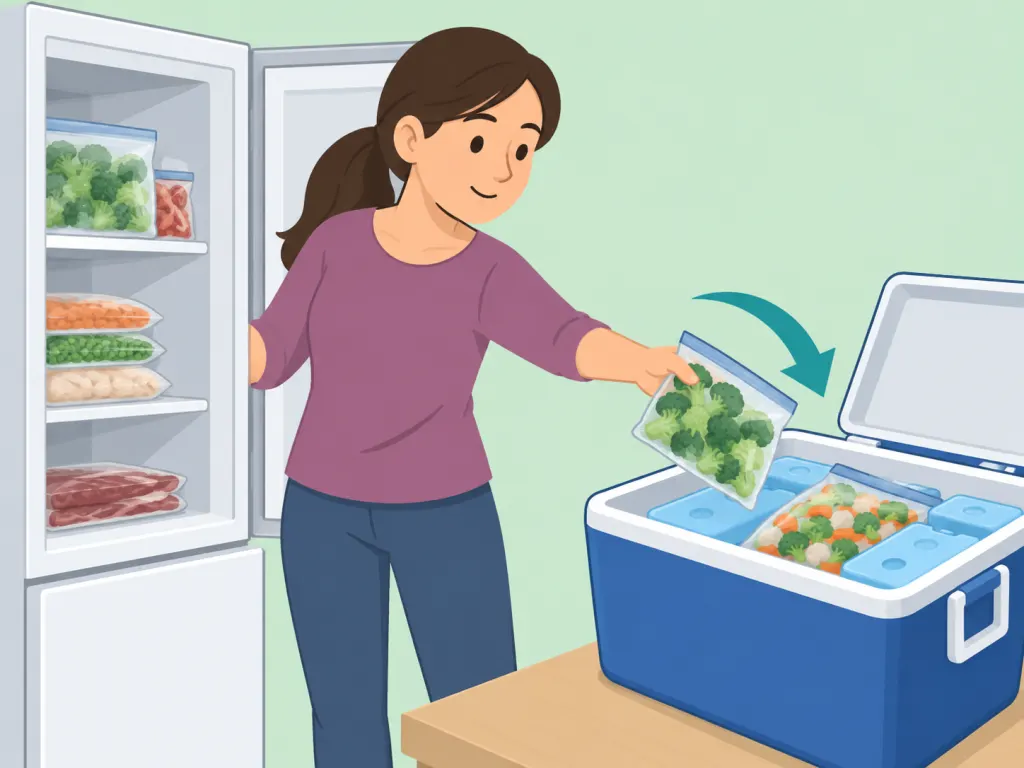
Put frozen food into an insulated cooler with frozen gel packs or ice so it stays cold while you work. FoodSafety.gov says a full closed freezer can hold a safe temperature longer than a half-full one, but defrosting requires the door to stay open, so move food out before you begin.
Step 2: Turn the freezer off before adding water
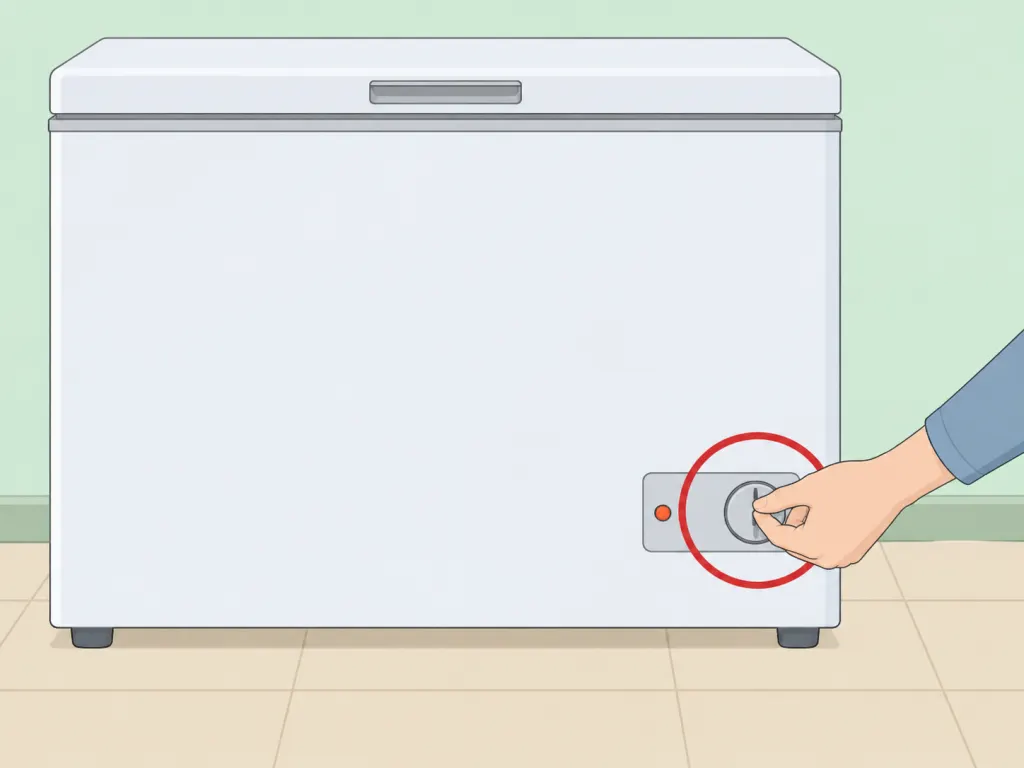
Switch the freezer off at the control or unplug it if you can reach the plug safely. The UK Health and Safety Executive advises people to switch off and unplug appliances before cleaning or adjusting them, which is especially important when towels and water are involved.
Step 3: Protect the floor with towels
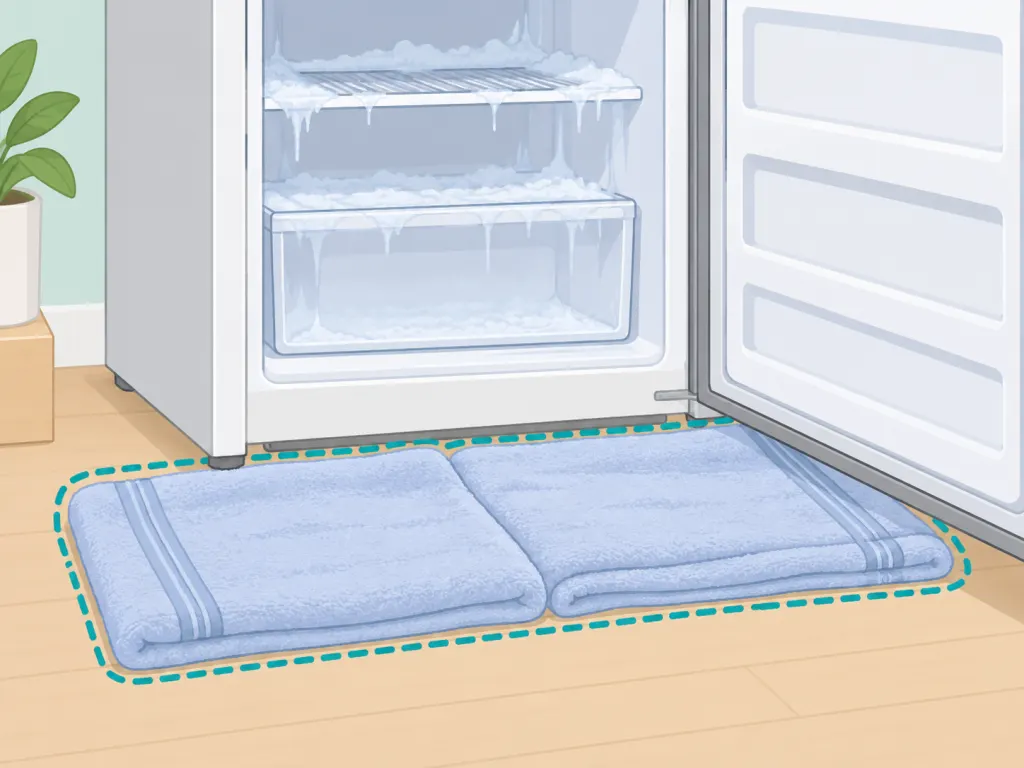
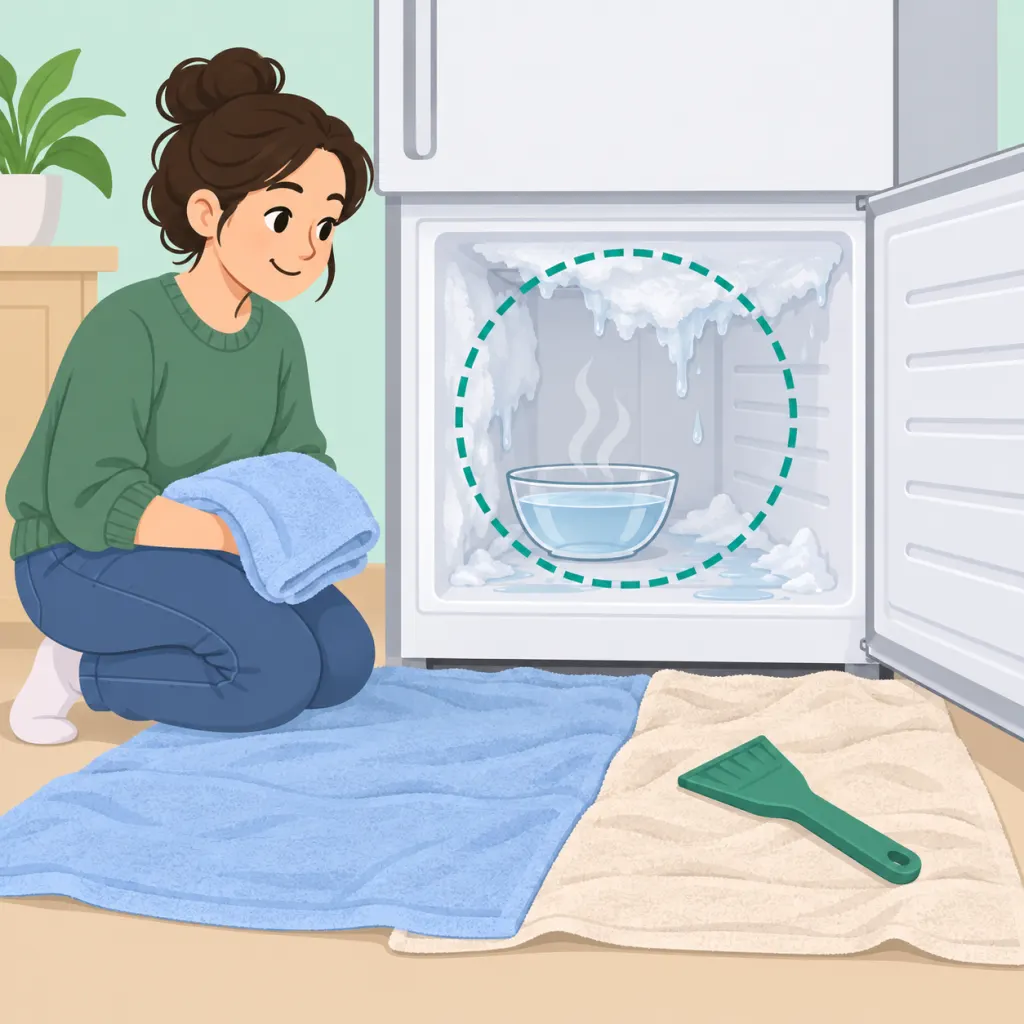
Lay thick towels along the freezer base and just outside the door to catch meltwater. Utah State University Extension recommends using towels to absorb excess water during freezer cleaning, which helps prevent puddles and slipping.
Step 4: Set bowls of warm water inside the freezer
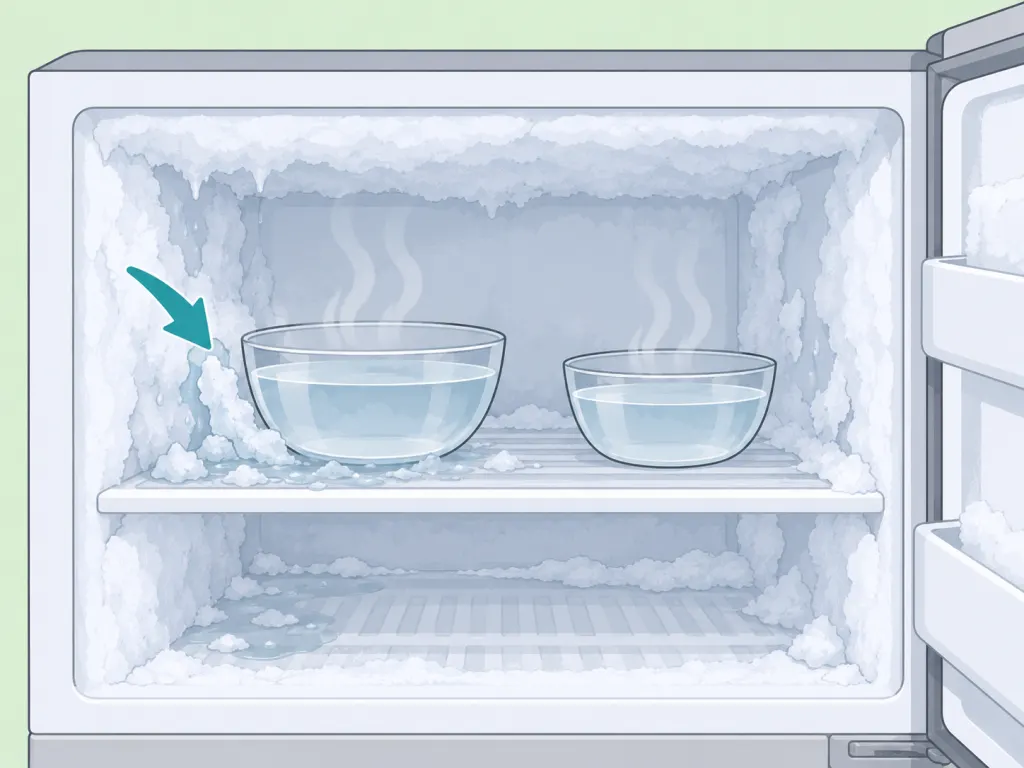
Place one or two heat-safe bowls of hot tap water on stable shelves or on a folded towel inside the freezer. Close the door for 5 to 10 minutes at a time so the trapped warmth softens the ice, then reopen it and replace the water when it cools.
Once the edges begin to lift, slide a plastic scraper or plastic spatula under the ice and work slowly. Extension freezer-cleaning guidance recommends plastic tools for chipping because they are less likely to damage interior finishes.
Step 6: Wipe, rinse, and dry the interior
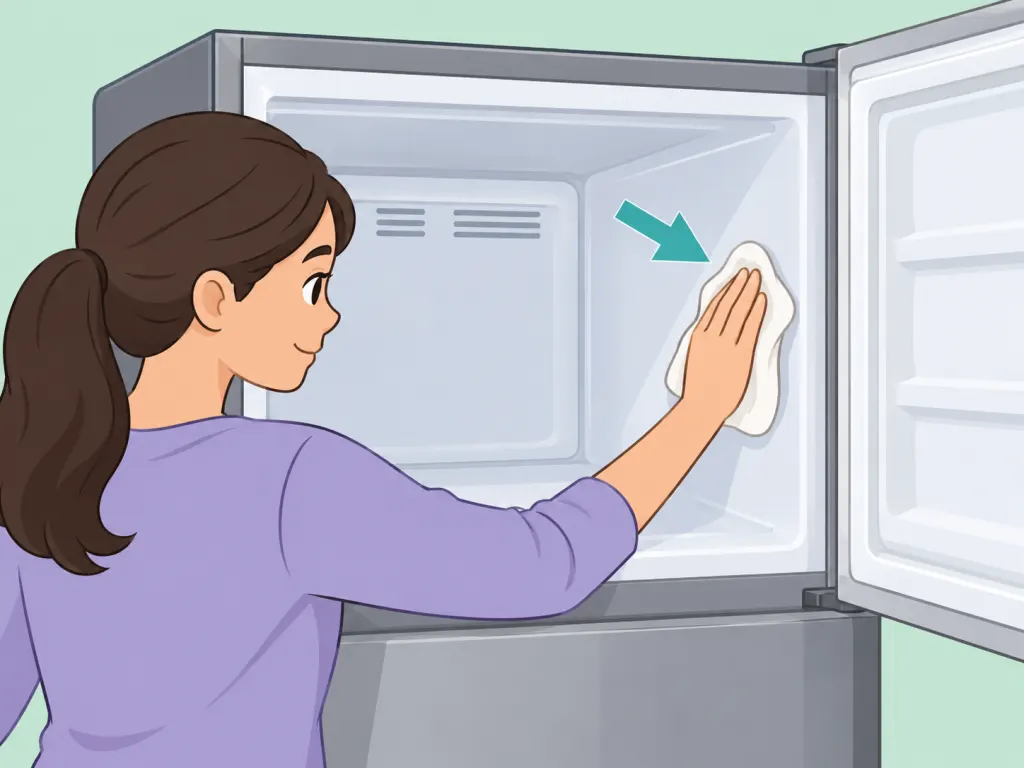
After the ice is gone, wipe the interior with a clean cloth and warm soapy water, then wipe again with clean water. University of Minnesota Extension explains that cleaning, rinsing, and drying are separate steps for food-contact surfaces, so finish with a dry cloth or air drying before turning the freezer back on.
Step 7: Restart the freezer and wait before restocking
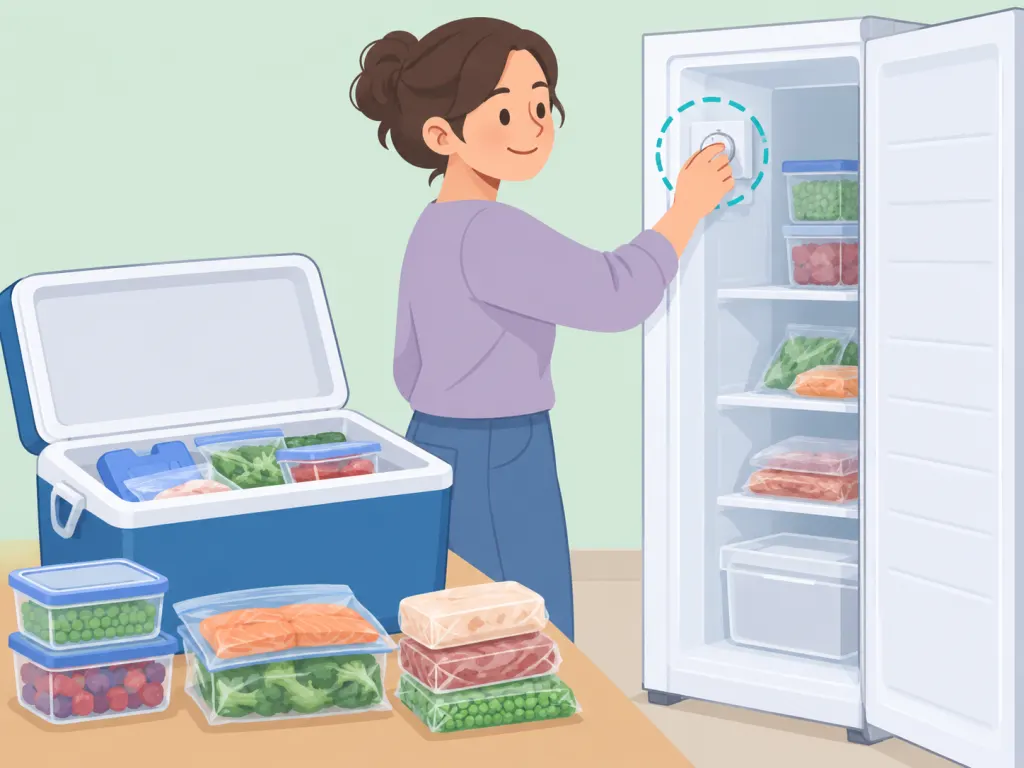
Turn the freezer back on and let it cool before returning food. ENERGY STAR recommends keeping freezers at 0°F, and Illinois Extension also notes that frozen food quality is best when the freezer is held at 0°F or below.
Step 8: Check each food package before putting it back
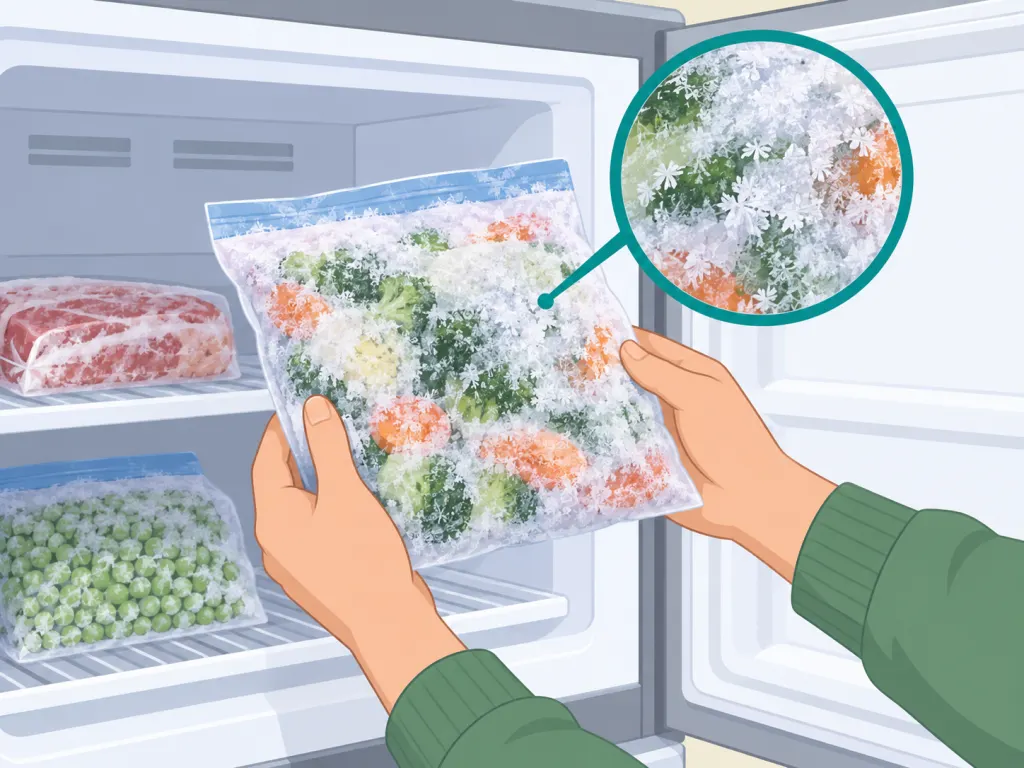
Return food only if it is still frozen, still has ice crystals, or measures 40°F or below. FoodSafety.gov advises never tasting food to judge safety, so discard questionable packages rather than relying on smell or appearance.
Step 9: Seek medical help if someone becomes ill after eating questionable food
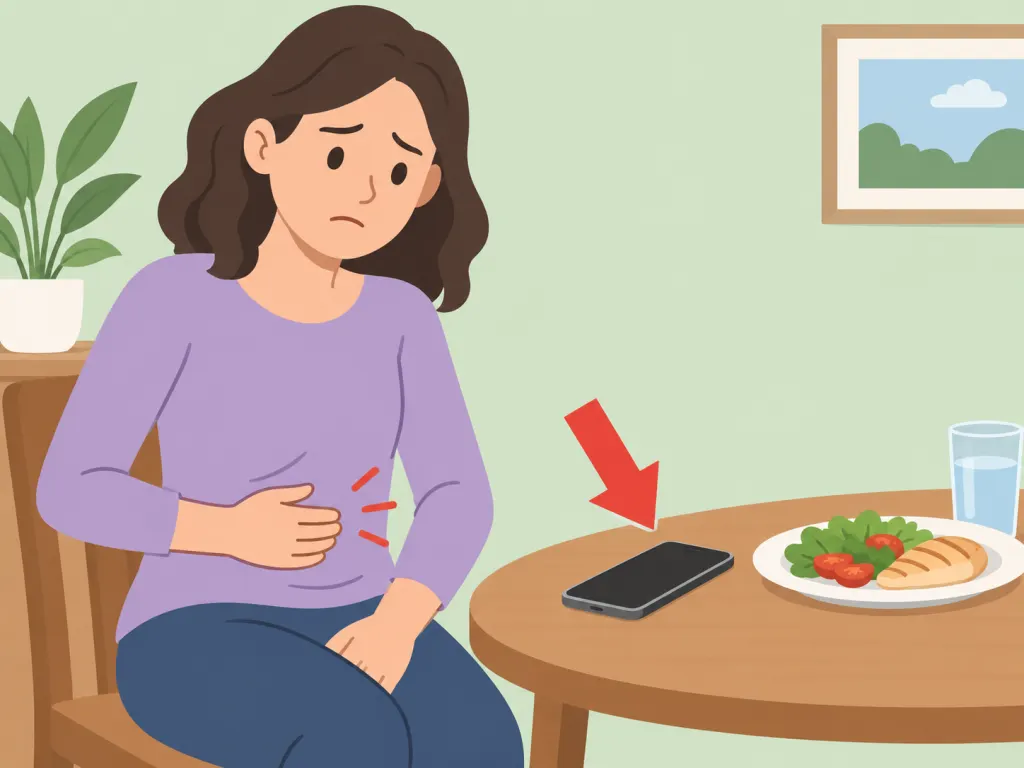
If someone develops severe symptoms after eating food that may have thawed, use medical judgment and get help promptly. The CDC advises seeing a doctor for severe food poisoning symptoms such as bloody diarrhea, diarrhea lasting more than 3 days, a fever over 102°F, repeated vomiting, or signs of dehydration.
Step 10: Prevent fast ice buildup after defrosting
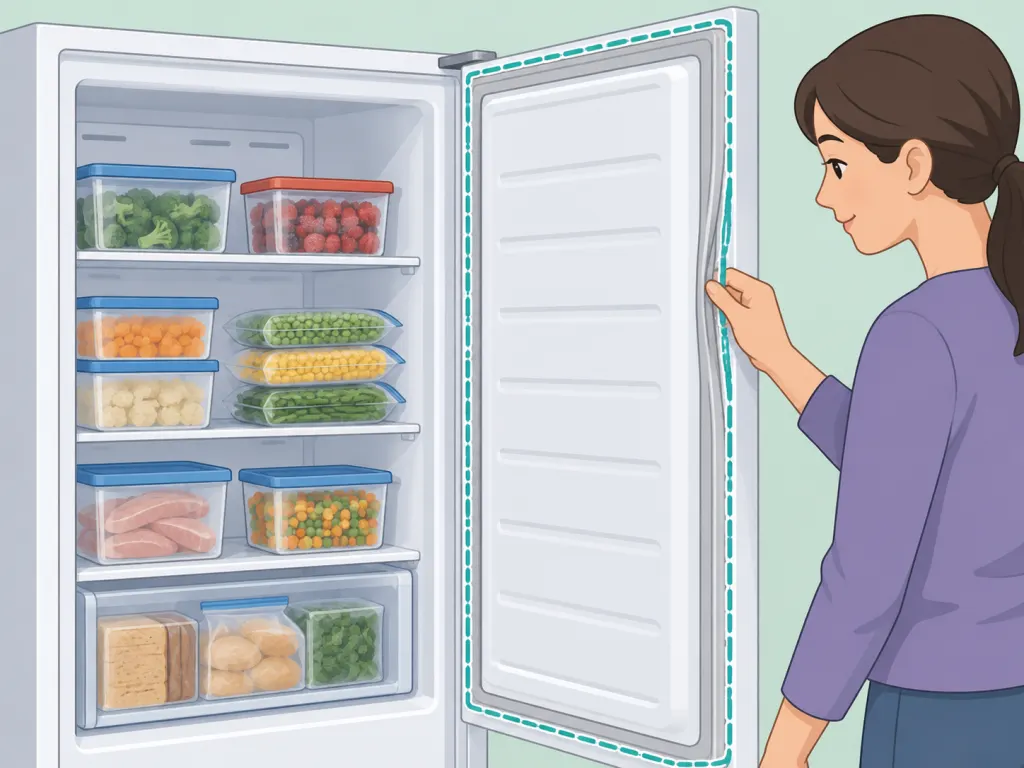
Keep the door open only as long as needed, leave space for air to circulate, and check that the gasket seals tightly. ENERGY STAR says manual defrost freezers need periodic defrosting for energy savings and recommends not letting frost build up beyond one-quarter inch.
Wrap-Up
The bottom line: move the food out first, turn the freezer off, melt ice gradually with warm water, use only plastic tools, and dry the interior before restarting. Once the freezer is back at 0°F, return only food that has stayed safely cold.
Frequently Asked Questions
- → Can I defrost a freezer without turning it off?
Do not use water inside a freezer while it is powered unless your appliance manual specifically says to do so. For a hands-on defrost, switching the freezer off or unplugging it first is the safer approach because water and electrical equipment should be kept apart.
- → Can I use boiling water to melt freezer ice faster?
Use hot tap water or very warm water instead of a rolling boil. Extremely hot water can be harder to handle safely and may stress cold plastic or glass parts inside the freezer.
- → Is vinegar necessary for melting freezer ice?
No. Warm water and time are usually enough to loosen frost and ice. If you clean afterward, use a mild, food-safe cleaning approach and rinse and dry the surfaces well before restarting the appliance.
- → Why should I avoid a metal scraper?
Metal tools can gouge the freezer liner or damage hidden parts behind it. A plastic scraper or plastic spatula is a safer choice for loosening softened ice.
- → When is freezer ice buildup a sign of a bigger problem?
If thick frost returns quickly, check whether the door seal closes tightly and whether packages are blocking airflow. ENERGY STAR recommends keeping freezer door seals airtight and minimizing how long the door stays open.
- → Can I refreeze food after defrosting the freezer?
FoodSafety.gov says frozen food may be refrozen if it still has ice crystals or is at 40°F or below, though quality may change. Evaluate each package separately and discard food that has been too warm for too long.
References
This content was developed and refined using reliable sources.
- https://www.energystar.gov/products/freezers
- https://www.hse.gov.uk/electricity/introduction.htm
- https://www.foodsafety.gov/food-safety-charts/food-safety-during-power-outage
- https://extension.usu.edu/news_sections/home_family_and_food/freezer-cleaning
- https://extension.illinois.edu/news-releases/tips-keeping-frozen-food-fresh
- https://extension.umn.edu/food/preparing/cooking-at-home/sanitizing-equipment-and-food-contact-surfaces
- https://www.cdc.gov/food-safety/signs-symptoms/index.html