 Save
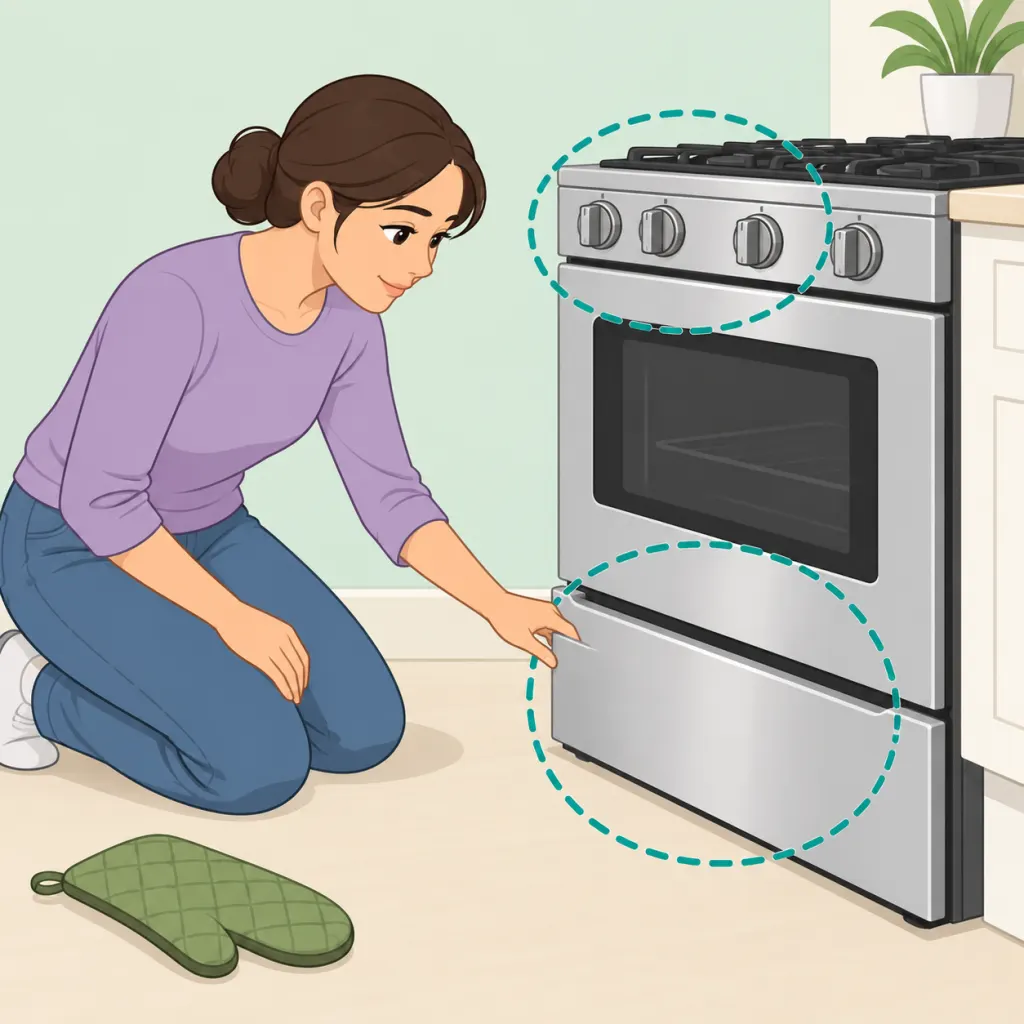
The drawer under a stove can look like simple storage, but its purpose depends on the range model. Some lower compartments are heated, while others are meant only for cookware. This guide shows you how to identify yours and use it safely.
Step 1: Look for words, icons, or controls near the drawer
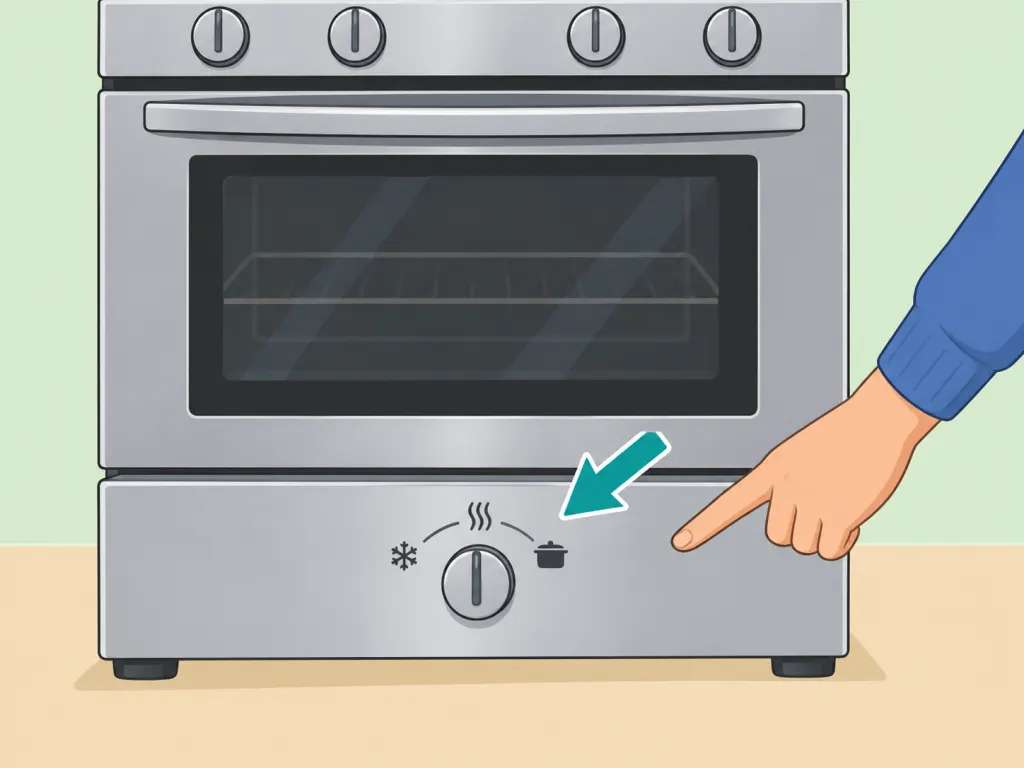
Start with the front of the range, the control panel, and the drawer face. If you see a temperature knob, warming setting, broil setting, or indicator light, the drawer may be more than storage; regulations define a drawer warmer as a heated drawer that holds hot food cooked elsewhere.
Step 2: Find the model number before deciding
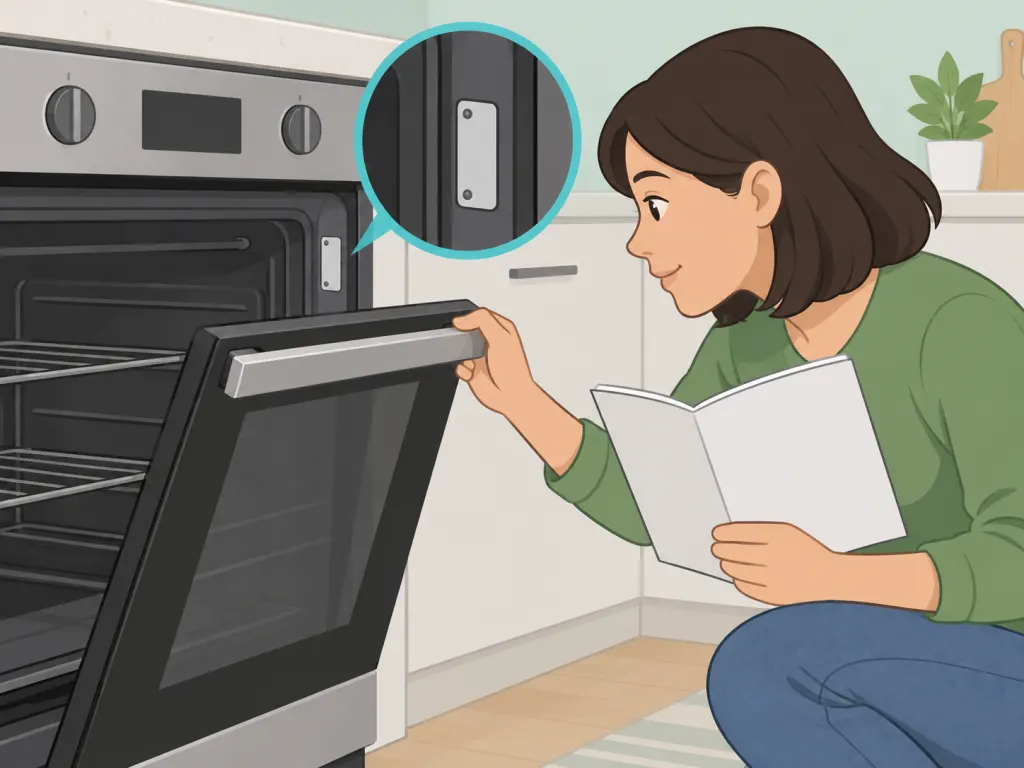
Open the oven door or lower drawer only when the appliance is cool, then look around the frame for the model tag. Use that model number to find the owner’s manual, because the same-looking space can have different purposes on different ranges. If the manual calls it a storage drawer, warming drawer, or broiler drawer, follow that wording.
Step 3: Use a warming drawer only for already-hot food
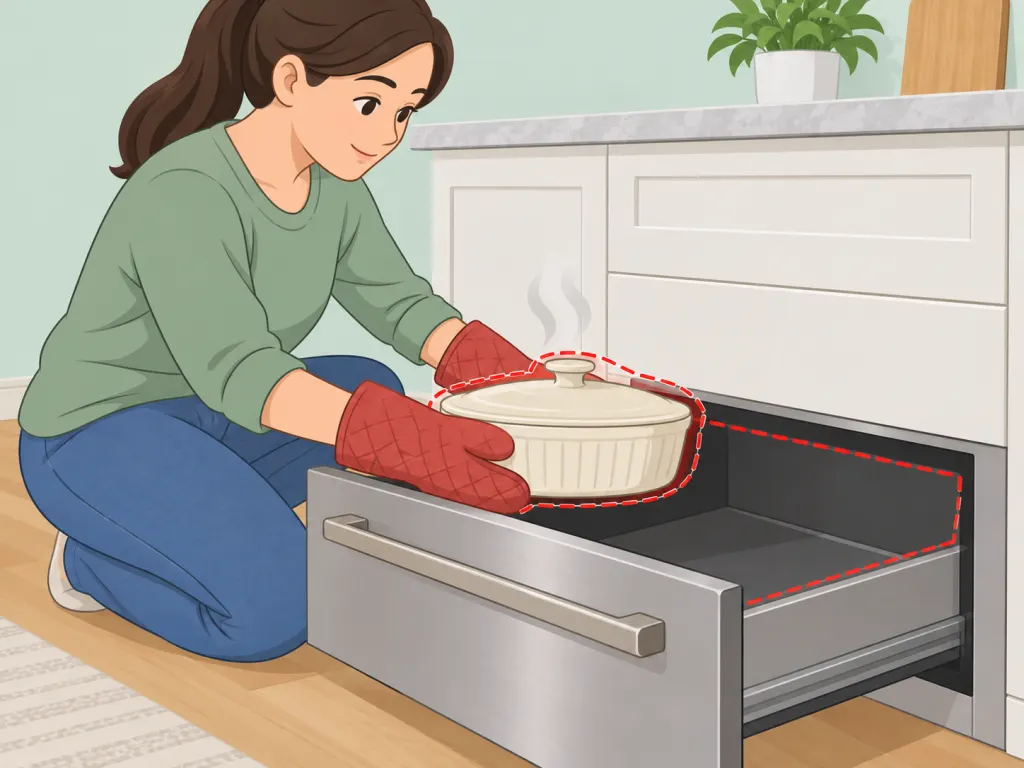
If the manual identifies a warming drawer, use it to hold cooked food at serving temperature, not to cook raw food. FoodSafety.gov says hot foods should stay at 140°F or warmer during serving, so check the drawer setting and use a food thermometer when timing matters.
Step 4: Reheat leftovers before placing them in the drawer
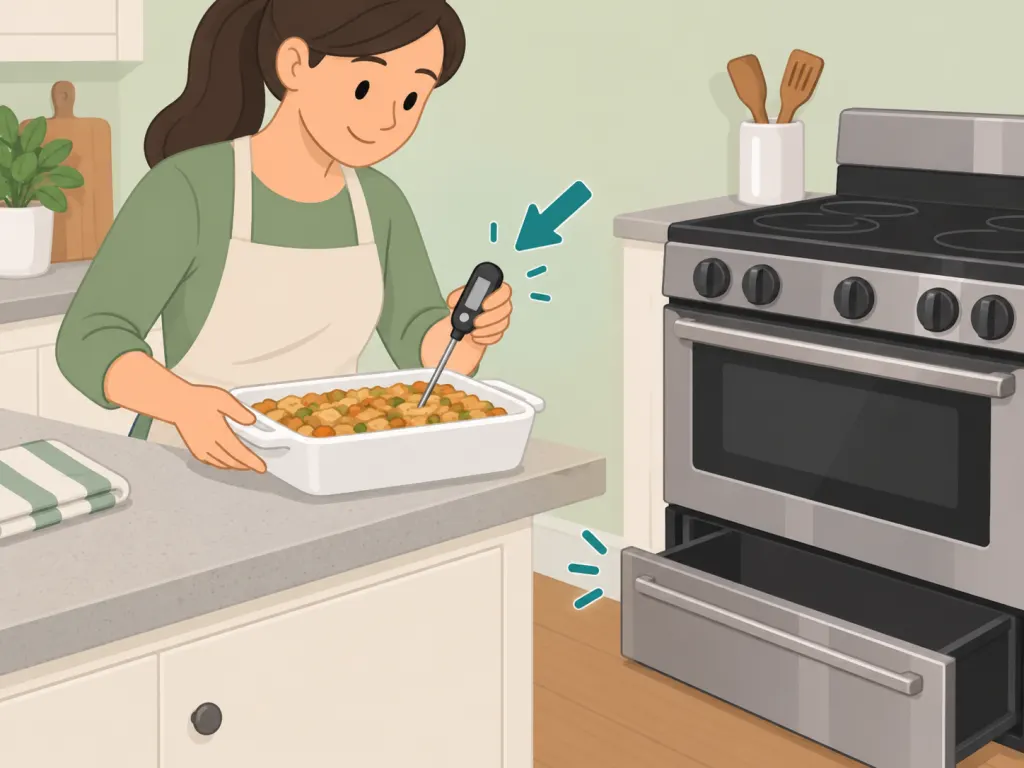
A warming drawer should not be your shortcut for cold leftovers. Reheat cooked-ahead food until it reaches a safe serving temperature first; FoodSafety.gov lists 165°F for leftovers. After reheating, the drawer can help hold the food briefly while the rest of the meal comes together.
If the manual labels the space as a storage drawer, keep it simple: use it for clean, dry, heat-safe cookware. Do not keep paper towels, food packaging, plastic containers, towels, or wooden utensils there, since the U.S. Fire Administration advises keeping items that can catch fire away from the stovetop. When in doubt, leave the drawer empty.
Step 6: Treat a broiler-style drawer as an active cooking area
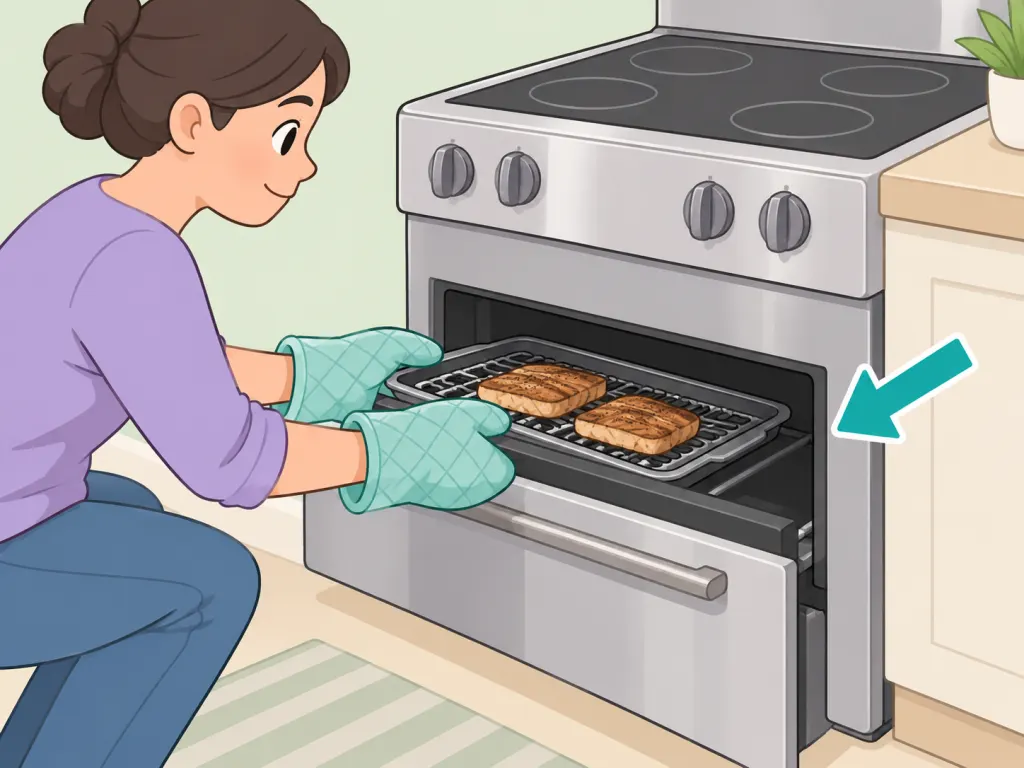
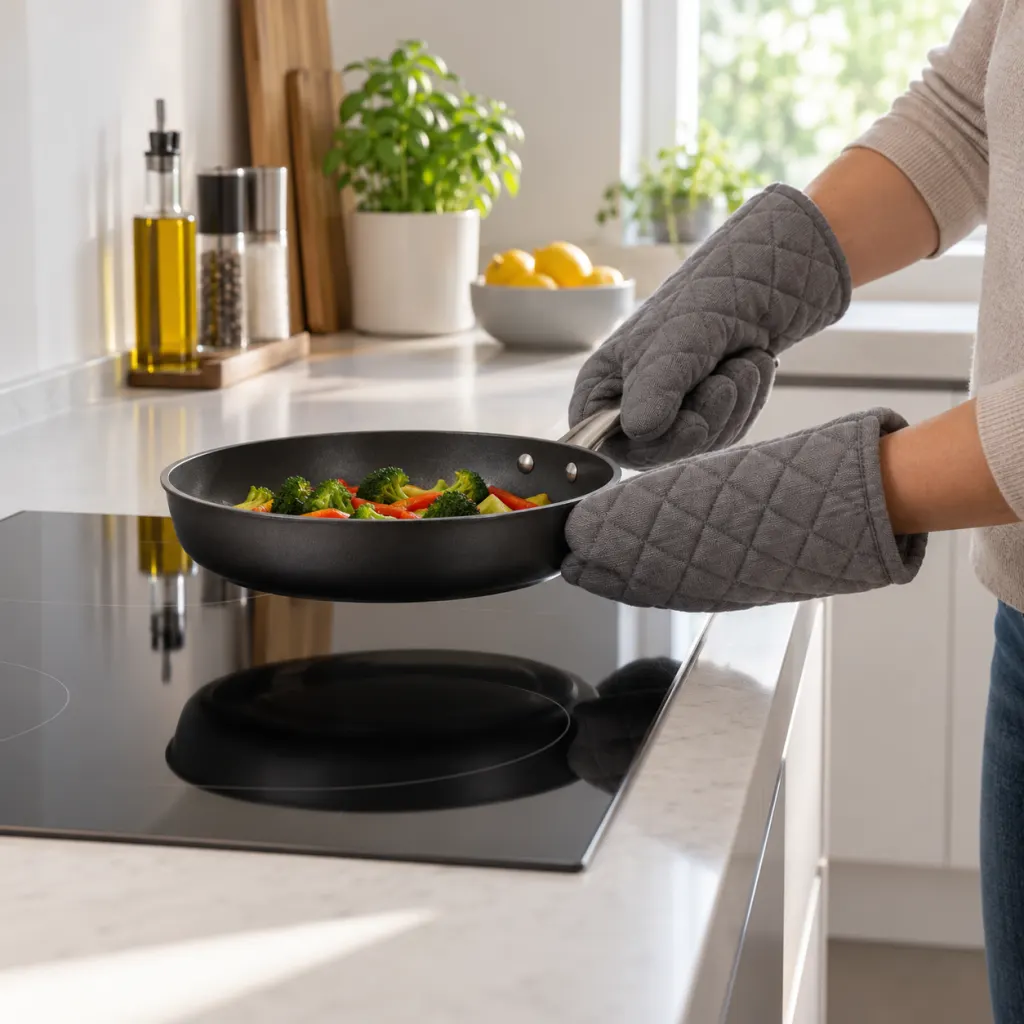
If your lower drawer is tied to the broil setting, has a broiler pan, or heats intensely from above, treat it like part of the oven. Stay in the kitchen while broiling, since the U.S. Fire Administration says to stay nearby when broiling. Use oven mitts and keep the drawer clear of stored items before turning it on.
Step 7: Check stability and keep children away from the drawer
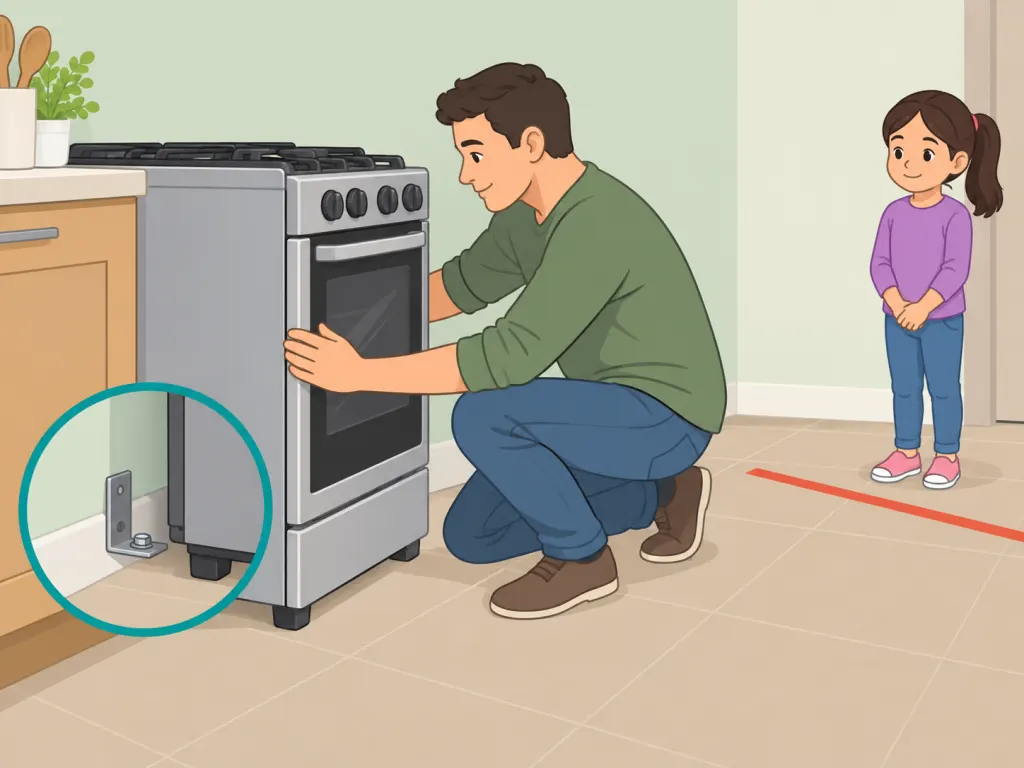
Do not let children climb, sit, or pull on the open drawer. The Consumer Product Safety Commission notes that freestanding ranges should have anti-tip brackets installed to reduce tip-over hazards. If the range shifts when the drawer is open, stop using the drawer until the appliance is secured.
Step 8: Get help if there is fire, injury, or unsafe operation
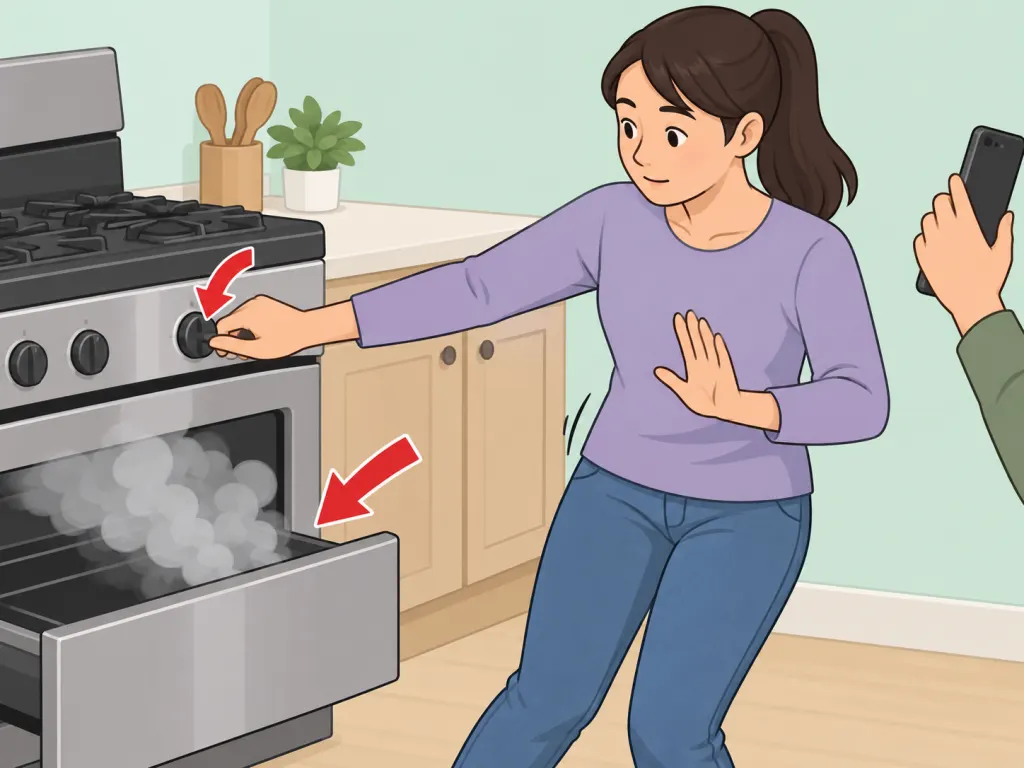
Turn the appliance off if the drawer smokes, sparks, smells unusual, will not close, or behaves differently than the manual describes. For flames escaping an oven area, leave the home and call emergency services; for a serious burn, Mayo Clinic advises getting emergency medical help. For appliance problems without immediate danger, contact a qualified repair professional.
Wrap-Up
The bottom line: do not guess based on appearance alone. Check the controls and manual, use a warming drawer only for hot cooked food, store only suitable cookware in a true storage drawer, and treat a broiler-style drawer as an active cooking space.
Frequently Asked Questions
- → Is the drawer under every stove a warming drawer?
No. A heated drawer can be designed to hold hot cooked food, but many stoves have a plain storage drawer or a lower broiler-style compartment. The safest answer comes from the model label and owner’s manual.
- → Can I keep pans in a warming drawer?
Only if your manual allows it and the pans are oven-safe. If the drawer has a heat control, assume it can become hot and avoid storing plastic, paper, towels, food packaging, or anything that could be damaged by heat.
- → Can a warming drawer reheat cold leftovers?
Use a warming drawer to hold food that is already hot, not as your main reheating method. FoodSafety.gov says leftovers should be reheated to at least 165°F before serving, so use an oven, stovetop, or microwave and a food thermometer first.
- → How hot should food stay in a warming drawer?
FoodSafety.gov recommends keeping hot foods at 140°F or warmer during serving. If your drawer does not show a temperature or you are unsure it holds that level, use a food thermometer and limit holding time.
- → What should I store in a true storage drawer?
Use a storage drawer for sturdy, heat-safe cookware such as metal baking sheets, cast iron, or oven-safe pans. Keep paper goods, plastic wrap, wooden utensils, towels, and food packaging away from the stove area.
- → Why does my lower drawer look like it has a rack?
A rack can be a clue that the compartment is intended for heating or broiling, but it is not proof by itself. Look for a broil setting, warming control, model information, or manual instructions before using it.
References
This content was developed and refined using reliable sources.
- https://www.law.cornell.edu/regulations/california/20-CCR-1602
- https://www.foodsafety.gov/blog/game-day-food-safety-tips
- https://www.foodsafety.gov/food-safety-charts/safe-minimum-internal-temperatures
- https://www.foodsafety.gov/blog/food-safety-tips-for-catered-and-diy-wedding-food
- https://www.usfa.fema.gov/gallery/pictographs/cooking.html
- https://www.cpsc.gov/safety-education/safety-guides/kids-and-babies/Childproofing-Your-Home
- https://www.mayoclinic.org/first-aid/first-aid-burns/basics/art-20056649