 Save
A transient ischemic attack (TIA), widely called a mini stroke, occurs when blood flow to part of the brain is temporarily interrupted, producing neurological symptoms that usually resolve within minutes to an hour. Despite the brief episode, a TIA is a genuine medical emergency. According to the CDC, more than one-third of people who experience a TIA without prompt treatment go on to have a major stroke within a year, with the risk highest in the 48 hours immediately following the event. For older adults, recognizing the five key warning signs is especially important: the chance of stroke roughly doubles every decade after age 55, meaning the window for preventive action narrows as age and underlying health conditions accumulate. This guide explains each warning sign clearly, explores why age amplifies risk, and describes what emergency medical evaluation typically involves, so that both older adults and the people who care for them can respond with confidence.
What Is a Transient Ischemic Attack?
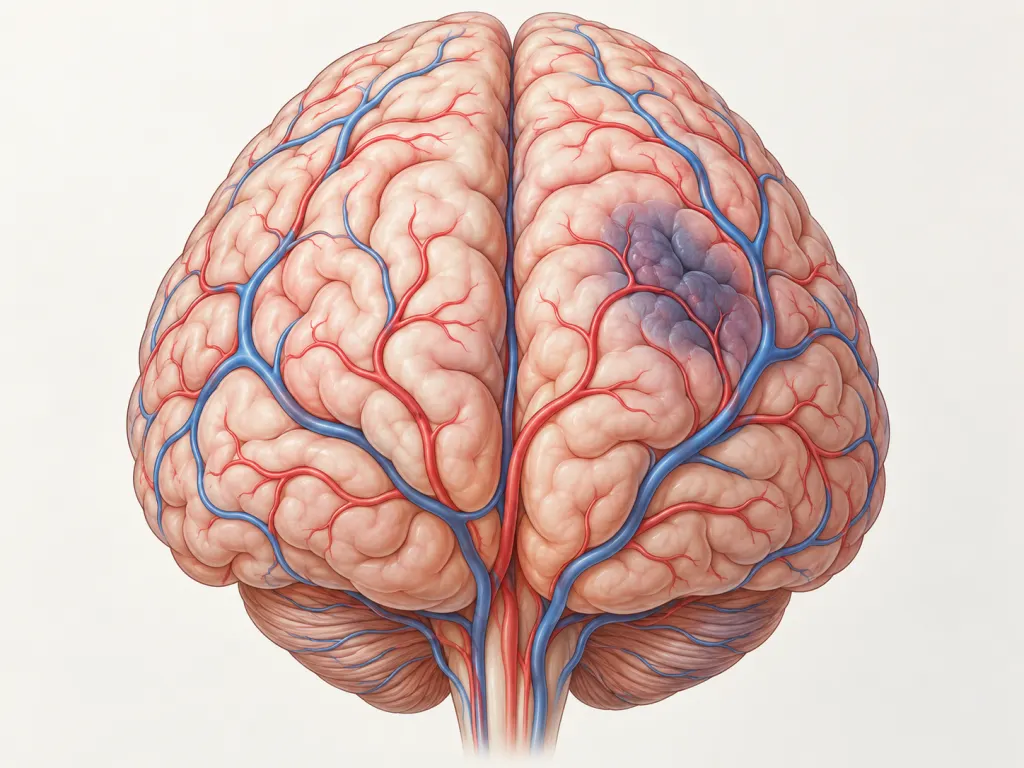
A transient ischemic attack occurs when a blood clot or narrowed artery temporarily blocks blood supply to a portion of the brain, spinal cord, or retina. Unlike a major ischemic stroke, the blockage clears before permanent tissue damage sets in, so symptoms resolve without lasting injury. Modern medical understanding defines a TIA by tissue evidence rather than time alone: no lasting infarction appears on brain imaging even when symptoms persist longer than a few minutes. In practice, most episodes last under an hour, and many resolve within five minutes. The blood supply can be blocked by a clot forming within a brain artery, a clot traveling from elsewhere in the body such as the heart, or a significant narrowing of vessel walls from decades of plaque accumulation. Regardless of the underlying mechanism, the brief interruption produces the same warning signs that a prolonged stroke would cause, which is precisely why symptoms that appear and then disappear must never be dismissed as insignificant. MedlinePlus describes a TIA as a warning sign of future strokes, noting that it signals increased vulnerability to more serious cerebrovascular events.
Why TIA Risk Increases With Age
Age is among the strongest non-modifiable risk factors for TIA and stroke. The CDC reports that the likelihood of stroke approximately doubles every ten years after age 55, making adults 65 and older particularly vulnerable. Older age is typically accompanied by a higher prevalence of conditions that directly raise TIA risk: hypertension, consistently identified as the single most significant risk factor, as well as type 2 diabetes, high cholesterol, coronary artery disease, and atrial fibrillation. Atrial fibrillation, an irregular heart rhythm, is especially notable because it can produce clots capable of traveling to the brain, and it becomes far more common with advancing age. Beyond these individual conditions, blood vessels in older adults often show more advanced atherosclerosis, the gradual narrowing and hardening caused by decades of plaque build-up. A clinical overview published in StatPearls via NCBI notes that TIA may affect between 0.5% and 8% of the elderly population in developed countries, with higher rates among people who carry multiple cardiovascular risk factors. This clustering of vulnerabilities means that recognizing warning signs early carries greater practical benefit for older adults than for any other age group.
The Five Warning Signs in Older Adults
The warning signs of a TIA mirror those of a full stroke because, in the moment, the brain cannot distinguish between a temporary and a lasting interruption of blood supply. The five most recognized signs appear suddenly, often reaching maximum intensity within seconds, and can affect one area of neurological function or several at once. Caregivers, family members, and older adults themselves benefit from knowing each sign specifically.
- Sudden weakness or numbness on one side of the body. The face, arm, or leg, typically on one side, may feel weak, heavy, or entirely numb. A person may notice that one side of their face droops when they attempt to smile, or that one arm drifts downward when both arms are raised. This one-sided pattern reflects how the brain is organized, with each hemisphere controlling the opposite side of the body.
- Difficulty speaking or understanding speech. Slurred speech, an inability to find the right word, jumbled or incoherent sentences, or sudden difficulty understanding what others are saying are recognized signs that language centers of the brain are affected. The person may appear confused about language even when otherwise alert and oriented.
- Vision changes in one or both eyes. Temporary loss of vision in one eye, sometimes described as a curtain or shade falling across part of the visual field, as well as blurred or double vision, can occur when blood flow to the retina or visual cortex is briefly reduced. These changes may last only seconds.
- Sudden dizziness, loss of balance, or poor coordination. A person may feel unexpectedly unsteady, veer while walking, or find that routine movements feel disconnected from intention. This differs from ordinary tiredness or familiar lightheadedness and tends to appear abruptly and without a clear preceding cause.
- Sudden confusion or disorientation. Brief episodes of confusion, difficulty understanding one's surroundings, or trouble following a simple conversation can accompany a TIA. Older adults may also describe an unusual difficulty completing a familiar task or recalling a very recent event.
Any one of these signs, even when brief and even when fully resolved before emergency help arrives, warrants calling emergency services immediately. The resolution of symptoms does not cancel the medical urgency of the event.

Why Symptoms That Pass Still Demand Emergency Care
One of the most dangerous features of a TIA is precisely its brevity. When symptoms disappear within minutes, it is natural to attribute the episode to tiredness, low blood sugar, or a momentary spell and assume the situation has passed. Medical evidence is unambiguous on this point: emergency evaluation must take place even when all symptoms have completely resolved. The CDC reports that more than one-third of people who experience a TIA without receiving treatment will go on to have a major stroke within one year, and that 10 to 15 percent will have a major stroke within three months. The StatPearls clinical review confirms a particularly narrow danger window immediately following the episode, noting that approximately half of subsequent strokes occur within 48 hours of a TIA. There is no reliable way to determine at home whether the episode was a TIA or the beginning of a longer-lasting stroke: emergency brain imaging is required to make that distinction. Delaying care on the assumption that everything is fine costs critical time that directly affects the range of treatments available.
The CDC promotes the acronym BE-FAST as a practical memory tool for recognizing and responding to stroke and TIA symptoms: Balance (sudden loss of balance or coordination), Eyes (sudden vision change in one or both eyes), Face (drooping or unevenness when smiling), Arms (weakness or downward drift when both arms are raised), Speech (slurred, strange, or absent), Time (call emergency services immediately). The T step is essential: stroke treatments are time-sensitive, and the most effective interventions are only available within a narrow window of hours after symptom onset. Calling 911 rather than driving to a hospital or waiting for a scheduled appointment is the recommended course of action, even if the person appears to have fully recovered by the time help arrives.

Risk Factors That Raise the Likelihood of TIA
Understanding risk factors matters because several of the most significant ones are modifiable, meaning medical treatment or lifestyle changes can reduce them. High blood pressure is the leading modifiable risk factor and raises TIA and stroke risk even when it produces no noticeable symptoms day to day. Other medically manageable factors include elevated LDL cholesterol, type 2 diabetes, and atrial fibrillation. Both the CDC and MedlinePlus identify tobacco use as a significant contributing factor, as smoking damages blood vessels and promotes the clot formation that underlies most TIAs. Excessive alcohol consumption, physical inactivity, and a diet high in sodium and saturated fat are also associated with elevated cardiovascular risk. The StatPearls clinical overview notes that a prior TIA or stroke is itself an independent risk factor for a subsequent event, meaning an older adult who has already experienced one episode faces heightened risk and warrants close medical monitoring and follow-up.
Factors that cannot be changed include age, genetic predisposition, and personal history of cerebrovascular disease. Clinicians sometimes use a validated tool called the ABCD2 score, which incorporates age, blood pressure at presentation, specific clinical features, duration of symptoms, and whether diabetes is present, to estimate the short-term risk of stroke following a TIA and guide how urgently a patient needs specialist evaluation. Patients do not calculate this score themselves; it is a clinical assessment performed during emergency evaluation. Its existence reinforces why that evaluation is essential rather than optional: risk is not uniform, and early assessment allows clinicians to match the urgency of intervention to each individual's actual level of danger.
What Emergency Evaluation Typically Involves
When a person arrives at an emergency department after a possible TIA, the first priority is ruling out an ongoing stroke and identifying the likely cause of the episode. Brain MRI with diffusion-weighted imaging (DWI) is the preferred imaging approach because it can detect small areas of restricted blood flow that may not yet appear on standard CT scan; a CT is used when MRI is not immediately available. Vascular imaging, typically a CT angiogram or carotid artery ultrasound, looks for significant narrowing in the arteries supplying the brain. An electrocardiogram and often an echocardiogram are performed to check for atrial fibrillation and other cardiac sources of clots. Blood tests assess glucose, cholesterol, and clotting factors. Together these tests allow clinicians to identify the mechanism that produced the episode and begin targeted treatment without delay.
Treatment following a confirmed TIA is focused on preventing a subsequent and potentially more disabling stroke. This typically includes antiplatelet therapy, such as aspirin combined with a second agent for a defined short period, along with statin therapy to address cholesterol and blood pressure management. When significant carotid artery narrowing is identified, a procedure to address it may be discussed. The StatPearls clinical review notes that comprehensive secondary prevention initiated promptly after TIA can reduce the risk of a subsequent stroke by 80 to 90 percent, a figure that underscores the life-changing value of prompt emergency evaluation and consistent follow-through with treatment rather than minimizing a brief episode that resolved on its own.
Wrap-Up
A transient ischemic attack is a brief interruption of blood flow to the brain that produces stroke-like symptoms, typically resolving within minutes to an hour, without causing lasting tissue damage. The five key warning signs are sudden one-sided weakness or numbness, difficulty speaking or understanding speech, vision changes, sudden loss of balance or coordination, and abrupt confusion or disorientation. Older adults face compounded risk because age, hypertension, atrial fibrillation, and diabetes often occur together. Emergency evaluation must happen even when all symptoms fully resolve, because the highest risk of a subsequent major stroke falls within the 48 hours following the episode. Evidence-based treatment begun promptly after a confirmed TIA can reduce subsequent stroke risk substantially. Recognizing these five signs and calling emergency services without delay are among the most protective steps that older adults and their caregivers can take.
Frequently Asked Questions
- → How long do TIA symptoms typically last?
Most TIA symptoms resolve within minutes, and nearly all clear within an hour. MedlinePlus notes they may occasionally persist for up to 24 hours. Because there is no reliable way at the time of onset to predict whether symptoms will resolve or persist, all episodes should be treated as emergencies requiring immediate medical evaluation.
- → Can a person have more than one TIA?
Yes. Having a prior TIA is itself a recognized risk factor for future TIA and stroke. This is one reason that full medical evaluation after even a single episode is important, identifying and managing contributing conditions such as high blood pressure or atrial fibrillation reduces the risk of recurrence.
- → What is the difference between a TIA and a full stroke?
Both involve a disruption of blood flow to the brain and produce identical warning signs in the moment. The distinction is that a TIA resolves without causing permanent brain tissue damage, whereas a stroke results in lasting injury to brain tissue. The two cannot be reliably distinguished by symptoms alone; emergency brain imaging is required to make that determination.
- → Is a TIA dangerous even when all symptoms disappear completely?
Yes. The CDC reports that more than one-third of people who experience a TIA without treatment will have a major stroke within a year, and 10 to 15 percent will have one within three months. The risk is concentrated in the first 48 hours, making prompt emergency evaluation essential even after complete symptom resolution.
- → What should I do if someone near me shows these warning signs?
Call emergency services (911 in the United States) immediately. Note the time symptoms began, as this information guides treatment decisions. Do not drive the person to the hospital yourself unless no other option exists, an ambulance brings appropriate care en route. Stay calm, keep the person comfortable, and remain with them until help arrives.
- → Can TIA risk be reduced in older adults?
Several contributing factors are modifiable with medical treatment or lifestyle changes. Managing high blood pressure, treating atrial fibrillation, controlling blood sugar and cholesterol, avoiding tobacco, and maintaining physical activity are among the steps clinicians commonly recommend. A doctor can assess individual risk and suggest an appropriate plan, personal medical decisions should always be made in consultation with a qualified health professional.