 Save
A morning smoothie can support a healthy routine after 50, but a single drink is not a shortcut to looking or feeling decades younger. The more useful question is whether the smoothie helps you build a balanced day: fruit, vegetables, protein, fiber-rich foods, and a beverage base that fits your needs. Authorities such as the National Institute on Aging describe smart food choices as one part of healthy aging, alongside appropriate calorie needs, food-group balance, and activity level NIA.
Why the Claim Needs a Reality Check
Viral smoothie stories often attach a dramatic personal result to a tidy morning ritual. That is appealing because it turns aging, appearance, energy, and fitness into something that seems simple and controllable. The problem is that personal stories do not tell us what else changed: training habits, total calorie intake, sleep, genetics, stress, work demands, alcohol use, medical history, or whether the person’s photos and timeline are reliable. A smoothie may be part of a useful routine, but it is not enough evidence for a sweeping claim about age or body composition.
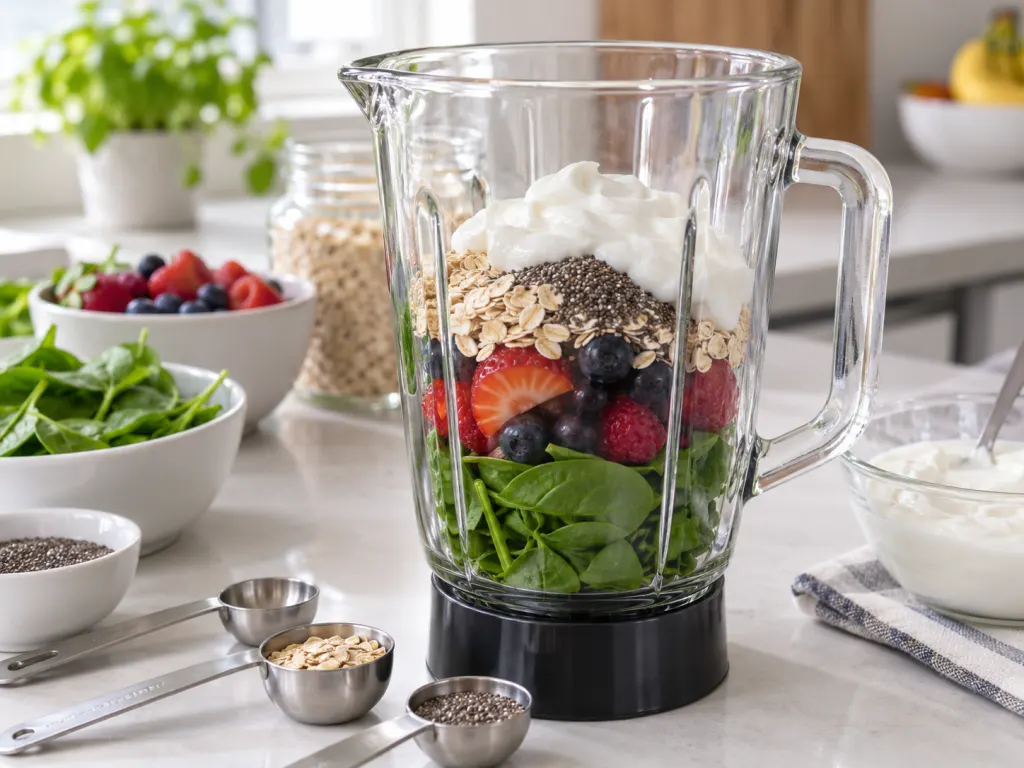
The better way to read the claim is ingredient by ingredient and habit by habit. A smoothie with berries, leafy greens, unsweetened yogurt or fortified soy milk, seeds, and perhaps oats can deliver useful nutrients in a convenient form. A smoothie built mostly from juice, sweetened powders, syrup, and oversized portions can look like a wellness choice while acting more like a sweet drink. The difference is not the word smoothie. It is the structure of the meal.
What a Smoothie Can Realistically Contribute
A balanced smoothie can make it easier to eat foods many adults miss. NIA notes that vegetables bring vitamins, minerals, carbohydrates, and fiber, and that fruits add color, flavor, and important nutrients. The same page also notes that older Americans generally do not eat enough fruit and that whole fruits are preferable to relying heavily on juice NIA. In smoothie terms, that means whole berries, banana, mango, spinach, kale, or cooked pumpkin usually make more sense than pouring in a large amount of juice.
Fiber is one reason whole ingredients matter. MedlinePlus explains that dietary fiber is found in fruits, vegetables, and grains, and recommends increasing fiber gradually while also getting enough fluids MedlinePlus. A smoothie can keep more fiber than juice because the whole fruit or vegetable is blended rather than strained. Still, blending does not make unlimited fruit portions automatically better. The glass should fit the meal, not become a hidden second breakfast.
A Better Checklist Than “Youth-Boosting”
When you see a morning smoothie claim, use a practical checklist instead of trusting the caption:
- Whole produce: Does it use whole fruit and vegetables, not mostly juice?
- Protein: Does it include yogurt, milk, fortified soy beverage, tofu, nut butter, seeds, or another protein source?
- Fiber-rich add-ins: Does it include oats, chia, flax, berries, greens, or another food that adds texture and staying power?
- Unsweetened base: Is the liquid mostly water, milk, plain yogurt, kefir, or an unsweetened fortified alternative?
- Reasonable portion: Is it sized like a meal or snack, not a pitcher-sized drink?
- Whole-day fit: Does it leave room for satisfying meals later, including vegetables, grains, protein foods, and healthy fats?
Protein, Fats, and Seeds Deserve Attention
One common weakness in smoothie routines is too little protein. NIA describes protein foods as building blocks used to build and repair tissues, and encourages older adults to choose a variety of nutrient-dense protein foods, including seafood, eggs, beans, nuts, seeds, and soy products NIA. In a smoothie, plain Greek yogurt, milk, fortified soy beverage, soft tofu, nut butter, or a measured amount of seeds can make the drink more meal-like. Without that, a fruit-heavy smoothie may be refreshing but leave some people hungry soon after.
Seeds are often promoted with more certainty than the evidence allows, but they can still be useful foods. The NIH Office of Dietary Supplements explains that omega-3 fatty acids include ALA, EPA, and DHA, and that ALA is found mainly in plant oils while foods such as flaxseed, chia seeds, and walnuts can provide omega-3s NIH ODS. That does not mean a spoonful of seeds transforms a smoothie into a special anti-aging formula. It means seeds can add fats, texture, and some fiber, and they can help a smoothie feel more complete.
Added Sugar Can Quietly Change the Drink
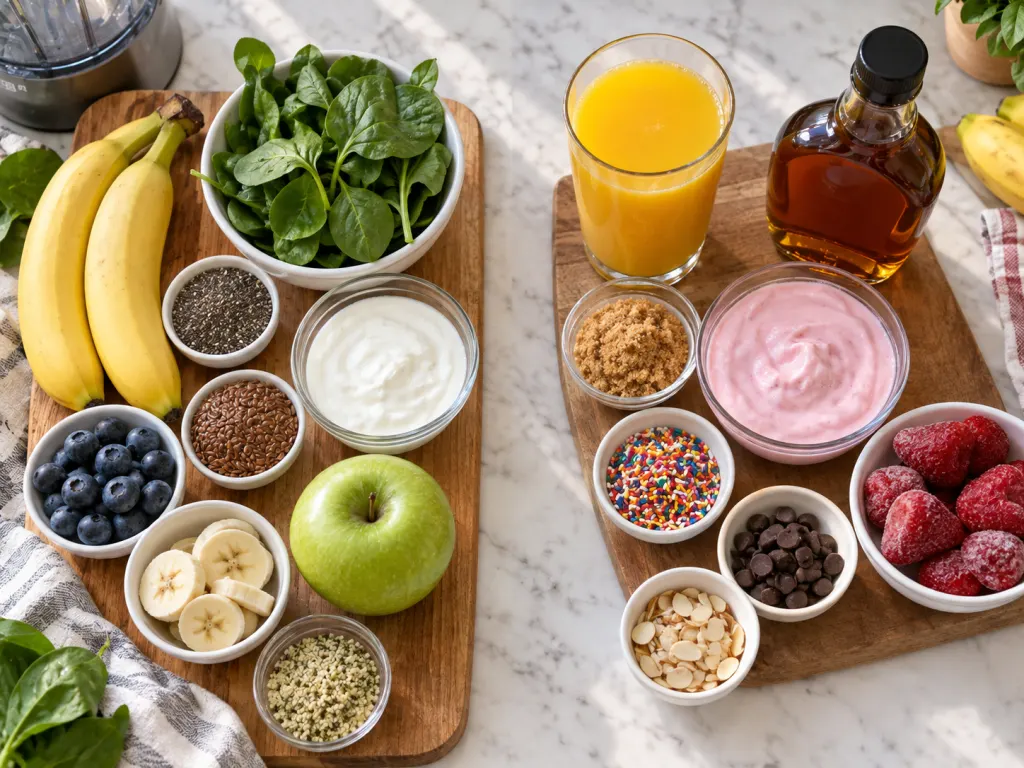
A smoothie can look wholesome and still carry more sweetness than expected. The Office of Disease Prevention and Health Promotion summarizes the Dietary Guidelines pattern as nutrient-dense foods and beverages across food groups, within calorie limits, while limiting added sugars, saturated fat, sodium, and alcohol ODPHP. For smoothies, the most useful move is simple: choose unsweetened liquids, use fruit for sweetness, and be cautious with honey, flavored yogurt, sweetened protein powders, syrups, and sweetened plant milks.
That does not make fruit the problem. Whole fruit brings water, flavor, fiber, and useful nutrients. The issue is stacking multiple sweet elements until the drink becomes less balanced. A banana plus berries may be plenty. A banana, dates, fruit juice, sweetened yogurt, and honey in the same glass is a different choice. The label and ingredient list matter more than the wellness language on the front of a package.
The Rest of the Morning Still Matters
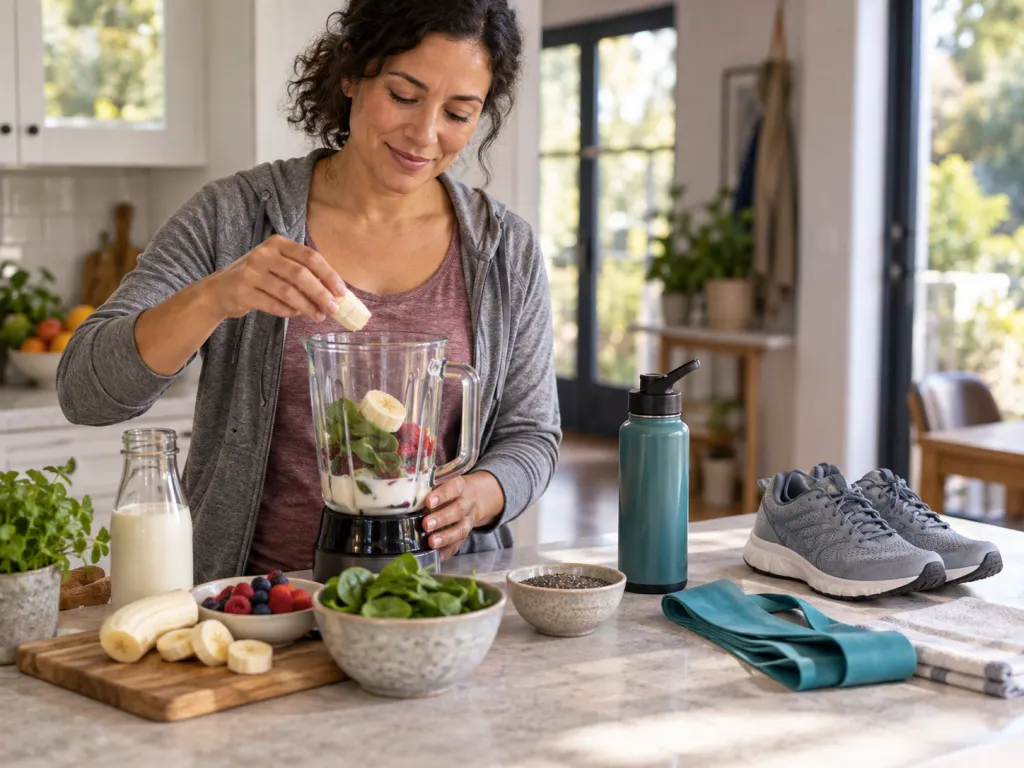
Food is only one part of a healthy-aging pattern. Physical activity matters too, especially because strength, balance, and endurance are practical parts of independence. The CDC says adults 65 and older need aerobic activity, muscle-strengthening activity, and balance activity each week, and that some activity is better than none when people cannot meet the full recommendation CDC. NIA similarly describes aerobic, muscle-strengthening, and balance activities as three important types of exercise for older adults NIA.
This is why a smoothie story should never be read in isolation. A person who drinks a produce-rich smoothie and also does regular strength work, walks often, sleeps well, eats balanced meals, and has supportive routines may feel better than they did during a more chaotic period of life. The smoothie may be a helpful anchor. It is not the whole explanation.
How to Build a Sensible Morning Smoothie Routine
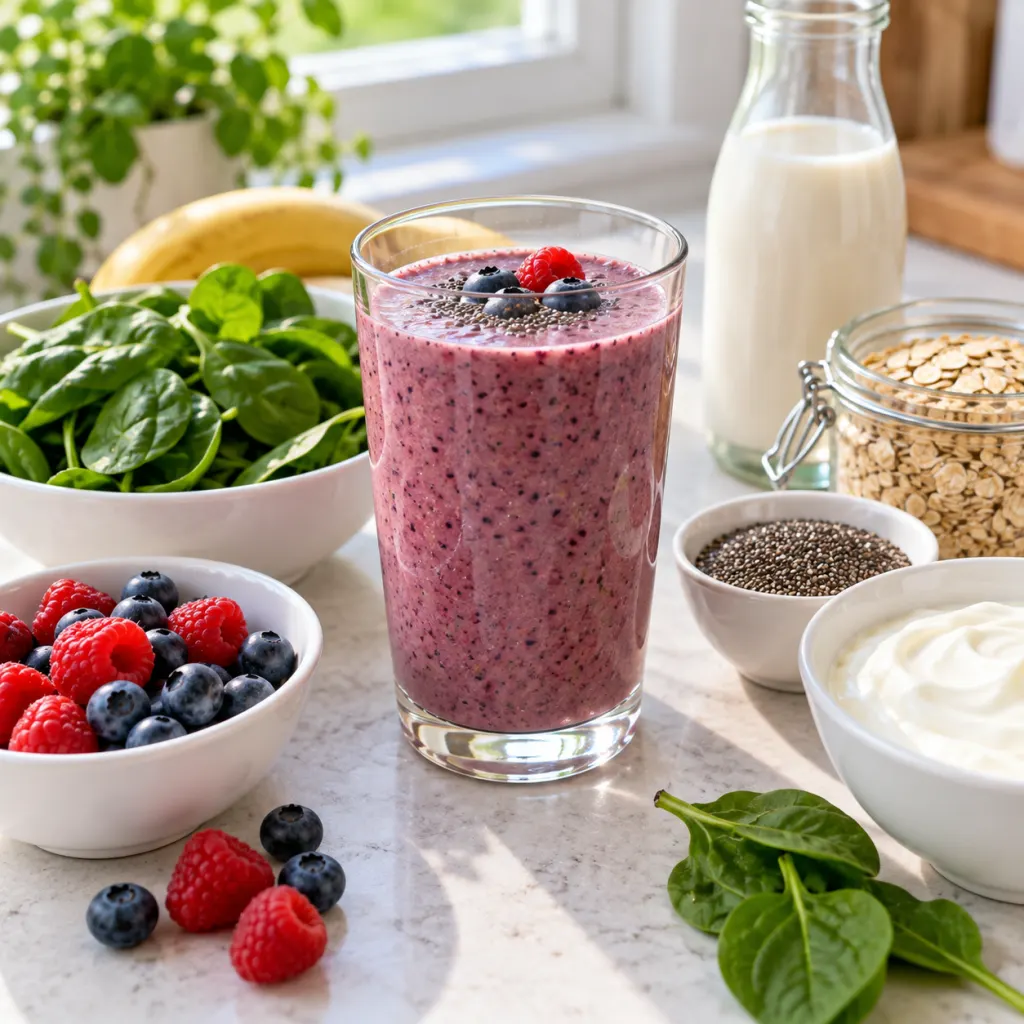
Think of the smoothie as a flexible breakfast template, not a fixed prescription. Start with one or two produce choices, such as berries and spinach. Add a protein source, such as plain yogurt, milk, fortified soy beverage, tofu, or nut butter. Add a small fiber-rich or fat-containing ingredient, such as oats, chia, flax, or walnuts. Use an unsweetened liquid base and blend to a texture you enjoy. If you want more smoothie ideas for flavor inspiration, compare ingredient patterns in the site’s cranberry smoothie, kiwi banana smoothie, or lemon blueberry avocado smoothie.
Portion size depends on whether the smoothie is the whole meal or one part of breakfast. A glass alongside eggs or toast does not need to be as large as a smoothie meant to stand alone. People who feel hungry soon after a smoothie can often improve staying power by adding protein, oats, or seeds, or by eating something chewable with it. Chewing matters for satisfaction for many people, even when the ingredients are nutritious.
Be Careful With Powders and Big Promises
Powders can make a smoothie convenient, but they also bring marketing. Protein powder, collagen powder, greens powder, and supplement blends vary widely in ingredients, sweeteners, and serving assumptions. Some may fit a person’s routine; others may be unnecessary or less satisfying than whole foods. A cautious approach is to read the label, keep the ingredient list simple, and avoid buying a product because a social post tied it to dramatic age-related results.
If a claim depends on a proprietary powder, a before-and-after photo, or a single person’s age, treat it as advertising until proven otherwise. Look for plain evidence: Does the drink help you meet food-group goals? Is it low in added sugar? Does it contain enough protein for breakfast? Does it fit your budget and taste preferences? Can you keep making it without feeling restricted? Those questions are more useful than trying to copy someone else’s exact ritual.
The Bottom Line
A morning smoothie can be a smart, convenient meal when it is built from whole produce, protein foods, unsweetened liquids, and fiber-rich add-ins. It can also become a sugary drink with a wellness label if the ingredients drift toward juice, sweetened bases, and oversized portions. The claim that one smoothie explains unusually youthful results is too broad to accept from a social caption. The evidence supports a calmer conclusion: a well-built smoothie can help some people create a steadier morning routine, but healthy aging depends on the whole pattern of eating, activity, rest, access to food, and personal circumstances.
Wrap-Up
The most evidence-based takeaway is modest but useful: smoothies can help adults include more fruit, vegetables, fiber-rich foods, protein foods, and unsweetened dairy or fortified alternatives. They should not be treated as proof of dramatic age-related claims. Use whole ingredients, watch added sugar, include protein, keep portions realistic, and judge the drink by how it fits your whole day.
Frequently Asked Questions
- → Can a morning smoothie be a healthy breakfast after 50?
Yes, it can be a healthy breakfast when it includes whole fruit or vegetables, a protein source, an unsweetened base, and enough substance to keep you satisfied. It is less balanced when it relies heavily on juice, sweetened liquids, or sweet add-ins.
- → Is blending fruit worse than eating it whole?
Blending whole fruit keeps more fiber than juicing, but it can make it easy to drink a large portion quickly. A practical approach is to use whole fruit, keep portions reasonable, and pair fruit with protein or fiber-rich add-ins.
- → What should I look for in a smoothie claim online?
Look for whether the claim separates one drink from the person’s whole lifestyle. Be cautious if the post makes dramatic promises, depends on a product, or gives no details about total eating pattern, activity, sleep, and other habits.
- → Do chia or flax seeds make a smoothie better?
They can add texture, fats, and fiber, and they can help make a smoothie more filling. They do not make the drink automatically superior. The overall ingredient pattern and portion size still matter.
- → Should every smoothie include protein?
If the smoothie is meant to be breakfast, protein usually helps it function more like a meal. Options include plain yogurt, milk, fortified soy beverage, tofu, nut butter, seeds, or another protein food that fits your preferences.
References
This content was developed and refined using reliable sources.
- https://www.nia.nih.gov/health/healthy-eating-nutrition-and-diet/healthy-eating-you-age-know-your-food-groups
- https://www.medlineplus.gov/ency/patientinstructions/000193.htm
- https://ods.od.nih.gov/factsheets/Omega3FattyAcids-Consumer
- https://odphp.health.gov/healthypeople/priority-areas/social-determinants-health/literature-summaries/access-foods-support-healthy-dietary-patterns
- https://cdc.gov/physical-activity-basics/guidelines/older-adults.html
- https://www.nia.nih.gov/health/exercise-and-physical-activity/three-types-exercise-can-improve-your-health-and-physical