 Save
A safe night ritual for senior leg and foot circulation is not a dramatic cleanse or a spoonful of something from the pantry. It is a steady wind-down routine: a few minutes of comfortable movement, gentle ankle and calf work, sensible leg elevation when swelling is present, a quick foot check, and a clear plan for symptoms that should not be ignored. This approach supports mobility and comfort without promising to fix an underlying vascular problem. It also helps seniors notice patterns, such as one foot feeling colder than the other, cramps that disturb sleep, swelling that changes quickly, or leg heaviness that appears with walking. Those details matter because some leg and foot symptoms are ordinary fatigue, while others deserve medical attention.
What a night routine can actually do
The goal is to make the evening easier on your legs and feet, not to force blood flow with extreme heat, tight wraps, or unproven mixtures. A useful routine should be repeatable, gentle, and easy to stop if it causes discomfort. The CDC older-adult activity guidance emphasizes a weekly mix of aerobic activity, strengthening, and balance work for people 65 and older, with the important reminder that some activity is better than none when full targets are difficult. At night, that can translate into a calm routine that keeps joints moving and muscles relaxed before bed.
A practical sequence might look like this:
- Walk indoors for a few minutes if you are steady and the space is well lit.
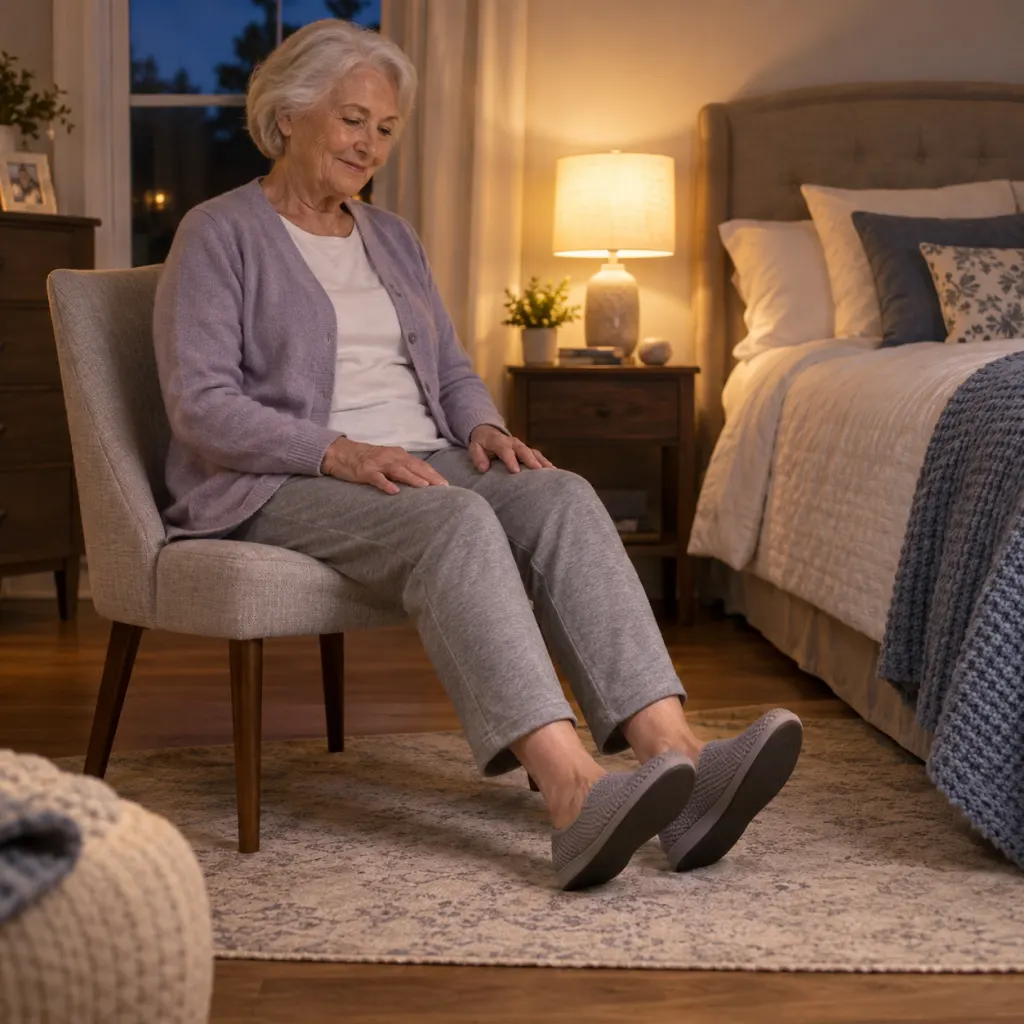
- Sit in a sturdy chair and do slow ankle circles, heel lifts, and toe lifts.
- Stretch the calf gently while holding a wall, counter, or chair for support.
- Raise the legs on pillows for a short rest if your ankles tend to swell.
- Look over the feet for rubbing, skin changes, cracks, sore spots, or nail problems.
- Set up safe footwear and a clear path for any nighttime bathroom trips.
This routine is intentionally modest. Seniors who use a cane, walker, oxygen, or who have balance concerns can adapt it while seated and should skip any movement that feels unsafe.
Know the difference between tired legs and warning signs
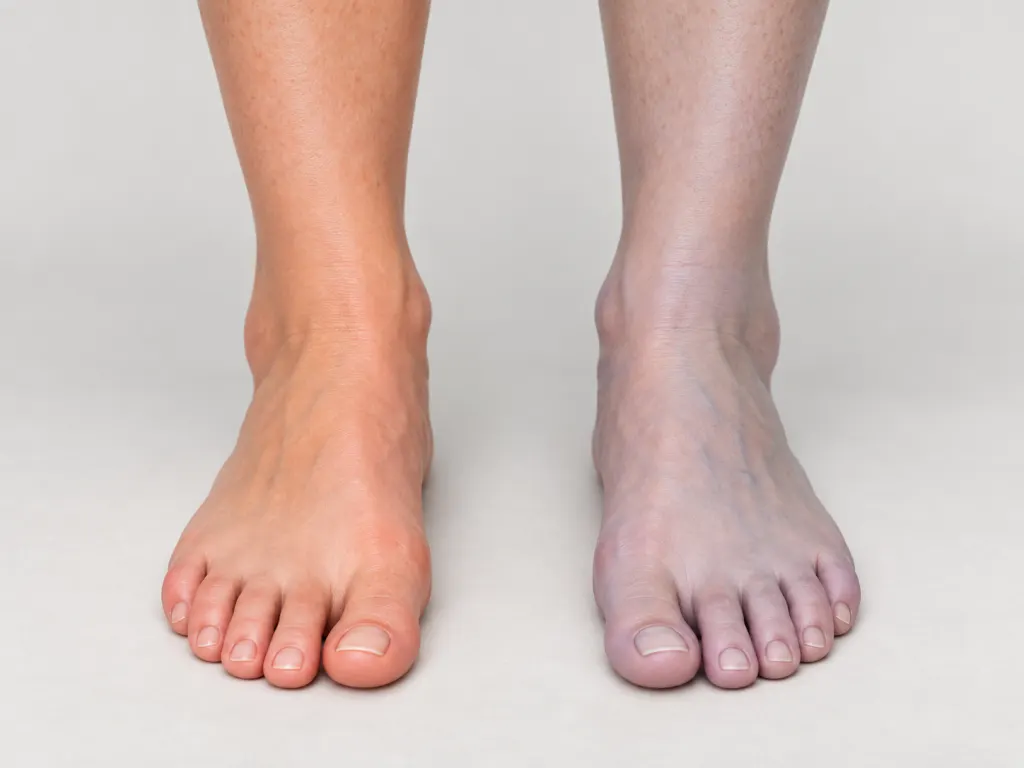
Heavy legs after a long day can come from many causes, including long sitting, long standing, uncomfortable shoes, low activity, swelling, nerve conditions, or vascular disease. Peripheral artery disease, often shortened to PAD, is one important possibility because it can limit blood flow to the legs and feet. The National Heart, Lung, and Blood Institute lists possible PAD symptoms such as pain, aching, heaviness, or cramping with walking or stairs that improves after rest, one foot feeling colder than the other, numbness or weakness, pale or blue color change, pins-and-needles feelings, and sores that heal slowly. Those signs do not prove a diagnosis at home, but they are good reasons to bring the pattern to a qualified clinician.
Start with gentle movement before sitting down for the night
The evening routine works best when it begins before you are already under the covers. If walking is safe for you, an easy stroll around the room, hallway, garden path, or kitchen can warm the legs and reduce stiffness from long sitting. If walking is not safe, seated marching, ankle pumps, and slow knee extensions can give the lower legs a similar sense of movement without leaving the chair. Keep the effort conversational and stop if you feel chest pressure, severe shortness of breath, dizziness, sudden weakness, or a new severe leg symptom.
Make ankle and calf movement slow, not forceful
The lower leg muscles act like a pump during ordinary movement. That is one reason a routine focused on ankle motion and calf comfort makes sense for many older adults. Try a slow pattern while seated: lift both heels, lower them, lift the toes, lower them, then circle each ankle in both directions. The point is rhythm, not strain. A person with arthritis, neuropathy, recent surgery, or severe balance trouble may need a different version. For related background on possible causes of weak legs, see How to Recognize Common Causes of Weak Legs in Seniors.
Use stretching as a comfort tool, especially for night cramps
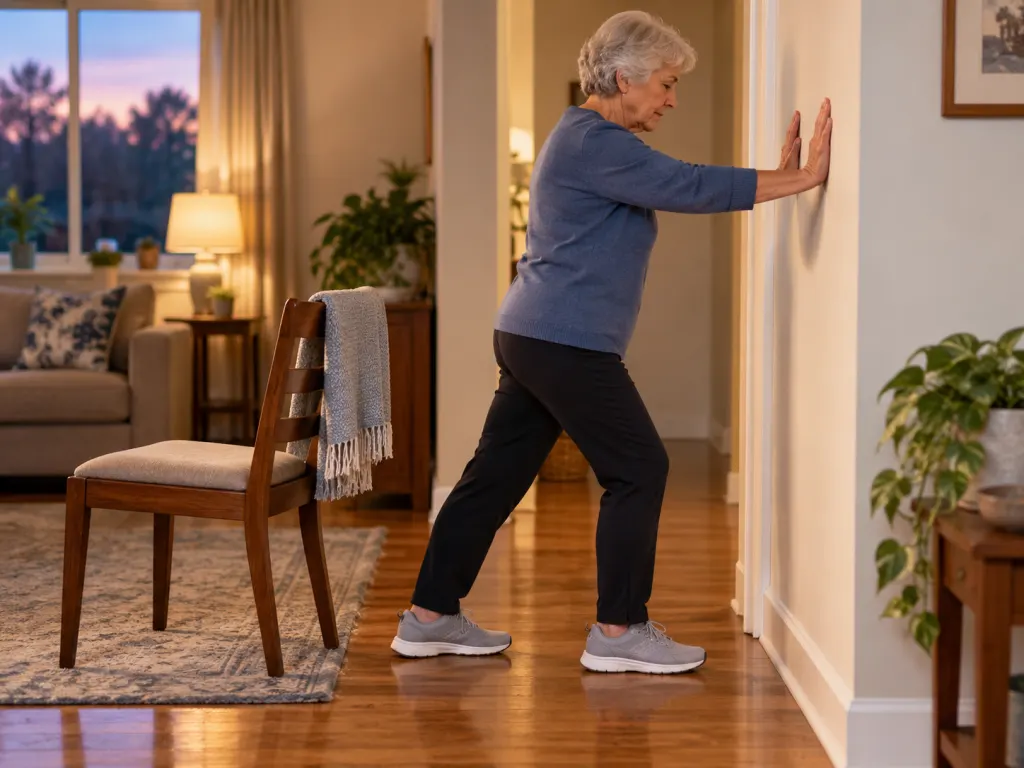
Night cramps are common and often happen in the calf, foot, or thigh. The NHS leg cramp guidance says stretching and massaging the muscle may ease a cramp, and regular calf stretching may reduce how often cramps occur for some people. A wall calf stretch can be done with both hands on the wall, feet flat, and the body leaning forward until the calf feels a gentle pull. Seniors should keep a chair or counter nearby and avoid bouncing. If cramps are a frequent problem, the site’s guide to why feet cramp at night and its overview of leg cramps at night can help frame the conversation with a clinician.
Elevation may help swelling, but swelling still needs context
Many seniors notice more ankle or foot swelling by evening. The NHS oedema page notes that swelling in the ankles, feet, and legs is often related to fluid build-up and may be associated with sitting or standing in the same position for too long, salty food, varicose veins, certain medicines, or conditions involving the kidneys, liver, heart, thyroid, blood clots, or infection. For mild end-of-day puffiness, raising the legs on pillows and wearing comfortable shoes may help. Swelling that is sudden, severe, painful, hot, red, one-sided without a clear reason, or paired with breathlessness or chest symptoms needs prompt medical attention.
Check your feet before bed, especially if sensation is reduced
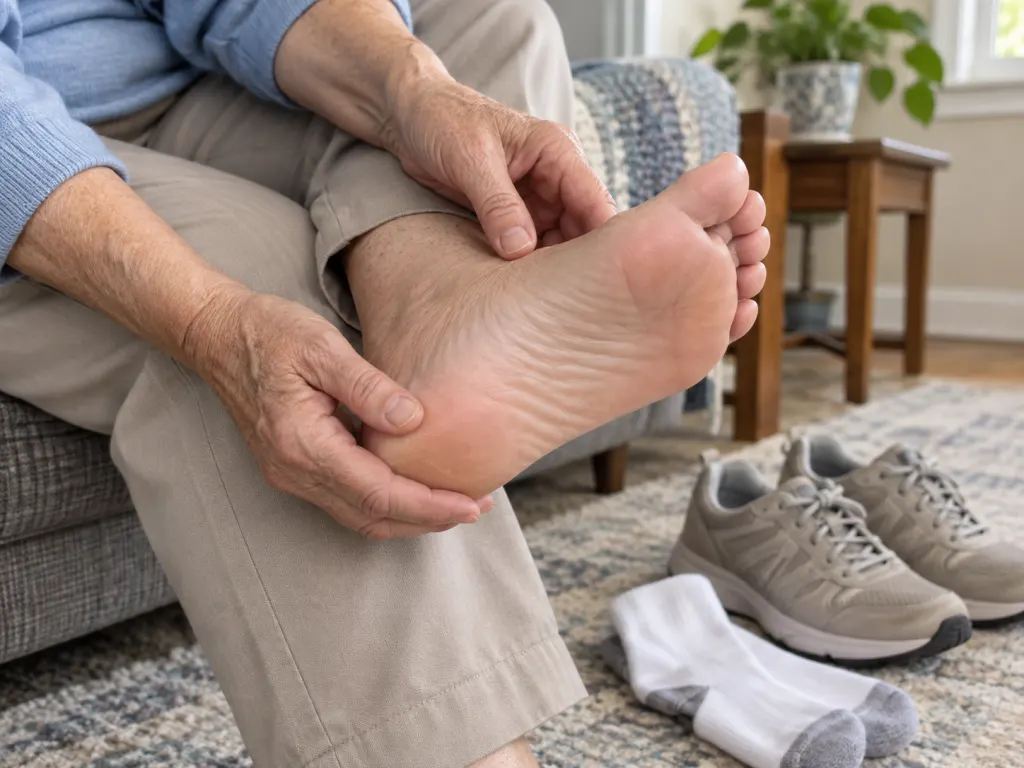
A quick foot check is one of the most useful parts of the routine because it turns vague discomfort into specific observations. Look at the soles, heels, between the toes, around the nails, and along areas where shoes rub. The NHLBI living-with-PAD guidance advises people with PAD to wear protective socks and shoes, check feet daily for injuries or sores, avoid going barefoot, and see a provider for foot problems. This is especially important for people who also have diabetes or reduced sensation, because small injuries may be harder to feel.
Be cautious with heat, massage, and tight socks
Warmth can feel pleasant, but seniors should be careful with heating pads, hot water bottles, and very hot baths if they have reduced sensation in the feet. A safer approach is usually gentle warmth, short exposure, and checking skin often. Massage should also be light. Avoid deep pressure over painful, swollen, red, or unusually warm areas. Tight socks or stockings are not the same as properly selected compression garments; clothing that leaves deep marks can worsen discomfort. If compression has been suggested, it should fit correctly and be matched to the person’s medical situation.
What about garlic and honey at night?
Garlic can be a normal food ingredient, but it should not be treated as the core of a circulation routine. The National Center for Complementary and Integrative Health reports that garlic supplements have been studied for several cardiovascular risk factors, with modest or limited findings, and also notes possible side effects such as stomach discomfort, nausea, body odor, allergic reactions, and increased bleeding risk with supplements. Honey may make garlic taste easier for some people, but that does not turn the combination into a reliable vascular care plan. For a more focused discussion, see Garlic and Better Circulation: What the Evidence Says.
Hydration and evening meals should stay sensible
Some people notice cramps or restless discomfort after very long days, heavy sweating, or too little fluid. Others wake more often if they drink a large amount right before bed. A balanced approach is to drink fluids steadily earlier in the day and keep the late evening simple. If you have been told to limit fluids, salt, potassium, or other nutrients because of kidney, heart, or other medical issues, follow the personal plan from your clinician. General articles can explain options, but they cannot know the details of your lab results, diagnoses, or medicine list.
Use the routine as a symptom diary
A night ritual becomes more useful when it includes a small record. You do not need a complicated tracker. Write down whether the feet were cold, whether one side looked different from the other, whether cramps woke you, how far you walked earlier in the day, whether swelling improved after elevation, and whether any sore spot appeared. Bring the pattern to an appointment if symptoms persist. A clinician can decide whether the next step should be a foot exam, pulse check, review of medicines, vascular testing, nerve evaluation, footwear assessment, or a physical therapy referral.
When to seek help quickly
Do not wait on a night routine if symptoms suggest an urgent problem. Seek emergency help if one foot suddenly becomes pale or blue, much colder than the other, very painful, numb, or hard to move. Seek prompt medical advice for sudden one-sided swelling, swelling with heat or redness, a wound that is not healing, new rest pain in the foot or leg, or swelling with breathlessness, chest tightness, faintness, confusion, or coughing blood. These boundaries are not meant to frighten readers; they simply keep a comfort routine from delaying care when the body is signaling something more serious.
A simple version to try tonight
Keep tonight’s routine short enough that you can repeat it. Clear the floor, put on supportive slippers or shoes, and sit in a stable chair. Move the ankles slowly, stand only if steady, stretch the calves gently, raise the legs for a comfortable rest if swelling is familiar, and check the feet before sleep. Keep the room warm enough that cold floors do not tighten your feet, and keep a light within reach for nighttime walking. The routine should leave you calmer, not exhausted. If it makes symptoms worse, stop and ask for medical guidance.
Wrap-Up
The safest night routine for senior leg and foot circulation is a comfort-and-awareness habit: gentle movement, calf stretching, sensible elevation, protective footwear, and a quick foot check. It may help reduce stiffness and make symptoms easier to track, but it is not a way to diagnose or manage vascular disease on your own. Pay special attention to one-sided coldness, color change, leg heaviness with walking, slow-healing sores, sudden swelling, or pain at rest. Those patterns belong in a medical conversation, and sudden severe changes need urgent care.
Frequently Asked Questions
- → Can a night routine improve circulation in legs and feet?
A night routine can support comfort, mobility, and symptom awareness, especially if it includes gentle movement, stretching, safe footwear, and foot checks. It should not be viewed as a way to diagnose circulation problems or manage vascular disease without medical guidance.
- → Is garlic with honey a good circulation ritual for seniors?
Garlic is fine as a food for many people, but the evidence does not support making garlic and honey the main plan for leg or foot circulation. Garlic supplements can cause side effects and may increase bleeding risk for some people, so seniors should discuss supplement use with a qualified health professional.
- → Should seniors elevate their legs before bed?
Leg elevation may feel helpful when ankles are mildly puffy after a day of sitting or standing. Sudden, painful, hot, red, one-sided, or worsening swelling needs medical advice rather than a home routine alone.
- → What is the safest bedtime exercise for older adults with cold feet?
Seated ankle pumps, heel lifts, toe lifts, and slow ankle circles are often a practical starting point because they can be done from a stable chair. Anyone with balance problems, new symptoms, or activity limits should adapt the routine with professional guidance.
- → When should leg or foot symptoms be checked urgently?
Seek urgent help if one foot suddenly becomes much colder, pale or blue, numb, very painful, or hard to move. Also seek prompt advice for slow-healing sores, new pain at rest, sudden swelling, swelling with redness or heat, or swelling with breathing trouble or chest symptoms.
References
This content was developed and refined using reliable sources.
- https://www.cdc.gov/physical-activity-basics/guidelines/older-adults.html
- https://www.nhlbi.nih.gov/health/peripheral-artery-disease/symptoms
- https://www.nhlbi.nih.gov/health/peripheral-artery-disease/living-with
- https://www.nhs.uk/conditions/oedema
- https://www.nccih.nih.gov/health/garlic
- https://www.nhs.uk/conditions/leg-cramps