 Save
Eating eggs in the evening usually does not cause anything dramatic or mysterious. For most people, a properly cooked egg at night is simply a nutrient-containing protein food. What changes the experience is context: how close it is to bedtime, how much you eat, what you cook it with, and whether late meals tend to bother your sleep or stomach comfort. CDC sleep guidance advises avoiding large meals before bedtime, while MedlinePlus notes that better sleep habits include avoiding large meals and drinks late at night (CDC, MedlinePlus).
The Short Answer
An evening egg is not a switch that suddenly changes the body overnight. Eggs contain protein and several micronutrients, and USDA FoodData Central is the federal source used for food composition data in the United States (USDA FoodData Central). In plain terms, the most likely immediate effect of eating an egg in the evening is satiety, meaning it may help you feel less hungry than a sugary snack or a plate of refined carbohydrates. That does not make eggs a sleep aid, a health shortcut, or a food everyone must eat at night. It means they are a compact food that can fit into an evening routine when the portion is sensible and the timing works for you.
The internet often turns ordinary foods into dramatic promises. Eggs are especially vulnerable because they are familiar, inexpensive, and nutritionally dense enough to sound impressive. A better question is not, "What secret effect do eggs cause at night?" It is: "Does this food fit my overall eating pattern, and does it leave me comfortable when I lie down?" The answer can be yes for one person and no for another. A boiled egg eaten a couple of hours before bed is a different experience from a large fried egg sandwich with rich toppings right before lying down.

What Eggs Add to an Evening Snack
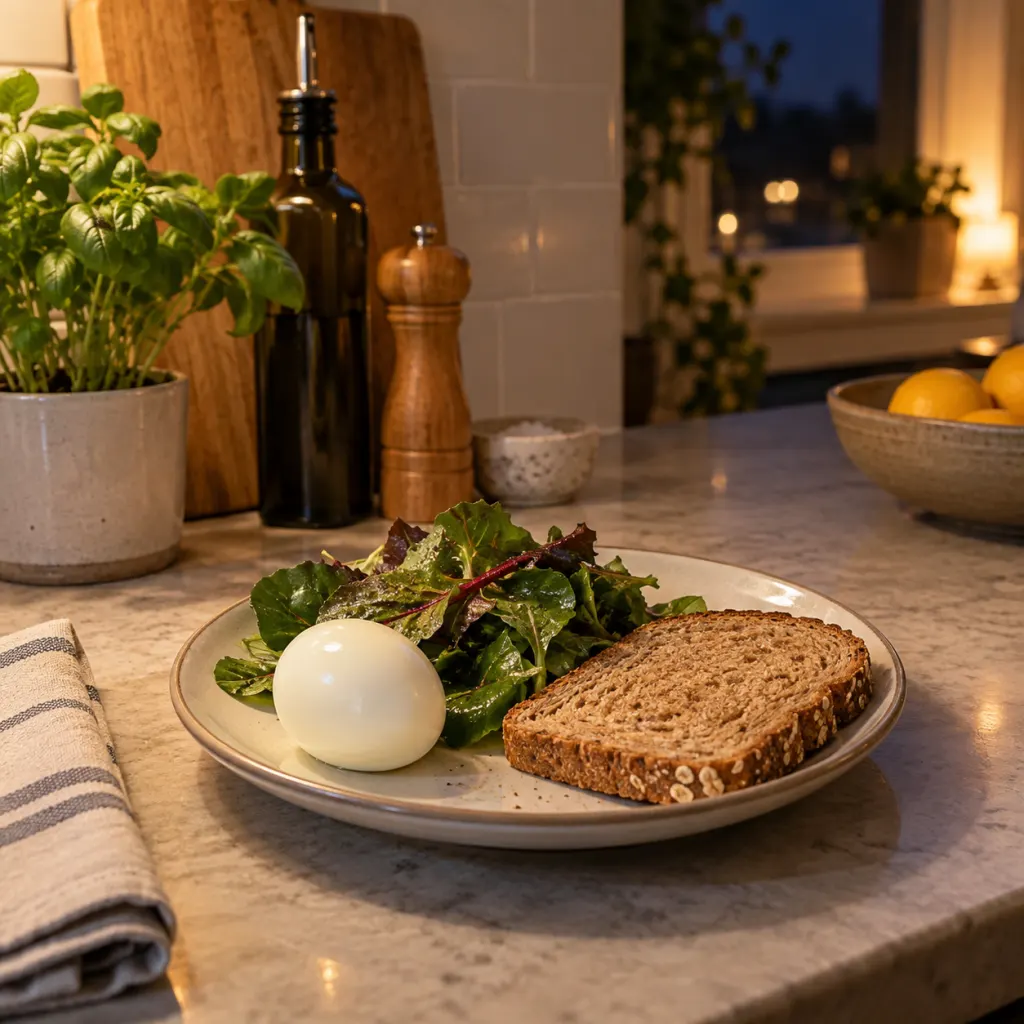
Eggs belong in the broader group of protein foods. Federal healthy-eating guidance encourages a pattern built from a variety of nutrient-dense foods, including protein foods such as eggs, poultry, seafood, beans, lentils, nuts, seeds, and soy foods (ODPHP MyHealthfinder). This matters because the egg itself is only one part of the plate. Pairing it with vegetables, whole-grain toast, or a simple salad produces a different meal from pairing it with salty processed meats or a stack of fried sides.
Eggs also provide choline, a nutrient found in many foods. The NIH Office of Dietary Supplements explains that choline helps form cell membranes and supports normal brain and nervous-system functions; eggs are listed among food sources of choline (NIH ODS choline fact sheet). Egg yolks also contain small amounts of vitamin D, according to the NIH vitamin D fact sheet (NIH ODS vitamin D fact sheet). These are normal nutrient facts, not a reason to treat evening eggs as a special remedy. The broader pattern of meals over days and weeks matters more than the clock time of a single egg.
For a practical evening plate, keep the idea simple:
- Choose a modest portion. One egg may be enough for a snack; more may make it feel like a meal.
- Use gentle preparation. Boiled, poached, or lightly scrambled eggs are usually lighter than heavily fried versions.
- Add plants when possible. Spinach, tomatoes, peppers, or leftover vegetables make the plate more balanced.
- Watch rich extras. Butter-heavy toast, creamy sauces, and salty processed meats can change how the meal feels.
- Leave time before bed. If late eating bothers you, finish earlier and keep the portion smaller.
Why Evening Timing Can Feel Different
The timing issue is less about eggs and more about digestion, comfort, and sleep routine. CDC sleep guidance lists consistent bedtimes, a cool and relaxing bedroom, reduced screen exposure before bed, and avoiding large meals and alcohol before bedtime among habits that support sleep (CDC). MedlinePlus gives similar sleep-hygiene advice and specifically includes avoiding large meals and drinks late at night (MedlinePlus). A small egg snack is not the same as a heavy dinner, but if it pushes your bedtime later or makes you feel overly full, the timing may be working against you.
People also vary. Some find a small protein snack steadying in the evening because it takes the edge off hunger. Others sleep best after the kitchen is closed for the night. The useful test is ordinary and personal: after an evening egg, do you feel comfortable, do you fall asleep normally, and do you wake feeling as expected? If the answer is yes, there is no special reason to fear the timing. If the answer is no, adjust the serving size, move it earlier, or choose a lighter option.
For more general food-pattern reading, the site has related explainers on what eating bananas adds to your diet and what eating avocados adds to your diet. The same principle applies here: a single food is best understood by what it contributes, how often you eat it, and what surrounds it on the plate.
When an Evening Egg May Not Feel Good
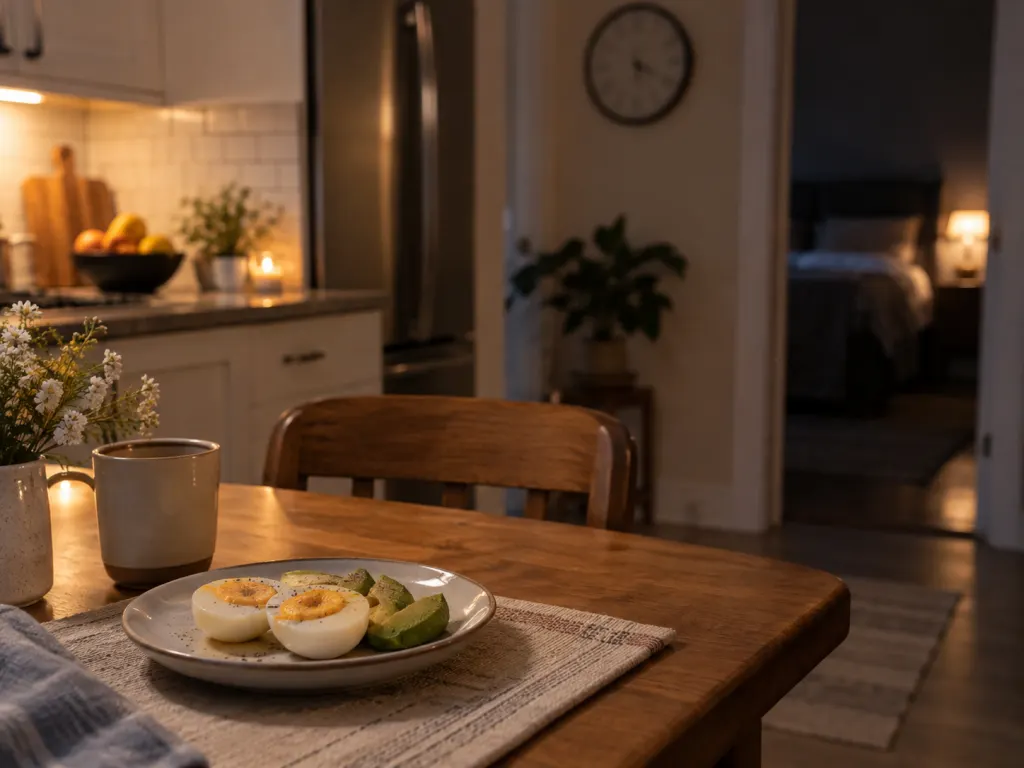
An evening egg can be perfectly ordinary, but the full meal around it can make a difference. MedlinePlus advises people with reflux symptoms to have dinner 2 to 3 hours before sleep and avoid eating after dinner when symptoms are worse at night (MedlinePlus). That does not mean eggs are automatically the problem. It means lying down soon after eating, very large portions, or rich preparations may be uncomfortable for some readers. If you already know late meals bother you, an egg close to bedtime may not be the best experiment.
Preparation also matters. A boiled egg, a vegetable omelet, and a buttery late-night breakfast plate are not nutritionally or practically identical. The egg provides the base; cooking fat, cheese, sauces, bread, meat, and portion size shape the final meal. If you are trying to keep the evening light, cook the egg plainly and add color from vegetables rather than relying on heavy toppings. If dinner was already substantial, you may not need the egg at all.
Food Safety Still Counts at Night
The clock does not change egg safety rules. FoodSafety.gov advises buying refrigerated eggs, keeping them refrigerated, discarding cracked eggs, cooking eggs until both yolk and white are firm, and refrigerating cooked egg dishes promptly (FoodSafety.gov). This is especially relevant for late-night cooking, when people may be tired and tempted to leave dishes on the counter. If you make eggs in the evening, handle them with the same care you would at breakfast.
Leftovers deserve the same attention. Do not leave cooked egg dishes sitting out while you watch a movie or finish chores. Put leftovers into shallow containers and refrigerate them promptly. If you are making a small snack, cooking only what you plan to eat is usually easier than managing leftovers. For dishes such as frittatas or casseroles, follow safe cooking and storage guidance rather than guessing by appearance alone.

How to Make the Choice Without Overthinking It
A reasonable evening egg routine is simple: eat it because you like it, because it fits your meal, or because you want a compact protein food. Avoid treating it as a nighttime rule. If you are hungry after an early dinner, a boiled egg with fruit, vegetables, or a small piece of whole-grain toast may be more satisfying than grazing through sweets or chips. If you are not hungry, skipping the snack is also reasonable. Eating by routine alone can blur the difference between appetite, habit, boredom, and fatigue.
It can help to notice patterns for a week. Write down roughly when you ate, what the egg was paired with, and how you slept. You do not need a complicated tracker. A few words are enough: "boiled egg, 8 p.m., fine" or "fried eggs late, too full." This kind of observation is more useful than a viral claim because it respects individual response. It also separates the egg from the rest of the evening: caffeine, alcohol, screen time, stress, portion size, and bedtime consistency can all affect how the night feels.
What Eating Eggs at Night Does Not Mean
Eating eggs in the evening does not prove that your routine is good or bad. It does not erase an unbalanced day of meals, and it does not ruin an otherwise balanced routine. It is one food choice. The most grounded way to think about it is to ask whether it supports the evening you want: comfortable, satisfying, and not so heavy that it crowds sleep. If it does, an evening egg can be a normal part of home cooking. If it does not, there is no need to force it.
Bottom Line
For most adults, eating a properly cooked egg in the evening is a normal food choice rather than a dramatic event. The benefits and drawbacks come from the larger pattern: portion size, cooking method, timing, food safety, and personal comfort. Keep the meal modest, cook eggs safely, avoid making dinner too heavy right before bed, and let your own response guide whether evening eggs belong in your routine.
Wrap-Up
Eggs in the evening are best understood as a simple protein food, not a secret nighttime trigger. They can be satisfying when prepared plainly and eaten in a modest portion, but they may feel too heavy if served as part of a large, rich meal close to bedtime. Use reliable food-safety habits, leave enough time before lying down if late meals bother you, and focus on your overall eating pattern rather than the hour on the clock.
Frequently Asked Questions
- → Is it bad to eat eggs in the evening?
Not automatically. For many people, an evening egg is just a normal protein food. The more important questions are whether the portion is modest, whether it is cooked safely, and whether eating close to bedtime leaves you comfortable.
- → Can eggs before bed affect sleep?
Eggs themselves are not the main sleep issue for most people. Large meals late at night can be uncomfortable and may interfere with sleep habits for some readers. If you notice that any late snack makes sleep worse, move it earlier or keep it lighter.
- → What is the best way to eat eggs at night?
A boiled, poached, or lightly scrambled egg with vegetables or a small whole-grain side is a practical choice. Rich toppings, heavy frying, and oversized portions are more likely to make the snack feel like a late meal.
- → Should I eat eggs at night if I am not hungry?
No. There is no special need to eat eggs in the evening just because they are nutritious. If you are not hungry, skipping the snack is fine. If you are hungry, a modest egg snack can be one reasonable option.
- → How should eggs be handled safely for an evening snack?
Keep eggs refrigerated, discard cracked eggs, cook them until the yolk and white are firm, and refrigerate cooked egg dishes promptly. Late-night cooking should follow the same safety habits as breakfast or lunch.
References
This content was developed and refined using reliable sources.
- https://fdc.nal.usda.gov
- https://odphp.health.gov/myhealthfinder/health-conditions/diabetes/eat-healthy
- https://ods.od.nih.gov/factsheets/Choline-Consumer
- https://ods.od.nih.gov/factsheets/VITAMIND-Consumer
- https://www.cdc.gov/sleep/about
- https://medlineplus.gov/healthysleep.html
- https://medlineplus.gov/ency/article/000265.htm
- https://www.foodsafety.gov/blog/salmonella-and-eggs