 Save
For most healthy women, occasionally peeing in a private shower is unlikely to be harmful. The more useful question is whether it is becoming an automatic bladder cue. The National Institute of Diabetes and Digestive and Kidney Diseases notes that hearing running water can trigger a sudden strong urge to urinate in some people, especially those prone to bladder control symptoms NIDDK. So the habit is usually less about danger from one shower and more about patterns: urgency, leakage, straining, incomplete emptying, or discomfort. If none of those apply, there is little reason to panic. If they do, the better next step is to pay attention and get qualified guidance.
The Short Answer: It Is Usually a Habit Question, Not a Crisis
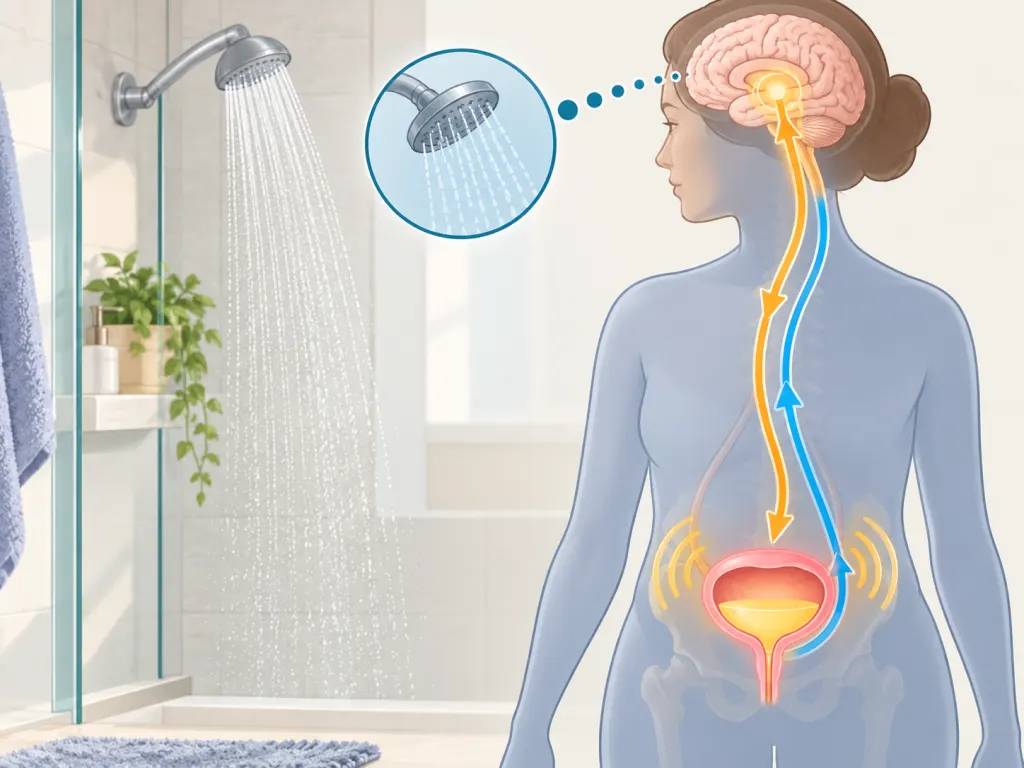
Peeing in the shower does not automatically create a urinary tract infection, damage the pelvic floor, or mean something is wrong. A private shower has running water, soap residue, and drainage, so a small amount of urine is quickly diluted and washed away. That said, the habit can be unhelpful for some women because the bladder, pelvic floor, and brain work together. Mayo Clinic describes urination as a coordinated process: as the bladder fills, nerve signals tell the brain; when it is time to urinate, the pelvic floor and urethral sphincter relax while the bladder contracts Mayo Clinic. A habit that repeatedly pairs running water with emptying the bladder may strengthen that cue in people who are already sensitive to urgency.
Why Running Water Can Become a Bladder Cue
The strongest evidence-based concern is not that shower urination poisons the body or directly weakens muscles. It is that the sound and feel of water can become part of an urge pattern. NIDDK lists drinking or touching water, hearing running water, and cold environments among triggers that may cause a sudden strong urge to urinate NIDDK. Cleveland Clinic similarly notes that urinary urgency can have triggers such as hearing or seeing running water, washing hands, or cold temperatures Cleveland Clinic. That does not mean every woman who pees in the shower will develop urgency. It means the habit is worth reconsidering if water sounds increasingly make you feel as if you have to go immediately.
Body Position and Relaxation Matter
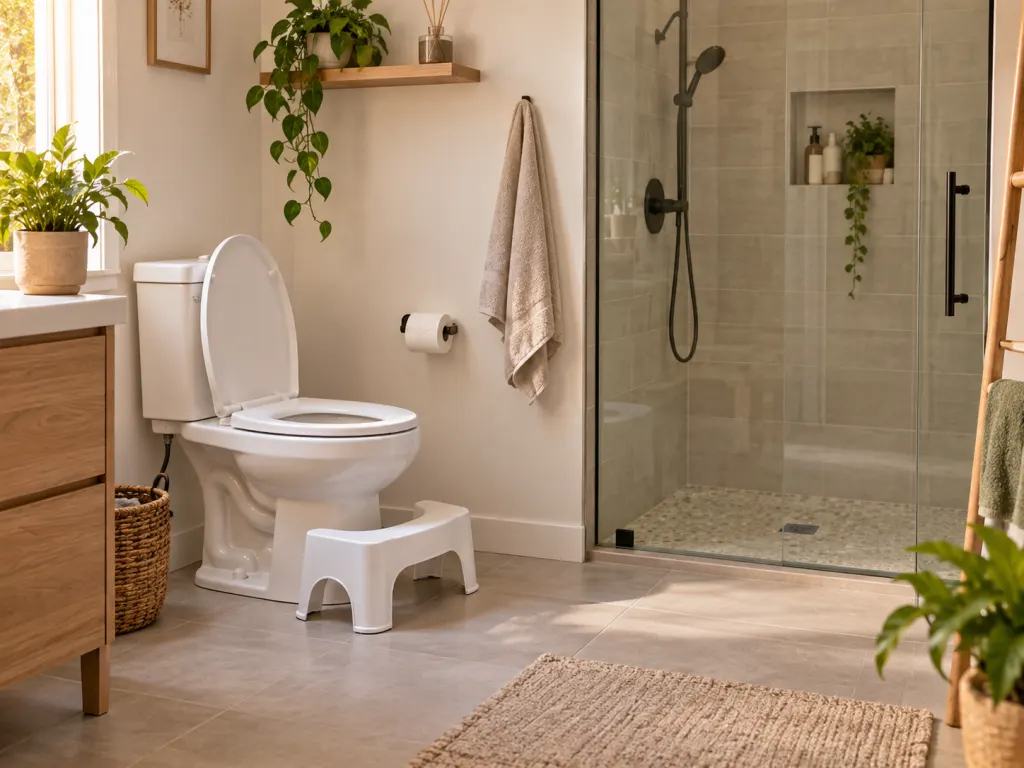
Many women empty the bladder most comfortably when seated, supported, and relaxed. NIDDK advises women to relax the muscles around the bladder when urinating and says it is best to sit on the toilet seat or use a full crouching squat; hovering over a toilet seat can keep muscles from fully relaxing and may leave urine in the bladder NIDDK. Standing in a shower is not automatically harmful, but it can invite awkward bracing: tightened thighs, a tucked pelvis, held breath, or pushing to speed things up. If the only way to urinate in the shower is to strain, it is a poor habit for you.
A practical checklist is more useful than a rule that applies to everyone:
- If you urinate easily and occasionally while the shower is already running, it is unlikely to be a major issue for an otherwise healthy adult.
- If you feel triggered by faucets, showers, or handwashing, stop making water the regular cue for urination.
- If you need to push, hover, brace, or rush, use the toilet where you can sit and relax.
- If you leak urine, cannot hold urine, wake often to urinate, or feel incompletely empty afterward, treat those as symptoms worth discussing with a qualified professional.
What About UTIs and Hygiene?
A urinary tract infection usually starts when bacteria enter the urethra and then the bladder; MedlinePlus also notes that women have UTIs more often because the urethra is shorter and closer to the anus than in men MedlinePlus. That mechanism is different from simply urinating during a running shower. The act itself is not a typical cause of a UTI. Hygiene still matters, especially in shared showers, because floors can collect skin cells, soap film, and microbes from many people. In a private shower, rinsing the floor and cleaning the shower regularly is usually a courtesy and cleanliness issue. In shared facilities, it is more respectful to use the toilet and keep the shower as clean as possible for the next person.
One popular line also needs correction: urine is not simply a sterile liquid. A Nature Reviews Urology article explains that research has found urinary microbial communities, challenging the older idea that urine is always sterile when there is no acute infection Nature Reviews Urology. That does not turn ordinary shower urination into a major hazard. It just means the cleaner explanation is this: urine is usually much less messy than feces, it is quickly diluted in a running shower, and a cleaned private shower is different from a crowded public shower.
When the Habit Is Worth Changing
The shower habit becomes more important when it overlaps with bladder symptoms. Overactive bladder can involve sudden urges that are hard to control, frequent urination, waking at night to urinate, or urgency incontinence; Mayo Clinic notes that symptoms that disrupt life are worth discussing with a health professional Mayo Clinic. NIDDK also advises seeing a health care professional for trouble urinating, loss of bladder control, waking to use the bathroom, pelvic pain, or leaking urine NIDDK. If running water is one of your triggers, using the toilet before showering can be a simple way to break the association.

Pelvic Floor Context for Women
The pelvic floor is not one muscle; it is a group of muscles and connective tissues that support the bladder, urethra, intestines, rectum, and, in women, the uterus, cervix, and vagina. NICHD explains that pelvic floor disorders occur when these muscles or tissues weaken or are injured, and common problems include urinary incontinence, fecal incontinence, and pelvic organ prolapse NICHD. Shower urination by itself is not established as a cause of pelvic floor disorders. Still, if a woman already has urgency, leakage, prolapse symptoms, trouble emptying, or pelvic heaviness, a relaxed toileting routine is more sensible than standing under running water and trying to force urine out.
A Better Routine If You Want to Stop
If you want to change the habit, keep it simple for two or three weeks. Use the toilet before turning on the shower. Sit with feet supported, let the abdomen relax, breathe normally, and give the bladder time. Do not practice pelvic floor squeezes while urine is flowing; NIDDK specifically says pelvic floor exercises should not be done while urinating NIDDK. If the urge appears when the shower starts, pause, breathe slowly, and remind yourself that you already used the toilet. If the urge remains strong or you leak, that pattern is useful information for a professional visit.
Water conservation is sometimes used as the argument for shower urination. There is a small logic to avoiding an extra flush when the shower is already running, but it is easy to overstate the benefit. EPA WaterSense reports that showering accounts for nearly 17 percent of residential indoor water use and that WaterSense labeled showerheads use no more than 2.0 gallons per minute while meeting performance criteria EPA WaterSense. EPA also notes that toilets are the largest source of household indoor water use and that WaterSense labeled toilets use 1.28 gallons per flush or less EPA WaterSense. The bigger savings usually come from shorter showers, efficient fixtures, and fixing leaks, not from building a bladder habit around the shower.
When to Seek Professional Care
Do not blame everything on the shower. Contact a qualified health professional if you have burning with urination, blood in urine, fever, chills, side or back discomfort, frequent urgent trips, leakage, trouble starting, or a feeling that the bladder does not empty. MedlinePlus lists pain or burning, cloudy or bloody urine, strong frequent urges, and lower abdominal pressure among possible bladder infection symptoms, and it advises prompt contact for signs such as fever, chills, vomiting, or back or side pain MedlinePlus. Cleveland Clinic also advises evaluation for urgency symptoms, especially with infection signs or blood in urine Cleveland Clinic. Those symptoms deserve attention whether or not you ever pee in the shower.
Bottom Line
For an otherwise healthy woman, an occasional shower pee is unlikely to be a serious concern. The habit is worth changing if it trains your body to treat running water as a bathroom signal, if you need to strain, or if you already have urgency, leakage, or trouble emptying. A relaxed seated toilet routine is the more reliable default. If urinary symptoms are new, intense, recurring, or disruptive, the answer is not a stricter shower rule; it is professional evaluation.
Wrap-Up
Peeing in the shower is not automatically harmful for most healthy women, and it is not a common direct cause of UTI. The better reason to pause is behavioral: running water can become a cue for urgency in some people. Body position also matters, because relaxed seated urination often makes emptying easier than standing and bracing. If there are no urinary symptoms, occasional shower urination is mostly a preference and hygiene question. If there is urgency, leaking, burning, blood in urine, fever, trouble starting, or incomplete emptying, use those symptoms as a reason to seek qualified care rather than assuming the shower habit explains everything.
Frequently Asked Questions
- → Is peeing in the shower automatically bad for women?
No. For most healthy women, doing it occasionally in a private shower is unlikely to be harmful. It becomes more relevant if running water triggers urgency, if you leak urine, or if you have to push or strain to urinate.
- → Can peeing in the shower cause a UTI?
It is not a typical direct cause of a UTI. UTIs usually happen when bacteria enter the urethra and bladder. Burning, blood in urine, fever, strong urgency, or side or back discomfort should be checked by a qualified health professional.
- → Why do some experts warn women against making it a habit?
The concern is conditioning. If you repeatedly urinate when you hear or feel running water, water may become a stronger cue for urgency, especially if you already have bladder control symptoms.
- → Is it better to sit on the toilet than stand in the shower?
For many women, yes. Sitting allows the pelvic floor and surrounding muscles to relax more easily. Standing, bracing, hovering, or rushing can make emptying less comfortable for some people.
- → Does peeing in the shower weaken the pelvic floor?
There is no good evidence that an occasional shower pee directly weakens the pelvic floor. The more important issues are avoiding straining and getting help if you already have leakage, urgency, pelvic heaviness, or trouble emptying.
- → What if I want to stop but feel the urge as soon as water runs?
Use the toilet before showering, then pause and breathe when the shower starts. If urgency remains strong, causes leakage, or disrupts daily life, discuss the pattern with a qualified health professional.
References
This content was developed and refined using reliable sources.
- https://www.niddk.nih.gov/health-information/urologic-diseases/bladder-control-problems/symptoms-causes
- https://www.niddk.nih.gov/health-information/urologic-diseases/bladder-control-problems/treatment
- https://www.niddk.nih.gov/health-information/urologic-diseases/bladder-control-problems/prevention
- https://www.medlineplus.gov/ency/article/000521.htm
- https://www.nichd.nih.gov/health/topics/factsheets/pelvicfloor
- https://my.clevelandclinic.org/health/symptoms/urinary-urgency
- https://www.mayoclinic.org/diseases-conditions/overactive-bladder/symptoms-causes/syc-20355715?p=1
- https://www.nature.com/articles/s41585-018-0104-z
- https://www.epa.gov/watersense/showerheads
- https://www.epa.gov/watersense/residential-toilets