 Save
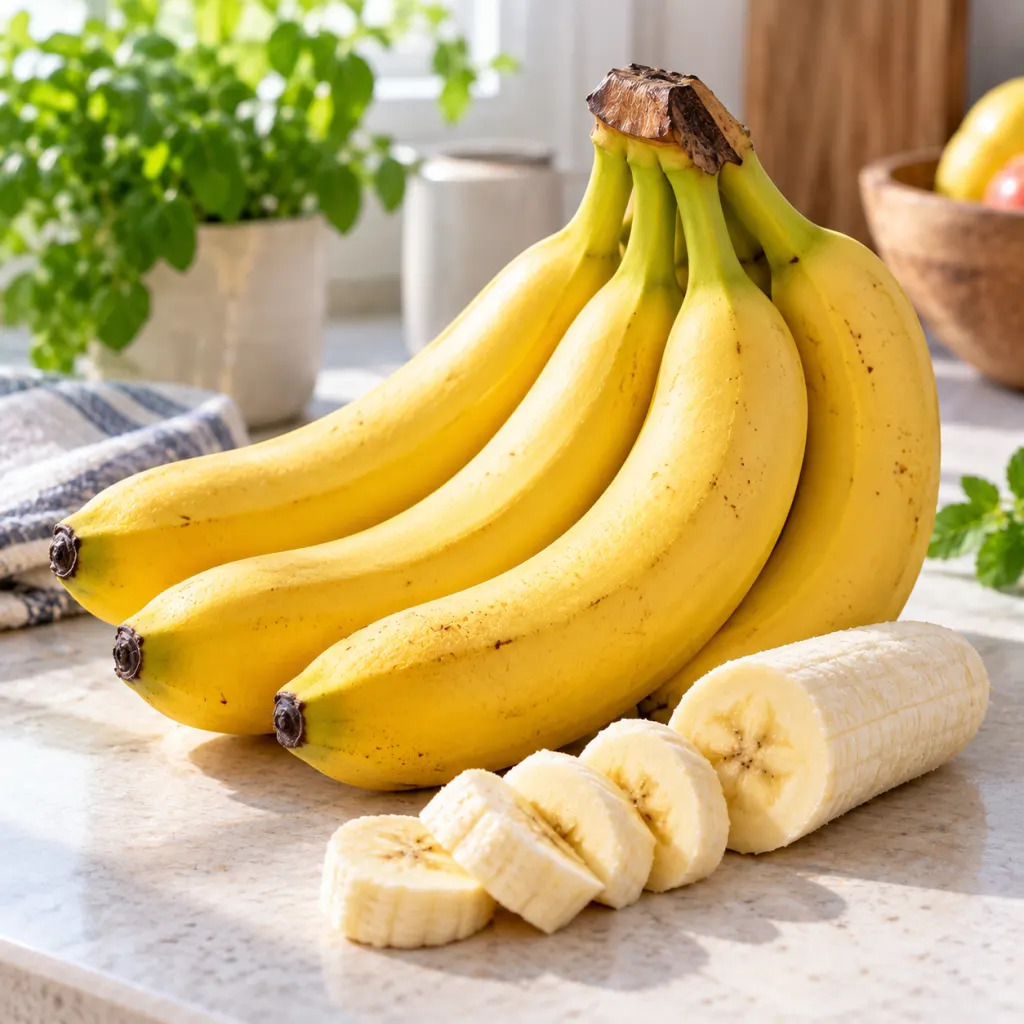
A banana is a practical, nutrient-dense fruit: it gives you natural carbohydrates, fiber, potassium, vitamin B6, water, and small amounts of several other vitamins and minerals in a portable package. The main benefit is not one dramatic effect; it is the combination of convenience, gentle sweetness, and useful nutrients that fit easily into breakfast, snacks, smoothies, lunch boxes, and simple desserts. According to the USDA FoodData Central entry for raw bananas, bananas are mostly carbohydrate and water, with very little fat. That makes them a good example of why whole fruit is different from candy: the sweetness comes packaged with fiber, fluid, and micronutrients rather than added sugar alone.
What a Banana Actually Provides
A medium banana is often treated as a quick snack, but nutritionally it is better described as a compact fruit serving. USDA FoodData Central lists raw bananas as a source of carbohydrate, fiber, potassium, magnesium, vitamin C, and vitamin B6, with minimal fat and modest protein. The exact numbers vary by banana size and ripeness, but the pattern is consistent: bananas are mainly a carbohydrate-rich fruit with enough fiber and water to make them more satisfying than the same sweetness in a drink or candy.
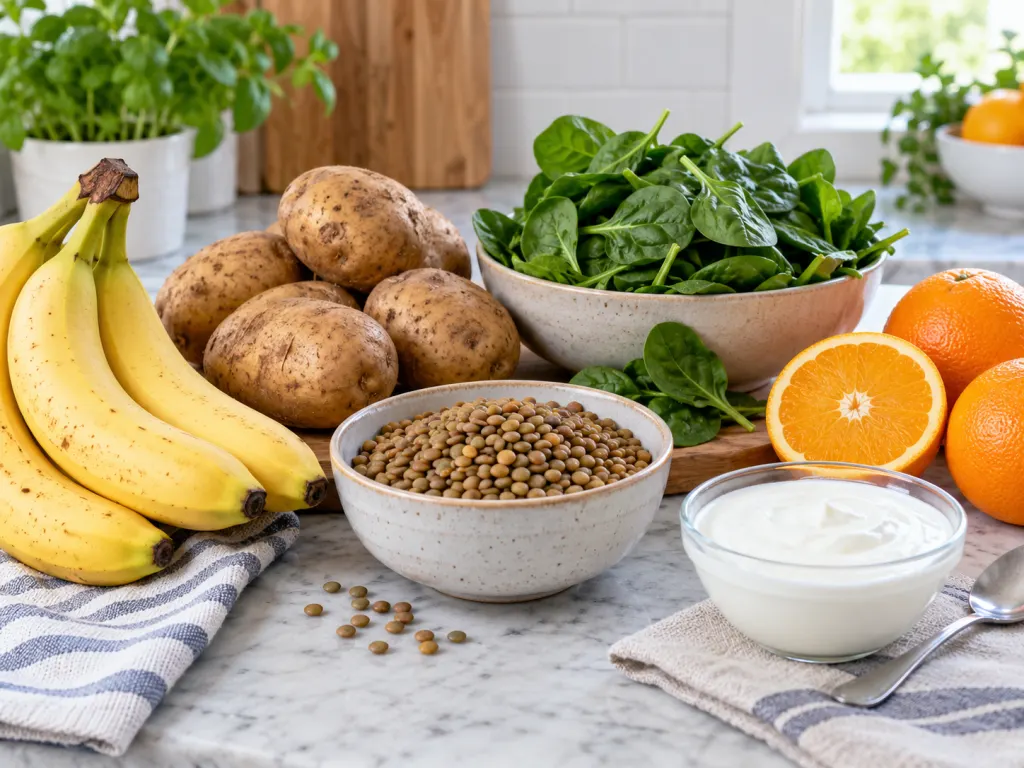
The potassium figure is one of the best-known banana facts. The National Institutes of Health lists one medium banana at about 422 milligrams of potassium, or about 9 percent of the Daily Value in its potassium food-source table from the NIH Office of Dietary Supplements. That does not make bananas the richest potassium food; potatoes, lentils, dried apricots, and some beans can provide more per serving. It does make bananas a realistic everyday contributor, especially because they require no cooking and are easy to pack.
The Carbohydrate Story Is More Useful Than the Sugar Worry
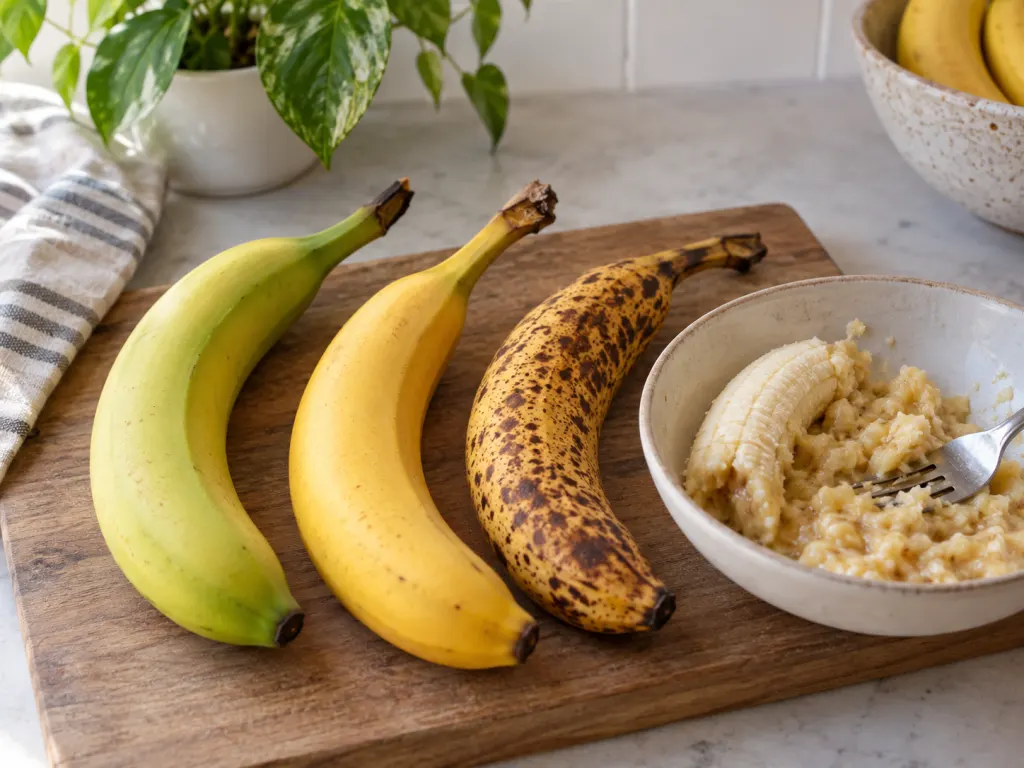
Bananas contain naturally occurring sugars and starches, and their balance changes as the fruit ripens. A greener banana tastes less sweet because more of its carbohydrate is still starch. A deeply yellow or speckled banana tastes sweeter because some starch has converted to sugars. That does not make a ripe banana a different category of food; it simply changes the texture, flavor, and how you may prefer to use it. Greenish bananas slice neatly into oatmeal or yogurt, ripe bananas blend smoothly, and very ripe bananas are useful for baking because they add sweetness and moisture.
The better question is not whether bananas contain sugar, but what comes with that sweetness. Whole fruit brings fiber and water, and the CDC notes that vegetables and fruits provide vitamins, minerals, fiber, and other substances important for good nutrition in its guidance on increasing fruits and vegetables. A banana also has a built-in portion: one fruit, one peel, one clear stopping point. That is one reason it can be easier to use thoughtfully than sweet foods served from a large package.
Potassium Is Helpful, But Bananas Are One Piece of the Pattern
Potassium is an essential mineral involved in normal cell function, nerve transmission, muscle contraction, and fluid balance, according to NIH nutrition guidance on potassium. The CDC also describes sodium and potassium as electrolytes involved in hydration, blood volume, and nerve and muscle function in its sodium and potassium overview. For everyday eating, the practical takeaway is simple: bananas can help add potassium, but they should sit alongside other potassium-containing foods such as beans, lentils, potatoes, yogurt, leafy greens, oranges, and squash.
Vitamin B6 Supports Normal Nutrient Metabolism
Bananas are also known for vitamin B6. NIH explains that vitamin B6 is involved in many enzyme reactions and plays roles in protein metabolism, glycogen use, immune function, and hemoglobin formation in its vitamin B6 fact sheet. In plain kitchen terms, this means bananas contribute to a nutrient your body uses in ordinary metabolic work. They are not the only source; chickpeas, fish, poultry, potatoes, fortified cereals, and some other fruits also contribute. Bananas are simply an easy source that many people already like.
The FDA lists the Daily Value for vitamin B6 as 1.7 milligrams and potassium as 4,700 milligrams on the Nutrition and Supplement Facts label reference guide published by the FDA. Those Daily Values are useful for comparison, not a command to build a day around one food. A banana can move the day in the right direction, but a balanced plate still depends on variety: whole grains, beans, nuts, seeds, vegetables, dairy or fortified alternatives, and protein foods all bring nutrients bananas do not provide in large amounts.
Fiber Makes the Fruit More Than Sweetness
MedlinePlus describes dietary fiber as a carbohydrate found in plant foods and notes that fruits and vegetables are good sources in its dietary fiber overview. Bananas are not the highest-fiber fruit, but their few grams matter because small contributions add up across the day. Fiber is one reason a banana eaten whole feels different from banana-flavored sweets or fruit drinks. The texture, chewing, water, and plant structure all matter.
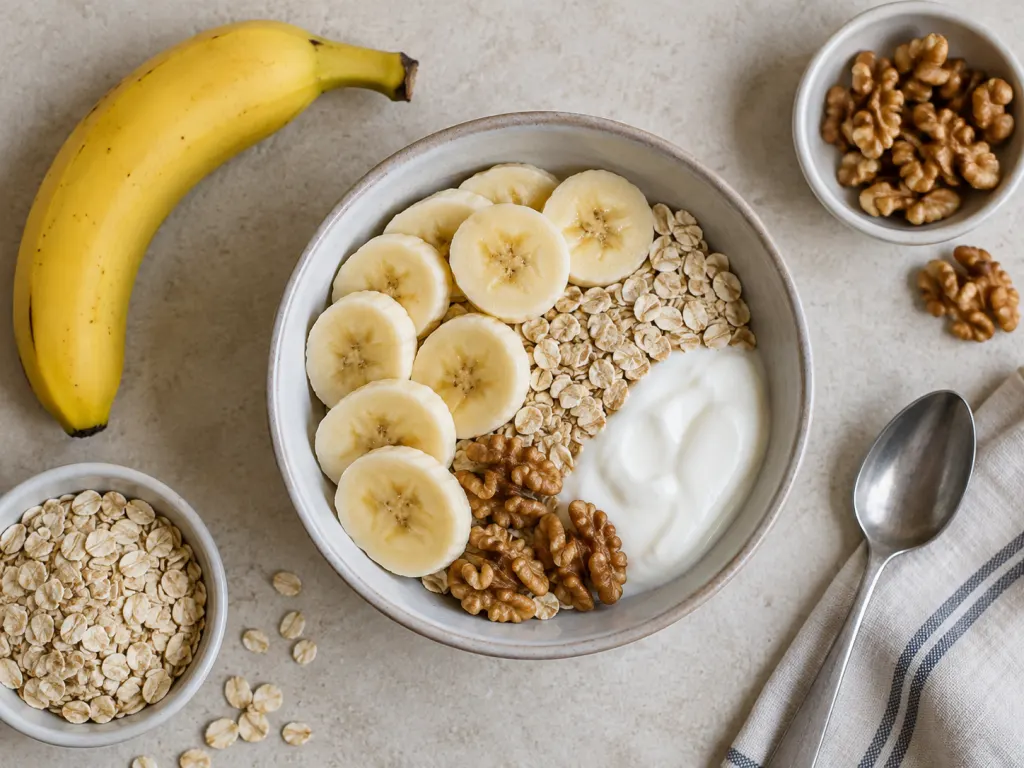
- For a more filling snack: pair banana slices with plain yogurt, peanut butter, walnuts, or cottage cheese.
- For breakfast: add half a banana to oatmeal, whole-grain toast, or a smoothie with protein.
- For dessert: use a ripe banana with cinnamon, cocoa, or chopped nuts instead of relying only on added sweeteners.
- For lunch boxes: choose a banana that is yellow with a little green at the stem so it travels better.
Ripeness Changes Texture, Flavor, and Best Use
Ripeness is not a moral ranking. Slightly green bananas are firmer and less sweet, which some people prefer sliced into cereal or eaten with savory-leaning foods such as nut butter. Yellow bananas are the most versatile for snacking. Speckled bananas are softer and sweeter, making them better for smoothies, pancakes, muffins, and quick breads. If you like banana flavor but want a less sweet bite, use half a ripe banana with tart berries or plain yogurt. If you want more sweetness without adding table sugar, use a very ripe banana in baking.
Storage can help you control ripeness. Keep bananas at room temperature until they reach the stage you like. Once ripe, they can go into the refrigerator; the peel may darken, but the fruit inside usually holds for a few more days. Peeled ripe bananas can also be frozen for smoothies or baking. Freezing changes texture, so frozen banana is better blended or mashed than eaten like a fresh fruit.
How Bananas Fit Into Real Meals
The strongest argument for bananas is practical. They are inexpensive in many stores, available year-round, easy to peel, soft enough for many textures, and useful across meals. That helps explain why people reach for them before workouts, during travel, or as a quick breakfast add-on. For more specific timing questions, the site also has a related article on bananas at night, nutrition, and smart timing. Older adults may also appreciate bananas because they are easy to chew and simple to pair with protein-rich foods; that topic is explored further in Banana Health Benefits for Older Adults.
Bananas also fit well with other nutrient-dense staples. A banana with walnuts gives carbohydrates, fiber, and plant fats; a banana with yogurt adds protein and calcium; a banana in oatmeal adds sweetness while keeping breakfast built around whole grain. If you enjoy comparing everyday foods, you may also like Health Benefits of Walnuts or Health Benefits of Sweet Potatoes. The goal is not to crown one food as best. The goal is to build repeatable meals from foods you enjoy.
Who Should Be More Thoughtful With Bananas
For most people, a banana is an ordinary food, not something that requires special rules. Still, personal needs vary. Some people manage carbohydrate intake carefully and may prefer half a banana paired with protein or fat. Some people have medical nutrition plans that set potassium targets, and a banana may or may not fit that plan on a given day. If you are following a clinician-guided eating plan, use that plan rather than general internet advice. The useful habit is portion awareness: notice the size of the banana, what else is in the meal, and how often it appears in your day.
Bottom Line
Bananas earn their reputation by being useful, not miraculous. They are portable, naturally sweet, and easy to combine with foods that add protein, fat, and extra fiber. Nutritionally, their main strengths are carbohydrate for everyday fuel, potassium, vitamin B6, water, and a modest fiber contribution. Their limits are just as important: they are not a complete meal, they are not unusually high in protein, and they should be part of a broader pattern that includes many fruits, vegetables, grains, beans, nuts, seeds, and protein foods. Used that way, the banana is exactly what it appears to be: a simple fruit that does a lot of quiet work in an ordinary kitchen.
Wrap-Up
Bananas are best understood as a convenient whole fruit with natural carbohydrates, potassium, vitamin B6, fiber, and water. They are especially useful when paired with protein or fat, such as yogurt, nuts, peanut butter, or cottage cheese. Ripeness changes sweetness and texture, so choose greener bananas for firmer slices, yellow bananas for snacks, and speckled bananas for smoothies or baking. The most balanced view is also the most practical: bananas are helpful, affordable, and versatile, but they work best as one part of a varied eating pattern.
Frequently Asked Questions
- → Are bananas a good source of potassium?
Yes, bananas contribute potassium. NIH lists one medium banana at about 422 milligrams, which is useful but not unusually high compared with some beans, potatoes, lentils, and dried fruits. Think of bananas as one convenient potassium source among many.
- → Is a ripe banana less nutritious than a green banana?
No. Ripeness mostly changes texture, sweetness, and how the banana works in recipes. Greener bananas are firmer and less sweet; speckled bananas are softer and sweeter. Both can fit into a balanced eating pattern.
- → What is the best way to make a banana snack more filling?
Pair it with a food that adds protein or fat. Plain yogurt, cottage cheese, peanut butter, walnuts, almonds, or a hard-boiled egg can make the snack feel more complete than a banana by itself.
- → Do bananas have fiber?
Yes. Bananas provide a modest amount of dietary fiber. They are not the highest-fiber fruit, but their contribution counts, especially when eaten with other plant foods such as oats, berries, beans, vegetables, nuts, and seeds.
- → Can bananas be part of breakfast every day?
They can be, as long as breakfast has enough variety. A banana with oatmeal, yogurt, nut butter, or whole-grain toast is more balanced than a banana alone. Rotate other fruits too, so your meals bring different flavors and nutrients.
References
This content was developed and refined using reliable sources.
- https://api.nal.usda.gov/fdc/v1/food/173944?api_key=DEMO_KEY
- https://ods.od.nih.gov/factsheets/Potassium-HealthProfessional
- https://medlineplus.gov/dietaryfiber.html
- https://ods.od.nih.gov/factsheets/VitaminB6-HealthProfessional
- https://www.fda.gov/food/nutrition-facts-label/daily-value-nutrition-and-supplement-facts-labels
- https://www.cdc.gov/healthy-weight-growth/healthy-eating/fruits-vegetables.html
- https://www.cdc.gov/salt/sodium-potassium-health/index.html