 Save
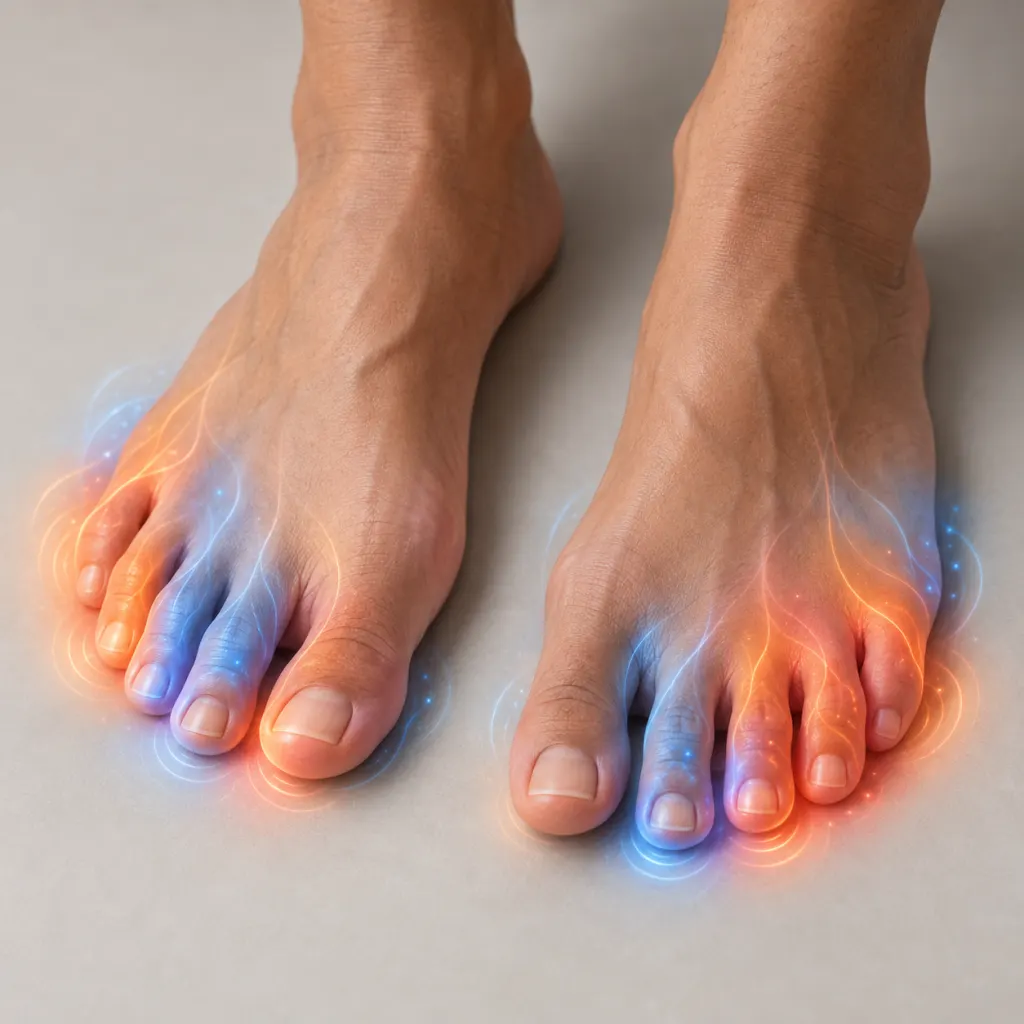
Burning, numbness, and tingling in the feet usually mean that nerves, blood flow, skin, or pressure-sensitive tissues are irritated. The most common pattern is nerve-related: symptoms begin in the toes or soles, may feel like pins and needles or heat, and can gradually move upward. That does not mean every foot sensation is dangerous, but repeated or unexplained symptoms deserve attention because some causes are easier to manage when found early.
The key is to notice the pattern. A foot that briefly falls asleep after sitting awkwardly is different from nightly burning, loss of feeling, weakness, poor balance, or a sore that is not healing. Public-health and clinical sources describe peripheral neuropathy as damage to nerves outside the brain and spinal cord; it often affects the hands and feet and can cause burning, numbness, tingling, pain, sensitivity, and balance trouble Mayo Clinic. This article explains the likely causes, what to track, and comfort steps that are reasonable while you arrange proper care.
What These Foot Sensations Can Mean
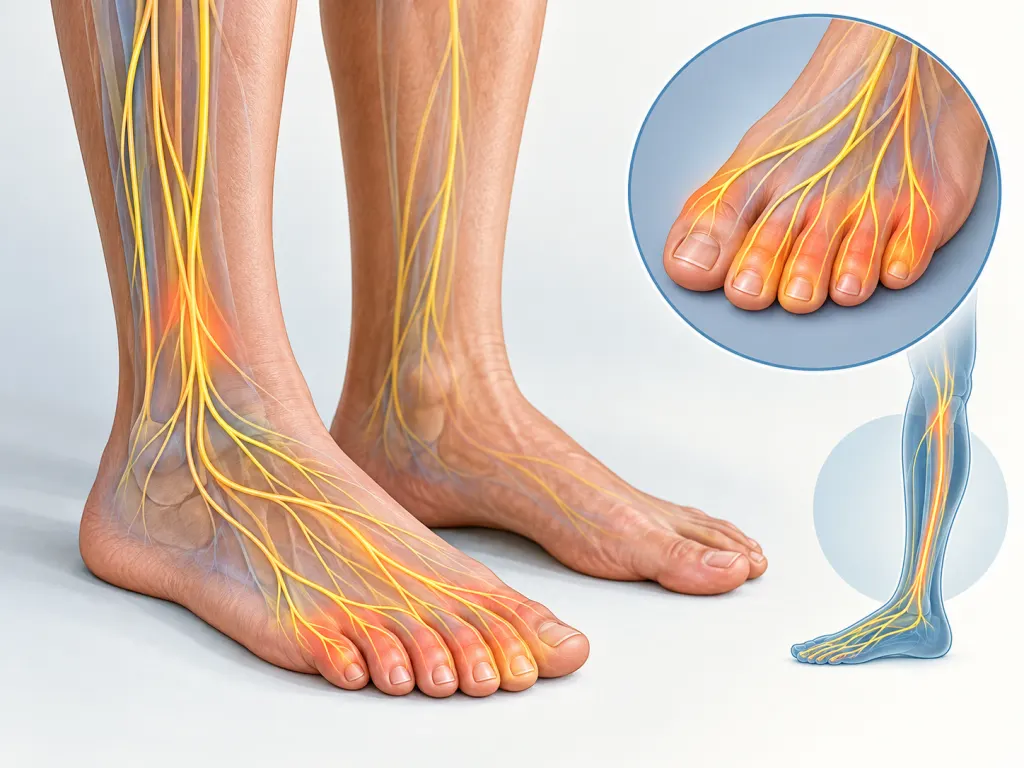
The feet are common places to notice nerve symptoms because long nerves reach all the way from the spine to the toes. When those nerves are irritated or damaged, the brain may receive altered signals: heat without an obvious burn, tingling without pressure, pain from light touch, or reduced sensation when stepping on the floor. The NHS describes peripheral neuropathy symptoms as numbness and tingling in the feet or hands, burning or shooting pain, loss of balance, and muscle weakness, especially in the feet NHS.
Useful pattern clues include:
- Burning: a hot, painful, or prickling feeling, often worse in bed or after a long day.
- Numbness: reduced feeling, a thick sock-like sensation, or trouble sensing temperature or small injuries.
- Tingling: pins and needles, buzzing, fizzing, or electric sensations.
- Weakness or balance change: stumbling, catching the toes, or feeling unsure on uneven ground.
- Skin or circulation clues: cold toes, color change, sores, swelling, or pain while walking.
One symptom alone rarely identifies the cause. A clinician usually combines your symptom pattern with a foot exam, neurological exam, medical history, and sometimes blood tests or nerve testing.

Common Causes: Nerves, Pressure, Metabolism, and Blood Flow
Peripheral neuropathy is a leading explanation for burning, numbness, and tingling, but neuropathy is not one single condition. Mayo Clinic lists several possible contributors, including diabetes, autoimmune diseases, infections, kidney or liver conditions, thyroid disease, inherited conditions, injuries or pressure on nerves, exposure to toxins, certain medicines, alcohol misuse, and low levels of vitamins important for nerve health Mayo Clinic. MedlinePlus also notes that tingling or burning in the arms and legs may be an early sign of nerve damage and that symptoms often start in the toes and feet MedlinePlus.
Diabetes deserves special mention because it is a common reason for foot nerve symptoms. NIDDK explains that peripheral neuropathy in diabetes typically affects the feet and legs, sometimes the hands and arms, and may feel burning, tingling, numb, painful, or weak. It can also reduce the ability to sense pain or temperature, which is why foot checks matter NIDDK. If that concern applies to you, see also 12 Foot Symptoms That May Signal Diabetes for a focused overview of foot changes worth taking seriously.
Not Every Burning Foot Is the Same Problem
Some foot symptoms come from pressure on a nerve rather than widespread nerve damage. A pinched nerve can cause pain that travels, numbness, tingling, weakness, or a burning feeling in the foot or toes; symptoms may be worse during sleep Mayo Clinic. Examples include irritation from the lower back, pressure around the ankle, or repeated strain from footwear and activity. These patterns may affect one side more than the other, or follow a narrow path rather than covering both feet evenly.
Circulation problems can also mimic or overlap with nerve symptoms. The CDC describes peripheral arterial disease as narrowed or blocked blood vessels carrying blood from the heart to the legs. Signs can include leg pain with walking that improves with rest, cool skin, reduced pulses, sores that do not heal, and cold or numb toes CDC. This is different from routine tired feet. If pain, coldness, color change, or a non-healing sore appears, the question is not which home step to try first; it is whether a health professional should examine the foot and circulation.
When Foot Symptoms Need Prompt Medical Attention
Arrange medical care promptly if burning, tingling, weakness, or pain interferes with sleep or daily life, if symptoms are spreading, if feeling is being lost in the toes or feet, or if a sore, blister, or cut is infected or slow to heal. Mayo Clinic advises emergency medical care when burning in the feet comes on suddenly, especially after possible toxin exposure, or when an open wound appears infected, particularly in a person with diabetes Mayo Clinic. The CDC similarly advises people with diabetes to call a doctor for an infected or non-healing foot sore, burning or tingling that affects daily activities or sleep, weakness, pain, dizziness, fainting, or changes in digestion, urination, or sexual function CDC.
Seek urgent help right away for sudden one-sided weakness or numbness, trouble speaking, facial drooping, chest pain, severe shortness of breath, a foot that becomes suddenly cold and pale, or a painful swollen leg that is new and unexplained. Those patterns are not typical simple foot tingling. For related leg warning signs, the site also has guides on subtle symptoms of blood clots and nighttime leg cramps, but new severe symptoms should be handled as a medical situation, not as reading material.
What a Clinician May Check
A good visit usually starts with a timeline: when symptoms began, whether they affect one foot or both, whether they are constant or come and go, whether sleep, walking, shoes, alcohol, illness, injury, or new medicines changed the pattern, and whether there are skin changes or wounds. A foot exam may look at pulses, skin, nail changes, swelling, sores, temperature, and footwear pressure points. A neurological exam may check reflexes, vibration, light touch, strength, balance, and walking.
NIDDK notes that a diabetes-related foot exam can include checking blood flow and sensation, using tools such as a tuning fork or a nylon strand called a monofilament, and reviewing gait and balance NIDDK. Depending on the story, blood tests may look for diabetes, thyroid, kidney, liver, vitamin-related, infection, or inflammation clues. Nerve conduction testing or electromyography may be considered when the diagnosis is unclear, symptoms are progressing, or weakness is present.

Self-Care That May Ease Symptoms Safely
Self-care is best thought of as support, not a substitute for finding the reason. Gentle movement, comfortable footwear, careful foot inspection, and avoiding clear irritants can reduce day-to-day strain while you wait for evaluation. Mayo Clinic describes healthy lifestyle choices that support nerve health, including regular exercise with a health professional's approval, eating a varied diet, avoiding toxic exposures, and avoiding smoking and too much alcohol Mayo Clinic. The CDC also notes that physical activity, tobacco avoidance, and management of blood pressure, cholesterol, and diabetes are important for peripheral arterial disease risk and symptoms CDC.
Practical comfort steps include choosing shoes with a wide toe box, checking that socks do not leave deep marks, taking movement breaks if symptoms worsen after sitting, using a blanket support if bedcovers hurt sensitive feet, and inspecting soles and between toes with a mirror. Avoid hot water bottles, heating pads, or very hot foot soaks when sensation is reduced, because numb skin may not warn you before a burn. If cold packs feel soothing, wrap them and keep use brief. Stop any step that increases pain, skin redness, swelling, or numbness.
What to Track Before an Appointment
A short symptom log can make the visit more useful. Record the location, sensation, timing, triggers, and what helps. Note whether symptoms are equal in both feet, whether they climb above the ankles, whether balance has changed, and whether there is weakness. Add skin details: cuts, blisters, redness, swelling, calluses, color change, temperature difference, or sores that linger. Bring a list of health conditions, supplements, alcohol use, workplace or hobby exposures, and all medicines, including recent changes.
It also helps to describe the impact in plain terms: waking at night, avoiding walks, tripping, not feeling the floor, or needing to remove shoes because of burning. These details matter because nerve, circulation, skin, and pressure problems can overlap. A person with numbness may also have a shoe-rubbed blister; a person with circulation trouble may also have tingling; a person with back-related nerve pressure may notice symptoms after certain positions. The goal is to match the pattern to the right evaluation.
How to Think About Natural Relief Without Overpromising
The phrase natural relief can be useful when it means low-risk habits that reduce strain: moving regularly, protecting the feet, wearing better-fitting shoes, sleeping with less blanket pressure, moderating alcohol, avoiding tobacco, and keeping known health conditions well monitored. It becomes risky when it suggests that a home practice can identify the cause or replace a needed exam. Burning, numbness, and tingling are signals, not a diagnosis.
If symptoms are mild and clearly linked to a short-lived pressure position, they may fade after changing posture. If they repeat, last, spread, disrupt sleep, come with weakness, or occur with a wound or circulation changes, the safer path is to seek a proper medical assessment. Early attention can protect walking, sleep, skin integrity, and confidence on your feet.
Wrap-Up
Burning, numbness, and tingling in the feet most often raise a nerve question, but pressure, circulation, skin problems, and underlying health conditions can all contribute. Watch the pattern: both feet versus one, toes versus whole foot, sudden versus gradual, and whether there is weakness, balance trouble, night pain, coldness, or a sore that is not healing. Supportive steps such as comfortable shoes, gentle activity, foot checks, and avoiding heat on numb skin may help comfort, but persistent or worsening symptoms belong in a conversation with a qualified health professional.
Frequently Asked Questions
- → Why do my feet burn more at night?
Nighttime burning can feel stronger because there are fewer distractions, bedcovers may touch sensitive skin, and some nerve symptoms are more noticeable at rest. It can happen with peripheral neuropathy, pressure on nerves, circulation issues, or other causes. If it repeats, disrupts sleep, or is getting worse, arrange a medical evaluation.
- → Can tingling feet come from sitting too long?
Yes. Temporary pressure on a nerve or reduced circulation from posture can make a foot fall asleep, and it should improve after changing position and moving gently. Tingling that keeps returning without a clear posture trigger, affects both feet, spreads upward, or comes with weakness or numbness should not be dismissed as ordinary sitting pressure.
- → Are burning feet always caused by diabetes?
No. Diabetes is a common cause of peripheral neuropathy, but not the only one. Other possibilities include pressure on a nerve, alcohol-related nerve irritation, vitamin-related problems, thyroid or kidney conditions, infections, certain medicines, toxins, inherited nerve conditions, skin problems, and circulation problems. A clinician can narrow the cause from the pattern and exam.
- → What can I do at home while waiting for an appointment?
Wear comfortable shoes, avoid tight socks, inspect your feet daily, keep feet clean and dry, take gentle movement breaks, and avoid very hot soaks or heating pads if sensation is reduced. Write down when symptoms happen and what changes them. Seek faster care if there is weakness, spreading numbness, sudden onset, infection, or a non-healing sore.
- → When should numb feet be treated as urgent?
Get urgent help for sudden one-sided numbness or weakness, trouble speaking, facial drooping, chest pain, severe shortness of breath, a foot that becomes suddenly cold or pale, possible toxin exposure, or an infected foot wound. These signs can point to problems that need immediate assessment.
References
This content was developed and refined using reliable sources.
- https://www.mayoclinic.org/diseases-conditions/peripheral-neuropathy/symptoms-causes/syc-20352061
- https://www.nhs.uk/conditions/peripheral-neuropathy
- https://www.medlineplus.gov/ency/article/000593.htm
- https://www.niddk.nih.gov/health-information/diabetes/overview/preventing-problems/nerve-damage-diabetic-neuropathies/peripheral-neuropathy
- https://www.mayoclinic.org/diseases-conditions/pinched-nerve/symptoms-causes/syc-20354746?p=1
- https://www.cdc.gov/heart-disease/about/peripheral-arterial-disease.html
- https://www.cdc.gov/diabetes/diabetes-complications/diabetes-and-nerve-damage.html
- https://www.mayoclinic.org/symptoms/burning-feet/basics/causes/sym-20050809