 Save
Pepto-Bismol and Tums overlap in one everyday phrase, “upset stomach,” but they do different jobs. Tums is an antacid: its active ingredient, calcium carbonate, neutralizes stomach acid and is aimed at heartburn, acid indigestion, sour stomach, and upset stomach connected with those symptoms. Pepto-Bismol contains bismuth subsalicylate and covers a broader stomach-and-bowel set, including diarrhea and upset stomach symptoms. In plain terms, choose by the symptom pattern, not by which bottle is closest in the cabinet. For an acid-burning feeling after a meal, Tums often fits. For loose watery stools with stomach upset, Pepto-Bismol is the more directly relevant product, provided its label is appropriate for you.
Quick Comparison
The clearest way to compare these two products is to start with the active ingredient. MedlinePlus describes bismuth subsalicylate as an antidiarrheal agent used for diarrhea, heartburn, and upset stomach in adults and children 12 years and older, while calcium carbonate is described as an antacid used for heartburn, acid indigestion, and upset stomach https://medlineplus.gov/druginfo/meds/a607040.html https://medlineplus.gov/druginfo/meds/a601032.html. That difference matters because “upset stomach” can mean acid burn, fullness, nausea, gas, or diarrhea, and a single phrase on a box does not tell you what is happening in your body.
- Pepto-Bismol: a bismuth subsalicylate product with stomach-settling and antidiarrheal uses.
- Tums: a calcium carbonate antacid for acid-related discomfort.
- Best first question: Is the main issue acid burning or loose watery stools?
- Best safety habit: read the exact package you own, because strengths and warnings vary by product.

What Pepto-Bismol Is Best Matched To
Pepto-Bismol is best understood as a bismuth subsalicylate product, not as a standard antacid tablet. Its official DailyMed label for the suspension lists it as an “upset stomach reliever and antidiarrheal” and names uses such as traveler’s diarrhea, diarrhea, and upset stomach due to overindulgence in food and drink, including heartburn, indigestion, nausea, gas, belching, and fullness https://dailymed.nlm.nih.gov/dailymed/drugInfo.cfm?setid=67006e82-870d-8d63-e053-2991aa0a02d1. That label explains why many people reach for it when the stomach problem feels mixed: maybe the meal was heavy, the stomach feels unsettled, and bowel changes are part of the picture.
What Tums Is Best Matched To
Tums is much narrower in a useful way. The DailyMed label for Tums Regular Strength identifies calcium carbonate as the active ingredient and lists the purpose as “antacid.” Its stated uses are heartburn, acid indigestion, sour stomach, and upset stomach associated with those acid-related symptoms https://dailymed.nlm.nih.gov/dailymed/drugInfo.cfm?setid=ac80f627-3f51-425b-8c75-e07363048b00. If your discomfort is a burning feeling after eating, a sour taste, or a sense that acid is the obvious issue, the Tums side of the comparison is easier to understand. It is not aimed at diarrhea, and expecting it to handle loose watery stools is a mismatch.
How to Match the Product to the Symptom Pattern
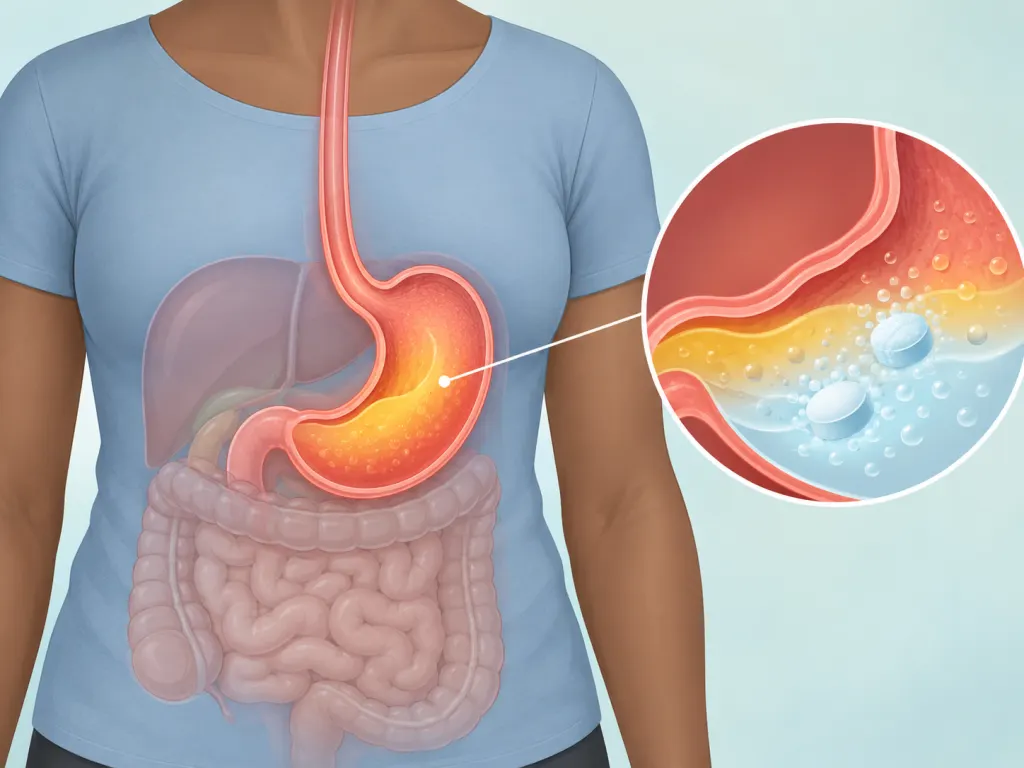
Start with the most specific symptom instead of the broadest one. “My stomach feels off” is too vague to choose well. If the center of the problem is heartburn after spicy food, lying down too soon after a meal, or a sour stomach, an antacid such as calcium carbonate fits the category described by MedlinePlus and DailyMed. If the center of the problem is diarrhea with stomach upset, bismuth subsalicylate fits more closely, because diarrhea is part of its stated use. If the problem is chest pressure, severe abdominal pain, repeated vomiting, black or bloody stool, signs of dehydration, or symptoms that keep coming back, the comparison between two shelf products is no longer the main issue.
Why the Same Words Appear on Both Labels
Both products can mention “upset stomach,” but labels use that phrase as a consumer-friendly umbrella, not as a medical explanation. The National Institute of Diabetes and Digestive and Kidney Diseases describes indigestion, also called dyspepsia or upset stomach, as a group of gastrointestinal symptoms that may include upper abdominal discomfort, burning, early fullness, bloating, nausea, or belching https://www.niddk.nih.gov/health-information/digestive-diseases/indigestion-dyspepsia/definition-facts. Because those symptoms can have different causes, the product choice should be tied to what you actually feel and what the label says the product is meant to address.
A Simple Decision Guide
Use this as a practical sorting tool, not as a personal medical plan. If you mostly notice acid burn, sour taste, or meal-related discomfort, read the Tums label first. If you mostly notice diarrhea plus unsettled stomach, read the Pepto-Bismol label first. If nausea is the main problem without diarrhea or acid burn, neither product may be a perfect match, and the label details matter. If symptoms are frequent, worsening, or hard to explain, it is wiser to step back and ask a qualified professional than to keep switching products. For a broader way to read popular health comparisons, see How to Evaluate Viral Ingredient Health Claims.

Safety Checks Before You Choose
The most important safety check is whether the label’s warnings apply to you. Bismuth subsalicylate contains a salicylate, and MedlinePlus advises checking with a doctor or pharmacist in situations such as salicylate sensitivity, certain bleeding concerns, fever or mucus with diarrhea, kidney disease, and use of some medicines https://medlineplus.gov/druginfo/meds/a607040.html. Calcium carbonate can affect how some other medicines are absorbed, and MedlinePlus says to discuss prescription and nonprescription products with a doctor or pharmacist and to avoid using calcium carbonate as an antacid for more than two weeks unless told otherwise https://medlineplus.gov/druginfo/meds/a601032.html. The safest practical move is boring but effective: read the Drug Facts panel every time, especially when you buy a different strength, flavor, or format.
When Symptoms Need Prompt Guidance
Some stomach symptoms should not be handled by product comparison alone. NIDDK says adults with diarrhea should seek help right away for signs such as dehydration, severe abdominal or rectal pain, black or tarry stools, blood or pus in stool, high fever, frequent loose stools, or diarrhea lasting more than two days https://www.niddk.nih.gov/health-information/digestive-diseases/diarrhea/symptoms-causes. NIDDK also advises prompt medical help for indigestion with warning signs such as chest, jaw, neck, or arm pain; trouble swallowing; bloody vomit; or severe constant abdominal pain https://www.niddk.nih.gov/health-information/digestive-diseases/indigestion-dyspepsia/definition-facts. These boundaries are not meant to make ordinary stomach upset sound alarming; they are meant to separate common short-lived discomfort from situations where personal advice matters.
Side Effects and Label Clues People Often Miss
Pepto-Bismol can temporarily darken the tongue or stool, a point MedlinePlus describes as harmless and usually short-lived after stopping the product https://medlineplus.gov/druginfo/meds/a607040.html. Calcium carbonate may cause effects such as constipation, belching, or stomach discomfort in some people, according to MedlinePlus https://medlineplus.gov/druginfo/meds/a601032.html. The overlap can be confusing because stomach products can both help one symptom and bother another. If a product repeatedly leaves you feeling worse, that pattern is worth discussing with a pharmacist or clinician instead of assuming you simply need a different flavor or format.
Why Frequent Heartburn Deserves a Different Conversation
Occasional heartburn after a predictable trigger is different from symptoms that happen often. Cleveland Clinic explains that antacids work quickly for heartburn and indigestion by reducing stomach acid’s effect, but they do not address underlying causes of frequent symptoms https://my.clevelandclinic.org/health/drugs/23076-antacid. If you are repeatedly comparing Pepto-Bismol and Tums because discomfort keeps returning, the better question may be what pattern is driving it. Keeping a short record of meals, timing, symptoms, and products used can make a pharmacist or medical visit more useful. For another careful look at stomach-related wellness claims, you may also find Drinking Water on an Empty Stomach: What to Know helpful.
Storage, Children, and Household Use
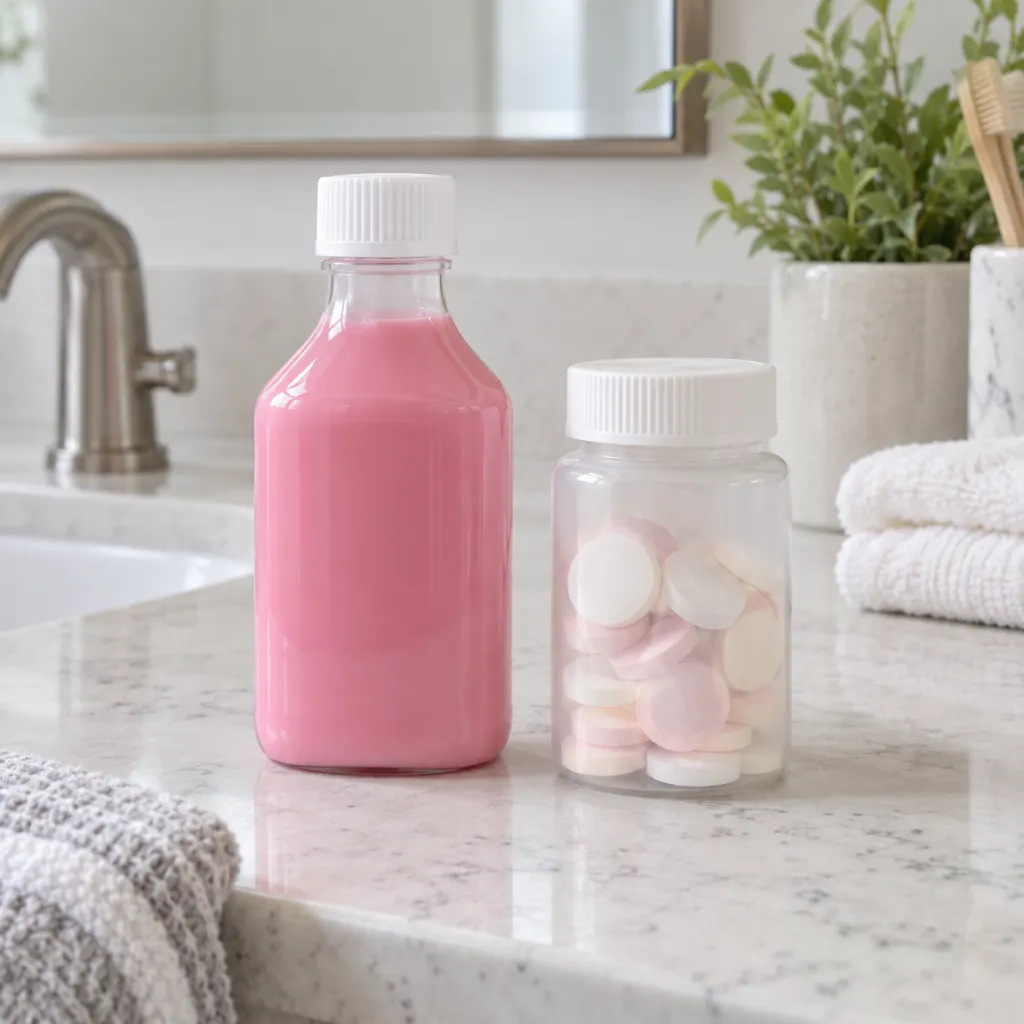
Both products should be treated as medicines, even though they are common household purchases. Keep them in their original containers so the active ingredient, warnings, and directions stay with the product. Store them out of sight and reach of children, and avoid mixing loose tablets from different packages in one container. That matters because “pink tablets” and “chewable antacid tablets” may look familiar but carry different active ingredients and warnings. If an accidental large amount is taken, use the emergency instructions on the product label or contact Poison Help in the United States.
Bottom Line
For a straightforward acid-style upset stomach, Tums is the simpler match because it is a calcium carbonate antacid. For diarrhea with an unsettled stomach, Pepto-Bismol is the closer match because bismuth subsalicylate is labeled for diarrhea as well as several upset stomach symptoms. For repeated, severe, unusual, or hard-to-explain symptoms, the right comparison is not Pepto-Bismol versus Tums; it is whether you need individual guidance. The package label, your symptom pattern, and your other medicines all matter more than brand familiarity.
Wrap-Up
Pepto-Bismol and Tums are both familiar stomach products, but they are not interchangeable. Tums is mainly for acid-related symptoms such as heartburn, acid indigestion, sour stomach, and the upset stomach that comes with those symptoms. Pepto-Bismol is a bismuth subsalicylate product labeled for diarrhea and several upset stomach symptoms. If diarrhea is present, Pepto-Bismol is usually the more relevant label to read. If the discomfort is mainly acid burn, Tums is usually the more direct category. In either case, follow the exact package label, avoid stretching short-term use into a long-running habit without guidance, and seek professional advice for warning signs or recurring symptoms.
Frequently Asked Questions
- → Is Pepto-Bismol the same kind of product as Tums?
No. Pepto-Bismol contains bismuth subsalicylate and is labeled for diarrhea and several upset stomach symptoms. Tums contains calcium carbonate and is an antacid for acid-related symptoms such as heartburn and sour stomach.
- → Which one makes more sense for heartburn after a meal?
If the main symptom is acid-related burning, sour stomach, or acid indigestion, Tums is the more direct match because it is a calcium carbonate antacid. Read the exact product label and ask a pharmacist if you take other medicines.
- → Which one makes more sense when diarrhea is part of the upset stomach?
Pepto-Bismol is the more relevant label to read when diarrhea is part of the problem because bismuth subsalicylate is used as an antidiarrheal. Do not ignore warning signs such as dehydration, blood in stool, high fever, severe pain, or diarrhea that lasts more than two days.
- → Can I choose based only on the words “upset stomach” on the package?
That is not ideal. “Upset stomach” can describe several symptoms, including burning, fullness, nausea, gas, belching, and bowel changes. Match the product to the most specific symptom and to the Drug Facts label.
- → When should I stop comparing shelf products and ask for help?
Ask a doctor, pharmacist, or qualified health professional when symptoms are severe, unusual, recurring, linked with other medicines, or accompanied by red flags such as chest pain, trouble swallowing, blood in stool, dehydration, high fever, or severe abdominal pain.
References
This content was developed and refined using reliable sources.
- https://medlineplus.gov/druginfo/meds/a607040.html
- https://medlineplus.gov/druginfo/meds/a601032.html
- https://dailymed.nlm.nih.gov/dailymed/drugInfo.cfm?setid=67006e82-870d-8d63-e053-2991aa0a02d1
- https://dailymed.nlm.nih.gov/dailymed/drugInfo.cfm?setid=ac80f627-3f51-425b-8c75-e07363048b00
- https://www.niddk.nih.gov/health-information/digestive-diseases/indigestion-dyspepsia/definition-facts
- https://www.niddk.nih.gov/health-information/digestive-diseases/diarrhea/symptoms-causes
- https://my.clevelandclinic.org/health/drugs/23076-antacid