 Save
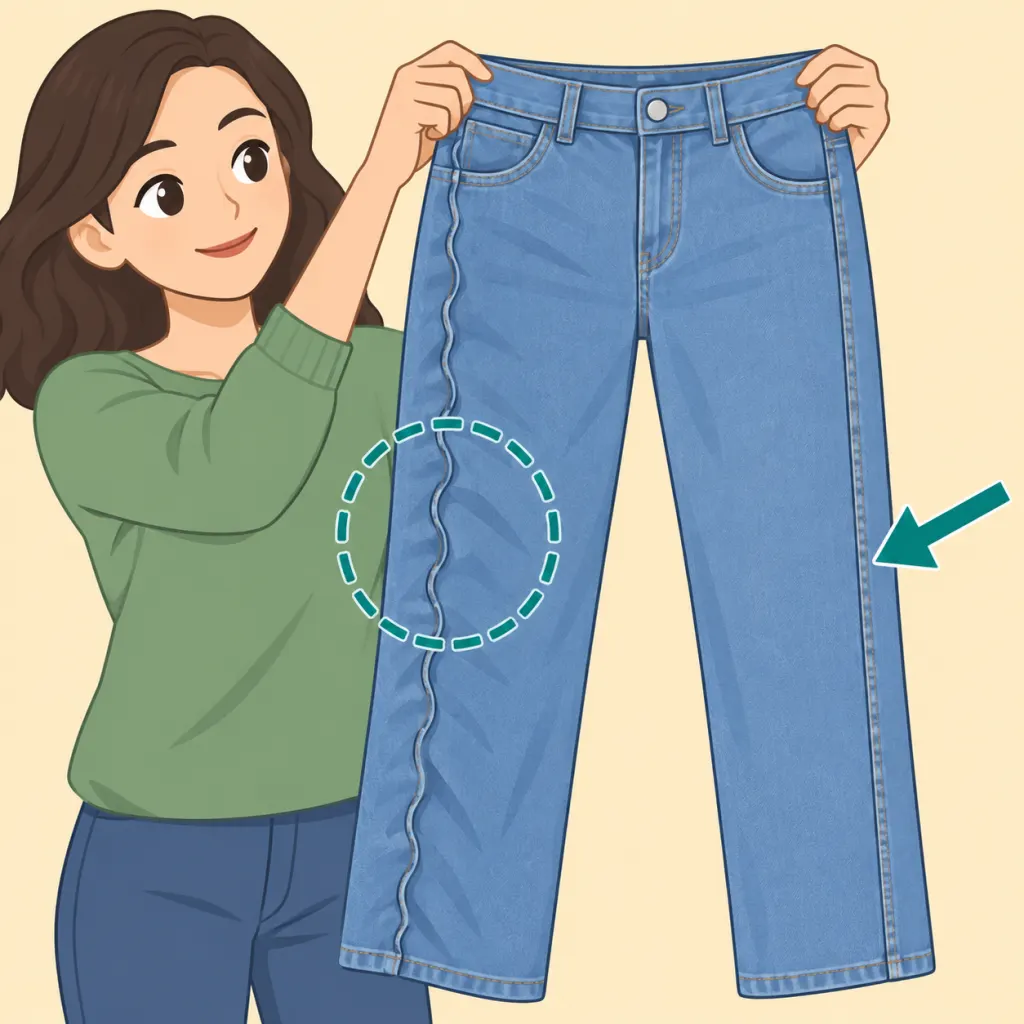
Jeans can come out of the wash with rippled seams, puckered hems, or waves across the thighs because denim is a sturdy woven fabric that can hold stress in different directions. Denim is commonly a cotton twill, and twill has diagonal ridges that can make uneven shrinkage or twisting more visible, as described by the ASU FIDM Museum. Stretch jeans need extra care because spandex is damaged by heat, according to the University of Georgia Extension. Here is how to wash and dry jeans so they stay smoother.
Step 1: Check the care label before washing
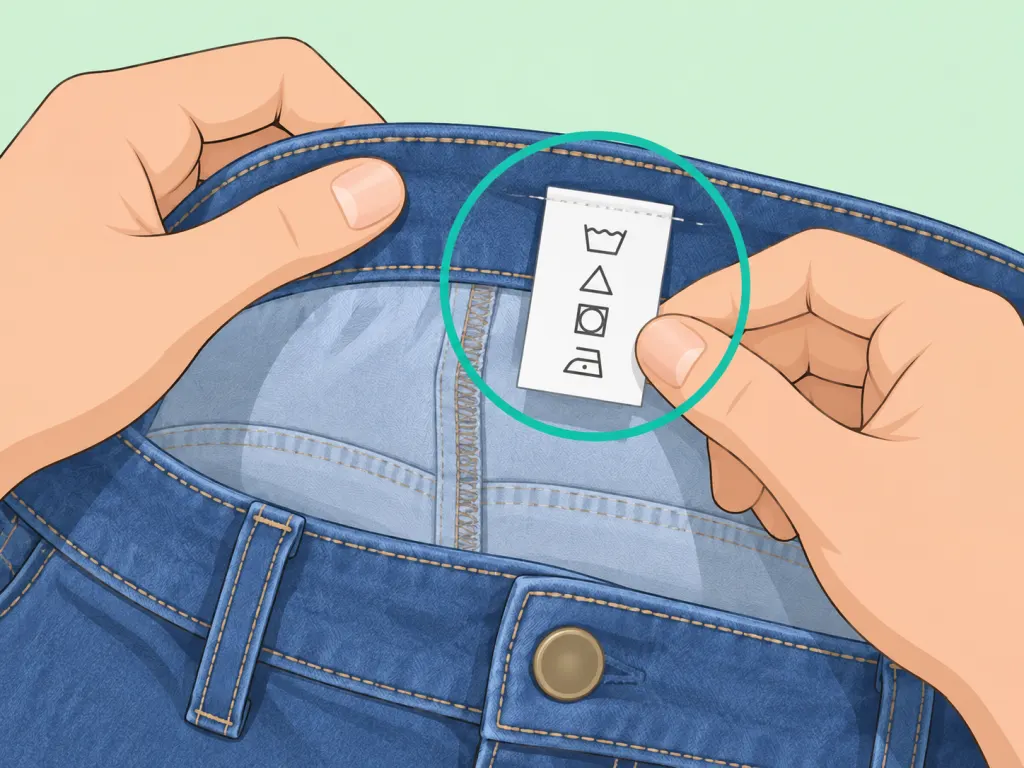
Look inside the waistband or side seam for the washing, drying, ironing, and warning instructions. The FTC care-label rule requires clothing labels to give regular care instructions and warnings when a normal care method could harm the garment. If your jeans say cold wash, gentle cycle, low heat, or line dry, treat that as the safest starting point.
Step 2: Turn the jeans inside out
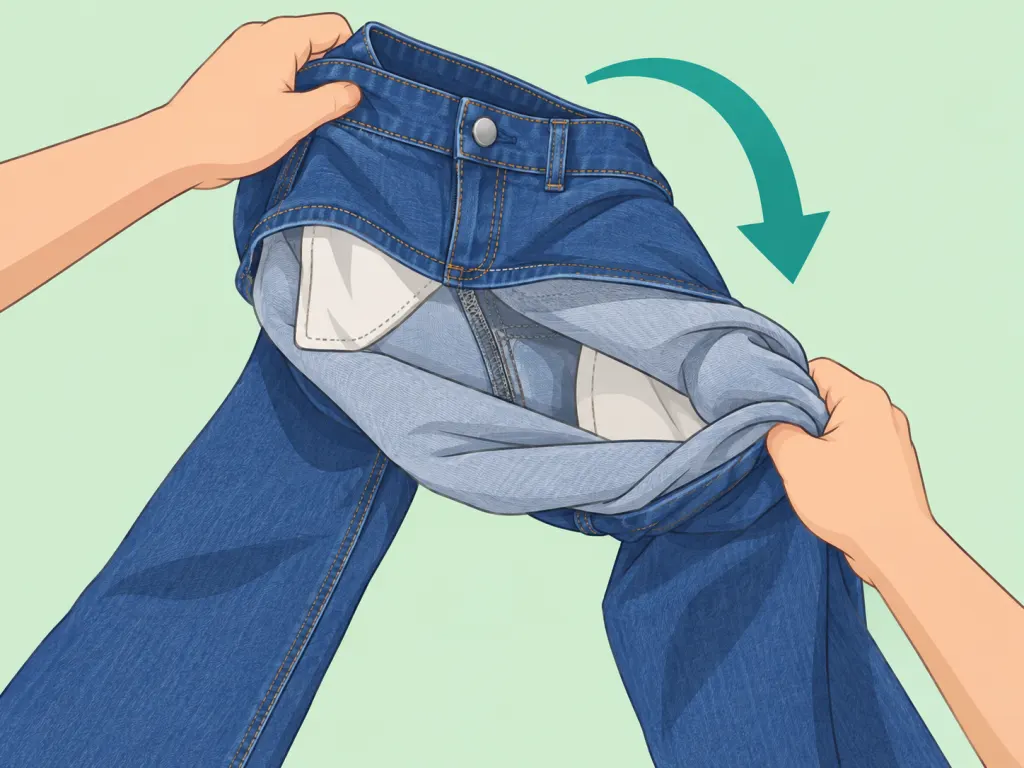
Button the waistband, close the zipper, and turn the jeans inside out before they go into the machine. The FTC glossary recognizes “wash inside out” as a care instruction used to protect the face of fabric, which matters for denim because the outside surface takes the most rubbing. This also helps reduce abrasion on hems, pockets, and whiskered areas.
Step 3: Choose cold water and a gentler cycle
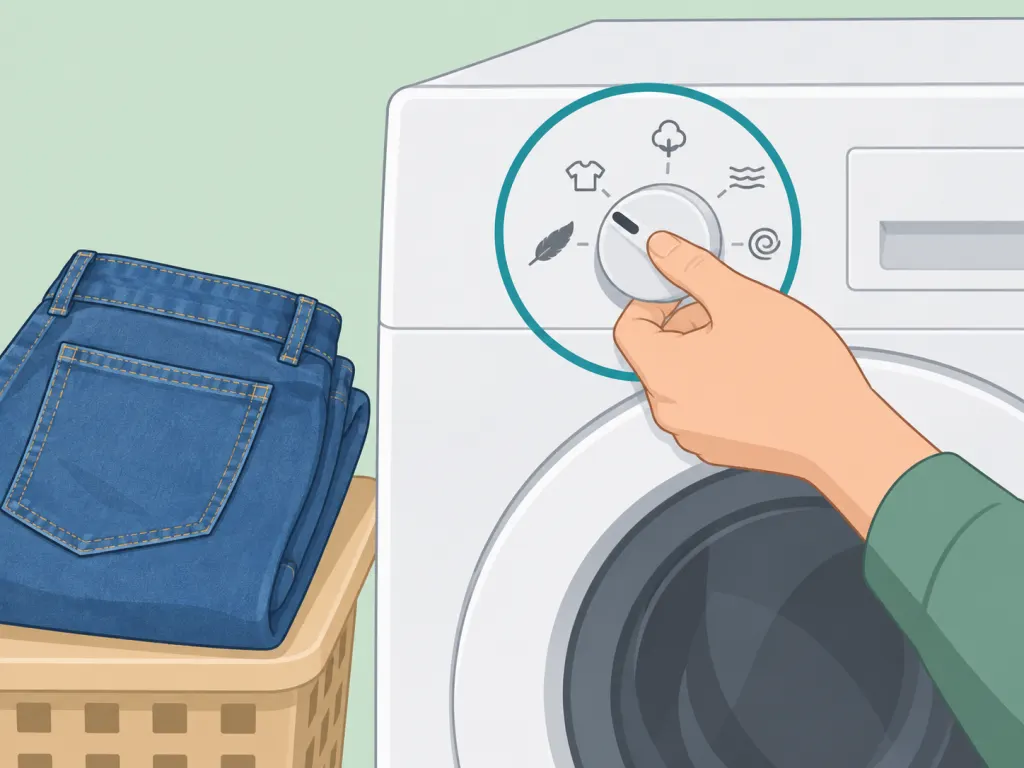
Use cold water and a gentle, delicate, or permanent-press style cycle unless the label says something different. The FTC defines cold washing as up to 86°F (30°C), while gentle cycles use slower agitation and reduced time. Less heat and less twisting help the denim and seams relax more evenly after washing.
Step 4: Wash jeans with similar weight clothing
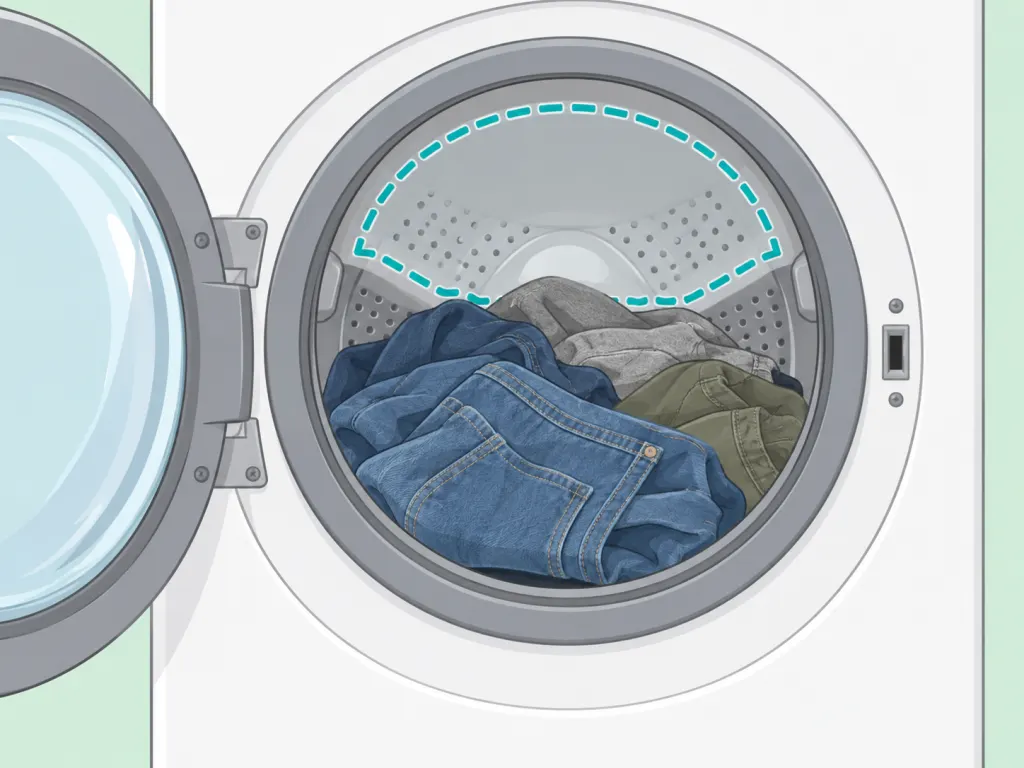
Wash jeans with other sturdy items instead of mixing them with thin shirts, towels, or bulky blankets. Denim is a heavy cotton twill with tight diagonal ridges, and the structure of denim makes seam distortion easier to see when the fabric is pulled hard in the wash. Keep the load balanced and leave enough room for water and detergent to move through the fabric.
If the fiber label lists spandex, elastane, or Lycra, keep the wash and dry settings mild. The University of Georgia Extension notes that spandex can be damaged by heat and should be washed warm, not hot, and dried at low temperature when machine drying is used. Heat stress can make stretch panels and tight seams recover unevenly, which shows up as waves.
Step 6: Remove jeans promptly after the cycle
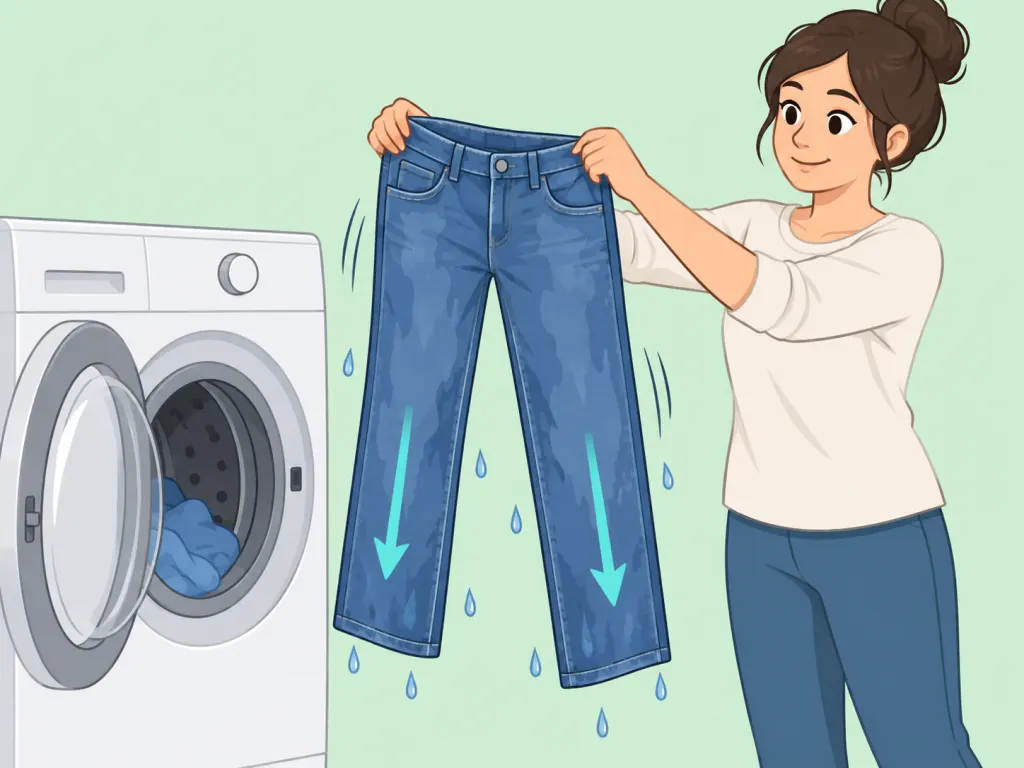
Take jeans out as soon as the washer or dryer stops instead of leaving them compressed in the drum. The FTC drying glossary explains that “remove promptly” means taking items out when dry to help prevent wrinkling. Shake the legs once, then pull the side seams, inseams, waistband, and hems straight while the denim is still damp.
Step 7: Dry jeans with airflow instead of harsh heat
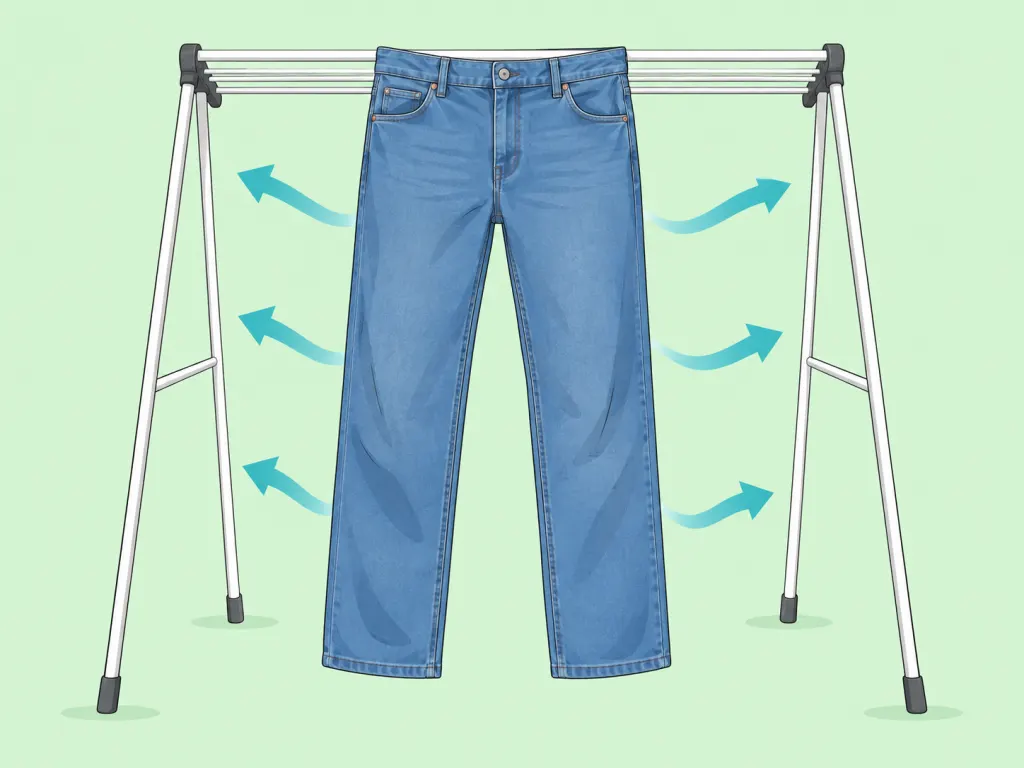
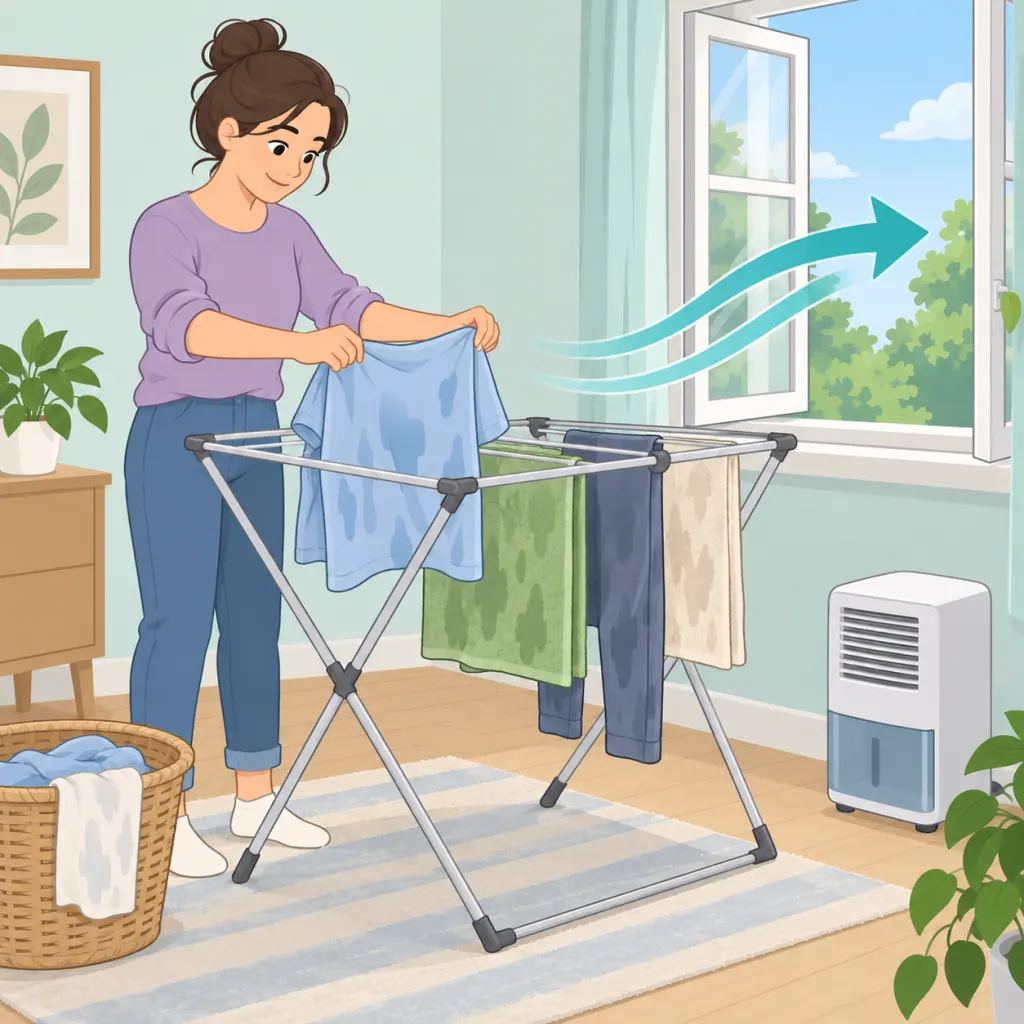
Air dry jeans on a rack, hang them from the waistband, or tumble dry on low if the label allows it. ENERGY STAR advises that dryer loads need enough drum space for hot air to circulate and notes that moisture sensors can help prevent over-drying clothes. The National Park Service also recommends washing in cold water when possible and not over-drying laundry as part of smart laundry practices.
Step 8: Smooth small waves while the denim is damp
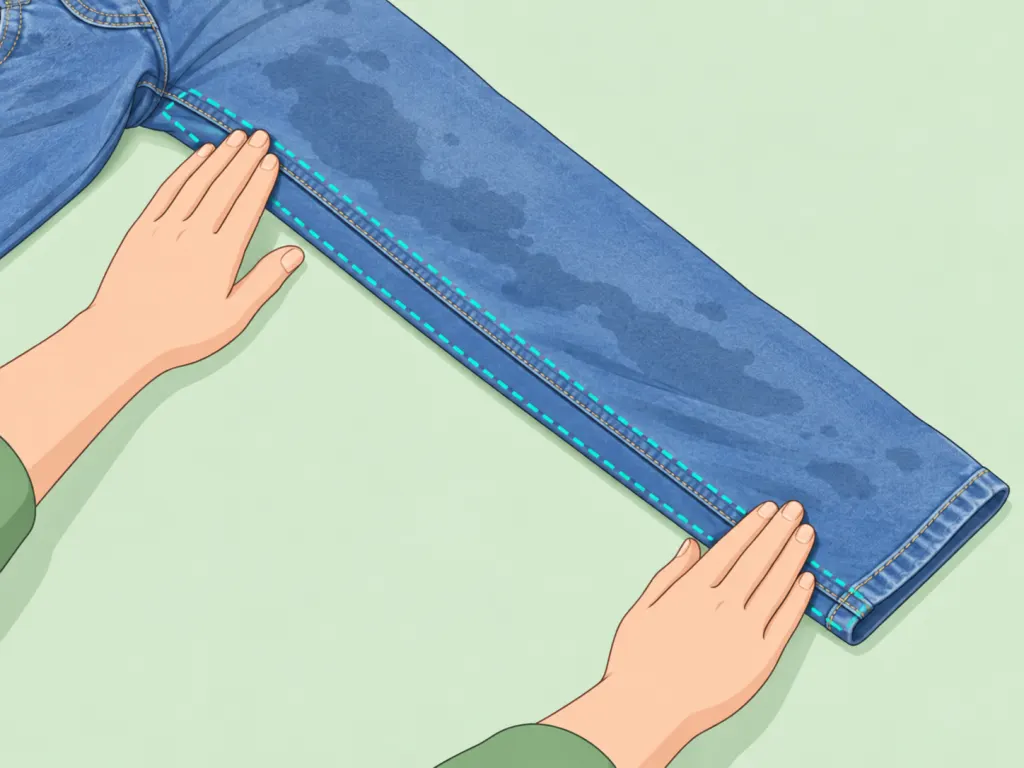
Lay the jeans flat or hang them, then use your hands to straighten the fabric along the wavy seam or hem. The FTC glossary includes “smooth by hand” as a drying instruction for removing wrinkles and straightening seams while fabric is wet. If the care label allows ironing, press from the inside with the lowest useful heat and stop once the seam lies flatter.
Wrap-Up
The bottom line: waves in jeans are usually a laundry-stress problem, not a mystery. Read the label, use cool water and a gentle cycle, leave room in the machine, remove jeans promptly, and dry them with low heat or air so the seams and fabric can settle evenly.
Frequently Asked Questions
- → Why do jeans get wavy after washing?
- Jeans get wavy when the fabric, seams, and any stretch fibers are pulled or dried unevenly. Heat, heavy agitation, over-drying, and leftover shrinkage can make hems, side seams, and knees look rippled.
- → Are wavy jeans ruined?
- Not always. If the waves are from temporary wrinkles or uneven drying, dampening and smoothing the jeans can help. If heat has weakened stretch fibers or a seam has shrunk unevenly, the change may be harder to reverse.
- → Should I wash jeans in cold water?
- Cold water is usually the gentler choice for jeans, especially dark or stretch denim, unless the care label says otherwise. It reduces heat stress and helps protect color and shape.
- → Is it better to air dry jeans?
- Air drying is often gentler than high-heat tumble drying. Hang jeans from the waistband or lay them flat, then smooth the seams while they are damp so they dry in a straighter shape.
- → Can I put jeans in the dryer?
- Yes, if the care label allows tumble drying. Use low heat, remove the jeans while they are just dry or slightly damp, and avoid packing the dryer so tightly that the denim cannot tumble freely.
- → Why are stretch jeans more likely to look rippled?
- Stretch jeans often include spandex or a similar elastic fiber. Spandex is sensitive to heat, so hot washing or high dryer heat can make stretch areas recover unevenly.
References
This content was developed and refined using reliable sources.
- https://www.ftc.gov/legal-library/browse/rules/care-labeling-textile-wearing-apparel-certain-piece-goods-text
- https://site.extension.uga.edu/textiles/textile-basics/understand-your-fibers
- https://site.extension.uga.edu/textiles/quality-and-selection
- https://www.energystar.gov/products/clothes_dryers
- https://www.nps.gov/articles/laundry.htm
- https://asufidmmuseum.asu.edu/learn/articles/early-denim-coat-fidm-museum-collection