 Save
Slow breathing for relaxation means gently easing your breathing into a comfortable rhythm, without forcing larger breaths or chasing a numerical target. It may help you settle, but the experience varies. The NHS breathing guidance emphasizes gentle breathing and optional counting. This article focuses on an easy, continuous rhythm without deliberate breath holds or rapid breathing.
The useful question is whether the practice feels manageable and makes a quiet pause worthwhile. You do not need to empty your mind, feel an immediate change, or turn relaxation into another task to complete perfectly.
What “slow” should mean in everyday practice
For this kind of relaxation, use comfort as your starting point. Let breathing remain easy rather than stretching each breath to match a recording. There is no need to fill your lungs as far as possible, lift your shoulders, or squeeze out the last bit of air. The NHS describes allowing the breath to move comfortably toward the belly without forcing it. Its suggested count is a possible aid, rather than a requirement to reach a particular number. NHS: breathing exercises for stress.
A useful personal intention is simply to spend a little time breathing without rushing. If you find yourself negotiating with a timer, competing with yesterday’s pace, or waiting anxiously for the next inhale, set the target aside. This article offers no breathing-rate goal.
Choose a position that does not require effort
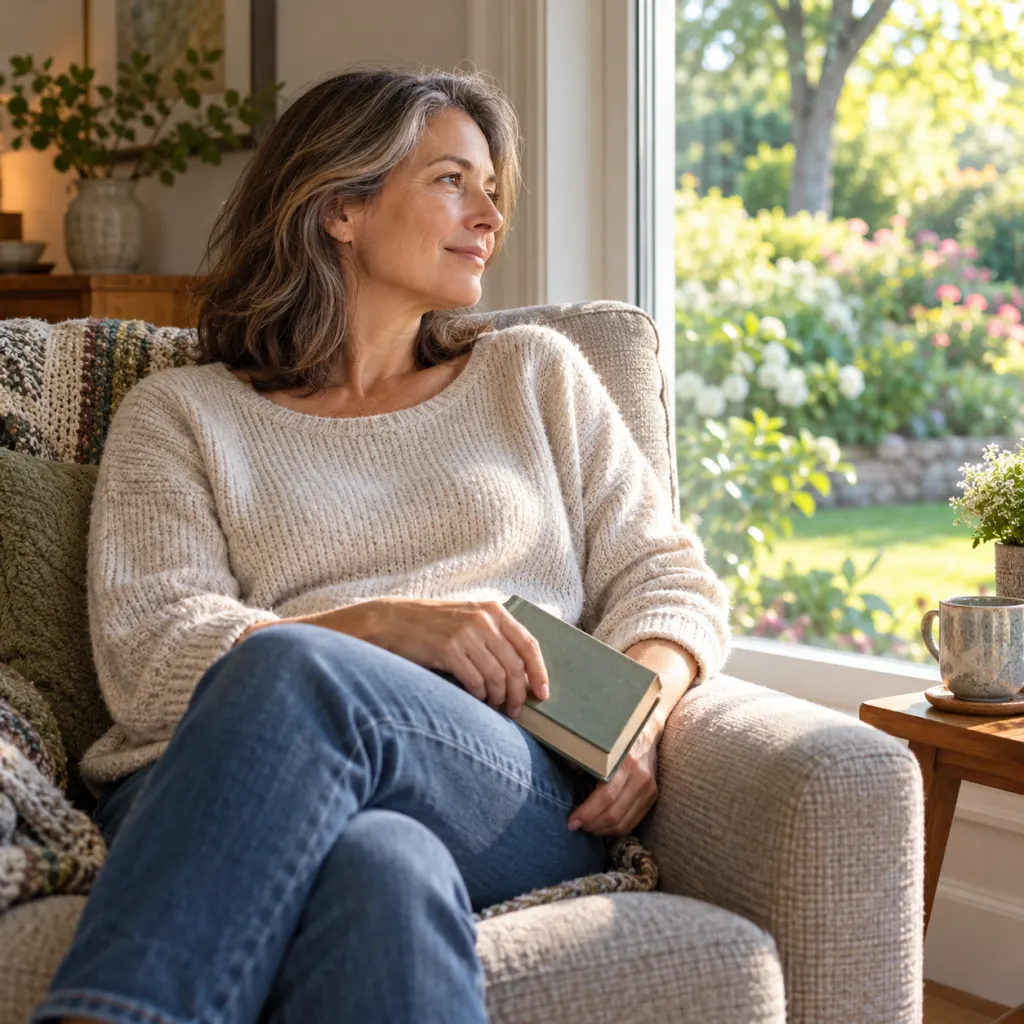
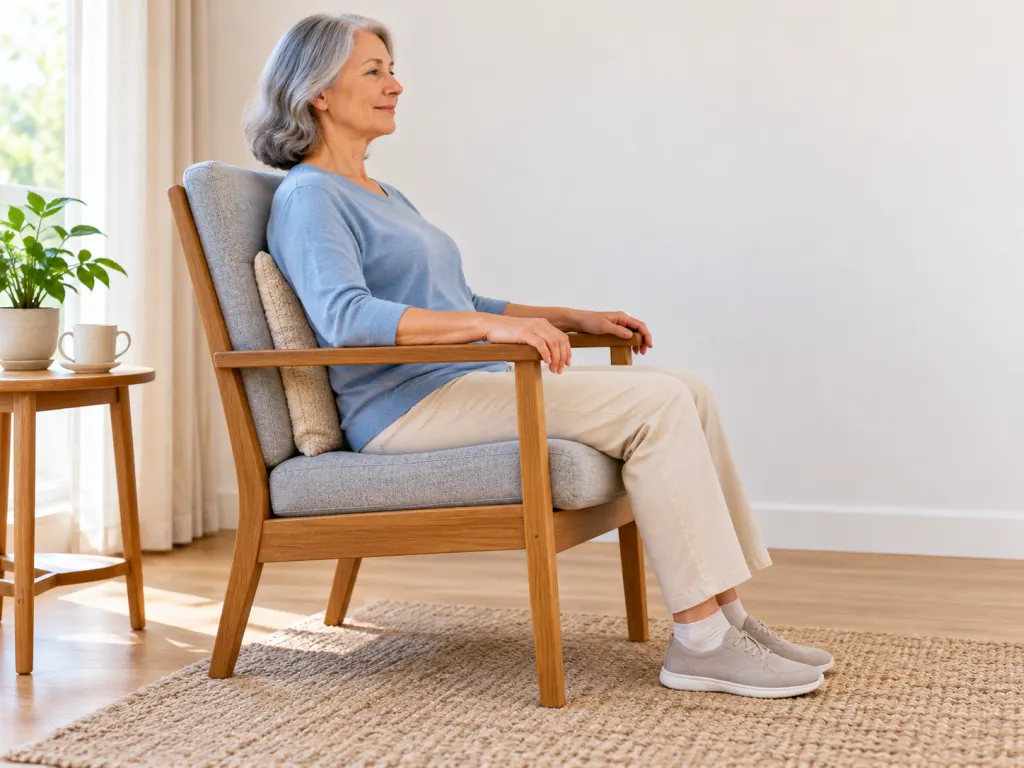
You can use a supportive chair or lie down comfortably; no special floor position is necessary. The NHS includes supported sitting and lying among its options and suggests loosening restrictive clothing. NHS posture guidance.
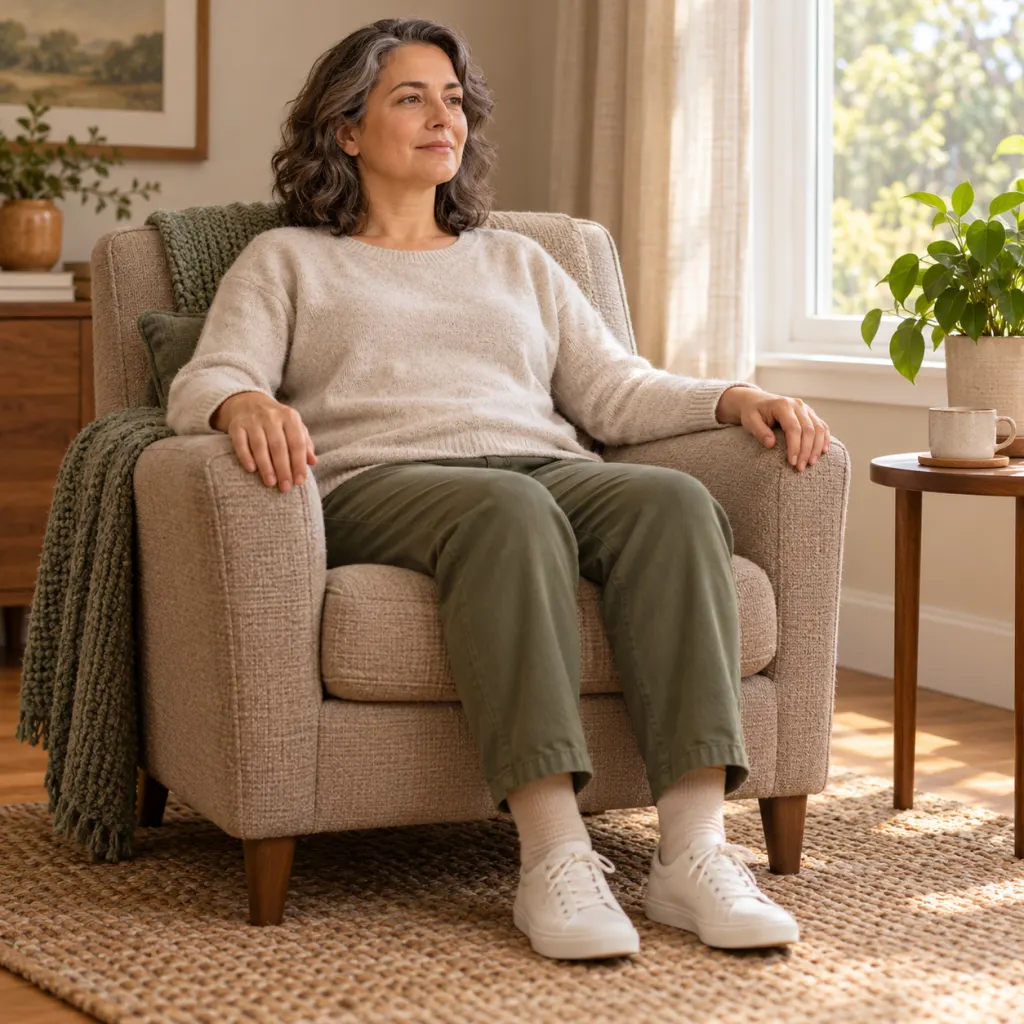
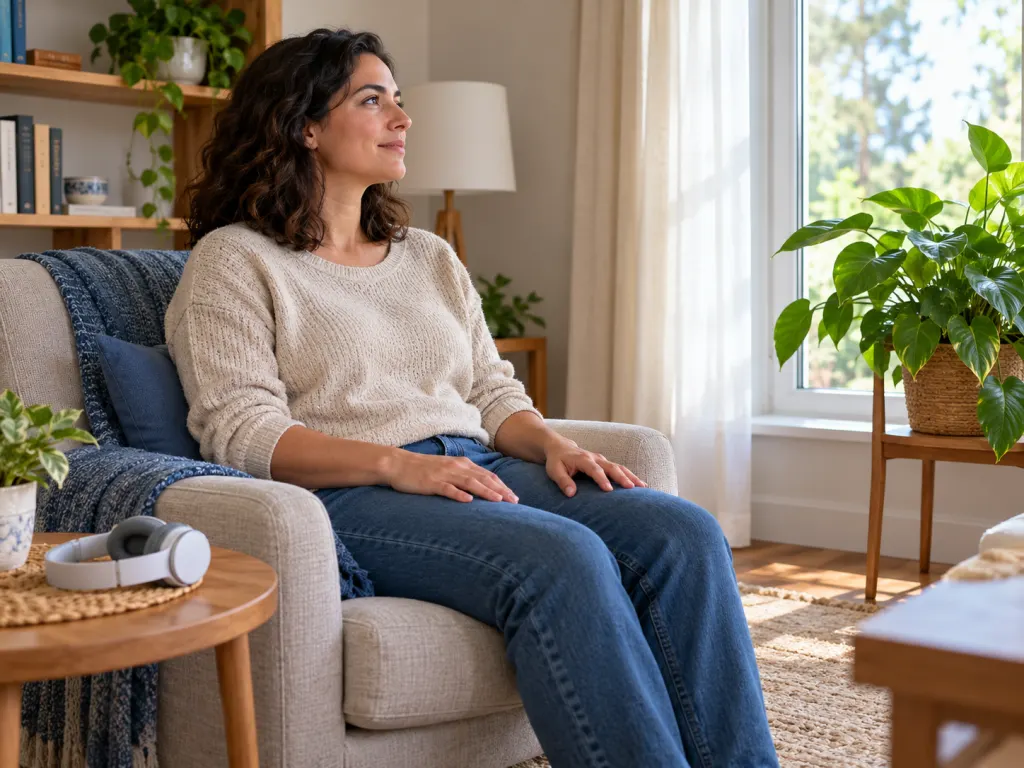
For an ordinary home pause, choose somewhere you will not need to balance, hold an object, or keep checking a task. Rest your hands wherever they are comfortable. Leave your eyes open if that is your preference. You might choose the same armchair each afternoon simply because it is convenient. For related reading about choosing comfortable resting positions, see What Sleeping Position May Reveal About Comfort.
Counting is an optional attention aid
If counting appeals to you, count quietly through an easy inhale and again through an easy exhale. The NHS suggests counting toward five when comfortable, while acknowledging that people may not reach five initially. Let your own comfortable breath determine where the count ends. NHS counting guidance.
For example, you could use a short, easy count rather than following someone else’s cadence. Do not lengthen the breath to finish the sequence. Allow the next breath to arrive without deliberately holding between phases. If numbers become distracting, leave them out. A quiet mental cue such as “in” and “out” is another optional way to organize your attention, rather than a formula with a promised result.
Give yourself permission to make the practice simpler
You can begin by deciding only where to sit and what you will stop doing for the moment. Put down the shopping list, close the work document, or leave the unfinished message until afterward. You do not have to add background music, a special scent, a posture sequence, and a breathing app at the same time.
For your first attempts, consider choosing one cue: comfortable breathing, quiet counting, or simply noticing the room while you rest. These are practical options for keeping the experience uncomplicated, not different levels of achievement. You can also decide in advance that you are free to finish early. An optional relaxation practice should leave room for preference, interruption, and an ordinary day when you would rather do something else.
What the evidence supports, and what remains uncertain
The National Center for Complementary and Integrative Health describes evidence that breathing exercises may help with stress as preliminary. It also emphasizes limitations across research on relaxation approaches. That supports modest expectations rather than a promise that a particular pattern will work for everyone. NCCIH: relaxation techniques.
A useful counterbalance comes from a 2023 randomized trial involving 400 adults. Researchers compared a slow guided rhythm with a faster guided rhythm over four weeks. Both groups reported improvements, but the slower rhythm did not produce a measurable additional benefit for the main stress outcome. Read the controlled breathing trial.
This distinction matters: improvement after an activity does not establish which part of the activity caused it. Scheduled quiet time, attention, expectations, and breathing instructions can occur together. The trial does not settle every question about breathing practice, but it gives readers a reason to be cautious about claims that one precise pace is uniquely effective.
Build a routine around a real opening in your day
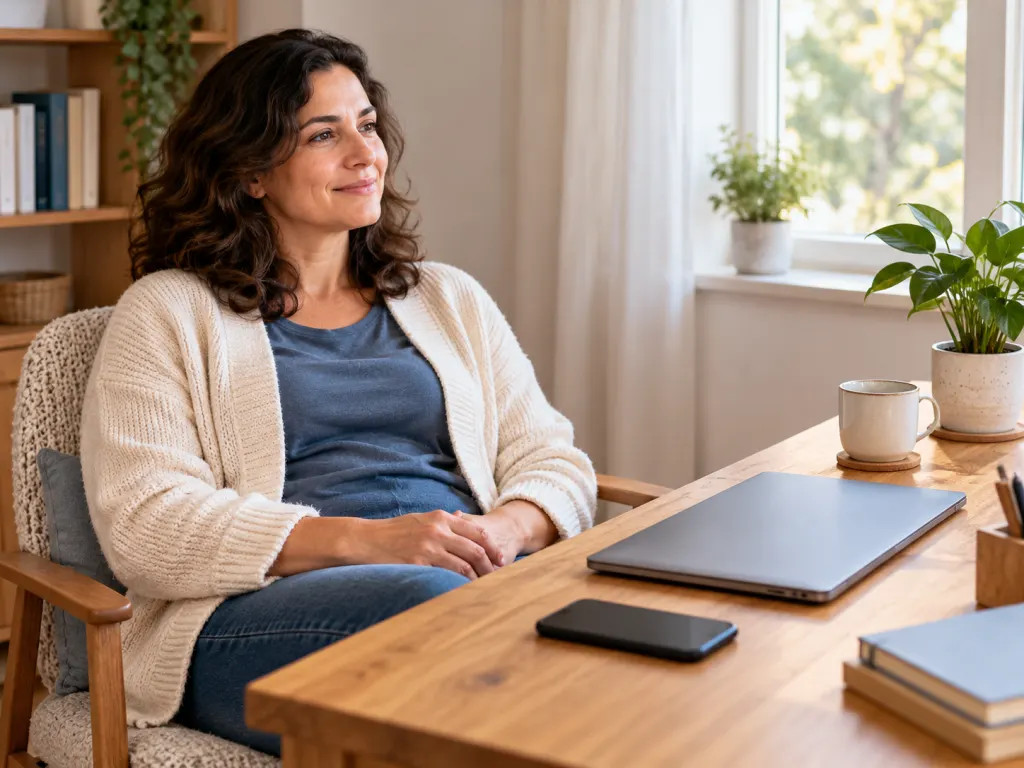
Choose a moment that already exists rather than designing an ambitious new schedule. Possible openings include sitting down after clearing the table, closing your laptop, or changing out of work clothes. Pick one that usually allows you to pause without supervising another activity.
Here are practical ways to make that choice concrete:
- After work: put your bag down, sit in your chosen chair, and leave messages unopened during the pause.
- Between desk tasks: close the completed document before beginning the next one, with your screen temporarily out of view.
- In the evening: choose a quiet moment before starting your next household task.
- On an interrupted day: let the pause end without trying to make up missed time later.
These examples are organizational suggestions, not studied schedules. Choose the one that fits your life. You can write a simple reminder such as “chair after laptop” in your own planner, rather than constructing a detailed tracking system. If the chosen moment repeatedly proves inconvenient, move it.
A wandering mind does not require a stricter exercise
When a thought appears, you can acknowledge it without restarting the whole session. Perhaps you remember an email, notice traffic outside, or begin planning dinner. If you want to continue, return your attention to the next comfortable breath. You do not need to argue with the thought or assess whether you have concentrated well enough.
Mayo Clinic describes relaxation as a skill that takes practice and advises against letting the effort itself become another source of stress. It also recognizes that another approach may suit someone better. Mayo Clinic: relaxation techniques.
For a practical adjustment, try changing only one thing next time: remove the count, choose a different seat, or leave your eyes open. Avoid changing several details at once if your aim is to learn what you prefer.
Treat recordings and apps as adjustable tools
Before using a recording, preview its instructions. For the gentle approach described here, choose guidance you can pause or ignore whenever its pace becomes uncomfortable. A moving shape or spoken count is a cue you may follow; it is not a test you must pass.
Consider whether the tool adds something useful. Can you turn off notifications? Is the voice pleasant to you? Can you finish without an achievement score? Would silence be simpler? These are preference questions, so there is no need to buy a device or subscription before trying a quiet pause.
If a guide asks for rapid breathing, forceful breathing, or deliberate breath retention, it is outside the scope of this article. Choose instructions that match the comfortable, continuous approach you intended to try.
Judge usefulness without turning it into a score
Afterward, consider one plain question: would you choose this kind of pause again? You might appreciate the time away from a screen even if your thoughts remained busy. You might feel unchanged. You might prefer a different way to rest. Record a short observation only if that is useful to you.
A personal observation can guide your preferences, but it cannot establish a medical effect or prove that the breathing rhythm caused a change. Likewise, an enjoyable session does not create an obligation to repeat it every day. Keep your conclusions proportionate to what you actually noticed.
For example, “I liked sitting quietly before opening messages” is a specific observation. “This exact count is necessary for me to relax” is a much larger conclusion that your experience alone cannot establish.
Stop when breathing practice becomes uncomfortable
Stop the deliberate exercise if you become dizzy or light-headed, and allow your breathing to return to its usual pattern. The American Heart Association explicitly advises stopping breathing techniques when these sensations occur. It also recommends discussing breathing exercises with a healthcare professional first if you have a heart or lung condition. American Heart Association: breathing guidance.
Discomfort can also be emotional. NCCIH notes that some people experience increased anxiety, intrusive thoughts, or distress during relaxation techniques. You do not need to push through those experiences. Stop, return your attention to your surroundings, and discuss persistent or troubling reactions with a qualified health professional. NCCIH safety information.
Breathing difficulty belongs on a different decision path
New, unexplained, or worsening shortness of breath needs medical assessment. Do not assume that stress is the cause or keep practicing while deciding whether it matters. The NHS advises seeking help for breathing difficulty and warns against diagnosing its cause yourself. NHS: shortness of breath.
Call your local emergency number for severe breathing difficulty, such as gasping or being unable to speak, or for breathing difficulty accompanied by a tight or heavy chest, very pale, blue or gray lips or skin, or sudden confusion. Do not drive yourself to emergency care. NHS emergency warning signs.
For separate background reading, the site also covers lungs and air pollution. Reading about a possible trigger should not delay assessment of a current breathing problem.
Wrap-Up
Keep a relaxation pause easy to begin and easy to stop. Choose a comfortable setting, use counting only if it helps, and leave room for ordinary breathing. Evaluate the experience without expecting a specific result. Seek medical help for breathing difficulties rather than trying to resolve them through a relaxation exercise.
Frequently Asked Questions
- → Should I try to control my breathing throughout the day?
This article describes a chosen relaxation pause, not continuous monitoring. There is no all-day pace or target to maintain. When the pause ends, return to your ordinary activities and usual breathing. If you begin checking every breath or worrying about doing it correctly, set the counting and tracking aside rather than adding more rules.
- → Does everyone need the same breathing rhythm?
The evidence does not establish one universally best rhythm. In a controlled trial, a slower guided rhythm did not outperform a faster guided comparison for the main stress outcome. That finding supports keeping expectations modest and avoiding an uncomfortable pace just because it is advertised as ideal. Controlled breathing trial.
- → What if I would rather relax without focusing on breathing?
You can choose another approach. Mayo Clinic lists options including visualization and recognizes that different relaxation methods suit different people. For a simple personal alternative, you might choose a quiet activity you already enjoy rather than forcing yourself to like breath-focused practice. Mayo Clinic relaxation options.
- → What should I ask a professional if the practice feels difficult?
Describe what happened, whether it was physical discomfort or emotional distress, and which instructions you were following. Useful questions include whether a breathing exercise is appropriate for your situation and whether another relaxation approach would suit you better. NCCIH encourages discussing complementary practices with healthcare professionals so decisions reflect individual circumstances. NCCIH guidance.
References
This content was developed and refined using reliable sources.
- https://www.nhs.uk/mental-health/self-help/guides-tools-and-activities/breathing-exercises-for-stress
- https://www.nccih.nih.gov/health/relaxation-techniques-what-you-need-to-know
- https://www.mayoclinic.org/healthy-lifestyle/stress-management/in-depth/relaxation-technique/art-20045368?pg=1
- https://www.heart.org/en/healthy-living/healthy-lifestyle/stress-management
- https://pmc.ncbi.nlm.nih.gov/articles/PMC10719279
- https://www.nhs.uk/symptoms/shortness-of-breath