 Save
You are less likely to be fooled when you treat every urgent claim, miracle-looking offer, dramatic headline, and official-looking message as something to verify before you react. The point is not to become cynical. It is to build a short pause between what you see and what you do next. That pause is where you check the source, compare the claim with reliable evidence, and decide whether the message deserves your attention, your money, your personal information, or your share button.
Misleading claims work because they often look ordinary. A scam message may use a familiar company name. A website may have a clean design. A post may repeat something you have seen several times already. The FTC warns that scammers often pretend to be known organizations, create a problem or prize, pressure people to act immediately, and request payment in specific ways such as gift cards, wire transfers, payment apps, or cryptocurrency https://consumer.ftc.gov/articles/how-avoid-scam. Online misinformation uses a similar advantage: it tries to make a claim feel familiar, urgent, flattering, or difficult to question.
The First Signal Is Pressure
A useful rule is simple: the more a message demands immediate action, the more slowly you should move. Honest organizations usually give people time to review a bill, compare terms, call a known number, or ask someone they trust. Scammers and low-quality persuaders often do the opposite. They try to keep you inside the message, on the phone, in the chat, or on the page until you act.
Pressure can sound like a warning, a limited offer, a personal compliment, a rescue, or a chance that will vanish if you hesitate. The FTC specifically advises resisting immediate pressure and contacting a company through a website or phone number you already know is trustworthy rather than using contact details supplied inside a suspicious message https://consumer.ftc.gov/articles/how-avoid-scam. That advice applies beyond classic scams. If a social post, video, ad, or forwarded message punishes you for asking questions, treat that as a credibility problem.

Check the Source From the Outside
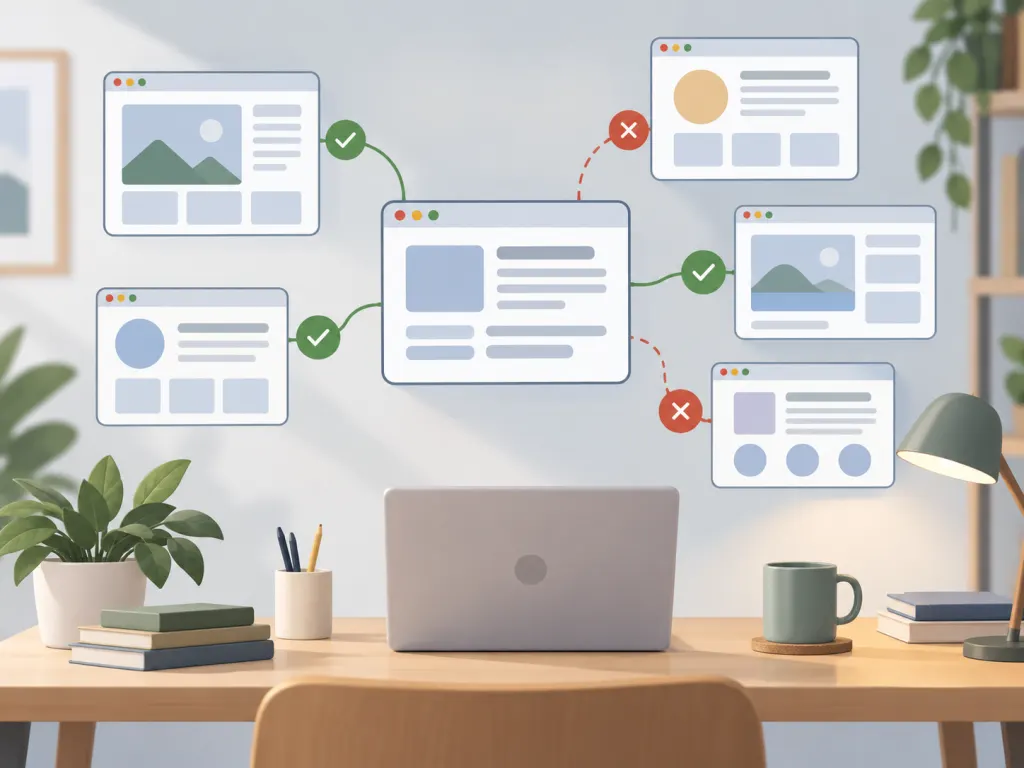
Many people try to judge a page by reading it carefully. That can work for books, contracts, or edited reports, but it is often a weak first move online. A polished site can still hide sponsorship, a fake contact point, a misleading title, or a copied logo. Stanford researchers describe a stronger habit called lateral reading: leave the page, open new tabs, and check what other reliable sources say about the site, author, organization, or claim https://ed.stanford.edu/news/it-doesn-t-take-long-learn-how-spot-misinformation-online-stanford-study-finds.
Outside checking can be fast. Search the organization name with terms such as “official,” “complaint,” “scam,” “funding,” or “about.” Look for the organization’s real web address from an unpaid result, a known public directory, or a document you already have. Do not assume a top search result is the correct one. The FTC notes that scammers can use paid search results and misleading taglines to steer people toward fake contact points that look related to a real business or government service https://consumer.ftc.gov/consumer-alerts/2025/04/online-search-results-good-bad-scammy.
A Practical Pause-and-Check List
Before you click, pay, forward, sign up, or repeat a claim, use this short list. It is designed for ordinary moments: a surprising message, a viral clip, a too-clean explanation, a strange invoice, or a headline that makes you feel instantly certain.
- Stop the clock: wait before acting on any urgent demand.
- Identify the messenger: ask who created the claim, who shared it, and who benefits if you believe it.
- Verify outside the message: use a known website, saved contact, official statement, or independent source.
- Look for the missing context: dates, funding, limits, exceptions, and whether the claim depends on one screenshot or one anecdote.
- Separate proof from polish: clean design, confident language, and a familiar logo are not evidence.
- Ask before sharing: decide whether passing it along would inform people or merely amplify uncertainty.
Repetition Can Make a Claim Feel True
Seeing the same statement many times can make it feel more credible, even when the evidence has not improved. A 2024 review indexed by PubMed describes the illusory truth effect: repetition can increase belief in information, including misinformation, and can also increase people’s willingness to share headlines https://pubmed.ncbi.nlm.nih.gov/38113667/. That is why “I keep seeing this everywhere” is not the same as “this has been verified.”
Repetition is especially persuasive when it arrives through different-looking channels: a short video, a screenshot, a comment thread, a newsletter, and a friend’s message. The formats vary, so the claim feels independently confirmed. In reality, all of those items may trace back to the same weak source. When a claim feels familiar, ask yourself where you first saw it and whether any later version added real evidence.
Scam Messages Often Tell a Story
Phishing and fraud messages rarely say, “Give me your password.” They tell a story that makes the request seem reasonable. The FTC says phishing emails and texts may claim there is suspicious activity, a payment problem, an unrecognized invoice, a government refund, or a free offer, all to push the reader toward a link, attachment, or personal-information request https://consumer.ftc.gov/articles/how-recognize-avoid-phishing-scams. The story gives the message momentum.
NIST gives similar advice for businesses and individuals: treat unexpected links and attachments with caution, watch for urgency, verify requests through known contact information rather than information inside the message, and use multi-factor authentication when available https://www.nist.gov/itl/smallbusinesscyber/guidance-topic/phishing. The practical takeaway is that you do not need to prove a message is fake before refusing to use its link. You only need a safer route to check it.
The Best Questions Are Boring on Purpose
Good verification questions are rarely dramatic. They sound almost dull: What is the original source? Is this current? Is there another explanation? Has a reliable organization confirmed it? Is the claim asking me to pay, click, share, sign, or reveal information before I understand the facts? Those questions work because they slow the emotional rhythm of the message.
When a claim involves money, identity, accounts, documents, or access, use a higher standard. Do not rely on caller ID, a search-result phone number, a link in a message, or a logo. If the message says it comes from a bank, delivery service, utility, school, marketplace, or government agency, go to the account or agency through a known route. If you are unsure, talk to someone who is not caught up in the message. The FTC recommends telling a trusted person before doing anything else when a potential scam appears, because explaining it aloud can reveal the manipulation https://consumer.ftc.gov/articles/how-avoid-scam.

Do Not Let Pride Keep You Trapped
Everyone can be fooled. Smart people are not immune to urgency, repetition, social proof, or a message that arrives at the right vulnerable moment. In fact, overconfidence can make a person easier to steer because it turns verification into something other people need. The better posture is modest: “This looks plausible, so I should check it.”
If you already clicked, paid, shared, or repeated something, switch from embarrassment to containment. Change affected passwords if account access may be involved. Contact the real institution through a known channel if financial information may have been exposed. Report suspicious messages through the platform or relevant reporting route. Correct a shared claim plainly if you discover it was wrong. A quiet correction is more useful than pretending the original post never happened.
When to Trust, When to Wait, and When to Walk Away
Trust is not a feeling of certainty. It is a judgment built from source, evidence, transparency, and fit. A claim becomes more trustworthy when it identifies who made it, shows how the conclusion was reached, admits limits, and can be checked against independent evidence. A claim becomes less trustworthy when it hides the source, depends on urgency, demands secrecy, uses one anecdote as proof, or asks for money or private information through an unusual route.
Waiting is a valid decision. Many misleading claims are designed to make waiting feel irresponsible, but a short delay often reveals whether the story holds up. New context appears. Official pages update. Better reporting separates fact from rumor. Friends may notice what you missed. The goal is not to react last; it is to react with enough information that your next step is yours.
Wrap-Up
The habit that keeps you from being fooled is not suspicion toward everything. It is verification before action. Pause when a message pressures you, check the source from outside the message, be wary of repeated claims that lack new evidence, and use known contact routes before clicking or paying. A convincing story is still only a story until reliable evidence supports it.
Frequently Asked Questions
- → What is the fastest way to check whether a claim is misleading?
Leave the original page or message and verify it from the outside. Search for the organization, author, or claim using independent sources, then compare what you find with the original. This is faster than trying to judge a polished page only by how it looks.
- → Are top search results always trustworthy?
No. The FTC warns that scammers can use paid search results and misleading wording to look connected to a real company or agency. When accuracy matters, scroll carefully, use a known web address when you have one, or confirm contact details from an official source.
- → Why do repeated claims feel more believable?
Repetition can make information feel familiar, and familiar claims can feel easier to accept. That feeling is not proof. If you keep seeing the same claim, look for independent evidence rather than counting repeated appearances as confirmation.
- → What should I do with an urgent message from a company I use?
Do not use the link, phone number, or attachment inside the message. Go to the company through its official app, a saved bookmark, a known web address, or a phone number from a document you already trust. If the issue is real, you should be able to find it there.
- → Does being skeptical mean distrusting everything?
No. Good skepticism is selective attention. It means asking for enough evidence before acting, especially when a claim asks for money, personal information, secrecy, outrage, or immediate sharing.
References
This content was developed and refined using reliable sources.
- https://consumer.ftc.gov/articles/how-avoid-scam
- https://consumer.ftc.gov/articles/how-recognize-avoid-phishing-scams
- https://consumer.ftc.gov/consumer-alerts/2025/04/online-search-results-good-bad-scammy
- https://ed.stanford.edu/news/it-doesn-t-take-long-learn-how-spot-misinformation-online-stanford-study-finds
- https://pubmed.ncbi.nlm.nih.gov/38113667
- https://www.nist.gov/itl/smallbusinesscyber/guidance-topic/phishing