 Save
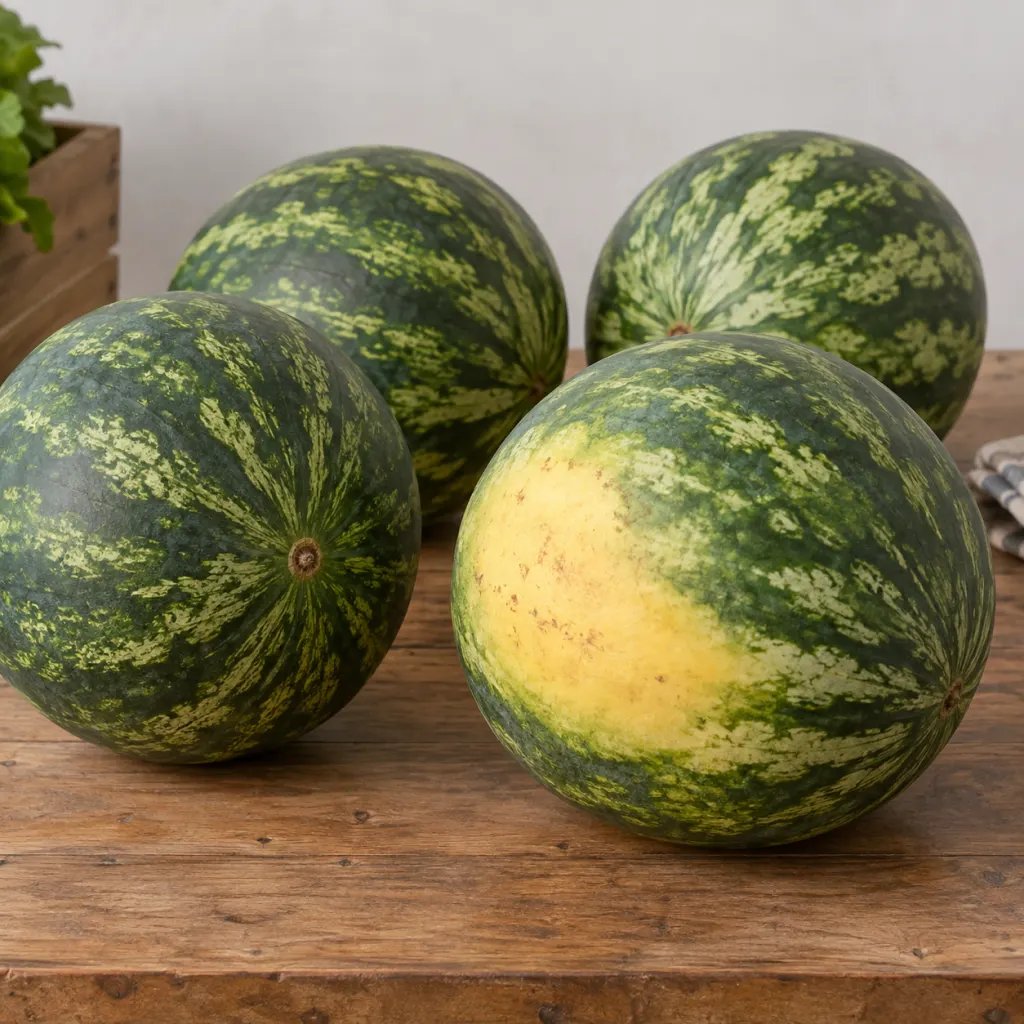
If the choice is between several whole watermelons, choose the melon with the most complete set of ripeness clues: a creamy yellow field spot, dull-looking rind, symmetrical shape, and heavy feel for its size. Those signs matter more than a perfect stripe pattern or a dramatic tap sound. University of Minnesota Extension notes that watermelons do not get sweeter after harvest, so the best pick is the one that was mature before it left the vine: https://extension.umn.edu/agriculture/specialty-crops/commercial-fruit-production/harvesting-and-storing-melons-squash-and-pumpkins. In a common four-melon puzzle, the winning melon is usually the one with the warm yellow resting spot, even shape, and firm, unbruised rind. This guide explains how to make that choice in real life, where lighting, variety, and store handling can make the clues less tidy.
Start With the Best Overall Candidate
The best melon is rarely the one with just one impressive feature. A watermelon with a beautiful pattern but a pale underside may have been picked early. A melon with a huge yellow patch but a soft bruise may have quality problems. A very shiny rind can look attractive, yet University of Georgia Extension describes a dull finish, creamy yellow field spot, heavy feel, and dry tendril or stem area as more useful clues for watermelon selection: https://site.extension.uga.edu/evansag/2025/07/how-to-pick-a-ripe-watermelon-and-why-you-should-enjoy-one-this-summer/. If you are looking at four similar watermelons, rank them by the whole picture. The strongest candidate has a buttery or creamy yellow ground spot, a rind that looks matte rather than glossy, no deep dents, no wet cracks, and a weight that feels generous compared with another melon of the same size.
Use this quick scan before you overthink it:
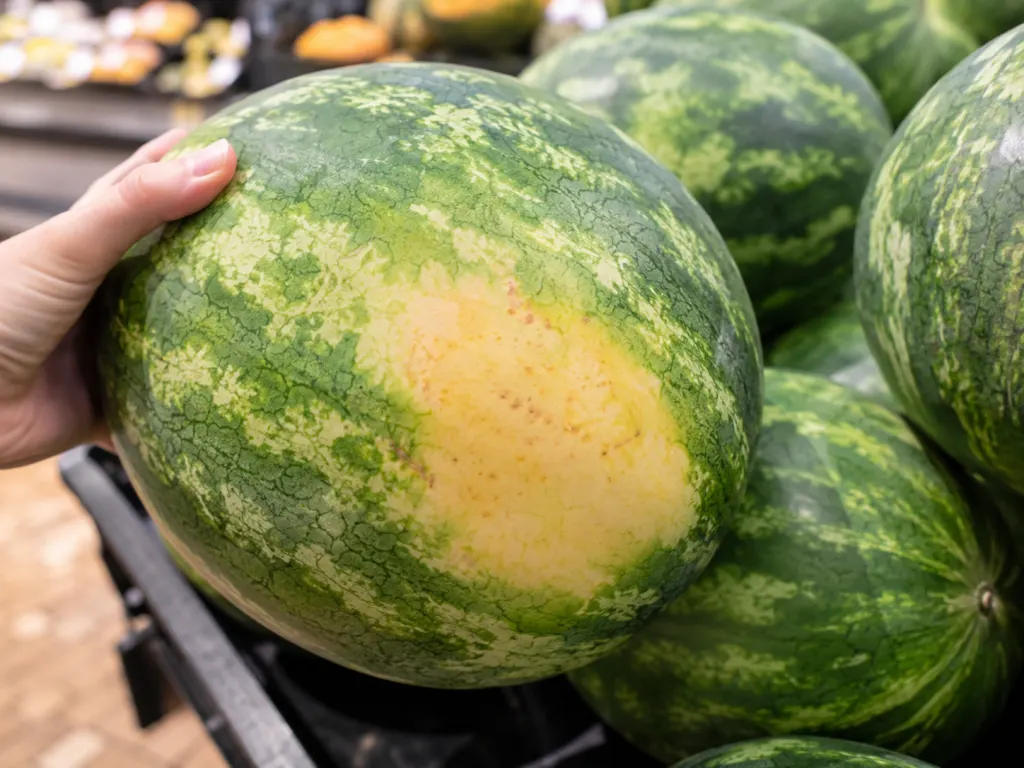
- Field spot: Choose creamy yellow over white, greenish, or absent.
- Weight: Compare two similar-size melons and favor the heavier one.
- Shape: Look for a balanced oval or round form without flat, sunken, or lopsided areas.
- Rind finish: A mature watermelon often looks more dull than shiny.
- Surface condition: Skip melons with soft bruises, leaking cracks, or rotten-looking spots.
- Stem clues: A dry stem can support the choice, but it should not outweigh poor rind or field-spot signs.
Why the Yellow Field Spot Matters
The field spot is the area that rested against the ground while the watermelon grew. It is useful because it records time on the vine better than a sticker, stripe pattern, or guess from size alone. University of Minnesota Extension says the spot where a watermelon touches the ground becomes more prominent and typically yellow as the fruit ripens. The same source also notes that a nearby tendril drying brown and a dull, hollow tap can support the call, while rind sheen varies by variety: https://extension.umn.edu/agriculture/specialty-crops/commercial-fruit-production/harvesting-and-storing-melons-squash-and-pumpkins. A white or greenish spot often points to a melon that had less time to mature before harvest. A dark yellow spot is not a guarantee, but it is one of the clearest shopper-friendly clues because you can see it without cutting the fruit.
Use Several Clues, Not One Trick
The thump test is famous, but it is easy to misread in a loud store. A ripe watermelon can sound hollow or dull, yet size, rind thickness, variety, and your own comparison point all affect what you hear. That is why the tap should be a tie-breaker, not the whole method. First, look at the underside. Second, lift the melon. Third, check for a dull finish and a sound shape. Then tap two or three melons of similar size if you want an extra clue. If one melon has a creamy yellow spot and feels heavy, while another has a sharper, paler underside but a nice ring when tapped, choose the first. For readers who want a watermelon-only version of this decision, see How to Choose a Sweet Watermelon and How to Pick a Sweet Watermelon.
Remember That Melon Types Behave Differently
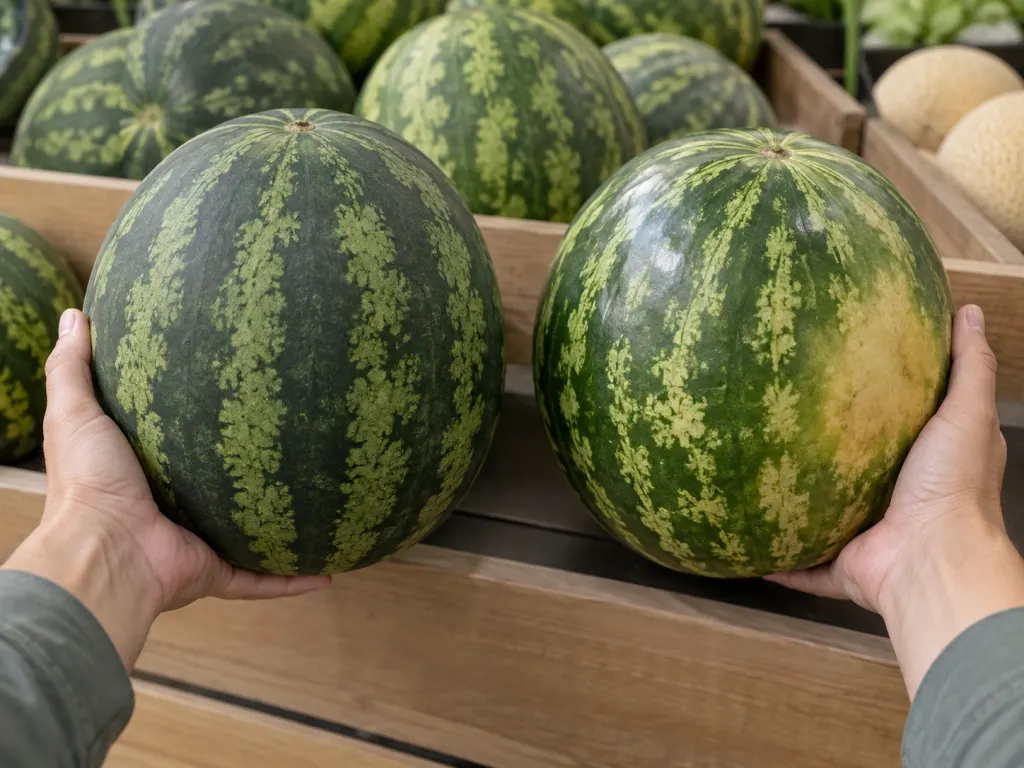
The word melon covers several fruits that shoppers handle in different ways. Watermelon is not the same picking problem as cantaloupe or honeydew. University of Minnesota Extension explains that watermelons do not ripen after harvest in the sense of becoming sweeter, so they should be harvested fully ripe. The same page notes that melon groups vary: cantaloupe-style melons may continue to ripen on the counter, while many honeydew-type melons should be harvested ripe because they generally will not become sweeter after picking. This is why a single rule like smell, softness, or stem slip can mislead you when you apply it to every melon in the bin.
Cantaloupe and Honeydew Need Different Tests
For cantaloupe or muskmelon, Iowa State University Extension says maturity is shown when the stem slips easily from the melon with slight pressure, the blossom end is slightly soft, the skin between the netting changes from green to yellow, and the melon has a strong aroma: https://yardandgarden.extension.iastate.edu/how-to/growing-cantaloupe-muskmelon-and-other-melons-home-garden. At the store, you may not see a fresh vine, so focus on rind color, aroma, and gentle blossom-end give. Honeydew is different. Iowa State notes that honeydew does not slip off the vine when mature; better signs are a pale green rind changing toward yellowish white, slight softness at the blossom end, and a light, pleasant aroma. Iowa State's Spend Smart Eat Smart produce guide gives a shopper-friendly version: cantaloupe should have tight netting and yellowish skin, honeydew should look creamy or yellow and feel heavy, and watermelon should have a creamy or yellow underside and a heavy feel: https://spendsmart.extension.iastate.edu/produce-item/melon-2/.
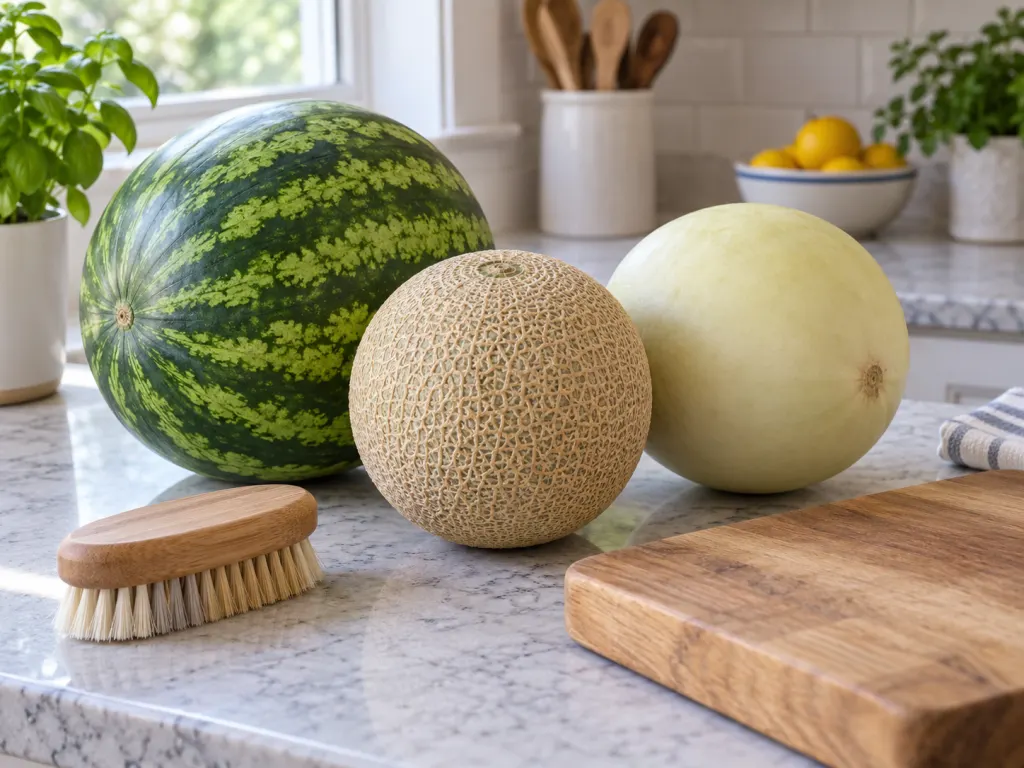
Do Not Let Looks Do All the Work
A picture puzzle can make melon choosing seem like a single visual answer, but real bins are messier. Some ripe watermelons have uneven striping. Some seedless varieties look paler than old-fashioned striped types. Some melons sit on the ground in a way that creates a small field spot rather than a large one. A pale, glossy, lightweight melon is easy to reject, but choosing between two good candidates takes judgment. Pick up both. Turn each one over. Look for a rind that is firm and intact. If one melon feels dense and balanced while another sounds fine but feels surprisingly light, favor the dense one. Weight is not sweetness by itself; it is a practical clue that the fruit has good internal moisture and has not dried out during storage.
Buying, Washing, and Storing Matter Too
The best-looking melon can still disappoint if it is bruised, poorly stored after cutting, or handled on an unclean board. The FDA advises choosing produce that is not bruised or damaged, buying pre-cut items such as watermelon halves only when they are refrigerated or on ice, and keeping produce separate from raw meat, poultry, and seafood in the cart and kitchen: https://www.fda.gov/food/buy-store-serve-safe-food/selecting-and-serving-produce-safely. The FDA also recommends rinsing produce before peeling or cutting, scrubbing firm produce such as melons with a clean produce brush, and drying it with a clean towel or paper towel: https://www.fda.gov/consumers/consumer-updates/7-tips-cleaning-fruits-vegetables. That advice applies even when you do not plan to eat the rind, because the knife passes through the outside on its way to the flesh.
A Simple Store Decision Tree
When you are standing in front of the display, start by deciding which melon type you are buying. For watermelon, ignore perfect beauty and search for maturity clues: yellow field spot, heavy feel, dull finish, and a firm, unbroken rind. For cantaloupe, sniff near the blossom end rather than relying only on color; the aroma should be pleasant, not harsh or fermented. Check that the rind between the netting has shifted away from green. For honeydew, look for a creamy yellow cast rather than a hard green look, then check that it feels heavy and has a little give at the blossom end. If you are buying cut melon, selection becomes less about rind clues and more about storage: choose pieces that are cold, fresh-looking, and packaged cleanly.
How to Read the Four-Melon Puzzle
If a puzzle shows four watermelons and asks which one you would choose, use the same hierarchy. The best answer is the melon with the warmest creamy-yellow ground spot, the firmest and most regular-looking rind, and a balanced shape. A large pale patch is weaker than a smaller rich yellow patch. A shiny bright-green rind is usually less persuasive than a dull rind. A melon with a good stem clue but obvious bruising should move down the list. In many versions of this puzzle, the first melon is the strongest candidate because it combines a visible yellow field spot with a regular shape and a rind that looks mature rather than overly shiny. That answer is reasonable only if the surface also looks firm and intact.
What to Do After You Cut It
Once cut, the rind can no longer protect the flesh from the kitchen environment, so storage becomes part of quality. Keep cut melon covered and chilled. Iowa State's Spend Smart Eat Smart guide says uncut melons can be stored at room temperature for up to one week and cut melon can be refrigerated in an airtight container for up to five days. Your own senses still matter: discard melon that develops an off odor, slimy surface, leaking package, or mold. For whole melons, store them where they will not be crushed, and avoid piling heavy items on top. For cantaloupe with a strong aroma, Iowa State Extension suggests refrigerating in a plastic bag so the scent does not flavor other stored foods.
Wrap-Up
Choose the melon with the strongest group of clues, not the one with a single flashy feature. For watermelon, that usually means a creamy yellow field spot, heavy feel, dull rind, regular shape, and no bruised or leaking areas. For cantaloupe, aroma, yellowing under the netting, slight blossom-end softness, and easy stem slip are more relevant. For honeydew, look for a creamy yellow cast, weight, and gentle blossom-end give. Handle the melon well after buying it: wash the rind before cutting, use clean tools, and refrigerate cut pieces.
Frequently Asked Questions
- → Is the yellow spot the most important clue on a watermelon?
It is one of the strongest visual clues because it shows where the melon rested on the ground as it matured. Choose creamy yellow over white or greenish, then confirm with weight, rind condition, shape, and a dull finish.
- → Does tapping a watermelon really work?
Tapping can help when you compare several similar melons, but it should not be the only test. A ripe watermelon may sound dull or hollow, yet variety and size affect the sound. Use tapping as a tie-breaker after checking the field spot, weight, and rind.
- → Will a watermelon get sweeter on the counter?
No. University of Minnesota Extension explains that watermelons do not become sweeter after harvest. That is why choosing one with maturity clues at the store matters more than waiting for it to improve at home.
- → How do I choose cantaloupe instead of watermelon?
Look for yellowing between the netting, a pleasant melon aroma, slight softness at the blossom end, and, when visible, a stem end that separated easily. Avoid cantaloupe with wet cracks, mold, or a harsh fermented smell.
- → Should I wash a melon if I will not eat the rind?
Yes. The FDA recommends rinsing produce before peeling or cutting and scrubbing firm produce such as melons with a clean produce brush. Washing first helps keep surface material from moving inward on the knife.
References
This content was developed and refined using reliable sources.
- https://extension.umn.edu/agriculture/specialty-crops/commercial-fruit-production/harvesting-and-storing-melons-squash-and-pumpkins
- https://site.extension.uga.edu/evansag/2025/07/how-to-pick-a-ripe-watermelon-and-why-you-should-enjoy-one-this-summer
- https://yardandgarden.extension.iastate.edu/how-to/growing-cantaloupe-muskmelon-and-other-melons-home-garden
- https://spendsmart.extension.iastate.edu/produce-item/melon-2
- https://www.fda.gov/food/buy-store-serve-safe-food/selecting-and-serving-produce-safely
- https://www.fda.gov/consumers/consumer-updates/7-tips-cleaning-fruits-vegetables