 Save
Wood ashes are not magic waste, but they are not ordinary dust either. The most reliable uses are practical and limited: a measured garden amendment for acidic soil, a traction aid on icy walkways, and a cautious old-fashioned scouring material for tough surfaces. University extension guidance consistently says the key is restraint. Wood ash can raise soil pH and add minerals, especially calcium and potassium, but too much can damage plants or create cleanup problems. Start by asking where the ash came from, whether it is completely cold, and whether you have a real use for it before spreading it anywhere.
What Wood Ash Is Good For
Clean wood ash is the powdery mineral residue left after untreated firewood burns. Because the wood's carbon has largely burned off, what remains is concentrated in mineral material. The University of Wisconsin Extension notes that wood ash can contain calcium, potassium, magnesium, phosphorus, sulfur, and trace minerals, while also acting on soil acidity through carbonates that raise pH https://hort.extension.wisc.edu/articles/using-wood-ash-in-the-home-garden/. That is why ash has value in certain gardens and lawns, but it is also why careless use causes trouble. It behaves less like compost and more like a liming material mixed with soluble salts.
The safest way to think about wood ash is as a narrow-purpose household material, not an all-purpose cure for every home and garden problem. Its best uses are situations where alkalinity, grit, or absorbency is helpful and where a small amount can be controlled. Useful possibilities include:
- Raising pH in soil that has tested acidic and is suitable for the plants you grow.
- Adding potassium and other minerals when a soil test suggests they are useful.
- Adding grip to icy paths when a non-melting traction material is enough.
- Scouring sturdy, non-delicate surfaces in a controlled way, followed by thorough rinsing.
- Absorbing a small fresh grease spot on concrete before sweeping and proper cleanup.
Those uses all share the same rule: use a little, keep it contained, and do not treat ash from unknown or contaminated burning as safe.
Start With The Source Of The Ash
The source matters more than the look of the ash. Ash from clean, untreated firewood is the only kind to consider for household or garden reuse. Do not use ash from trash, cardboard, coal, barbecue briquettes, painted wood, stained wood, pressure-treated wood, plywood, particleboard, or wood with glue. Oregon State University Extension specifically warns against using ash generated by burning trash, cardboard, coal, barbecue charcoal, and treated or finished wood because those materials can leave unwanted substances behind https://extension.oregonstate.edu/news/sweep-wood-ash-fireplace-garden. EPA wood-burning guidance also lists trash, coated or pressure-treated wood, plywood, particleboard, plastics, and similar materials among things that should not be burned in a wood appliance https://19january2017snapshot.epa.gov/burnwise/burn-wise-best-burn-practices_.html.
If you did not control what was burned, do not reuse the ash in the garden, on cookware, or near surfaces that children or pets touch. That includes ash from public fire pits, demolition wood, old fence boards, glossy packaging, and mixed campfire leftovers. Even when ash looks pale and clean, it may contain nails, glass, melted plastic residue, charcoal chunks, or concentrated salts. A simple rule works well: if the fuel source would not have belonged in a clean indoor wood stove, the ash does not belong in a vegetable bed or household project.
Use In The Garden Only When Soil Needs It
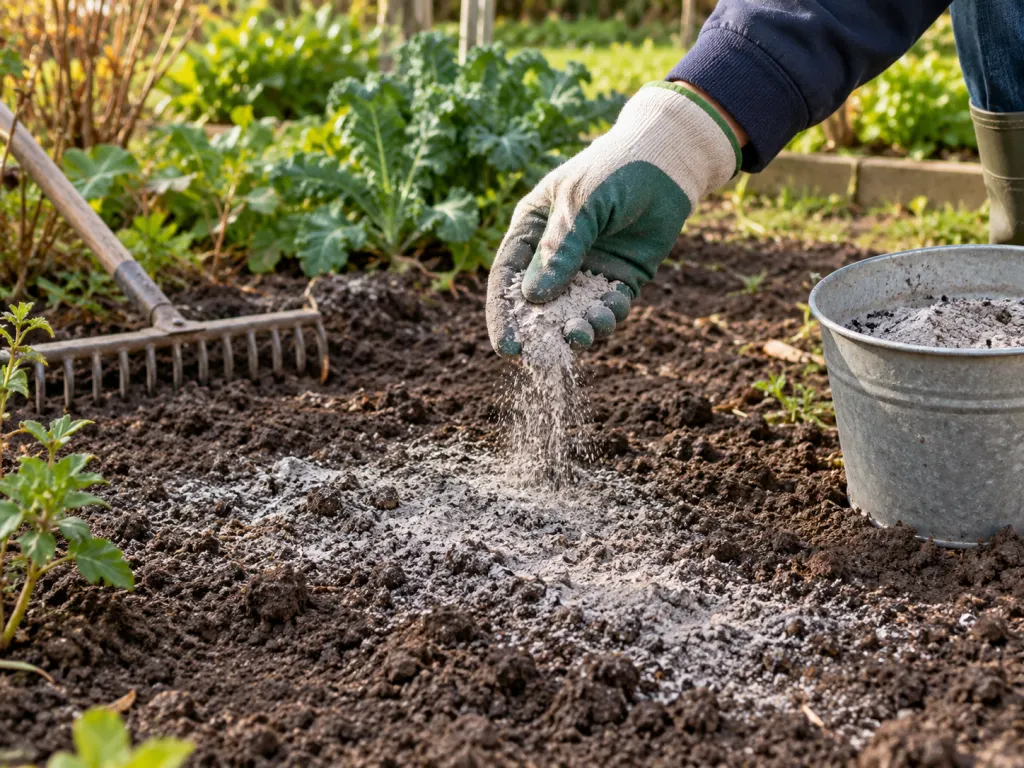
The most evidence-supported use for wood ash is soil adjustment. Wood ash can raise soil pH, much like lime, and it can supply minerals that plants use. Wisconsin Extension says calcium may make up 20 percent or more of wood ash, while potassium can occur up to about 5 percent https://hort.extension.wisc.edu/articles/using-wood-ash-in-the-home-garden/. Oregon State Extension describes wood ash as most useful on acidic soils that are also low in potassium https://extension.oregonstate.edu/news/sweep-wood-ash-fireplace-garden. That pairing is important. If the soil is not acidic, or if potassium is already sufficient, adding ash may create more problems than benefits.
A soil test is the difference between using ash as an amendment and simply dumping fireplace leftovers outdoors. The University of Minnesota Extension explains that soil testing helps identify pH, organic matter, and nutrient levels, and helps gardeners decide how much, if anything, to add https://extension.umn.edu/garden-and-home/yard-and-garden/gardening-in-minnesota/soil-testing-for-lawns-and-gardens. Without that information, wood ash is guesswork. Repeated small guesses can add up quickly because ash is soluble and reactive. It is especially easy to overdo it in raised beds, small vegetable plots, and narrow planting strips near a walkway.
A Practical Garden Checklist
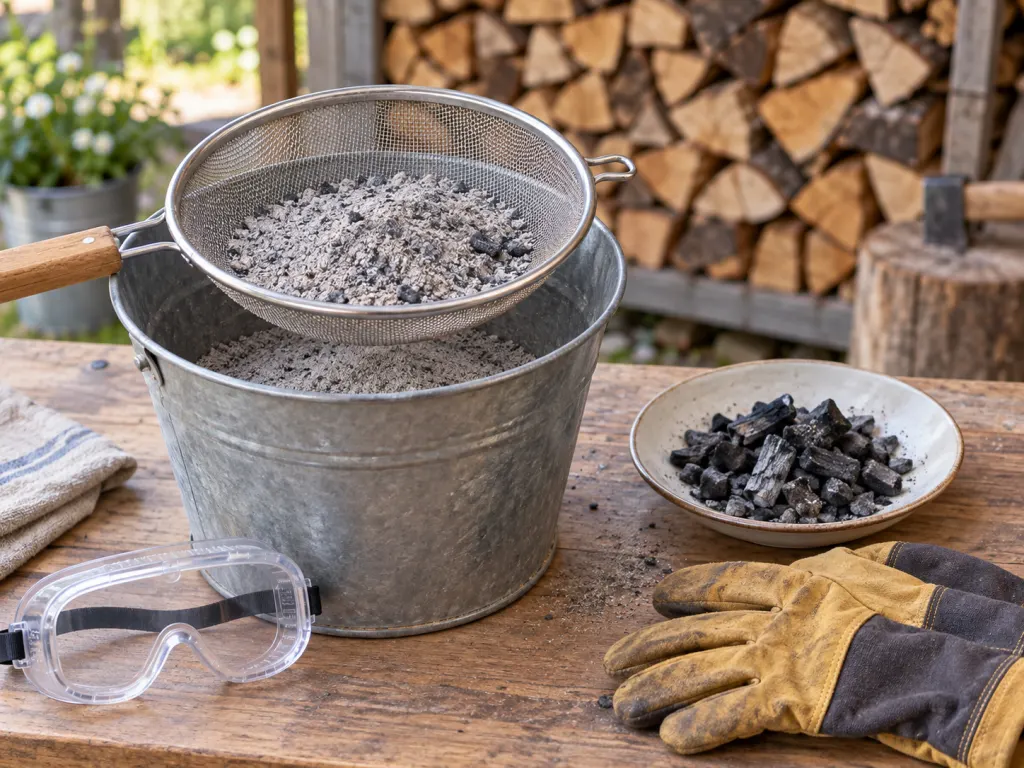
Before ash goes into a garden, run through a short checklist. Use only fully cooled, dry ash from clean firewood. Sift out charcoal chunks, nails, and debris. Avoid windy days because the fine dust travels easily. Apply only to soil that can use a pH increase, then rake it in lightly rather than leaving piles. Oregon State Extension gives a yearly upper limit of 10 pounds per 100 square feet, while Wisconsin Extension says garden applications are generally limited to 15 to 20 pounds per 1,000 square feet per year, depending on soil testing and plant needs https://extension.oregonstate.edu/news/sweep-wood-ash-fireplace-garden https://hort.extension.wisc.edu/articles/using-wood-ash-in-the-home-garden/. Because recommendations vary by site, the smaller and better-measured approach is the safer habit for home gardeners.
Some plants should usually be left out of the ash plan. Blueberries, azaleas, rhododendrons, ferns, and similar acid-loving plants generally prefer acidic conditions, so ash can push their soil in the wrong direction. Oregon State also advises against using ash when soil pH is above 7.0 and at the time of seeding, because salts in ash can harm tender roots https://extension.oregonstate.edu/news/sweep-wood-ash-fireplace-garden. Potatoes are another crop to treat carefully because higher pH can favor scab problems. In plain terms, wood ash is not a springtime dusting for everything green. It is a measured amendment for a specific soil condition.
Compost, Lawns, And Small Beds
Wood ash is often suggested for compost, but that is one place where less is usually better. Compost works well across many garden situations because it adds organic matter and supports soil structure. Ash does not do that. It changes chemistry. Oregon State warns against mixing ash into compost unless you are keeping records of how much has been added, because ash-treated compost can damage sensitive seedlings and acid-loving plants https://extension.oregonstate.edu/news/sweep-wood-ash-fireplace-garden. If you compost, it is better to think of ash as a separate amendment that belongs in measured soil-care decisions, not as a routine layer between kitchen scraps and leaves.
Lawns can sometimes tolerate a light, even ash application better than a small bed because the area is larger and the ash is less concentrated. The University of New Hampshire Extension says wood ash is commonly used as a lawn and garden soil amendment and gives 20 pounds per 1,000 square feet as a yearly amount that may be acceptable for many lawn or garden areas, while still stressing soil testing every two or three years https://extension.unh.edu/resource/managing-wood-ashes. Even on a lawn, do not leave ash in piles. Concentrated ash can leach salts into one spot, leaving weak patches and runoff concerns.
Household Uses That Still Make Sense
Wood ash also has a long history outside the garden. UNH Extension lists traditional uses such as producing lye for soapmaking, sprinkling ash on paths and driveways for winter traction, scouring pots and pans, and cleaning glass, silver, and pewterware https://extension.unh.edu/resource/managing-wood-ashes. Modern households should interpret that list carefully. Historic use does not mean every method is convenient or suitable for every surface. Ash is alkaline and gritty. That combination can help with grime on tough, unfinished or fireproof surfaces, but it can also dull finishes, scratch coatings, and create dusty residue.
For cleaning, keep the use small and low-risk. A pinch of fine, fully cooled ash mixed with a little water can act as a mild abrasive paste on sturdy metal or fireplace glass, followed by a thorough rinse and drying. Do not use it on nonstick coatings, delicate enamel, porous stone, glossy modern finishes, or anything where scratching would matter. Do not combine ash with commercial cleaners. If you like household reuse ideas, this is the same practical mindset behind guides such as Unexpected Uses for Dryer Sheets Around the Home and 18 Things Never to Put in the Dishwasher: the best trick is the one that respects the material in front of you.
Winter Traction, Not Ice Melting
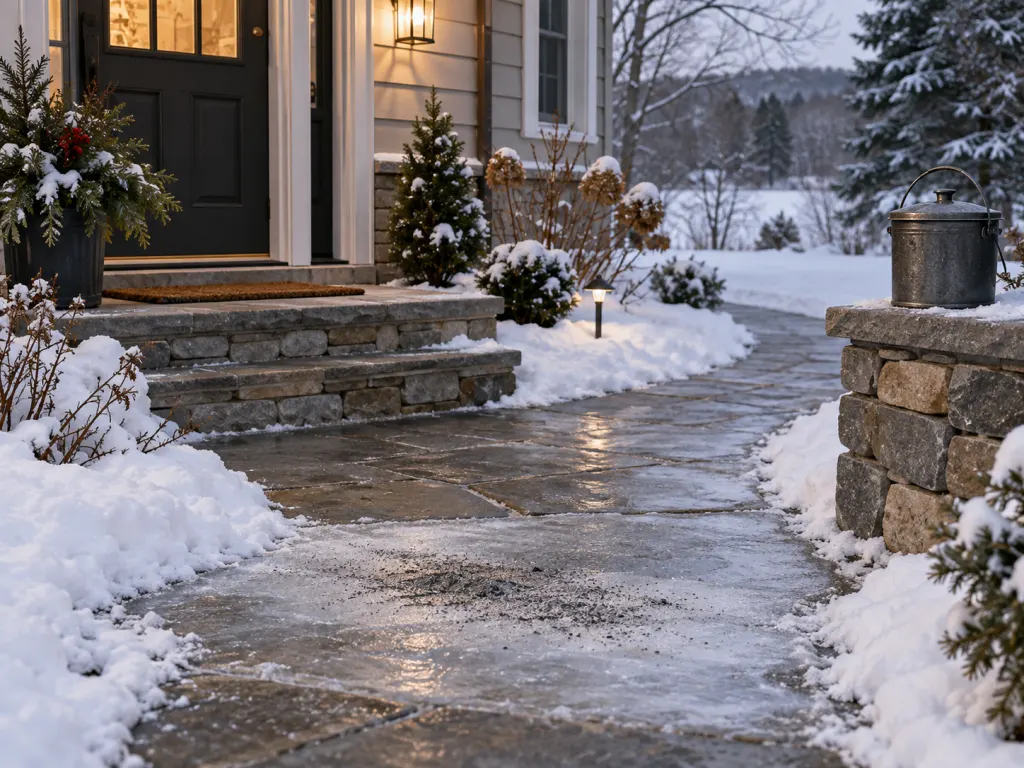
On icy paths, ash is better understood as grit than as a true ice-melt product. UNH Extension describes fireplace ash as one of several materials that can add grip to icy walkways, along with sand, wood shavings, and similar grits https://extension.unh.edu/blog/2018/11/breaking-ice. That can be useful when the goal is to reduce slipperiness for a short period. The tradeoff is mess. Ash tracks indoors, darkens snow, and leaves residue that must be swept when conditions thaw. Use it sparingly, keep it away from door thresholds where it will be carried inside, and avoid spreading it where runoff will wash a thick layer into garden beds.
Where Wood Ash Can Cause Trouble
The most common mistake is treating ash as harmless because it came from a natural material. Wood may be natural, but ash is concentrated, alkaline, and dusty. Too much can push soil pH beyond the range plants prefer, interfere with nutrient availability, and create salts that stress roots. Wisconsin Extension also notes that even good wood ash may contain small amounts of heavy metals, which is another reason to use ash from known clean wood and avoid overapplication https://hort.extension.wisc.edu/articles/using-wood-ash-in-the-home-garden/. The answer is not panic; it is selectivity. Keep good ash for a known purpose, and discard questionable ash safely.
Skip wood ash as an indoor deodorizer, a casual pest powder, or a homemade water treatment material. Fine ash can drift, settle, and make a bigger mess than the problem it was meant to solve. Claims about sprinkling ash for insects, slugs, or outdoor pests are often less reliable in real weather because rain and irrigation quickly change the texture. If you do try ash as a temporary dry barrier around non-food ornamental areas, keep it thin, avoid breathing the dust, and do not rely on it as your main garden strategy. For most readers, soil amendment and traction are more dependable uses than pest control.
Handling, Storage, And Disposal
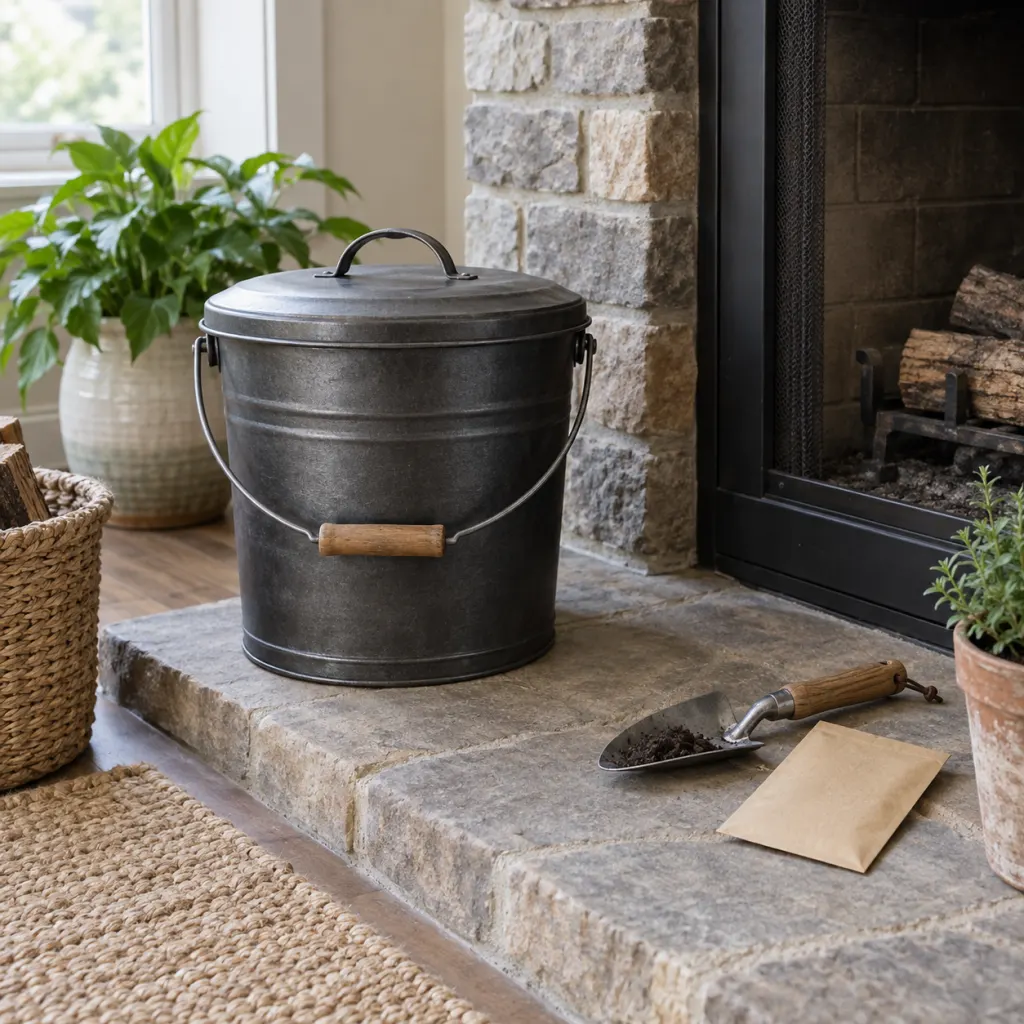
Ash disposal begins before reuse. Embers can remain hidden after a fire appears out, so storage needs to be fire-aware. The U.S. Fire Administration says ashes should cool before disposal, then be placed in a tightly covered metal container kept at least 10 feet from the home and other buildings, and not emptied directly into a trash can https://www.usfa.fema.gov/gallery/pictographs/pictograph43.html. UNH Extension similarly recommends a covered metal container outdoors on cement or brick, away from combustible surfaces, and warns against storing ash on a wooden deck or porch https://extension.unh.edu/resource/managing-wood-ashes. For reuse, the ash should be fully cold, dry, and free of embers.
A Simple Decision Rule
Here is the simplest way to decide what to do with a bucket of wood ash. If it came from clean untreated firewood, has cooled completely, and you have a soil test or a specific traction or cleaning use, save a small amount in a dry covered metal container. If you do not know what was burned, if the ash includes trash or treated material, or if you are only looking for somewhere to dump it, dispose of it safely instead of spreading it. Wood ash is useful when it solves a defined problem. It becomes a problem when it is treated as free fertilizer for every plant, free cleaner for every surface, or free grit for every outdoor step.
Wrap-Up
Wood ashes can earn a place in home care, but only with limits. Their strongest role is as a measured amendment for acidic soil that can use a pH lift and added minerals. They can also add temporary grip to icy paths and provide old-fashioned scouring power on sturdy surfaces. Use only clean, fully cooled ash from untreated wood, store it in a covered metal container, and avoid casual spreading. When in doubt, test the soil, use less than you think, or dispose of the ash safely.
Frequently Asked Questions
- → Can I put wood ash straight on my vegetable garden?
Only if the ash is from clean untreated wood and your soil conditions call for it. A soil test is the best starting point because ash raises pH and adds soluble minerals. Avoid applying it to new seedlings, acid-loving plants, or soil that is already neutral to alkaline.
- → Which plants usually should not get wood ash?
Blueberries, azaleas, rhododendrons, ferns, and other acid-loving plants are usually poor candidates because wood ash raises pH. Potato beds also deserve caution because higher pH can favor scab problems. When plant needs are uncertain, skip the ash until you have a soil test.
- → Can fireplace ash go into compost?
It can, but it should not be a routine dumping place. Ash changes compost chemistry and can make the finished material less suitable for seedlings or acid-loving plants. If you add any, use a very small amount, mix it thoroughly, and keep a record so it does not build up over time.
- → Is ash from charcoal or burned trash usable?
No. Use only ash from clean, untreated firewood. Ash from trash, cardboard, coal, barbecue briquettes, painted wood, stained wood, pressure-treated wood, plywood, particleboard, or glued wood should not be reused in the garden or around household surfaces.
- → Can wood ash melt ice?
Wood ash is better for traction than melting. A light sprinkle can add grip to an icy path, but it leaves dark residue and can be tracked indoors. Use it sparingly, clean it up after thawing, and avoid washing thick ash into planting beds.
- → How should I store ashes before using or discarding them?
Let ashes cool fully, then keep them in a tightly covered metal container outdoors on a nonflammable surface and away from buildings. Do not place warm ashes in plastic, paper, cardboard, or an indoor trash can. Hidden embers can stay hot longer than they look.
References
This content was developed and refined using reliable sources.
- https://hort.extension.wisc.edu/articles/using-wood-ash-in-the-home-garden
- https://extension.oregonstate.edu/news/sweep-wood-ash-fireplace-garden
- https://www.usfa.fema.gov/gallery/pictographs/pictograph43.html
- https://extension.umn.edu/garden-and-home/yard-and-garden/gardening-in-minnesota/soil-testing-for-lawns-and-gardens
- https://19january2017snapshot.epa.gov/burnwise/burn-wise-best-burn-practices_.html
- https://extension.unh.edu/resource/managing-wood-ashes
- https://extension.unh.edu/blog/2018/11/breaking-ice