 Save
Oatmeal is not a quick fix, but it can be a practical breakfast for people watching cholesterol, blood sugar, or weight goals. Oats contain beta-glucan, a soluble fiber linked with fullness and heart-health nutrition, and plain oatmeal is easy to pair with fruit, nuts, seeds, or yogurt. This guide shows how to build a bowl that is filling, balanced, and realistic.
Step 1: Choose plain oats as your base
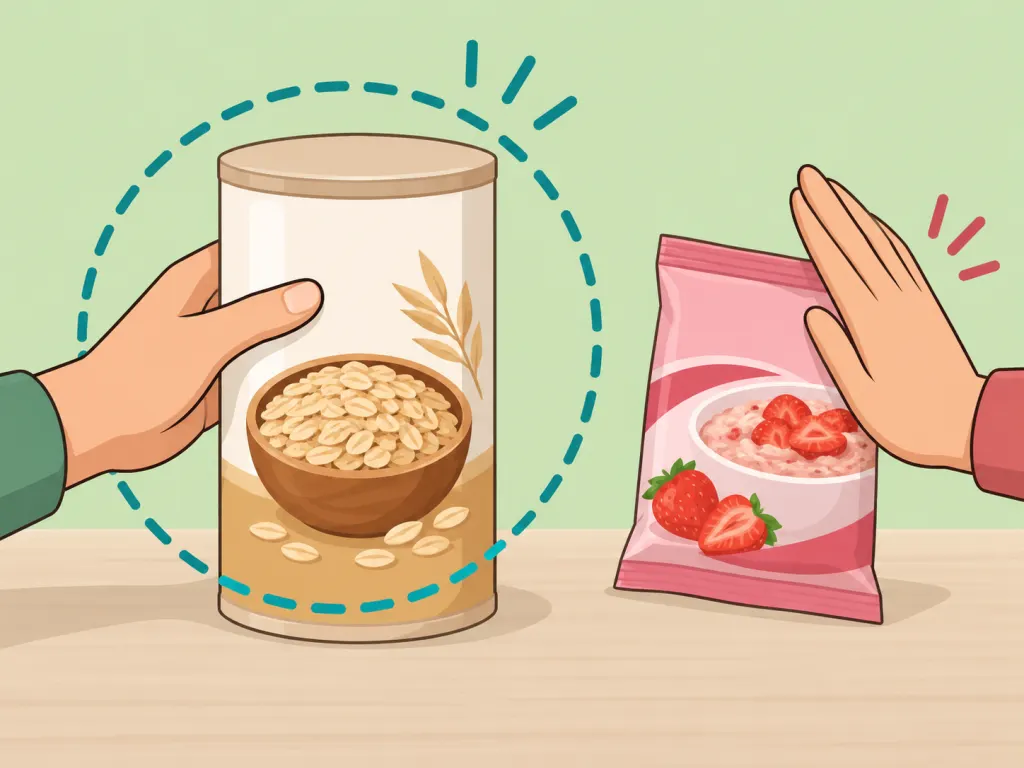
Start with plain rolled oats, steel-cut oats, or plain quick oats instead of a flavored packet. Oats are usually a whole-grain food, and the American Heart Association explains that their beta-glucan fiber helps make oatmeal filling and supports heart-health nutrition.
Step 2: Pick the oat texture that fits your routine
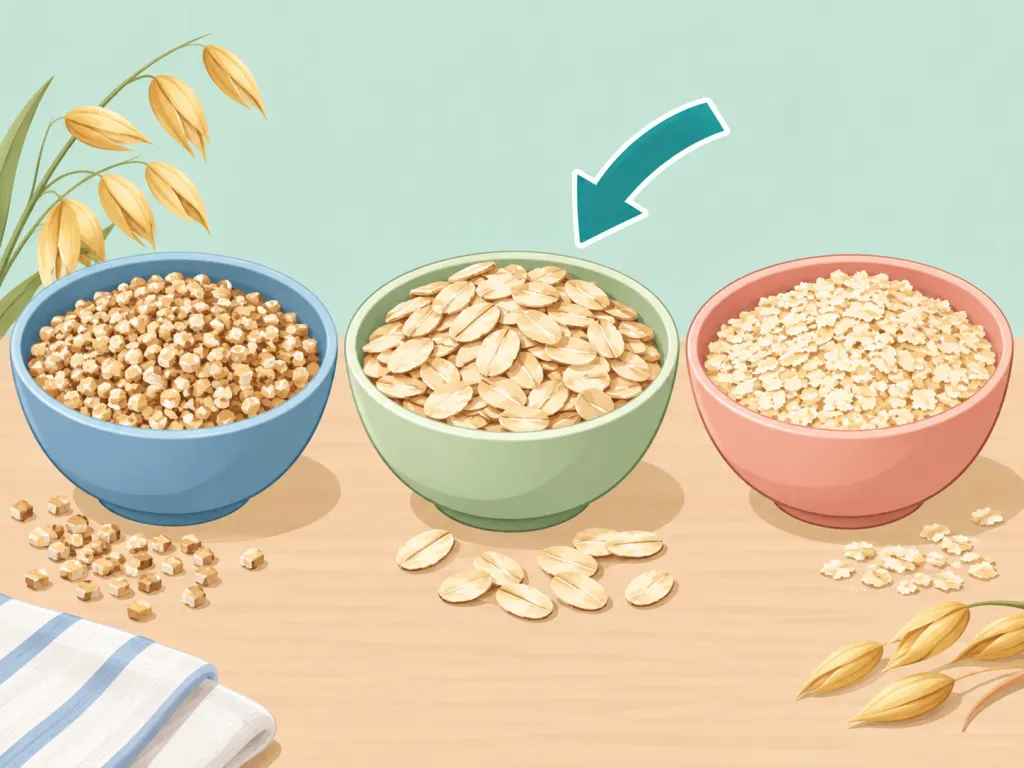
Steel-cut oats are chewier and take longer, rolled oats cook faster, and quick oats are thinner. The American Heart Association notes that instant oats may raise blood sugar faster than less processed forms, so plain rolled or steel-cut oats are a good everyday default when you have time.
Step 3: Use the label to set a sensible portion
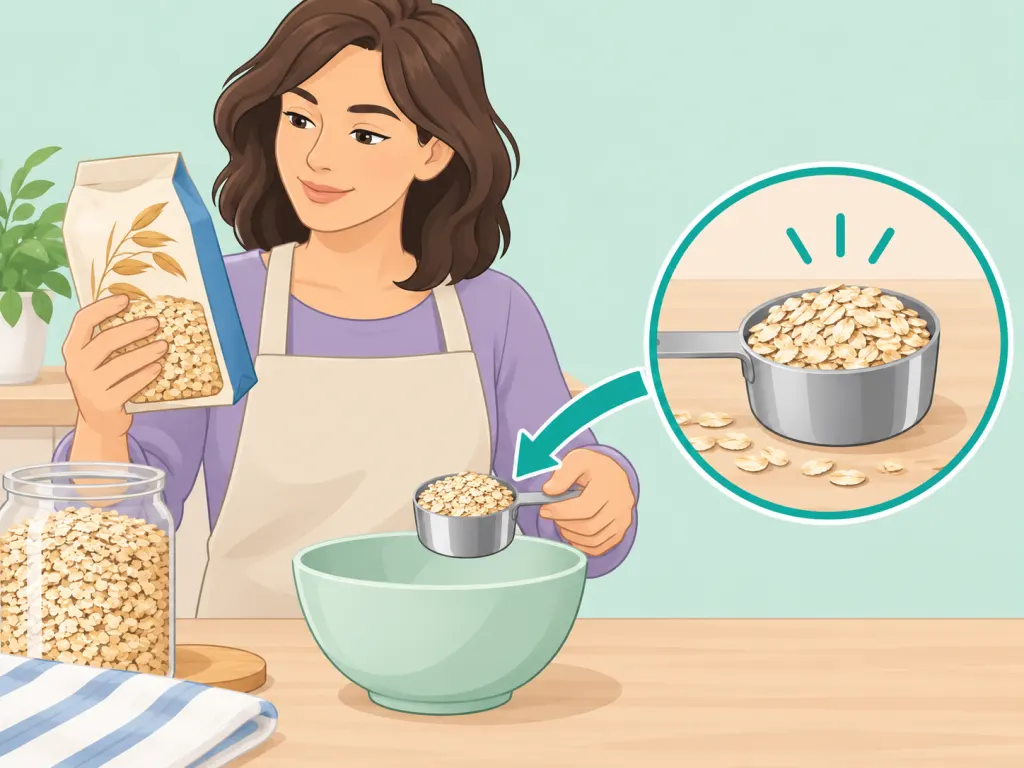
Check the serving size on the package before cooking, since the Nutrition Facts label lists nutrients for that stated amount. The FDA explains that label values are tied to serving size, so comparing oats, toppings, and prepared cups is easier when you start with the Nutrition Facts label.
Step 4: Cook it with water, milk, or an unsweetened option
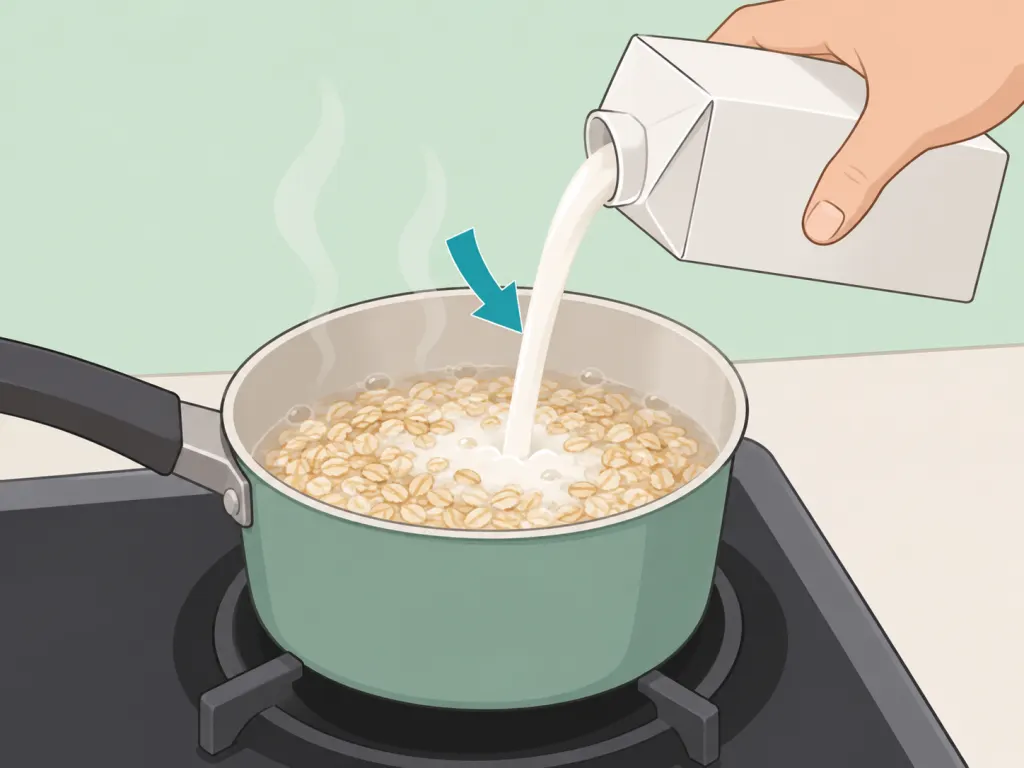
Prepare oatmeal with water, dairy milk, or an unsweetened fortified drink, depending on the flavor and nutrition profile you want. For a creamier bowl, stir often while it cooks and avoid turning the base into dessert before the toppings even start.
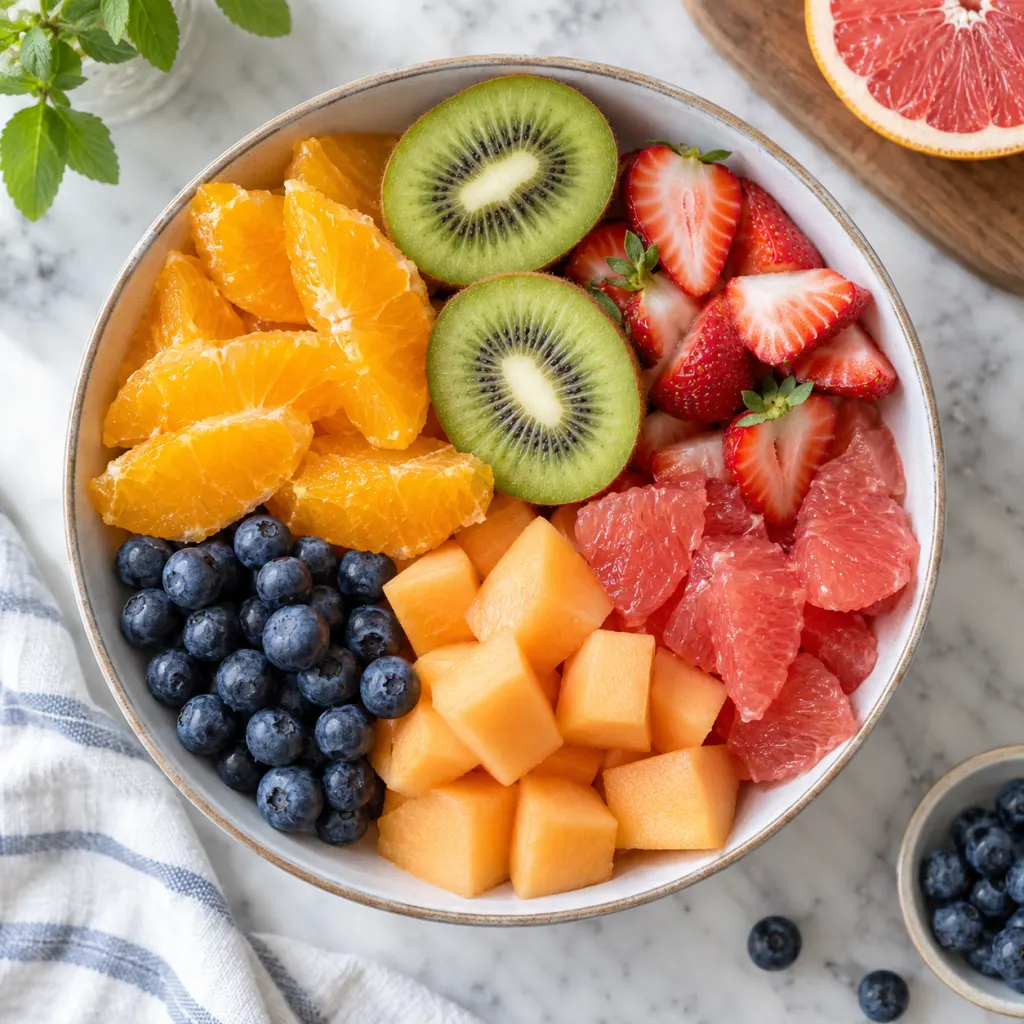
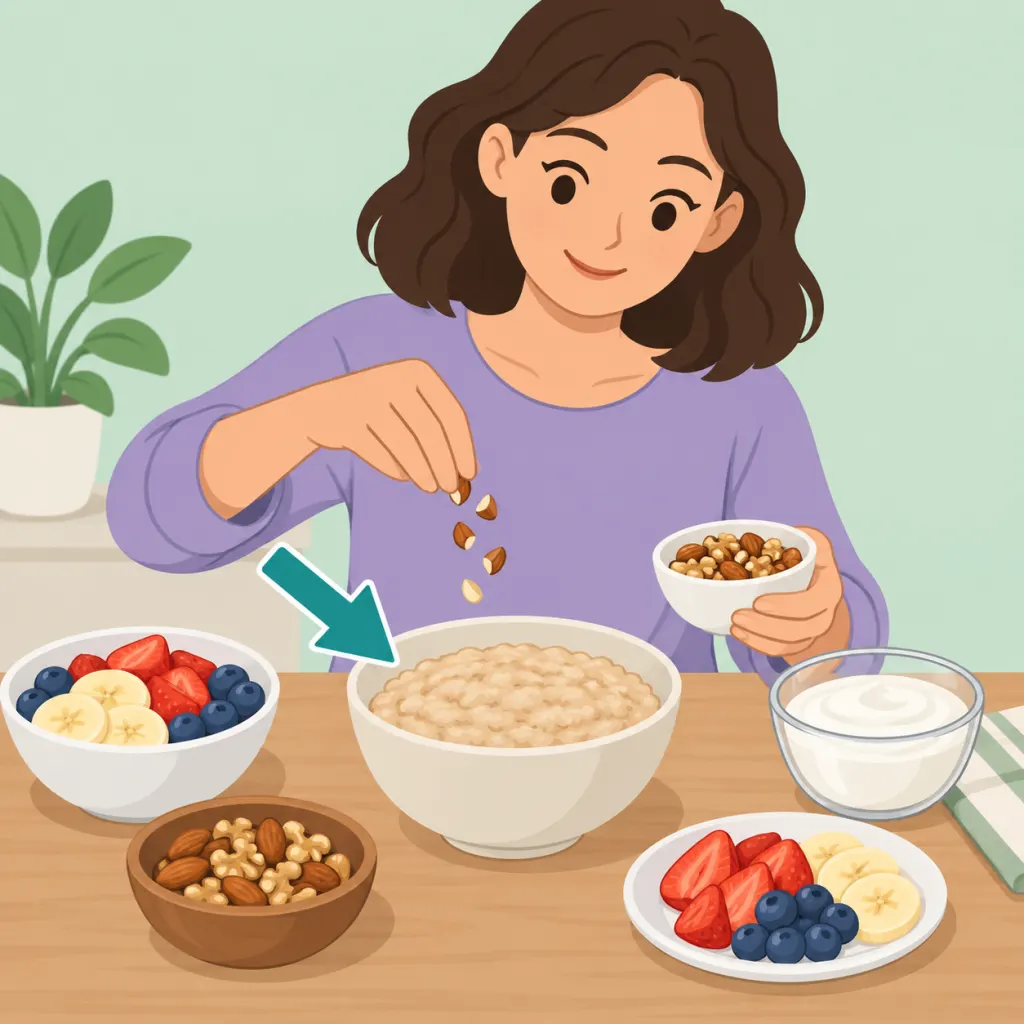
Top the bowl with berries, apple slices, banana, or pear instead of relying mostly on sugar, syrup, or sweetened creamers. MedlinePlus lists oatmeal, fruit, and legumes among foods that provide soluble fiber, which can be part of a cholesterol-conscious eating pattern.
Step 6: Include protein or unsaturated fat for staying power
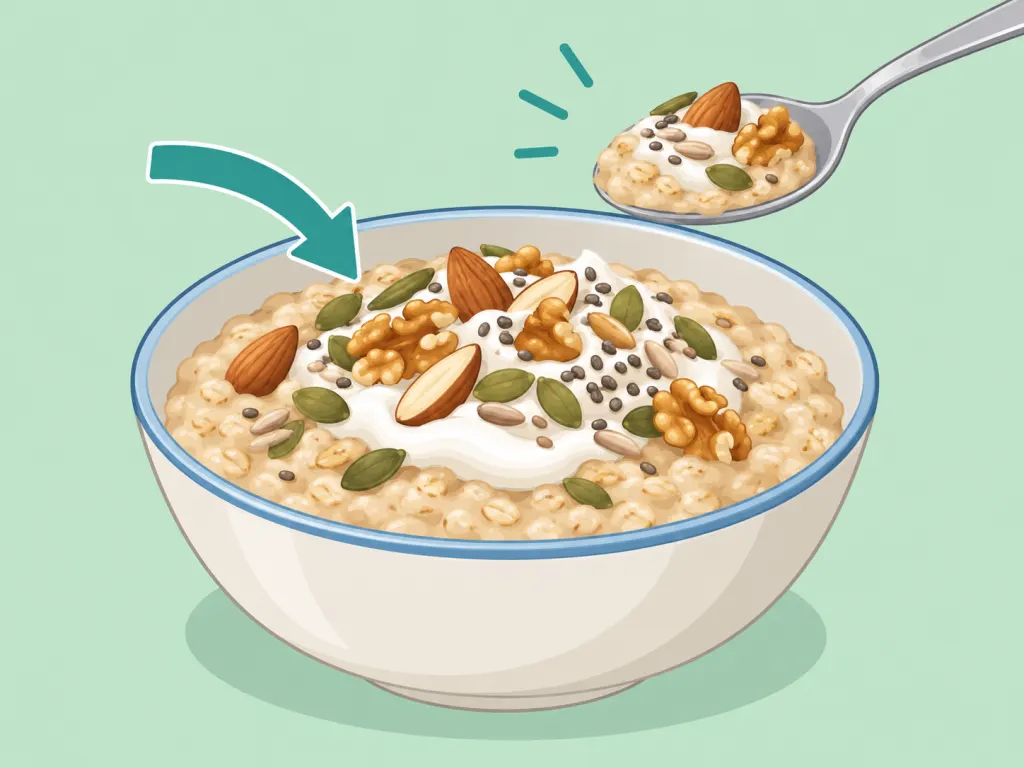
Add plain yogurt, milk, nuts, nut butter, chia seeds, or ground flaxseed to make the bowl more satisfying. The CDC notes that pairing carbohydrate foods with a protein source can help with fullness, and its fiber guidance explains that fiber moves slowly through the stomach and can support weight management routines.
Step 7: Limit toppings that work against your goal
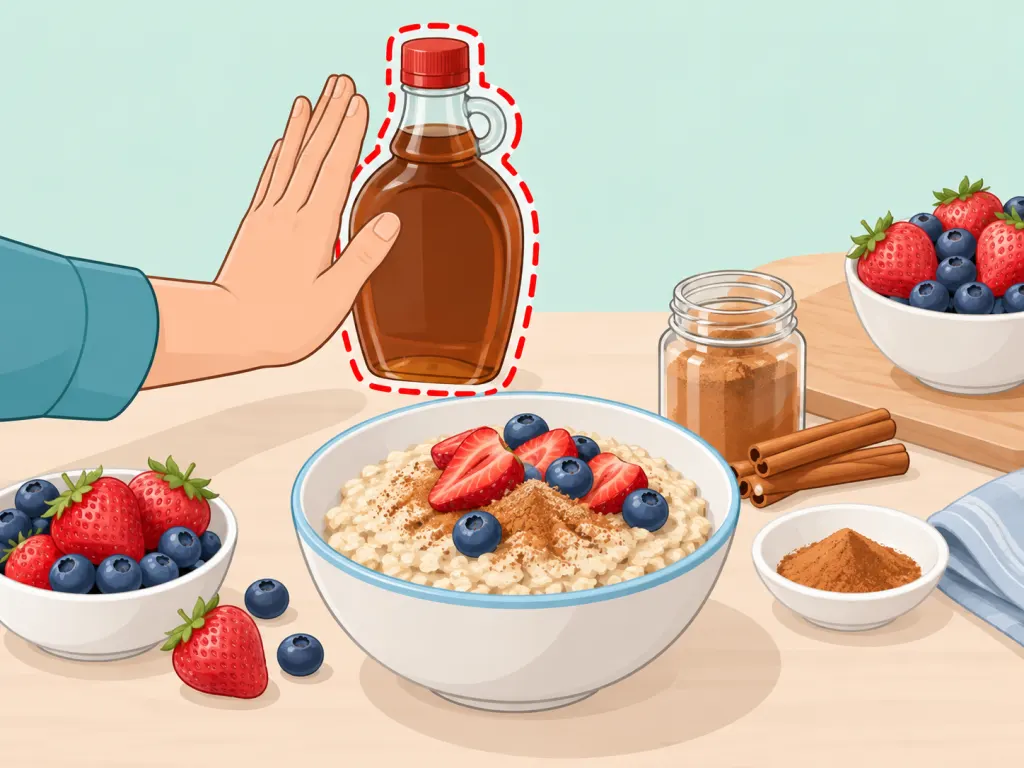
Keep brown sugar, honey, syrup, candy-like toppings, and sweetened flavored packets modest. The FDA says added sugars appear on the Nutrition Facts label, and using that line can help you choose oatmeal products and toppings with less added sugar.
Step 8: Make oatmeal part of the whole day
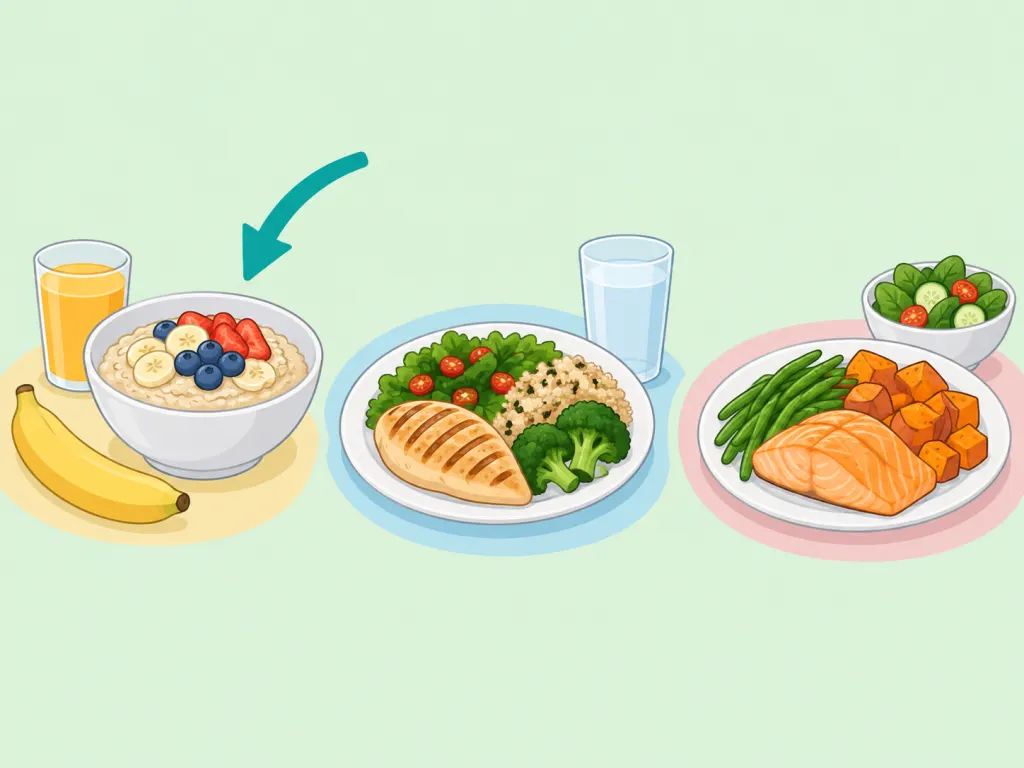
Think of oatmeal as one helpful meal, not the entire plan. The American Heart Association emphasizes that no single food can do everything, while the CDC explains that sugars and starches affect blood sugar differently than fiber, making the full pattern of meals and snacks important for blood sugar awareness.
Step 9: Talk to a doctor about personal health targets
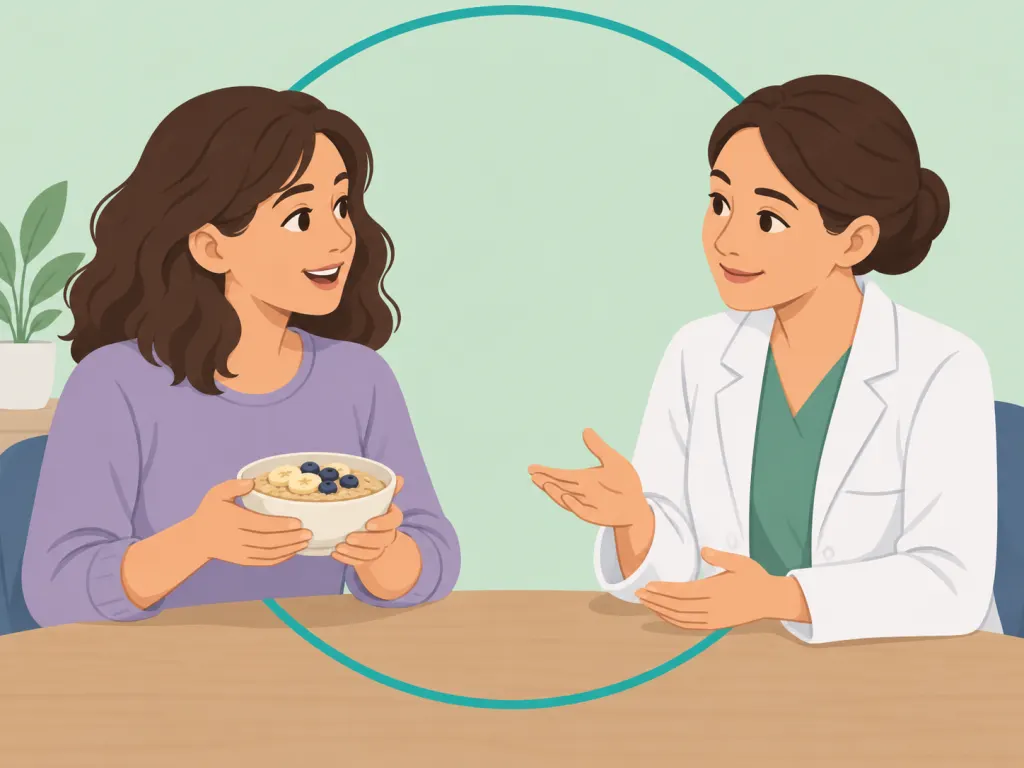
Ask a doctor or qualified dietitian for guidance on personal cholesterol, blood sugar, weight, or care-plan questions. FDA-authorized food label claims go through evidence review, but they do not make one food a personalized plan; use trusted guidance and professional care for individual decisions about health-related food claims.
Wrap-Up
The bottom line: plain oatmeal works best when it replaces a less balanced breakfast, stays low in added sugar, and includes toppings that add fiber, protein, and unsaturated fat. For personal health targets, use it alongside guidance from a qualified health professional.
Frequently Asked Questions
- → Is oatmeal enough by itself to change cholesterol, blood sugar, or weight?
No single food does the whole job. Oatmeal can support a balanced eating pattern because it provides whole-grain fiber and can be filling, but the rest of the day still matters.
- → Which oats are best for a steady breakfast?
Plain steel-cut oats or old-fashioned rolled oats are good choices because they are unsweetened and less processed than many flavored packets. Plain quick oats can also work when the ingredient list is simple.
- → Can instant oatmeal be a good choice?
Yes, if it is plain or low in added sugar. Check the Nutrition Facts label and ingredient list, since flavored packets can contain added sugars and more sodium.
- → What should I add to oatmeal for fullness?
Try fruit, nuts, seeds, plain yogurt, or milk. These add texture and can bring more fiber, protein, or unsaturated fat than sweet toppings alone.
- → Does oatmeal have to be eaten at breakfast?
No. Oatmeal can fit at any meal or snack time, though many people like it in the morning because it is warm, quick, and easy to prepare ahead.
- → Should I track how oatmeal affects me personally?
Yes, especially when you are working toward personal health goals. Notes about portion size, toppings, hunger, and how you feel afterward can help you discuss your routine with a doctor or qualified dietitian.
References
This content was developed and refined using reliable sources.
- https://www.heart.org/en/news/2022/09/01/take-a-fresh-look-at-oatmeal-its-not-as-simple-as-you-think
- https://medlineplus.gov/howtolowercholesterolwithdiet.html
- https://www.cdc.gov/diabetes/healthy-eating/choosing-healthy-carbs.html
- https://www.cdc.gov/diabetes/healthy-eating/fiber-helps-diabetes.html
- https://www.cdc.gov/diabetes/healthy-eating/carb-counting-manage-blood-sugar.html
- https://www.fda.gov/food/nutrition-facts-label/how-understand-and-use-nutrition-facts-label
- https://www.fda.gov/food/nutrition-food-labeling-and-critical-foods/authorized-health-claims-meet-significant-scientific-agreement-ssa-standard