 Save
Strength exercises can help older adults maintain everyday abilities such as standing from a chair, climbing stairs, and carrying groceries, according to the National Institute on Aging. This guide gives you a simple home routine using a chair, a wall, light weights, or a resistance band. Move slowly, keep support nearby, and choose the version that feels steady and controlled.
Step 1: Ask a doctor when exercise may affect your health
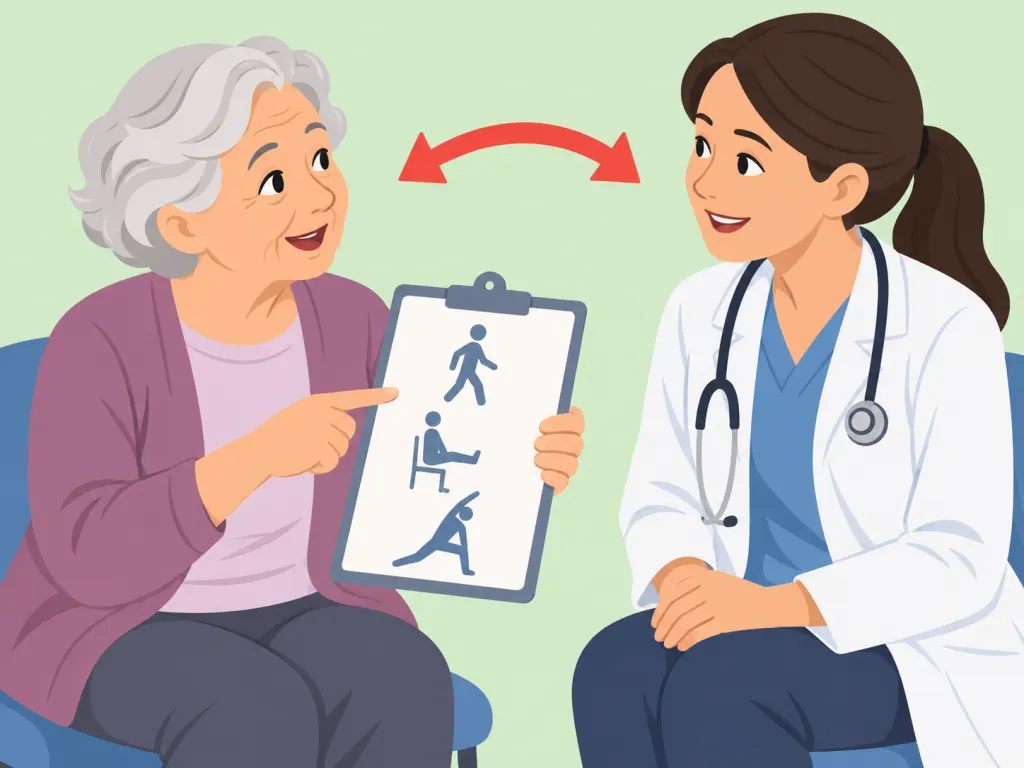
If you have a chronic condition, have not been active for a while, or are unsure about a movement, talk with a doctor or qualified health professional before starting. The National Institute on Aging says many people with chronic conditions can be active safely when they build up slowly and use a plan that fits their situation. Stop and seek medical help promptly if exercise brings chest pain or pressure, dizziness, nausea, or sudden severe pain.
Step 2: Set up a sturdy chair, wall, or counter for support
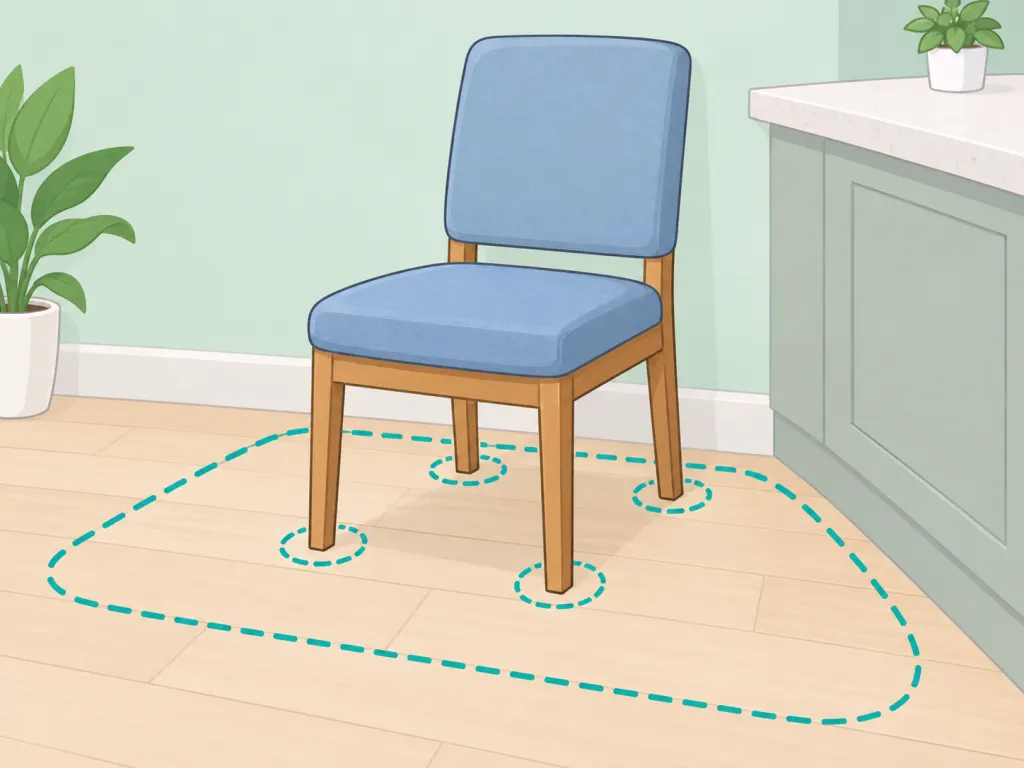
Choose a stable chair without wheels, a clear wall, or a counter that does not shift when you touch it. For chair-based exercise, the NHS recommends a solid chair that will not slip, with your feet able to rest flat on the floor. Keep the floor clear so your feet and chair stay steady.
Step 3: Warm up with easy movement
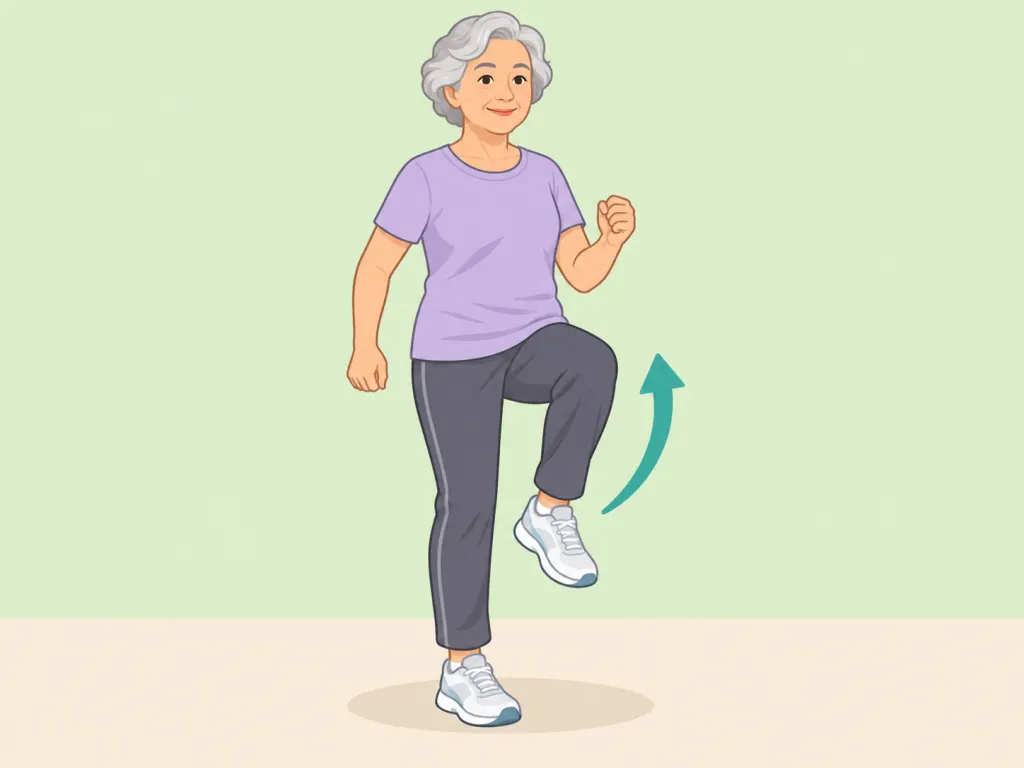
Before the strength moves, walk slowly around the room or march gently in place for 3 to 5 minutes. Mayo Clinic notes that warming up with a few minutes of easy aerobic activity can help your body get ready for strength training. Keep the effort light enough that you can speak comfortably.
Step 4: Do chair sit-to-stands
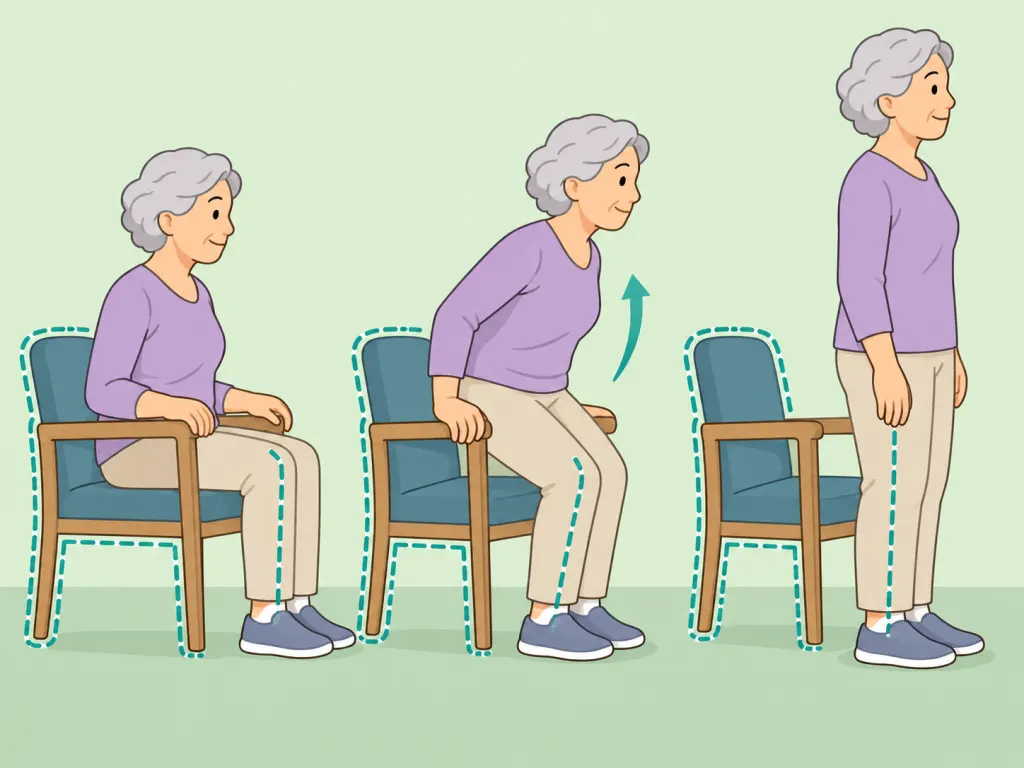
Sit near the front edge of the chair with your feet hip-width apart and flat on the floor. Lean slightly forward, stand up using your legs, then slowly sit back down; the NHS sit-to-stand instructions suggest using your hands only for guidance if possible. Start with 5 repetitions and keep your knees pointing in the same direction as your toes.
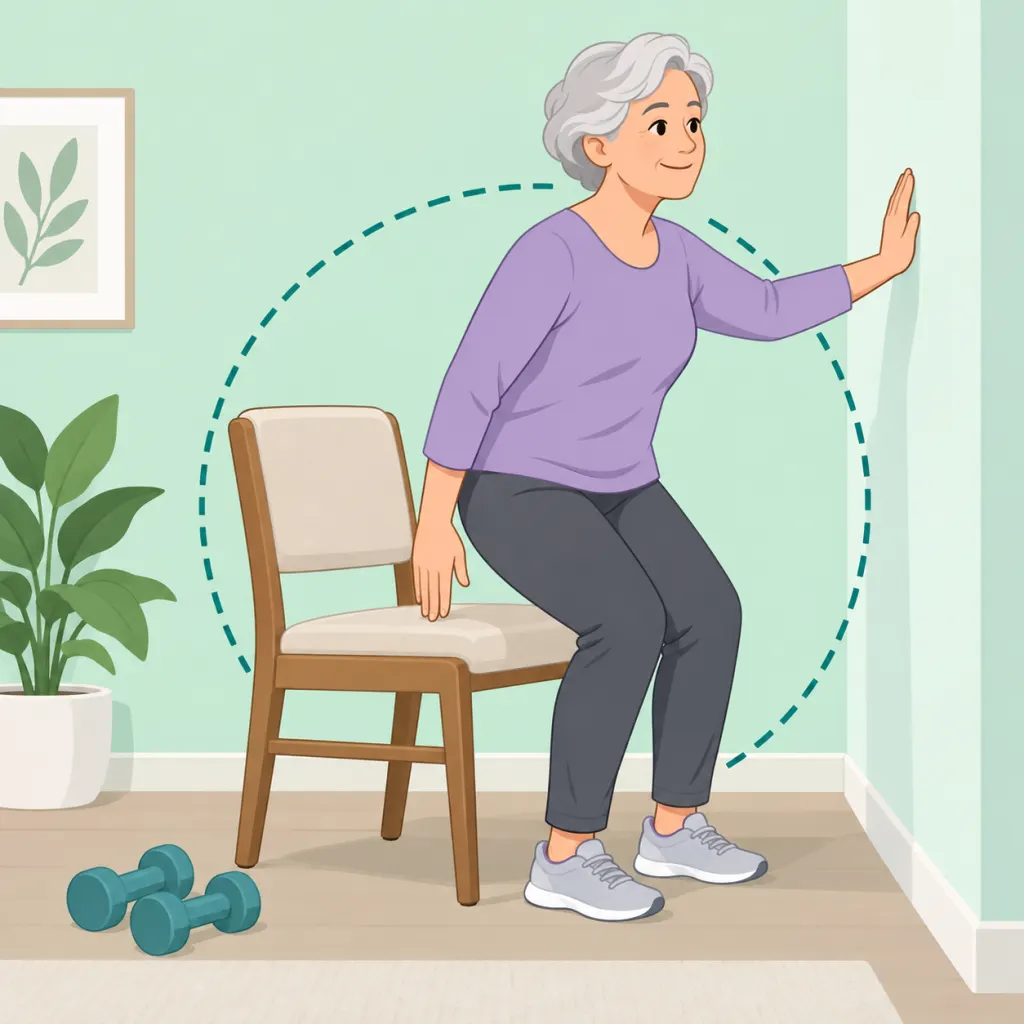
Stand facing a wall with your hands at chest height and your feet far enough back that your body forms a straight line. Bend your elbows slowly to bring your chest toward the wall, then press back to the start, following the basic wall press-up pattern. Move your feet closer to the wall if you need an easier version.
Step 6: Raise your heels with support
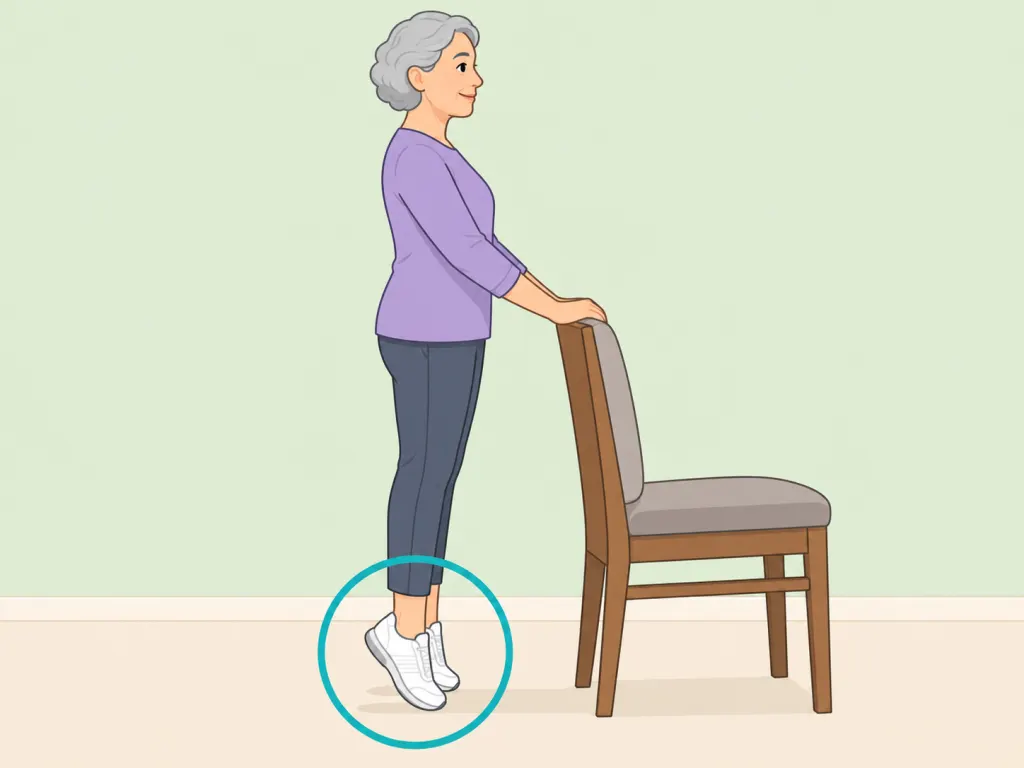
Stand behind the chair or at a counter and hold on lightly. Lift both heels as far as comfortable, pause briefly, then lower them with control; the NHS calf raise guide uses slow, supported movement for this exercise. Begin with 5 repetitions and avoid bouncing.
Step 7: Lift each leg to the side and back
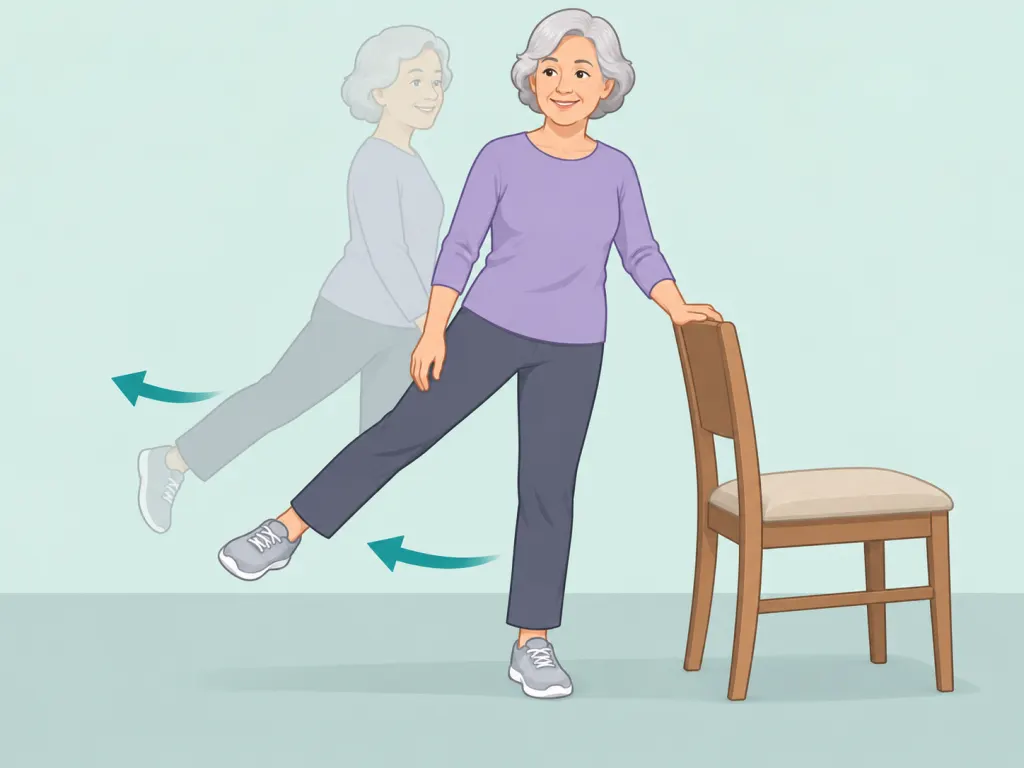
Hold the chair or counter, stand tall, and raise one leg out to the side without leaning your trunk. Lower it, then raise the same leg gently behind you without arching your back, using the NHS leg lift guidance as a model for controlled movement. Repeat on the other side, aiming for 5 slow lifts in each direction.
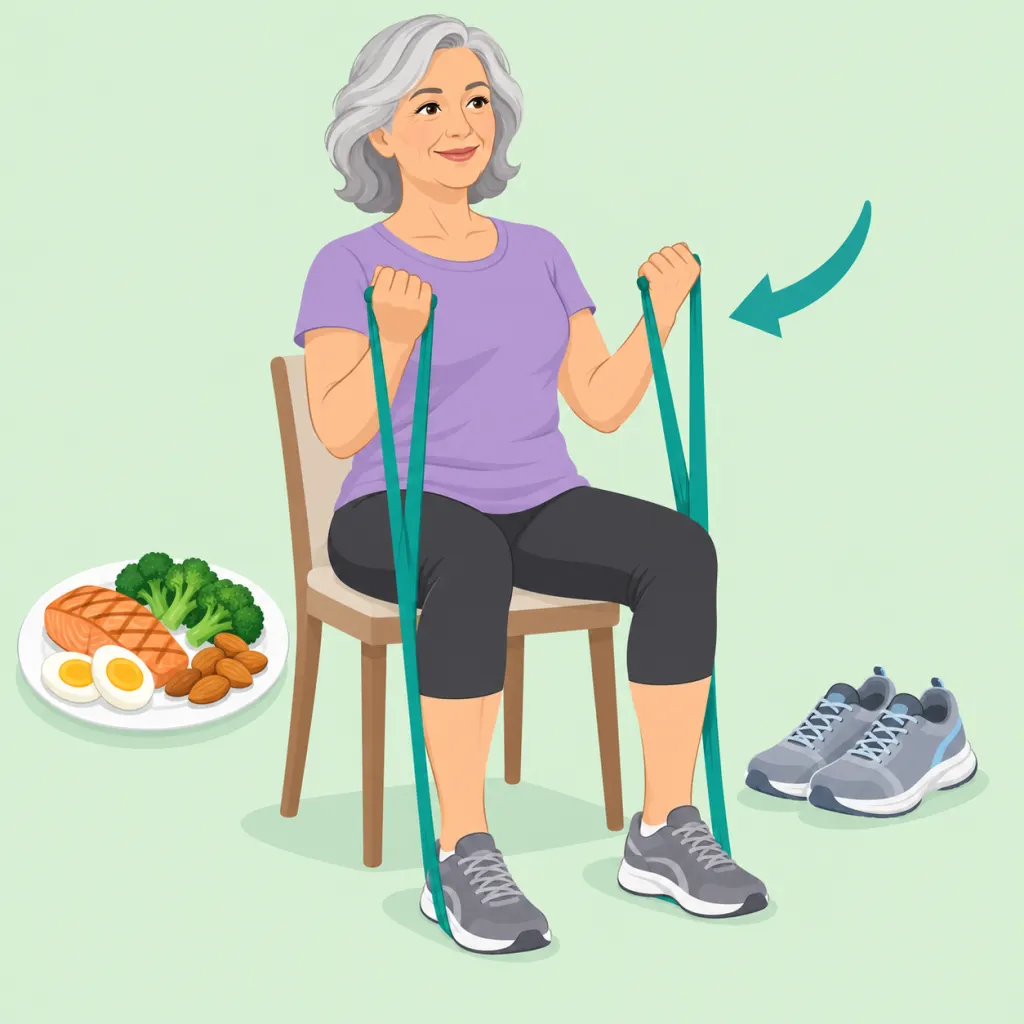
Step 8: Pull a resistance band into a row
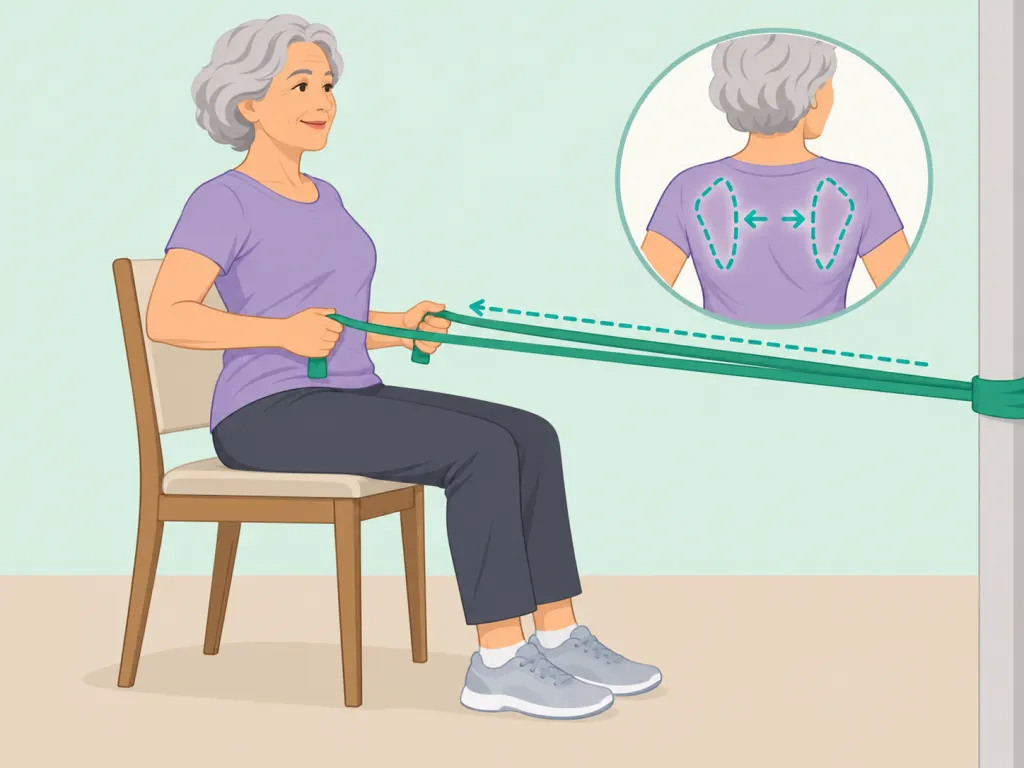
Sit tall or stand with a resistance band secured safely in front of you, then pull your elbows back toward your sides and gently bring your shoulder blades together. Keep your shoulders down and return slowly, without letting the band snap back. Rows help include the back and shoulders in a routine, which matters because the CDC advises choosing strengthening activities that work the major muscle groups.
Step 9: Curl light weights with control
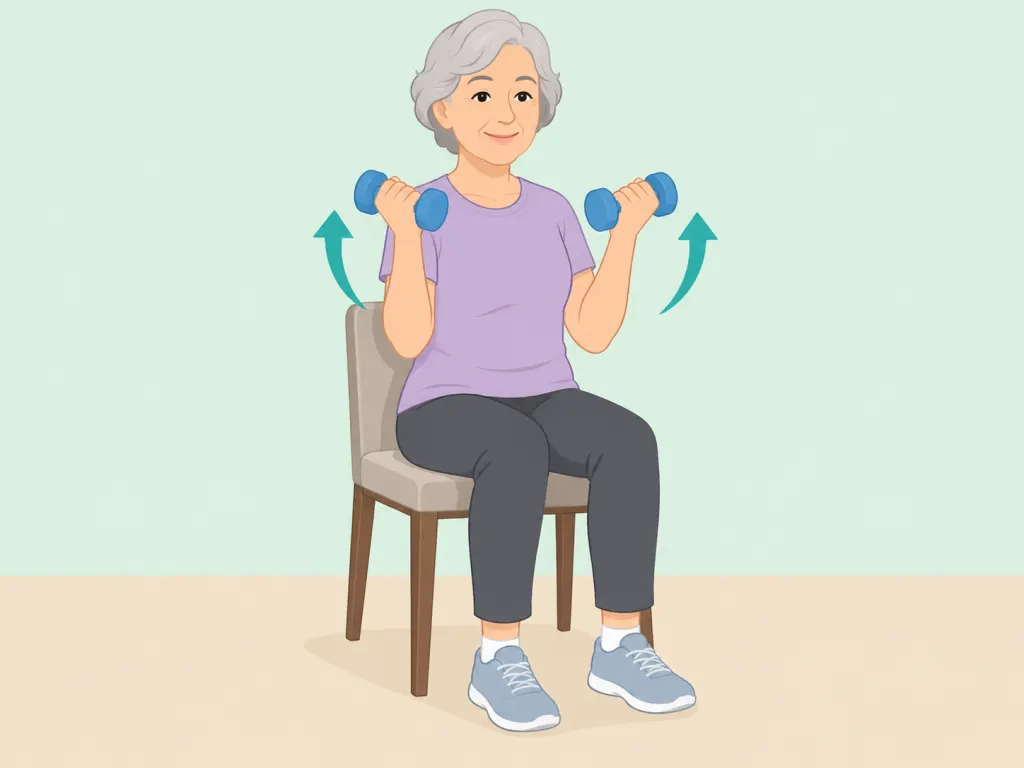
Hold light dumbbells or filled water bottles at your sides with your palms facing forward. Bend your elbows to lift the weights toward your shoulders, then lower them slowly; the NHS biceps curl instructions note that this move can also be done while sitting. Use a weight that lets you keep your wrists straight and your breathing steady.
Step 10: Repeat the routine and progress slowly
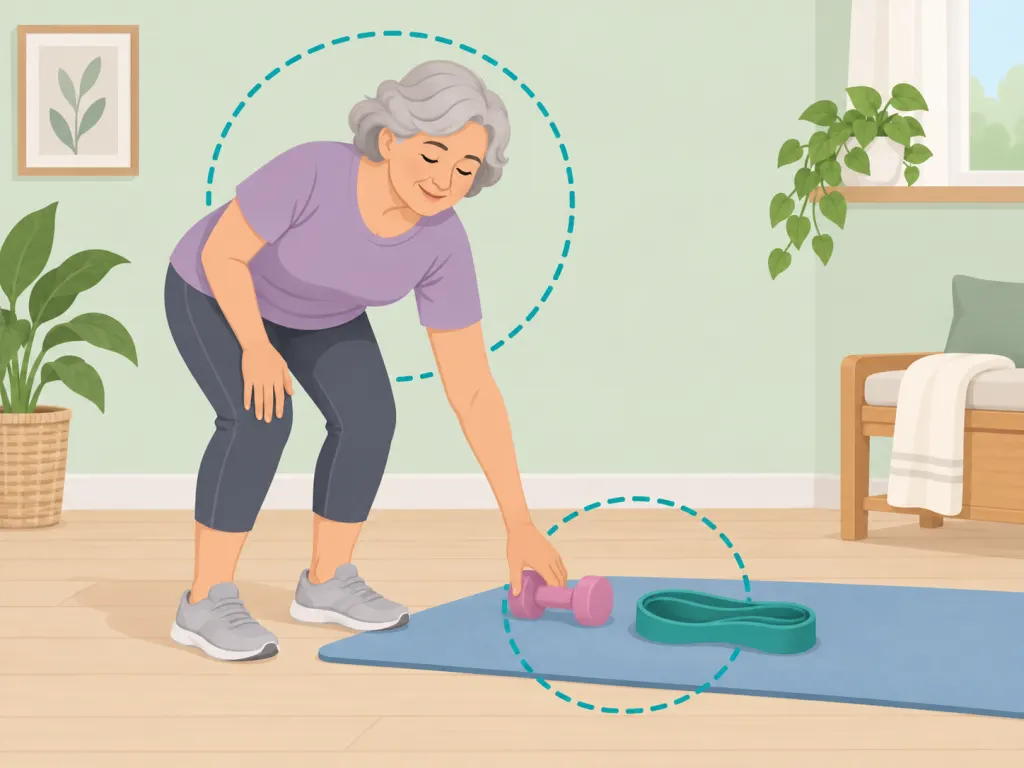
Do this routine 2 days a week at first, leaving rest time before working the same muscles again. The CDC explains that one set of 8 to 12 repetitions counts as a set, and the National Institute on Aging advises gradually increasing weight, repetitions, sets, or training days. Add only one small challenge at a time so your form stays steady.
Wrap-Up
The bottom line: choose a stable setup, warm up, do a few supported strength moves with careful form, and build up gradually. A simple routine done consistently is more useful than a hard workout you cannot repeat comfortably.
Frequently Asked Questions
- → How often should older adults do strength exercises?
- The CDC recommends muscle-strengthening activities at least 2 days a week for adults 65 and older, along with aerobic and balance activities.
- → How many repetitions should I start with?
- If you are new to strength work, start with about 5 controlled repetitions for each move. As the exercise becomes easier, the CDC describes 8 to 12 repetitions as one typical set for muscle-strengthening activities.
- → Do I need dumbbells for this routine?
- No. The National Institute on Aging lists body-weight moves, resistance bands, hand weights, and everyday carrying tasks as ways to strengthen muscles.
- → Can I do any of these exercises sitting down?
- Yes. Biceps curls can be done seated, and seated versions may be useful when standing balance is limited. Use a stable chair without wheels, as the NHS advises for chair-based exercises.
- → What should strength exercise feel like?
- It should feel like effort, but it should stay controlled. The National Institute on Aging advises listening to your body, breathing during strength work, and seeking guidance if you are unsure about a movement.
- → Should I stretch before or after strength exercises?
- Do light movement first to warm up. The National Institute on Aging suggests stretching when muscles are warm and not stretching so far that it hurts.
References
This content was developed and refined using reliable sources.
- https://www.cdc.gov/physical-activity-basics/guidelines/older-adults.html?linkId=883798815
- https://www.cdc.gov/physical-activity-basics/adding-older-adults/what-counts.html
- https://www.nia.nih.gov/health/exercise-and-physical-activity/three-types-exercise-can-improve-your-health-and-physical
- https://www.nia.nih.gov/health/exercise-and-physical-activity/exercising-chronic-conditions
- https://www.nhs.uk/live-well/exercise/strength-exercises
- https://www.mayoclinic.org/healthy-lifestyle/fitness/in-depth/strength-training/art-20046670
- https://www.medlineplus.gov/exerciseforolderadults.html