 Save
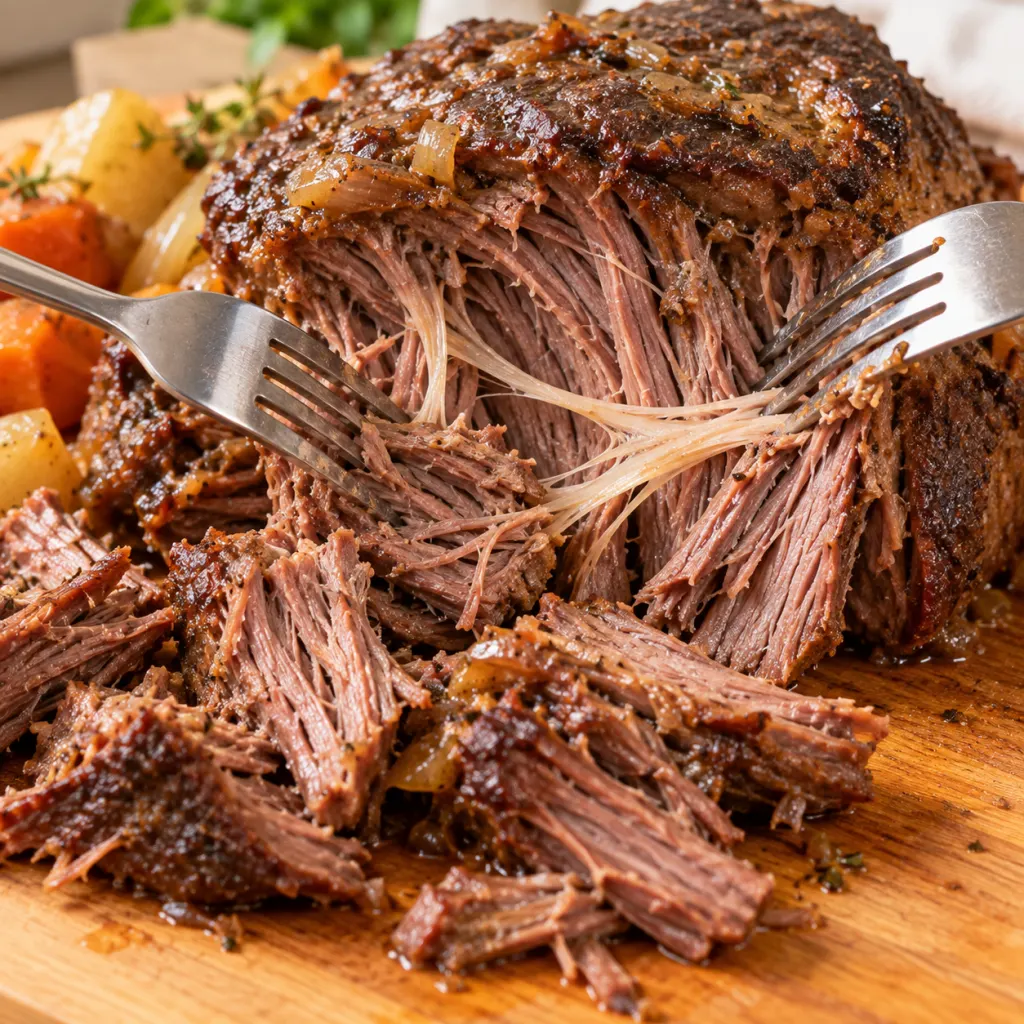
The white stringy fibers in a cooked beef roast are usually normal parts of the meat: connective tissue, collagen-rich strands, fat, silver skin, or muscle bundles that have separated during long, moist cooking. They are especially noticeable in slow-cooked chuck roast, brisket, pot roast, and shredded beef. Seeing them does not, by itself, mean the roast is unsafe. The better question is whether the meat was thawed, cooked, held, and stored safely, and whether it has obvious spoilage signs such as an off odor, slimy surface, or unsafe time at room temperature.
The Short Answer: Usually Connective Tissue
Beef is not a smooth, uniform material. It is made of muscle tissue, water, fat, and layers of connective tissue that hold muscle bundles together. When a roast cooks for several hours, the structure changes. Muscle strands tighten and separate, fat softens, and collagen-rich connective tissue can turn pale, slippery, or stringy. In a shredded roast, those parts may look like thin white threads woven through the meat.
Meat science sources describe tenderness as a balance between muscle tissue, moisture, time, temperature, and connective tissue. The Institute of Food Technologists explains that braising and stewing use moist heat, and that tougher meat generally needs more cooking time for a tender result (IFT). A scientific review of meat cooking also notes that heat treatment conditions depend on meat type, cut size, intramuscular connective tissue, and protein components (PMC review). In plain kitchen terms, a tough roast becomes pull-apart tender because its internal structure changes, and those changes can make pale strands easier to see.
The most likely identities are:
- Collagen-rich connective tissue: often soft, slippery, pale, or threadlike after moist cooking.
- Silver skin or fascia: a tougher, whitish membrane that may remain chewy if it was not trimmed before cooking.
- Separated muscle strands: normal meat bundles that pull apart along the grain after long cooking.
- Rendered fat or membranes: pale pieces that may cling to shredded beef or cooking juices.
- Tendon or gristle: firmer pieces that are edible but often unpleasant, so many cooks remove them while shredding.
Why Slow Cooking Makes the Strands More Visible
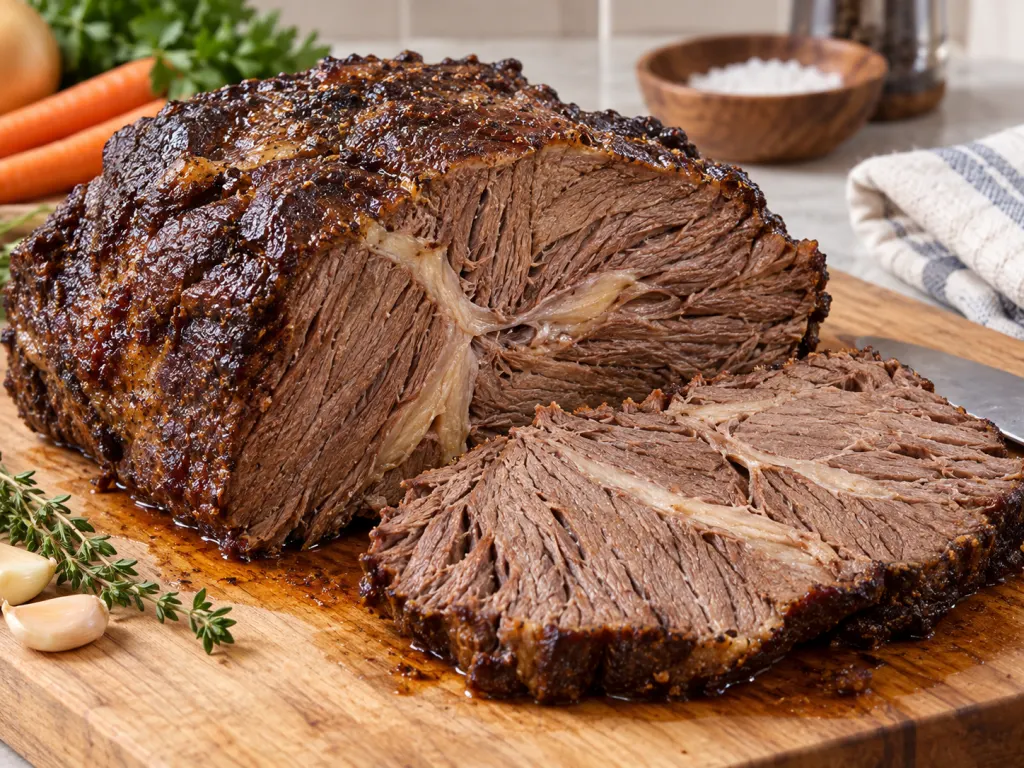
Slow cooking is designed for cuts that contain more connective tissue. Chuck roast, brisket, shank, and some round cuts come from muscles that did more work, so they can be flavorful but firm. Long, moist heat helps them soften. That same process can expose the boundaries between muscle bundles. When you pull the roast apart with forks, the meat separates along those natural lines, and pale connective tissue that was hidden inside the raw roast becomes more noticeable.
This is why the strands often appear after a roast has cooked for hours in broth, sauce, or its own juices. The meat is not growing anything new in the cooker. The heat, moisture, and time are revealing structures that were already present. A roast cooked quickly to a slicing texture may show less of this because it is not pulled apart as much. A pot roast cooked until it shreds can make every seam and membrane more obvious.
Collagen, Gelatin, and the Texture of Pot Roast
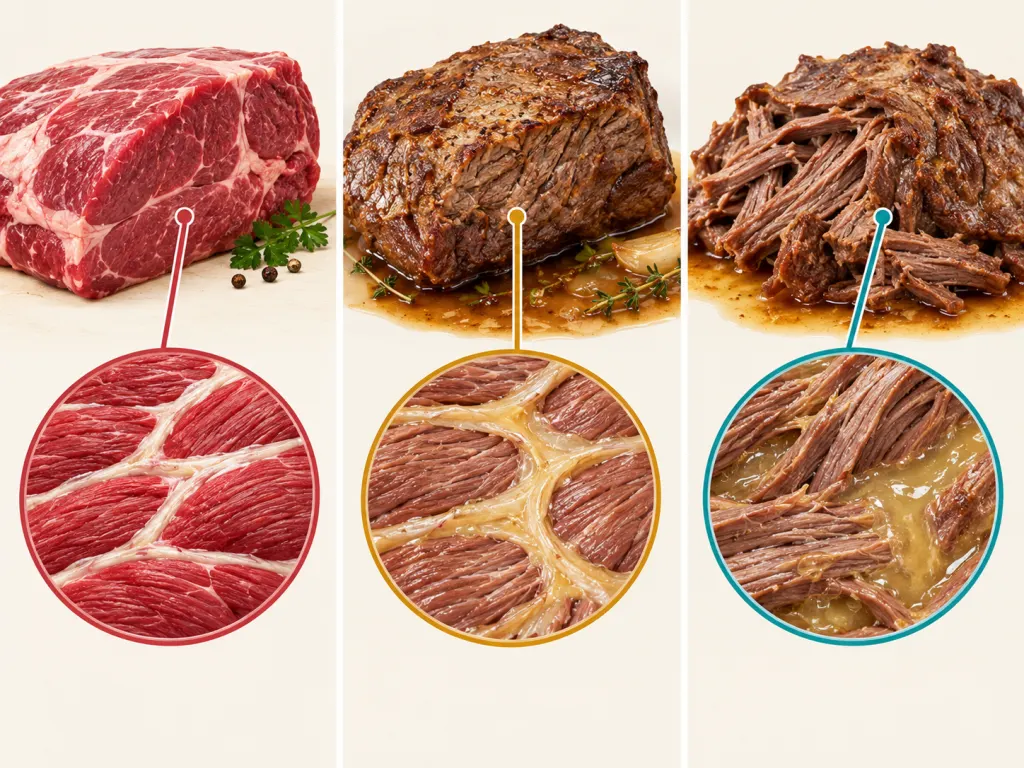
Collagen is one of the main proteins in connective tissue. During long moist cooking, some collagen softens and contributes to gelatin in the cooking liquid. That gelatin gives pot roast juices a richer, slightly sticky body when they cool. Not all connective tissue melts away at the same rate, though. Some pieces soften into the sauce, while thicker membranes, tendon, or silver skin may remain visible as pale strands.
The PMC review on sous-vide and meat quality summarizes that meat texture is affected by collagen behavior, cooking temperature, time, muscle type, and cut characteristics (PMC review). That matters at home because two roasts with the same weight can behave differently. A chuck roast with more seams and connective tissue may show many white strands; a leaner roast may show fewer but can turn drier if cooked too long.
How to Tell Normal Strands From a Food Safety Problem
Normal white strands usually follow the grain of the meat or sit along natural seams. They look like pale threads, membranes, soft fat, or stringy pieces that pull away as you shred. They do not move, they do not appear suddenly after storage as fuzzy growth, and they are usually mixed with otherwise normal-looking cooked beef. If the roast smells like cooked beef and was handled safely, these strands are usually a quality and texture issue rather than a safety warning.
Food safety depends more on temperature and time than appearance. FoodSafety.gov says whole cuts of beef, including roasts, should reach 145°F with a 3-minute rest, and leftovers should be reheated to 165°F (FoodSafety.gov temperature chart). For slow-cooked meals, FoodSafety.gov also advises using a food thermometer in the thickest part of the food and not assuming that hours in the cooker automatically prove the meal reached a safe temperature (FoodSafety.gov slow-cooker guidance).
Use a practical check before serving:
- Normal: pale strings along the grain, soft membranes, rendered fat, or chewy gristle in otherwise hot, freshly cooked beef.
- Questionable: sour or rancid odor, sticky or slimy coating, unusual discoloration unrelated to browning, or meat that sat at room temperature too long.
- Unsafe handling concern: a roast cooked from frozen in a slow cooker, a delayed-start cooker cycle, a power outage during cooking, or leftovers cooled slowly in a deep pot.
- When unsure: discard the questionable portion or the roast. Tasting is not a safe way to test food.
Are the White Strings Worms?
In an ordinary cooked beef roast, white strings that run with the meat grain are much more likely to be connective tissue or muscle strands than worms. The pattern is the clue. Connective tissue follows seams, membranes, and muscle bundles. It often appears in repeated lines through the roast and pulls apart with the meat. A parasite concern would not be judged by a viral photo or a single pale strand; it would call for a cautious food safety decision, especially if the meat also had an abnormal odor, odd texture, or unsafe handling history.
If the roast came from a regulated store, was kept cold, thawed safely, cooked properly, and served promptly, the white strands alone are not a reason to panic. If it came from an uncertain source, was left out for hours, or was not cooked with a thermometer, treat the problem as a handling and temperature issue rather than trying to identify every strand by sight.
Slow-Cooker Habits That Reduce Surprises
A slow cooker can be a good tool for tougher beef cuts, but it works best when the roast is prepared and handled correctly. University of Minnesota Extension notes that slow cookers cook at low temperatures over several hours and can tenderize less expensive tougher cuts, but they should be used correctly for quality and safety (University of Minnesota Extension). FoodSafety.gov advises thawing meat before it goes into the slow cooker, keeping raw meat separate from ready-to-eat foods during prep, filling the cooker properly, and refrigerating leftovers within 2 hours after cooking (FoodSafety.gov slow-cooker guidance).
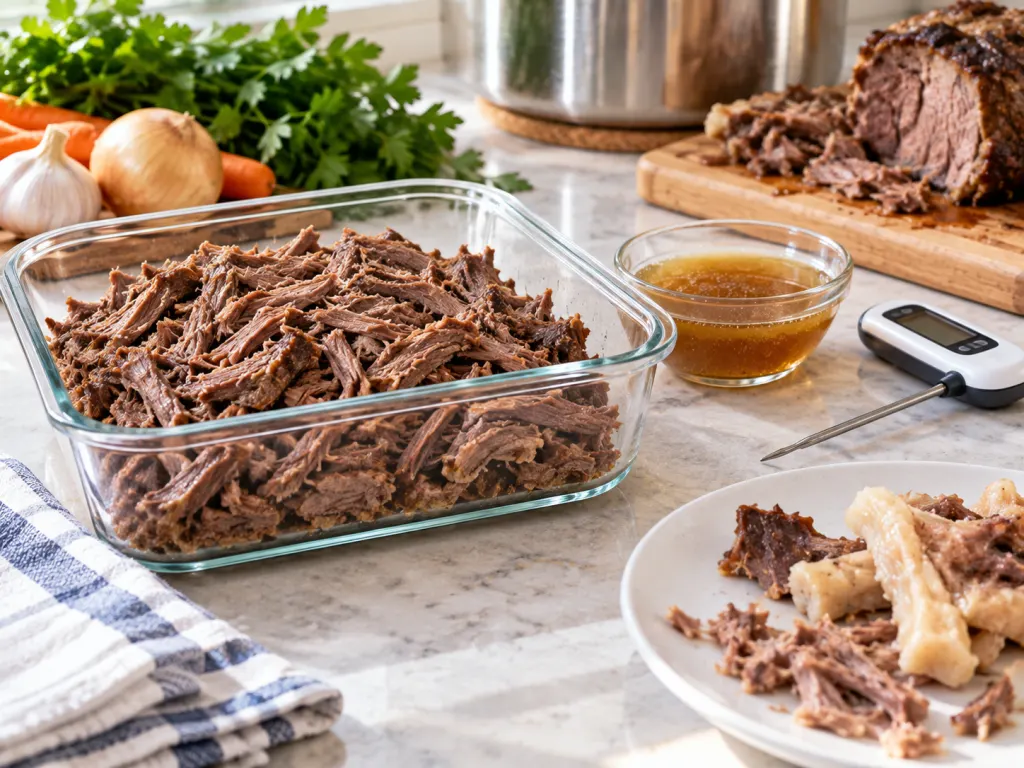
For fewer chewy white pieces, trim obvious silver skin and large hard fat deposits before cooking, but do not remove every seam. Some connective tissue is part of what makes pot roast become tender and rich. After cooking, shred the roast on a cutting board or in a wide dish. As you pull it apart, remove large rubbery pieces, thick membranes, or hard gristle. Then moisten the shredded meat with a little strained cooking liquid so the lean strands do not seem dry or cottony.
What the Cut of Beef Tells You
The cut matters. Chuck roast is a classic pot roast choice because its connective tissue and marbling can become tender with time. Brisket has strong grain and connective tissue, so it can show long strands after cooking. Shank and short rib cuts can produce especially gelatin-rich juices but may also leave chewy connective pieces. Round roasts are leaner and may shred into drier strands if cooked far beyond tenderness.
If you dislike visible strands, choose a roast with moderate marbling and trim heavy membranes before cooking. If you love rich pot roast texture, choose chuck and accept that some pale connective tissue may appear. The goal is not to eliminate every white piece. It is to distinguish normal cooked-meat structure from signs that the roast was mishandled or spoiled.
When to Keep It, Trim It, or Toss It
Keep the roast when the strands are built into the grain, the meat smells normal, it reached a safe internal temperature, and it has been held and stored properly. Trim it when the roast is safe but some pieces are tough, rubbery, or visually unappealing. Toss it when safety is uncertain: for example, if the roast was left out for more than 2 hours, if a power outage interrupted cooking and you cannot verify safe handling, if the meat has a sour odor or slimy feel, or if leftovers were cooled in a deep container for many hours.
FoodSafety.gov lists beef and time- or temperature-abused foods among sources associated with certain foodborne bacteria, and it advises cooking meat to safe temperatures, keeping hot foods hot, refrigerating leftovers within 2 hours, and dividing large roasts or stews into shallow containers for rapid cooling (FoodSafety.gov bacteria and viruses). Those steps are more reliable than trying to decide safety from color alone.
Bottom Line for Home Cooks
White stringy fibers in cooked beef roast are usually a normal result of meat structure and long cooking. They are common in slow-cooker roasts because the process exposes connective tissue and separates muscle bundles. If everything else about the roast is normal and it was cooked and stored safely, you can trim away any tough pieces and serve the rest. If the roast smells wrong, feels slimy, was left out too long, or has an unsafe cooking history, discard it. A thermometer, safe thawing, prompt refrigeration, and shallow storage containers will tell you more than the strands do.
Wrap-Up
White stringy fibers in beef roast are usually connective tissue, collagen-rich membranes, fat, or separated muscle strands. They become easier to see after long, moist cooking, especially in chuck roast and brisket. The strands alone are not a spoilage sign. Rely on safe cooking temperature, proper slow-cooker use, prompt leftover storage, normal odor, and texture when deciding whether to keep, trim, or discard the roast.
Frequently Asked Questions
- → Can I eat cooked beef roast if it has white stringy fibers?
Usually, yes, if the roast was thawed, cooked, served, and stored safely. White strands that follow the grain are commonly connective tissue, fat, or separated muscle strands. Do not rely on appearance alone. If the roast smells off, feels slimy, or spent too long at room temperature, discard it.
- → Why did my slow-cooker roast have more white strands than an oven roast?
Slow cooking uses long, moist heat, which is exactly what makes tougher cuts tender enough to shred. That process also exposes seams, membranes, and muscle bundles inside the roast. When the meat is pulled apart, the pale connective pieces become easier to spot.
- → Should I remove the white strings before serving?
You can remove any pieces that are tough, rubbery, or visually distracting. Soft strands mixed into shredded beef are usually harmless from a texture standpoint, but thick silver skin, tendon, or gristle may be unpleasant to chew. Trimming after cooking is often easier than trying to remove every seam before cooking.
- → Do white strings mean the roast was overcooked?
Not necessarily. They often mean the roast contained connective tissue and was cooked long enough to separate. However, if the meat is dry, cottony, or falling into fine shreds with little moisture, it may have cooked longer than ideal for that particular cut. Adding a little strained cooking liquid can improve serving texture.
- → How can I make pot roast less stringy next time?
Start with a suitable cut, trim obvious silver skin, thaw the roast before slow cooking, avoid overfilling the cooker, and check doneness with a food thermometer. Shred the roast while warm, remove large chewy membranes, and moisten the meat with cooking juices before serving.
References
This content was developed and refined using reliable sources.
- https://www.ift.org/food-technology-magazine/understanding-cooking-techniques
- https://pmc.ncbi.nlm.nih.gov/articles/PMC10453940
- https://akastage-www.foodsafety.gov/food-safety-charts/safe-minimum-internal-temperatures
- https://akastage-www.foodsafety.gov/blog/warm-safely-slow-cooked-meal
- https://extension.umn.edu/es/node/161316
- https://www.foodsafety.gov/food-poisoning/bacteria-and-viruses