 Save
The hole in the middle of a pasta spoon is usually there for a practical reason: it helps drain water when serving cooked noodles, and on many spaghetti servers it can also estimate a bundle of dry long pasta before it goes into the pot. The catch is that the hole is not a universal measuring standard. One utensil may be designed for a small bundle, another for a larger one, and some holes are mainly for drainage. Think of it as a built-in kitchen shortcut, not a laboratory tool. That small opening can still be useful if you know what it can and cannot tell you. Used wisely, it helps you cook closer to the amount you want, avoid a mountain of extra noodles, and make better use of everyday tools already sitting in the drawer. For exact measuring, a digital kitchen scale is more consistent; NIST notes that measuring ingredients by weight is more precise than measuring by volume and helps make results repeatable NIST.
The Hole Has Two Everyday Jobs
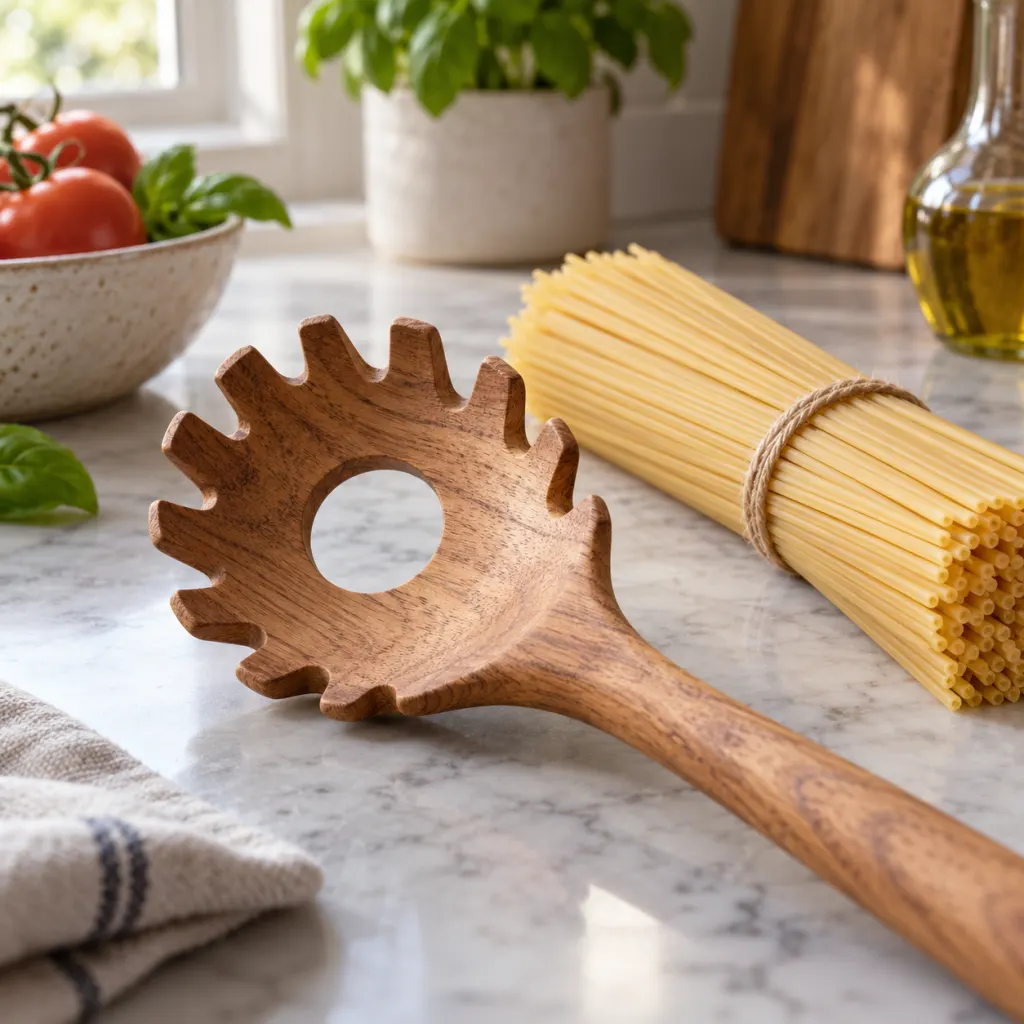
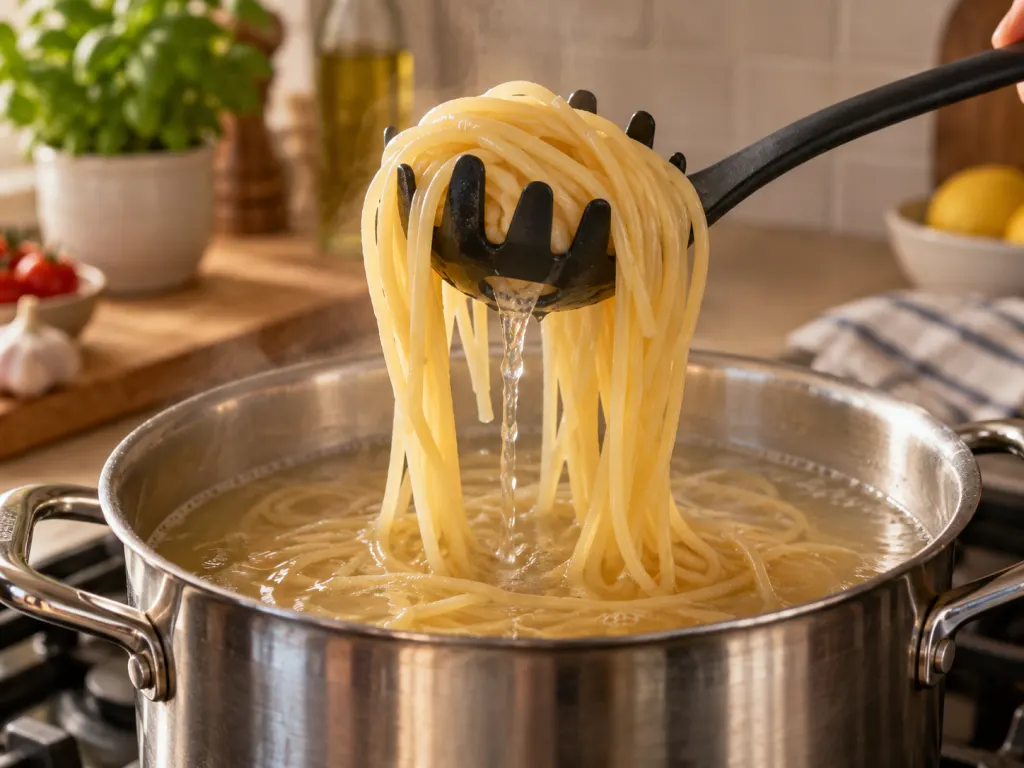
A spaghetti server looks a little odd if you stare at it for long enough: long fingers around the edge, a shallow scoop, and a neat circle or oval in the center. The fingers grip slippery strands. The shallow bowl lifts and carries them. The center opening lets water fall away instead of pooling in the spoon. That drainage role is real, especially when you move pasta directly from the pot to a skillet of sauce and want some water to drip off on the way.
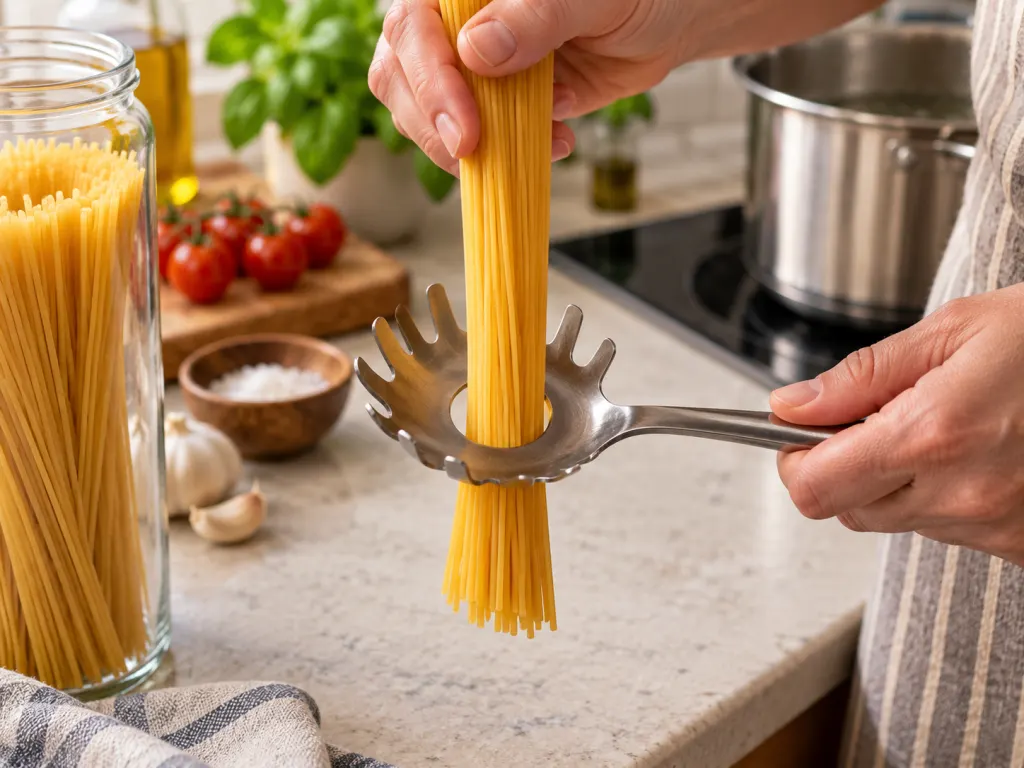
On many models, though, the hole also doubles as a dry pasta gauge. You gather uncooked spaghetti, linguine, or another straight long pasta into a bundle and slide the strands through the opening. If the bundle fills the hole without forcing, you have a quick estimate for one measure according to that utensil's design. It is a handy idea because long dry pasta is awkward to measure with cups. The strands do not settle like rice or flour, and the same handful can look small in your hand and huge once cooked.
Why the Gauge Is Useful but Imperfect
The spoon-hole trick works best as a repeatable household habit. If you always buy a similar spaghetti thickness and use the same server, the opening can help you learn what amount suits your table. It is less reliable when you switch pasta brands, use thicker bucatini, cook very fine angel hair, or pack the strands tighter than usual. Even two spoons that look similar can have different opening sizes, so one person's “one hole” may not match another person's.
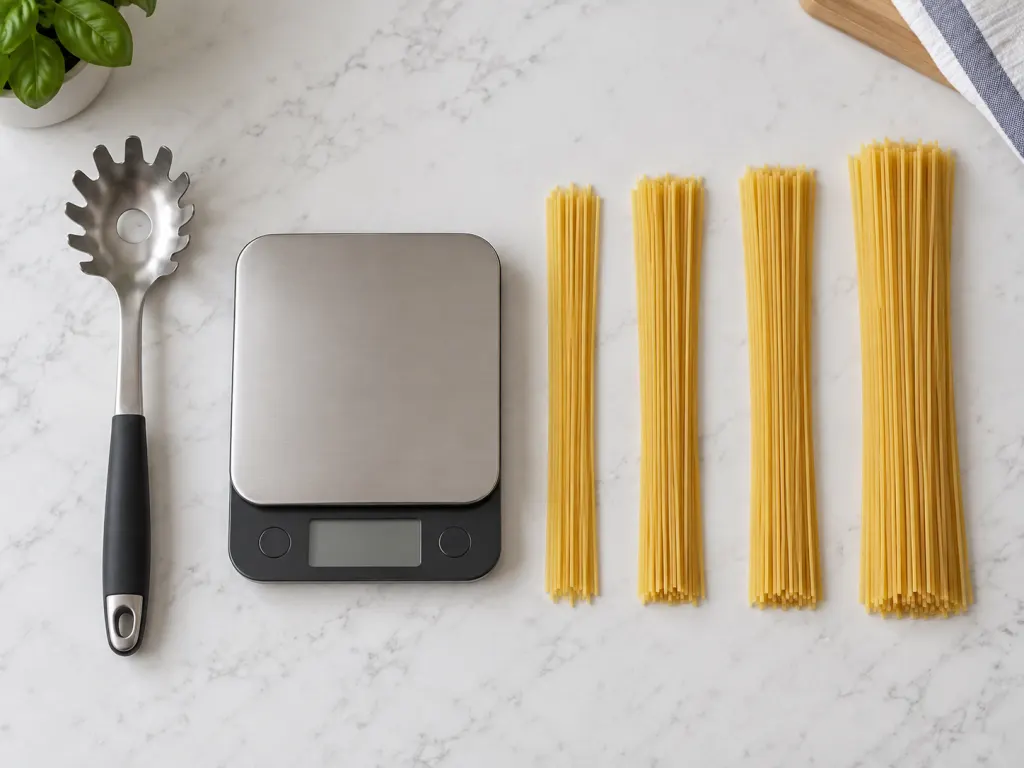
That is why the scale still wins when accuracy matters. NIST recommends a digital kitchen scale for measuring ingredients in grams and explains that weight is more precise and consistent than volume for repeatable cooking results NIST. A pasta spoon hole is closer to using your thumb as a ruler: useful, fast, and sometimes surprisingly effective, but dependent on the tool and the way you use it.
How to Use the Hole Before Cooking
The simplest method is to hold the dry spaghetti vertically and guide the cut ends through the center opening. Let the strands sit naturally rather than crushing them together. If they slide through loosely, add a few more. If you have to force the bundle, remove a few. The goal is a tidy bundle that fills the space without bending the pasta or wedging strands in at odd angles.
A few details make the estimate more useful:
- Use it with straight long pasta. Spaghetti and linguine behave better than short shapes, nests, elbows, shells, or broken strands.
- Keep the bundle even. Tap the ends on the counter so the strands line up before sliding them through.
- Use the same utensil each time. Consistency matters more than the exact opening size.
- Check the package when cooking for a crowd. Package guidance and a scale are easier to repeat when the amount matters.
- Adjust for the meal. A small side dish, a saucy main dish, and a pasta salad do not all need the same amount of dry pasta.
If you are planning a creamy weeknight bowl, the spoon gauge can help you avoid opening more pasta than you need before starting something like Quick Creamy Bacon Pasta or Creamy Pasta with Broccoli. For a chilled dish such as Pasta Salad with Pepperoni, measuring before cooking is especially helpful because extra cooked pasta can change the balance of dressing, vegetables, and add-ins.
Why It Helps With Waste
Cooking too much pasta is common because dry strands expand visually and physically once they soften. A little extra can be useful if you like planned leftovers, but accidental extra pasta often becomes clutter in the refrigerator. The EPA recommends cooking and serving the right amount for the number of people being fed as one way to prevent wasted food at home EPA. The pasta spoon hole is one small tool that supports that habit: it makes you pause and decide on an amount before the pot is boiling.
That pause is the real benefit. Even if the opening is not exact, it turns guessing into a visible check. Instead of shaking half a box into the pot and hoping, you measure one bundle, then decide whether you need another half bundle, another full bundle, or the whole package. Over time, that makes cooking feel less random.
When the Hole Is Mainly for Drainage
Not every pasta spoon was designed as a measuring tool. Some have a large decorative opening, several small drainage slots, or an off-center hole that clearly serves the cooked-pasta function better than the dry-pasta one. If the hole is very wide, oddly shaped, or positioned where dry strands cannot pass through neatly, use it for draining only. That is still useful: lifting pasta with a slotted spoon keeps some cooking water behind while letting a little cling to the noodles, which can help them move smoothly into a pan of sauce.
Scale, Spoon, or Package: Which Should You Use?
Choose the measuring method based on the situation. For a casual dinner, the spoon hole is fast and good enough if you already know your utensil. For a recipe that depends on ratios, use the package amount or a kitchen scale. For a large table, weigh or count package portions so you are not repeating an uncertain estimate many times. NIST also advises using the tare function on a scale so the bowl or container is removed from the displayed weight before adding the ingredient NIST.
The best system is often a combination. Use the spoon hole when you want speed, then weigh the bundle once out of curiosity. Write down what your utensil actually holds for the pasta you buy most often. From then on, the hole becomes a personalized guide instead of a vague kitchen legend.
What to Look for in a Pasta Server
If you are buying a new spaghetti server and want the measuring feature, look for a clear center opening that dry strands can pass through cleanly. A round or oval hole is easier to use than an irregular decorative cutout. The outer fingers should be long enough to lift cooked strands without dropping them, and the handle should feel stable when the spoon is loaded. Wood, nylon, stainless steel, and silicone-coated utensils all have different advantages, so match the material to your cookware and cleaning routine.
For nonstick pans, many cooks prefer softer materials that will not scrape the surface. For deep pots or heavy family-style serving, a firm stainless steel server may feel more secure. If the spoon has multiple holes, check whether they are drainage slots or labeled measuring openings. A useful measuring hole should be big enough for dry strands to pass through in a neat bundle, not so small that the pasta snaps or so large that the estimate becomes meaningless.
The Bottom Line
The “secret” of the pasta spoon hole is not magic; it is practical design. It drains water from cooked pasta, and on many spaghetti servers it can estimate dry long pasta before cooking. Use it with straight pasta, keep your bundle consistent, and remember that the opening belongs to that specific utensil rather than to a universal standard. When precision matters, use a scale. When dinner is casual and the pot is ready, the little hole in the spoon can be a surprisingly useful guide.
Wrap-Up
The center hole in a pasta spoon is a small feature with a useful purpose. It helps water drain from cooked strands, and on many spaghetti servers it can estimate a bundle of dry long pasta before cooking. Because utensil openings and pasta shapes vary, it should be treated as a practical estimate rather than an exact measure. For everyday cooking, it can reduce guesswork; for repeatable results, a kitchen scale or package guidance is the better choice.
Frequently Asked Questions
- → Is the hole in every pasta spoon for measuring spaghetti?
No. Many spaghetti servers use the hole as a dry pasta gauge, but others use it mainly for drainage or decoration. If dry strands fit neatly through the opening, it can work as an estimate. If the opening is oddly shaped or very large, treat it as a drain.
- → Does the pasta spoon hole measure one exact serving?
Not universally. Utensil openings vary, and pasta thickness changes the amount that fits. The hole is best used as a consistent household guide, not as an exact standard.
- → What pasta shapes work with the spoon-hole trick?
It works best with straight long pasta such as spaghetti or linguine. It does not work well with shells, elbows, spirals, nests, lasagna sheets, or broken pieces because those shapes cannot pass through the opening evenly.
- → What should I use when I need a precise amount of pasta?
Use a kitchen scale or the package guidance when precision matters. A scale is especially helpful when cooking for guests, scaling a recipe, or trying to repeat the same result each time.
- → Can the hole still be useful after the pasta is cooked?
Yes. Even when it is not used for measuring, the opening helps liquid drain as you lift cooked pasta from the pot. That makes the server useful for transferring strands to a plate, bowl, or sauce pan.