 Save
The short answer: bananas can be preserved for later use, but they do not stay fresh for two years in any normal home kitchen setup. A banana kept whole at room temperature keeps ripening, a refrigerated banana can suffer peel and texture changes, and a frozen banana is no longer fresh fruit in the everyday sense. The useful goal is not to chase a dramatic storage promise; it is to choose the right method for how you plan to use the fruit later.
The Claim Needs a Practical Translation
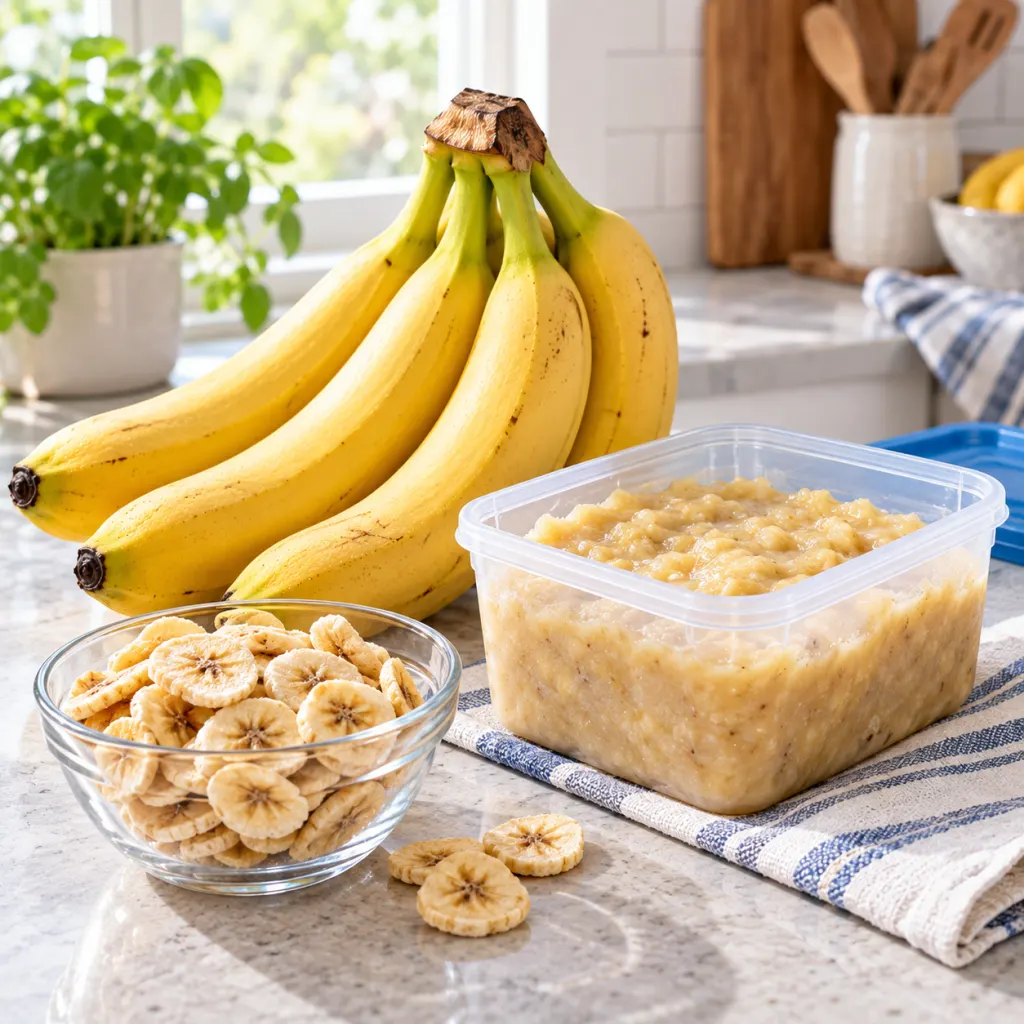
When people talk about keeping bananas for very long periods, they usually mean one of three different things: delaying ripening for a few extra days, freezing ripe fruit for later cooking, or drying slices so they become a shelf-stable snack. Those are not interchangeable. A yellow banana that peels cleanly and tastes freshly ripe is a short-lived food. A bag of frozen mashed banana can be excellent in banana bread, and dried banana slices can be useful in trail mixes, but neither is the same as a just-ripened banana from the counter.
Professional banana handling gives the clearest reality check. UC Davis Postharvest Research and Extension lists mature-green banana storage and transport temperatures around 13-14°C, with ripening conditions around 15-20°C, and notes that controlled atmospheres can extend mature-green banana life to roughly weeks, not years: UC Davis banana postharvest facts. That is with commercial-style control of temperature, humidity, gases, and handling. A home kitchen has far less control, so a two-year fresh-fruit expectation is not realistic.
- Fresh storage is for days, sometimes a bit longer if fruit is bought greener and kept away from extra heat.
- Freezing is for ripe bananas you plan to blend, bake, or cook later.
- Drying is for banana pieces that become chewy or leathery and are stored dry.
- Canning whole bananas is not a casual substitute for tested preservation directions; use research-tested methods for any home-preserved food.
Why Bananas Change So Quickly
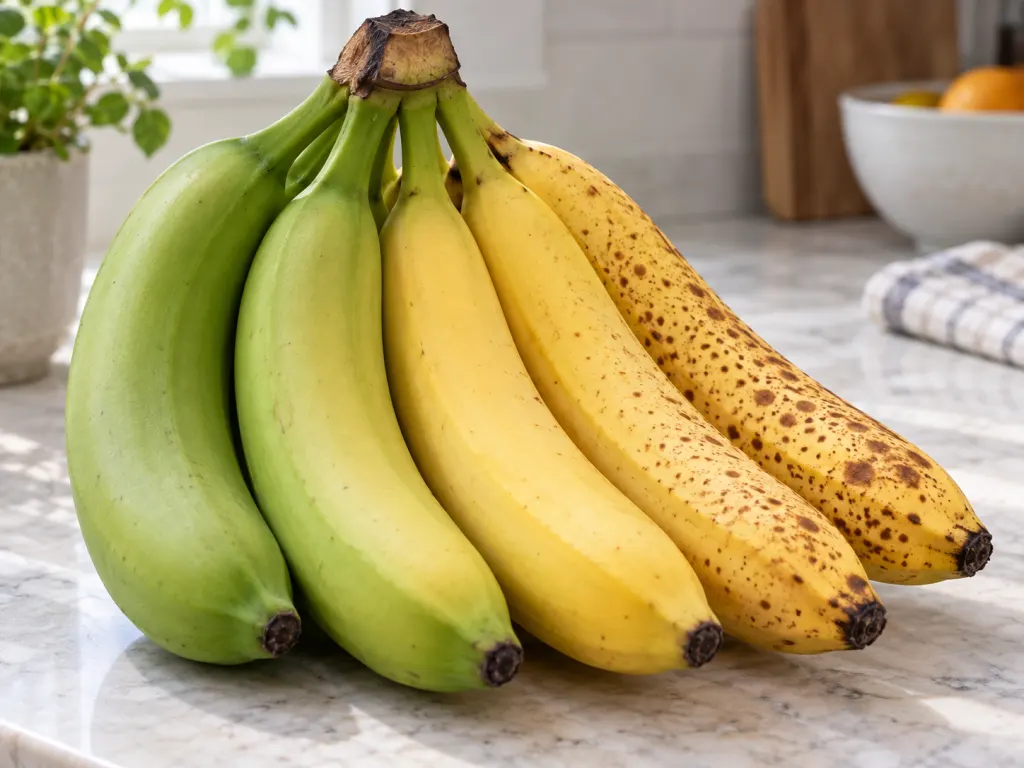
Bananas are climacteric fruit, which means they continue ripening after harvest. University of Maryland Extension explains that climacteric fruits, including bananas, show increased respiration and ethylene activity during ripening: University of Maryland Extension on ethylene and fruit ripening. In plain kitchen terms, that is why a firm green bunch can become yellow, speckled, soft, and then overripe without much help from you.
Ethylene matters because it is part of the ripening signal. A banana sitting beside other ripening fruit can move through its stages faster, especially in a warm kitchen. Separating bananas from other ethylene-producing fruit, keeping them out of direct sun, and buying only as many as you can use are modest but useful habits. These steps may buy time, but they do not stop biology. Once the peel is speckled and the flesh is soft, the best preservation decision is usually to freeze or cook rather than wait.
Freezing Is the Best Long-Term Home Option for Ripe Bananas
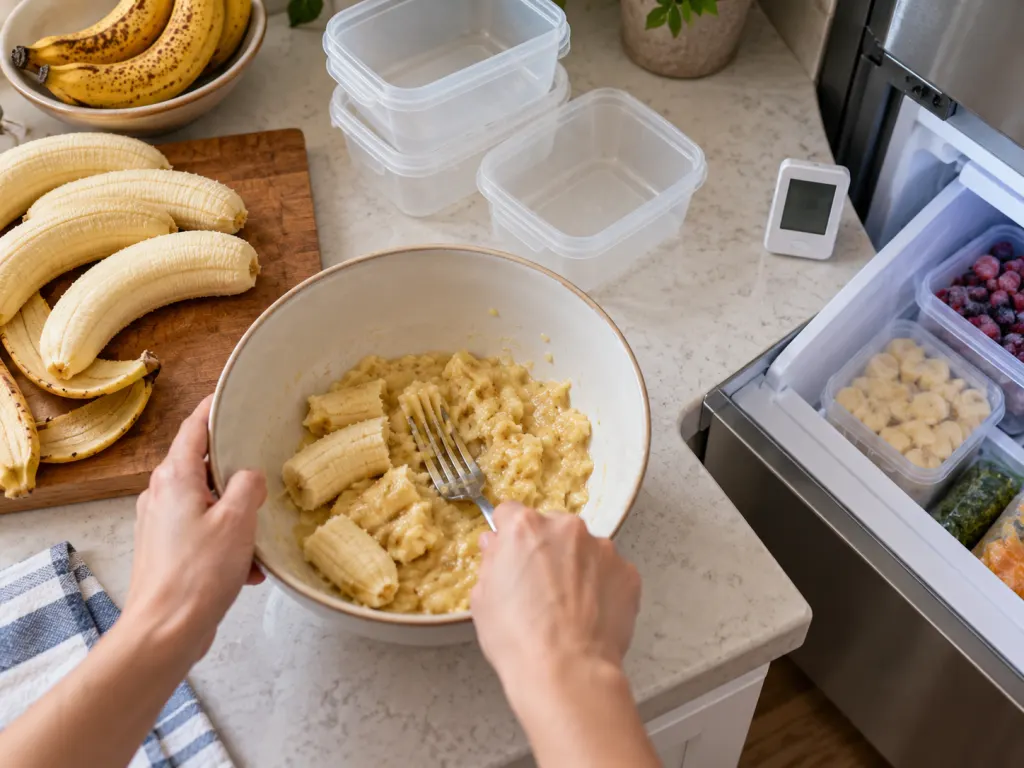
The National Center for Home Food Preservation gives a specific banana-freezing method: select firm ripe bananas, peel them, mash them thoroughly, add ascorbic acid, package in a moisture-vapor resistant container, seal, and freeze: NCHFP freezing bananas guidance. This is a practical approach for fruit you want to use in batters, pancakes, smoothies, sauces, or stirred desserts. It is less satisfying if your goal is neat slices with a fresh bite.
Freezer safety and freezer quality are related but different. FDA food-storage guidance says a freezer should be kept at 0°F (-18°C), and that properly frozen food remains safe while quality decreases with long storage: FDA food storage basics. For bananas, the quality issues are obvious after thawing: the fruit softens, liquid separates, and the aroma may fade. That thawed texture can be perfect for a banana smoothie, but it will not resemble a fresh peeled banana.
Drying Bananas Makes a Different Food
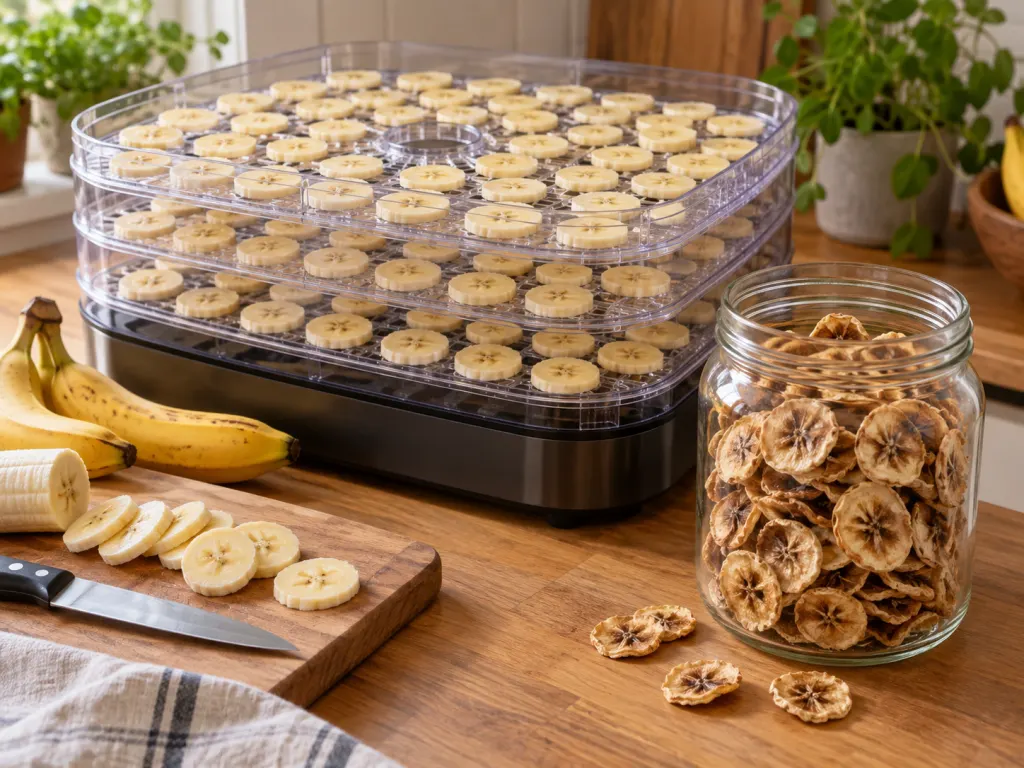
Drying is another legitimate way to preserve bananas, but it changes the fruit even more than freezing. Colorado State University Extension recommends selecting firm ripe fruit, peeling it, cutting it into 1/8-inch slices, dipping slices in an antidarkening or antimicrobial solution, arranging them in a single layer, and drying until tough and leathery, about 6 to 10 hours: Colorado State University Extension drying fruits. The result is a chewy dried snack, not fresh banana.
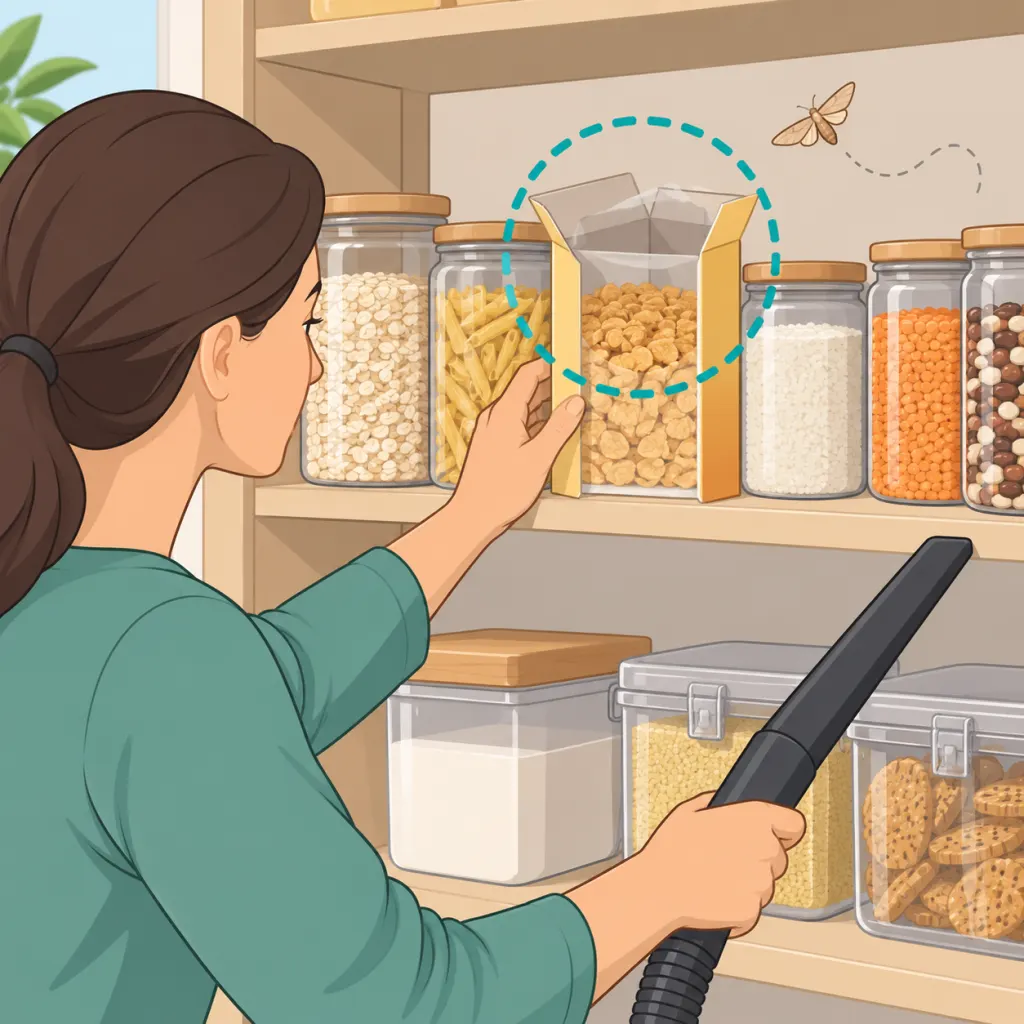
Dry storage also has limits. The National Center for Home Food Preservation explains that dried foods should be cooled, packed in clean dry containers, protected from moisture and insects, and stored in cool, dry, dark areas. Its dried-food storage guidance gives typical storage ranges of 4 months to 1 year, with most dried fruits lasting about 1 year at 60°F and about 6 months at 80°F: NCHFP packaging and storing dried foods. That is useful pantry life, but it is still not a two-year fresh-banana method.
What Not to Do With Bananas You Want to Save
Avoid improvised preservation shortcuts that sound tidy but are not backed by tested directions. Do not seal ripe bananas in an airtight jar at room temperature and assume the jar itself makes them stable. Do not rely on appearance alone to decide whether stored food is safe. FDA notes that food can be unsafe even when it does not look or smell spoiled, and it recommends discarding moldy food rather than trying to rescue questionable portions: FDA food storage basics. With bananas, obvious mold, leaking packages, off odors, or moisture inside a dried-food container are signs to stop and discard.
Also be cautious with refrigerator storage. Bananas are tropical fruit, and UC Davis notes chilling injury can occur below about 13°C, with peel discoloration and ripening problems depending on time and temperature: UC Davis banana postharvest facts. Many home refrigerators are colder than that. A ripe banana can be refrigerated briefly if you accept peel darkening, but refrigeration is not a long preservation method for fresh quality.
A Better Banana Preservation Plan
A practical plan starts before the fruit overripens. Buy bananas at mixed stages if you can: some greener for later, some yellow for immediate use. Keep them at room temperature away from sun and strong heat. Once a banana is fully ripe, decide quickly whether it belongs in today’s snack, tomorrow’s baking, the freezer, or the dehydrator. For households that often have extra fruit, a simple freezer routine is usually more useful than any complicated hack.
- For the next few days: keep unpeeled bananas on the counter, separated from other ripening fruit when possible.
- For baking: mash ripe peeled bananas, add ascorbic acid if following the NCHFP method, and freeze in measured portions.
- For smoothies: freeze peeled chunks on a tray, then move them to a freezer bag once firm.
- For pantry snacks: dry evenly sliced bananas until leathery, condition them, then package them away from heat and moisture.
- For comparison: use the same clear labeling habits you would use for other preserved foods, such as the date-focused approach in egg freshness storage.
The best method depends on the finished use. Frozen banana is ideal when texture will be blended or baked into something soft, such as loaf cakes, pancakes, oatmeal, or fruit drinks. Dried banana is better when you want a portable snack or a chewy ingredient for cereal. Fresh bananas are best kept fresh by buying smaller bunches more often, choosing greener fruit when you need time, and using ripe fruit before it crosses into waste.
The Bottom Line
The honest version of the long-storage promise is this: bananas can be preserved, but not kept fresh for two years by an ordinary household method. Freezing can keep ripe banana available for future cooking, and drying can make a compact snack with a much longer pantry life than fresh fruit. Both methods require clean handling, suitable packaging, and realistic expectations. If you want a fresh banana experience, buy and manage small amounts. If you want to reduce waste, preserve the fruit in the form that matches how you will actually use it.
Wrap-Up
Banana preservation works best when the goal is clear. For fresh eating, slow ripening with good shopping and counter storage habits. For long storage, freeze ripe mashed banana or dry thin slices using research-based guidance. A preserved banana can still be useful and delicious, but calling it fresh after long storage is misleading.
Frequently Asked Questions
- → Can bananas stay fresh for two years at home?
No ordinary home method keeps bananas fresh in the same form for two years. You can freeze or dry bananas for later use, but the texture, appearance, and best uses change.
- → Is freezing bananas better than drying them?
It depends on the use. Freezing is better for baking, smoothies, and soft mixtures. Drying is better for a chewy snack or pantry ingredient when the fruit has been dried and stored properly.
- → Should I freeze bananas with or without the peel?
For most kitchen uses, peeled bananas are easier to portion and use later. NCHFP’s banana-freezing guidance focuses on peeled, mashed ripe bananas packed in a moisture-vapor resistant container.
- → Why do bananas brown so fast?
Bananas keep ripening after harvest. Ethylene activity and respiration are part of that process, so warmth, time, and exposure to other ripening fruit can move bananas from firm to overripe quickly.
- → Can I use preserved bananas in recipes on this site?
Yes, if the texture fits the recipe. Frozen mashed banana works well in soft batters and blended drinks, while dried banana is better as a topping or snack. For fresh-looking desserts such as banana split cheesecake sundae, fresh bananas are usually the better choice.
References
This content was developed and refined using reliable sources.
- https://postharvest.ucdavis.edu/produce-facts-sheets/banana
- https://www.extension.umd.edu/resource/ethylene-and-regulation-fruit-ripening
- https://nchfp.uga.edu/how/freeze/fruits/freezing-bananas
- https://www.fda.gov/consumers/consumer-updates/are-you-storing-food-safely
- https://extension.colostate.edu/resource/drying-fruits
- https://nchfp.uga.edu/how/dry/drying-general/packaging-and-storing-dried-foods