 Save
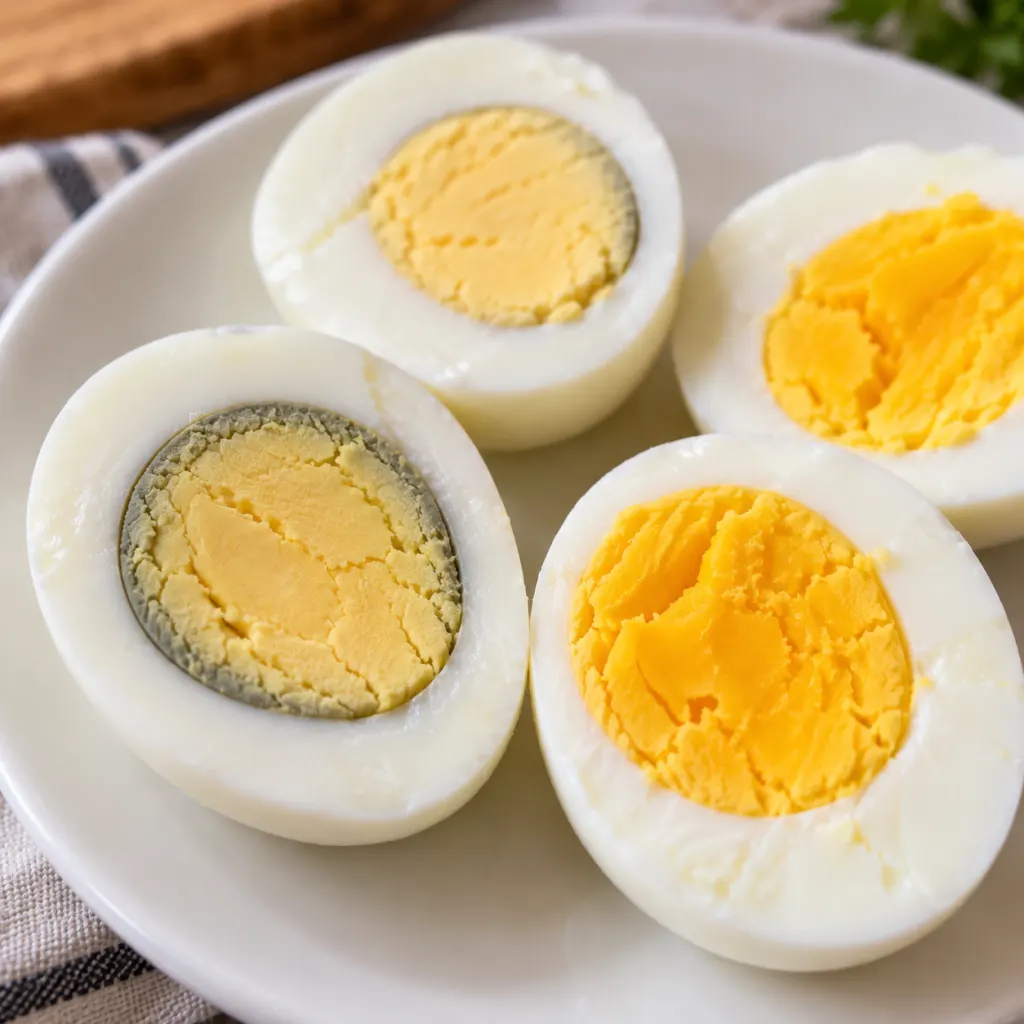
The green ring around a hard-boiled egg yolk is a simple kitchen-chemistry clue: the egg got enough heat for sulfur compounds in the white and iron in the yolk to react at their shared surface. It is usually a cosmetic issue, not proof that the egg is spoiled. Illinois Extension explains that the greenish coating comes from cooking at too high a temperature, cooking too long, or not cooling the eggs quickly, and that the compounds formed at the yolk surface do not affect wholesomeness (source). The fix is not fancy. Use moderate heat, time the eggs, and cool them promptly so carryover heat does not keep cooking the center.
The Ring Is a Surface Reaction
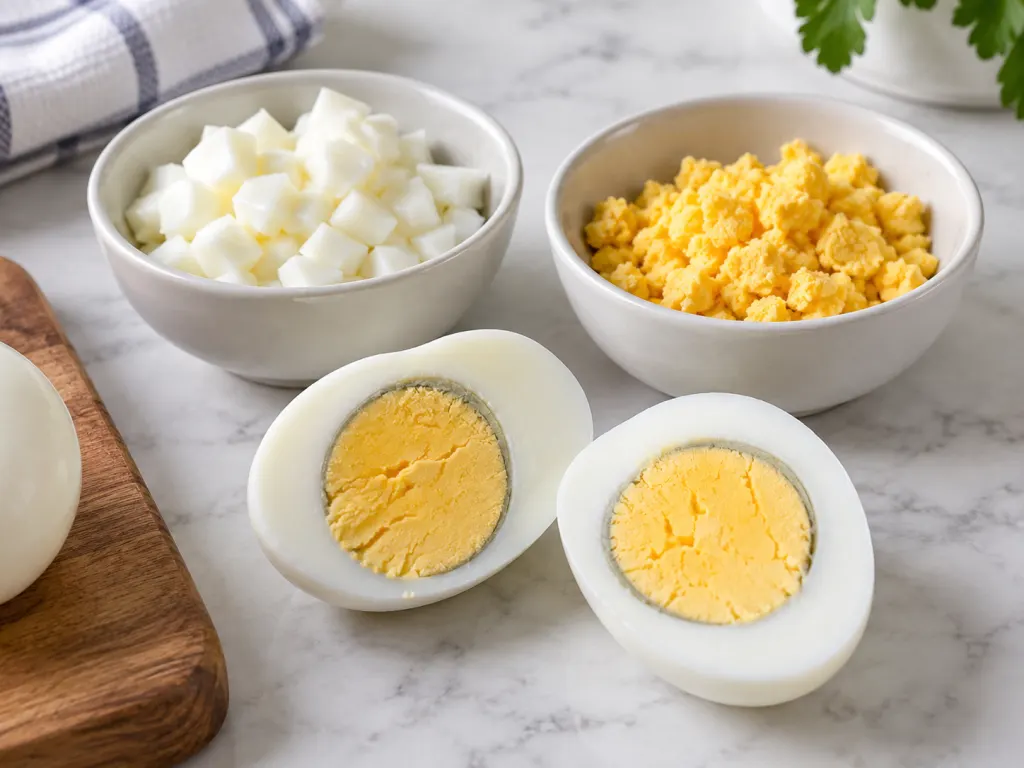
A hard-cooked egg is not one uniform food once heat enters it. The white and yolk have different proteins, minerals, water content, and textures, so they respond differently as temperature rises. The green ring appears at the boundary where the firm white touches the outer edge of the yolk. Texas A&M AgriLife Extension describes the ring as a combination of iron and sulfur when an egg is cooked too long or not cooled quickly after cooking (source). That is why the color forms as a neat halo instead of turning the entire yolk green.
The usual explanation is that heat encourages sulfur-containing compounds from the white to move and react with iron from the yolk. The resulting iron-sulfur compounds can look green, gray-green, or slightly olive. The exact shade depends on time, temperature, egg size, cooling, and even the water or pan environment. A faint ring means the reaction barely got started; a thick gray-green band usually means the egg spent much longer in hot conditions than it needed.
Why Overcooking Makes It More Obvious
Heat is the practical trigger. The longer the egg stays hot after the white and yolk are already firm, the more opportunity the surface reaction has to show. This can happen during active cooking, but it can also happen after the burner is off. A pot of hot water holds a surprising amount of heat, and a shell-on egg keeps absorbing that heat until it is cooled. That is why an egg can be technically cooked at the moment you remove it from the stove, then continue toward a drier yolk and stronger ring while it sits in the pan.
Boiling hard for the entire cooking time often makes the problem worse because the outside of the egg receives harsher heat than needed. The white may become rubbery before the yolk is properly set, and by the time the center is done, the outer yolk has spent extra time at high heat. University of Nebraska-Lincoln Extension recommends hard-cooking rather than hard-boiling and gives a covered standing method after the water reaches a boil, with timing based on egg size (source). The broader lesson is that controlled heat gives the yolk less time in the ring-forming zone.
Cooling Is Part of Cooking
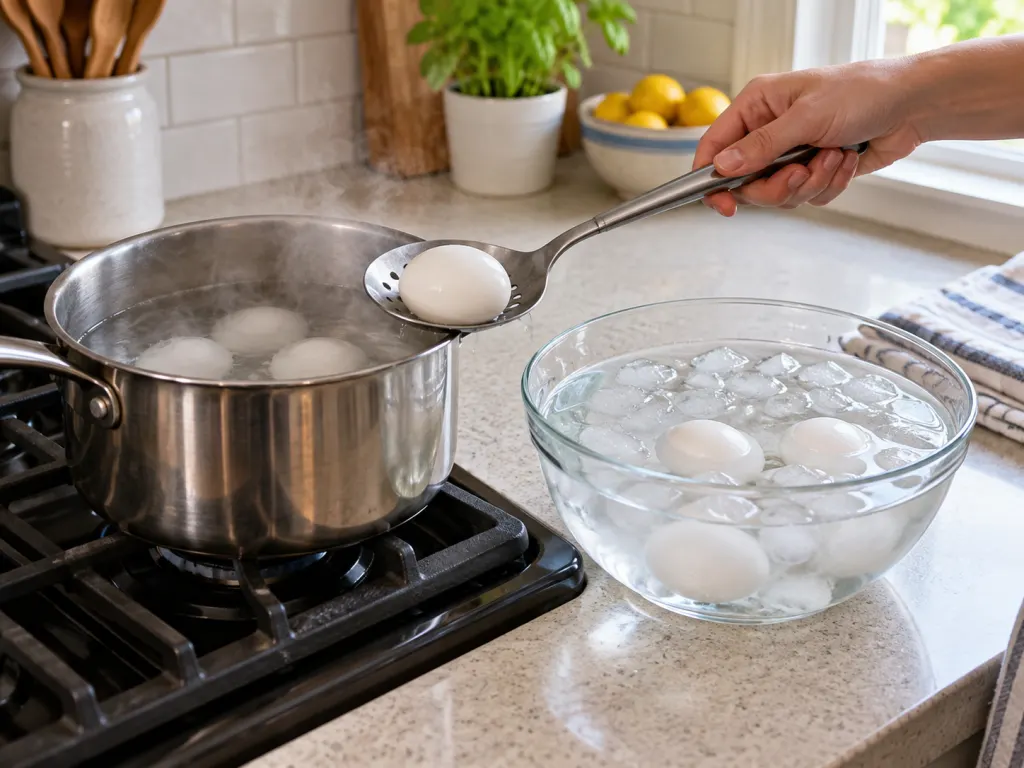
Cooling is not just a convenience for peeling. It is the step that stops the process. If hot eggs remain in hot water or in a warm pot, they keep cooking even though the stove is off. Cold running water or an ice-water bath pulls heat away from the shell and center much faster. This is especially helpful when cooking a full dozen, because a crowded pan and a mass of hot eggs can hold heat longer than a small batch.
A useful habit is to decide on the cooling setup before the eggs are done. Fill a bowl with cold water and ice, or clear space at the sink for cold running water. When the timer ends, move the eggs immediately. Let them cool until they are no longer warm to the touch before peeling or refrigerating. Quick cooling helps keep the yolk color cleaner and also gets cooked eggs out of the warm range faster.
A Green Ring Is Not the Same as Spoilage
The ring by itself is not a spoilage test. Extension sources describe it as unattractive rather than harmful when it comes from the normal cooking reaction. Illinois Extension says the sulfur and iron compounds formed at the yolk surface do not affect flavor or wholesomeness (source), and Texas A&M AgriLife Extension similarly notes that such eggs are safe to eat when the issue is the familiar overcooking-and-cooling reaction (source).
That said, color alone should not override basic egg handling. An egg with a green ring can still be too old, mishandled, or left out too long, just as a perfectly yellow-yolked egg can be mishandled. Judge storage and handling separately from the ring. If cooked eggs have been left unrefrigerated too long, stored too long, or have an off odor after peeling, the safer decision is to discard them. The ring explains appearance; it does not certify the whole history of the egg.
How to Reduce the Ring at Home
You do not need special equipment to reduce the green ring. The main controls are gentle heating, reliable timing, and fast cooling. The following routine works because it avoids a long aggressive boil and gives the eggs a clean stop at the end:
- Place eggs in a single layer so they heat evenly and are less likely to crack from bumping.
- Cover with about an inch of water so the shells are fully surrounded.
- Bring the water just to a boil, then cover the pan and remove it from the heat.
- Use egg size as your timing guide; larger eggs need longer than medium eggs.
- Transfer eggs to cold water as soon as the time is up.
- Refrigerate cooked eggs promptly if you are not eating them right away.
The timing can vary with pan size, starting egg temperature, altitude, and personal preference. The University of Nebraska-Lincoln article gives a practical range of 9 minutes for medium eggs, 12 minutes for large eggs, and 15 minutes for extra-large eggs after the water reaches a boil and the covered pan stands off heat (source). If your yolks are chalky or ringed, shorten the standing time slightly next time. If the center is not set enough for your use, add a minute.
Why Some Batches Ring More Than Others
Two batches cooked by the same person can look different. Egg size matters because larger eggs take longer for heat to reach the center. Starting temperature matters because refrigerator-cold eggs and room-temperature eggs do not follow the same timeline. Pan material, water volume, burner strength, and how quickly the pot comes to a boil also change the heat curve. Even crowding matters: a pan packed tightly with eggs may heat unevenly, and a larger batch can cool more slowly unless it is moved into plenty of cold water.
Freshness can affect a different part of the experience: peeling. Illinois Extension notes that very fresh hard-cooked eggs are often harder to peel because eggs lose carbon dioxide as they age, making peeling easier after several days of storage (source). That peeling detail does not mean old eggs are better in every way; it means eggs that have been properly refrigerated for a short time may peel more neatly than eggs laid very recently.
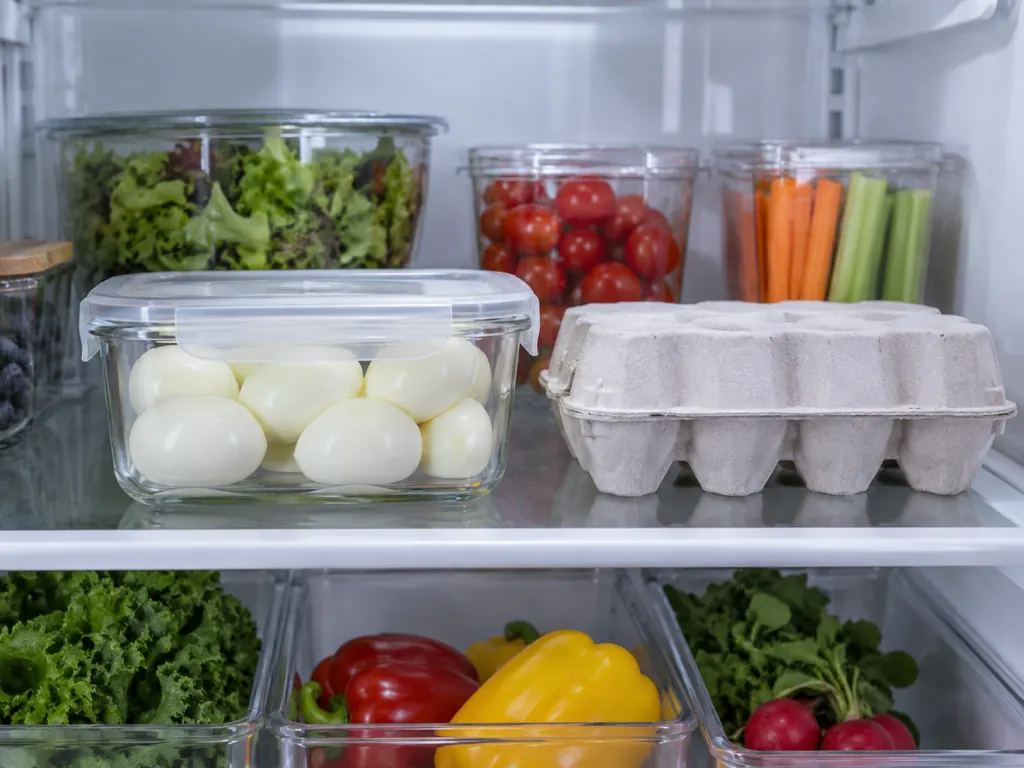
Storage Still Matters After Cooking
Hard-cooked eggs should be handled like a perishable cooked food. The FDA advises storing eggs promptly in a refrigerator at 40 degrees F or below and using hard-cooked eggs, whether peeled or still in the shell, within one week after cooking (source). FoodSafety.gov lists hard-cooked eggs at one week in the refrigerator and says they do not freeze well (source). Those timelines are about storage quality and safety, not yolk color.
If you are making eggs ahead for lunches, salads, or deviled eggs, cool them first, dry the shells if they are going into a carton, and mark the date. Peeled eggs are convenient but can pick up odors and dry at the surface, so store them in a covered container. Shell-on eggs often keep their texture better. Either way, the one-week refrigerator window is the practical boundary to remember.
When the Color Is Something Else
A green ring around a firm yolk is the classic overcooking pattern, but not every unusual egg color has the same cause. A greenish egg white in a fresh egg can be related to riboflavin, according to Illinois Extension, and cloudy whites can indicate carbon dioxide in very fresh eggs (source). A blood spot or meat spot is another separate egg-quality issue, not the same thing as the green ring. The location of the color is your first clue: a narrow halo at the yolk edge points to cooking, while odd color or odor throughout the egg deserves more caution.
The Bottom Line for Better-Looking Eggs
The green ring is a reminder that hard-cooked eggs benefit from restraint. Cook them long enough for the yolk to set, but not so long that the outer yolk stays hot after it is already done. Cool them right away. Store them cold. If a ring appears anyway, it is usually an appearance issue, and the next batch can be adjusted by trimming the cooking time, using gentler heat, or chilling the eggs faster.
Wrap-Up
A green ring on a hard-boiled egg yolk forms when heat gives sulfur compounds from the white and iron from the yolk time to react at the yolk surface. It is most common when eggs are cooked too long, boiled too aggressively, held hot after cooking, or cooled slowly. The ring itself is usually cosmetic, but storage rules still matter: cool cooked eggs promptly, refrigerate them, and use them within one week. For brighter yolks, hard-cook gently, time by egg size, and move the eggs into cold water as soon as the timer ends.
Frequently Asked Questions
- → Is the green ring around a hard-boiled egg yolk harmful?
When the ring is the familiar narrow green-gray band around a fully cooked yolk, it is usually a cosmetic result of iron and sulfur compounds reacting during overcooking or slow cooling. Judge storage separately, because an egg can still be mishandled regardless of yolk color.
- → Why does the ring appear only around the yolk?
The reaction happens where the white and yolk meet. Sulfur compounds are associated with the white, while iron is present in the yolk, so the color shows most clearly as a halo at the surface of the yolk rather than throughout the whole egg.
- → How can I keep hard-boiled eggs from turning green?
Use gentler heat, avoid a long rolling boil, time the eggs by size, and cool them immediately in cold water. If your usual method gives you dry yolks and a strong ring, shorten the hot standing time slightly on the next batch.
- → Does an ice bath make eggs easier to peel?
An ice bath quickly stops cooking and can make handling easier. Peeling also depends on freshness; very fresh eggs are often harder to peel than eggs that have been properly refrigerated for several days before cooking.
- → How long can I keep hard-cooked eggs in the refrigerator?
The FDA and FoodSafety.gov list hard-cooked eggs for up to one week in the refrigerator. Store them cold, covered, and dated, whether they are peeled or still in the shell.
References
This content was developed and refined using reliable sources.
- https://extension.illinois.edu/consumer-concerns
- https://mytexas.ag.tamu.edu/publications/poultry-questions-and-answers
- https://ianrnews.unl.edu/food-specialist-outlines-easter-egg-safety
- https://www.fda.gov/food/buy-store-serve-safe-food/what-you-need-know-about-egg-safety
- https://akaprod-www.foodsafety.gov/food-safety-charts/cold-food-storage-charts