 Save
The practical answer is white vinegar: its acetic acid can help loosen limescale in a toilet bowl, especially when the stain comes from hard-water minerals rather than dye, rust, or damaged porcelain. The trick is contact time. Lower the water level if you can, soak the mineral ring with vinegar, let it work, scrub gently, then rinse well before using any other product.
Limescale is stubborn because it is not ordinary surface dirt. It is a mineral deposit that forms when water leaves calcium and magnesium compounds behind. The U.S. Geological Survey explains that hard water is high in dissolved calcium and magnesium and can leave mineral buildup on fixtures and plumbing USGS. That is why the same home may show white crust on faucets, cloudy shower glass, and a rough ring in the toilet bowl.
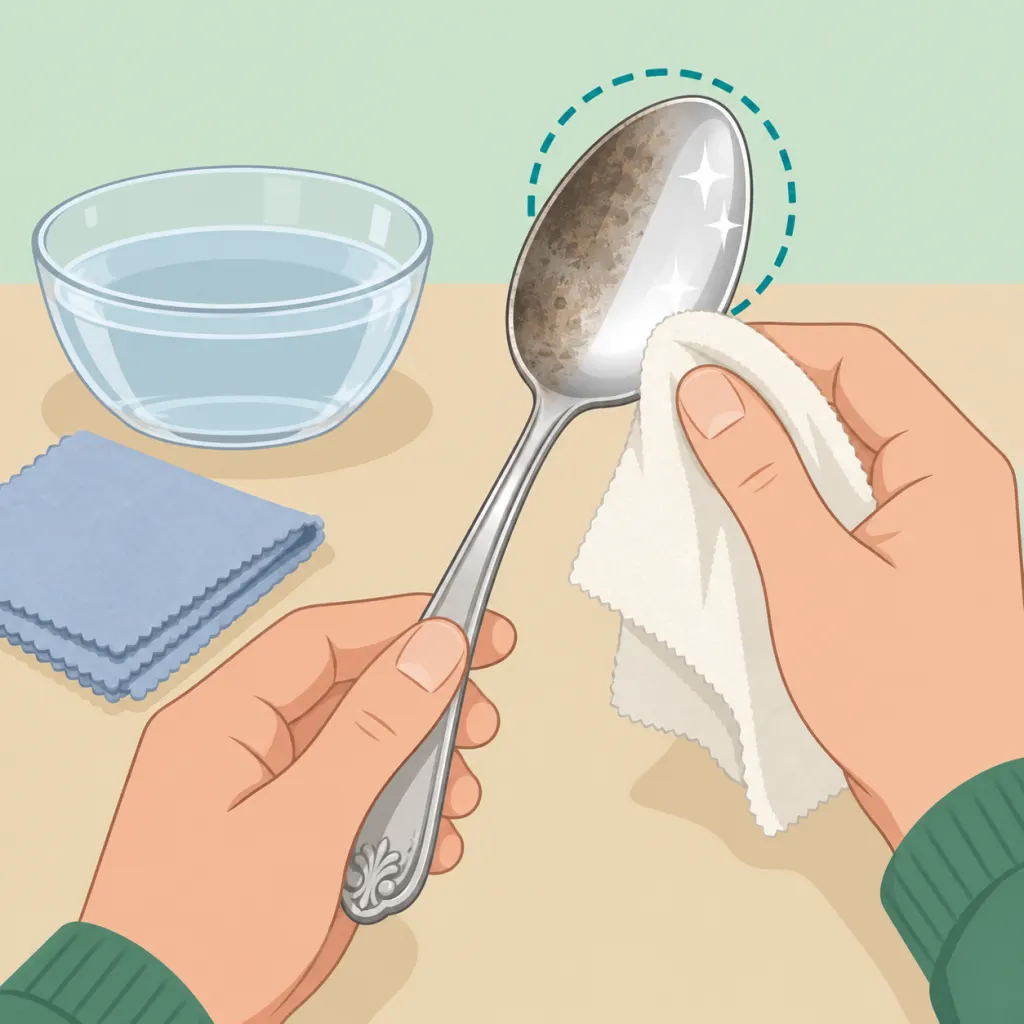
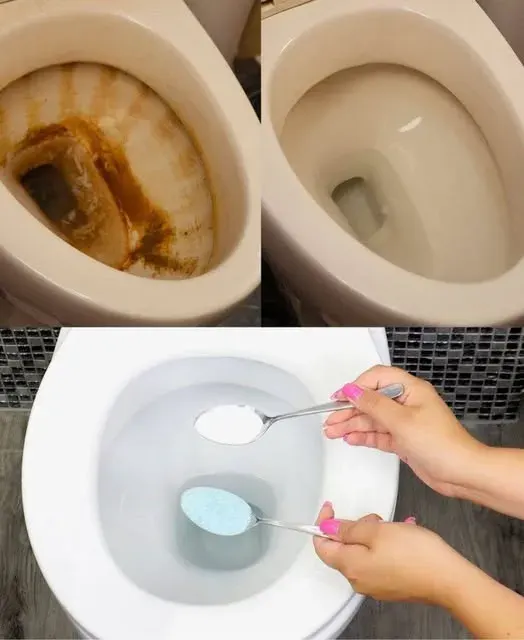
The spoon in the photo does not identify the cleaner
The image includes a spoonful of pale powder. That is not enough to identify baking soda, a commercial cleaner or any other ingredient. The vinegar method below is a separately described option for compatible porcelain, not a reconstruction of the photographed powder. Never combine vinegar with bleach or an unknown product already in the bowl.
What Toilet Limescale Actually Is
In many homes, toilet limescale is a hard-water deposit. As water repeatedly sits, splashes, evaporates, and refills, dissolved minerals can collect on the porcelain surface. USGS notes that hard water is largely associated with calcium and magnesium, and that heated hard water can form solid calcium carbonate scale; the same chemistry helps explain why mineral films appear around wet household fixtures USGS.
The color is not always pure white. A toilet ring may look gray, yellow, tan, or brown because mineral scale can trap other particles. Iron in water, soil tracked into the bathroom, old cleaning residue, and ordinary bowl soil can cling to the rough mineral layer. That roughness is why scrubbing alone often feels disappointing: the brush may polish the high points while leaving the mineral base attached to the glaze.
Why Vinegar Helps, and Why It Is Not Magic
White vinegar works because it is a mild acid. The University of Florida IFAS Extension describes vinegar as a dilute acetic acid solution and explains that acid can react with calcium carbonate, releasing carbon dioxide as carbonate material is dissolved or loosened University of Florida IFAS Extension. In a toilet bowl, that does not mean the ring vanishes instantly. It means vinegar can soften the mineral grip so a brush or non-scratch pad has a fair chance.
New Mexico State University Extension lists acids as cleaners used for mineral deposits, rust stains, and hard-water deposits, and specifically identifies acetic acid in clear white vinegar as useful on surfaces that can tolerate an acidic product New Mexico State University. That last phrase matters. Vinegar is gentle compared with many commercial toilet cleaners, but it is still acidic. It belongs on the bowl surface, not on natural stone floors, unsealed grout, metal trim, or parts where the fixture maker advises against acidic cleaners.
Before You Pour: Set Up the Bowl for Contact Time
Vinegar needs direct contact with the mineral deposit. If the stain is under a full bowl of water, the vinegar becomes diluted quickly. The usual low-risk approach is to turn off the toilet's water supply, flush once to lower the bowl level, and use a cup or small container to remove extra water if needed. You do not have to make the bowl bone dry, but the limescale should be exposed or at least sitting in a stronger vinegar solution.
- Use plain white vinegar. Supermarket white vinegar is commonly sold around 5 percent acidity, which is the kind referenced by University of Florida IFAS Extension in its carbonate test discussion University of Florida IFAS Extension.
- Give it time. Light film may loosen in 30 to 60 minutes; a heavy ring may need several hours of soaking and a second pass.
- Keep it separate. Do not add bleach, disinfectant, drain cleaner, or commercial toilet-bowl cleaner while vinegar is in the bowl.
- Use gentle friction. A toilet brush, nylon scrubber, or pumice stone labeled for toilets can help after soaking. Test any abrasive lightly so you do not dull the glaze.
A Careful Vinegar Method for the Toilet Bowl
Start by ventilating the bathroom and removing other cleaning products from the immediate area. Lower the water level, then pour enough white vinegar into the bowl to wet the limescale ring and the stained channels where water runs down from the rim. For stains above the waterline, press vinegar-soaked paper towels against the deposit so the acid stays in place. Let the vinegar sit, keeping children and pets away from the open bowl during the soak.
After the soak, scrub the area with a toilet brush. If the ring feels gritty, keep brushing in short passes rather than grinding hard in one spot. Flush, inspect, and repeat only if the surface is improving. For a vertical streak, reapply vinegar to that exact path instead of flooding the entire bowl again. When the result looks acceptable, flush several times before using any other cleaner in the toilet.
What Not to Mix with Vinegar
The most important rule is separation. The CDC warns not to mix household bleach or disinfectants with other cleaners or disinfectants because dangerous vapors can be released CDC. CDC guidance on chemical disinfectants also notes that hypochlorites, the chemistry in household bleach, can release toxic chlorine gas when mixed with ammonia or acids, including household cleaning agents CDC. Vinegar is an acid, so it should not share the bowl with bleach-based products.
That warning includes products that seem unrelated: blue tank tablets, disinfecting sprays, toilet gels, mildew removers, and leftover cleaner under the rim. If you used a commercial toilet-bowl cleaner earlier, flush thoroughly and wait before trying vinegar. If vinegar was used first, flush thoroughly before switching products. The goal is boring but important: one cleaner at a time, label directions first, plenty of ventilation, and no experiments in the bowl.
When Vinegar Is Enough and When It Is Not
Vinegar is best for light to moderate mineral film, fresh rings, and rough deposits that lighten after soaking. It is less impressive on old brown stains that are partly iron, deep scratches that hold discoloration, or toilets whose glaze has been worn by harsh abrasives. If the mark does not change after two careful vinegar treatments, more vinegar is unlikely to change the story.
At that point, identify the stain before escalating. A chalky white or gray crust usually points to mineral scale. Orange or reddish brown may suggest iron. Black or dark marks that sit along cracks or pits may be trapped residue in damaged porcelain. A labeled acidic toilet-bowl cleaner may be appropriate for some mineral and rust stains, but it should be used exactly as directed, never combined with vinegar, and never treated as an all-purpose bathroom product.
How to Reduce the Ring Coming Back
Hard-water areas need maintenance because the minerals keep arriving with each flush. You do not have to deep-clean every week, but a short routine prevents the ring from becoming a hard ridge. Brush the waterline regularly, keep the bowl from sitting dirty for long periods, and treat the first sign of scale rather than waiting until it turns rough and dark. If your home has very hard water, local water utility information or a qualified water-treatment professional can help you understand whether a whole-home softening option makes sense.
Indoor air also deserves attention during cleaning. EPA explains that cleaning and disinfecting products can release organic compounds while they are used and stored, and advises increasing ventilation, following label precautions, keeping products out of reach of children and pets, and never mixing household care products unless the label directs it EPA. A bathroom fan and an open door are simple habits, but they make cleaning less concentrated in a small space.
A Realistic Result to Expect
A successful vinegar cleaning usually leaves the bowl smoother and brighter, not necessarily showroom-new after one pass. The mineral ridge should feel less rough under the brush. The waterline may fade in stages. Old brown shadowing may lighten but remain visible if it includes iron or worn glaze. That is not failure; it is a clue that the stain has more than one cause.
For rented homes or older fixtures, avoid aggressive scraping. A toilet is easier to maintain when the glaze remains intact. Once the surface is scratched, new mineral and soil deposits cling more easily, which creates the cycle of harsher scrubbing and faster restaining. Mild acid, patience, and soft scrubbing are slower, but they are usually kinder to the fixture.
The Bottom Line
White vinegar is a sensible first choice for toilet limescale because acetic acid can loosen carbonate-based mineral deposits, and authoritative cleaning guidance recognizes mild acids as useful for hard-water buildup. The method works best when vinegar touches the scale directly and is followed by scrubbing and thorough rinsing. The limits are just as important: vinegar is not a registered disinfectant substitute, it will not solve every brown stain, and it must never be mixed with bleach, disinfectants, or other cleaners.
Wrap-Up
Use plain white vinegar when the toilet stain is likely hard-water limescale: lower the water, soak the deposit, scrub gently, and rinse well. Expect gradual improvement on heavy scale. If the stain does not respond after a couple of careful treatments, consider iron staining, worn porcelain, or a labeled toilet-bowl product used by itself. The most important safety habit is to use one cleaner at a time and keep vinegar away from bleach and disinfectants.
Frequently Asked Questions
- → Can I leave vinegar in the toilet overnight?
For a plain porcelain bowl with no other cleaner present, an overnight soak is often used for heavy limescale. Keep the bathroom ventilated, keep the bowl away from children and pets, and flush thoroughly afterward. Do not leave vinegar sitting on metal trim, natural stone, or surfaces the manufacturer says should not contact acidic cleaners.
- → Should I use baking soda with vinegar in the toilet?
Baking soda and vinegar fizz together, but they also neutralize each other. That can be useful for mild deodorizing or light soil, but it is not the strongest approach for mineral scale. For limescale, vinegar needs time in its acidic state before you scrub and flush.
- → Why did the white crust come back so quickly?
The source is usually hard water, not poor cleaning. If your supply is high in calcium and magnesium, new minerals arrive with each refill. Regular light brushing and early vinegar soaks can slow visible buildup, but very hard water may require broader water-treatment advice.
- → Can vinegar disinfect the toilet bowl?
Do not rely on vinegar as a disinfectant. New Mexico State University Extension notes that vinegar is widely used in household cleaning, but packaging cannot claim it as a disinfectant because it is not registered with EPA for that purpose. If disinfection is needed, use an EPA-registered product according to its label and never combine it with vinegar.
- → What if the stain is brown instead of white?
Brown staining can be mineral scale holding other residue, but it may also involve iron or worn porcelain. Try the vinegar method once or twice. If the stain does not lighten or the surface feels scratched, stop escalating with abrasives and choose a labeled product suited to the stain, used alone and rinsed well.
References
This content was developed and refined using reliable sources.
- https://www.usgs.gov/water-science-school/science/hardness-water
- https://ask.ifas.ufl.edu/publication/HS1262
- https://pubs.nmsu.edu/_g/G304
- https://www.cdc.gov/hygiene/about/cleaning-and-disinfecting-with-bleach.html
- https://www.cdc.gov/infection-control/hcp/disinfection-sterilization/chemical-disinfectants.html
- https://www.epa.gov/indoor-air-quality-iaq/volatile-organic-compounds-impact-indoor-air-quality