 Save
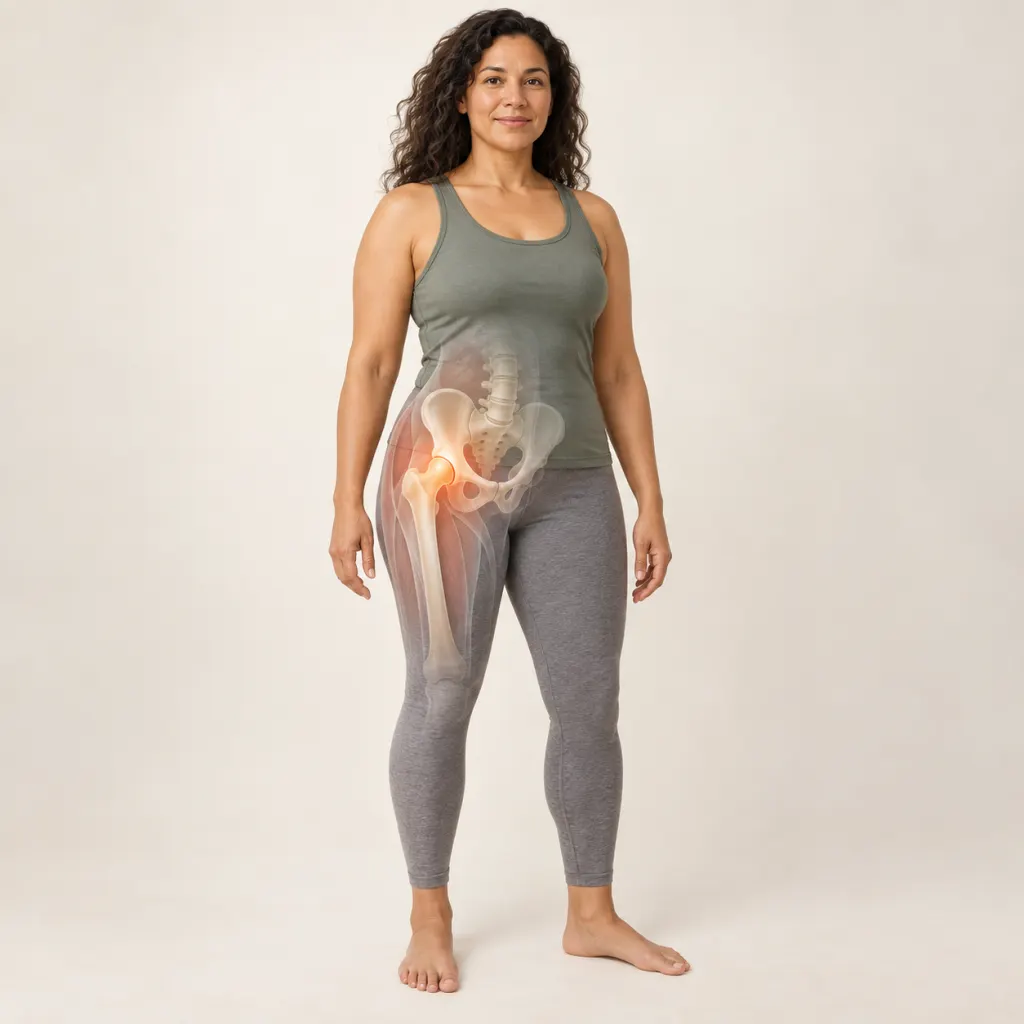
Hip pain can come from the hip joint, the soft tissues around it, the lower back, or an injury, so the meaning depends on where it hurts, how it started, and what makes it worse. Pain felt deep in the groin often points more toward the joint; pain over the outside of the hip may involve bursae, tendons, or nearby muscles; and pain that travels from the back can be referred pain. MedlinePlus notes that hip pain may be felt in the groin, thigh, or knee rather than directly over the hip itself, which is one reason a careful exam matters https://www.medlineplus.gov/ency/article/003179.htm.
Start With the Pattern, Not a Guess
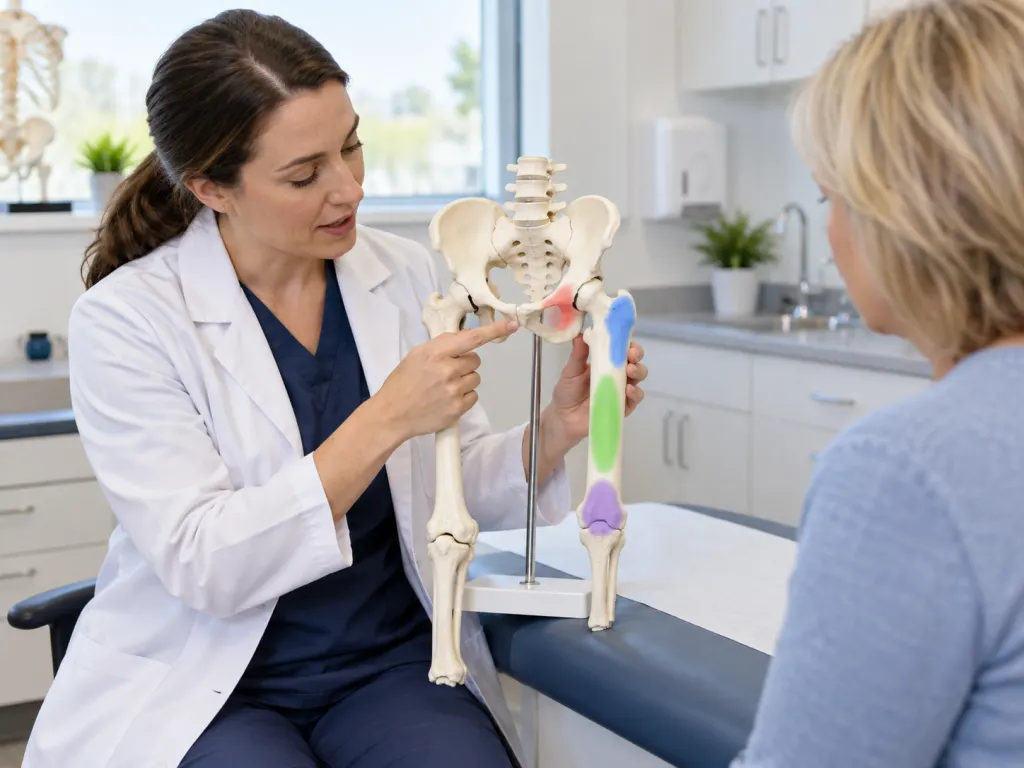
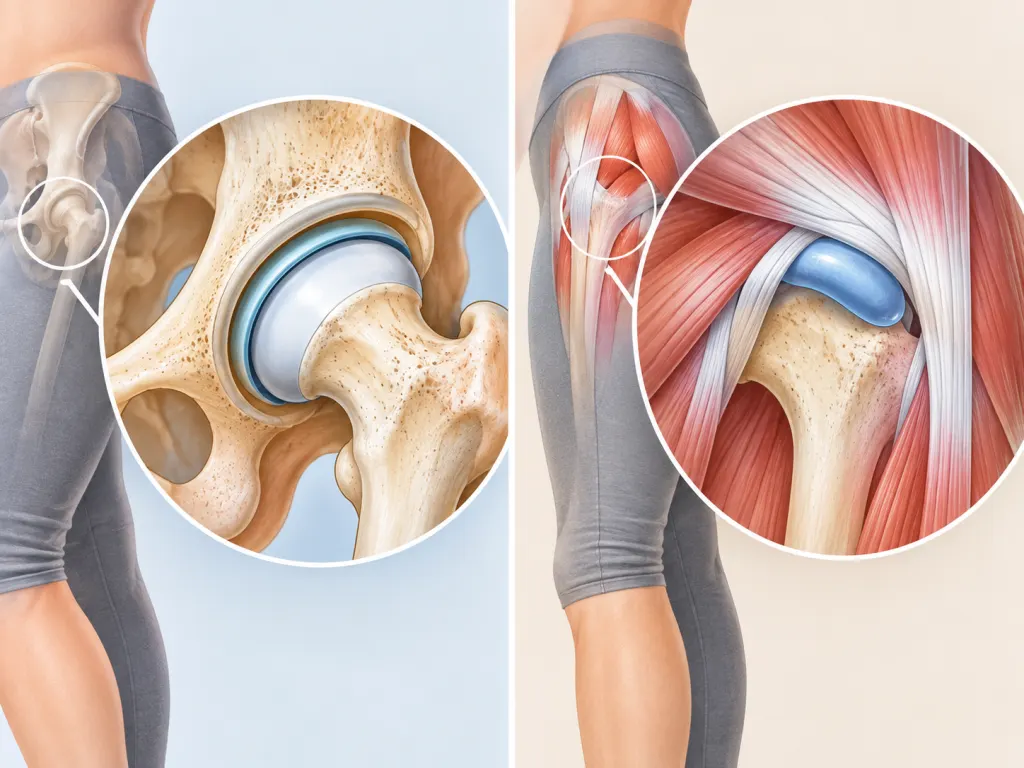
The same word, hip pain, can describe several different experiences. One person may feel a deep ache in the groin when climbing stairs. Another may feel a sharp spot on the outer hip when lying on one side. Someone else may notice buttock or thigh discomfort that seems to begin in the lower back. Mayo Clinic explains that inside-hip or groin pain often suggests a problem within the hip joint, while outer-hip, upper-thigh, or outer-buttock pain is more often related to muscles, ligaments, tendons, or bursae around the joint https://www.mayoclinic.org/symptoms/hip-pain/basics/causes/sym-20050684.
That pattern is not a diagnosis by itself. It is a useful map for the conversation you may have with a clinician. Helpful details include whether the pain began after a fall, after a new activity, gradually over months, or after a long period of sitting. Notice whether walking, stairs, getting in and out of a car, putting on socks, sleeping on one side, or standing from a chair changes the pain. These clues help separate likely joint irritation from soft-tissue strain, bursitis, referred back pain, or a more urgent injury.
Groin Pain and Stiffness Can Point Toward the Joint
Pain felt in the groin, front of the thigh, inner thigh, or sometimes the knee can come from the hip joint. One common reason is osteoarthritis, a condition in which joint tissues change over time. The National Institute of Arthritis and Musculoskeletal and Skin Diseases describes osteoarthritis as a degenerative joint disease that can affect the hips and may cause pain with joint use, short stiffness after rest, swelling, and reduced movement https://www.niams.nih.gov/health-topics/osteoarthritis. In the hip, that can show up as trouble stepping up, getting out of a chair, walking longer distances, or rotating the leg far enough to put on a shoe.
Osteoarthritis is often associated with age, prior injury, joint structure, repeated joint stress, body weight, and family history, but it is not simply a moral failing or a sign that someone has used their body incorrectly. NIAMS also notes that younger people can develop osteoarthritis after joint injury, abnormal joint structure, or genetic cartilage differences. A person in midlife who develops persistent groin pain should not assume it is impossible for the hip joint to be involved, and an older adult should not assume every ache is only normal aging.
Outer Hip Pain Often Has a Different Story
Pain on the outside of the hip, especially when lying on that side, walking, climbing stairs, or rising from a chair, often raises the possibility of bursitis or tendon-related irritation. Cleveland Clinic describes bursitis as painful swelling in a small fluid-filled sac called a bursa, with overuse and pressure among common causes; the hips are one of the places bursitis can occur https://my.clevelandclinic.org/health/diseases/10918-bursitis. This type of pain can feel very local at first and may spread down the outside of the thigh.
Soft-tissue causes may follow a change in routine: more stairs, a longer walk than usual, a new exercise class, a period of gardening, carrying heavy loads, or a job that involves repeated bending or standing. They can also appear when the hip and pelvis are working around a weak or irritated area elsewhere. The important point is that outer hip pain is not automatically hip joint damage. It may need a different assessment and a different care plan than deep groin pain with loss of hip rotation.
Sudden Pain After a Fall Deserves Special Caution
Hip pain after a fall or collision is different from a slow-building ache. The NHS lists severe pain and inability to walk after a fall or injury as a pattern that may suggest a hip fracture, and it advises emergency care when severe hip pain follows a fall or injury, when a person cannot walk or put weight on the leg, or when tingling or loss of feeling follows an injury https://www.nhs.uk/symptoms/hip-pain/. MedlinePlus gives similar urgent boundaries, including a deformed leg, bad bruising or bleeding, inability to move the hip, or inability to bear weight https://www.medlineplus.gov/ency/article/003179.htm.
Falls matter especially for older adults and for people with bone fragility. CDC describes broken hips as one of the most serious fall injuries and notes that recovery can be difficult, with many people unable to live independently afterward https://www.cdc.gov/falls/prevention/index.html. This does not mean every fall causes a fracture, but it does mean severe pain, inability to stand, a shortened-looking leg, or a hip that looks out of place should be treated as urgent rather than watched for several days.
Other Causes Can Imitate Hip Trouble
Not every hip-area pain begins in the hip. MedlinePlus notes that pain around the hip may reflect a back problem and that hip joint pain is often felt most in the groin https://www.medlineplus.gov/ency/article/003179.htm. Nerve irritation from the lower back may travel into the buttock, thigh, or leg. Pelvic, sacroiliac, abdominal, or groin conditions can also overlap with hip-area pain. This is one reason online symptom matching has limits: location helps, but the body does not always respect neat labels.
A labral tear is another example. The labrum is a ring of cartilage around the hip socket. Mayo Clinic says a hip labral tear may cause hip or groin pain, stiffness, limited range of motion, or locking, clicking, or catching sensations, though some people have few or no symptoms https://www.mayoclinic.org/diseases-conditions/hip-labral-tear/symptoms-causes/syc-20354873. A clicking hip alone is not enough to identify a tear, but clicking plus pain, catching, and reduced movement is worth discussing with a qualified professional.
A Practical Symptom Checklist
Before an appointment, it can help to write down a clear, plain-language account of what is happening. The goal is not to self-label the cause; it is to give the clinician better evidence from daily life.
- Location: groin, outer hip, buttock, low back, thigh, knee, or more than one area.
- Timing: sudden after injury, gradual over weeks, morning stiffness, pain after rest, or pain after activity.
- Movement triggers: stairs, walking, sitting, standing from a chair, tying shoes, getting in a car, or lying on one side.
- Function: limping, reduced walking distance, sleep disruption, trouble dressing, or avoiding usual tasks.
- Associated signs: swelling, warmth, fever, rash, numbness, weakness, visible deformity, or pain in several joints.
- Context: recent fall, new exercise, physically demanding work, prior hip injury, inflammatory joint condition, long-term steroid use, or known bone fragility.

When to Arrange Non-Urgent Care
If hip pain is mild and clearly follows a small overuse episode, a short period of gentler activity may be reasonable for some people. But persistent pain deserves attention. The NHS advises seeing a GP when hip pain stops normal activities, affects sleep, gets worse or keeps returning, has not improved after home care for two weeks, or includes stiffness for more than 30 minutes after waking https://www.nhs.uk/symptoms/hip-pain/. MedlinePlus suggests contacting a provider if the hip is still painful after one week of home care, if fever or rash occurs, if pain affects both hips and other joints, or if limping and difficulty with stairs or gait begin https://www.medlineplus.gov/ency/article/003179.htm.
During an evaluation, a clinician may ask where the pain is, when it began, what improves or worsens it, how it affects walking and weight bearing, and what other medical issues or medicines are part of the picture. MedlinePlus notes that a physical exam often looks carefully at the hips, thighs, back, and the way a person walks, and that imaging such as an X-ray or MRI may be considered depending on the situation https://www.medlineplus.gov/ency/article/003179.htm. The right next step depends on the story and exam, not just the pain score.
What Everyday Changes May Be Discussed
Care conversations often begin with reducing irritation while preserving safe movement. Depending on the likely cause, a professional may discuss modifying activities, physical therapy, strength and balance work, footwear, temporary walking support, imaging, or referral. For bursitis, Cleveland Clinic says rest from the irritating activity is often part of the plan, and a provider may suggest options such as physical therapy or other care when symptoms persist https://my.clevelandclinic.org/health/diseases/10918-bursitis. For hip osteoarthritis, NIAMS emphasizes that symptoms can differ widely, from mild limits to significant disability, which is why the plan should match the person rather than a generic label https://www.niams.nih.gov/health-topics/osteoarthritis.
Some people fear that hip pain automatically means surgery. That is not true. Surgery may be discussed for severe joint damage or major loss of function, but many hip pain problems are evaluated and managed first with less invasive steps. MedlinePlus describes hip replacement as an option for severe hip damage, commonly from osteoarthritis, when other measures such as physical therapy, pain medicines, and exercise have not helped enough https://medlineplus.gov/hipreplacement.html. For most readers, the immediate task is simpler: identify warning signs, track the pattern, and get an appropriate assessment when pain persists or limits life.
The Bottom Line
Hip pain could mean a joint problem such as osteoarthritis, a soft-tissue issue such as bursitis or tendon irritation, a labral tear, referred pain from the back, or an injury that needs urgent attention. The most useful first step is to describe the pattern accurately: location, onset, triggers, stiffness, walking changes, and any red flags. Groin pain with stiffness often points more toward the joint; outer hip pain when lying on one side often points more toward surrounding tissues; and sudden severe pain after a fall is a different category altogether. A qualified professional can connect those clues with an exam and, when needed, imaging or referral.
Wrap-Up
Hip pain is a clue, not a diagnosis. Its meaning depends on location, timing, movement triggers, stiffness, injury history, and warning signs. Deep groin pain may involve the hip joint, outer hip pain may involve bursae or tendons, and pain around the hip may sometimes come from the back. Get urgent help for severe pain after injury, inability to bear weight, visible deformity, fever with a hot swollen hip, or numbness after trauma. For ongoing pain that limits sleep, walking, stairs, or daily tasks, arrange a medical evaluation rather than trying to label it at home.
Frequently Asked Questions
- → Does hip pain always come from the hip joint?
No. Hip-area pain can come from the joint, nearby muscles or tendons, bursae, the lower back, or an injury. Groin pain more often suggests the hip joint, while outer hip pain often points toward surrounding soft tissues, but a clinician may need an exam to sort it out.
- → Why does my hip hurt in the groin?
Deep groin pain can be a sign that the hip joint itself is involved, especially when it comes with stiffness, reduced rotation, limping, or trouble with stairs, shoes, or getting out of a chair. Osteoarthritis is one possible cause, but it is not the only one.
- → What does outer hip pain mean?
Outer hip pain may involve bursitis, tendon irritation, muscle strain, or pressure on tissues around the hip. It is often worse when lying on the affected side, climbing stairs, walking longer distances, or rising from a chair.
- → When is hip pain urgent?
Seek urgent help for severe hip pain after a fall or injury, inability to walk or put weight on the leg, a leg that looks deformed or shortened, sudden severe swelling, fever with a hot swollen hip, or tingling or loss of feeling after trauma.
- → Can hip pain be related to arthritis?
Yes. Osteoarthritis can affect the hip and may cause pain with use, short stiffness after rest, reduced motion, and difficulty with daily activities. Other forms of arthritis can also affect joints, so persistent stiffness or pain in several joints should be discussed with a qualified health professional.
- → Should I keep moving if my hip hurts?
It depends on the cause and severity. Gentle movement may be reasonable for minor overuse discomfort, but do not push through severe pain, injury-related pain, fever, numbness, or inability to bear weight. If pain persists or limits daily life, ask a qualified professional what level of activity is appropriate.
References
This content was developed and refined using reliable sources.
- https://www.medlineplus.gov/ency/article/003179.htm
- https://www.niams.nih.gov/health-topics/osteoarthritis
- https://www.nhs.uk/symptoms/hip-pain
- https://www.mayoclinic.org/symptoms/hip-pain/basics/causes/sym-20050684
- https://www.mayoclinic.org/diseases-conditions/hip-labral-tear/symptoms-causes/syc-20354873
- https://my.clevelandclinic.org/health/diseases/10918-bursitis
- https://www.cdc.gov/falls/prevention/index.html
- https://medlineplus.gov/hipreplacement.html