 Save
Baking soda is most useful at home when you treat it as a modest, inexpensive helper: good for odors, gentle scrubbing, and loosening light residue, but not a universal cleaner. The smartest approach is to use small amounts, keep it dry until you need a paste or solution, rinse it away when it touches food-contact surfaces, and avoid mixing it with stronger products. Baking soda can freshen a refrigerator, help wipe a sink, reduce shoe odors, lift light mug stains, and make microwave cleanup easier. It should not replace soap, sanitizer, or appliance instructions when those are needed.
What Baking Soda Can Do Well
Baking soda, also called sodium bicarbonate, earns its place in the cleaning cupboard because it is simple, cheap, and flexible. Utah State University Extension describes it as useful for neutralizing some acid-based odors, adsorbing odors from the air, and working as a gentle cleanser on surfaces such as sinks, tubs, ovens, and fiberglass when used with a damp sponge or cloth https://extension.usu.edu/archive/home-cleaning-chemicals. That makes it especially useful for maintenance cleaning: the small jobs that happen before a surface becomes heavily soiled.
The limit matters as much as the benefit. Baking soda is not the same thing as a sanitizer or disinfectant. The CDC explains that cleaning uses water, soap, and scrubbing to remove dirt and impurities, while disinfecting uses chemicals to kill remaining germs on surfaces https://www.cdc.gov/hygiene/about/cleaning-and-disinfecting-with-bleach.html. In practice, baking soda is best for odor and residue. If a surface has touched raw meat juices, floodwater, spoiled food, or another higher-risk mess, first clean it properly and then use an appropriate sanitizer or disinfectant according to the label.
Start With Odors, Where Baking Soda Shines
Odor jobs are the easiest place to see baking soda's value because they usually do not require heavy scrubbing or harsh chemistry. Use it dry for passive odor control, or dissolve it in warm water for wipeable interiors. Keep expectations realistic: it helps with everyday stale smells, not with spoiled food, hidden leaks, mold growth, smoke damage, or a trash bin that has not been washed.
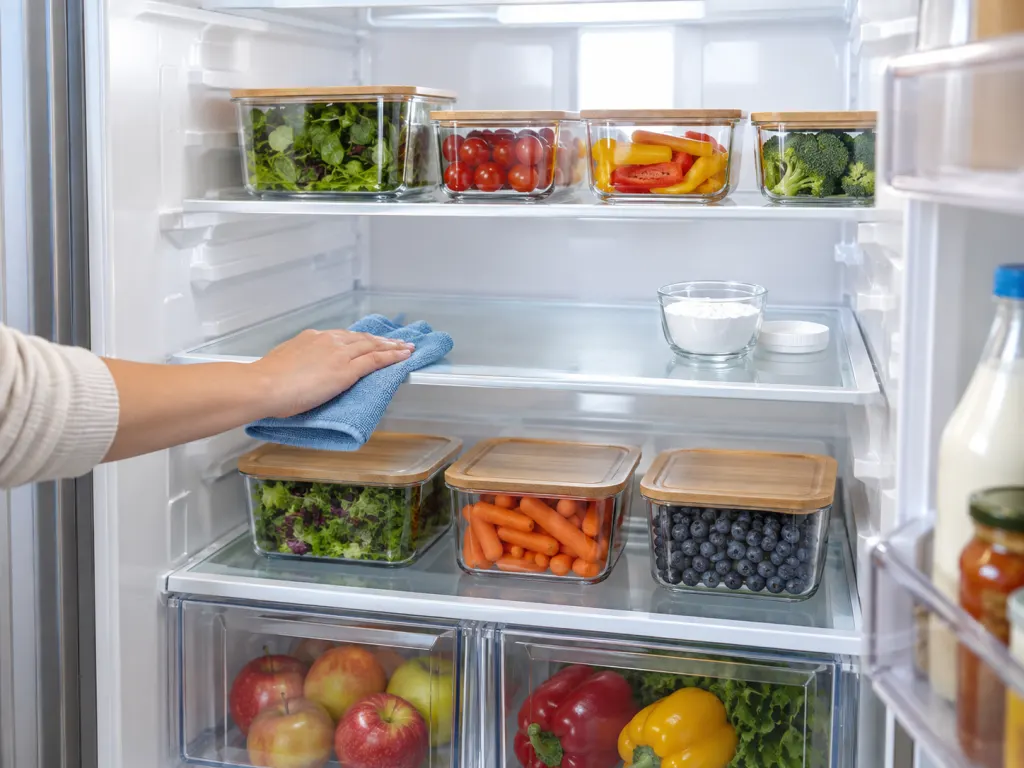
- Refrigerator: Place an open container on a shelf after wiping spills and removing old food. Illinois Extension also lists baking soda as one option for lingering refrigerator odors after cleaning https://extension.illinois.edu/food-safety/cleaning-and-sanitizing.
- Freezer: Use the same open-container method, but only after checking for unwrapped food, spills, and packaging that has absorbed odor.
- Shoes: Sprinkle a small amount inside dry shoes overnight, then shake or vacuum it out fully before wearing them.
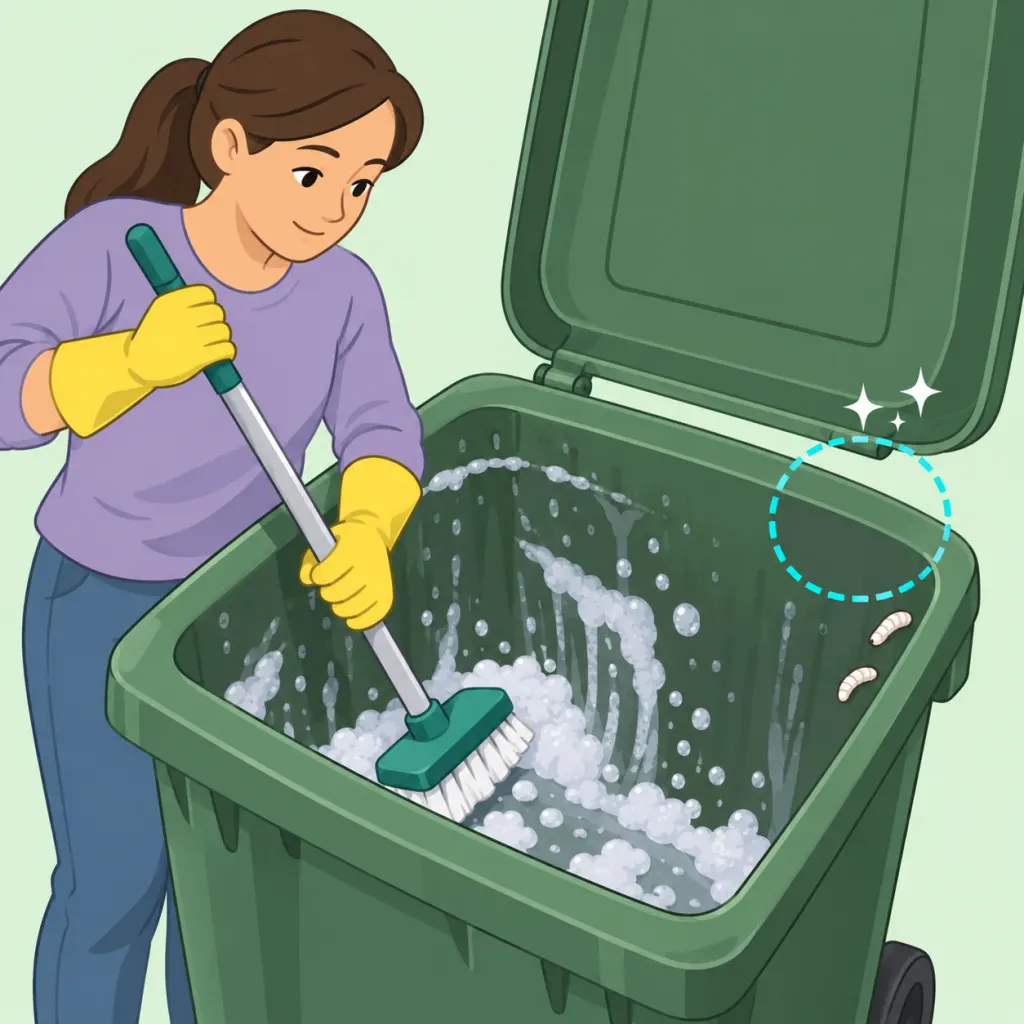
- Trash bin: Wash and dry the bin first, then sprinkle a thin layer at the bottom before replacing the liner.
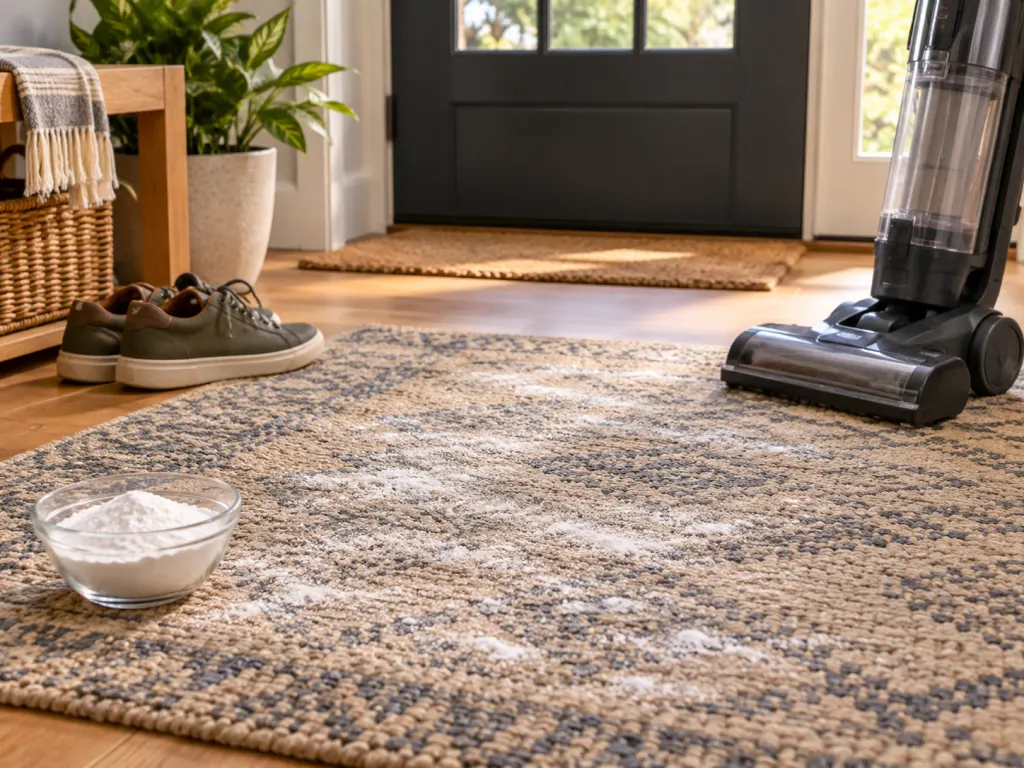
- Carpet or rugs: Lightly sprinkle only on dry, colorfast material, let it sit briefly, and vacuum thoroughly. Skip this on delicate rugs or anything with care instructions that warn against powder cleaners.
The quiet rule for deodorizing is that baking soda should not cover up a problem you need to remove. A sour refrigerator often needs a shelf-by-shelf cleanout. A persistent dishwasher odor may come from the filter. A carpet smell may need drying, ventilation, or professional cleaning if moisture is involved. Baking soda helps most when the source has already been handled and you are dealing with leftover stale odor.
Use It as a Gentle Scrub, Not a Forceful Abrasive
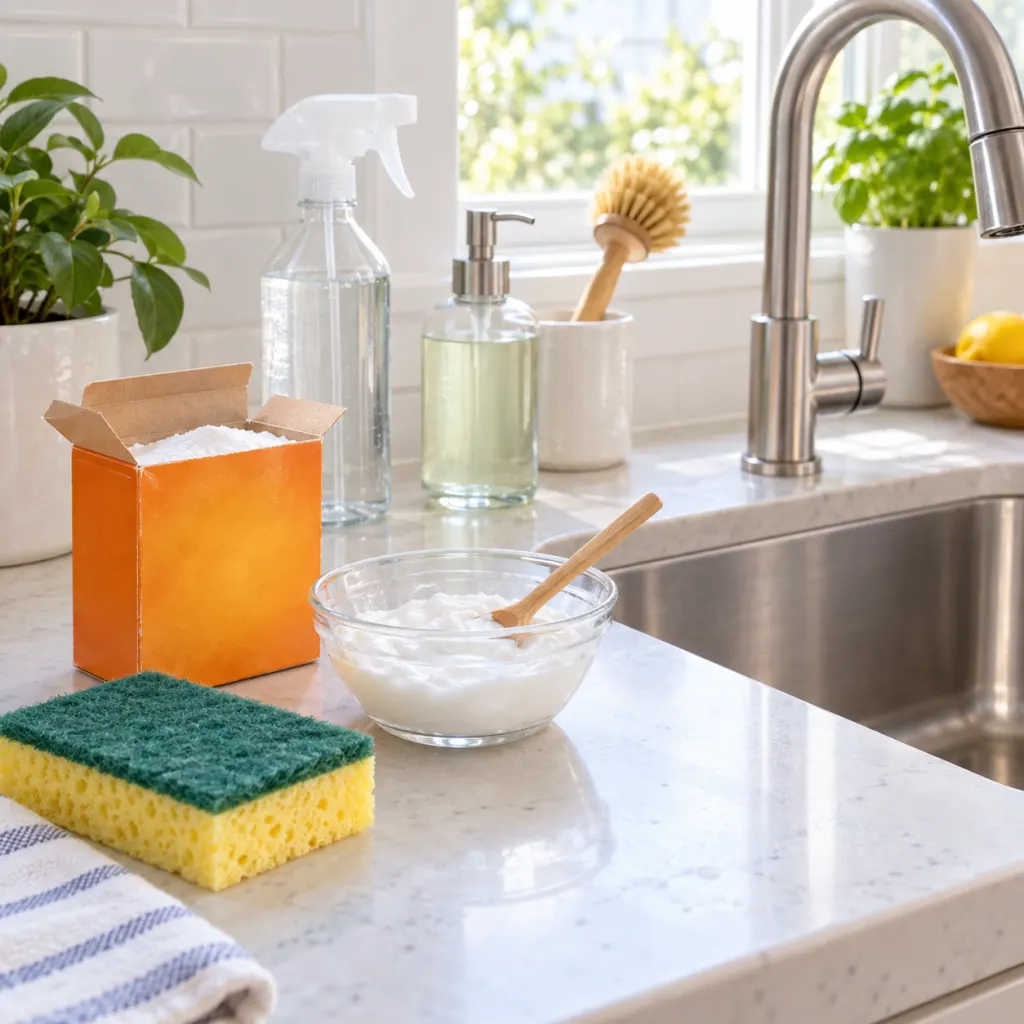
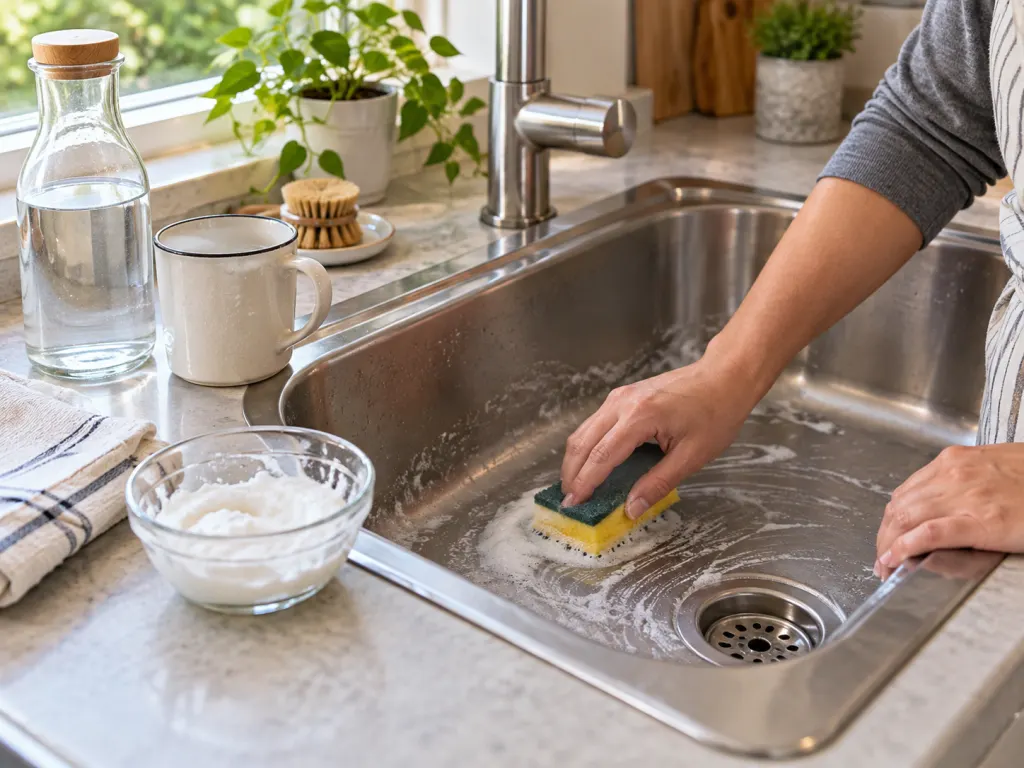
For light soil, a paste of baking soda and water gives you a little grip without reaching immediately for stronger cleaners. Sprinkle a small amount on a damp sponge for a stainless sink, porcelain sink, or sturdy tub, then rinse thoroughly. On mugs, a paste can help remove tea or coffee staining from the inside surface. On a plastic food container, it can help loosen odor and residue before a normal wash.
Go slowly on finishes that scratch, dull, or stain easily. Test a hidden spot first on painted surfaces, brushed metals, enamel, fiberglass, and any countertop with a special seal. Avoid aggressive scrubbing on natural stone, waxed wood, nonstick cookware, appliance screens, and decorative metal unless the manufacturer says that method is acceptable. Baking soda is gentle compared with many scouring powders, but repeated rubbing can still change a delicate finish.
15 Practical Tricks Worth Keeping
Use these ideas as a menu, not a command list. Choose the trick that fits the material, start small, and rinse or vacuum completely when the job is done.
- Freshen the refrigerator: Keep an open container inside, and replace it periodically.
- Wipe refrigerator drawers: After removing food and loose debris, wipe with a baking soda and water solution, then rinse and dry.
- Clean a stainless sink: Sprinkle lightly, scrub with a soft sponge, and rinse well.
- Brighten stained mugs: Rub a small paste over light tea or coffee marks, then wash normally.
- Loosen microwave splatter: Heat a microwave-safe bowl of water with baking soda, let it cool behind the closed door, then wipe. Illinois Extension lists 6 tablespoons baking soda with 1 cup water as one option for caked-on microwave food, while also reminding readers to follow manufacturer instructions https://extension.illinois.edu/food-safety/cleaning-and-sanitizing.
- Freshen bottles and thermoses: Soak with warm water and a spoonful of baking soda, then scrub, rinse, and air dry.
- Deodorize a trash bin: Use a thin dry layer only after the bin is washed and dry.
- Help with shoe odor: Leave a little dry baking soda in dry shoes overnight, then remove it fully.
- Refresh upholstery: Use only on colorfast fabric, test first, sprinkle lightly, and vacuum well.
- Deodorize carpet: Use a light sprinkle on dry carpet, keep it away from damp spots, and vacuum carefully.
- Pre-treat greasy pans: Soak cooled cookware with warm water and baking soda before gentle scrubbing.
- Lift burnt residue: Let the pan soak before touching it with a non-scratch sponge; avoid this on delicate nonstick coatings unless allowed.
- Freshen a dishwasher: Clean the filter first, then use baking soda only if the manual allows it.
- Support laundry odor control: Add a modest amount only when compatible with the washer and garment care labels.
- Scrub grout surface dirt: Use a paste and a soft brush, then rinse so residue does not dry in the lines.
Know Where Baking Soda Does Not Belong
Baking soda is not automatically safe for every job just because it is familiar. Do not use it as a routine produce wash. University of Minnesota Extension recommends washing fresh produce under cool running water and says baking soda or vinegar can affect flavor; it also advises against soaking produce in water for quality and safety reasons https://extension.umn.edu/food/preparing/cooking-at-home/washing-fresh-fruits-and-vegetables. A clean produce brush and running water are better choices for firm fruits and vegetables.
Do not pour baking soda into appliances, drains, or compartments in large amounts unless the manual allows that use. Powder can clump when it meets moisture, and residue can be hard to rinse from tight spaces. Skip it on electronics, unsealed grout, old stone, antique finishes, cast iron seasoning, and any surface where the care label calls for a specific cleaner. When an item is valuable or hard to replace, a hidden spot test is a small investment.
Keep Cleaning Products Separate
The most important safety habit is simple: do not mix cleaning products casually. The CDC warns not to mix household bleach or disinfectants with other cleaners because the vapors may be dangerous to breathe https://www.cdc.gov/hygiene/about/cleaning-and-disinfecting-with-bleach.html. Illinois Extension gives similar kitchen-safety advice for bleach, including following manufacturer instructions, using unscented liquid household bleach for sanitizer solutions, and never mixing bleach with ammonia https://extension.illinois.edu/food-safety/cleaning-and-sanitizing.
This matters even when baking soda itself feels ordinary. Many homes store bleach, ammonia, vinegar, drain cleaners, oven cleaners, disinfecting sprays, and laundry products near one another. Use one product at a time, rinse if needed, and let the area dry before switching methods. Keep homemade mixtures labeled, avoid storing mystery bottles, and keep cleaning supplies away from children and pets.
Kitchen Surfaces Need a Two-Step Mindset
In the kitchen, baking soda can be helpful for residue, but food-contact surfaces need more than deodorizing. Illinois Extension recommends washing surfaces, sinks, and appliances first with hot, soapy water, then sanitizing when needed with an appropriate diluted bleach solution after cleaning https://extension.illinois.edu/food-safety/cleaning-and-sanitizing. This order matters because visible food and grime can interfere with sanitizing.
Use baking soda on cutting boards only for odor or light surface residue, then wash the board with hot, soapy water and rinse well. If the board has touched raw meat, poultry, seafood, or eggs, follow food-safety cleaning and sanitizing guidance for that board material. Replace cutting boards that have deep grooves that cannot be cleaned well. A fresh-smelling board is not the same thing as a properly cleaned board.
Appliance Tricks Work Best When You Clean the Parts First
A dishwasher that smells stale often has food trapped in the filter, spray arm, gasket, or drain area. Baking soda may help after those places are cleaned, but it cannot remove debris it never touches. For refrigerators and freezers, wipe spills quickly, discard questionable food, and wash removable parts according to the manual. Illinois Extension lists baking soda as one option for lingering refrigerator odors and describes a dishwasher odor routine that includes cleaning the filter before any vinegar or baking soda step https://extension.illinois.edu/food-safety/cleaning-and-sanitizing.
Microwaves deserve extra caution because vents, electrical components, seals, and interior coatings vary. Use a microwave-safe bowl, avoid overfilling, let steam do part of the work, and wipe gently after the bowl cools enough to handle. Do not use oven cleaner, steel wool, or abrasive cleaners inside a microwave; Illinois Extension specifically warns against those methods for microwave cleaning https://extension.illinois.edu/food-safety/cleaning-and-sanitizing.
A Simple Decision Guide
Before you reach for the box, ask three questions. First, is the job mainly odor, light staining, or residue? If yes, baking soda may be a good first try. Second, is the surface sturdy and rinseable? If no, test first or choose the manufacturer-approved method. Third, does the situation involve raw food juices, spoiled food, floodwater, bathroom contamination, or someone recently sick in the home? If yes, baking soda may help with cleanup after the fact, but it is not the main safety step.
That decision process keeps the tricks practical. A sink with dull residue is a good baking soda job. A smelly shoe is a good dry deodorizing job. A raw-chicken cutting board is a cleaning and sanitizing job. A marble counter with a stain is a specialty-surface job. A garbage bin with liquid at the bottom is a wash-and-dry job first, then a light sprinkle if odor remains.
How to Store and Use It Neatly
Keep one box for cleaning and a separate container for cooking, clearly labeled. Cleaning boxes pick up odors and may be touched with damp hands or dusty scoops, so they do not belong back in food preparation. Store baking soda dry, close it after use, and pour a little into a small bowl instead of dipping a dirty sponge into the main box.
For most household tasks, less is better. A dusting, spoonful, or small paste is usually enough. Heavy piles are harder to vacuum, rinse, and remove from seams. After using it on a surface, rinse with clean water when the surface touches food or skin, then dry fully. On fabrics, vacuum slowly and check that no powder remains in seams, tufts, or stitching.
The Bottom Line
Baking soda is best understood as a dependable supporting tool. It can freshen, loosen, and lightly scrub. It can make ordinary kitchen and laundry tasks easier. It can reduce waste by helping you finish simple jobs without buying a special product for every small mess. But it does not replace soap, sanitizers, disinfectants, appliance manuals, fabric-care labels, or common sense about delicate materials.
If you keep the rules simple, the box earns its shelf space: use it for odors and light residue, rinse it away where needed, never mix cleaning products casually, and step up to the right cleaner when the job calls for more than deodorizing. That is the real trick: not using baking soda everywhere, but using it where it is genuinely useful.
Wrap-Up
Baking soda works well for refrigerator odor, shoe odor, light sink residue, mug stains, bottles, microwaves, carpets, upholstery, trash bins, and some laundry tasks. It works poorly when asked to disinfect, remove serious contamination, or clean surfaces that scratch easily. Use it sparingly, rinse thoroughly, follow appliance and material instructions, and keep it separate from bleach, ammonia, and other cleaning products.
Frequently Asked Questions
- → Can baking soda disinfect kitchen counters?
No. Baking soda can help scrub light residue and reduce odors, but it is not a disinfectant. For kitchen surfaces that need sanitizing, clean first with hot, soapy water and then use a sanitizer that is appropriate for the surface and label directions.
- → Is it safe to mix baking soda with vinegar for cleaning?
Small fizzing reactions are common in household tips, but the reaction quickly reduces the useful action of both ingredients. For most jobs, use baking soda as a paste or dry deodorizer, or use vinegar separately when the surface allows it. Do not mix products casually.
- → Can I use baking soda on produce?
Running water is the better default. University of Minnesota Extension recommends washing fresh produce under cool running water and says baking soda or vinegar can affect flavor; it also discourages soaking produce in water.
- → Will baking soda scratch surfaces?
It can affect delicate finishes if rubbed aggressively or used repeatedly. Test a hidden area first, use a soft sponge or cloth, and avoid natural stone, nonstick coatings, appliance screens, and specialty finishes unless their care instructions allow it.
- → How much baking soda should I use for odor control?
Use a light amount. An open container in a refrigerator, a thin sprinkle in a dry trash bin, or a small dusting on dry carpet is usually enough. Heavy piles are harder to remove and may leave residue.