 Save
Eight household items reliably suffer real damage inside a standard home dishwasher: cast iron and carbon steel pans, wooden cutting boards and utensils, sharp kitchen knives, most nonstick and ceramic-coated cookware, uncoated aluminum pots and bakeware, vacuum-insulated tumblers and thermoses, fine crystal or metallic-trimmed dishware, and any plastic that isn't marked dishwasher-safe. The common culprits are the same three forces every cycle produces: sustained heat well above hand-washing temperature, strongly alkaline detergent formulated to strip grease, and thirty to ninety minutes of standing water and spray-arm agitation. Materials that tolerate a quick rinse in the sink often cannot tolerate all three at once, repeated night after night. Below, each item gets a plain explanation of what actually breaks down, plus the hand-washing habit that protects it, so you can decide in a few seconds whether something belongs in the rack or the sink.
Why Dishwashers Are Hard on Certain Materials
A dishwasher is engineered to do one job extremely well: remove baked-on grease and food residue from sturdy ceramic, glass, and stainless steel using hot water, high-pH detergent, and mechanical spray pressure. Water temperatures typically run higher than a person could comfortably hold a hand under, and dishwasher detergents are formulated to be alkaline because that chemistry breaks down fat and protein efficiently. That same combination is exactly what degrades softer or more reactive materials: heat accelerates rust and coating breakdown, alkaline chemistry reacts with metals like aluminum and strips protective finishes like cast-iron seasoning, and the extended soak lets wood absorb water it cannot quickly release. None of this means a dishwasher is poorly made; it means some kitchen items were designed around a gentler routine of warm water, mild soap, and immediate drying.
The Quick List: 8 Items to Keep Out of the Dishwasher
- Cast iron and carbon steel cookware, heat and detergent strip the seasoning and invite rust.
- Wooden cutting boards, bowls, and utensils, prolonged moisture warps and cracks wood.
- Good kitchen knives, contact with other items dulls the edge and can damage handles.
- Nonstick and ceramic-coated cookware, heat, detergent, and jostling chip the coating faster.
- Uncoated aluminum cookware and bakeware, alkaline detergent causes dark, pitted discoloration.
- Vacuum-insulated tumblers and thermoses, heat can weaken the seal that keeps drinks hot or cold.
- Fine crystal or metallic-trimmed dishware, heat and detergent etch glass and fade gold or silver trim.
- Plastics without a dishwasher-safe label, high heat warps or melts softer plastics.
1. Cast Iron and Carbon Steel Cookware
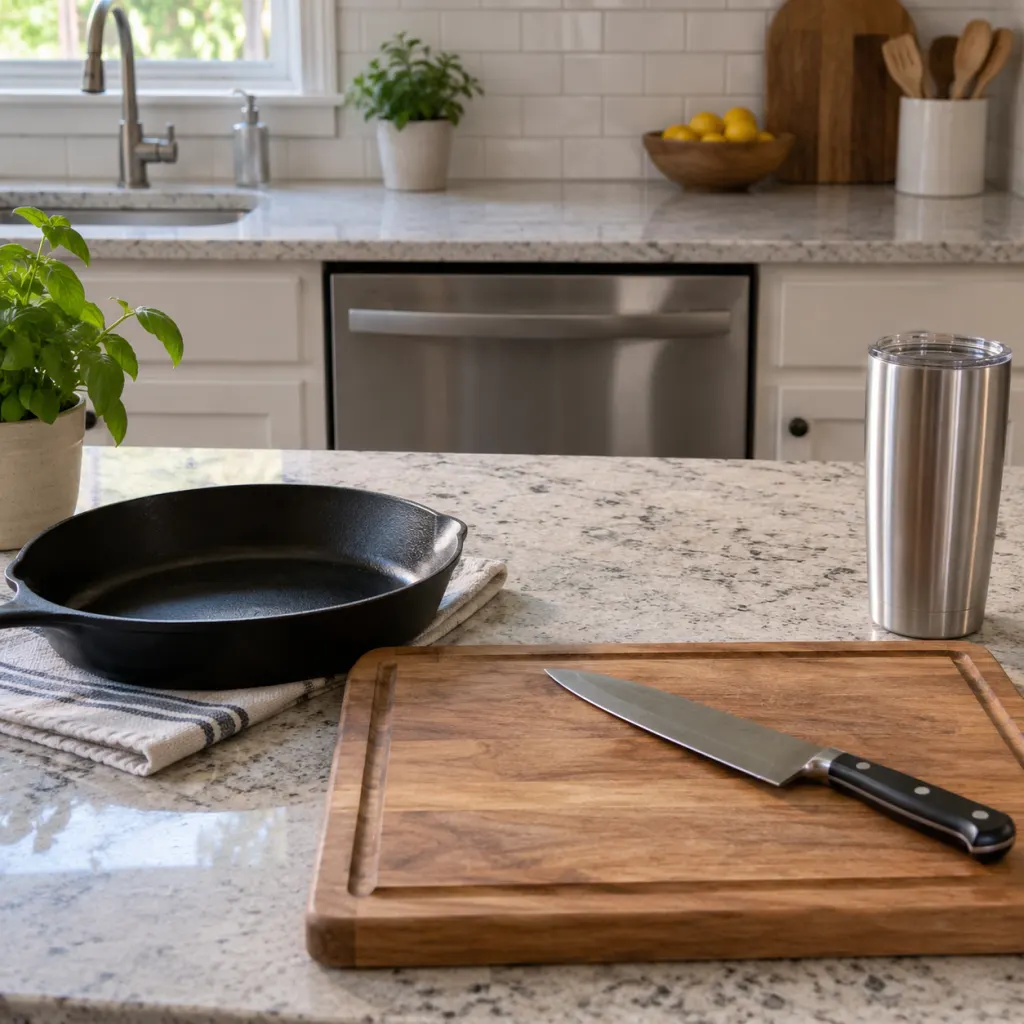
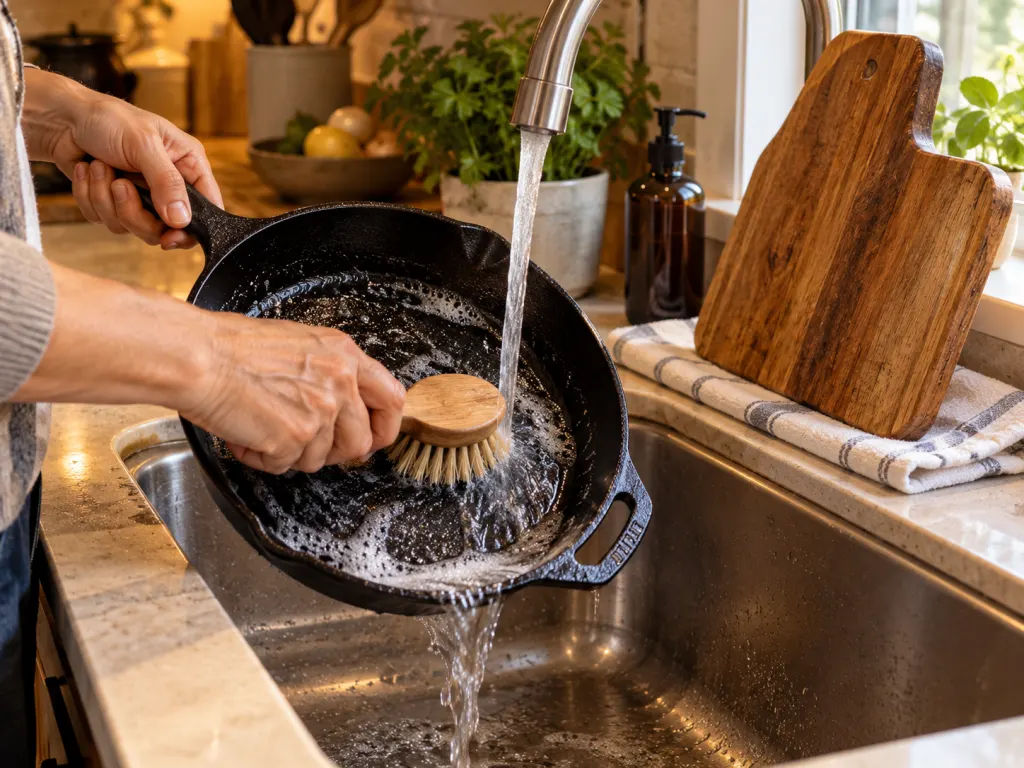
Cast iron and carbon steel pans rely on a thin layer of polymerized oil called seasoning, built up over repeated use, to create a nonstick surface and protect the bare metal from rust. Dishwasher detergent is formulated to strip grease and oil, so a cycle removes seasoning along with food residue. Worse, the prolonged soak in standing water gives the newly bare iron time to oxidize, and pans often come out of a dishwasher with a dull, rust-speckled surface instead of a dark, smooth one. Mississippi State University Extension advises cleaning cast iron promptly with hot water and a stiff brush rather than soap or a dishwasher, then drying it completely and applying a light coat of oil while it's still warm.
2. Wooden Cutting Boards, Bowls, and Utensils
Wood is porous, and a dishwasher cycle forces water deep into that structure for far longer than a quick rinse would. The wood swells, then dries unevenly as it cools, and repeated cycles warp boards, split bowls, and loosen spoon handles. Washington State University Extension notes that wood is harder to keep sanitary than nonporous acrylic or plastic, because bacteria can settle into tiny cracks in the surface. The FDA recommends replacing any cutting board, wooden or otherwise, once knife grooves and cracks become too deep to clean. Hand-washing a wooden board in hot, soapy water and drying it upright, rather than running it through repeated dishwasher cycles, helps it stay smooth and crack-free longer.
3. Good Kitchen Knives
A dishwasher's spray arms knock utensils and cookware around the rack, and a knife blade banging against pots, forks, or the rack itself dulls the edge far faster than normal cutting does. The heat and detergent can also degrade wood, bone, or composite handle materials over time, leading to cracking or loosening at the bolster. There's a practical safety reason to avoid it too: an exposed blade sitting in a utensil basket is easy to grab by the edge without noticing while unloading. A quick hand wash immediately after use, followed by drying with a towel, keeps an edge sharp for far longer and removes that unloading hazard entirely.
4. Nonstick and Ceramic-Coated Cookware
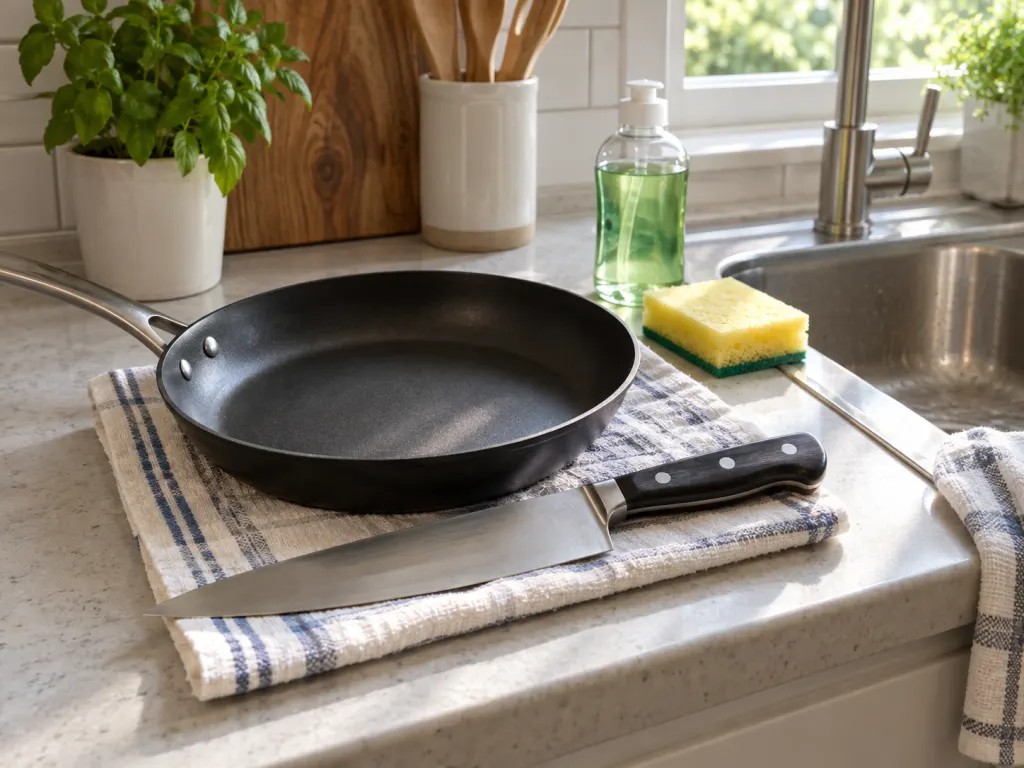
Most nonstick cookware sold today uses a polytetrafluoroethylene (PTFE) or ceramic-based coating bonded to the pan during manufacturing. The FDA notes that this coating, when intact, contains only a negligible amount of material capable of migrating into food. The dishwasher threatens that intact state rather than food safety directly: sustained high heat, aggressive detergent, and contact with other items in the rack chip and thin the coating faster than gentle hand-washing does. Once a coating is visibly scratched or flaking, the pan loses its nonstick performance and is generally due for replacement, so hand-washing with a soft sponge is the more reliable way to protect the coating.
5. Uncoated Aluminum Cookware and Bakeware
Bare aluminum forms a thin, naturally occurring oxide layer that protects it from corrosion in everyday use. Dishwasher detergent is strongly alkaline, and that chemistry reacts with the oxide layer, stripping it away and leaving the exposed aluminum to darken, streak, or develop a rough, pitted texture. The damage is cosmetic rather than a safety hazard, but it is difficult to reverse once it sets in, and pitted surfaces become harder to keep clean. Hand-washing aluminum pots, sheet pans, and roasters with warm water and a mild dish soap keeps that protective layer intact.
6. Vacuum-Insulated Tumblers, Bottles, and Thermoses
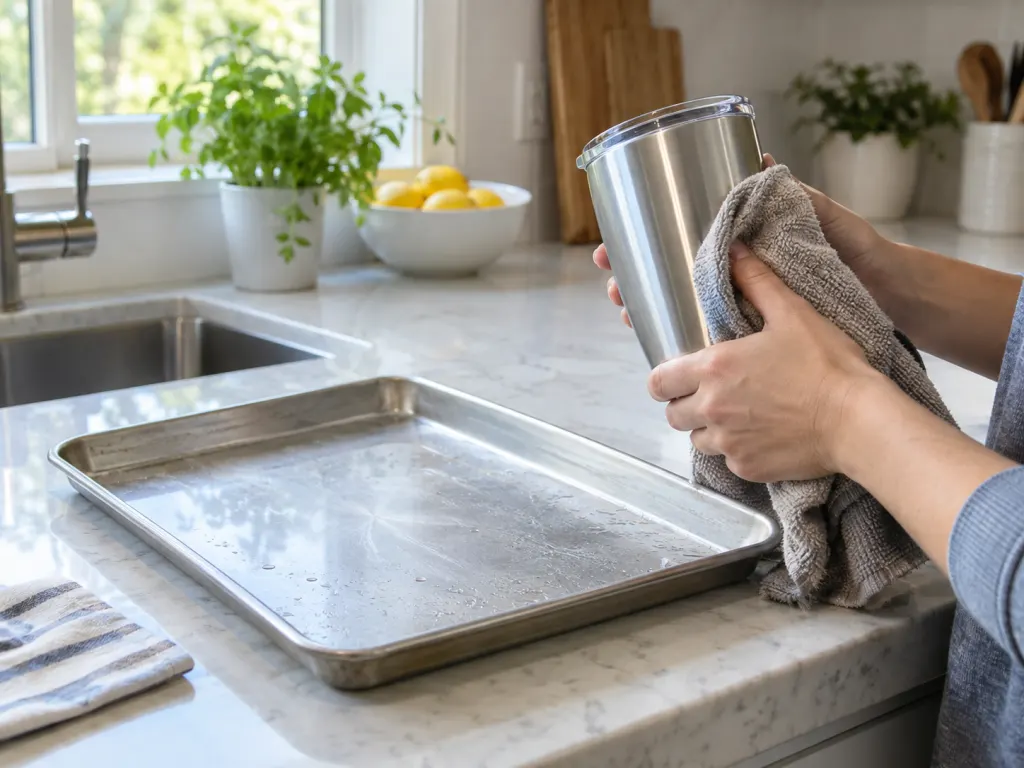
The insulating power of a double-wall tumbler or thermos comes from a sealed vacuum layer between an inner and outer wall. Sustained dishwasher heat and detergent can gradually weaken the adhesive and gasket that hold that seal, and a compromised seal shows up as a tumbler that no longer keeps drinks hot or cold for long, or that feels warm to the touch on the outside when holding a hot drink. Powder-coated exterior finishes can also dull or peel under repeated cycles. Hand-washing with warm soapy water and a bottle brush, then air-drying with the lid off, protects both the finish and the seal.
7. Fine Crystal, Hand-Painted, or Metallic-Trimmed Dishware
Dishwasher heat and detergent can permanently etch glass, leaving a cloudy, rough surface that no amount of polishing removes, which is a particular risk for thin crystal and delicate stemware. Hand-painted patterns and gold or silver trim fare no better: repeated heat and abrasive detergent gradually fade painted designs and wear away metallic accents until they flake or discolor. Because this kind of damage is permanent and can't be restored, hand-washing delicate or decorative pieces in warm water with a soft cloth is the safer routine, even if everyday glassware goes in the machine without issue.
8. Delicate Plastics and Items Without a Dishwasher-Safe Label
Not all plastic tolerates dishwasher heat, which can run well above the temperature a hand can comfortably touch. Thin, single-use, or lower-grade plastics can warp, cloud, or melt near the heating element, and food storage lids without a dishwasher-safe symbol are common casualties. When a plastic item has no visible care label, hand-washing in warm, soapy water is the safer default until you can confirm what the manufacturer recommends.
How to Decide When You're Not Sure
When an item doesn't fall neatly into one of these eight categories, a few quick checks help. Look for a printed dishwasher-safe symbol, usually small plates or glasses under water droplets, molded or printed on the base. If there's no symbol, check the material: anything bare metal, wood, or hand-decorated is a safer hand-wash candidate, while stainless steel, tempered glass, and modern ceramic dinnerware are generally built to handle repeated cycles. If in doubt, a two-minute hand wash costs far less than replacing a favorite pan, board, or mug.
Wrap-Up
Cast iron, carbon steel, wood, sharp knives, most nonstick cookware, uncoated aluminum, vacuum-insulated drinkware, delicate crystal or trimmed china, and unlabeled plastics all hold up better with a quick hand wash than a full dishwasher cycle. In every case, the damage comes from the same combination of sustained heat, alkaline detergent, and prolonged water contact that makes the dishwasher so effective on sturdier items. A dishwasher-safe symbol or a manufacturer's care instructions are the fastest way to settle any remaining doubt about a specific item.
Frequently Asked Questions
- → Can a solid wooden cutting board ever go in the dishwasher occasionally?
- Some solid, one-piece wooden boards are labeled dishwasher-safe by their maker, but most solid wood still warps or dries out with repeated heat and moisture exposure. Unless the manufacturer specifically states it's safe, hand-washing and air-drying upright keeps a wooden board smooth and free of the deep cracks where bacteria can settle.
- → Does a dishwasher cycle make my nonstick pan unsafe to cook with?
- An intact nonstick coating is considered safe by the FDA, since it contains only a negligible amount of material that can migrate into food. The real dishwasher risk is to the coating itself: heat, detergent, and contact with other items chip and thin it faster, and once it's visibly scratched or flaking, it's time to replace the pan rather than keep cooking on it.
- → Why do my kitchen knives feel duller after months in the dishwasher?
- Spray arms and water pressure knock knives against pots, forks, and the rack itself during every cycle, and that contact rolls and dulls the edge much faster than normal cutting does. Handles made of wood, bone, or composite materials can also crack or loosen from the heat and moisture. A quick hand wash right after use keeps the edge sharper for longer.
- → My aluminum pan came out of the dishwasher looking dark and blotchy. Is it ruined?
- That dark, chalky discoloration happens when strongly alkaline dishwasher detergent reacts with aluminum's natural protective oxide layer. It's a cosmetic problem rather than a safety issue, and it's very difficult to fully reverse, so the pan is usually still usable but permanently duller-looking. Hand-washing aluminum cookware going forward prevents further damage.
- → How can I quickly tell if something is actually dishwasher-safe?
- Check the base or underside for a small printed or molded symbol showing plates or glasses under water droplets, or look up the manufacturer's care instructions. If you can't find either and the item is made of bare metal, wood, or hand-painted or metallic-trimmed material, hand-washing is the safer choice.
- → Will one dishwasher cycle ruin a vacuum-insulated tumbler?
- A single cycle rarely destroys the seal outright, but repeated exposure to dishwasher heat and detergent gradually weakens the adhesive and gasket that hold the vacuum layer together. Over time this shows up as a tumbler that no longer keeps drinks hot or cold as long, or that feels warm on the outside when holding a hot drink.
References
This content was developed and refined using reliable sources.
- https://extension.wsu.edu/foodsafety/2016/04/29/sanitizing-cutting-boards
- https://extension.msstate.edu/blogs/extension-for-real-life/how-care-for-cast-iron
- https://www.fda.gov/food/process-contaminants-food/questions-and-answers-pfas-food
- https://www.fda.gov/food/people-risk-foodborne-illness/cleaning-food-safety-moms-be