 Save
The best way to clean kitchen cupboards is to work gently: remove dust and crumbs first, wash doors and frames with a mild detergent solution, treat greasy areas in small sections, rinse with a barely damp cloth when needed, and dry immediately. That simple order matters because cupboard finishes can be damaged by excess water, harsh scrubbing, or products used on the wrong surface. Kitchen cupboards sit close to cooking steam, oil droplets, hands, and food packages, so they collect a different kind of grime than a living room shelf. The goal is not to strip the finish or make every surface smell like cleaner. The goal is to loosen soil, lift grease, protect the material, and leave the cabinet ready for everyday use.
Why Cupboards Need a Different Cleaning Plan
Kitchen cupboards are touched often, but they are not all the same material. A sealed wood door, a painted MDF panel, a laminate cabinet, a lacquered surface, and a metal pull can all react differently to moisture and cleaners. That is why a careful cupboard routine begins with identification: look for peeling finish, exposed raw wood, swelling seams, chipped paint, or a manufacturer care label inside the cabinet. If the finish is already damaged, keep water to an absolute minimum and avoid soaking edges or hinge holes. For intact, washable surfaces, a mild detergent in warm water is usually the most reliable first pass. The CDC explains that routine cleaning uses soap or detergent, water, and scrubbing to remove dirt and many germs from surfaces, while sanitizing and disinfecting are separate tasks used when needed: CDC home cleaning guidance.
A cupboard-cleaning session is easier when the job is split into five decisions rather than one big scrub. Use this as the working checklist:
- Dry first: remove dust, crumbs, pet hair, and loose debris before adding moisture.
- Wash gently: use a soft cloth and a mild soap solution for the main door and frame surfaces.
- Treat grease locally: focus degreasing only where oil film is visible or sticky.
- Protect the finish: test cleaners in a hidden spot and avoid abrasive pads, strong solvents, and long wet contact.
- Finish with touch points: clean handles, knobs, pulls, and shelf lips because hands leave residue there first.
Tip 1: Start Dry, Then Use Mild Soap and Water
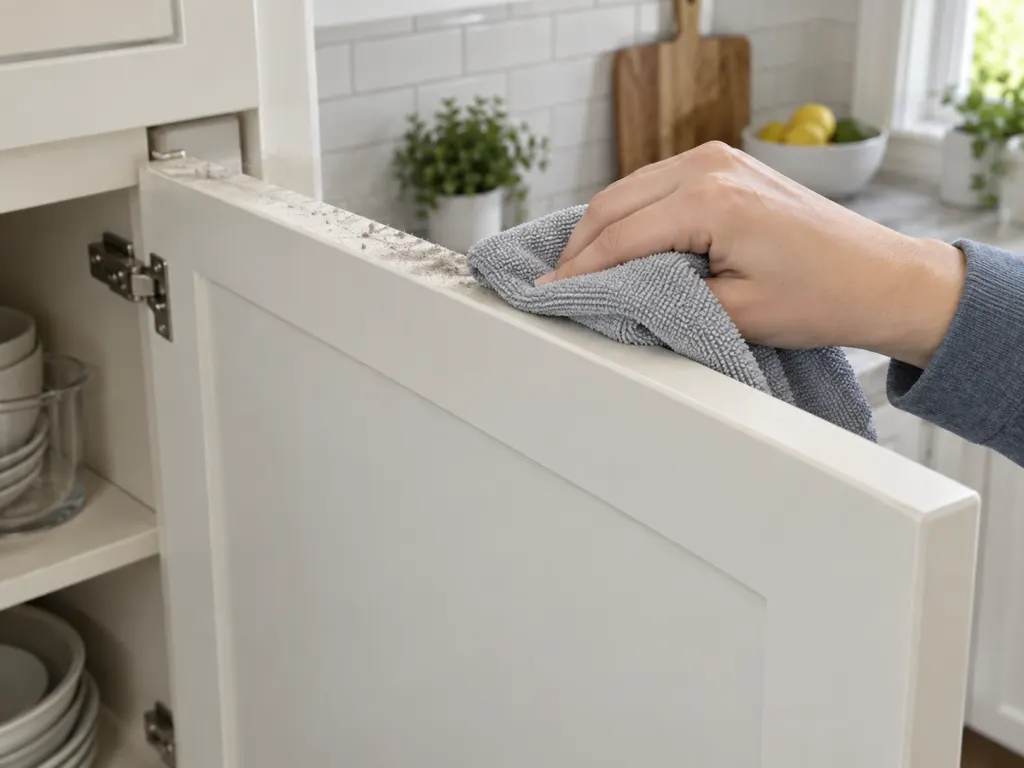
Before opening a bottle of cleaner, wipe the cupboard with a dry microfiber cloth or a vacuum brush attachment. This removes the loose material that can turn into muddy streaks once water is added. Pay attention to the top edge of upper cabinets, the inner lip of drawers, the area around hinges, and the groove where a frame meets a center panel. After the dry pass, mix a small amount of dish detergent into warm water. Dip a microfiber cloth, wring it until it is damp rather than dripping, and wipe with the direction of the grain or finish pattern. Follow with a second cloth dampened with plain water if the surface feels soapy, then dry with a clean towel.
This first tip sounds basic, but it prevents many cabinet problems. Excess water can settle into seams, loosen older finish, or swell composite materials. A damp cloth gives you enough moisture to dissolve ordinary kitchen film without flooding the surface. Do not spray cleaner directly onto cupboard doors unless the label specifically says that is safe for that material; spraying can push liquid into hinges, gaps, and unfinished edges. Work one door or drawer front at a time so the cleaner does not sit while you move across the room.
Tip 2: Treat Grease With Chemistry, Not Force
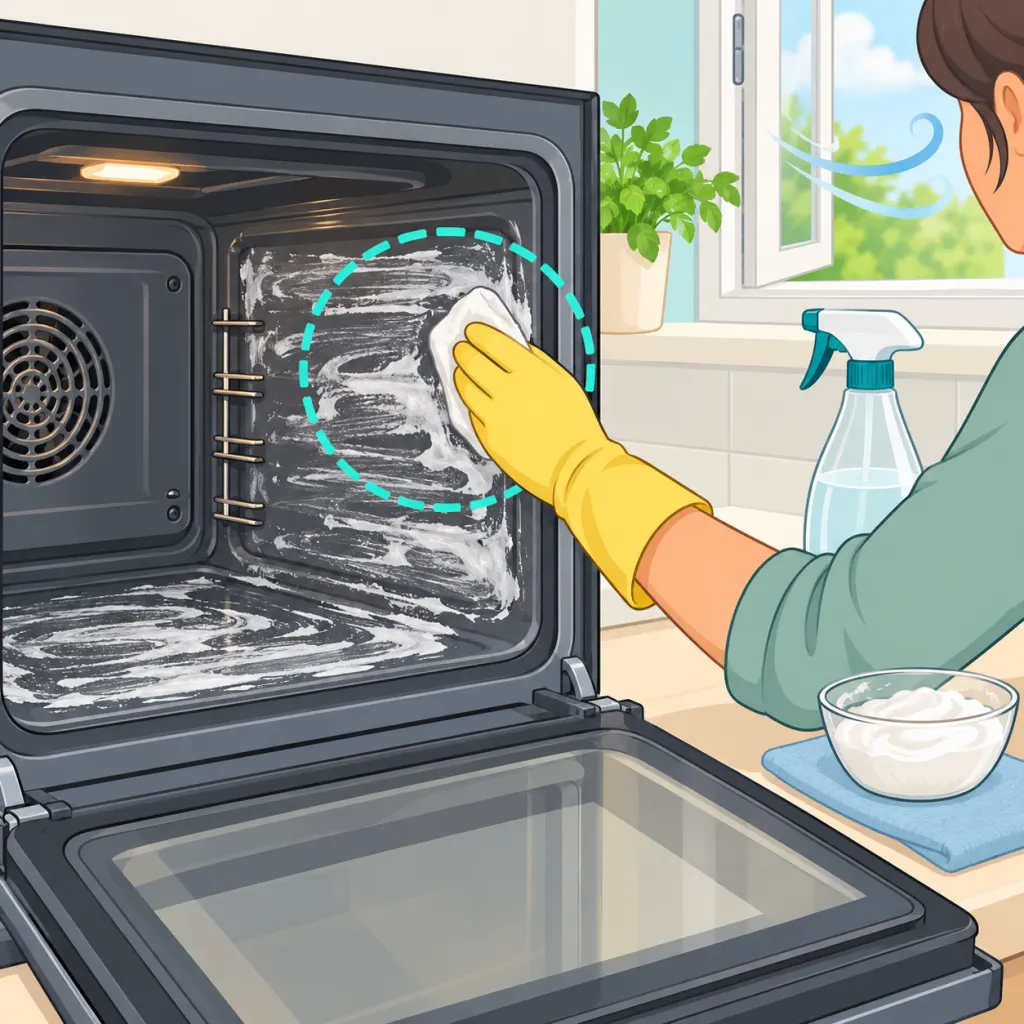
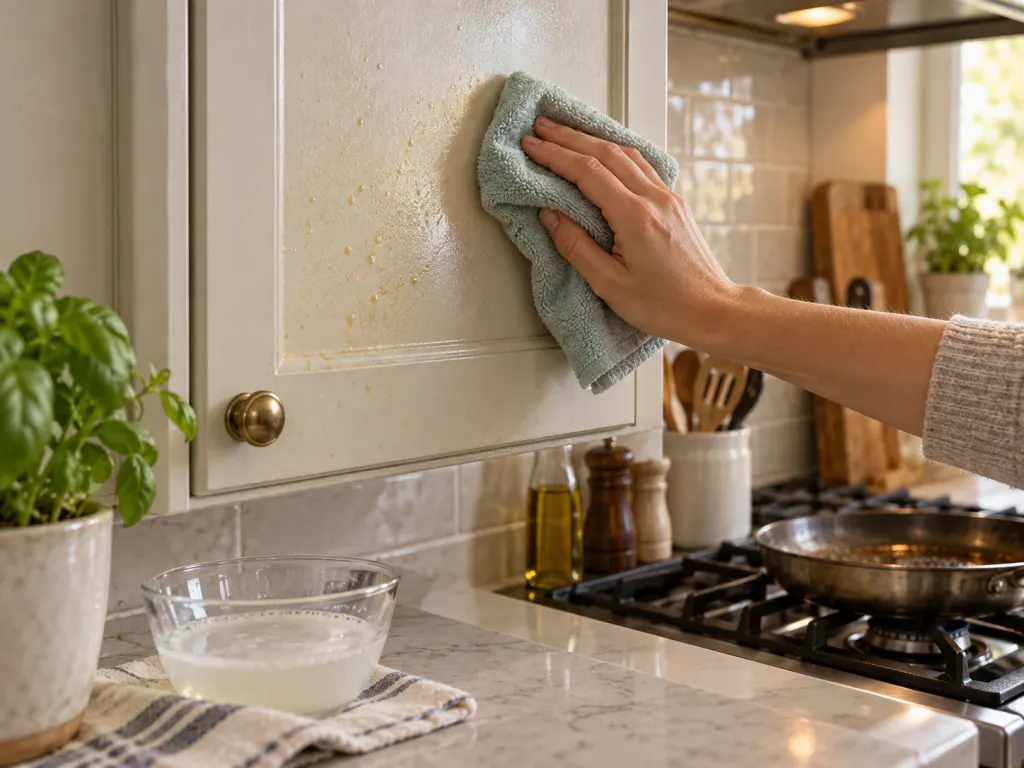
Grease near the stove is stubborn because it often arrives as a fine mist, then catches dust and gradually becomes tacky. Scrubbing harder is not the smartest answer. A mild alkaline cleaner can help loosen oily soil; University of Georgia Extension notes that baking soda is one of the mildest alkalis and can help cut grease in household cleaning: UGA cleaning chemistry guide. For cupboard doors, make the gentlest useful version: sprinkle a little baking soda onto a damp cloth or make a loose paste, test it in a hidden spot, and rub lightly only on the greasy area. Remove residue with a clean damp cloth and dry fully.
For washable laminate or painted cabinets with a heavy cooking film, a labeled kitchen degreaser may be more appropriate than repeated rounds of homemade cleaner. The key is to keep the product matched to the surface and to read the label for dwell time, rinsing, and ventilation. If the cabinet is real wood with an older finish, avoid aggressive degreasers until you know how the finish responds. University of Georgia Extension's stain guidance for kitchen and bathroom wood cabinets recommends using products made for wood and testing cleaning agents in an inconspicuous area first: UGA guidance on greasy stains and wood cabinets.
Tip 3: Match the Cleaner to the Finish
A cleaner that works beautifully on white laminate may be too harsh for a hand-painted door or too wet for an old wood cabinet. For sealed wood, start with mild detergent and water, then move to a wood-safe cleaner if the finish still looks dull or greasy. For laminate and melamine, a soft cloth with mild detergent often handles daily soil, while sticky edges may need a small amount of a labeled degreasing product. For painted cabinets, avoid abrasive powders and hard scrub pads because they can flatten the sheen or lift weak paint. For glossy lacquered cabinets, use a very soft cloth and light pressure; even fine scratches can be visible under kitchen lighting.
Vinegar and lemon juice are mild acids, so they can be useful in some household cleaning tasks, especially where mineral film is the issue. Cupboard grease, however, is usually better handled by detergent or a mild alkaline cleaner. If you do use vinegar on a washable surface, dilute it, test first, and do not leave it sitting on metal hardware or vulnerable finishes. The larger principle is simple: use the mildest cleaner that does the job, and stop escalating once the surface is clean. A cupboard door is furniture as much as it is kitchen equipment.
Tip 4: Use Disinfectants Sparingly and Correctly
Most cupboard cleaning does not require disinfecting. Cupboard exteriors usually need soil removal, grease control, and careful drying. The CDC notes that disinfecting at home is generally reserved for situations such as illness in the household or specific higher-risk circumstances, and surfaces should be cleaned before they are sanitized or disinfected: CDC cleaning and disinfecting guidance. If you choose a disinfectant for handles or other high-touch hard surfaces, use one that is appropriate for the surface, follow the label, keep the surface wet for the stated contact time, and dry or rinse afterward if the label requires it.
Bleach deserves special caution around cupboards. It can discolor finishes, corrode some metals, and create unsafe vapors if mixed with other products. The CDC advises never mixing household bleach with other cleaners or disinfectants and recommends good ventilation and any protective equipment listed on the product label when bleach is used: CDC bleach safety guidance. For everyday cupboard cleaning, bleach is rarely the best first choice. If a product is needed beyond soap and water, an EPA Safer Choice-labeled cleaner can help shoppers identify products that meet the program's ingredient criteria: EPA Safer Choice.
Tip 5: Give Handles, Edges, and Shelves Their Own Routine
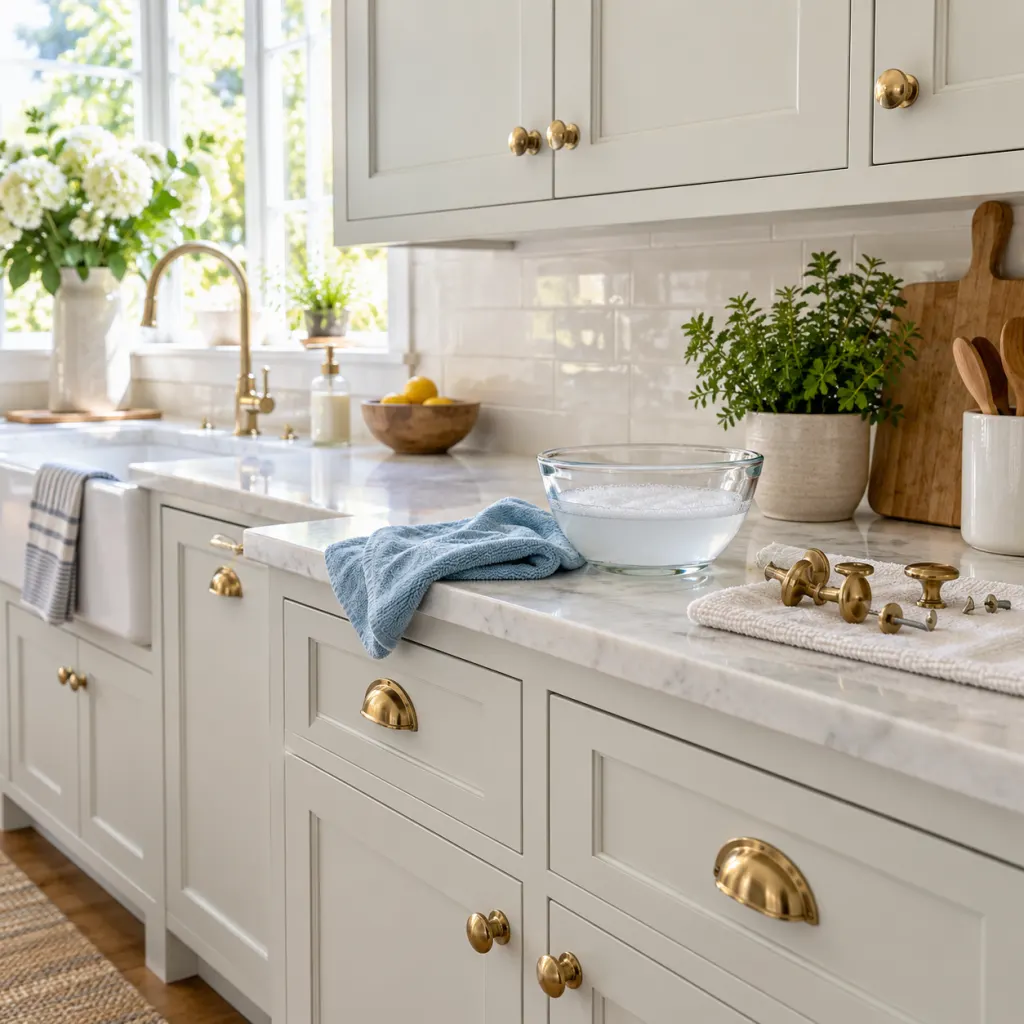
Handles and pulls often look dull before the rest of the cupboard because they collect hand oils, flour dust, splashes, and residue from cooking. Remove grime around hardware with a damp cloth and mild detergent, then dry around screw posts and seams. If the hardware is removable and very dirty, you can take off one piece at a time, wash it separately, dry it completely, and reinstall it before moving to the next. This prevents confusion about screw lengths and keeps doors aligned. Avoid soaking plated hardware unless you know the finish can handle it.
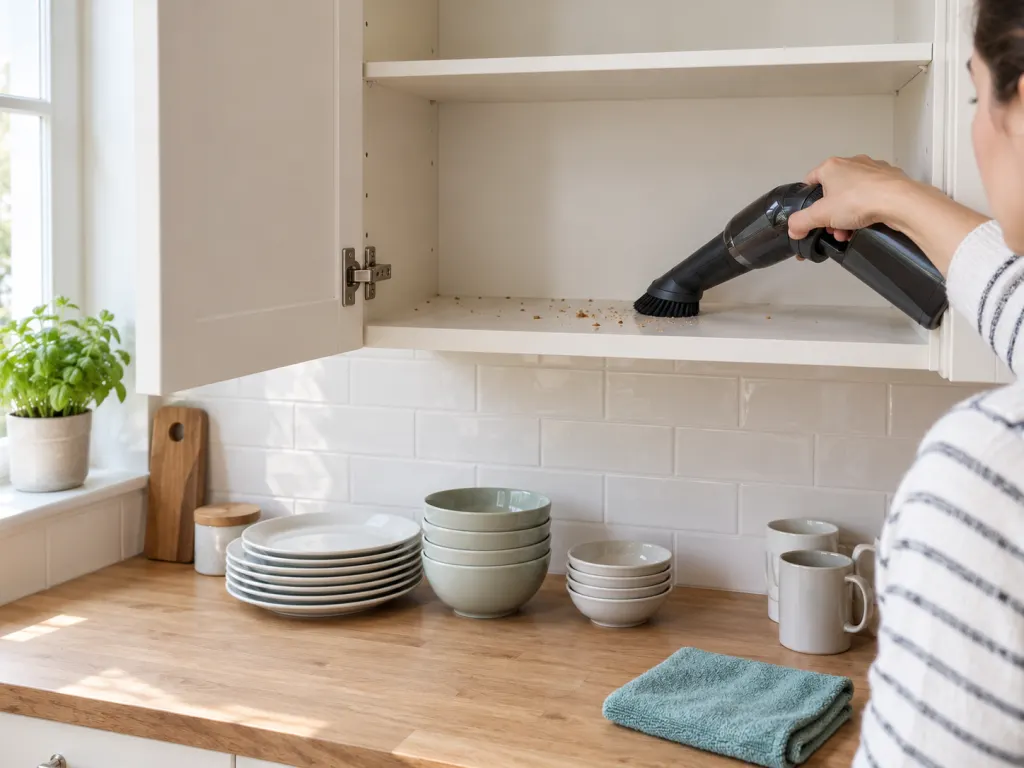
Inside the cupboards, remove packages before wiping shelves. Vacuum or sweep crumbs first, especially in corners and shelf-pin holes. Then wipe with a damp, soapy cloth and dry well before returning food containers, dishes, or cookware. Illinois Extension's food safety cleaning guidance emphasizes washing kitchen surfaces first and paying attention to clean cloths, sponges, and complete drying in kitchen routines: Illinois Extension cleaning and sanitizing guide. Shelf liners should be lifted occasionally, not just wiped on top, because crumbs and moisture can hide underneath.
How Often to Clean Kitchen Cupboards
A realistic schedule depends on how much you cook. In a busy kitchen, wipe handles and the doors nearest the stove weekly, then give all cupboard fronts a fuller cleaning about once a month. If you cook with a lot of oil, fry foods, or have open shelving near the range, the area around the stove may need attention every few days. Interior shelves can often wait longer, but they should be cleaned promptly after spills, leaking jars, flour dust, syrup drips, or pest-attracting crumbs. The top of upper cabinets, if exposed, is a dust-and-grease trap; clean it seasonally or more often if you can see buildup.
Maintenance also includes prevention. Use the range hood while cooking, cover splattering pans when appropriate, wipe fresh spills before they dry, and keep sticky bottles on washable trays. Check the cabinet below the sink for leaks, swelling, or musty smells during regular cleaning. If you see peeling finish, soft wood, or persistent dampness, cleaning alone will not solve the problem; the source of moisture needs attention.
Common Mistakes That Make Cupboards Look Worse
The first mistake is using too much water. A dripping cloth may feel thorough, but it can push moisture into seams and unfinished edges. The second mistake is using abrasive pads on glossy, painted, or laminate surfaces; the dull patch left behind can be more noticeable than the original smudge. The third mistake is mixing products in the hope of making them stronger. Cleaning chemistry does not work that way, and product labels are part of safe use. The fourth mistake is skipping the dry towel. Drying removes leftover moisture, catches streaks, and gives you one last chance to feel for sticky areas.
The fifth mistake is treating every dark mark as dirt. Some marks are finish wear, heat damage, water staining, or color transfer from a rubber bumper or plastic item. If gentle cleaning does not change the mark, pause before escalating. Stronger products may remove finish instead of removing the mark. Photographing the spot before and after a small hidden test can help you decide whether a product is improving the surface or simply changing it.
Wrap-Up
Clean cupboards look better when the routine is steady and gentle. Dust first, wash with a mild detergent solution, treat grease only where it appears, protect the finish with testing and quick drying, and clean handles and shelf edges more often than broad door panels. Disinfectants are separate from everyday cleaning and should be used only when appropriate for the situation and the surface. A calm monthly routine, plus quick touch-ups near the stove and handles, is usually enough to keep kitchen cupboards from looking sticky, dull, or neglected.
Frequently Asked Questions
- → Can I use vinegar on kitchen cupboards?
Sometimes, but it depends on the finish. Diluted vinegar may be suitable for some washable surfaces, but it should be tested in a hidden spot and wiped away rather than left sitting. For greasy cupboard doors, mild detergent or a surface-safe degreaser is often a better first choice.
- → What is the safest everyday cleaner for cupboard doors?
For many intact, washable cupboard finishes, a soft microfiber cloth with warm water and a small amount of mild dish detergent is the safest starting point. Wring the cloth well, avoid soaking seams, and dry the surface promptly.
- → How do I remove sticky grease from cabinets near the stove?
Work in small sections. Start with warm, soapy water. If the film remains, try a little baking soda on a damp cloth or a labeled kitchen degreaser that is safe for the cabinet material. Test first, rub lightly, rinse residue with a barely damp cloth, and dry well.
- → Should kitchen cupboard handles be disinfected?
Handles are high-touch areas, so they deserve frequent cleaning. Disinfecting may be useful in specific situations, such as illness in the home, but ordinary grime should be washed off first. Always follow the product label and make sure the disinfectant is safe for the hardware finish.
- → How often should I clean inside kitchen cupboards?
Clean interior shelves whenever there are crumbs, spills, sticky jars, or dust. In many kitchens, a seasonal shelf cleanout works well, with faster spot cleaning as needed. Let shelves dry completely before returning dishes or food packages.
References
This content was developed and refined using reliable sources.
- https://www.cdc.gov/hygiene/about/when-and-how-to-clean-and-disinfect-your-home.html?CDC_AAref_Val=https://www.cdc.gov/hygiene/cleaning/cleaning-your-home.html
- https://www.cdc.gov/hygiene/about/cleaning-and-disinfecting-with-bleach.html
- https://www.epa.gov/saferchoice
- https://fieldreport.caes.uga.edu/publications/C1114/cleaning-healthy-cleaning-green
- https://site.extension.uga.edu/textiles/care/stain-removal/remove-stains-from-grease-automotive-cooling-vaseline
- https://extension.illinois.edu/food-safety/cleaning-and-sanitizing