 Save
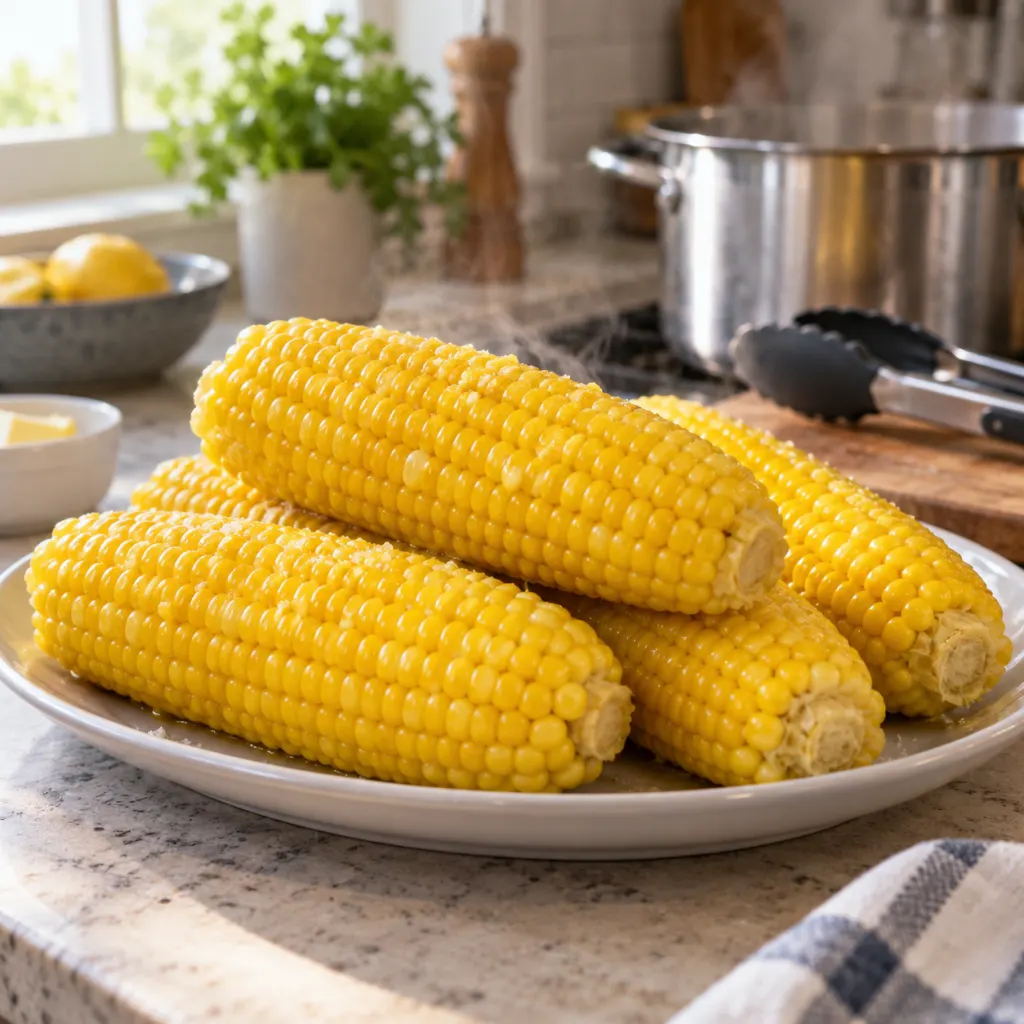
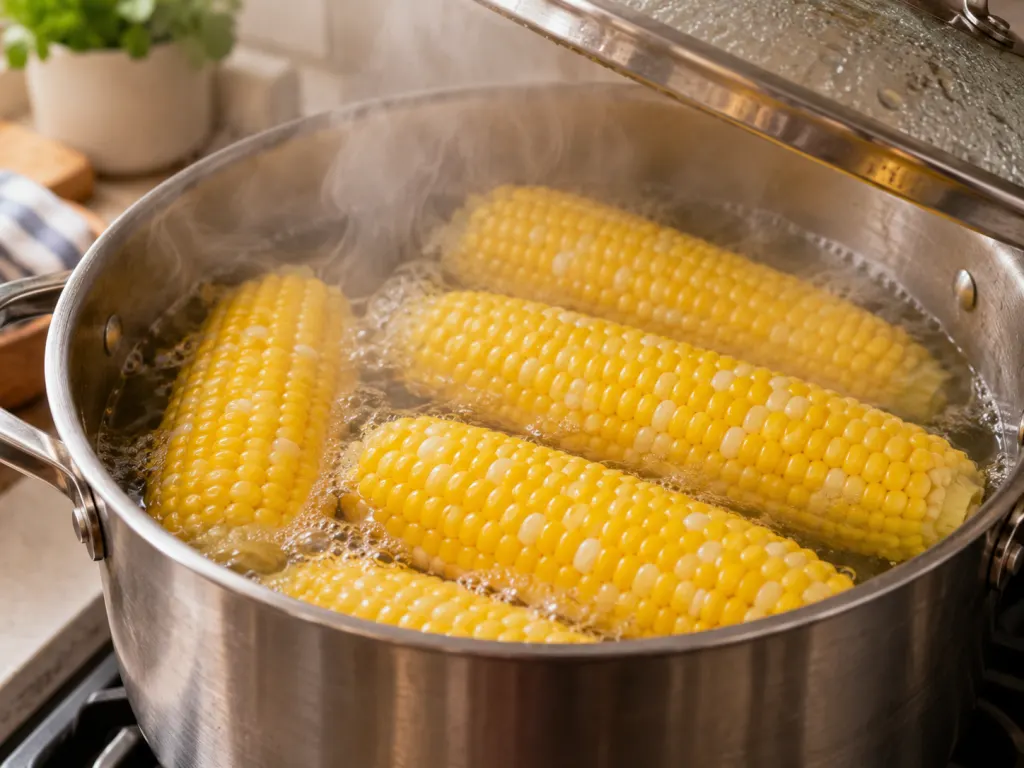
For fresh sweet corn on the cob, the best boiling time is usually short: place husked ears in boiling water, cover the pot, let the water return to a boil, then turn off the heat and let the corn stand for about 5 minutes. Utah State University Extension gives this same practical method and notes that corn can remain in the hot water up to 10 minutes before serving (USU Extension). The goal is not to boil the sweetness out of the kernels. It is to heat the cob through, keep the kernels juicy, and stop before they turn tough.
The Short Answer: About 5 Minutes for Fresh Sweet Corn
If your corn is freshly picked, tender, and already shucked, think in minutes, not half hours. Bring a large pot of water to a lively boil, add the ears, cover the pot, and wait until the water returns to a boil. At that point, turn off the heat and give the corn about 5 minutes in the covered pot. This gentle finish is enough for most sweet corn because the kernels are already tender when they are fresh and in season. If you keep boiling hard for much longer, the cob may heat thoroughly, but the kernels can lose their crisp snap and taste flatter.
This timing applies to corn that will be eaten right away, not corn being prepared for the freezer. That distinction matters. The National Center for Home Food Preservation lists longer blanching times for freezing corn on the cob: 7 minutes for small ears, 9 minutes for medium ears, and 11 minutes for large ears (National Center for Home Food Preservation). Blanching is meant to prepare vegetables for frozen storage, so it follows a different standard than dinner-table boiling.
Why Freshness Changes the Timing
Fresh sweet corn cooks quickly because its best eating quality is already present before it touches the pot. USU Extension advises using corn as soon as possible after picking because its sugars gradually turn to starch, which can make the corn taste less sweet (USU Extension). That is why farmers market corn, garden corn, and very fresh supermarket corn often need only a brief hot-water bath. Older corn may still be fine, but it is more likely to benefit from the longer end of the range.
- Very fresh, tender ears: about 5 minutes after the water returns to a boil, or 5 minutes standing off heat in the covered pot.
- Large ears: give them closer to 7 to 8 minutes if the kernels are plump and the cob is thick.
- Older or starchier ears: allow up to 10 minutes, but taste one kernel before extending the time further.
- Small ears or half ears: start checking around 4 minutes because they heat faster.
- Corn for freezing: follow tested blanching times rather than dinner timing.
A Reliable Pot Method
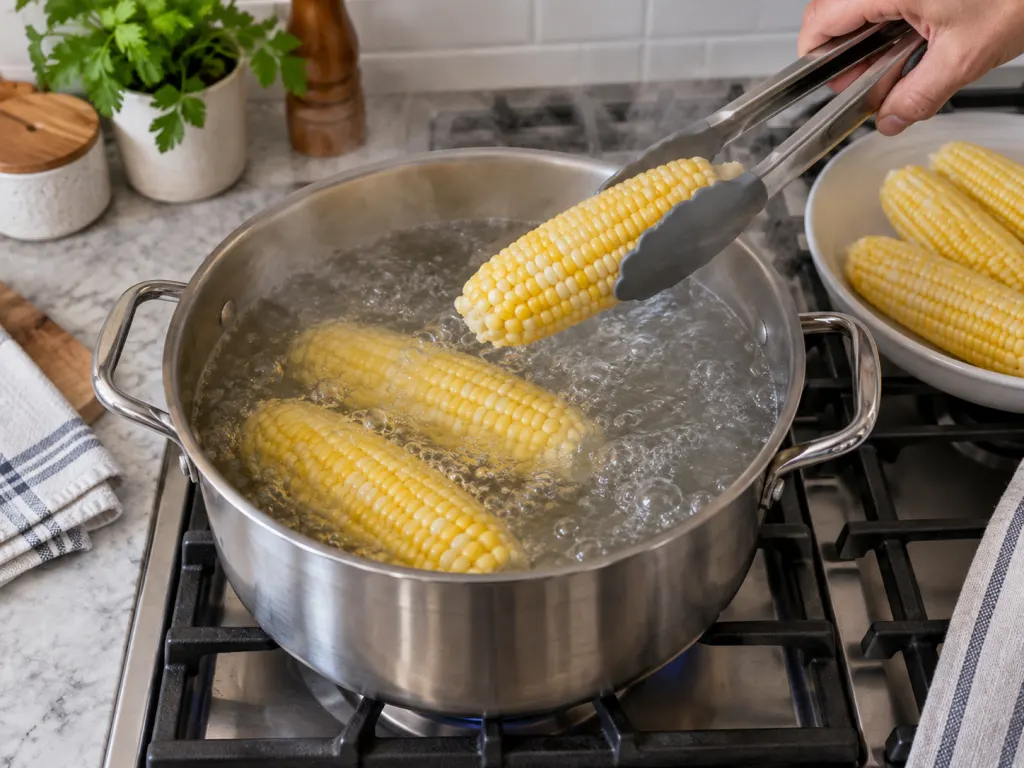
Use a pot wide enough that the ears are not packed tightly. Fill it with enough water to cover the corn once the ears are added, then bring the water to a boil before adding the corn. Drop the ears in carefully with tongs, cover the pot, and keep the heat on only until the water returns to a boil. Then turn off the burner and let the covered pot sit for about 5 minutes. This method gives the corn steady heat without punishing the kernels.
For crowded family dinners, cook in batches instead of jamming every ear into one pot. If the pot is overloaded, the water cools too much and takes longer to return to a boil. The ears on top may cook unevenly, while the ears on the bottom may sit in hot water longer than intended. A second batch often works better than a full pot that never quite recovers its boil.
Should You Salt the Water?
Many cooks salt pasta water automatically, but corn behaves differently. Illinois Extension advises against adding salt to the boiling water for sweet corn because it can contribute to tougher kernels, especially when combined with overcooking (Illinois Extension). If you like salt, add it after cooking, when the corn is drained and ready for butter, olive oil, herbs, lime, or another finishing flavor.
How to Tell When Corn Is Done
Done corn should look bright, smell sweet, and feel hot all the way through. The kernels should be tender when pierced but still have a little pop when bitten. If the kernels taste watery or feel wrinkled, the corn may have gone too long. If they taste raw and cool near the cob, return the ears to the hot water for another minute or two, then check again.
A useful doneness check is to pull one ear from the pot, cut or bite a single kernel, and judge texture rather than relying only on the clock. Timing gives you a starting point; freshness, ear size, pot size, and water volume decide the final minute. This is especially helpful when cooking mixed ears from a garden, where one cob may be much thicker than another.
Boiling Versus Steaming, Grilling, and Microwaving
Boiling is simple and fast, but it is not the only good method. USU Extension lists steaming, microwaving, grilling, and oven roasting as other options for corn. Steaming can keep the corn above the water instead of submerged. Grilling gives smoky flavor and some browned spots. Microwaving is convenient for one or two ears. Boiling is still the easiest method when you need several ears ready at the same time, especially for a cookout or side dish spread.
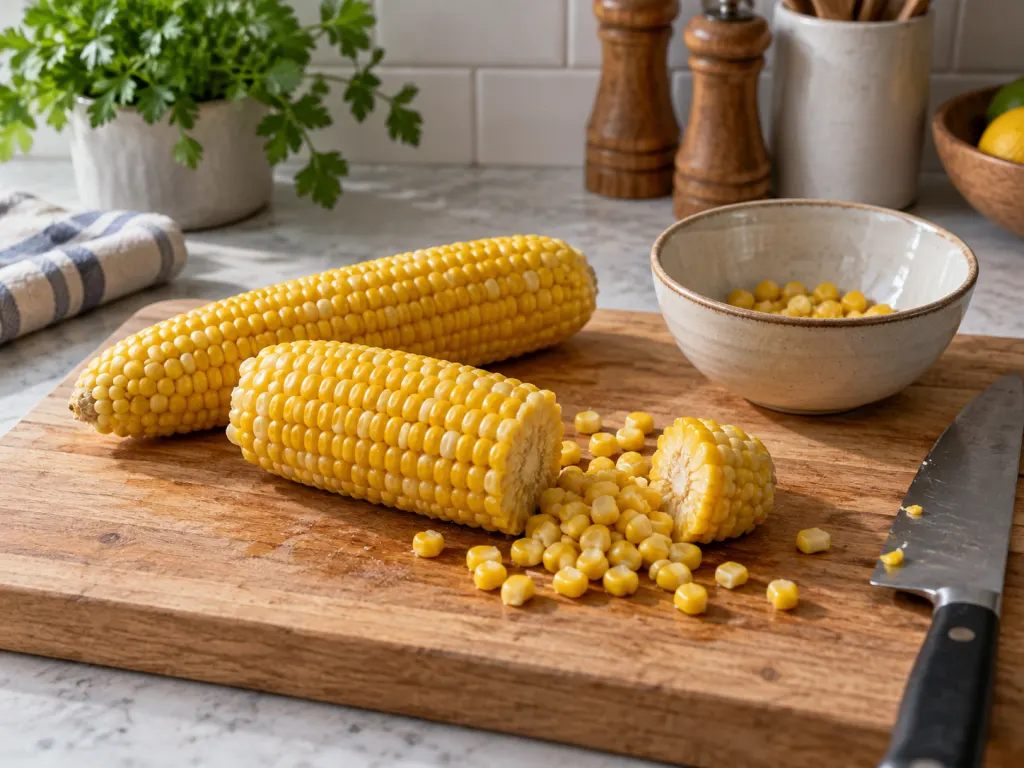
If you are planning a dish that uses kernels cut from the cob, cook just enough to loosen and tenderize them. Overcooked corn can become mushy once cut, folded into salads, or mixed into casseroles. For a more composed dish, cooked corn can also be cooled, sliced off the cob, and used in something like Mexican Street Corn Pasta. The better the initial boil, the better the kernels hold their shape later.
What About Corn You Plan to Freeze?
Freezer preparation is the place where longer boiling times make sense. The National Center for Home Food Preservation recommends blanching corn on the cob before freezing, with the time based on ear diameter: 7 minutes for small ears, 9 minutes for medium ears, and 11 minutes for large ears (National Center for Home Food Preservation). After blanching, the corn should be cooled promptly and completely before packaging. That quick cooling step helps preserve quality and keeps the ears from continuing to cook from retained heat.
How to Store Cooked Corn
Cooked corn should not sit around the kitchen or picnic table for hours. FoodSafety.gov advises refrigerating perishable foods within 2 hours, or within 1 hour when the food has been exposed to temperatures above 90°F, and placing leftovers in shallow containers for faster cooling (FoodSafety.gov). Once chilled, leftover corn is best used in a few days for salads, soups, skillet sides, or kernels cut from the cob.
If you are cooking ahead, leave the corn slightly under your ideal texture because reheating adds more heat. You can warm whole ears briefly in hot water, steam them, or cut the kernels off and reheat them in a skillet. For more timing-minded kitchen guides, the same practical approach applies to foods like eggs; see how long hard-boiled eggs last in the fridge for another example of matching storage habits to cooked food.
Common Mistakes That Make Corn Less Tender
The biggest mistake is treating corn like a dense root vegetable. Sweet corn does not need a long rolling boil to become edible. Another mistake is starting with poor-quality ears and hoping extra time will restore sweetness. Look for green, fresh-looking husks, plump rows of kernels, and silk that is not dried out beyond recognition. If you are cleaning produce before cooking, rinse ears under running water after removing the husks and silk; FoodSafety.gov gives the same basic advice for fruits and vegetables, without soap or produce wash (FoodSafety.gov). For another produce-prep explainer, see soaking strawberries in salt water.
The Practical Rule to Remember
For corn you are serving tonight, start with 5 minutes after the water returns to a boil, or use the covered-pot method where you turn off the heat and let the ears stand for 5 minutes. Move toward 7 to 10 minutes only for very large, older, or less tender ears. Save the longer 7-, 9-, and 11-minute times for blanching corn on the cob before freezing. In everyday cooking, less boiling usually means sweeter, juicier corn.
Wrap-Up
The best boiling time for corn on the cob depends on what you plan to do with it. For fresh sweet corn served right away, about 5 minutes in a covered pot after the water returns to a boil is usually enough. Larger or older ears may need a few more minutes, but long boiling can make kernels tougher and less sweet. For freezing, use tested blanching times instead: small ears 7 minutes, medium ears 9 minutes, and large ears 11 minutes, followed by prompt cooling.
Frequently Asked Questions
- → How long should corn on the cob boil if it is very fresh?
Very fresh sweet corn usually needs about 5 minutes after the water returns to a boil, or about 5 minutes standing in the covered pot after you turn off the heat. The kernels should be hot, bright, and tender with a little pop.
- → Can you boil corn on the cob too long?
Yes. Long boiling can make sweet corn less crisp and can give the kernels a tougher, flatter texture. If the ears are fresh, start with a short cook and add only a minute or two if the kernels are still too firm.
- → Should corn go into cold water or boiling water?
For the quickest, most predictable result, add husked corn to boiling water. Cover the pot so the water returns to a boil efficiently, then use that return-to-boil point to start judging the cooking time.
- → Why are freezing times longer than dinner boiling times?
Freezing instructions use blanching times, not serving times. Blanching is designed to prepare vegetables for frozen storage, so tested guidance gives longer times based on ear size: small, medium, and large ears are handled differently.
- → How do I keep boiled corn warm for serving?
After the corn is done, it can sit briefly in the covered hot water, but avoid holding it there too long. If dinner is delayed, drain the corn, cover it loosely, and serve as soon as practical so the kernels stay juicy.