 Save
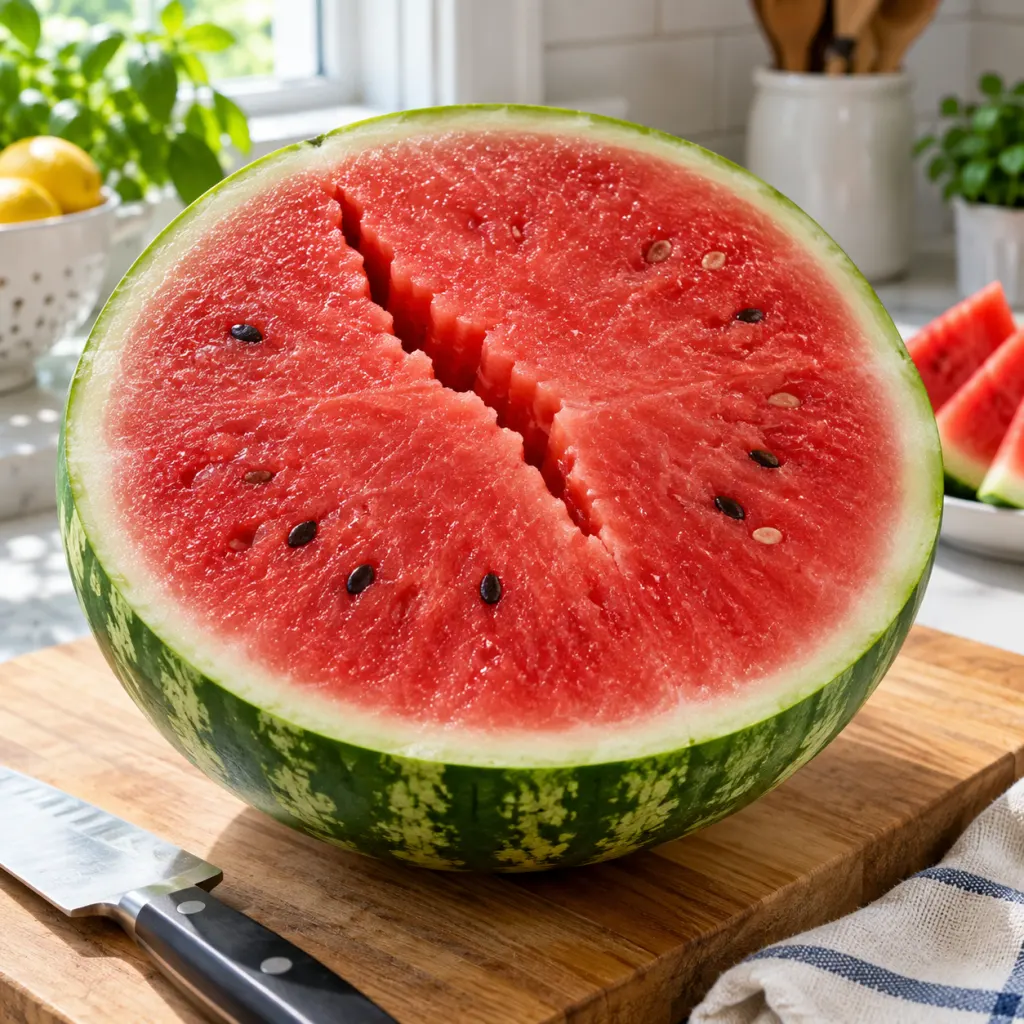
If you cut open a watermelon and find a clean crack, star-shaped gap, or hollow space in the center, the most likely explanation is a natural growing defect called hollow heart. It can look dramatic, but a clean internal cavity is usually a quality issue, not automatic evidence that the fruit is unsafe or has been tampered with. What matters most is the condition of the flesh around it: fresh smell, firm texture, typical color, and no slime, mold, bubbling, or sour odor.
Watermelon is a raw produce item, so handling still matters. The rind can carry dirt or germs from the field, transport, store display, or your kitchen, and a knife can move surface contamination into the flesh during cutting. That means the practical question is not simply “Is there a crack?” It is “Does this melon look and smell fresh, and was it handled like cut produce should be handled?”
The Short Answer: A Crack Is Often Hollow Heart
Hollow heart is the common name for an internal separation in watermelon flesh. Oregon State University Extension describes hollow heart as a common watermelon defect that can produce hollow or cracked internal fruit flesh, with possible links to genetics, pollination, tissue firmness, and environmental stressors such as heat, uneven irrigation, and fertilization https://extension.oregonstate.edu/catalog/pnw-741-pacific-northwest-watermelon-production-east-cascades. Purdue Extension similarly notes that hollow heart can appear as a triangular hole in the middle of the fruit and may be linked to inadequate pollination, especially under challenging weather conditions https://extension.purdue.edu/news/2025/08/watermelon-woes-and-pumpkin-predictions-how-rainy-weather-could-affect-seasonal-favorites.html.
The important distinction is that hollow heart forms while the watermelon is growing. It is not the same thing as spoilage that develops after harvest, and it is not a reliable sign of chemical abuse. A melon with hollow heart may be less attractive, may have a slightly uneven texture, or may give you less usable flesh, but the empty space alone does not tell you to throw it away.
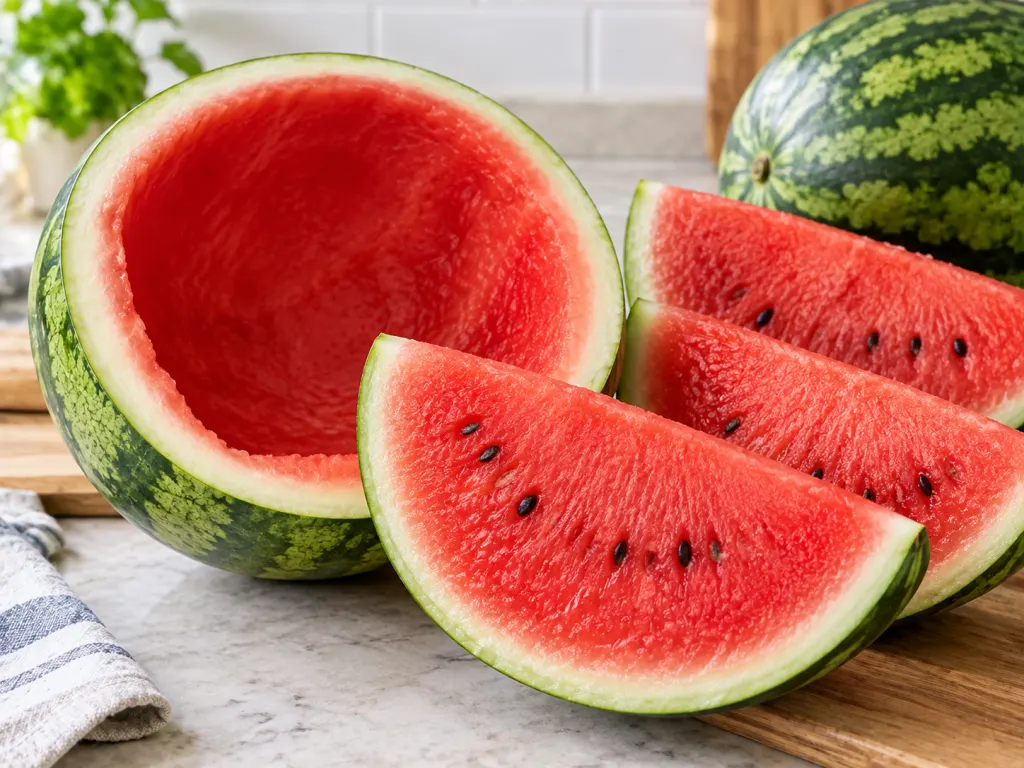
Why Hollow Spaces Form While Watermelon Grows
Watermelon develops from flowers that need successful pollination. Oregon State University Extension explains that female watermelon flowers are viable for only one day and need repeated pollinator visits for complete pollination; incomplete pollination can lead to fruit that is aborted or misshapen https://extension.oregonstate.edu/catalog/pnw-741-pacific-northwest-watermelon-production-east-cascades. When internal tissues do not expand evenly, they can pull apart as the fruit grows, leaving a crack, cavity, or open center.
Researchers continue to study why some melons develop the defect and others do not. North Carolina State University’s Plants for Human Health Institute describes hollow heart as a watermelon disorder involving cracks in the center of the fruit, associated with lack of cell growth and expansion, limited pollination, adverse conditions during bloom and early fruit growth, and possible genetic factors https://plantsforhumanhealth.ncsu.edu/2022/07/26/grafting-watermelon-to-combat-hollow-heart/. That uncertainty is useful for home cooks because it keeps the conclusion modest: the crack is a clue about development and quality, not a complete diagnosis of everything that happened in the field.
What a Normal Hollow-Heart Melon May Look Like
A typical hollow-heart watermelon may have one long center split, a triangular gap, a star-shaped opening, or several clean spaces where the flesh has separated. The surrounding flesh may still be red or yellow, depending on the variety, and it may still smell mildly sweet and fresh. The rind may look completely normal from the outside. That surprise is one reason social posts about cracked watermelon spread so easily: the inside can look unusual even when the fruit is not spoiled.
Use this quick inspection before deciding what to do:
- Clean crack only: a dry-looking, fresh-smelling gap with firm flesh nearby is more consistent with hollow heart.
- Quality loss: very large cavities, pale areas, or mealy sections may make the melon less enjoyable even if it is not obviously spoiled.
- Possible spoilage: sour odor, fizzing, foam, slime, mold, leaking fermented liquid, or widespread soft collapse are reasons to discard it.
- Handling concern: if the cut melon sat unrefrigerated too long, judge it by time and storage conditions as well as appearance.
Why the Chemical-Injection Claim Does Not Hold Up
A clean internal crack does not prove the melon was injected, “boosted,” or made unsafe by a hidden treatment. Hollow heart is documented by university extension and horticultural researchers as a physiological or developmental disorder in watermelon. OSU Extension lists hollow heart among common physiological disorders, alongside blossom end rot and sunscald, and describes possible causes that involve growing conditions rather than post-harvest tampering https://extension.oregonstate.edu/catalog/pnw-741-pacific-northwest-watermelon-production-east-cascades.
That does not mean every cracked melon is perfect. It means the crack is not enough evidence by itself. You cannot look at a hollow center and reconstruct the farm’s pesticide history, fertilizer program, transportation conditions, or storage temperature. For a shopper or home cook, the more useful test is sensory and practical: does the fruit look fresh, smell normal, and feel sound, and has it been washed, cut, refrigerated, and served with clean utensils?
When to Throw the Watermelon Away
Discard the melon when the signs point beyond a simple internal crack. The U.S. Food and Drug Administration advises consumers to choose produce that is not bruised or damaged, cut away damaged or bruised areas before preparing fresh fruits and vegetables, and throw away produce that looks rotten https://www.fda.gov/food/buy-store-serve-safe-food/selecting-and-serving-produce-safely. With watermelon, that guidance is especially relevant because the fruit is usually eaten raw.
A sour or alcoholic smell suggests fermentation. Foam, bubbling, or pressure when the rind is cut can also signal that the fruit has changed in ways you do not want on the plate. Slime on the flesh, fuzzy mold, dark sunken areas, or a texture that is mushy throughout are not hollow heart; those are reject signs. If only a small bruised area is present on an otherwise sound melon, FDA guidance supports cutting away damaged areas before eating, but a melon that looks rotten or has multiple spoilage signs should be discarded rather than trimmed into service.
Why Washing the Outside Still Matters
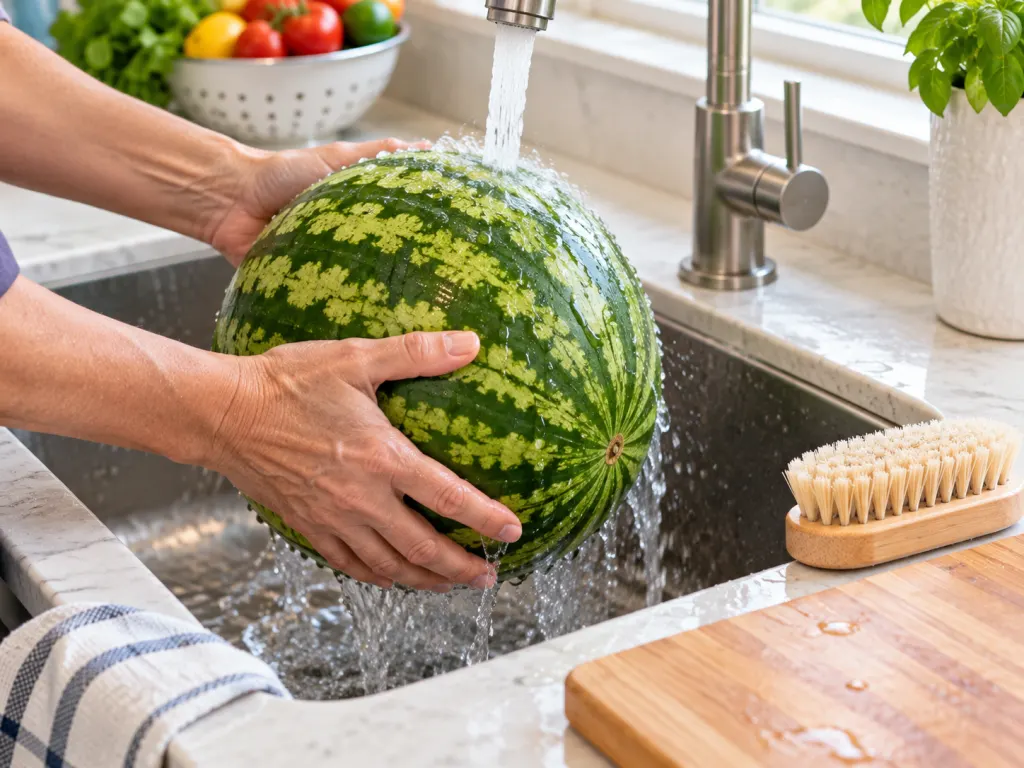
It can feel odd to wash a rind you will not eat, but it is a smart step. FDA guidance says to wash produce under running water before preparing it, including produce with a peel or skin, because dirt and bacteria can transfer from the surface to the inside when the knife cuts through. FDA specifically recommends scrubbing firm produce such as melons and cucumbers with a clean produce brush, and it does not recommend soap, detergent, or commercial produce wash for fruits and vegetables https://www.fda.gov/food/buy-store-serve-safe-food/selecting-and-serving-produce-safely.
A good routine is simple: wash your hands, rinse the whole watermelon under running water, scrub the rind with a clean brush, dry it with a clean towel, and cut it on a clean board with a clean knife. If the same counter, board, or knife touched raw meat, poultry, seafood, or their juices, clean it before preparing fruit. The crack inside the melon is not the main contamination route in an ordinary kitchen; the larger risk is moving germs from surfaces onto ready-to-eat fruit.
Cut Melon Needs Cold Storage
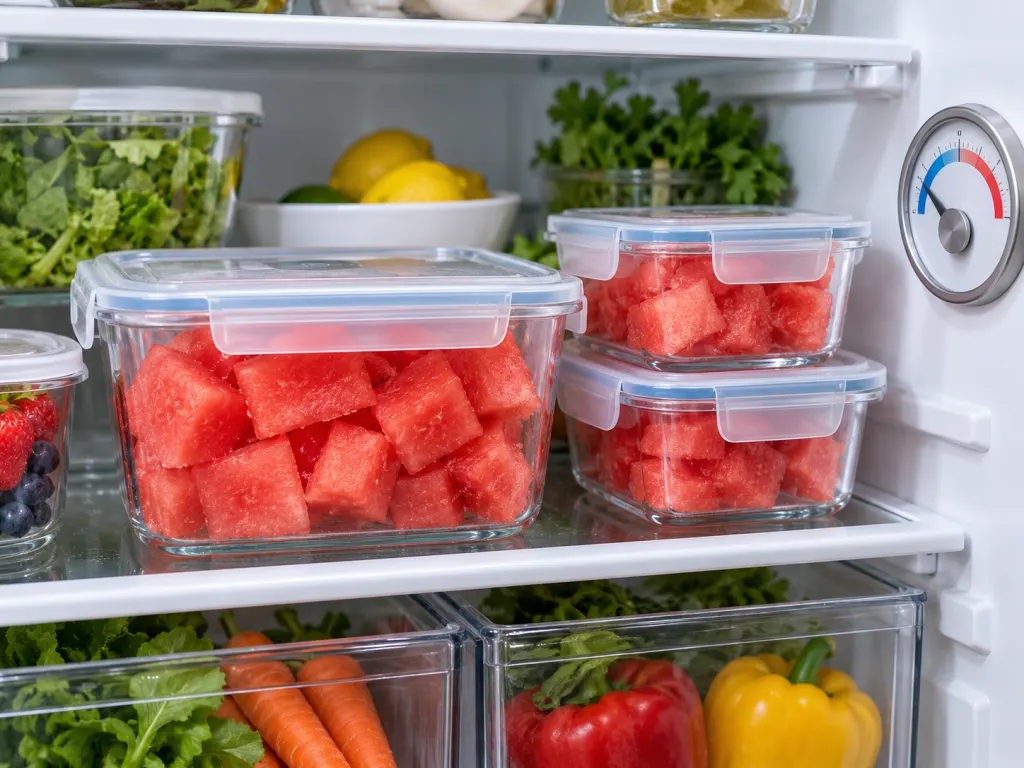
Once watermelon is cut, it should be treated as perishable cut fruit. The CDC lists cut melon among foods more likely to carry germs that can make people sick and recommends the basic food-safety steps of clean, separate, cook, and chill https://www.cdc.gov/food-safety/prevention/index.html. For cut fruit, the “chill” step is the one many people miss during picnics, cookouts, and long countertop grazing.
CDC guidance says perishable food, including cut fruit, should be refrigerated within two hours, or within one hour if it has been exposed to temperatures above 90°F. Keep the refrigerator at 40°F or below. FDA also advises choosing pre-cut produce only when it is refrigerated or surrounded by ice and refrigerating all produce purchased pre-cut or packaged https://www.fda.gov/food/buy-store-serve-safe-food/selecting-and-serving-produce-safely.
Why Melon Gets Extra Attention in Food Safety Advice
Melons receive extra attention because they are low-acid fruits and are often eaten without cooking. CDC notes that melons can support Listeria growth because they have low acidity and may be kept refrigerated for a long time https://www.cdc.gov/listeria/causes/fruits-vegetables.html. This does not mean every watermelon is risky, and it does not mean a hollow space is a Listeria sign. It means cut melon should be handled with the same seriousness you would give other ready-to-eat perishable foods.
For everyday kitchens, the best habit is to cut only what you plan to serve soon, refrigerate the rest promptly in a clean covered container, and use clean serving utensils instead of letting hands go back and forth into a bowl. If you bought a half watermelon or packaged chunks, check that the store kept them cold, take them home promptly, and refrigerate them right away.
How to Decide in Real Life
Here is a practical way to make the call. First, look at the crack. If it is a clean internal gap with normal flesh around it, think hollow heart. Second, smell the melon. A fresh watermelon should smell mild, clean, and sweet, not sour, boozy, or rotten. Third, feel the texture. The flesh should hold together; it should not be slimy or collapsing across large areas. Fourth, remember the timeline. A melon that looked fine when cut but then sat out for hours at a hot gathering is a different decision than one you just opened on a clean counter.
When the melon passes those checks, you can trim away any unappealing dry or mealy edges around the cavity and serve the good portions. When it fails those checks, do not try to rescue it with rinsing. Washing cut flesh will not reverse spoilage, and it can spread juices around the sink and counter. Put the questionable melon in the trash or compost where appropriate, clean the cutting area, and start fresh.
What Gardeners Can Learn From It
For home gardeners, hollow heart is more frustrating than mysterious. It may point to pollination problems, variety susceptibility, or stress during flowering and early fruit development. OSU Extension emphasizes that complete pollination is important for marketable watermelon fruit and that pollinator insects should be present throughout flowering https://extension.oregonstate.edu/catalog/pnw-741-pacific-northwest-watermelon-production-east-cascades. If you repeatedly harvest melons with internal gaps, look at flower timing, pollinator activity, irrigation swings, and whether the variety has a reputation for the issue in your area.
Gardeners should also separate hollow heart from rind cracking. Heavy rain or uneven watering near harvest can contribute to external fruit cracking, and external splits create a more obvious path for damage and decay. An intact rind with an internal hollow space is a different situation from a melon that split open in the garden and sat exposed to soil, insects, heat, or rainwater. When the rind is broken before harvest, it is wise to be more cautious.
The Bottom Line
A crack inside a watermelon usually means the fruit developed unevenly, not that something alarming happened to it. Hollow heart is recognized by university extension sources and researchers as a real watermelon quality defect. It can make the melon look strange and sometimes less pleasant to eat, but the crack itself is not the safety test.
The safest, least wasteful approach is balanced: do not panic over a clean hollow center, and do not ignore clear spoilage signs. Wash the rind before cutting, keep cut melon cold, use clean tools, and trust the obvious warnings of sour smell, slime, mold, bubbling, leaking fermented liquid, or broad mushiness. That gives you a better answer than any viral rule that treats every cracked watermelon the same.
Wrap-Up
Clean cracks or hollow spaces inside watermelon are commonly linked to hollow heart, a developmental quality defect associated with pollination, variety, weather, and growing conditions. They are not, by themselves, proof of tampering or a reason to discard the fruit. Judge the melon by freshness signs and handling: normal smell, firm flesh, clean appearance, washed rind, clean tools, and prompt refrigeration after cutting. Throw it away if it smells sour, foams, leaks fermented liquid, feels slimy, shows mold, or has widespread mushy breakdown.
Frequently Asked Questions
- → Is a cracked watermelon always unsafe to eat?
No. A clean internal crack or hollow center can be hollow heart, which is a growing defect. It is more concerning if the melon also smells sour, feels slimy, shows mold, foams, leaks fermented liquid, or has widespread mushy flesh.
- → Does a hollow space mean the watermelon was injected with chemicals?
No. University extension sources describe hollow heart as a physiological or developmental defect connected with factors such as pollination, genetics, tissue firmness, and growing conditions. The crack alone cannot tell you how the crop was treated.
- → Should I wash watermelon before cutting it?
Yes. Wash the rind under running water and scrub it with a clean produce brush before cutting. Even though you do not eat the rind, the knife can move dirt or germs from the outside into the flesh.
- → How long can cut watermelon sit out?
Follow general cut-fruit guidance: refrigerate perishable cut fruit within two hours, or within one hour if it has been exposed to temperatures above 90°F. Keep cut watermelon in a clean covered container in the refrigerator.
- → Can I cut around the hollow part and eat the rest?
If the only issue is a clean hollow space and the flesh looks fresh, smells normal, and feels firm, you can trim away any unappealing edges and use the good portions. If there are spoilage signs, discard the melon instead.
References
This content was developed and refined using reliable sources.
- https://extension.oregonstate.edu/catalog/pnw-741-pacific-northwest-watermelon-production-east-cascades
- https://plantsforhumanhealth.ncsu.edu/2022/07/26/grafting-watermelon-to-combat-hollow-heart
- https://extension.purdue.edu/news/2025/08/watermelon-woes-and-pumpkin-predictions-how-rainy-weather-could-affect-seasonal-favorites.html
- https://www.fda.gov/food/buy-store-serve-safe-food/selecting-and-serving-produce-safely
- https://www.cdc.gov/food-safety/prevention/index.html
- https://www.cdc.gov/listeria/causes/fruits-vegetables.html