 Save
The short answer: you cannot reliably prove a jar is real honey with a quick kitchen test. If you want a better chance of buying genuine honey, start with the label, the source, and the seller's transparency. International standards describe honey as a bee-made substance from plant nectar or related plant secretions, and its color, flavor, aroma, thickness, and crystallization naturally vary by plant source according to the Codex honey standard. That natural variety is exactly why viral tricks can mislead. A thick jar may be real, a runny jar may be real, and a convincing syrup can still look persuasive on a spoon.
What Real Honey Means
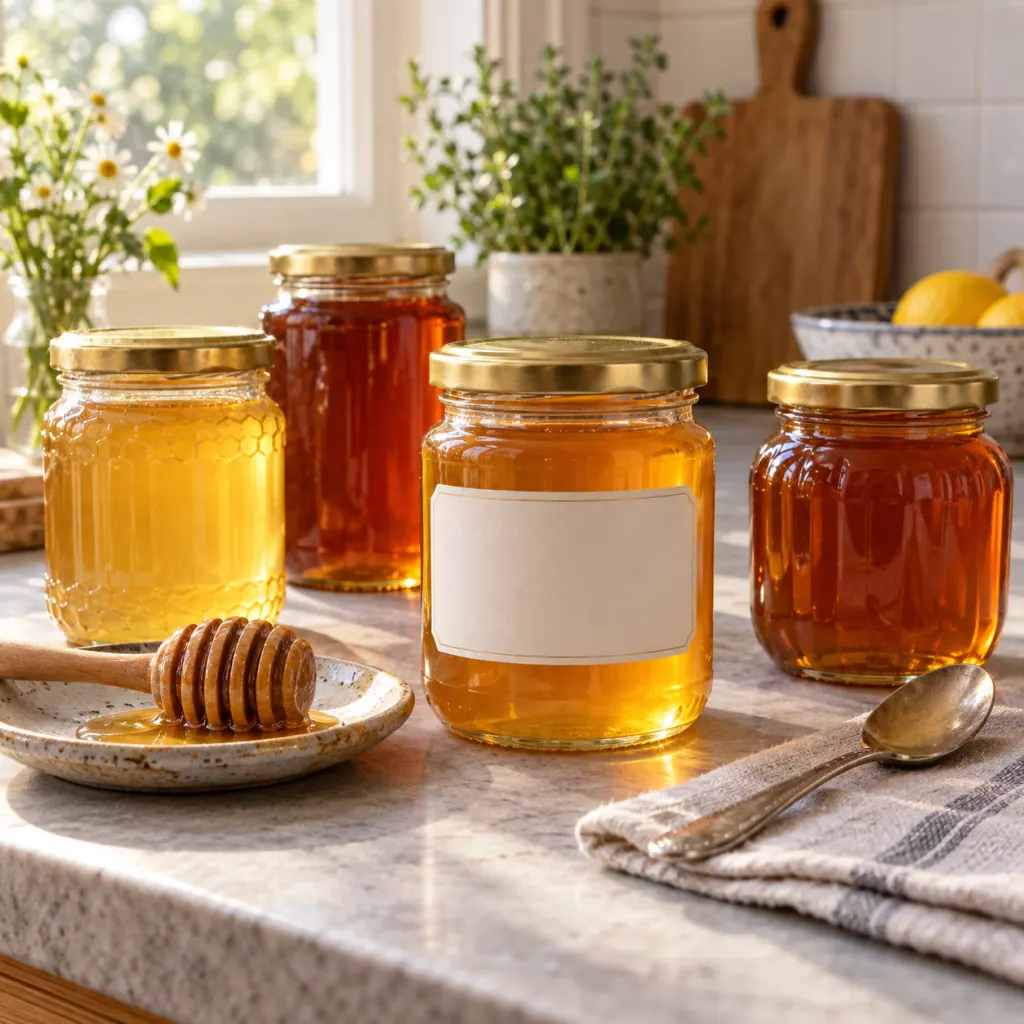
Honey is not simply any golden sweet syrup. The Codex standard describes it as a substance made by honeybees from nectar or plant-related secretions, then transformed, stored, and matured in honeycomb. The same standard notes that honey can be nearly colorless or dark brown, fluid or crystallized, mild or strongly aromatic depending on plant origin as described by FAO's Codex text. That means appearance alone is a weak judge. A pale clover-style honey and a dark buckwheat-style honey can both be genuine while looking and tasting very different.
In the United States, FDA guidance says accurate labeling helps prevent honey and honey products from being adulterated or misbranded, and helps buyers make informed choices under its honey labeling guidance. The practical takeaway for shoppers is simple: plain honey should not quietly include cheaper syrups. If another sweetener is present, the product should be represented as a blend or otherwise declared rather than pretending to be only honey.
Why Honey Fraud Is Hard To Spot By Eye
Honey fraud is often called economically motivated adulteration: a lower-cost substance is added, substituted, or hidden to make a product seem more valuable than it is. The FDA's fiscal year 2025 honey sampling assignment tested 102 domestic and imported honey samples for undeclared added sweeteners and found four violative samples, a 4 percent violation rate in that assignment according to the published FDA results. The agency also warned that the assignment was not designed to compare countries or trends statistically, which is a useful reminder not to turn one dataset into a blanket claim about every jar on a shelf.
The European Commission's earlier coordinated honey action found the same broader problem: honey can be misrepresented by added sugars, botanical source claims, or origin claims. In that 2015 to 2017 plan, authorities collected more than 2,000 samples across the supply chain, and the Commission reported that the Joint Research Centre found added sugar in 14 percent of the samples it tested in the coordinated action summary. The page also explains why advanced testing was used: pollen profiles, sensory checks, sugar analysis, and isotope methods can reveal things a shopper cannot see in the jar.
The Problem With Viral Honey Tests
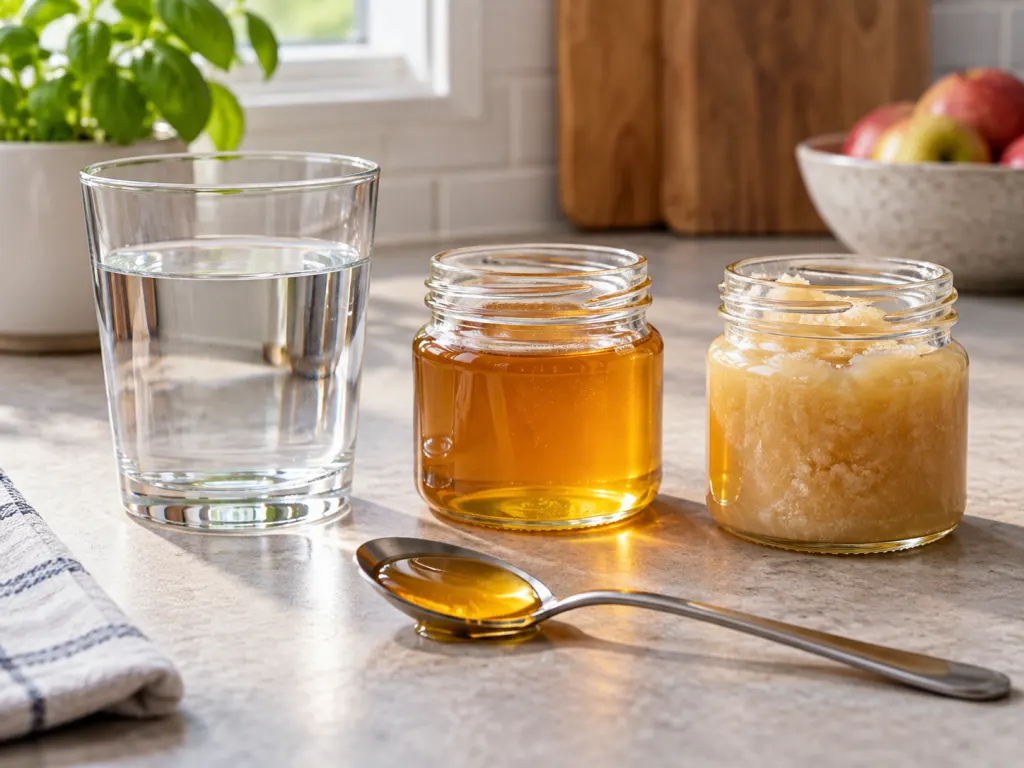
The bubble test, water-glass test, thumb test, and flame test travel well online because they are dramatic and easy. They are also poor proof. A slow bubble may point to a thicker liquid, not necessarily a more honest product. A spoonful that sinks in water may be viscous, not verified. A drop that stays on your thumb may simply have low moisture, be cool, or come from a plant source that naturally produces thicker honey. Crystallization is also normal for many honeys, but the rate depends on the balance of sugars, storage temperature, tiny seed crystals, and floral source.
These tests can still teach you something about texture. They are useful if your question is, "Is this jar runnier than the one I bought last month?" They are not useful if your question is, "Does this contain undeclared syrup?" The FDA's FY25 assignment used stable carbon isotope ratio analysis and expert review when results looked atypical for authentic honey as described in its methodology. That is a long way from watching a bubble crawl through a squeeze bottle.
What To Read On The Jar
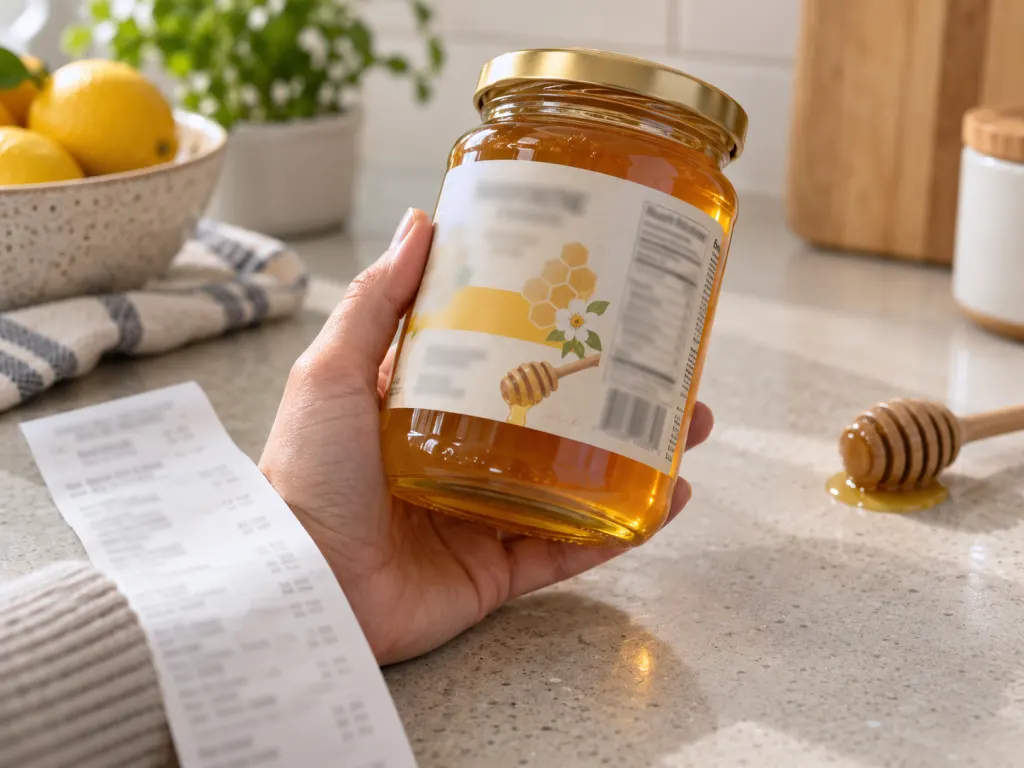
The label is where your best everyday evidence begins. Look first at the name of the food. If the front says only "honey," the rest of the package should not quietly reveal corn syrup, rice syrup, cane syrup, sugar beet syrup, or another sweetener in the ingredient statement. If sweeteners are added, FDA says the resulting product must be labeled as a blend rather than simply as honey, with the added sweeteners properly declared in its FY25 honey discussion.
Next, look for country-of-origin information and the packer or distributor. USDA's Agricultural Marketing Service explains that its packed honey country-of-origin rule clarifies obligations for honey packers on packed honey labeling. Origin details do not prove authenticity by themselves, but vague sourcing gives you less to work with. A clear packer name, lot code, and origin statement make it easier to ask questions, compare jars, or report a concern.
- Product name: Look for whether it says honey, honey blend, flavored honey, or another qualified name.
- Ingredient statement: Plain honey should not need a list of added syrups.
- Origin wording: Check whether the jar names a country, a blend of origins, or a local producer.
- Packer information: A real business name and contact route make questions easier.
- Lot or batch details: These help sellers trace a jar if concerns come up.
- Price and setting: A bargain far below similar jars deserves extra attention, especially when the sourcing is unclear.
USDA Grades Are About Quality, Not A Purity Guarantee
Some jars mention U.S. Grade A, Grade B, or Grade C. USDA's extracted honey standards describe grades by scoring factors, with Grade A requiring a minimum score of 90, Grade B 80, and Grade C 70 on the AMS grade standards page. Grades can help describe quality characteristics for extracted honey, but they should not be read as a complete consumer fraud test. A grade mark, where properly used, is one piece of information among several.
Color is similar. Honey color standards help the trade describe and compare honey, but color does not equal authenticity. A dark honey may be robust and floral, or it may simply come from a plant source that gives darker nectar. A light honey may be delicate and clean, or it may be from another source altogether. Use color and grade language to understand style and quality, then use labeling and seller transparency to judge trust.
How To Buy Honey With More Confidence
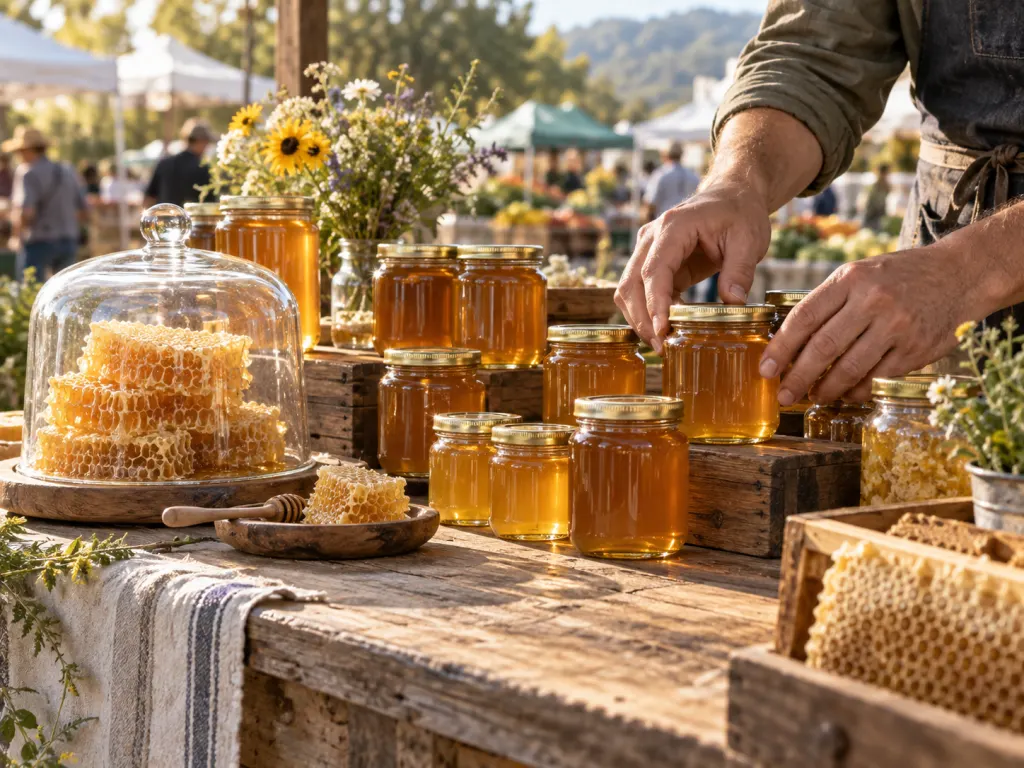
The most reliable shopping habit is to make the seller explain the jar. A local beekeeper, co-op, specialty shop, or careful grocery brand should be able to tell you where the honey was harvested or packed, whether it is single-origin or blended, and whether it has been filtered, creamed, or heated for handling. None of those processing words automatically make a honey bad; they simply describe what happened before the jar reached you. The clearer the explanation, the less you have to rely on guesswork.
At a farmers market, ask practical questions: Where are the hives located? Is this from one season or several batches? Is it mostly from a known floral source, or is it wildflower honey from mixed forage? Does the producer pack their own honey or buy and repack from another supplier? A straightforward answer is more valuable than romantic wording on a label. If a seller cannot explain the source at all, choose another jar.
What Crystallization Really Tells You
Crystallization is often misunderstood. The Codex standard recognizes crystallized or granulated honey as honey that has undergone a natural solidification process linked to glucose crystallization in its descriptions of honey styles. So crystals are not a warning sign by themselves. They may appear as a fine creamy texture, coarse grains, cloudiness near the bottom, or a fully set jar.
What crystallization cannot do is settle authenticity. Some genuine honeys crystallize quickly; others stay liquid much longer. Storage conditions matter too. A cool pantry can speed the change, while a warm kitchen may keep the jar pourable. If you like liquid honey, gently warming a closed jar in warm water can usually loosen crystals without changing your buying decision. If you like spreadable honey, creamed honey is designed to have a fine crystal structure.
When A Jar Deserves A Closer Look
Most shopping decisions do not require suspicion. Still, a few clues should slow you down. Be cautious when a product is sold as plain honey but the ingredient statement lists other sweeteners, when the label uses flashy words without a producer name or origin, when the price is far below comparable jars, or when the seller avoids basic sourcing questions. Also be cautious with products that look like honey but are named "honey-flavored syrup" or "breakfast syrup" in smaller print; those may be perfectly lawful products, but they are not the same purchase as a jar of honey.
If you already bought a jar and are unsure, compare the label against the product name and ingredient statement first. Then contact the company with the lot code and ask whether the product is single-ingredient honey, a blend of honeys, or a blend with another sweetener. If the answer is evasive, keep the label and receipt. Regulators and retailers can do much more with a package, lot number, seller, and purchase date than with a photo of a spoon test.
The Bottom Line For Shoppers
Buying real honey is less about performing a trick at home and more about choosing jars with accountable information. The best signals are plain naming, no undeclared sweeteners, clear origin language, a reachable packer or producer, reasonable pricing, and answers that match the label. Texture, bubbles, color, and crystallization can help you learn the style of a honey, but they cannot replace standards, documentation, and laboratory testing.
Wrap-Up
If you want real honey, do not let a viral test make the decision for you. Read the product name, check whether any added sweetener is declared, look for origin and packer details, and buy from sellers who can explain what they are selling. Real honey varies naturally, so a jar can be light, dark, liquid, thick, or crystallized and still be genuine. The most useful habit is not suspicion; it is slowing down long enough to match the label, the source, and the story of the jar.
Frequently Asked Questions
- → Can the water test prove honey is real?
No. Dropping honey into water mainly shows thickness and how quickly it disperses. A thick liquid may sink and still be something other than plain honey, while genuine honey can vary in texture by floral source, temperature, and storage.
- → Is crystallized honey fake?
No. Crystallization is a normal texture change for many honeys. Some jars crystallize quickly and others stay liquid longer, depending on the honey's composition and how it is stored.
- → What is the strongest label clue that honey is not plain honey?
The clearest clue is an ingredient statement showing another sweetener while the front of the package makes the product look like plain honey. A sweetened blend should be represented honestly rather than sold as only honey.
- → Does local honey guarantee authenticity?
No guarantee is automatic, but buying from a local beekeeper or transparent producer can make questions easier. Ask where the honey was harvested, who packed it, and whether it is from one source or a blend.
- → Are USDA grades the same as proof of purity?
No. USDA extracted honey grades describe scored quality factors for extracted honey. They can be useful, but they do not replace label reading, source information, or analytical testing for undeclared sweeteners.
References
This content was developed and refined using reliable sources.
- https://www.fao.org/4/w0076e/w0076e30.htm
- https://www.fda.gov/regulatory-information/search-fda-guidance-documents/guidance-industry-proper-labeling-honey-and-honey-products
- https://www.fda.gov/food/economically-motivated-adulteration-food-fraud/fy25-sample-collection-and-analysis-domestically-produced-and-imported-honey-economically-motivated
- https://food.ec.europa.eu/food-safety/eu-agri-food-fraud-network/eu-coordinated-actions/honey-2015-17_en
- https://www.ams.usda.gov/rules-regulations/country-origin-labeling-packed-honey
- https://www.ams.usda.gov/grades-standards/extracted-honey-grades-and-standards