 Save
Golden-brown chicken wings come from dry skin, steady oven heat, and enough space for hot air to move around each piece. This guide shows a simple baked method that gives good color without deep-frying. It also covers basic raw-poultry handling, doneness checks, and safe storage.
Step 1: Preheat the oven and set up a rack
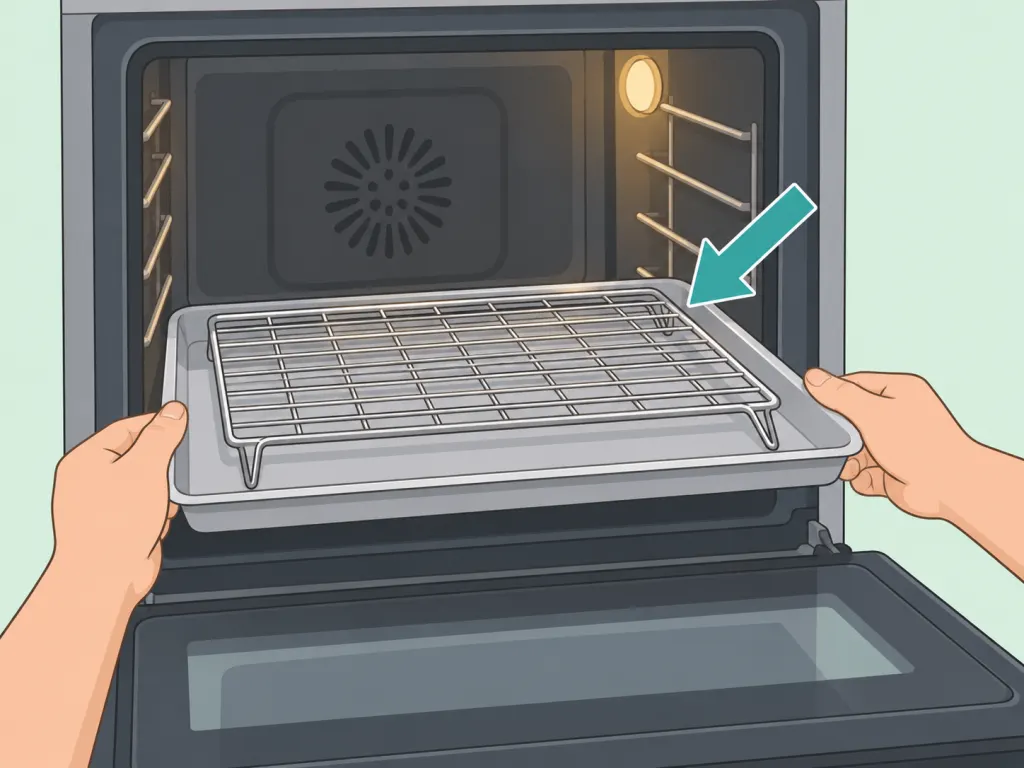
Heat the oven to 425 F and place a wire rack on a rimmed baking sheet. The rack lifts the wings so heat can reach more of the surface, while the rimmed pan catches drips. Line the pan under the rack if you want easier cleanup.
Step 2: Handle the raw wings separately
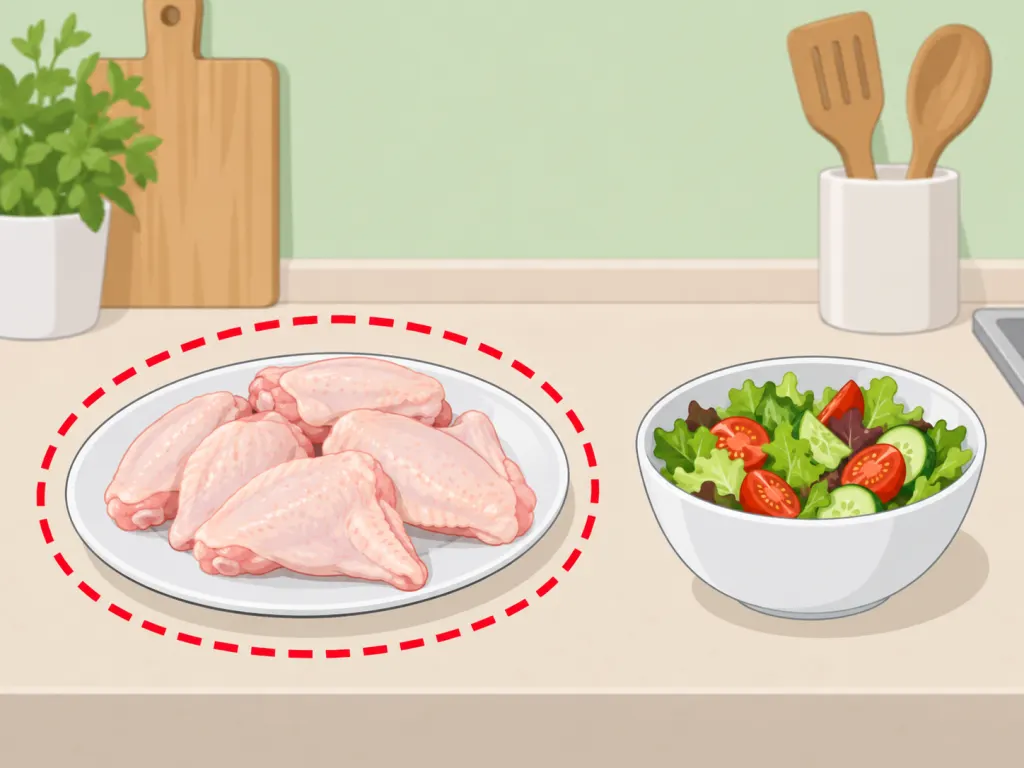
Keep raw wings and their juices away from ready-to-eat foods, and use a separate board or plate while prepping them. Raw poultry can carry harmful bacteria, and FoodSafety.gov advises never washing raw poultry because splashing water can spread germs around the kitchen.
Step 3: Pat the wings very dry
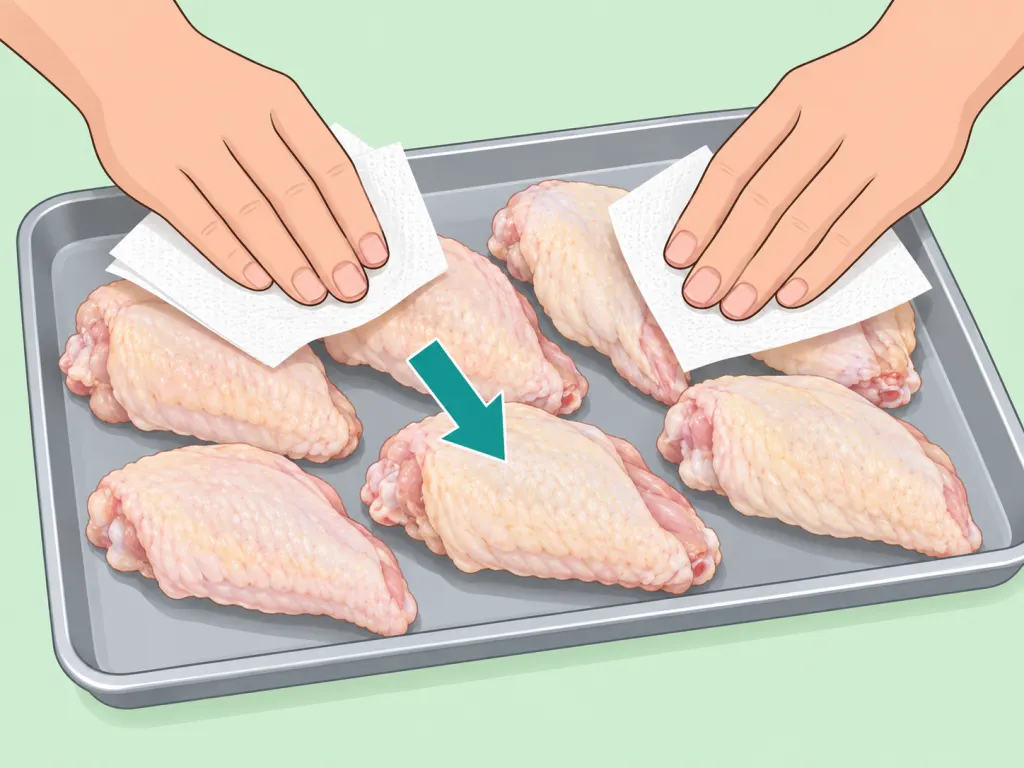
Blot each wing with paper towels until the skin feels tacky rather than wet. Surface moisture works against browning because the oven has to drive off water before the skin can color. The Maillard reaction, which helps create browned flavor and color, is affected by heat, time, pH, and water activity, according to a review of Maillard browning factors.
Step 4: Season with a thin, even coating
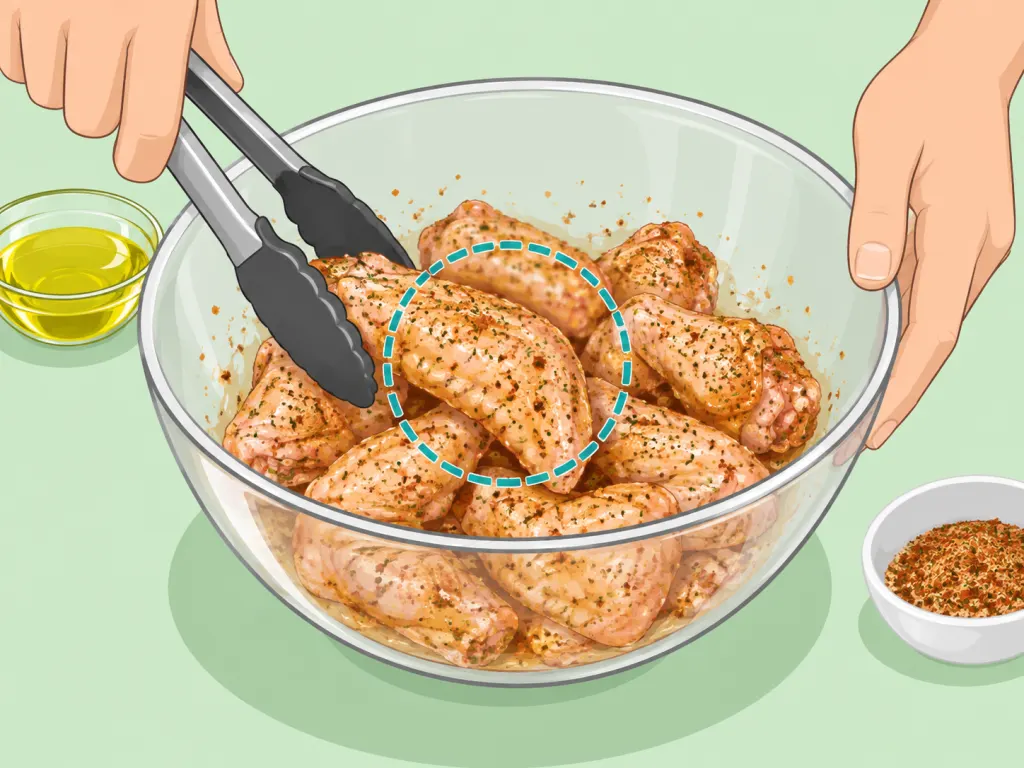
Toss the wings with a small amount of oil, salt, pepper, and your preferred dry seasonings. For extra browning, you can add a very light sprinkle of aluminum-free baking powder, about 1 teaspoon per pound of wings. Keep the coating thin so the skin roasts instead of turning pasty.
Place the wings skin-side up on the rack with a little space between each piece. Crowding traps steam, which softens the skin and slows browning. If the pan looks packed, divide the wings between two pans.
Step 6: Bake until the wings start to color
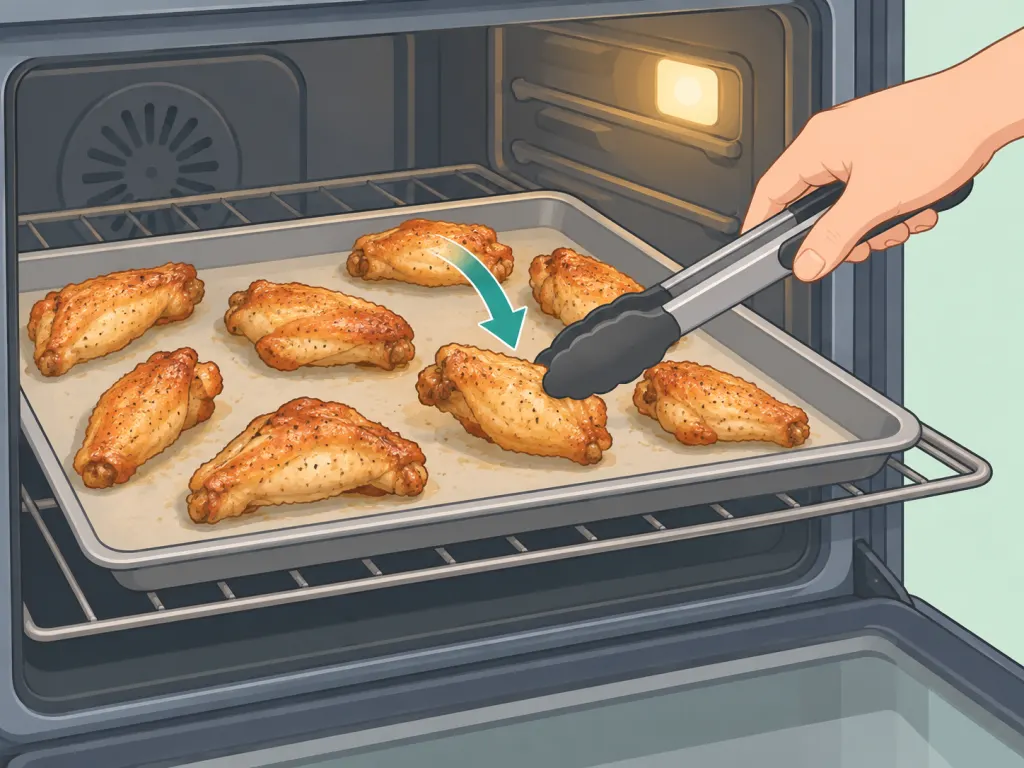
Bake the wings for about 35 to 45 minutes, turning them once after the first 20 minutes. Smaller wingettes may finish sooner, while larger whole wings may need longer. Use time as a guide, but rely on temperature for doneness.
Step 7: Brown the skin at the end
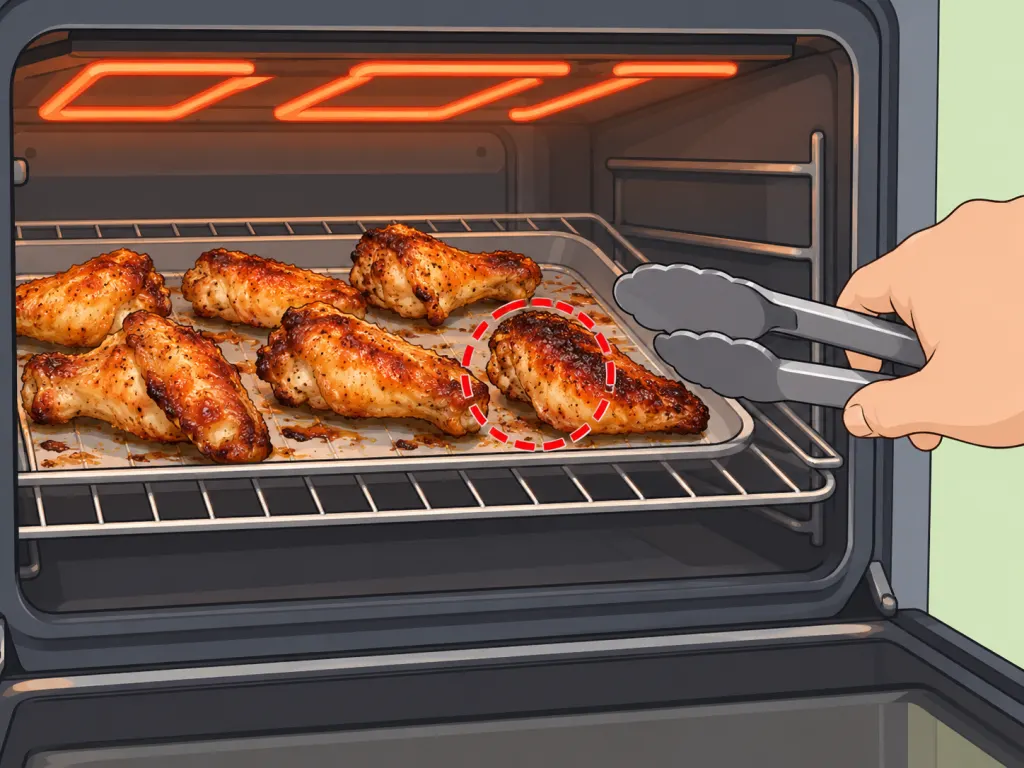
When the wings are cooked through and lightly browned, raise the oven temperature or switch briefly to broil for deeper color. Watch closely during this stage because the edges can go from golden to scorched quickly. If you plan to use sauce, brush it on during the last few minutes so it warms and clings without burning.
Step 8: Check the internal temperature
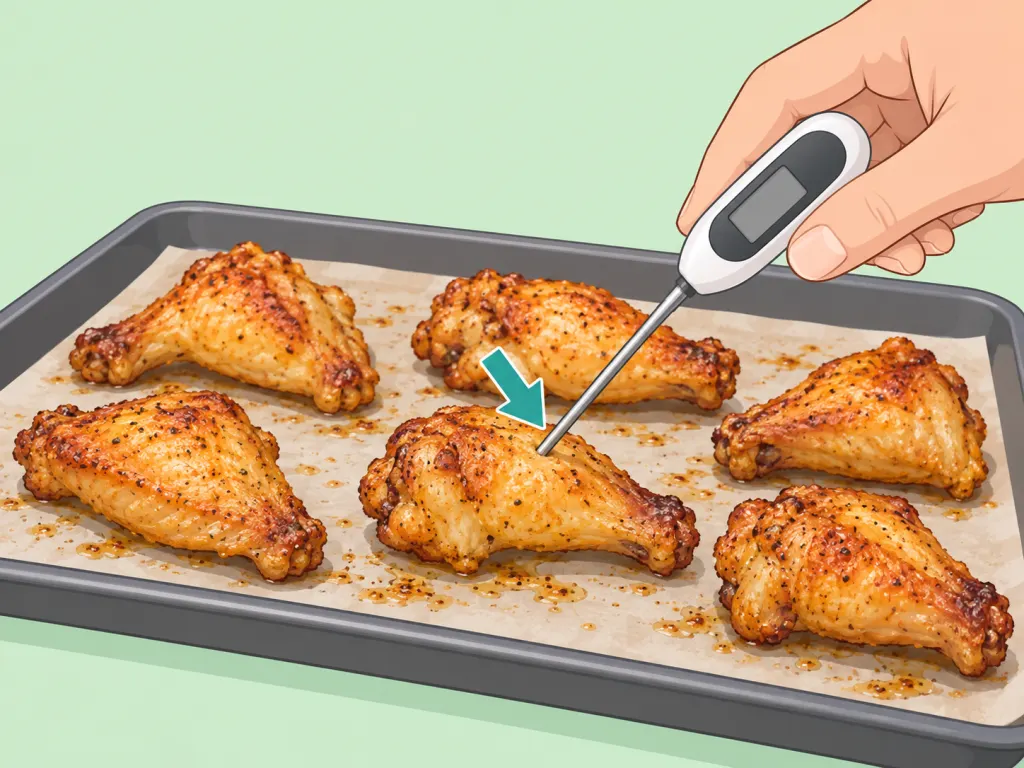
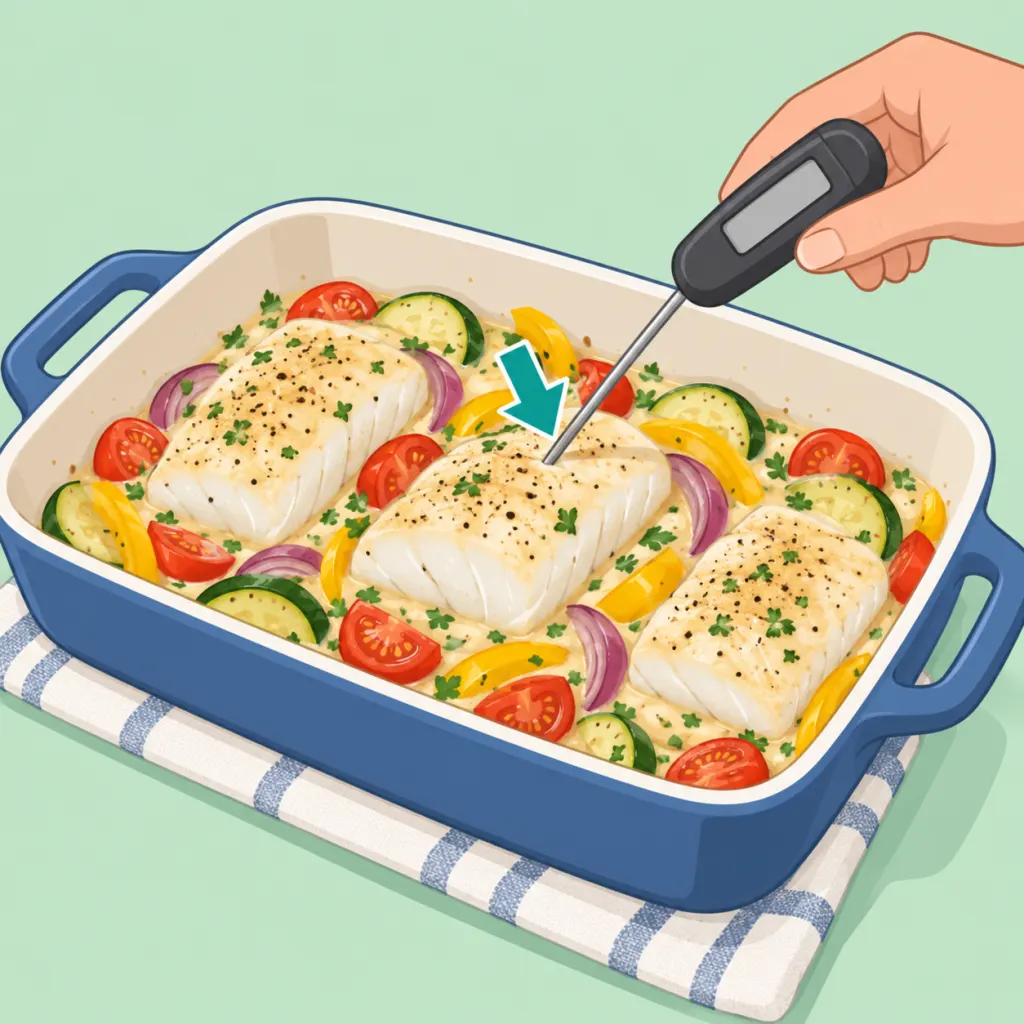
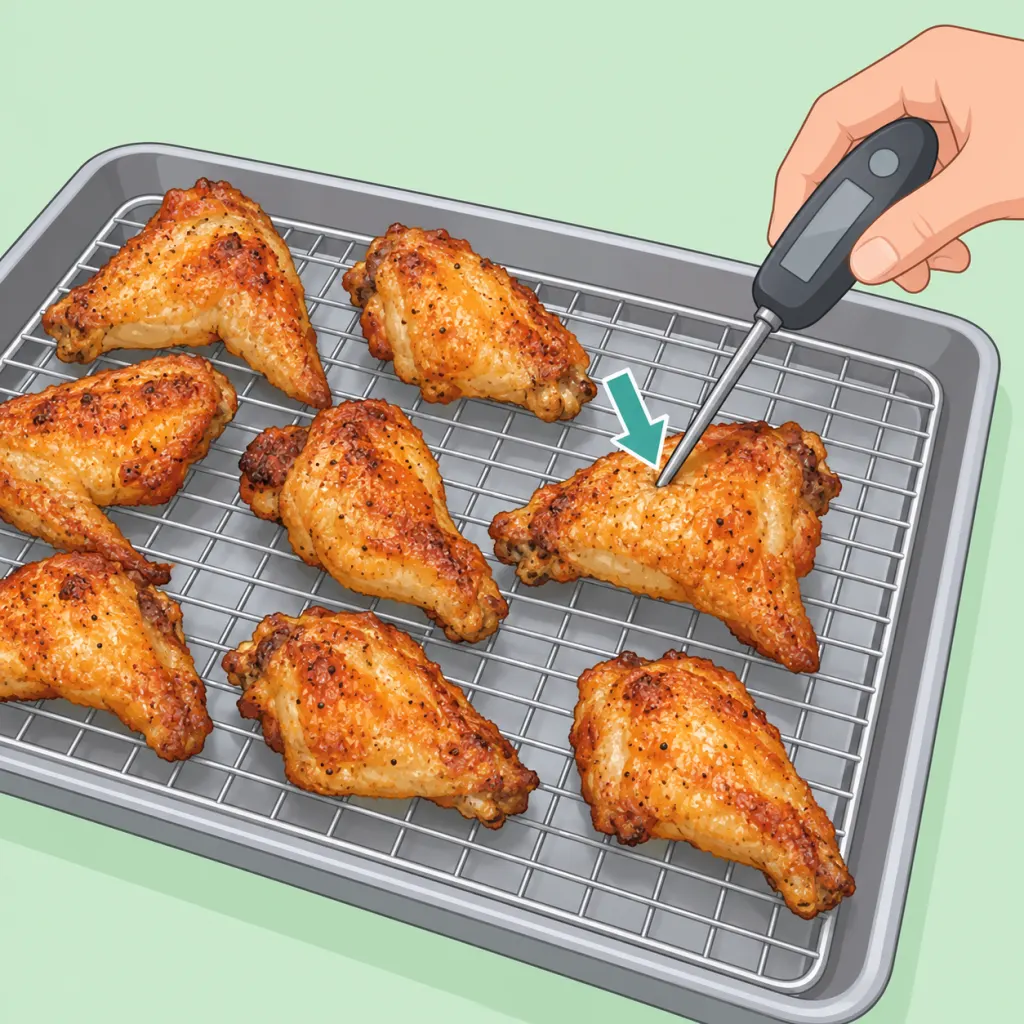
Test several of the largest wings with a food thermometer before serving. Chicken wings should reach 165 F, and FoodSafety.gov lists 165 F as the safe minimum internal temperature for all poultry. The CDC also notes that a thermometer is the reliable way to check safe cooking, not color or texture alone.
Step 9: Serve hot and refrigerate leftovers promptly
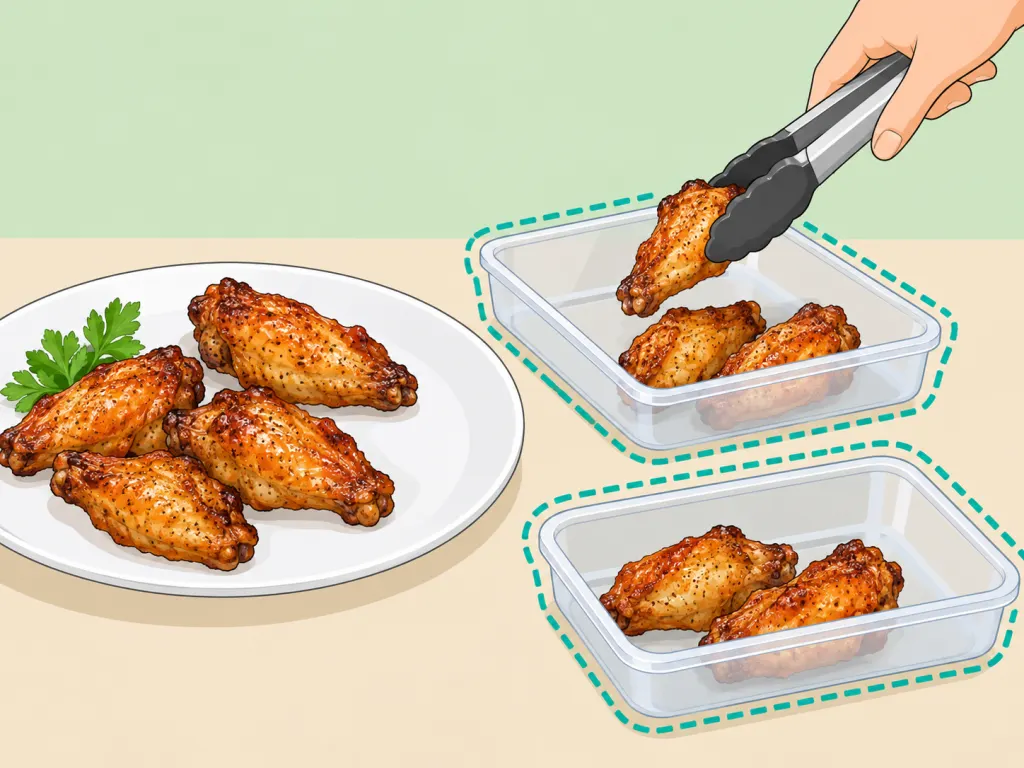
Serve the wings while the skin is crisp. Put leftovers in small, shallow containers and refrigerate them within 2 hours, or within 1 hour if they have been in temperatures above 90 F, following FoodSafety.gov leftover guidance. Reheat leftover wings to 165 F before eating.
Step 10: Seek help if severe symptoms appear
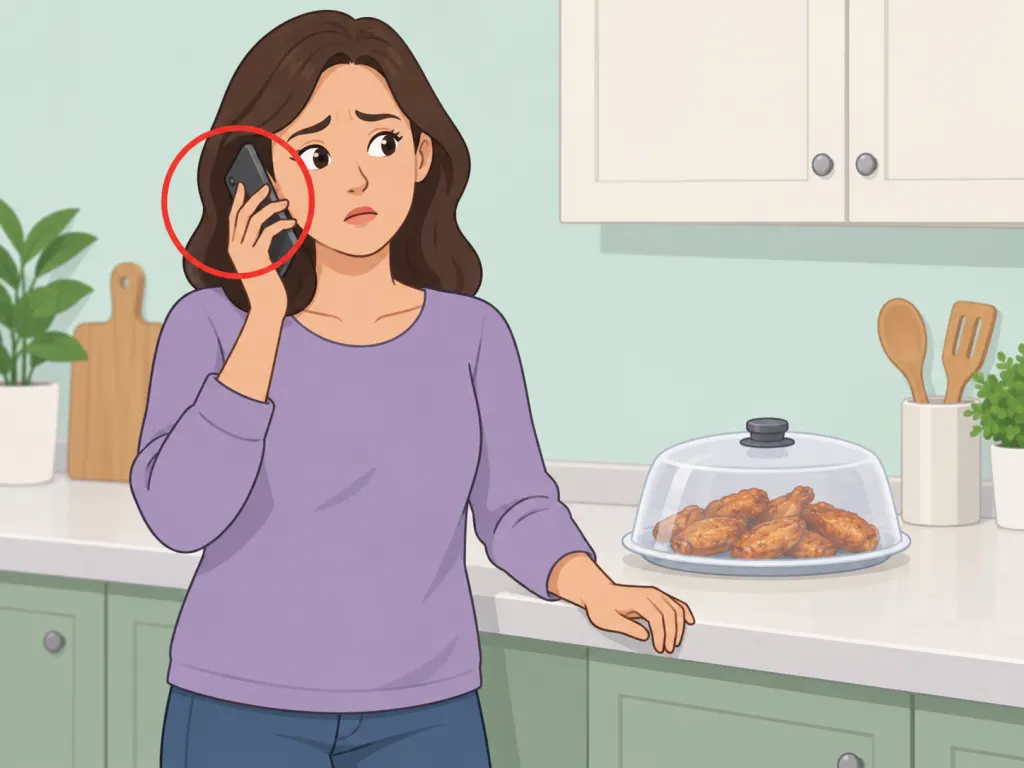
If someone becomes sick after eating and has severe symptoms, use medical guidance rather than trying to judge it at home. The CDC says to see a doctor for severe food poisoning symptoms, including bloody diarrhea, diarrhea lasting more than 3 days, fever over 102 F, repeated vomiting, or signs of dehydration.
Wrap-Up
The bottom line: dry the wings well, give them space on a rack, bake until browned, and use a food thermometer to confirm 165 F. Serve them hot, then chill leftovers promptly in shallow containers.
Frequently Asked Questions
- → Can I use frozen chicken wings?
Yes, but thaw them safely before baking so they cook evenly. The CDC advises thawing frozen foods in the refrigerator, in cold water, or in the microwave, not on the counter.
- → Why are my wings pale instead of golden?
Pale wings are often too wet, crowded, or cooked without enough air circulation. Pat them dry, use a rack if you have one, and leave space between the pieces so the oven heat can brown the surface.
- → Do chicken wings have to reach 165 F?
Yes. FoodSafety.gov lists 165 F as the safe internal temperature for chicken, turkey, and other poultry, including wings.
- → Can I skip the baking powder?
Yes. The wings can still brown with oil, salt, dry skin, and enough heat. Baking powder is optional and should be used lightly so it does not leave a dusty coating.
- → Can I sauce the wings before baking?
Use thick, sugary sauces near the end instead of at the start. Sauce added too early can darken quickly before the chicken is fully cooked, so bake first and glaze during the final few minutes.
- → How long can cooked wings sit out?
FoodSafety.gov recommends refrigerating perishable leftovers within 2 hours, or within 1 hour if the food is exposed to temperatures above 90 F. Use small, shallow containers so the wings cool faster.
References
This content was developed and refined using reliable sources.
- https://www.foodsafety.gov/food-safety-charts/safe-minimum-internal-temperatures
- https://www.foodsafety.gov/keep-food-safe/food-safety-by-type-food
- https://www.foodsafety.gov/blog/leftovers-gift-keeps-giving
- https://www.cdc.gov/food-safety/prevention
- https://www.cdc.gov/food-safety/signs-symptoms/index.html
- https://pmc.ncbi.nlm.nih.gov/articles/PMC12154226