 Save
Baking soda cream is not a well-supported answer for wrinkles. It may make skin feel temporarily smoother because its particles can buff the surface, but that same gritty, alkaline quality can also leave facial skin dry, tight, or irritated. The most useful way to think about it is as a DIY exfoliating experiment with limits, not as a dependable skin-care plan. Wrinkles are shaped mainly by age, genetics, sun exposure, smoking, skin dryness, and repeated facial movement, and a pantry ingredient cannot change all of those factors. If you are curious because the idea is affordable and familiar, the safer question is not how to make it stronger. It is whether your skin barrier is likely to tolerate it at all, and whether gentler, better-studied habits would serve your face better.
Why the Idea Sounds Convincing
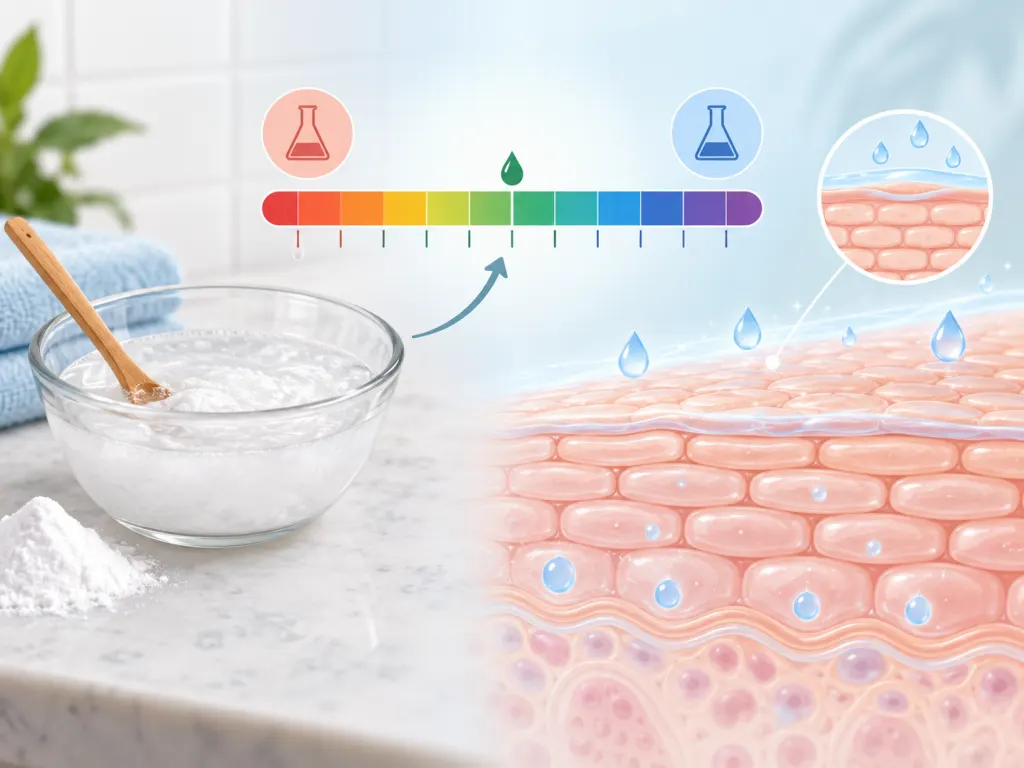
Baking soda, also called sodium bicarbonate, is a common household powder with a fine, crystalline texture. The National Library of Medicine's NCBI Bookshelf describes a 1 percent sodium bicarbonate solution as having a pH of 8.4, which places it on the alkaline side of the pH scale: NCBI Bookshelf. That matters because facial skin is not naturally alkaline. Cleveland Clinic explains that adult skin is usually mildly acidic, around pH 5.5, and that this acidity helps support the skin's normal oils, resident microbes, and barrier function: Cleveland Clinic. A homemade baking soda cream may feel clever because it combines a familiar kitchen ingredient with a moisturizer or gel. The chemistry, however, is the reason to be careful. A product that feels simple can still be too basic, too abrasive, or too unpredictable for the face.
What Wrinkles Are Mostly About
Wrinkles are normal creases and lines that become more visible as skin changes over time. The National Institute on Aging notes that older skin tends to become thinner, less elastic, and drier, while collagen and elastin changes affect how firm and smooth the skin appears: National Institute on Aging. Mayo Clinic also lists sun exposure, smoking, age, and repeated facial expressions among common contributors to wrinkles: Mayo Clinic. This helps separate a surface effect from deeper skin structure. A scrubby cream may lift some dull surface flakes, so the face can look fresher for a short time. It does not rebuild the deeper support layers that influence creasing. That difference is important because many DIY beauty trends blur the line between a temporary cosmetic effect and a biological change.
Where Baking Soda Fits, and Where It Does Not
The closest evidence-based category for baking soda on the face is mechanical exfoliation, meaning physical removal of dead skin cells from the outer surface. The American Academy of Dermatology says exfoliation can be done mechanically or chemically, but it also cautions that exfoliation is not suitable for everyone and can lead to redness, breakouts, or skin damage when done harshly: American Academy of Dermatology. Baking soda is not a purpose-built facial exfoliant with a controlled formula, measured particle shape, preservative system, and label directions. It is a household powder. Mixing it into a cream does not automatically make it gentle, and leaving it on the skin can increase contact time with an alkaline substance. If someone already uses retinol, benzoyl peroxide, acids, scrubs, or other strong skin-care products, adding baking soda may make the routine more irritating rather than more effective.
A Safer Way to Think About a Home Skin Trial
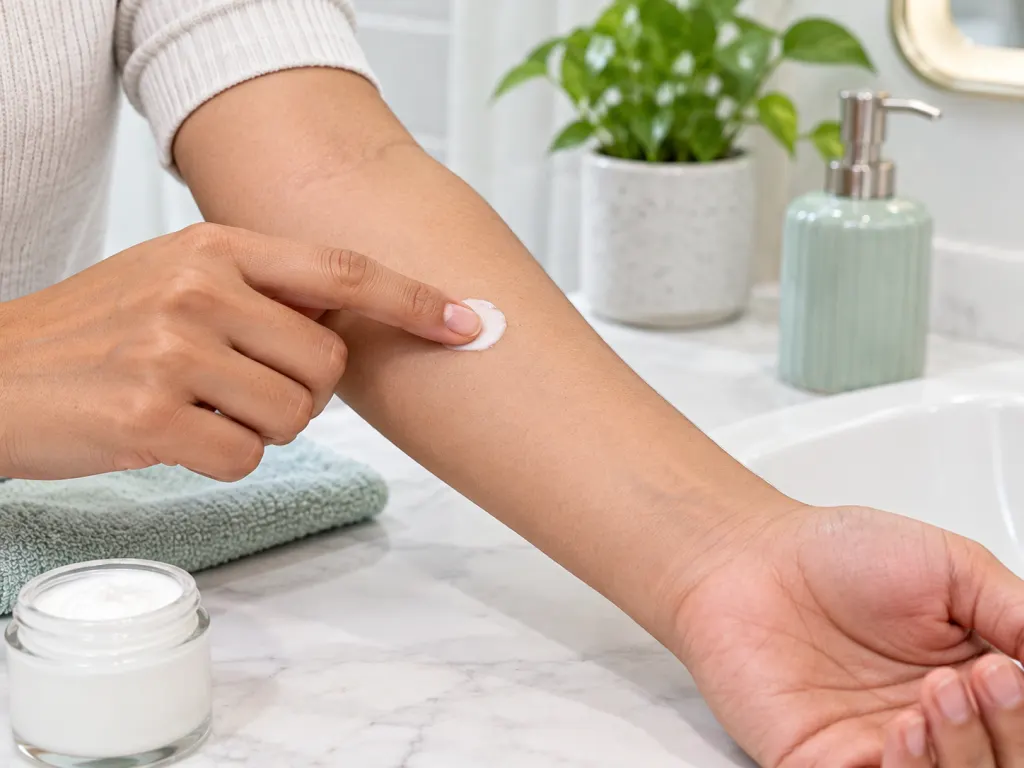
If you still choose to test a baking soda mixture, make the trial small, brief, and conservative. The American Academy of Dermatology recommends testing skin-care products on small areas first because even products labeled for sensitive skin can bother some people: American Academy of Dermatology. For a DIY mixture, the cautious approach is to avoid the eye area, avoid scrubbing pressure, keep contact short, rinse thoroughly with lukewarm water, and follow with a plain moisturizer. Do not use it on skin that is already irritated, sunburned, freshly shaved, cracked, or peeling. Do not combine it with other exfoliating steps on the same day. The point of a trial is to learn how your skin responds, not to force a visible change.
- Choose a small test area away from the eyes before using anything on the full face.
- Use only light fingertip pressure; gritty particles can become irritating with pressure.
- Keep the mixture simple, with no fragrance or essential oil if your skin is reactive.
- Rinse if the skin stings, burns, feels hot, or looks unusually red.
- Wait several days before repeating, because irritation can show up after the first use.
When a Pantry Ingredient Is the Wrong Choice
Baking soda is a poor fit for many people with dry, sensitive, acne-prone, eczema-prone, rosacea-prone, or easily dark-marking skin. AAD guidance on exfoliation notes that people with dry, sensitive, or acne-prone skin may do better with a washcloth and mild chemical exfoliant than with mechanical exfoliation, and that more aggressive exfoliation may be a concern for people who develop dark spots after irritation. The eye area deserves special restraint because the skin there is thin and easy to irritate. Essential oils also add fragrance compounds that may bother some users, so they are not a harmless upgrade. If the goal is smoother-looking skin before an event, a bland moisturizer is often a calmer choice than a last-minute scrub. If the goal is long-term support for aging skin, a steady routine usually matters more than a homemade cream.
What a Basic Routine Can Do Better
A simple routine has an advantage over a trend: it is easier to repeat without provoking the skin. A practical routine might include a gentle cleanser, a moisturizer that suits your skin type, and daily broad-spectrum sunscreen. AAD's advice on selecting aging-skin products starts with sunscreen and moisturizer, noting that these are two of the most useful products for visible signs of skin aging and that expectations should stay realistic: American Academy of Dermatology. The National Institute on Aging similarly emphasizes sun-smart habits, moisturizing, hydration, and attention to changing spots or skin concerns. None of this sounds flashy, but skin often rewards consistency. The less dramatic routine is often the one people can keep doing.
How to Compare Claims Without Getting Pulled In
Wrinkle-related claims can be emotionally persuasive because they speak to time, identity, and the wish to look rested. The FDA explains that cosmetics are generally products intended for cleansing, beautifying, promoting attractiveness, or altering appearance, and that products with different intended effects can be regulated differently: FDA. For consumers, that means a skin cream's wording deserves a slow read. Ask what the product or DIY idea is actually doing. Is it moisturizing? Is it exfoliating? Is it temporarily making lines look less noticeable by adding hydration? Or is it implying more than it can show? A grounded claim will usually name a modest cosmetic effect, explain who may not tolerate it, and avoid overnight certainty.
What to Do After a Bad Reaction
If a cosmetic product or homemade mixture causes a reaction, the FDA says the first step is to stop using the product and contact a health care provider; it also provides a way to report cosmetic product problems: FDA. For baking soda on facial skin, rinse gently with lukewarm water and avoid applying more active products while the skin feels upset. Do not try to scrub away redness or flaking. If symptoms involve the eyes, widespread swelling, hives, trouble breathing, severe pain, blistering, or a reaction that keeps worsening, seek prompt help. For milder discomfort, a plain moisturizer and a break from exfoliation may be enough while you monitor the skin. The key is to stop escalating. Skin that is already annoyed usually needs quiet, not another experiment.
Wrap-Up
Baking soda face cream has a simple appeal, but facial skin is not a countertop. Sodium bicarbonate is alkaline, and the face usually functions best in a mildly acidic range. The most likely benefit is a short-lived smoother feel from surface exfoliation, while the main concern is irritation, dryness, and barrier disruption. If you are curious, keep any trial small and brief, and skip it if your skin is sensitive or already irritated. For everyday wrinkle care, gentle cleansing, moisturizer, sunscreen, realistic product claims, and professional guidance when needed are better-supported anchors.
Frequently Asked Questions
- → Can baking soda cream remove wrinkles?
There is no strong evidence that a homemade baking soda cream changes the deeper skin factors that shape wrinkles. It may make the surface feel smoother for a short time because it can act like a physical exfoliant, but that is different from changing collagen, elastin, sun damage, dryness, or repeated facial movement.
- → Why can baking soda bother facial skin?
Baking soda is alkaline, while facial skin is usually mildly acidic. That mismatch can be drying or irritating for some people. Its gritty texture can also create too much friction if rubbed firmly or used too often, especially on dry, sensitive, acne-prone, or already irritated skin.
- → Is it safer to leave a baking soda mixture on overnight?
Overnight contact gives the skin much longer exposure to an alkaline mixture, so it is not the cautious choice. A brief patch-style trial on a small area is safer than sleeping with a homemade mixture on the full face. Rinse promptly if skin stings, feels hot, or looks unusually red.
- → What should I use instead if my goal is smoother-looking skin?
Start with a gentle cleanser, moisturizer, and daily broad-spectrum sunscreen. If you want exfoliation, choose a product designed for facial skin and use it according to the label. People with sensitive, darker-marking, or acne-prone skin may want a dermatologist's input before adding exfoliation.
- → When should I get help after using a DIY face mixture?
Get prompt help for eye exposure, spreading swelling, hives, trouble breathing, severe pain, blistering, or a reaction that keeps worsening. For personal skin-care decisions after a reaction, contact a doctor or qualified health professional.
References
This content was developed and refined using reliable sources.
- https://www.ncbi.nlm.nih.gov/books/NBK216446
- https://health.clevelandclinic.org/what-is-skin-ph
- https://www.nia.nih.gov/health/skin-care/skin-care-and-aging
- https://www.mayoclinic.org/diseases-conditions/wrinkles/symptoms-causes/syc-20354927?geo=national&invsrc=other&placementsite=enterprise
- https://www.aad.org/public/everyday-care/skin-care-secrets/routine/safely-exfoliate-at-home?referrer_id=1618655?referrer_id%3D1618655
- https://www.aad.org/public/everyday-care/skin-care-secrets/prevent-skin-problems/test-skin-care-products
- https://www.aad.org/public/everyday-care/skin-care-secrets/anti-aging/selecting-anti-aging-products
- https://www.fda.gov/cosmetics/cosmetics-labeling-regulations/summary-cosmetics-labeling-requirements
- https://www.fda.gov/cosmetics/cosmetics-compliance-enforcement/how-report-cosmetic-product-related-complaint