 Save
The practical answer is simple: cling film is generally meant for short-term food covering and storage, not for high-heat cooking or direct contact with very hot, oily, or fatty foods. Food-contact plastics are regulated because small amounts of substances can move from packaging into food, and the risk depends on the material, the food, temperature, time, and how the wrap is used. A cautious kitchen habit is to use cling film for cool storage, follow the label, and switch to glass or ceramic covers for reheating.
Why Cling Film Raises Health Questions
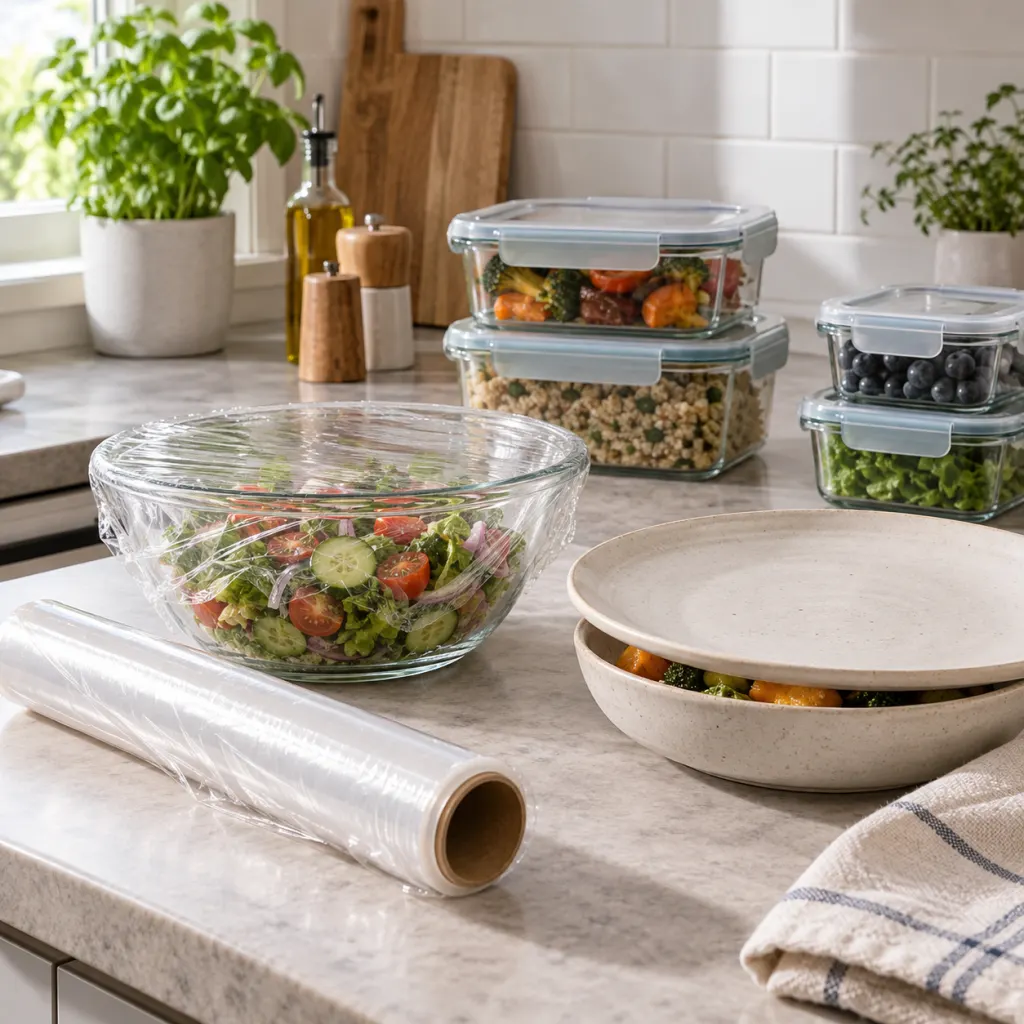
Cling film, also called plastic wrap, is a thin flexible film used to cover bowls, wrap sandwiches, protect cut produce, and slow moisture loss. It feels ordinary because it sits in many kitchen drawers, but it is still a food-contact material. The U.S. Food and Drug Administration defines food-contact substances as packaging, components, processing surfaces, cookware, adhesives, colorants, and other materials that touch food without being intended to affect the food itself. The FDA says these substances must be authorized for their intended use when they meet the definition of a food additive, and that safety reviews include migration and toxicology data FDA food-contact materials.
The important word is intended. A wrap designed to cover cold leftovers in the refrigerator has a different use pattern from a film stretched tightly over bubbling sauce in a microwave. Regulators evaluate materials under defined food types and conditions of use, not under every possible kitchen improvisation. The FDA’s food-contact tables separate foods by acidity, water, fat, alcohol, and dry or oily surfaces, and they also separate use conditions such as refrigerated storage, hot filling, reheating, and cooking above 250 degrees Fahrenheit FDA food types and conditions of use. That framework helps explain why the same roll of wrap can be reasonable in one situation and a poor choice in another.
What Migration Means in Plain Kitchen Terms
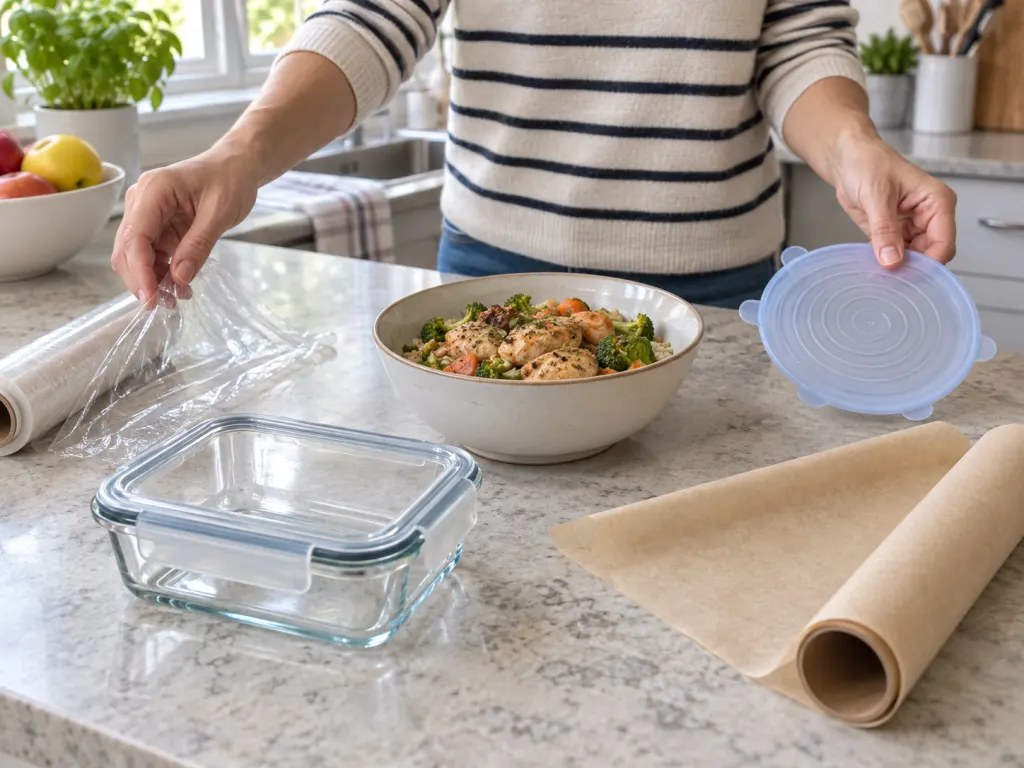
Migration is the movement of small amounts of substances from a food-contact material into food. It does not mean every contact is dangerous, and it does not mean a visible piece of plastic has entered the meal. It means molecules from the material or its additives may transfer at levels that can be measured or estimated. The European Food Safety Authority explains that chemicals in food-contact materials can transfer into food and drink, and EFSA evaluates possible health risks using migration and toxicological data EFSA food-contact materials.
Migration usually increases when the conditions become more demanding. Heat can make materials more mobile. Longer contact gives more time for transfer. Fatty foods can be especially relevant because some substances dissolve more readily into fats than into water. A cold bowl of grapes loosely covered for a few hours is a different exposure scenario from hot cheese, roasted meat juices, or oily tomato sauce pressed against plastic wrap. This is why the safest everyday rule is not panic, but fit: match the cover to the food, temperature, and time.
The Main Variables: Heat, Fat, Time, and Contact
If you remember only one decision tool, use four questions before reaching for cling film: Is the food hot? Is it oily or high in fat? Will the wrap touch the food? Will it stay wrapped for a long time? When most answers are no, cling film is often a convenient short-term cover. When one or more answers are yes, a rigid lid, plate, glass container, or silicone cover is usually a better fit.
- Heat: do not let cling film melt, sag into hot food, or touch surfaces that may exceed its label directions.
- Fat: use extra caution with cheese, butter, cream sauces, fried foods, roasted meats, and oily leftovers.
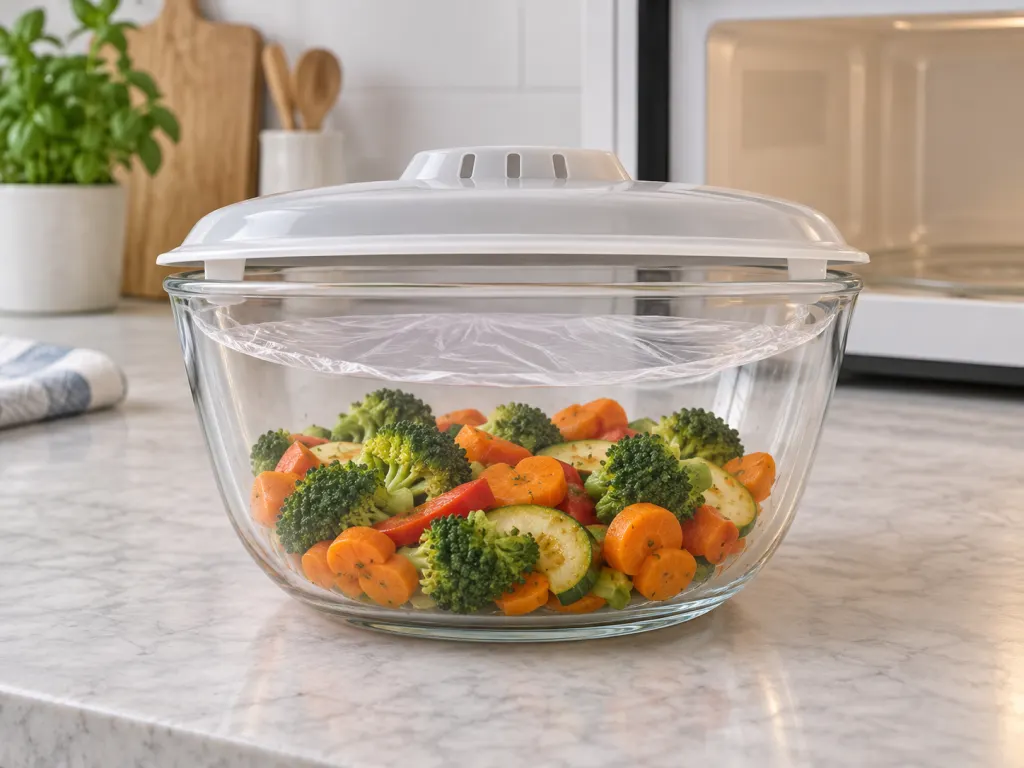
- Direct contact: create an air gap when covering food for microwave heating, and vent steam as directed.
- Time: for longer storage, use a container designed for that purpose instead of wrapping food tightly in film.
- Reuse: once film has touched food, stretched, warmed, or collected condensation, discard it rather than reusing it.
Microwave Use Is Where Many Mistakes Happen
Microwave directions deserve special attention because microwaves heat food unevenly and can create very hot steam under a cover. Health Canada advises using only microwave-safe containers, lids, and wraps; covering food with a microwave-safe lid or plastic wrap that does not touch the food; and leaving a small gap so steam can escape Health Canada microwave food safety. That advice is about both chemical and ordinary food-safety risks: a cover can help food heat evenly, but trapped steam and sagging film can create problems.
For home reheating, the safer method is straightforward. Transfer leftovers to a microwave-safe glass or ceramic dish. Cover with a microwave-safe lid, plate, wax paper, parchment, or wrap labeled for microwave use. If using wrap, keep it raised above the food and vent it. Stir or rotate food partway through heating when appropriate, then allow standing time so heat distributes more evenly. If the film melts, warps, shrinks onto food, or develops an unusual odor, discard the affected cover and avoid eating food that may contain visible melted plastic.
What About PVC, Phthalates, and BPA?
Cling films have not all been made from the same plastic. Some older or commercial wraps have used PVC, while many household products now use polyethylene or related materials. PVC can require plasticizers to make it flexible, which is why phthalates often enter the conversation. The FDA explains that phthalates are plasticizers used most commonly in PVC or vinyl to make plastic softer and less brittle. The agency notes that some phthalates remain authorized for certain food-contact applications, that many abandoned authorizations were revoked in 2022, and that the FDA continues post-market review as science and use patterns change FDA phthalates in food packaging.
BPA is a different chemical discussion. It is associated more with polycarbonate plastics and epoxy can linings than with ordinary thin cling film. The FDA says BPA may migrate at very low levels from some food packaging and that its safety evaluation considers exposure, the material, and safe levels of exposure FDA BPA food-contact Q&A. For cling film decisions, BPA is usually less central than whether the wrap is intended for food contact, whether it is microwave-safe, and whether it is being pressed against hot or fatty foods.
How Regulations Reduce Risk Without Making Wrap Foolproof
Food-contact rules exist because migration is expected to be assessed, not because consumers should run laboratory tests at home. In the European Union, Regulation No. 10/2011 sets rules for plastic materials intended to contact food. It requires compliance with specific migration limits for certain substances and an overall migration limit for total constituents released under test conditions EU plastic food-contact regulation. Health Canada likewise states that food packaging safety is controlled by regulations that prohibit packages from imparting harmful substances to food, and that materials may be submitted for chemical-safety assessment for intended packaging applications Health Canada packaging materials.
Those systems are reassuring, but they are not permission to use any plastic in any way. A material can be suitable for cold storage but unsuitable for heating. A takeout tray may be designed for a single trip, not repeated reheating. A plastic wrap may be appropriate as a vented cover but inappropriate as a tight pouch around food in direct contact with steam and fat. The label and the use conditions matter because they are the bridge between regulatory testing and kitchen behavior.
Microplastics: A Separate but Related Concern
Microplastics are tiny plastic particles that can come from many environmental and product sources. They are often discussed alongside food packaging, but they are not the same issue as chemical migration from a fresh sheet of cling film. The World Health Organization reviewed dietary and inhalation exposure to microplastic particles and described the field as an emerging area with public concern, ongoing uncertainty, and research needs WHO microplastics review. For a home cook, that means it is reasonable to reduce unnecessary single-use plastic where practical, while avoiding exaggerated claims about any one roll of wrap.
Practical reduction steps overlap with good kitchen habits anyway. Do not cut food directly on plastic wrap. Do not scrape a knife across film and then fold tiny torn pieces into food. Discard old wrap that has become brittle, dusty, or difficult to unroll cleanly. Use containers with lids for routine leftovers. These habits reduce mess, waste, and possible particle contamination without turning food storage into a complicated ritual.
Safer Everyday Alternatives
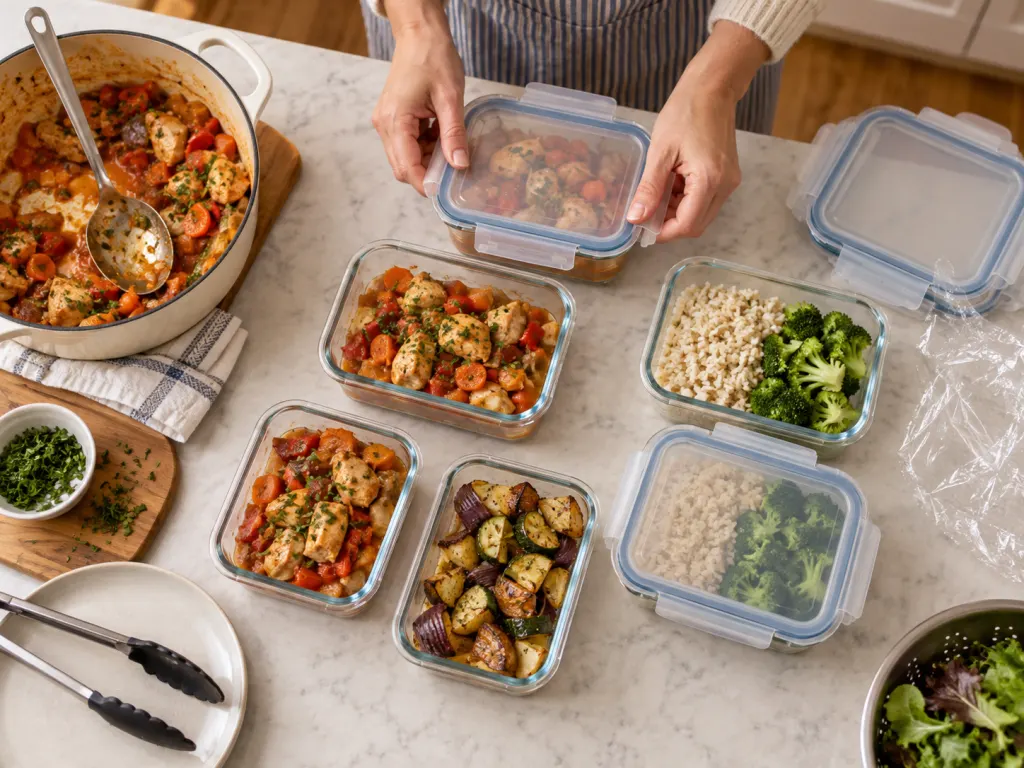
The best alternative depends on the job. For reheating, glass or ceramic with a vented lid is the most versatile choice. For refrigerator leftovers, a lidded glass container is easy to inspect and stack. For cut fruit or a bowl of dough, a plate, silicone stretch lid, or beeswax-style wrap can reduce disposable plastic, though waxed wraps are not for hot foods and may not suit raw meat or very oily leftovers. For sandwiches and dry snacks, parchment, paper bags, or reusable boxes often work well.
There is also a middle ground: keep cling film for tasks where it genuinely performs well, and stop using it where another cover is better. It can still be useful for short refrigerator storage, preventing dough from drying when there is no heating step, covering a tray during prep, or wrapping a dry sandwich for a short trip. It is less attractive for hot leftovers, oily roasted vegetables, cheese melted onto a plate, fatty sauces, and any food that will be microwaved with the film touching the surface.
A Simple Decision Guide for Home Cooks
Use cling film when the food is cool, the storage time is short, and the wrap is not being asked to withstand high heat. Choose another cover when the food is hot, oily, acidic and fatty, or likely to be reheated. If you are packing meals ahead, let hot food cool safely before covering and refrigerating, then reheat later in a container meant for microwave use. If you enjoy simple, lighter meals such as Light and Healthy Broccoli Pasta or One Pan Chicken and Veggies, store portions in lidded containers rather than wrapping warm servings tightly in film.
For raw ingredients, avoid treating cling film as a substitute for proper food handling. Raw meat, poultry, or seafood should be stored in containers or packaging that prevents drips onto other foods. Produce can be covered loosely or placed in containers that preserve moisture without crushing it. Crispy foods, including snacks like Crispy Roasted Chickpeas, usually keep better in breathable or rigid storage after cooling, because tight film can trap moisture and soften texture.
When to Throw Plastic Wrap Away
Discard cling film after one use, especially if it touched food, became warm, collected grease, or stretched tightly. Throw it away if it melted, wrinkled from heat, stuck to food, picked up odors, or tore into small fragments. Do not reuse film from raw foods, and do not use grocery-store produce bags or other thin bags as microwave covers unless the packaging clearly says that use is intended. The small savings from reusing a piece of wrap are not worth the uncertainty, mess, or possible contamination.
Storage habits do not have to be perfect to be meaningfully better. The biggest gains come from a few repeatable rules: read the label, keep plastic wrap off hot food, do not microwave with film touching the meal, use vented microwave-safe covers, and rely on lidded containers for regular leftovers. That approach keeps cling film in its proper role: a convenience for selected cool-storage jobs, not the default cover for every food in every condition.
Wrap-Up
Cling film is best understood as a limited-use kitchen material. Regulated food-contact plastics are evaluated for intended uses, but kitchen misuse can change the exposure picture. Heat, fat, long contact time, damaged film, and direct contact during microwaving are the main situations to avoid. For most households, the calm solution is not fear; it is better matching. Use cling film for cool, short-term covering when the label supports that use, and choose glass, ceramic, stainless steel, parchment, silicone lids, or purpose-made containers when food is hot, oily, stored for longer, or headed for the microwave.
Frequently Asked Questions
- → Is cling film safe for covering cold leftovers?
For short refrigerator storage, cling film labeled for food contact is generally a reasonable cover when it stays intact and is used as directed. For longer storage, strong odors, oily foods, or meals you plan to reheat, a lidded glass or food-storage container is usually a better choice.
- → Can cling film touch food in the microwave?
It is better to keep plastic wrap from touching food during microwave heating. Use only wrap labeled for microwave use, leave an air gap, and vent steam. A microwave-safe lid, plate, parchment, or glass cover is often simpler and sturdier.
- → Should I avoid cling film with fatty foods?
Use caution with fatty or oily foods, especially when warm. Fat, heat, and direct contact can make plastic contact less desirable. Let food cool appropriately, then store it in a lidded container rather than pressing film onto the surface.
- → Are all plastic wraps made from the same material?
No. Plastic wraps can vary by polymer, additives, and intended use. Some films are designed mainly for cold storage, while some are labeled for microwave covering. The safest guide is the product label and whether the use matches the conditions described there.
- → What is the best everyday replacement for cling film?
For most leftovers, glass containers with fitted lids are the most flexible replacement because they work for storage, stacking, and many reheating routines. Silicone lids, plates over bowls, parchment, wax paper for cool foods, and stainless steel containers can also reduce reliance on disposable wrap.
References
This content was developed and refined using reliable sources.
- https://www.fda.gov/food/food-ingredients-packaging/food-packaging-other-substances-come-contact-food-information-consumers
- https://www.fda.gov/food/packaging-food-contact-substances-fcs/food-types-conditions-use-food-contact-substances
- https://www.efsa.europa.eu/en/topics/topic/food-contact-materials
- https://www.canada.ca/en/health-canada/services/general-food-safety-tips/microwaves.html
- https://www.fda.gov/food/food-additives-and-gras-ingredients-information-consumers/phthalates-food-packaging-and-food-contact-applications
- https://www.fda.gov/food/food-packaging-other-substances-come-contact-food-information-consumers/questions-answers-bisphenol-bpa-use-food-contact-applications
- https://eur-lex.europa.eu/eli/reg/2011/10/oj
- https://www.canada.ca/en/health-canada/services/food-nutrition/food-safety/packaging-materials.html
- https://www.who.int/publications/i/item/9789240054608