 Save
Eggs stay fresher when they are kept cold, protected from cracks, and stored away from temperature swings. This guide covers the safest everyday habits for buying, refrigerating, checking, and freezing eggs so they keep their quality as long as possible. It also explains when to discard eggs and when to get medical advice after eating questionable food.
Step 1: Choose refrigerated, uncracked eggs
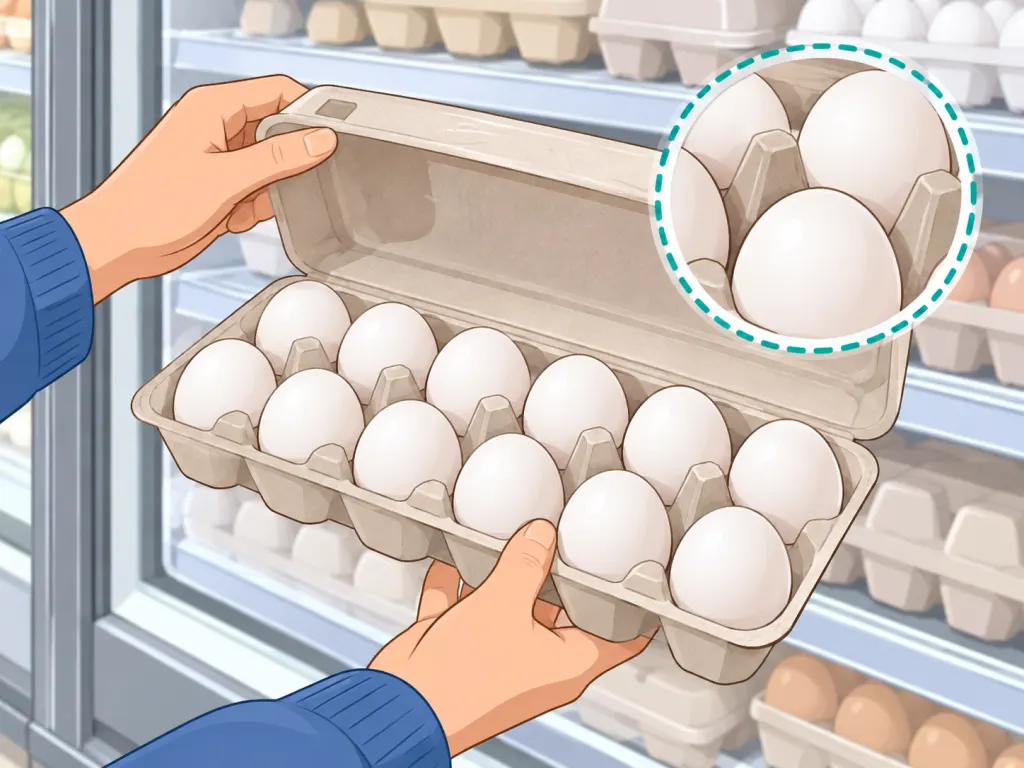
Buy eggs only from a refrigerated case, and open the carton before checkout to make sure the shells are clean and uncracked. The FDA advises choosing clean eggs with intact shells because proper buying and storage affect both safety and quality.
Step 2: Refrigerate eggs as soon as you get home
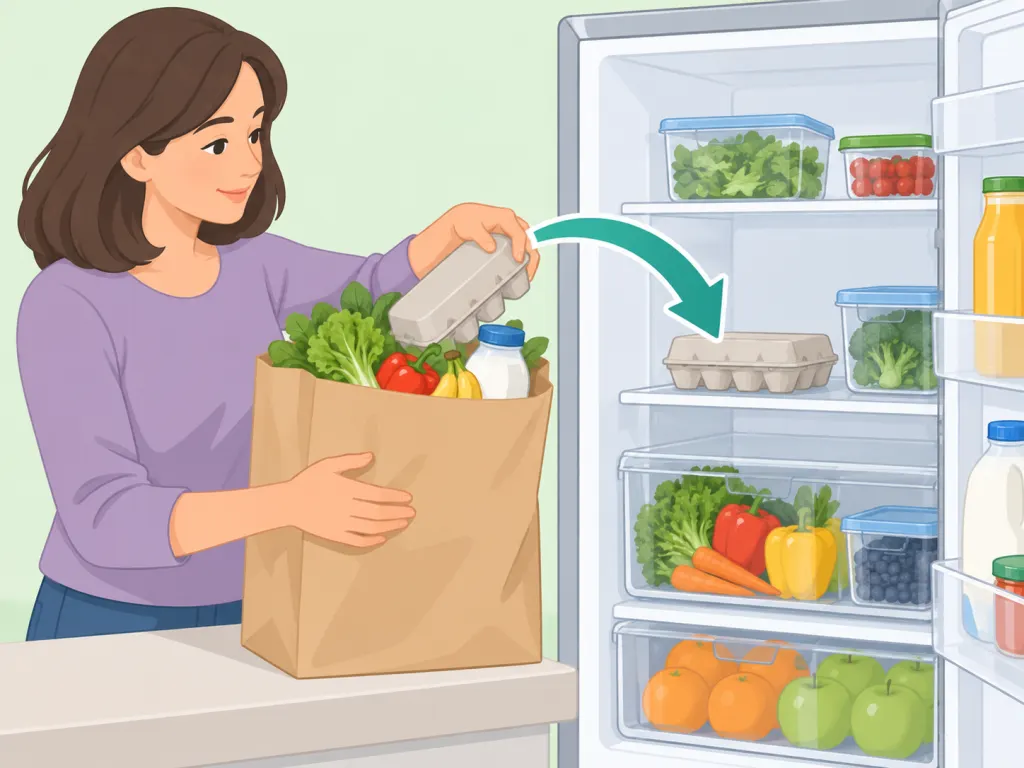
Put eggs in the refrigerator promptly instead of leaving them on the counter or in a warm car. Foods that need refrigeration, including eggs, should not sit at room temperature for more than 2 hours, according to FDA food storage guidance.
Step 3: Keep the refrigerator at 40°F or below
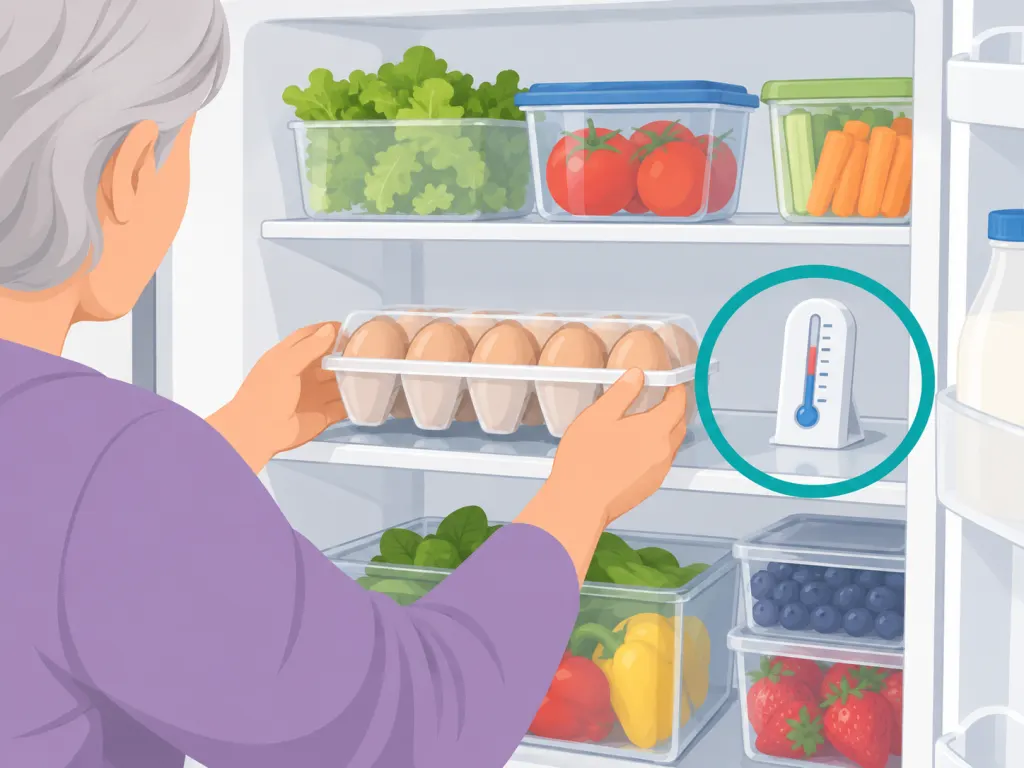
Use a refrigerator thermometer and keep the temperature at 40°F or below. Cold storage slows quality loss, and the FDA recommends this temperature for egg storage; the FoodSafety.gov cold storage chart uses the same temperature for refrigerated eggs.
Step 4: Store eggs in their original carton on an inside shelf
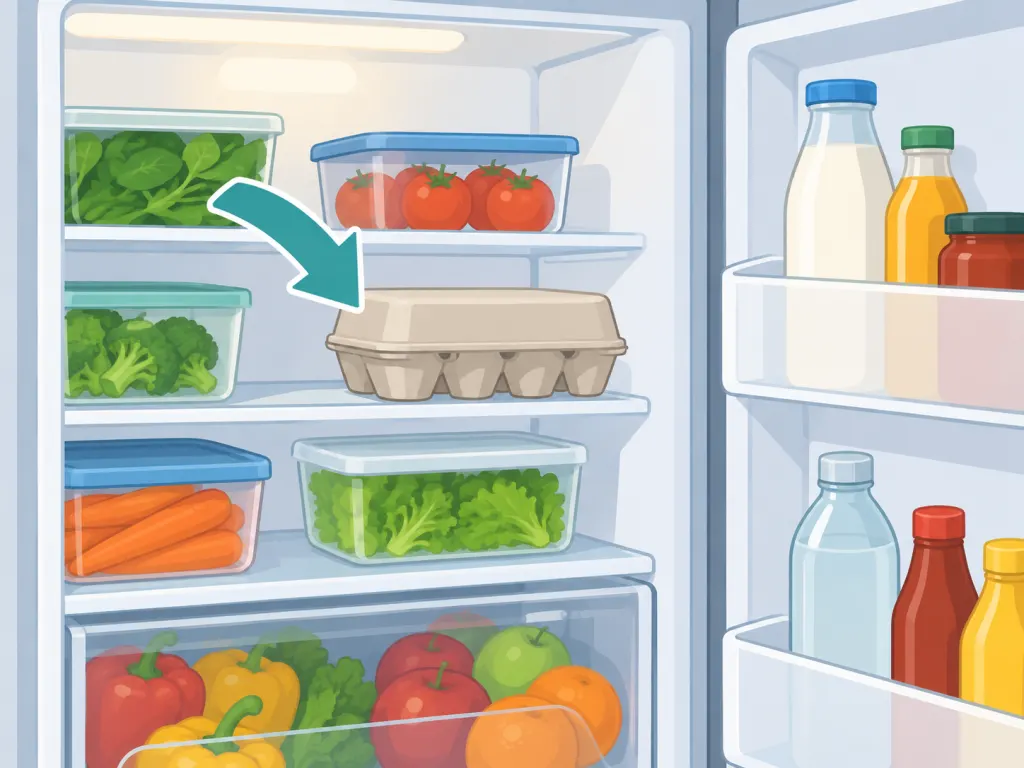
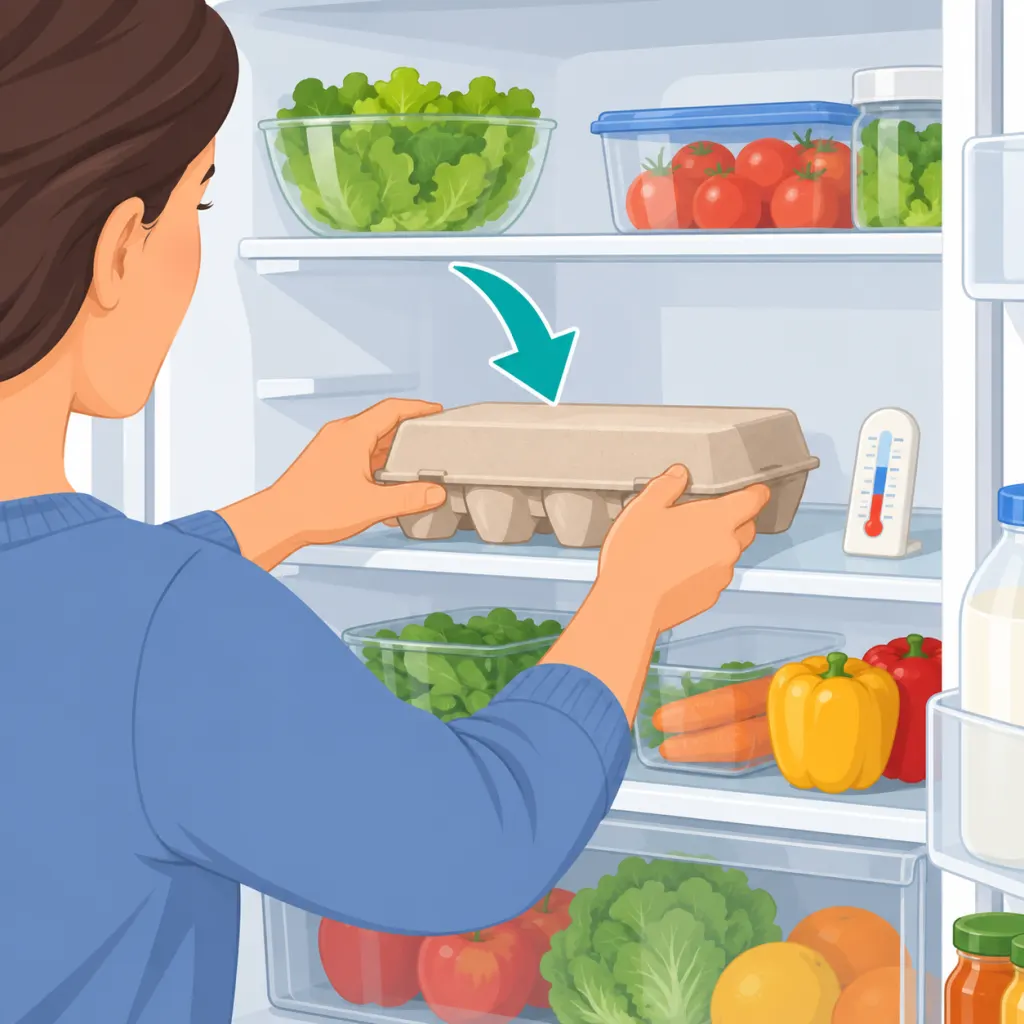
Leave eggs in the carton so the shells are protected and the eggs absorb fewer odors from nearby foods. Store the carton on an inside refrigerator shelf rather than the door, since Illinois Extension notes that the door is the warmest spot and can shorten quality.
Put grocery-store eggs away dry, without rinsing the shells. Commercial eggs are cleaned before packaging, and adding water at home can work against the goal of keeping the shell surface clean and dry.
Step 6: Use the oldest eggs first
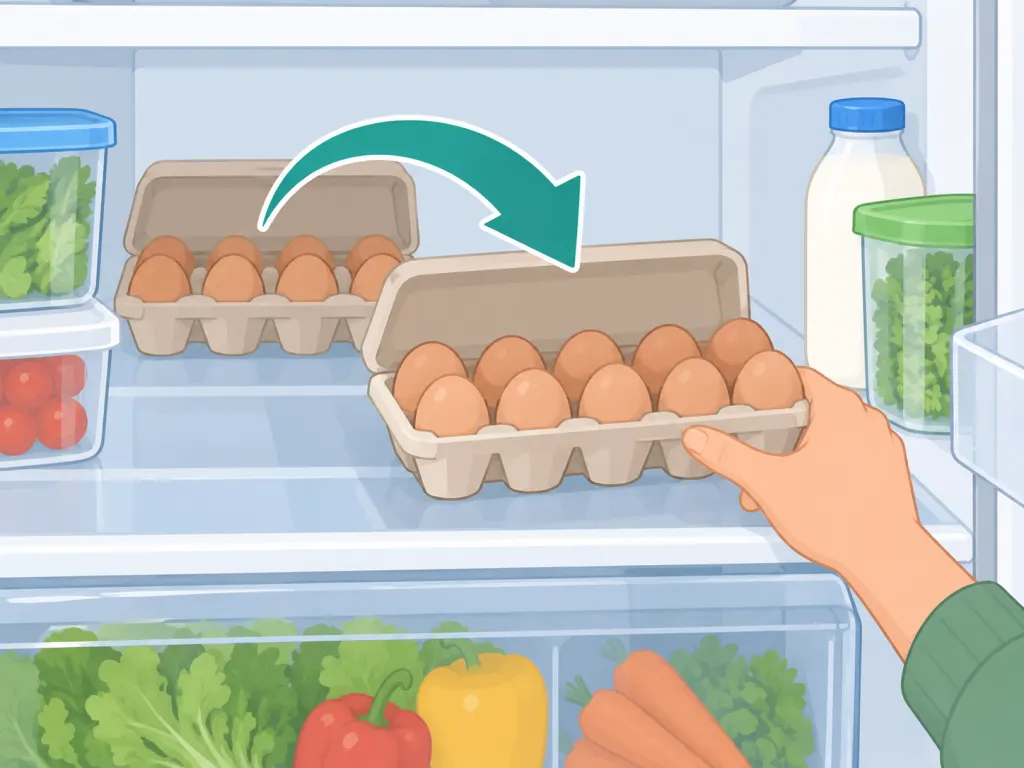
Mark the purchase date on the carton if your household buys eggs often, then rotate older cartons to the front. Raw eggs in the shell are listed at 3 to 5 weeks in the refrigerator on FoodSafety.gov storage guidance, while the FDA recommends using eggs within 3 weeks for best quality.
Step 7: Freeze extra eggs out of the shell
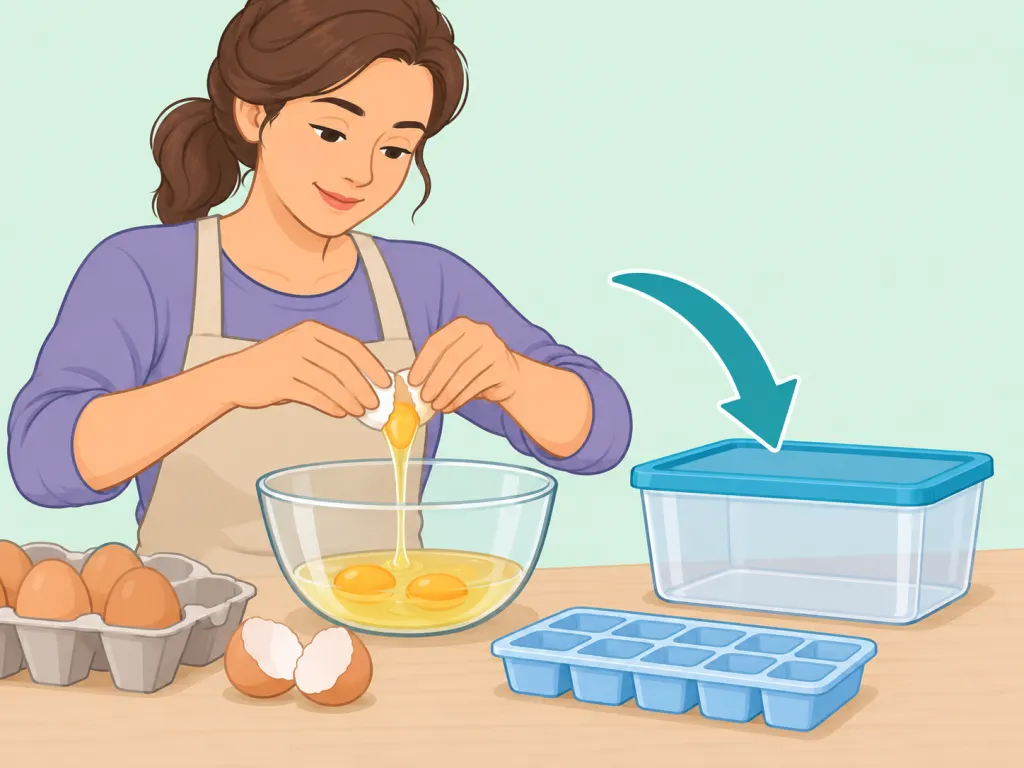
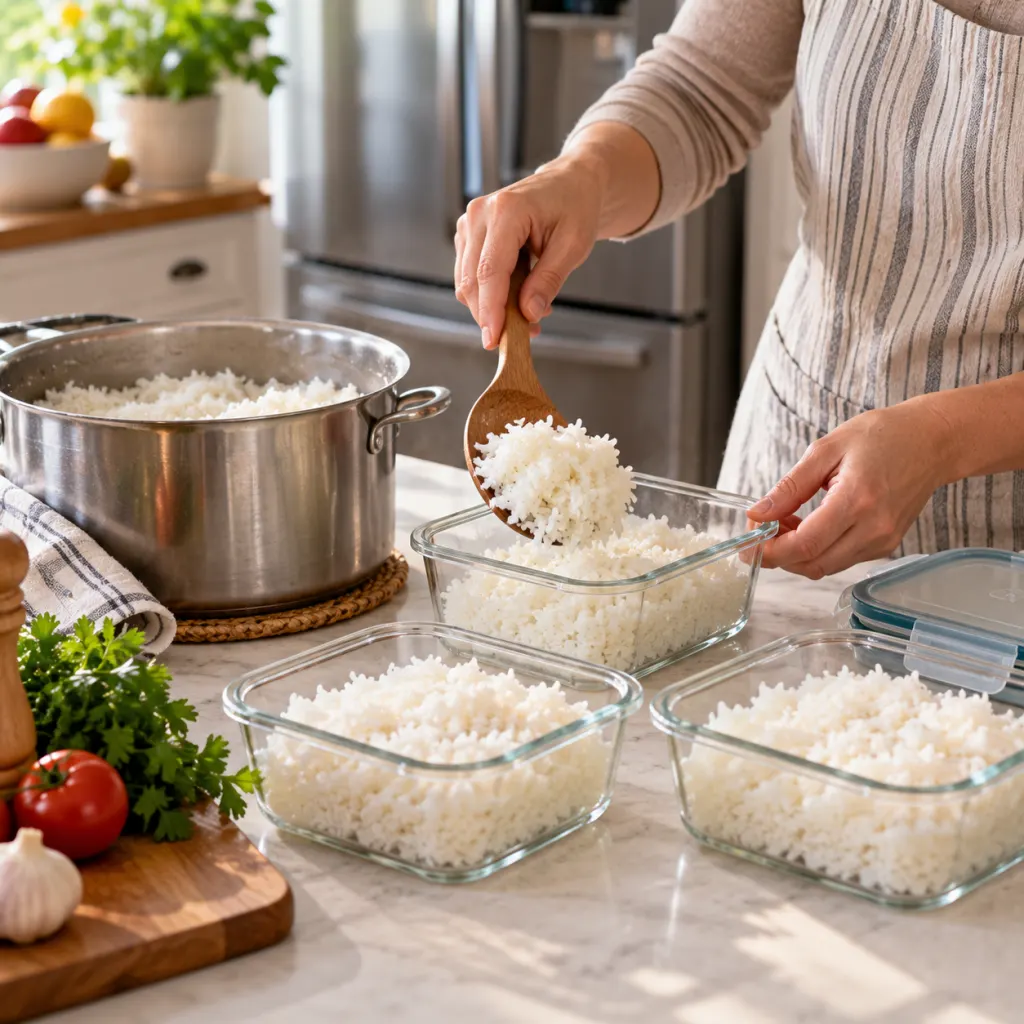
If you have more eggs than you can use, crack them into a clean bowl and freeze them without the shell. The National Center for Home Food Preservation recommends mixing whole eggs gently before freezing, or freezing whites separately in sealed freezer-safe containers.
Step 8: Know when to seek medical advice
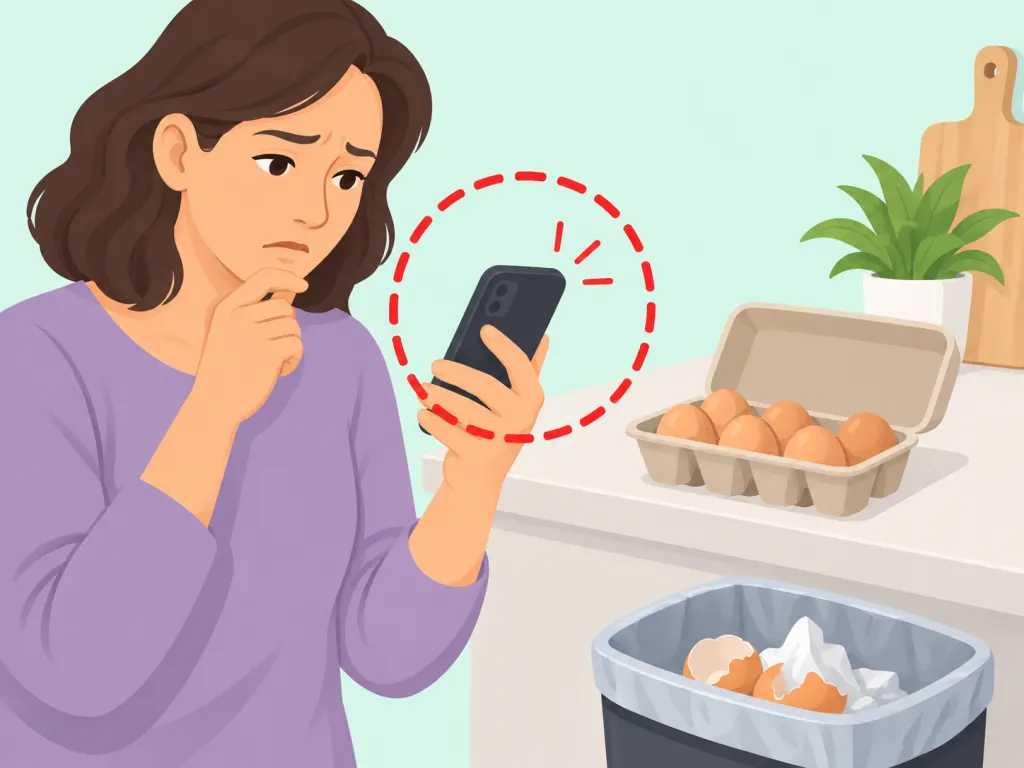
If someone develops concerning symptoms after eating eggs or another questionable food, contact a doctor or qualified health professional promptly. People in higher-risk groups, including older adults, young children, pregnant women, and people with weakened immune systems, should be especially cautious with raw or undercooked eggs, as explained by FoodSafety.gov.
Wrap-Up
The bottom line: keep eggs cold, leave them in their carton, avoid the refrigerator door, do not wash store-bought eggs, and use or freeze extras before quality drops. When an egg is cracked, smells off, or has been left warm too long, discard it.
Frequently Asked Questions
- → How long do fresh eggs last in the refrigerator?
Raw eggs in the shell generally keep for 3 to 5 weeks in a refrigerator at 40°F or below. For best quality, use the oldest carton first and avoid moving eggs in and out of cold storage.
- → Should eggs be stored in the refrigerator door?
No. The door is usually warmer and changes temperature more often, so eggs keep better on an inside shelf in their carton.
- → Should I wash eggs before storing them?
Do not wash store-bought eggs before putting them away. They have already been cleaned under controlled conditions, and extra moisture can make safe storage harder.
- → Does a floating egg always mean it is unsafe?
No. Floating often means the egg has a larger air pocket and may be older, but it is not a complete safety test. Crack questionable eggs into a separate bowl and discard any egg with an unusual odor or appearance.
- → Can I freeze eggs to keep them longer?
Yes, but do not freeze eggs in their shells. Crack them first, mix whole eggs gently or separate whites and yolks, then freeze in a sealed freezer-safe container.
- → What should I do with a cracked egg?
Do not buy eggs with cracked shells. If an egg cracks after purchase, use it promptly only if it stayed clean and cold; otherwise, discard it.
References
This content was developed and refined using reliable sources.
- https://www.fda.gov/food/buy-store-serve-safe-food/what-you-need-know-about-egg-safety
- https://www.fda.gov/consumers/consumer-updates/are-you-storing-food-safely
- https://www.foodsafety.gov/food-safety-charts/cold-food-storage-charts
- https://www.foodsafety.gov/people-at-risk
- https://nchfp.uga.edu/how/freeze/dairy-products/freezing-eggs
- https://extension.illinois.edu/blogs/live-well-eat-well/2025-01-29-safely-storing-store-bought-eggs