 Save
Crystal dishes still belong in a modern home when they are used with intention: as family memory, table beauty, and occasional serving pieces rather than everyday storage containers. The key is to separate sentiment from safety. Health Canada notes that lead crystalware can include cups, bowls, plates, tumblers, and decanters, and that it may be hard to tell lead crystal, lead-free crystal, and regular glass apart by sight alone Health Canada. That does not mean every sparkling bowl needs to disappear. It means inherited pieces deserve a little context before they hold juice, wine, pickles, or a dessert that will sit overnight.
Why These Pieces Still Feel Special
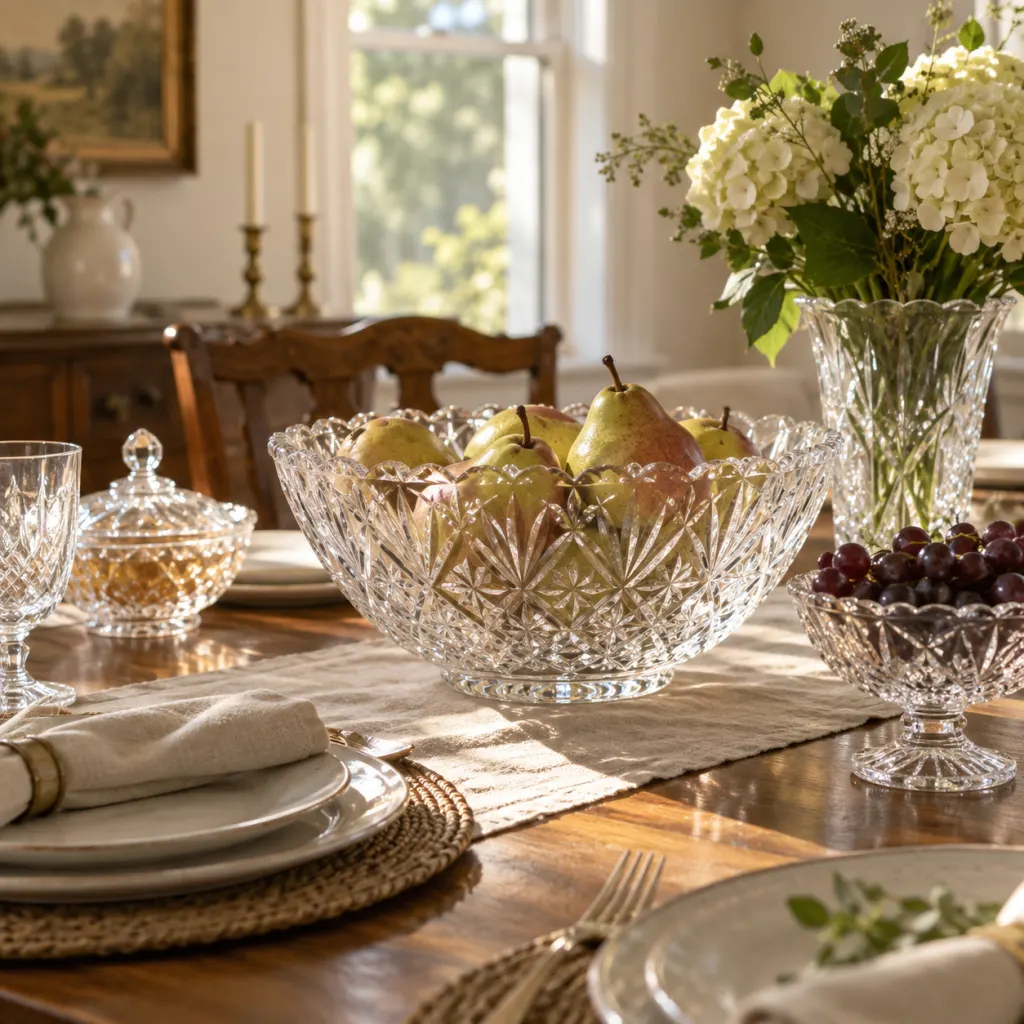
Crystal dishes became family shorthand for celebration because they changed the mood of an ordinary table. A cut bowl, a pedestal compote, or a small pressed-glass candy dish catches candlelight differently from plain everyday glass. It asks people to slow down, pass things carefully, and notice the occasion. That is why many families remember these pieces as part of holidays, Sunday dinners, engagement parties, or a grandmother’s dining room, even when the exact manufacturer is forgotten.
The history of American table glass also helps explain why so many households inherited cupboards full of bowls, tumblers, pickle dishes, berry bowls, and serving pieces. Smithsonian archival records on the Imperial Glass Company describe early twentieth-century mass-market production that included jelly glasses, tumblers, butter dishes, pickle dishes, berry bowls, and other tableware; later machine-pressed glass helped expand the market for decorative glass items Smithsonian Institution. In other words, elegant-looking table glass was not only for palaces or hotels. It moved into ordinary homes and became part of how families marked abundance, welcome, and pride.
Crystal, Glass, and Why the Difference Matters
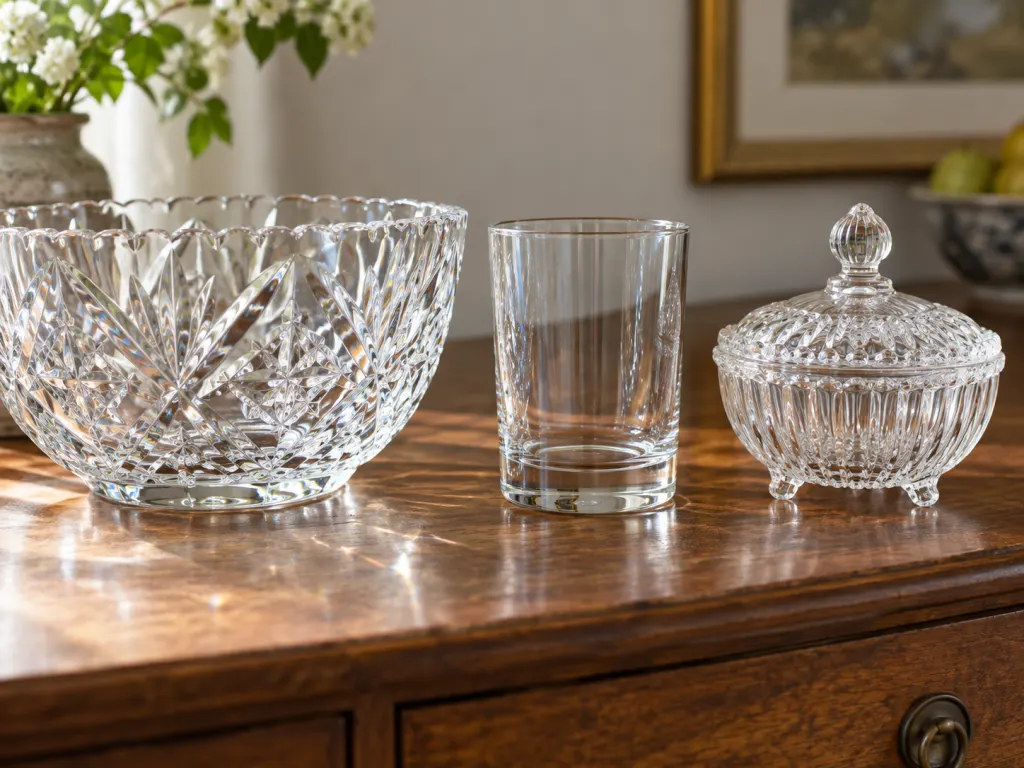
In everyday speech, people often call any clear, heavy, sparkling dish “crystal.” In practice, a cabinet may contain several different things: regular glass, pressed glass, cut glass, lead crystal, or newer lead-free crystal. The distinctions matter because an heirloom’s appearance does not reliably tell you how it should be used. Health Canada explains that lead crystalware can look thinner and brighter than regular glass and may feel heavier, but it also says it may not be easy to identify by sight whether a piece is lead crystal, lead-free crystal, or regular glass Health Canada.
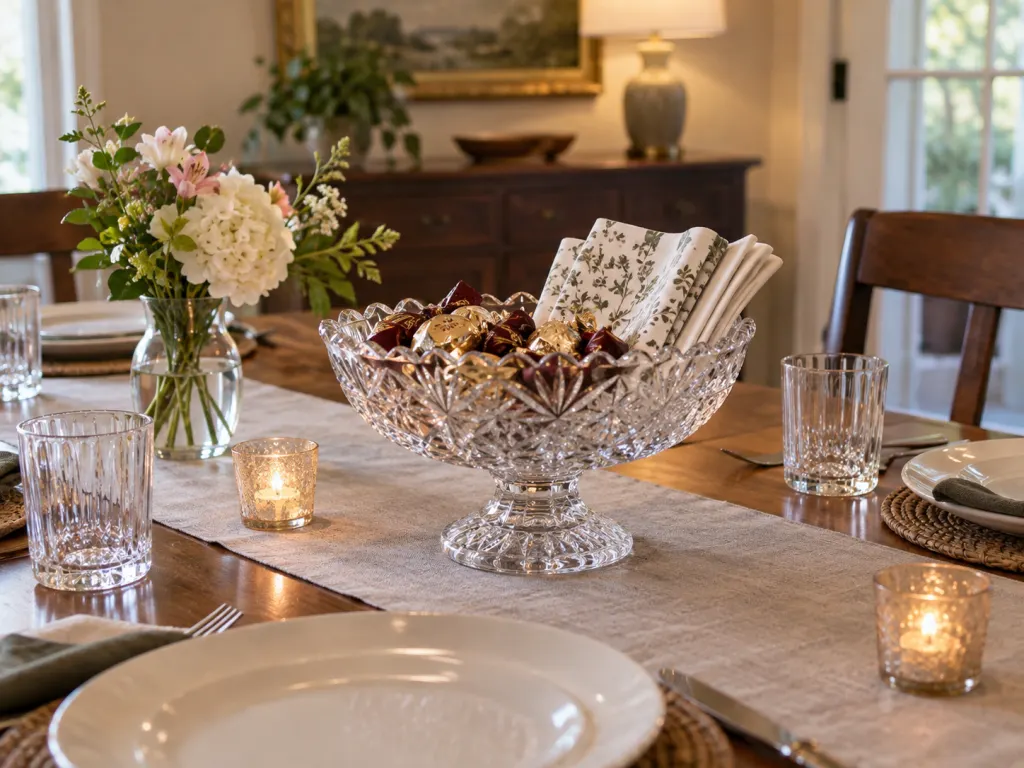
A practical family rule is to treat unknown vintage crystal as decorative or occasional unless you have reliable manufacturer information. That rule preserves the pleasure of the object without asking it to do every kitchen job. A bowl can hold wrapped candies, ornaments, nuts served for a short gathering, folded napkins, floating blossoms, or a small seasonal centerpiece. A decanter can be admired empty on a tray. A set of stemware can be used for a toast when adults understand the piece is for brief use, not for storing a drink all evening or overnight.
The Food-Contact Question
The main safety question is contact: what touches the dish, how acidic it is, and how long it stays there. Health Canada says more lead may transfer from lead crystalware to highly acidic foods and drinks such as pickles, fruit juices, soft drinks, or wine, while the risk is lower when lead crystal is used briefly over the course of a meal rather than for long storage Health Canada. The FDA also explains that lead can enter food from foodware and that the agency monitors and regulates lead in foods and foodwares because no known safe level of lead exposure has been identified FDA.
For a home table, that points to a simple distinction. Using an inherited dish as a brief serving piece is different from using it as a storage container. A crystal bowl set out for dry cookies during a party is a different situation from fruit juice left in a decanter until morning. A small dish of wrapped mints is different from pickled vegetables sitting in a cut-glass bowl through a long buffet. Elegance is not lost by choosing the safer role; often the table looks more thoughtful because every piece has a job it can do well.
When Heirlooms Belong on the Table
There is no need to save crystal only for formal dinners. The most graceful tables often mix ordinary and special pieces: a plain white platter, linen napkins, a bright salad bowl, and one sparkling dish with a family story. That single inherited piece can create a sense of continuity without making the meal feel stiff. The trick is to use crystal where its beauty matters and its limits are respected.
Good uses for uncertain vintage crystal include a low centerpiece, wrapped sweets, whole fruit that will be removed after the meal, unshelled nuts, decorative napkin rings, place cards, or a small arrangement of flowers in a liner. If the piece is confirmed lead-free by a reliable maker and is in good condition, it may have more routine serving uses. If the piece is chipped, cracked, cloudy, or unknown, display is kinder to the object and simpler for the host. Family elegance does not require pretending an heirloom is indestructible; it comes from letting the piece add atmosphere without creating worry.
A Cabinet Sorting Method That Respects Memory
Sorting inherited crystal can feel emotional because the dishes often arrive with stories attached: a wedding gift, a holiday bowl, a set that was “too good” for regular meals. Instead of starting with the question “Should I keep all of this?” begin with a gentler question: “What role can each piece play now?” Food contact materials are broadly understood as articles intended to touch food and drink, and EFSA notes that chemicals in such materials can transfer into food or beverages depending on the material and circumstances EFSA. That makes role-setting a useful household habit, not a rejection of family history.
- Display: cracked, chipped, sentimental, or unidentified pieces that are best admired rather than used with food.
- Brief dry serving: bowls or dishes used for wrapped sweets, cookies, nuts, or bread during a short gathering.
- Confirmed food use: newer pieces with reliable lead-free labeling or manufacturer information, used according to care instructions.
- Do not use for food: pieces with decorative-only warnings, damaged surfaces, uncertain coatings, or unknown imported markings that raise questions.
Care, Washing, and Storage
Crystal’s shine can be dulled by rough handling, harsh scouring, crowded cabinets, and repeated knocking against other dishes. Health Canada advises washing lead crystalware by hand in warm water with mild detergent and a soft cloth or sponge to reduce surface damage that could increase later transfer Health Canada. Even for pieces that are not lead crystal, hand-washing is usually the more respectful choice for older glass with delicate rims, cut patterns, gilding, or sentimental value.
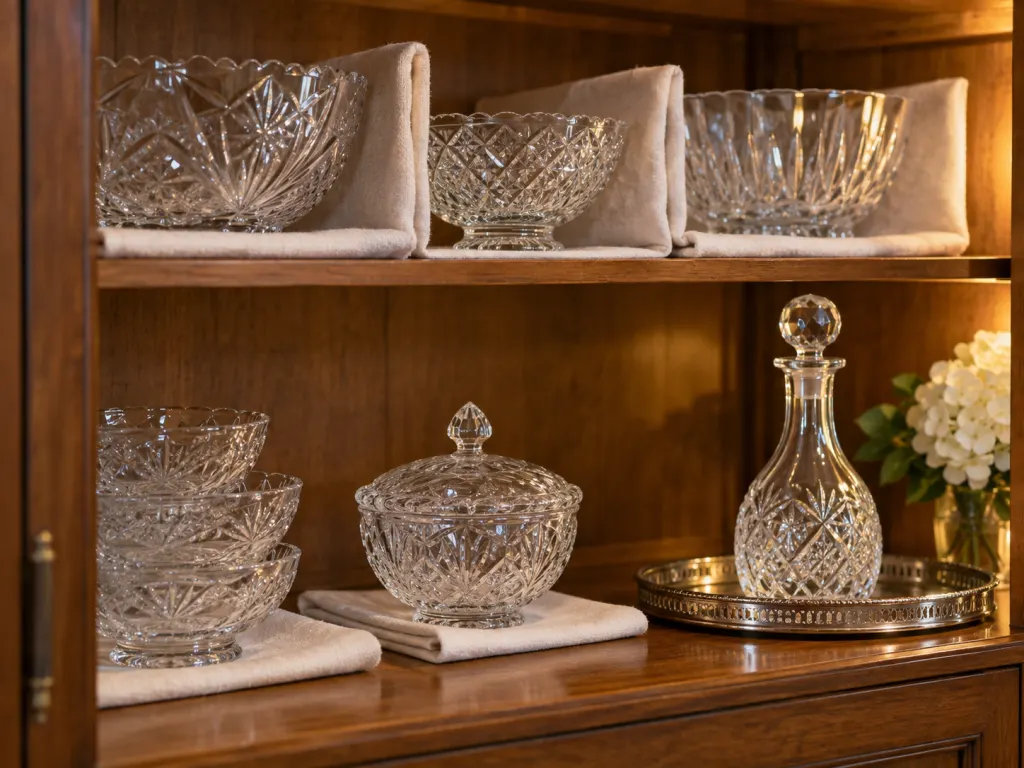
Storage matters too. Give stems, bowls, and plates enough room that they do not scrape each other every time the cabinet opens. Avoid stacking heavy pieces on delicate rims. If you must stack, place a soft, clean separator between pieces and keep the stack low. For pieces used only once or twice a year, store them where they can be reached without a risky climb. A dish that requires a chair, a stretch, and a nervous hand is more likely to stay unused or get broken. True family elegance is practical: it lets people enjoy beautiful things without turning every holiday setup into a balancing act.
Lead Awareness Without Panic
Lead awareness is a reason for calm boundaries, not alarm. The World Health Organization identifies lead as a toxic metal used in many products, including lead crystal glassware, and notes that exposure can affect multiple body systems, with young children among the most vulnerable groups WHO. The EPA similarly describes lead as a substance associated with health effects in both children and adults, with young children at particular risk from exposure sources in their environment EPA.
For crystal dishes, the household takeaway is narrow and manageable: reduce unnecessary contact between uncertain older crystal and foods or drinks that sit for a long time, especially acidic items. Choose modern, clearly food-safe containers for storage. Use heirloom crystal mainly for display, dry serving, and brief special occasions. If a family includes infants, young children, or someone who is pregnant, the conservative choice is to serve them from lead-free tableware rather than from unknown vintage crystal. That approach honors both the people at the table and the people who preserved the dishes before you.
Family Elegance Without Fragility
Many families stop using crystal because they assume elegance means perfection: a complete set, matching stems, polished silver, and a meal with no accidents. But inherited dishes often feel most alive when they are folded into ordinary hospitality. A single crystal bowl of oranges on a brunch table can look generous. A small dish of wrapped chocolates beside coffee can feel like a remembered tradition. A cut-glass compote filled with pinecones, ribbon, or flowers can make a winter table feel cared for without touching food at all.
Letting crystal be useful in new ways also prevents the heirloom from becoming a burden. If a set has missing pieces, use the survivors as accents. If the large bowl is too heavy for serving, make it a centerpiece. If the decanter raises food-contact questions, place it on a bar cart as a sculptural object rather than filling it. If a dish belonged to someone beloved, write down the story and keep it with the piece. The value is not only in the material; it is in the way the object keeps a person, a room, or a ritual present.
What to Do With Pieces Nobody Uses
Not every inherited dish needs to remain in the cupboard forever. Some pieces are too damaged, too numerous, or too disconnected from the current household. Before donating or passing them along, sort them honestly. Keep the pieces with the strongest stories or the most realistic roles. Offer relatives a chance to choose items tied to shared memories. Label decorative-only or uncertain pieces clearly so a future owner does not mistake them for everyday food storage.
For pieces that stay, consider creating one accessible “occasion shelf” rather than hiding everything in boxes. Place the safest, sturdiest, most usable items where they can actually come out for birthdays, holidays, and small dinners. Put fragile or display-only pieces in a lit cabinet, on a mantel, or in a protected vignette. The goal is not to turn the home into a museum. It is to let memory participate in daily life at a scale that suits the household now.
The Bottom Line
Crystal dishes can still carry family elegance beautifully, but the most thoughtful use is selective. Let inherited pieces create sparkle, memory, and ceremony. Use modern food-safe containers for storage, especially for acidic foods and drinks. Treat unknown vintage crystal as something to admire, display, and use briefly rather than something to rely on every day. A family table does not become elegant because every piece is expensive or old. It becomes elegant when the objects on it are chosen with care, the meal feels welcoming, and the stories behind the dishes have room to be remembered.
Wrap-Up
Crystal dishes are not outdated simply because modern glassware is easier to use. They remain meaningful because they connect family meals with memory, care, and occasion. The wiser question is not whether to keep them, but how to use them. Display fragile or uncertain pieces, use known food-safe pieces according to their instructions, avoid long storage of acidic foods or drinks in unknown vintage crystal, and give sentimental items roles that fit modern life. With those boundaries, crystal can stay part of the family table without asking it to do work better suited to everyday containers.
Frequently Asked Questions
- → Should I throw away inherited crystal dishes?
Usually, no. If a piece is meaningful, intact, and beautiful, it can still be displayed or used in low-contact ways. The cautious approach is to avoid using unknown vintage crystal for long food or drink storage, especially with acidic items.
- → How can I tell whether a dish is lead crystal?
Appearance alone is not reliable. Lead crystal can look bright, thin, and heavy, but Health Canada notes that it may be hard to distinguish lead crystalware, lead-free crystalware, and regular glassware by sight. Manufacturer information is more useful than guessing.
- → What foods are best suited to uncertain vintage crystal?
For uncertain pieces, choose display uses or brief dry serving: wrapped candies, cookies, nuts, bread, whole fruit removed after the meal, or decorative table elements. Use modern food-safe containers for storage and for acidic foods or drinks.
- → Can a crystal decanter be used for wine or juice?
An unknown vintage decanter is best treated as decorative or for very brief adult serving only. It should not be used to store wine, juice, or other acidic drinks for long periods. A modern lead-free decanter is a better choice for routine use.
- → How do I make old crystal feel modern on the table?
Use one or two pieces as accents instead of setting a fully formal table. A crystal bowl with wrapped sweets, a compote with flowers, or a small dish beside coffee can add history without making the meal feel overly delicate.
References
This content was developed and refined using reliable sources.
- https://www.canada.ca/en/health-canada/services/healthy-living/your-health/products/lead-crystalware-your-health.html
- https://www.fda.gov/food/environmental-contaminants-food/lead-food-and-foodwares
- https://www.who.int/news-room/fact-sheets/detail/lead-poisoning-and-health
- https://www.epa.gov/lead/what-are-some-health-effects-lead
- https://www.efsa.europa.eu/en/topics/topic/food-contact-materials
- https://sova.si.edu/record/nmah.ac.0105