 Save
The direct answer: a stick of butter left at room temperature for three days is usually past the most cautious home-safety guidance, so refrigeration or discarding is the better call. Butter is more stable than milk because it is high in fat and relatively low in available moisture, but that does not make every butter safe on the counter indefinitely. University of Maine Cooperative Extension advises that covered salted butter may sit at room temperature below 70°F for up to one to two days; for longer storage, refrigeration is recommended. That same guidance says unsalted, cultured, whipped, and compound butter should be kept cold or only softened briefly. So if the butter has been out for three full days, the answer depends on type and conditions, but the practical household rule is simple: do not treat three-day counter butter as your normal plan.
The Short Answer For A Three-Day Stick
If the butter is plain, commercially made, salted, covered, handled with a clean knife, and kept in a cool room, the risk is lower than it would be for many moist dairy foods. Even then, three days stretches beyond the one-to-two-day countertop window described by University of Maine Cooperative Extension for salted butter stored below 70°F in a covered dish or butter crock (University of Maine Cooperative Extension). If the butter is unsalted, whipped, cultured, homemade, reduced-fat, spreadable, or mixed with garlic, herbs, honey, fruit, cheese, or other ingredients, three days at room temperature is not a good storage choice. Those products either lack salt’s preserving effect, contain more air or moisture, or include added ingredients that can change the safety and quality picture.
Why Butter Gets More Room-Temperature Leeway Than Milk
Butter gets a little more flexibility because of what it is. USDA Agricultural Marketing Service describes butter as made from milk or cream and containing at least 80 percent milkfat (USDA Agricultural Marketing Service). That high fat level means butter contains much less water than fluid milk or cream. In food safety, available water matters because bacteria, yeasts, and molds need usable moisture to grow. FDA’s water activity guidance explains that reducing available moisture can inhibit the growth of organisms, while many foods with high water activity provide enough moisture for bacteria, yeasts, and mold (FDA).
That chemistry explains why a covered pat of plain butter on toast does not behave like a bowl of milk. It does not mean butter is sterile, self-protecting, or immune to spoilage. Butter can still pick up crumbs, moisture, and microorganisms from utensils. Its fat can oxidize, leading to rancid aromas and stale flavors. Light, warmth, and air speed quality loss. The safest reading is balanced: butter is relatively stable for a dairy food, but it still needs sensible limits.
Salted, Unsalted, Whipped, Cultured, And Flavored Butter Are Not The Same
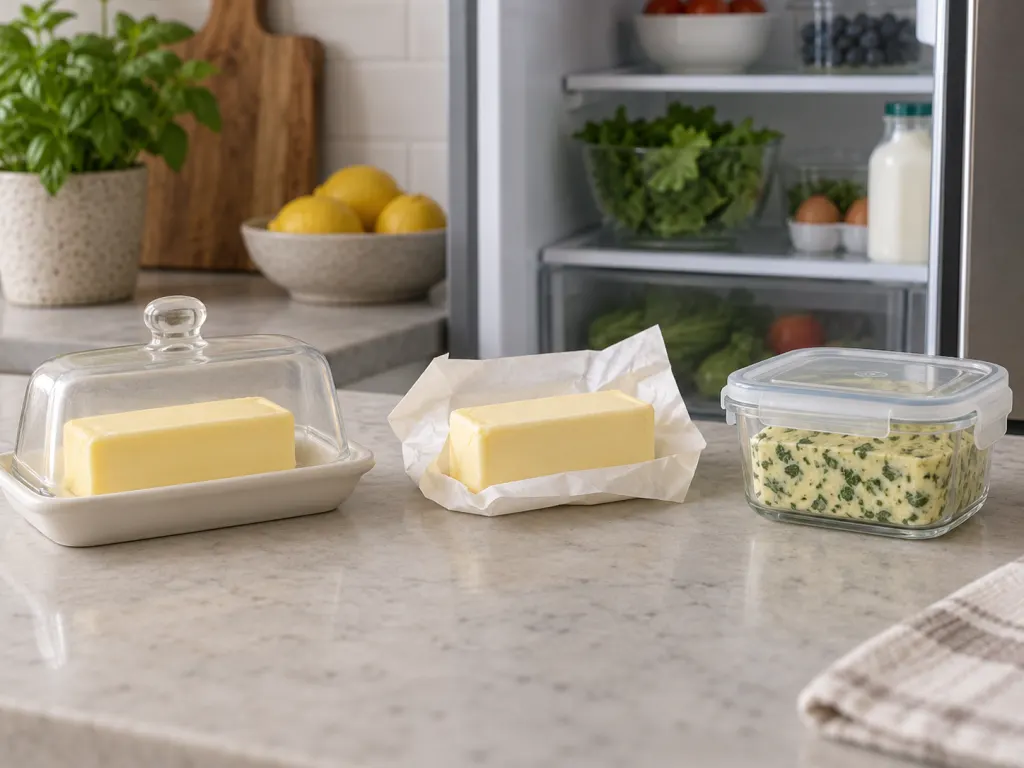
The biggest mistake in counter-butter advice is treating every yellow spread as identical. University of Maine Extension notes that salt content, moisture, fat concentration, and processing all affect spoilage and counter storage. Salted butter is the most tolerant of brief countertop use because salt helps slow microbial growth and quality loss. Unsalted butter lacks that extra help and should be refrigerated, then softened only briefly. Cultured butter may have a tangy flavor from fermentation, but it still contains moisture and milk solids, so it is not meant for extended counter storage. Whipped butter has air incorporated into it, increasing exposed surface area and making off-flavors more likely. Compound butter should stay refrigerated because added ingredients can bring in moisture and microorganisms (University of Maine Cooperative Extension).
That matters for the recipes many home cooks love. A plain covered dish of salted butter for toast is one decision. A soft garlic-herb butter for steak, rolls, or vegetables is another. If you are making a flavored spread such as Homemade Wild Garlic Butter, treat it as a refrigerated food. If you are using butter in a hot cooked dish such as Garlic Butter Rice, store the butter properly before cooking and refrigerate leftovers according to the finished dish, not according to plain butter rules.
The Countertop Variables That Change The Answer
Room temperature is not a single condition. A shaded 66°F kitchen in winter is different from a sunny counter near a stove in August. University of Maine’s guidance for salted butter specifies a cool room below about 70°F and a covered dish. FoodSafety.gov also emphasizes that safe storage guidance depends on correct conditions, including keeping refrigerators at 40°F or below and paying attention to time at room temperature for perishable foods (FoodSafety.gov). Plain butter has its own short counter allowance, but the general temperature lesson still applies: warmth narrows the margin.
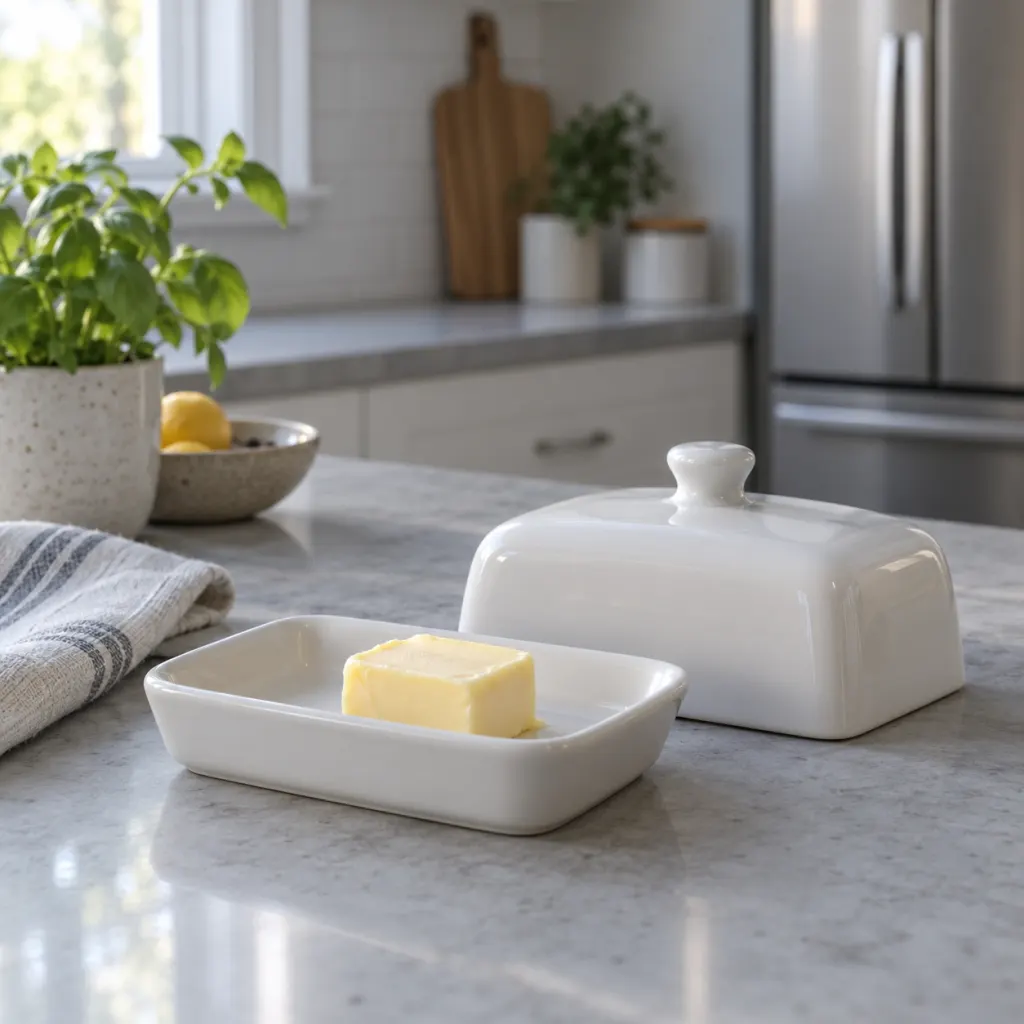
A covered dish matters because it limits dust, insects, splashes, and airborne mold spores. A clean knife matters because crumbs, jam, toast residue, and moisture create a more inviting surface for spoilage. Portion size matters too. A whole pound softened on the counter invites repeated handling over many meals, while two tablespoons in a small clean dish may be used before quality has time to slide. The goal is not to make butter last as long as possible at room temperature; it is to keep a small amount conveniently spreadable without turning the counter into bulk storage.
A Practical Butter Dish Setup
For a safer everyday routine, set up the counter butter as a small-service system rather than a storage system:
- Use plain salted butter if you want a countertop portion.
- Put out only what your household will use within one to two days.
- Keep it in a clean, covered dish or butter crock.
- Place the dish away from sunlight, the oven, the toaster, the dishwasher vent, and other warm spots.
- Use a clean, dry knife each time.
- Wash and dry the dish before refilling it.
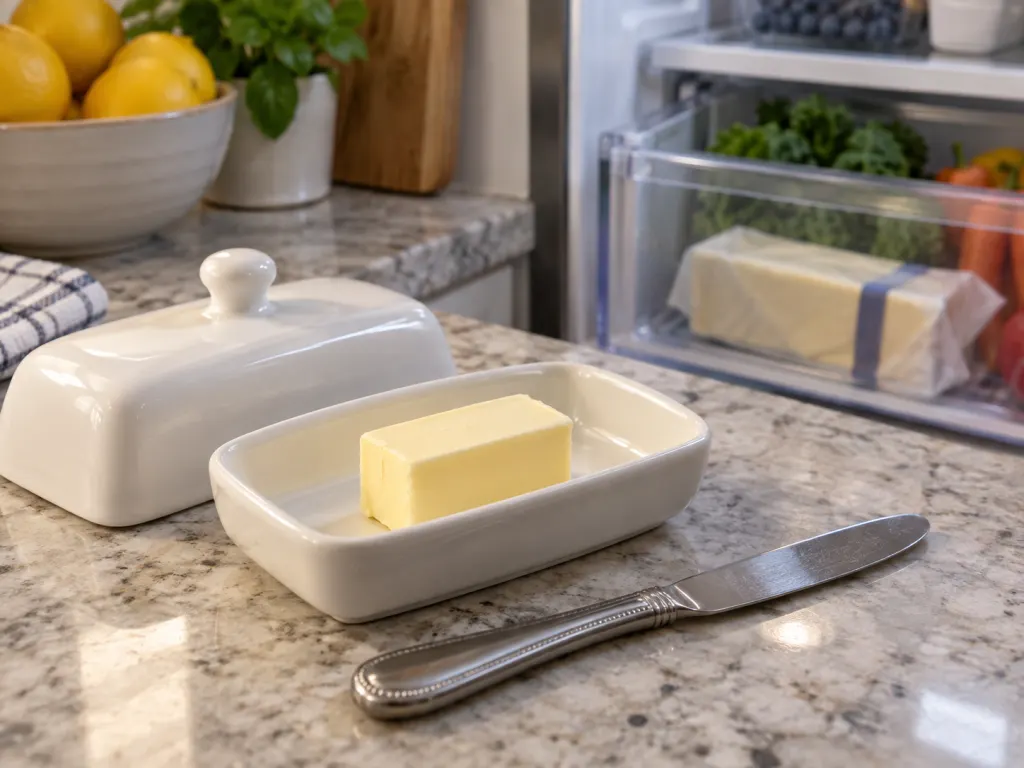
- Refrigerate the main package and cut a fresh portion as needed.
What To Do If It Has Already Been Out For Three Days
When butter has already sat out for three days, start with what you know. Was it salted? Was it plain? Was it covered? Did the room stay cool? Did anyone dip in with a wet or crumb-covered knife? If every answer is favorable, the immediate food-safety risk may still be relatively low compared with many moist dairy foods, but the butter is outside the brief countertop window recommended by extension guidance. The cautious choice is to discard it and restart with a smaller amount.
If any answer is unfavorable, discard it. That includes butter left uncovered, stored near heat, sitting in a humid kitchen, smeared with crumbs, mixed with other foods, touched by used utensils, or left out during an uncertain power outage or party cleanup. Do not taste questionable butter to decide whether it is safe. Smell and appearance can help identify obvious spoilage, but they are not a complete safety test for every possible contamination issue.
Signs Butter Should Be Thrown Away
Discard butter if you see mold, unexpected spots, wet-looking separation that seems unusual for the product, a sour smell, a stale or paint-like rancid smell, a soapy or metallic flavor, visible debris, insect contact, or any unknown storage history. Rancidity is often a quality problem first, but quality and safety overlap when butter has been handled poorly or left in warm conditions. FDA’s water activity guidance helps explain why lower available moisture can slow microbial growth, but it does not turn spoiled-looking food into a safe choice (FDA).
How Butter Crocs And Covered Dishes Fit In
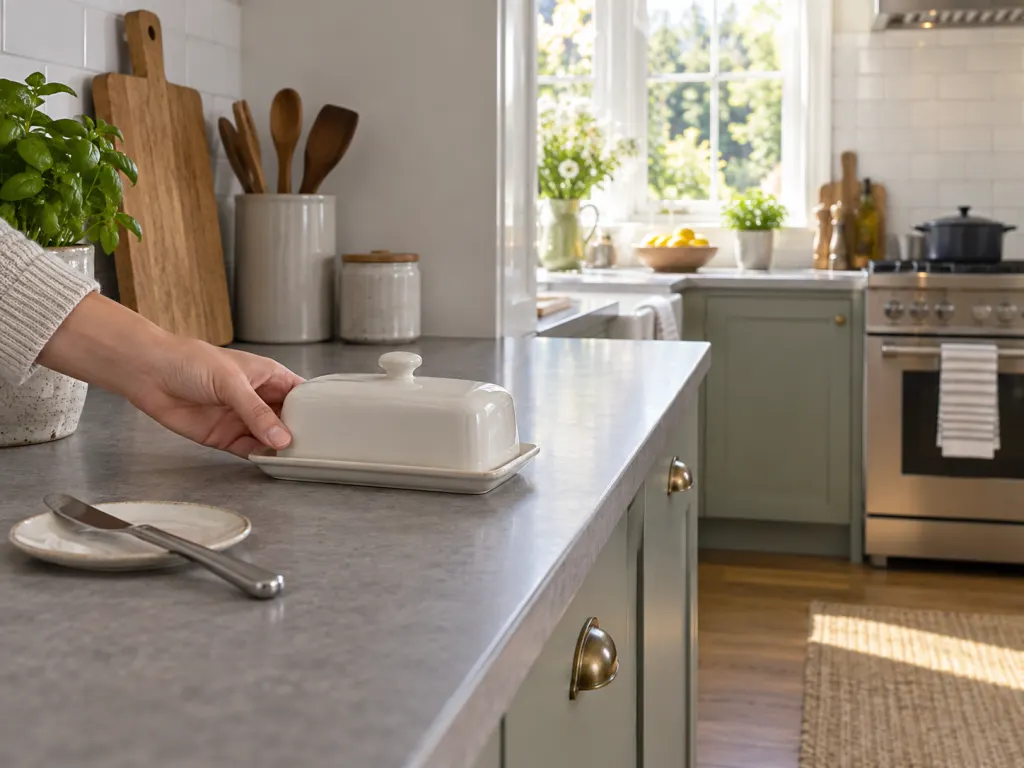
A butter crock or lidded dish can help protect a small portion from air and surface contamination, but it does not cancel the time limit. The same basic rules apply: plain salted butter, cool room, clean container, clean utensils, and a small amount used promptly. If a butter crock uses water, change and clean it regularly according to the maker’s instructions, because dirty water or a neglected crock defeats the point of using a protected container. A dish that looks charming on the counter is still kitchen equipment, and kitchen equipment needs cleaning.
Why The Refrigerator Is Still The Default For Storage
The refrigerator is the right place for the main butter supply because cold storage slows quality loss and helps protect foods under ordinary household conditions. FoodSafety.gov describes FoodKeeper as a guide to how long foods keep in the pantry, refrigerator, and freezer, developed by USDA’s Food Safety and Inspection Service with Cornell University and the Food Marketing Institute (FoodSafety.gov FoodKeeper App). For the home cook, the useful habit is simple: keep the bulk of the butter cold, soften only what you need, and leave out only a small covered portion if your household uses it quickly.
Cold butter is also better for many cooking tasks. Pie crust, biscuits, some cookies, and laminated doughs often depend on firm butter. Room-temperature butter has its place for spreading and for some baking methods, but keeping all butter soft all the time can make cooking less predictable. If you want spreadable butter for toast, reserve a small counter portion. If you need butter for baking, keep the wrapped sticks refrigerated and soften them intentionally when a recipe calls for it.
Who Should Be More Conservative
Some households should use stricter rules. If the butter will be eaten by very young children, older adults, or people with weakened immune systems, keeping butter refrigerated and softening it briefly before use is the more cautious routine. FoodSafety.gov notes that some people are more likely to have serious illness from foodborne germs, including adults 65 and older, children younger than 5, and people with weakened immune systems (FoodSafety.gov). That does not mean plain butter is uniquely risky; it means the tolerance for uncertain storage should be lower.
A Simple Decision Tree For Home Kitchens
Use this decision tree when you are standing at the counter looking at the dish. If it is plain salted butter, covered, cool, clean, and out for one to two days, it is within the practical short-term guidance from extension food-safety sources. If it is day three, move from convenience thinking to caution thinking. If it is unsalted or whipped, put it in the refrigerator sooner. If it contains garlic, herbs, fruit, honey, cheese, spices mixed with fresh ingredients, or any other add-ins, refrigerate it. If the butter was uncovered, warm, contaminated, moldy, or simply forgotten, discard it.
Wrap-Up
Three days is not the best routine for butter at room temperature. Plain salted butter gets more counter leeway than many dairy foods because it is high in fat, lower in available moisture, and helped by salt, but current extension guidance still points to a short one-to-two-day window in a cool room with a clean covered dish. Unsalted, whipped, cultured, reduced-fat, homemade, and flavored butters should be refrigerated or softened only briefly. The most reliable household habit is to keep the main butter supply cold, put out only a small amount of plain salted butter for spreading, keep it covered and clean, and discard any butter with mold, off odors, contamination, warmth, or uncertain history.
Frequently Asked Questions
- → Can salted butter sit out longer than unsalted butter?
Salted butter is the better candidate for brief counter storage because salt helps slow microbial growth and quality loss. University of Maine Extension says covered salted butter may be kept below 70°F for up to one to two days. Unsalted butter should stay refrigerated and be softened only briefly before use.
- → Is three-day counter butter automatically unsafe?
Not automatically in every possible situation, but it is beyond the usual one-to-two-day guidance for plain salted butter in a cool covered dish. Because home conditions vary and handling is hard to verify after three days, the cautious choice is to discard it, especially if the butter was warm, uncovered, unsalted, whipped, or mixed with other ingredients.
- → Can I scrape off mold from butter and use the rest?
No. For a household butter dish, visible mold is a discard sign. Butter is inexpensive compared with the uncertainty of surface growth, crumbs, moisture, and unknown handling. Throw away the affected butter, wash and dry the dish, and restart with a smaller clean portion.
- → What is the safest way to keep butter spreadable?
Keep most butter refrigerated. Put a small amount of plain salted butter in a clean covered dish, keep it in a cool spot away from heat and sunlight, use clean dry utensils, and finish it within one to two days. For unsalted or flavored butter, soften only the amount you need and return the rest to the refrigerator.
- → What if someone ate butter that was left out too long?
Most questionable butter situations do not prove that illness will occur, but watch for symptoms after eating any suspect food. CDC lists common foodborne illness symptoms such as diarrhea, stomach pain or cramps, nausea, vomiting, and fever. Contact a qualified health professional for personal guidance, especially if symptoms are severe or persistent.
References
This content was developed and refined using reliable sources.
- https://extension.umaine.edu/food-health/2026/05/21/butter
- https://www.ams.usda.gov/grades-standards/butter-grades-and-standards/butter-grading-info
- https://www.fda.gov/inspections-compliance-enforcement-and-criminal-investigations/inspection-technical-guides/water-activity-aw-foods
- https://www.foodsafety.gov/blog/maintain-food-safety-while-cutting-food-waste
- https://www.foodsafety.gov/keep-food-safe/foodkeeper-app?os=app
- https://www.foodsafety.gov/blog/key-facts-about-food-poisoning
- https://www.cdc.gov/food-safety/signs-symptoms/index.html