 Save
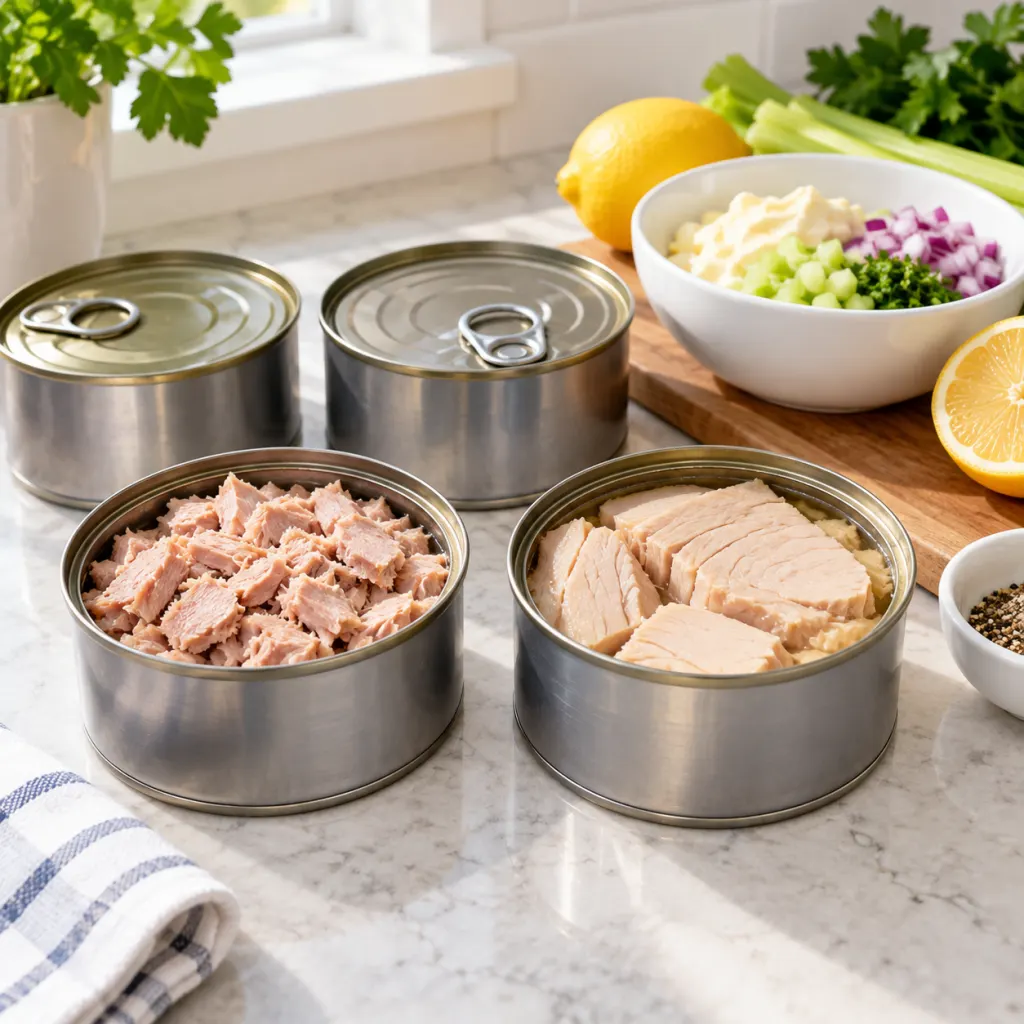
The main mistake with canned tuna is not eating tuna at all; it is treating every can as if it carries the same mercury concern. The practical fix is simple: read the label for the tuna type. FDA/EPA advice lists canned light tuna, including skipjack, as a Best Choice, while albacore or white tuna is placed in a more limited Good Choice category, and bigeye tuna is in the Choice to Avoid category. That distinction matters more than whether the can is packed in water or oil.
The Mistake: Treating Every Can as the Same
Canned tuna looks like one pantry item, but the label may point to different species, sizes, and mercury patterns. The FDA/EPA fish advice separates tuna into categories: canned light tuna is a Best Choice, albacore or white tuna and yellowfin are Good Choices, and bigeye tuna is a Choice to Avoid. That is the heart of the issue. A tuna salad made with canned light tuna and one made with white albacore may feel identical at lunch, but they do not represent the same mercury category.

Why Tuna Type Changes the Mercury Picture
Mercury enters waterways from natural and human-related sources, and microorganisms can change it into methylmercury, the form that builds up in fish. The EPA explains that methylmercury levels tend to be higher in larger fish, fish that eat other fish, and fish that live longer. This is why tuna cannot be judged by the word tuna alone. A smaller tuna used in canned light products is usually a different exposure choice than a larger, longer-lived tuna.
FDA monitoring data make that difference easier to picture. In the agency's table of commercial fish and shellfish, canned light tuna has a mean mercury concentration of 0.126 parts per million, while canned albacore is listed at 0.350 parts per million. Fresh or frozen yellowfin is listed at 0.354 parts per million, and bigeye at 0.689 parts per million in the same table. Those numbers come from the FDA mercury levels table, and they explain why label reading is not a fussy detail.
Use this quick label check when buying tuna:
- Canned light tuna: often includes skipjack and is listed as a Best Choice by FDA/EPA.
- Albacore or white tuna: generally means a larger tuna and is listed as a Good Choice.
- Yellowfin tuna: also appears as a Good Choice in FDA/EPA advice.
- Bigeye tuna: is listed as a Choice to Avoid because of higher mercury levels.
- No clear species listed: check the front, ingredients, and brand information before making it a frequent default.

How Often Tuna Fits Depends on the Category
The FDA/EPA advice is written especially for people who might become or are pregnant or breastfeeding and for children ages 1 to 11, but its categories are useful for any household trying to understand relative mercury levels. For the groups covered by that advice, FDA/EPA says to eat 2 to 3 servings a week from the Best Choices list, or 1 serving from the Good Choices list. In that framework, canned light tuna has more room than albacore or yellowfin because it sits in the lower-mercury category.
That does not mean canned light tuna should be the only seafood in the pantry. FDA/EPA also encourages variety. A rotation might include canned light tuna sometimes, then salmon, sardines, pollock, shrimp, tilapia, trout, or other Best Choice fish at other meals. Rotation helps keep the decision practical: instead of counting every sandwich with anxiety, you create a pattern where tuna is one option among several.
Water-Packed, Oil-Packed, or Drained Is Not the Main Mercury Question
Water-packed and oil-packed tuna can differ in flavor, calories, and how you use them in cooking, but mercury is not solved by draining a can. The key issue is the fish itself. EPA describes methylmercury as building up in fish and shellfish, especially higher in the food chain, so the species category remains the more meaningful guide than the packing liquid. Choose water-packed tuna if you prefer a lighter texture or oil-packed tuna if it suits a dish, but do not treat that choice as a mercury-control step.
A Smarter Tuna Pantry Strategy
A useful pantry strategy is to split tuna into everyday, occasional, and avoid categories. For frequent sandwiches, salads, casseroles, and quick protein bowls, canned light tuna is usually the more flexible default. Keep albacore or yellowfin for meals where their firmer texture or milder flavor matters. Avoid making bigeye tuna part of a routine home pattern, especially when cooking for a mixed household where children may be eating the same meal.
Practical habits make this easier:
- Put canned light tuna on the regular grocery list if tuna is a weekly staple.
- Buy albacore or white tuna intentionally, not by accident, and plan it less often.
- Vary seafood across the month instead of relying on one can for every quick meal.
- Check local advisories for fish caught by family or friends, because local waters can have separate guidance.
- Save a note in your grocery app with the terms Best Choice, Good Choice, and Choice to Avoid.

What If You Already Eat Tuna Often?
If tuna is already part of your routine, start by looking at what kind you buy most often. If it is canned light tuna, your habit is already aligned with the FDA/EPA lower-mercury category. If it is mostly albacore or white tuna, the simplest change is to swap some of those meals for canned light tuna or another Best Choice seafood. You do not need to turn the pantry upside down; you need a pattern that matches the label categories.
For people with specific health concerns, unusual exposure concerns, or questions about children in the household, the article cannot decide personal limits. The EPA's health effects page notes that the effect of mercury exposure depends on factors such as the form of mercury, amount, age, length of exposure, and route of exposure. That is why personal questions belong in a care conversation rather than in a one-size-fits-all pantry rule.
Why Avoiding Tuna Completely Is Usually Not the Takeaway
The point is not to make tuna sound frightening. Fish can provide useful nutrients, and FDA/EPA advice is built around choosing fish with lower mercury levels rather than avoiding fish altogether. The 2024 FAO/WHO background document on fish consumption also frames seafood decisions as a balance of risks and benefits, not a simple yes-or-no choice. For most home cooks, the better question is: which tuna, how often, and what else is in the seafood rotation?
Bottom Line
The best canned tuna habit is label awareness. Choose canned light tuna more often when tuna is a routine meal, recognize albacore or white tuna as a more limited choice, and do not treat bigeye tuna as a regular option. Pair that with seafood variety, calm planning, and reputable guidance rather than viral fear. The can in your hand already gives you the clue; the useful move is to read it before it becomes lunch.
Wrap-Up
Canned tuna is not one uniform mercury choice. The most important difference is the type of tuna: canned light tuna is generally the better routine pick, while albacore or white tuna and yellowfin call for more moderation, and bigeye is listed by FDA/EPA as a Choice to Avoid. Reading the label, rotating seafood, and using authoritative fish-advice charts is a more balanced approach than either ignoring mercury or giving up tuna entirely.
Frequently Asked Questions
- → Is canned light tuna lower in mercury than albacore tuna?
Yes, FDA monitoring data list canned light tuna at a lower mean mercury concentration than canned albacore tuna. FDA/EPA advice places canned light tuna in the Best Choices category and albacore or white tuna in the Good Choices category.
- → Does draining canned tuna reduce mercury?
Draining changes liquid, texture, and sometimes sodium or fat depending on the product, but it should not be treated as the main mercury-control step. The more important choice is the tuna type listed on the label.
- → What tuna label should I look for if I eat tuna often?
For frequent tuna meals, look for canned light tuna, which often includes skipjack and is listed by FDA/EPA as a Best Choice. Use albacore or white tuna more intentionally and less often.
- → Is bigeye tuna the same as canned light tuna?
No. FDA/EPA lists bigeye tuna as a Choice to Avoid because of higher mercury levels. Canned light tuna, including skipjack, is listed separately as a Best Choice.
- → Should I stop eating canned tuna because of mercury?
For many readers, the better step is not total avoidance but smarter selection. Choose lower-mercury tuna more often, vary seafood choices, and use FDA/EPA guidance for serving frequency and household planning.
References
This content was developed and refined using reliable sources.
- https://www.fda.gov/food/consumers/advice-about-eating-fish
- https://www.fda.gov/food/consumers/questions-answers-fdaepa-advice-about-eating-fish-those-who-might-become-or-are-pregnant-or
- https://www.fda.gov/food/environmental-contaminants-food/mercury-levels-commercial-fish-and-shellfish-1990-2012
- https://www.epa.gov/mercury/how-people-are-exposed-mercury
- https://www.epa.gov/mercury/health-effects-exposures-mercury
- https://www.who.int/publications/i/item/9789240096882