 Save
Store-bought beef and farm-raised beef are not automatically better or worse than each other; they usually differ in how the cattle were fed and finished, whether the beef carries a USDA quality grade, and how much documentation backs up the label. Supermarket beef is typically graded Choice or Select and comes from cattle finished on a grain-heavy diet in a feedlot, which produces consistent tenderness and marbling. Beef sold directly by a farm is more likely to be grass-fed or pasture-finished, with more variable marbling and a firmer, sometimes more pronounced flavor. Neither path guarantees superior nutrition or safety on its own. This guide walks through what USDA grading actually measures, what labels like "grass-fed" and "farm-raised" do and do not promise, what research shows about nutritional differences, and how to handle and cook either type safely.
How USDA Grading Actually Works
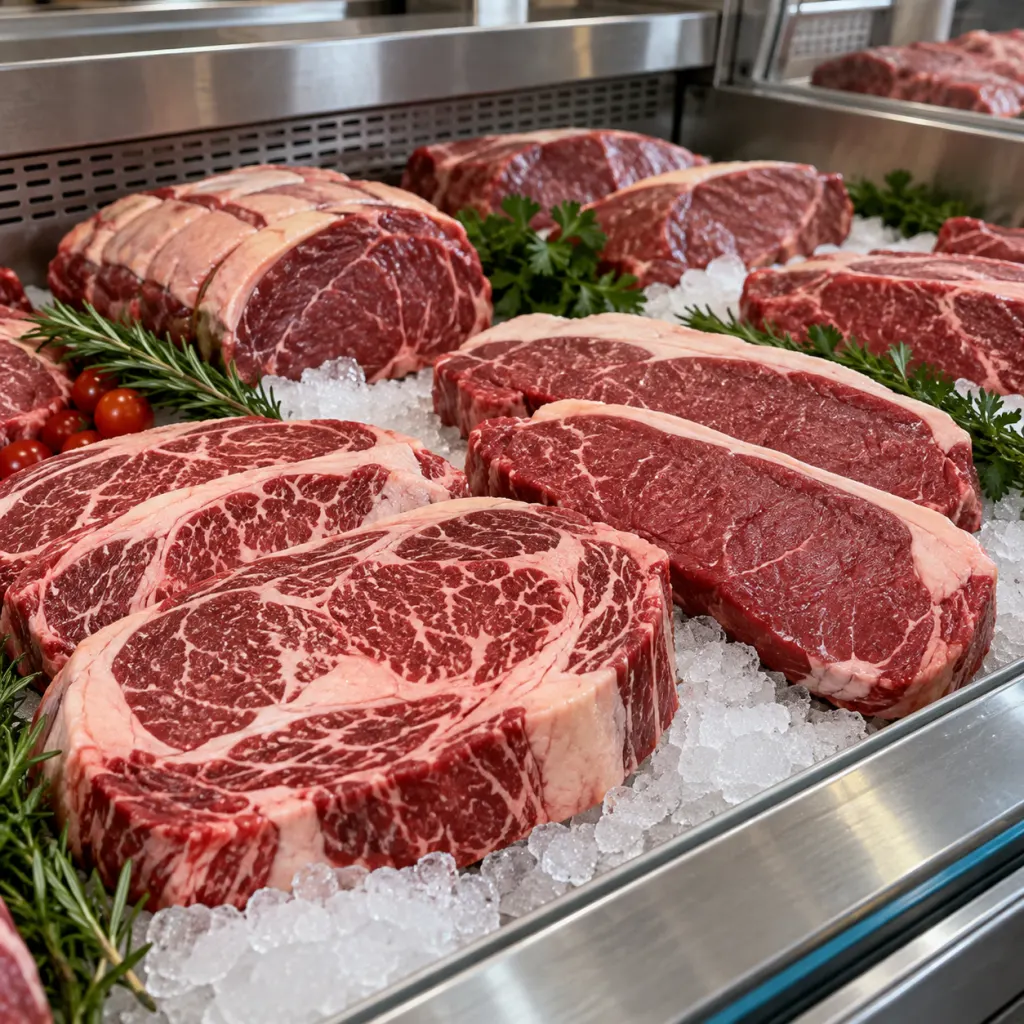
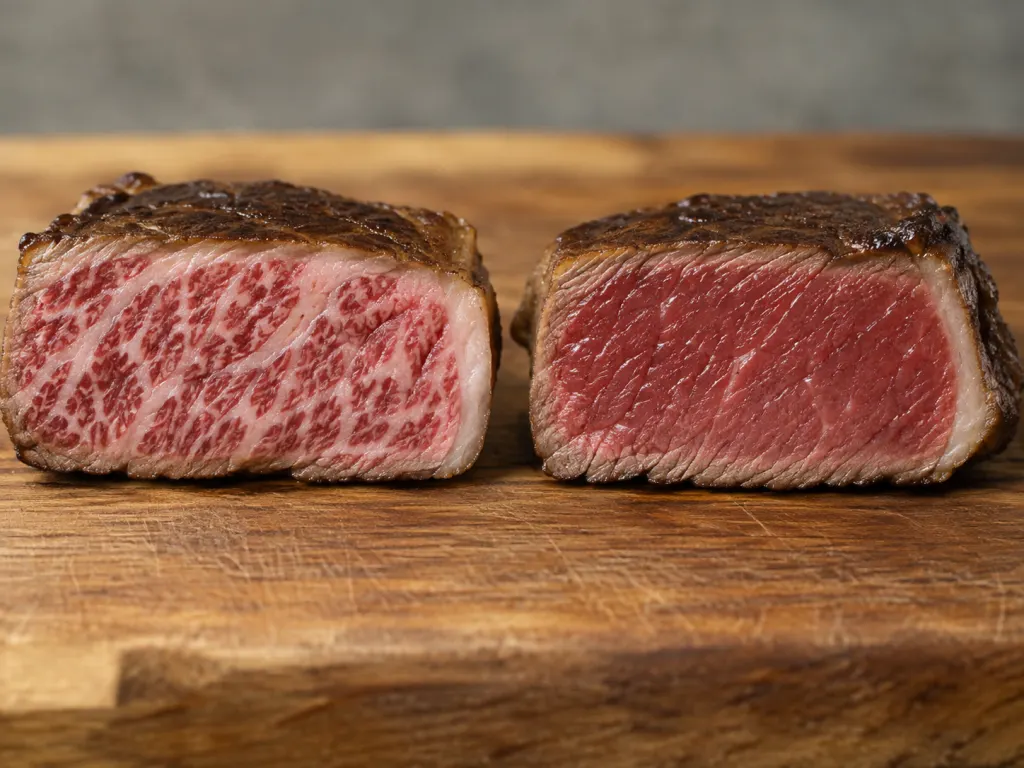
Most confusion about beef quality starts with grading, so it helps to know what a USDA quality grade actually measures. The USDA Agricultural Marketing Service (AMS) grading standard evaluates two things on the carcass: marbling (the flecks of fat within the muscle) and the animal's estimated maturity. Prime requires a minimum "slightly abundant" amount of marbling, Choice requires at least a "small" amount, and Select requires only a "slight" amount, with the required minimum marbling increasing as the standard moves from younger to older maturity groups. More marbling generally means more juiciness and a softer bite, which is why Prime commands a premium and Select is described by AMS as leaner and more variable in juiciness and flavor.
What surprises many shoppers is that grading is voluntary and paid for by the packer, not a government mandate applied to every carcass. AMS formally calls this the Regulations Governing the Voluntary Grading of Meat and Meat Products
, and a company can choose to skip grading altogether. That matters for comparing sourcing: most supermarket beef is graded Choice or Select because large processors pay for grading as a marketing and quality-control tool, while beef sold directly by a small farm is often ungraded, not because it is lower quality, but because the farm never submitted it for grading. An ungraded farm steak and a graded Choice steak may have similar marbling; only one of them was scored against the federal standard.
What "Grass-Fed" and "Farm-Raised" Really Mean
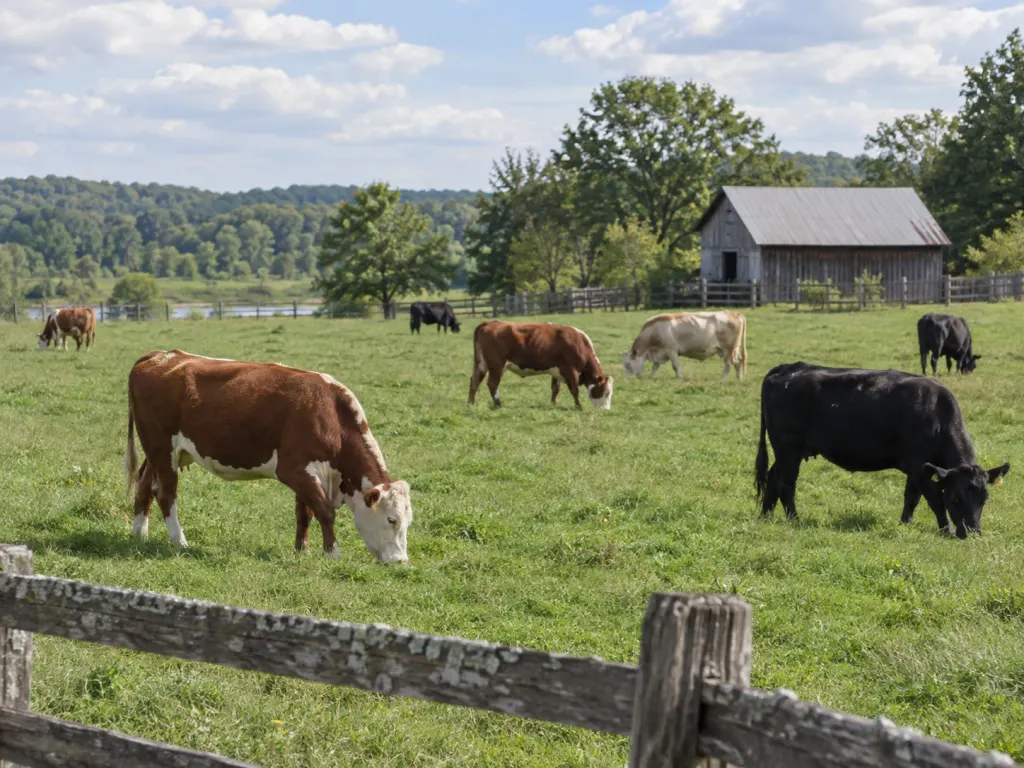
"Grass-fed" is one of the few sourcing claims with a documented federal definition, even though oversight has shifted over the years. Under the USDA Grass Fed Program fact sheet, cattle marketed as USDA Certified Grass Fed must consume only grass and forage after weaning, cannot receive grain or grain by-products, and must have continuous pasture access during the growing season, though routine mineral and vitamin supplementation is allowed. AMS previously ran a broader grass-fed marketing claim standard, withdrew it in 2016 amid a dispute over which agency had authority to police the claim, and now verifies grass-fed status mainly through this audit-based program for small and very small producers, with the Food Safety and Inspection Service reviewing label claims for compliance.
"Farm-raised" has no equivalent federal definition. It is a marketing phrase, and a package can carry it whether the animal spent its life on open pasture or in a large commercial operation that still technically qualifies as a farm. The only way to know what "farm-raised" means for a specific product is to look for a verified claim behind it, such as a USDA grass-fed certificate, a named farm you can research directly, or a processor's own documented feeding program. Without that backup, treat "farm-raised" as a description of vibe rather than a guarantee about diet, space, or how the animal was finished.
Taste, Texture, and Why Perceptions Differ
Feeding and finishing method is the biggest driver of the flavor differences shoppers notice. Feedlot cattle finished on a grain-heavy diet tend to develop more intramuscular fat in a shorter finishing window, producing the buttery, consistent tenderness associated with well-marbled supermarket steaks. Cattle finished mostly or entirely on pasture develop marbling more slowly and often less abundantly, which can mean a firmer bite, and the forage-heavy diet also changes the fat itself, giving grass-finished beef a flavor many people describe as more mineral or "grassy" compared with the milder, fattier taste of grain-finished beef. Neither profile is objectively correct; it is closer to the difference between a fruity olive oil and a neutral one.
- Marbling: typically higher and more consistent in grain-finished supermarket beef; more variable and often leaner in pasture-finished beef.
- Finishing time: feedlots usually finish cattle faster on a calorie-dense grain diet; pasture finishing on forage alone generally takes longer.
- Flavor profile: grain-finished beef is often described as milder and richer; grass-finished beef is often described as more pronounced or earthy.
- Label assurance: supermarket beef is more likely to carry a USDA quality grade; farm-direct beef is more likely to rely on a named farm or a specific certified claim instead.
Nutritional Differences Backed by Research
Research does show measurable nutritional differences tied to feeding method, though the size of those differences varies by study and by how the animals were actually managed. A peer-reviewed review in Nutrition Journal summarizing decades of research found that grass-based diets tend to increase omega-3 fatty acid content and conjugated linoleic acid (CLA) in beef fat compared with grain-based diets, along with higher levels of precursors to vitamins A and E. The same review notes that total saturated fat content is not consistently different between the two feeding methods, but the mix of saturated fats shifts toward less cholesterol-elevating types in grass-finished beef, and that grass-finished beef is generally leaner overall, which is part of why it can taste and cook differently.
It is worth reading those findings with the right level of caution. The differences are real on average, but they are not large enough to make either type of beef a stand-in for a balanced diet, and the review itself notes that consumers eating higher-fat grain-finished beef in larger portions can end up with similar total omega-3 and CLA intake as someone eating leaner grass-finished beef. In other words, feeding method shifts the nutritional profile of beef in measurable ways, but portion size and how often beef appears in your diet matter just as much as which type you buy.
Cost, Availability, and What You're Actually Paying For
Price differences between store-bought and farm-raised beef mostly track the economics of how the cattle were raised, not a fixed quality ranking. Feedlot finishing on grain is designed for efficiency: cattle reach market weight faster, processing happens at large scale, and the resulting economies of scale keep supermarket beef, especially Choice and Select grades, relatively affordable. Farm-direct and grass-finished beef usually costs more per pound because pasture finishing takes longer, herds are smaller, and processing often goes through smaller regional facilities with less capacity to spread costs across volume. Paying more for farm-raised beef is often buying a longer finishing timeline, more documented sourcing, and support for a smaller operation, rather than paying for guaranteed superior taste or nutrition, since both of those still depend on the specific animal, feed, and cut.
Handling and Cooking Either Type Safely
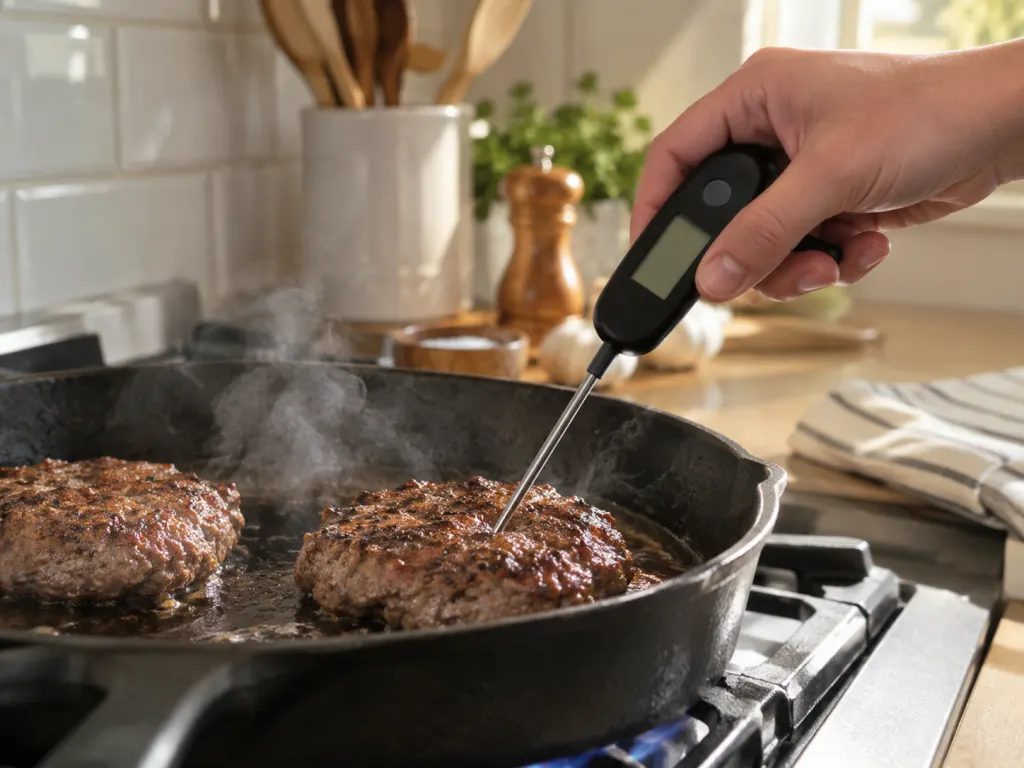
Food-safety basics do not change based on where beef was raised, and neither store-bought nor farm-raised beef gets a pass on proper handling. According to University of Illinois Extension's summary of USDA guidance, ground beef needs to reach a verified internal temperature of 160°F, while whole cuts like steaks and roasts can safely be cooked to lower temperatures depending on preference, because the two forms of beef carry different bacterial risks. Grinding beef mixes any surface bacteria throughout the meat, so a hamburger patty needs more heat throughout to be safe, while a steak's bacteria mostly sit on the exterior, which searing addresses. Color is not a reliable way to judge doneness in either case; ground beef can turn brown before it is safely cooked, or stay pink after it is safe, so a food thermometer is the only dependable check.
The same core habits apply whether your beef came from a supermarket case or a farm stand: refrigerate or freeze it promptly, keep raw beef and its juices away from other foods and surfaces, wash hands and utensils after contact with raw meat, and use a food thermometer inserted into the thickest part of the cut rather than relying on appearance. Farm-direct beef that skips a retail cold chain is not automatically riskier, but it is worth asking how it was transported and stored between the farm and your kitchen, since consistent refrigeration matters more than which type of operation raised the animal.
How to Decide What Fits Your Kitchen
There is no single right answer between store-bought and farm-raised beef; the more useful question is which tradeoffs match your priorities. If consistent tenderness, lower cost, and easy availability matter most, a graded supermarket Choice or Prime cut is a reasonable, well-documented choice. If you value a specific feeding practice, want to support a smaller producer, or prefer a leaner, more pronounced flavor, farm-direct or verified grass-fed beef may fit better, as long as you can confirm the claim behind the label rather than assuming "farm-raised" alone guarantees anything. Reading the actual label, asking a butcher or farmer direct questions about feed and finishing, and applying the same safe-handling habits either way will do more for your outcome than picking a side based on marketing language.
Wrap-Up
"Store-bought" and "farm-raised" describe where you buy beef and how it was likely fed and finished, not a guaranteed quality tier. USDA quality grades (Prime, Choice, Select) measure marbling and maturity through a voluntary, fee-based program, so grading tells you about tenderness and fat distribution, not about the farm it came from. "Grass-fed" has a specific USDA-recognized definition when verified, while "farm-raised" is an unregulated marketing phrase. Research comparing grass-finished and grain-finished beef finds real but variable differences in fat composition, including more omega-3 fatty acids and conjugated linoleic acid in grass-finished beef, alongside a distinct flavor some shoppers prefer and others do not. Cost differences mostly reflect the efficiency of feedlot grain finishing versus smaller-scale pasture operations, not a fixed rule about which beef is intrinsically better. Whichever type you buy, the same food-safety basics apply: refrigerate promptly, avoid cross-contamination, and cook ground beef to a verified 160°F, since grinding mixes surface bacteria throughout the meat in a way that whole cuts do not.
Frequently Asked Questions
- → Does a higher USDA grade always mean better-tasting beef?
Usually, but not always. Prime and Choice grades require more marbling, which most people associate with juicier, more tender beef, but grading does not account for how a cut is aged, stored, or cooked, and personal taste for leaner or more pronounced flavors varies.
- → Is grass-fed beef definitely healthier than grain-fed beef?
Research shows grass-finished beef tends to have more omega-3 fatty acids and a leaner fat profile on average, but the differences are variable between farms and are not large enough to call either type a health solution on its own. Overall diet and portion size matter more than feeding method alone.
- → Why is beef from a local farm often more expensive than supermarket beef?
Pasture and grass finishing typically take longer than feedlot grain finishing, and smaller farms and processors have less capacity to spread costs across large volumes, so the price usually reflects that slower, smaller-scale production rather than a guaranteed quality difference.
- → Do farmers have to get their beef USDA graded before selling it directly?
No. USDA quality grading is a voluntary, paid service that packers request. Many farms selling beef directly to consumers skip grading entirely, so ungraded farm beef is not automatically lower quality; it simply was not submitted for grading.
- → What's the safest way to cook ground beef no matter where it came from?
Use a food thermometer and cook ground beef to a verified internal temperature of 160°F. Color alone is not reliable, since ground beef can look done before it is safe or stay slightly pink after it is safe.
- → Does "farm-raised" on a label mean the same thing as "grass-fed"?
No. "Grass-fed" can be backed by a specific USDA-recognized standard when verified, while "farm-raised" has no federal definition and can describe very different operations, so it is worth looking for a verifiable claim behind it.