 Save
The short answer is that there is no single vegetable that is always the most parasite-contaminated. The more useful question is which vegetables are harder to make safe once contamination has happened. Leafy greens, fresh herbs, and especially raw sprouts deserve the closest attention because they may be eaten raw, have many surfaces or folds, and can be exposed to contaminated water, soil, manure, animals, equipment, or hands before they reach your cutting board. The CDC notes that food and water contaminated with the Cyclospora parasite can make people sick, and its produce advice includes washing under running water, cutting away damaged areas, refrigerating cut produce, and cooking when possible https://www.cdc.gov/cyclosporiasis/prevention/index.html.
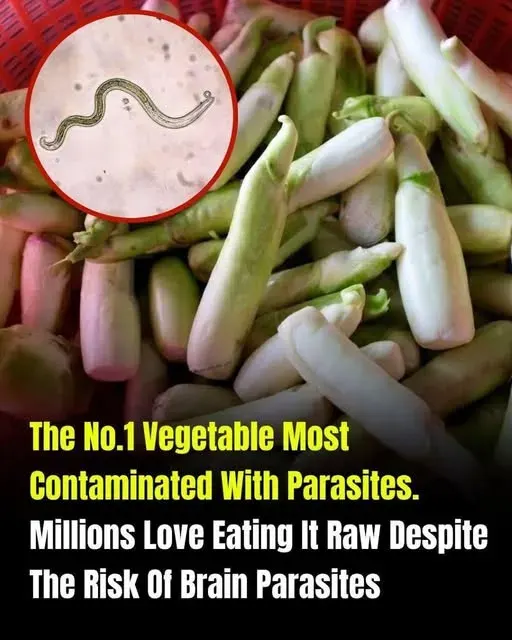
The white vegetables in this particular picture
The round white produce appears to be a white eggplant variety, but identification from this small image remains tentative. The parasite inset is a separate illustration; it does not demonstrate that the vegetables shown are infested. Neither this picture nor its caption establishes a ranking of the “most contaminated” vegetable. The handling guidance below applies to produce generally, with risk depending on how it was grown, handled and stored.
The direct answer: risk depends on the chain, not a single vegetable
Calling one vegetable the most contaminated oversimplifies how produce risk works. A cabbage grown with safe water, handled with clean equipment, chilled promptly, and cooked before serving is not the same risk as herbs rinsed in unsafe water and scattered raw over a meal. The FDA explains that contamination can happen while produce is growing, during harvest and handling, after purchase, or through storage and food preparation at home https://www.fda.gov/consumers/consumer-updates/7-tips-cleaning-fruits-vegetables. The FDA Produce Safety Rule also identifies agricultural water, worker hygiene, animals, manure and compost, equipment, tools, and buildings as important points where contamination must be controlled https://www.fda.gov/food/food-safety-modernization-act-fsma/what-produce-safety-rule-means-consumers.
Why leafy greens and herbs get so much attention
Lettuce, spinach, cabbage, cilantro, parsley, and similar greens are often mentioned because their shape gives dirt and microorganisms many places to hide. Outer leaves may touch soil, irrigation water, animals, crates, and many hands. Fresh herbs can be similar: they are light, delicate, and commonly used raw as a garnish, so there may be no heat step before eating. That does not mean these foods should be avoided. It means the safety steps should match the way the food is grown and served.
Parasites can reach vegetables through environmental routes. WHO explains that soil-transmitted helminth eggs can be attached to vegetables and then swallowed if vegetables are not carefully cooked, washed, or peeled in settings where sanitation is poor https://www.who.int/news-room/fact-sheets/detail/soil-transmitted-helminth-infections. A joint WHO and FAO report on water used with fresh fruits and vegetables also notes that water used during production can still contain human pathogens and that risk assessment should match the specific water source and local context https://www.who.int/publications/i/item/9789240030220. In plain kitchen terms, the safest handling plan is not based on fear of one vegetable; it is based on washing, separating, chilling, and cooking when the situation calls for it.
Sprouts are a special case
Raw sprouts are different from ordinary leafy greens. Sprouts grow in warm, moist conditions that are also friendly to many microbes. The FDA notes that sprouts have been associated frequently with foodborne illness outbreaks, and the CDC lists raw or undercooked sprouts among riskier produce choices while listing cooked sprouts as the safer option https://www.cdc.gov/food-safety/foods/safer-food-choices.html. Washing sprouts may rinse away surface debris, but it cannot reliably fix contamination that began with the seed or multiplied during sprouting. For a sandwich, salad, noodle bowl, or stir-fry, the practical choice is simple: use cooked sprouts, or skip raw sprouts when serving someone who needs a more cautious plate.
What washing can and cannot do
Washing fresh produce is still worthwhile, but it should be understood as risk reduction, not sterilization. FDA consumer guidance recommends rinsing produce under plain running water, gently rubbing it while rinsing, scrubbing firm produce with a clean brush, drying with a clean towel, and removing the outermost leaves of lettuce or cabbage https://www.fda.gov/consumers/consumer-updates/7-tips-cleaning-fruits-vegetables. It also says there is no need for soap or produce wash. Household soap, detergent, and bleach are not meant to be eaten, so they do not belong on vegetables.
For everyday greens and herbs, use a calm, repeatable routine:
- Wash hands before and after handling raw produce.
- Discard slimy, moldy, badly bruised, or heavily damaged pieces.
- Remove outer leaves from lettuce and cabbage before rinsing.
- Separate leafy layers when practical, then rinse under cool running water.
- Rub sturdy leaves gently with clean fingers; avoid crushing tender herbs.
- Use a clean salad spinner or clean towel to remove extra water.
- Keep washed produce away from raw meat, poultry, seafood, and their juices.
When cooking is the smarter choice
Heat gives you a safety advantage when a vegetable or herb will tolerate it. The CDC says cooking can destroy Cyclospora and advises cooking produce to at least 158°F, or 70°C, when possible because washing alone cannot guarantee removal of that parasite https://www.cdc.gov/cyclosporiasis/prevention/index.html. That does not mean every salad must become soup. It means you can choose heat when the source is uncertain, when produce will be served to someone who needs extra caution, or when travel conditions make raw garnish harder to trust.
Leafy greens and herbs are easy to move into cooked dishes without making the meal feel heavy. Spinach can be folded into eggs, pasta, beans, or stews. Cabbage can be braised, stir-fried, roasted, or added to soup. Cilantro, parsley, mint, or basil can be added earlier to sauces and curries rather than sprinkled raw at the end. Sprouts can be cooked until hot in stir-fries, soups, or skillet meals. The important point is that the center of the food should become hot, not merely warmed at the edges.
Storage matters after rinsing
Rinsing is only one step. Once produce is cut, peeled, or cooked, it needs clean handling and prompt chilling. CDC guidance for Cyclospora says cut, peeled, or cooked fruits and vegetables should be refrigerated as soon as possible, within two hours https://www.cdc.gov/cyclosporiasis/prevention/index.html. FDA cleaning guidance also says perishable produce should be stored in the refrigerator at or below 40°F https://www.fda.gov/consumers/consumer-updates/7-tips-cleaning-fruits-vegetables. In a home kitchen, that means pre-cut lettuce, chopped herbs, washed greens, cooked vegetables, and cut melon should not sit out through a long afternoon while other cooking tasks continue.
Cross-contact can undo careful washing. Use a clean cutting board and knife for produce. If raw meat, poultry, seafood, or eggs were on a surface first, wash the surface with hot, soapy water before vegetables touch it. Keep reusable towels clean and dry, and replace them often. If a bag of greens has leaked water into the refrigerator drawer, wipe the drawer before placing new produce inside. These habits are not dramatic, but they are the quiet routines that keep contamination from spreading around the kitchen.
Travel, recalls, and ready-to-eat produce
Produce safety also changes with context. When traveling where water quality is uncertain, raw salads, uncooked herbs, ice, fresh garnishes, and produce washed in local water may deserve more caution. The CDC notes that in areas where cyclosporiasis occurs regularly, routine treatment of food or water is unlikely to destroy Cyclospora https://www.cdc.gov/cyclosporiasis/prevention/index.html. In those settings, thoroughly cooked foods served hot and fruits you peel yourself are often the more practical choices.
At home, watch recalls and public food-safety alerts. If a product is recalled, do not try to wash your way around the recall. Throw it away or return it according to the notice. Ready-to-eat chopped salads and fresh-cut produce are convenient, but convenience does not add a safety step; it simply moves much of the cutting and handling outside your kitchen. Check dates, keep packages cold, avoid damaged or leaking bags, and use opened packages promptly.
Who should be more cautious with raw produce
The CDC lists adults 65 years or older, children under age 5, people with weakened immune systems, and pregnant women among groups more likely to have a serious foodborne illness https://www.cdc.gov/food-safety/foods/safer-food-choices.html. For these households, the cautious approach is not to remove vegetables from the menu. It is to choose washed produce, cooked sprouts instead of raw sprouts, properly chilled cut produce, and cooked greens when the source or handling history is uncertain. If you are hosting, it is considerate to offer both raw and cooked vegetable options so guests do not have to explain personal health details at the table.
When a kitchen issue becomes a medical question
Most produce-safety decisions happen before anyone feels unwell: choosing intact produce, washing it correctly, keeping it cold, separating tools, and cooking when appropriate. If illness does happen after a meal, do not try to identify the cause by guesswork alone. The CDC advises seeing a doctor for severe signs such as bloody diarrhea, diarrhea lasting more than three days, fever over 102°F, vomiting that prevents keeping liquids down, or signs of dehydration such as very little urination, dry mouth and throat, or dizziness when standing https://www.cdc.gov/food-safety/signs-symptoms/index.html. Mention recent travel, raw sprouts, salads, herbs, recalled foods, and shared meals if you speak with a qualified health professional.
A practical produce-safety checklist
Use this checklist when you bring greens, herbs, sprouts, cabbage, lettuce, or other fresh vegetables into the kitchen:
- Buy produce that looks fresh, intact, and properly chilled when it is sold cut or packaged.
- Keep raw vegetables separate from raw meat, poultry, seafood, and eggs in the cart, bags, refrigerator, and prep area.
- Wash hands and clean the sink area before rinsing produce.
- Rinse vegetables under plain running water; do not use soap, detergent, or bleach.
- Remove the outer leaves of lettuce or cabbage and discard damaged areas.
- Dry greens with a clean towel or salad spinner before storage or serving.
- Refrigerate cut, peeled, washed, or cooked produce promptly.
- Cook sprouts and consider cooking greens or herbs when the source is uncertain or the eater needs extra caution.
- Follow recall notices exactly rather than trying to salvage recalled produce.
The bottom line
The hidden risk is not that one vegetable is secretly unsafe. The hidden risk is assuming that all raw produce carries the same level of concern. Leafy greens and herbs need careful washing because of their surfaces and folds. Sprouts need extra caution because their growing conditions make raw use a different risk category. Water quality, sanitation, farm conditions, transport, storage, and home handling all matter. A sensible kitchen routine keeps the focus where it belongs: clean hands, clean tools, plain running water, cold storage, separation from raw animal foods, attention to recalls, and heat when it is the better choice.
Wrap-Up
No single vegetable deserves the title of most parasite-contaminated in every kitchen. Leafy greens, herbs, and raw sprouts simply deserve more careful decisions because they are often eaten raw and can be difficult to clean completely. Wash produce under plain running water, remove damaged and outer leaves, avoid soap or bleach on food, refrigerate cut produce promptly, keep tools clean, follow recall notices, and cook sprouts or uncertain greens when a hotter preparation fits the meal.
Frequently Asked Questions
- → Is lettuce the most parasite-contaminated vegetable?
No authority source reviewed for this article names lettuce as always the most parasite-contaminated vegetable. Lettuce does deserve careful handling because it has many surfaces, is often eaten raw, and may have outer leaves exposed to soil, water, animals, equipment, and hands.
- → Does washing vegetables remove every parasite?
No. Washing under clean running water can remove dirt and reduce surface contamination, but it cannot guarantee that every parasite or germ is gone. That is why storage, clean tools, separation from raw animal foods, recall awareness, and cooking when appropriate also matter.
- → Should I use vinegar, soap, or bleach to clean vegetables?
Use plain running water for household produce washing. FDA guidance says there is no need for soap or produce wash, and soap, detergent, and bleach should not be used on food because they are not meant to be eaten.
- → Are raw sprouts riskier than leafy greens?
Raw sprouts deserve special caution because their warm, moist growing conditions can allow contamination to multiply. CDC safer-food guidance lists raw or undercooked sprouts as a riskier choice and cooked sprouts as the safer option.
- → When should I cook vegetables instead of serving them raw?
Cooking is a smart choice when the produce source is uncertain, when water safety during travel is unclear, when sprouts are involved, or when serving someone who needs extra caution. Greens, herbs, cabbage, and sprouts can all work well in soups, stews, stir-fries, sauces, and skillet meals.
References
This content was developed and refined using reliable sources.
- https://www.cdc.gov/cyclosporiasis/prevention/index.html
- https://www.fda.gov/consumers/consumer-updates/7-tips-cleaning-fruits-vegetables
- https://www.fda.gov/food/food-safety-modernization-act-fsma/what-produce-safety-rule-means-consumers
- https://www.cdc.gov/food-safety/foods/safer-food-choices.html
- https://www.who.int/publications/i/item/9789240030220
- https://www.who.int/news-room/fact-sheets/detail/soil-transmitted-helminth-infections
- https://www.cdc.gov/food-safety/signs-symptoms/index.html