 Save
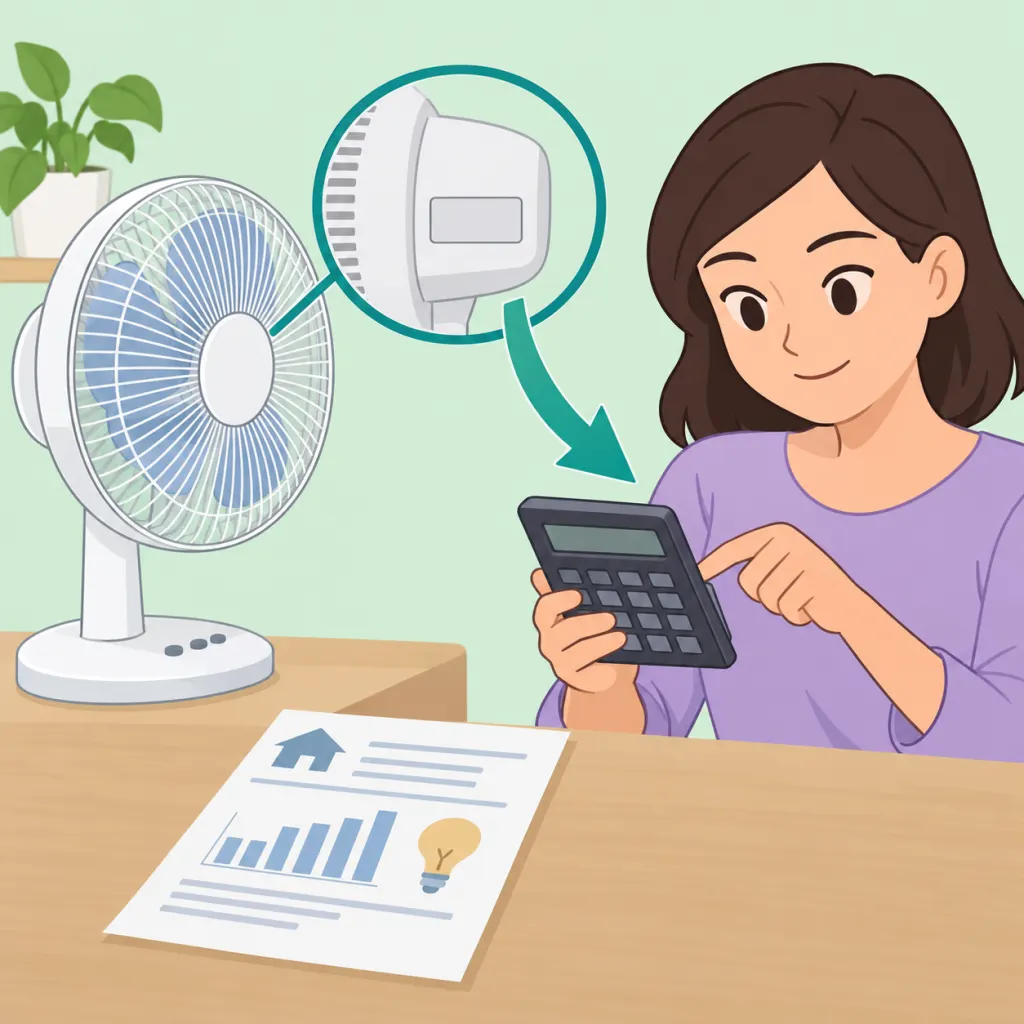
A fan usually costs only a small amount to run, but the exact number depends on its wattage, how long it runs, and what you pay for electricity. This guide shows you the simple formula for estimating daily, monthly, and multi-fan costs. You can use the same method for a ceiling fan, box fan, pedestal fan, or desk fan.
Step 1: Find the fan's wattage
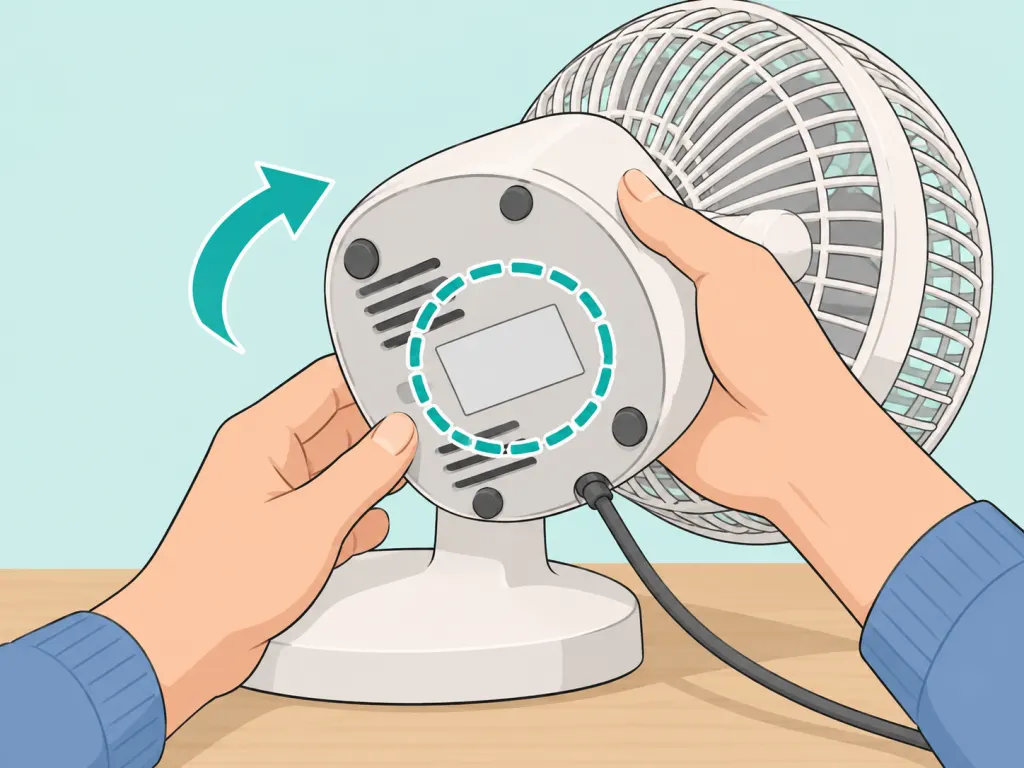
Look for a wattage number on the fan label, manual, box, or manufacturer page. The University of Maryland Extension notes that power ratings are often listed on the device, in the manual, or on the manufacturer's website, so start with the most specific number you can find: checking the device power rating.
Step 2: Estimate watts from amps and volts if needed
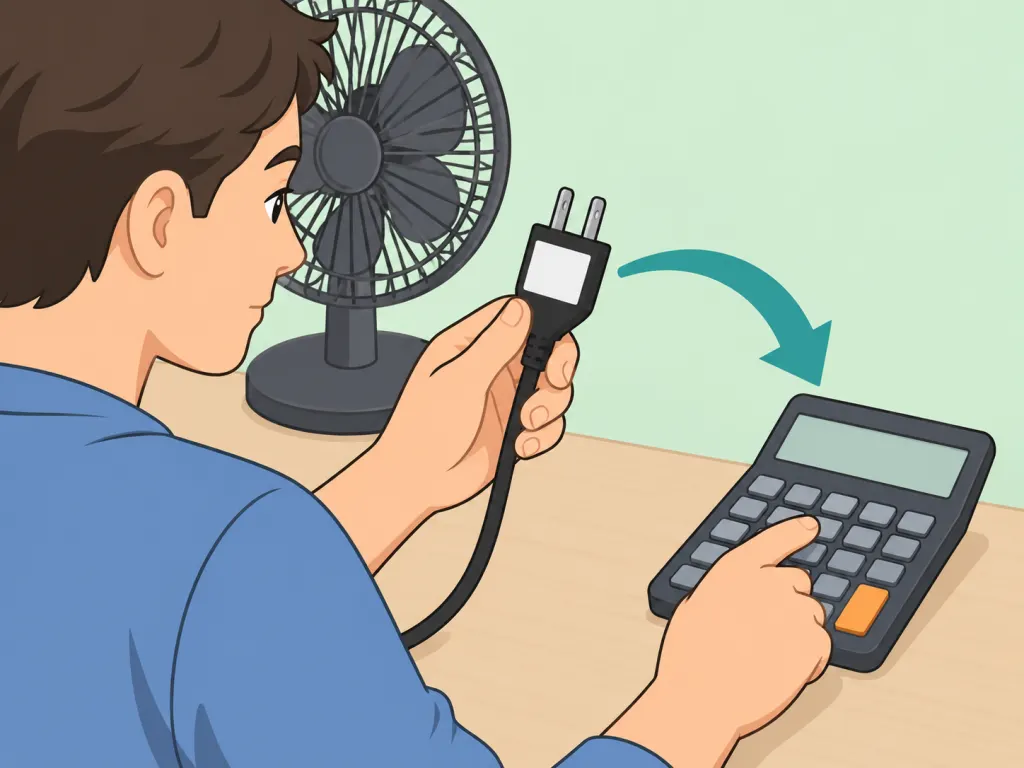
If the label lists amps and volts instead of watts, multiply amps by volts to estimate watts. For example, a fan labeled 0.5 amps on a 120-volt household circuit is about 60 watts. This is an estimate, but it is useful when the wattage is not printed clearly.
Step 3: Write down how many hours the fan runs

Use the number of hours the fan actually runs in a typical day. If the schedule changes, do separate calculations for each pattern, such as weekdays and weekends. For a monthly estimate, multiply daily hours by the number of days you expect to use the fan.
Step 4: Convert the use into kilowatt-hours
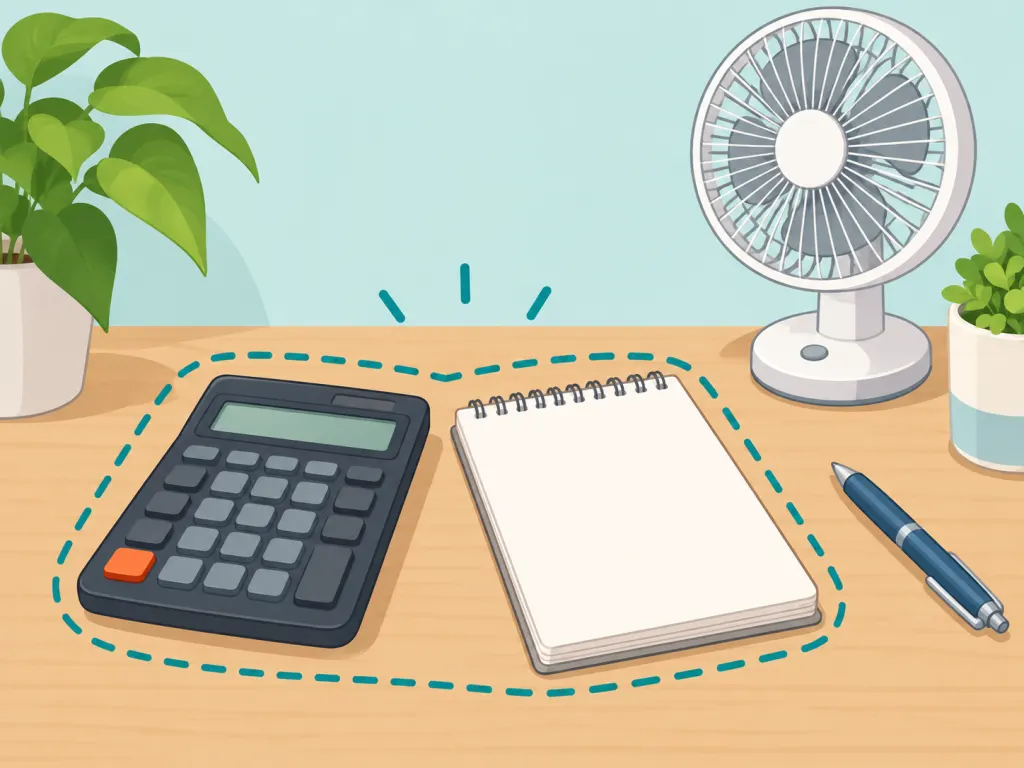
Multiply watts by hours, then divide by 1,000. The U.S. Energy Information Administration explains that electricity use over time is measured in watt-hours and kilowatt-hours, with one kilowatt equal to 1,000 watts. A 50-watt fan running 6 hours uses 300 watt-hours, or 0.3 kWh.
Find your price per kWh on your electric bill, then multiply it by the kWh from the previous step. As a national example, EIA's June 2026 electric power summary listed the U.S. residential average price at 18.34 cents per kWh. At that rate, 0.3 kWh costs about 5.5 cents for one day.
Step 6: Scale the result for a month or multiple fans
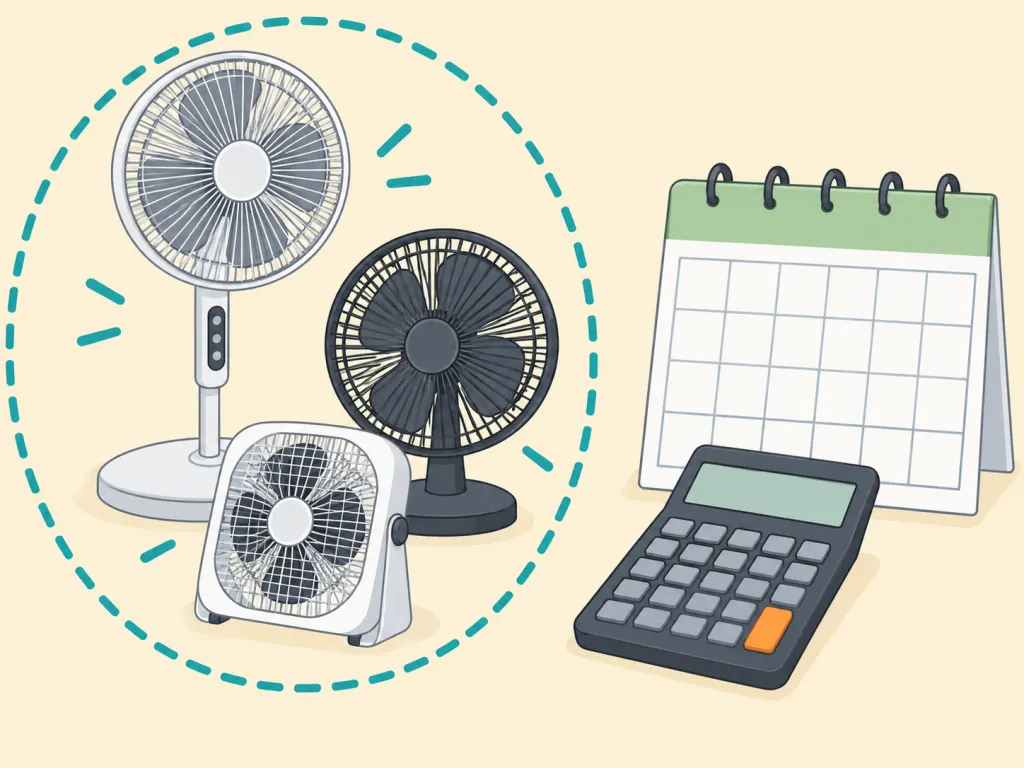
For one fan, multiply the daily cost by the number of days used. For several similar fans, multiply the result by the number of fans; for different fans, calculate each one separately and add the totals. A 50-watt fan running 6 hours a day for 30 days uses 9 kWh, which costs about $1.65 at 18.34 cents per kWh.
Step 7: Use the number to make a saving choice
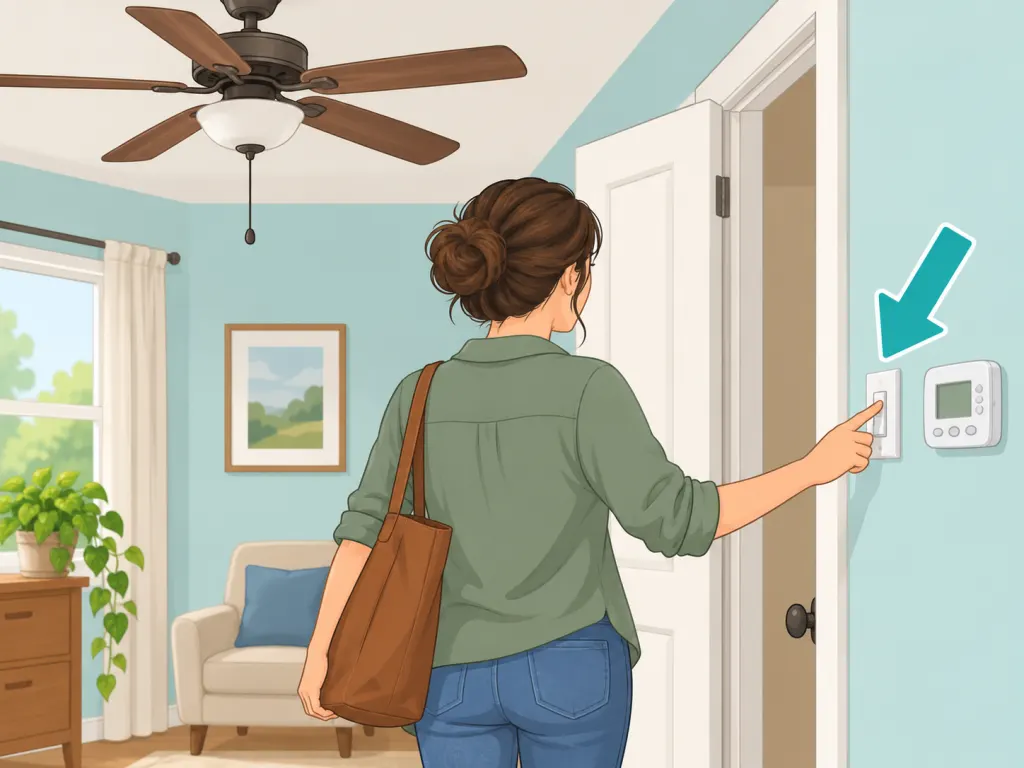
A fan saves the most when it helps you stay comfortable while using less air conditioning. The Department of Energy says a ceiling fan can let you raise the thermostat setting about 4°F with no reduction in comfort, but also notes that fans cool people, not rooms, so turn the fan off when you leave. If you are replacing a ceiling fan, ENERGY STAR says certified models are up to 44% more efficient than conventional fans.
Wrap-Up
The bottom line: fan cost is a simple wattage problem. Convert watts and hours into kilowatt-hours, multiply by your real electric rate, and repeat the math for each fan or setting you use.
Frequently Asked Questions
- → What is the basic formula for fan running cost?
Use this formula: watts x hours used ÷ 1,000 = kWh, then multiply kWh by your electricity price per kWh.
- → How much does a 50-watt fan cost to run for 6 hours a day?
A 50-watt fan used 6 hours a day uses 0.3 kWh per day. At 18.34 cents per kWh, that is about 5.5 cents per day, or about $1.65 for 30 days.
- → Where do I find my electricity rate?
Look on your electric bill for a line that lists cents per kWh or dollars per kWh. If the bill has several electricity charges, dividing the total electric charges by total kWh used gives a rough all-in rate.
- → Does fan speed change the cost?
Yes. Higher speeds usually use more watts, so calculate with the wattage for the speed you actually use when that information is available.
- → Should I include the ceiling fan light?
Yes, if the light is on. Count the fan motor and the light kit separately, then add the two costs together.
- → Does a fan cool the room itself?
A fan mainly helps people feel cooler by moving air. For energy savings, turn it off when no one is in the room to feel the breeze.
References
This content was developed and refined using reliable sources.
- https://www.eia.gov/energyexplained/electricity/measuring-electricity.php
- https://www.eia.gov/electricity/monthly/epm_table_grapher.php?from=article_link&t=epmt_es1a
- https://extension.umd.edu/resource/working-solar-design-and-system-sizing-fs-2023-0655
- https://www.energy.gov/articles/top-11-things-you-didnt-know-about-saving-energy-home-summer-edition
- https://www.energystar.gov/products/ceiling_fans