 Save
If you see small moths around flour, cereal, rice, pasta, nuts, spices, dried fruit, pet food, or birdseed, the fastest useful answer is this: find the infested package, seal it, throw it out, vacuum the pantry thoroughly, wash shelves with soap and water, and store remaining dry goods in tight containers. Pantry moths, especially Indianmeal moths, usually spread from stored dry food, not from dirty kitchens. The University of Minnesota Extension notes that pantry pests contaminate more food than they eat and that discarding contaminated food plus cleaning storage areas is the main control step: https://extension.umn.edu/garden-and-home/home-maintenance/household-insects/pantry-pests-insects-found-in-stored-food.
What pantry moths are actually doing in your food
The moths people notice in kitchens are often adult Indianmeal moths. The adult moths are the visible clue, but the larvae are the stage that feeds in stored dry products. University extension sources describe the common signs as webbing in packages, small caterpillar-like larvae, tiny moths flying in kitchens or nearby rooms, and sometimes larvae or cocoons on walls and ceilings after they leave the food to pupate. The University of California Statewide Integrated Pest Management Program explains that pantry pests commonly arrive in an already infested food package and may not be obvious until adults are flying or insects appear near stored food: https://ipm.ucanr.edu/home-and-landscape/pantry-pests/.
This is why swatting the flying moths rarely ends the problem. The source is usually a forgotten or recently purchased package somewhere in the pantry, utility shelf, baking drawer, pet-food bin, or decorative stored seed item. Pantry moth larvae can feed on many dry foods, including cereal products, flour, cake mix, cornmeal, rice, pasta, crackers, cookies, dried beans, popcorn, nuts, chocolate, dried fruit, spices, powdered milk, tea, dry pet food, and birdseed. Even unopened paper, cardboard, cellophane, thin plastic, or loosely folded packages can be vulnerable because insects may crawl into seams or chew through weak packaging.
Start by finding the source, not by deep-cleaning everything at once
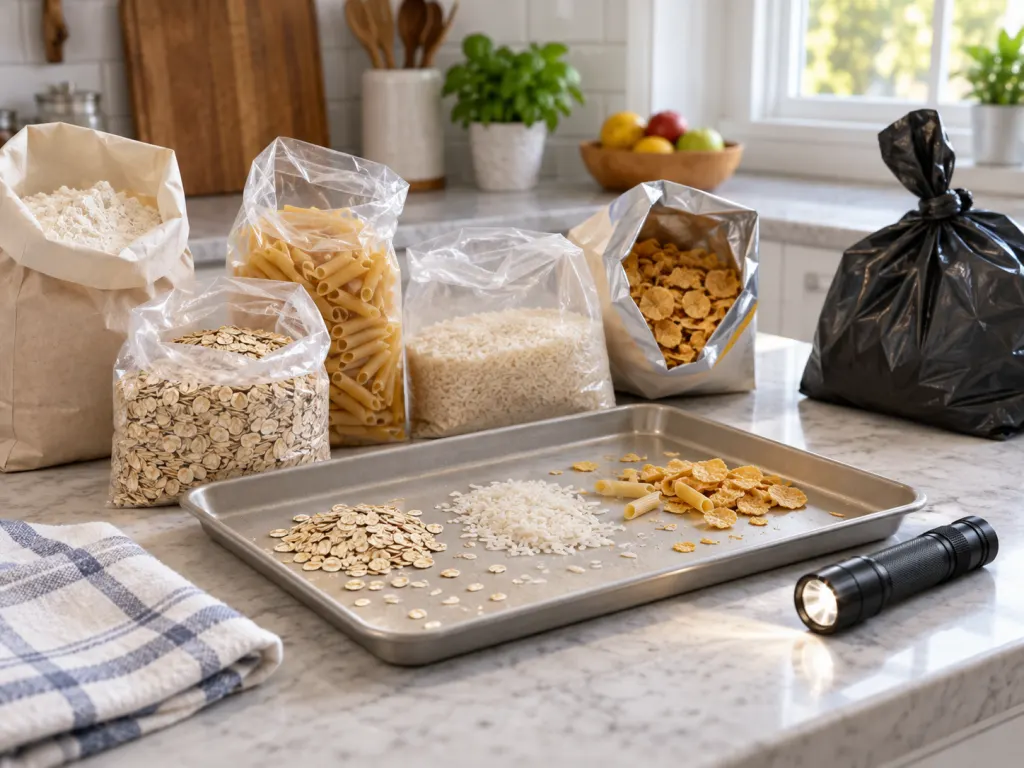
Before pulling every container onto the counter, place a trash bag nearby, clear a work surface, and inspect by category. Start with older, opened, forgotten, or seldom-used dry goods. Then check newer packages, especially bulk-bin purchases and items with torn seals. Look closely at package corners, folded tops, and the surface of the food. Webbing, clumps that look lightly bound together, larvae, shed skins, adult moths, unusual holes, or fine debris are reasons to discard the item. If you are unsure, pour a small amount onto a light-colored baking sheet and inspect it under bright light.
A careful search matters because more than one item may be involved. Colorado State University Extension advises a thorough search of dried foods, including often-overlooked dog food and birdseed, and notes that continued moth activity for longer than about three weeks can suggest an unfound source: https://extension.colostate.edu/resource/moths-in-the-home/. Treat the first obvious package as a clue, not necessarily the whole answer.
- Check baking staples: flour, cornmeal, cake mix, pancake mix, oats, bran, and breadcrumbs.
- Check grains and pantry starches: rice, pasta, cereal, crackers, dry mixes, and whole grains.
- Check concentrated foods: nuts, dried fruit, chocolate, powdered milk, tea, spices, seeds, and popcorn.
- Check nonhuman food: dry pet food, birdseed, animal treats, garden seeds, and rodent bait stored indoors.
- Check nearby hiding places: shelf holes, pegboard openings, lid grooves, basket seams, ceiling corners, and the tops of cabinets.
Discard infested food promptly and contain the trip out of the house
When a package shows moths, larvae, or webbing, the most practical choice is to seal it and remove it from the home. Do not leave the open package in the kitchen trash overnight. Tie it in a bag, place it in an outdoor bin if available, and wipe or wash any reusable container before returning it to storage. If the infested food was inside a canister, empty the canister outside the pantry area, wash it with hot soapy water, dry it fully, and inspect the lid gasket or grooves before reuse.
Some extension guidance describes freezing or heating uncertain dry goods to kill insects and eggs, but that approach is best reserved for items that show no visible contamination and that you genuinely want to salvage. The University of Minnesota Extension lists freezer and oven temperature options for older food when infestation is uncertain, while still advising that food known to be infested should be thrown away. In a home kitchen, visible webbing, larvae, or debris is enough reason to discard, especially for flour, cereal, grains, nut pieces, or powdered foods where contamination is hard to separate from the food itself.
Clean shelves like you are removing crumbs and hidden larvae
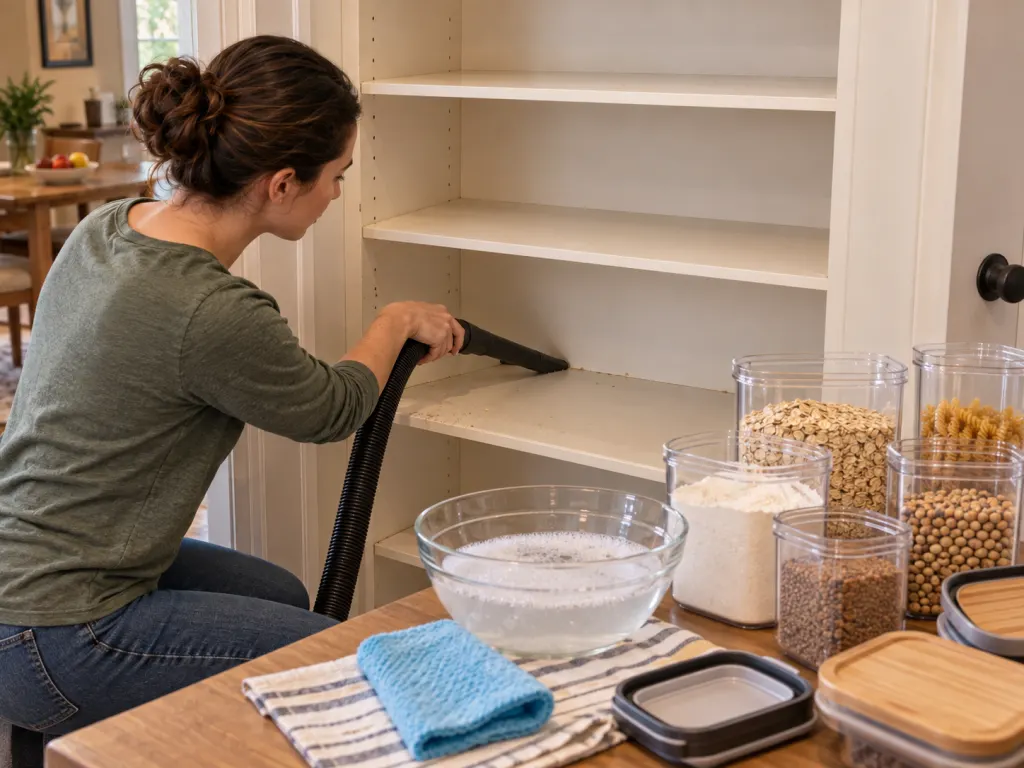
After discarding suspect items, empty the affected shelf or cupboard. Vacuum shelves, corners, shelf-pin holes, drawer tracks, wall seams, and the underside of shelf lips with a crevice tool. Then remove the vacuum bag or empty the canister into a sealed trash bag outside the living area. Follow with warm water and dish soap on washable surfaces, then dry everything completely before restocking. Soap and water help remove food dust and residue; dryness matters because many stored-product pests do better where food debris and moisture linger.
Bleach, ammonia, strong disinfectants, essential oils, bay leaves, and mint gum are not reliable moth control. University of Minnesota Extension specifically notes that washing with detergent, ammonia, or bleach will not prevent infestation, and it reports no evidence that bay leaves or spearmint gum prevent or remove stored-food insect pests. Strong cleaners can also create avoidable problems if residues contact food. For pantry moths, the boring method is the one that works: remove the infested food, remove the crumbs, close the gaps in storage, and keep watching for activity.

Use pheromone traps as monitors, not as the whole solution
Pheromone traps can be useful after cleanup because they tell you whether adult moths are still active. They are not a substitute for finding infested food. UC IPM explains that traps for Indianmeal moths attract adult males and can help detect pests that remain after the source has been removed, but they will not pull larvae out of food packages or catch every adult. Place traps near the previous activity zone, follow the package directions, and check them weekly. If fresh moths keep appearing in traps, inspect stored foods again.
Be precise about trap type. A trap labeled for pantry moths may not attract pantry beetles, and a clothes-moth trap belongs near fabrics, not flour. Utah State University Extension describes Indianmeal moths as weak, meandering fliers with copper-colored wing tips and lists stored grains, cereals, dried fruits, seeds, nuts, powdered milk, chocolate, spices, dry pet food, and birdseed among the foods they can use: https://extension.usu.edu/planthealth/ipm/notes_nuisance/indian-meal-moth. If your insects are beetles rather than moths, the cleanup principles are similar, but the trap and identification details may differ.
Do not spray insecticide in food cupboards
Routine insecticide spraying is a poor fit for pantry moths because the main problem is inside packages and food debris, not on open shelf surfaces. University of Minnesota Extension says insecticides are not recommended for insects in stored food cupboards and that household insecticides have no effect on insects inside food packages. UC IPM likewise says insecticides are not recommended for pantry pests and warns that spraying pesticides on or near food may cause more concern than the pests themselves.
If you use any pesticide elsewhere in the home, read and follow the label exactly. The U.S. Environmental Protection Agency says pesticide labels must be followed and that products should be used only as directed: https://www.epa.gov/indoor-air-quality-iaq/pesticides-impact-indoor-air-quality. EPA also advises storing pesticides in original labeled containers and never in cabinets with or near food, animal feed, or medical supplies: https://www.epa.gov/safepestcontrol/storing-pesticides-safely. If food, dishes, or pantry surfaces come into contact with pesticide, discard affected food and clean washable items thoroughly before reuse.
Restock the pantry in a way that breaks the cycle
Once shelves are clean and dry, restock only food you have inspected. Move vulnerable dry goods into rigid containers with tight lids. Glass jars, metal tins, and sturdy food-storage containers are better barriers than rolled bags, thin plastic, paper, or cardboard. Do not pour a new bag of flour into an old flour container without washing and drying the container first; if the old container held eggs or larvae in a lid groove, the fresh food can become the next source. Date labels are helpful because long storage gives hidden insects more time to develop.
For foods you use slowly, consider refrigerator or freezer storage if the product quality allows it. Flour, nuts, whole grains, seeds, and some specialty baking ingredients are common candidates. Buy dry foods in quantities your household can use within a reasonable period, rotate older packages forward, and avoid bringing home damaged packaging. A tidy pantry does not need to look staged; it needs to make inspection easy. Clear containers, visible dates, and fewer half-used duplicates make moth problems easier to catch early.
How long it takes to know the problem is gone
You may still see a few adult moths after the source has been removed because some larvae may already have left the food to pupate. The key question is whether activity declines. If moths continue appearing for several weeks, return to inspection mode. Look beyond the obvious pantry shelf: check a bag of birdseed in the laundry room, a box of old crackers in a basement cabinet, pet treats near the back door, holiday decorations made with seeds or grains, and bulk dry goods in storage bins. The unfound source is often outside the main cooking zone.
For apartments or shared buildings, keep the focus on your own stored foods first, then consider nearby shared storage if the issue persists. Pantry moths can arrive from the store, from another infested package, or from overlooked dry products already in the home. They do not damage the building structure and, according to University of Minnesota Extension, pantry pests do not bite or sting people or pets. The practical task is containment: remove food sources, clean the places where crumbs collect, and make future food harder to enter.
A simple reset plan for today
If the pantry feels overwhelming, handle it in a clear order. First, throw away food with visible moths, larvae, webbing, or unexplained clumping. Second, inspect every nearby dry product, including pet food and birdseed. Third, vacuum and wash shelves, cracks, lids, and containers. Fourth, put clean food into tight rigid containers. Fifth, place a pantry-moth pheromone trap near the old activity area and check it weekly. Finally, schedule a second inspection in two to three weeks. That follow-up is what catches the one overlooked source before it restarts the cycle.
Wrap-Up
Getting rid of moths in food is less about a dramatic treatment and more about a disciplined pantry reset. The reliable steps are to identify the infested dry food, seal and discard it, inspect nearby packages, vacuum cracks and corners, wash and dry shelves, avoid spraying insecticide in food storage areas, and restock in tight containers. Pheromone traps can help you monitor for adults after cleanup, but they cannot replace removing the source. If moths keep showing up after several weeks, assume another dry-food item, pet-food bag, seed product, or hidden spill still needs attention.
Frequently Asked Questions
- → Can I just throw away the one bag where I found moths?
Start there, but do not stop there. Pantry moths often spread from one package into nearby dry goods, especially opened or loosely sealed items. Inspect flour, cereal, rice, pasta, nuts, dried fruit, spices, pet food, birdseed, and older shelf items before restocking.
- → Are pantry moths the same as clothes moths?
No. Pantry moths are associated with stored dry food, while clothes moths are associated with fabrics and natural fibers. If you see moths near flour, cereal, grains, pet food, or webbing in food packages, pantry moths are more likely. If the activity is near closets or woolens, identify the insect before choosing a control method.
- → Should I use bleach after pantry moths?
Bleach is not needed for moth control and will not keep pantry moths from returning. Vacuum crumbs and cracks, wash shelves with soap and water, dry surfaces well, and remove the infested food source. Avoid strong chemical residues where food will be stored.
- → Do pantry moth traps get rid of the whole problem?
Traps can help monitor adult moth activity, but they do not remove larvae from food packages. Use traps after you discard infested food and clean the storage area. If traps keep catching fresh moths, inspect again for an overlooked source.
- → What containers work best after cleanup?
Use tightly closing glass, metal, or heavy plastic containers. Thin bags, rolled paper packages, cardboard boxes, and loose clips are weaker barriers. Wash and dry old containers before refilling them so hidden eggs, larvae, or food dust are not carried into new food.
- → Why am I still seeing moths after cleaning?
A few adults may appear after cleanup, especially if larvae had already left the food source. Activity should decline. If moths continue for several weeks, check overlooked items such as pet food, birdseed, old baking mixes, nuts, dried fruit, spices, decorative seed items, and crumbs in shelf cracks.
References
This content was developed and refined using reliable sources.
- https://extension.umn.edu/garden-and-home/home-maintenance/household-insects/pantry-pests-insects-found-in-stored-food
- https://ipm.ucanr.edu/home-and-landscape/pantry-pests
- https://extension.colostate.edu/resource/moths-in-the-home
- https://extension.usu.edu/planthealth/ipm/notes_nuisance/indian-meal-moth
- https://www.epa.gov/indoor-air-quality-iaq/pesticides-impact-indoor-air-quality
- https://www.epa.gov/safepestcontrol/storing-pesticides-safely