 Save
No, baking soda is not a good way to fix dog urine spots on your lawn. Dog urine damage is mainly a concentration problem: too much nitrogen-containing material, salts, and other urine components land in one small area. Colorado State University Extension specifically cautions that baking soda, or sodium bicarbonate, is itself a salt and may make the soil problem worse rather than repair the grass https://extension.colostate.edu/resource/dog-urine-damage-on-lawns-causes-cures-and-prevention/. The better first response is plain water on fresh spots, followed by reseeding or sod if the turf is already dead.
What Dog Urine Spots Usually Look Like
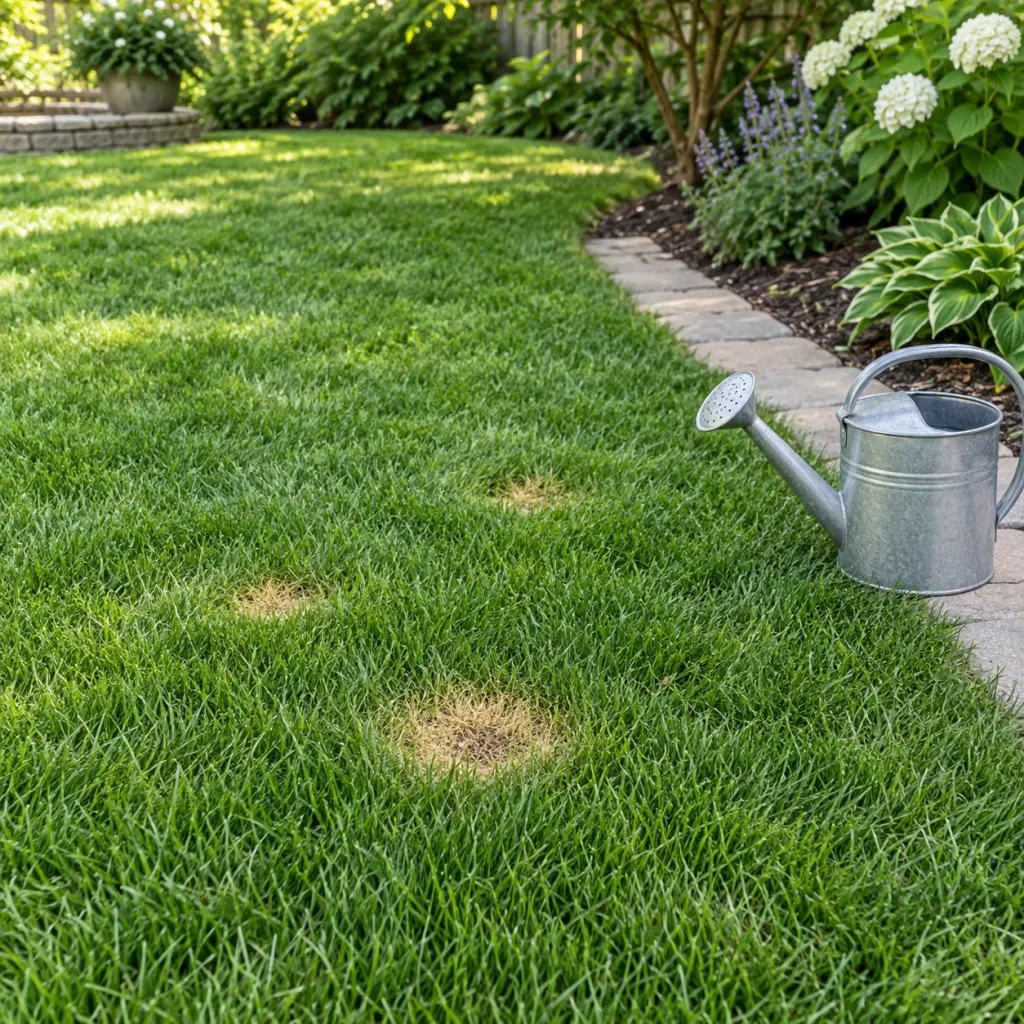
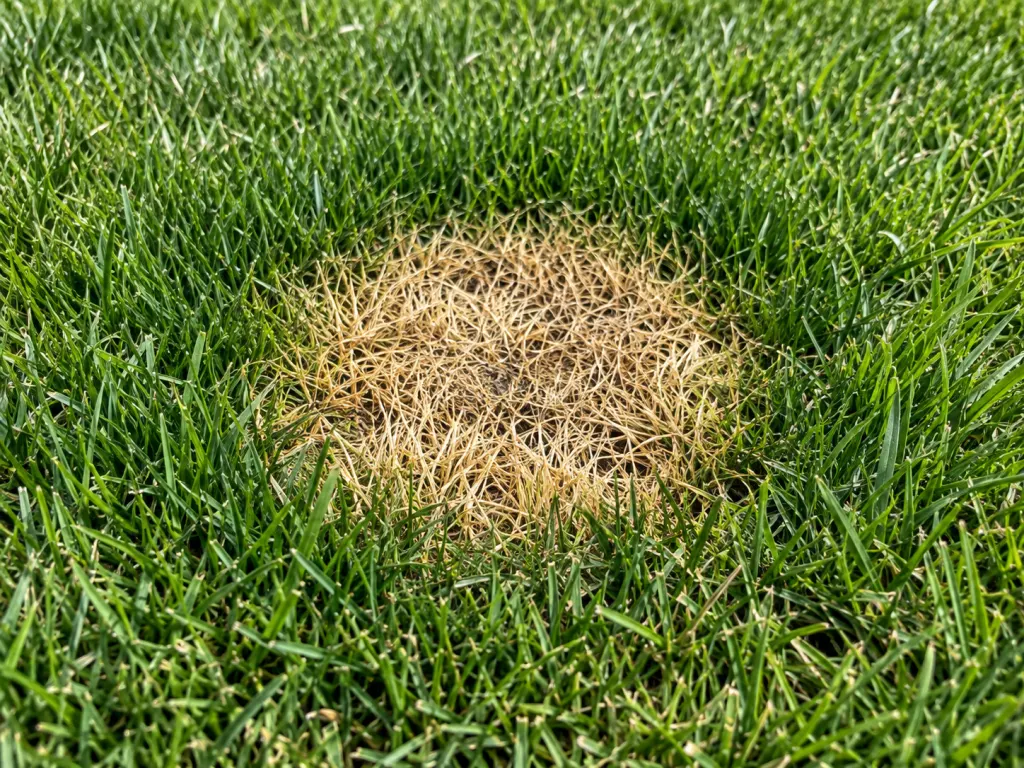
Dog urine spots often appear as small yellow, tan, straw-brown, or brown patches. Some have a darker green rim, which can be confusing because part of the lawn looks extra vigorous while the center looks damaged. NC State Extension describes mild urine patch as darker, taller grass and more severe injury as straw-colored spots with darker green perimeters https://content.ces.ncsu.edu/dogs-and-turfgrass-interactions. That ring pattern is one clue, although it is not the only possible cause of brown lawn patches.
The important point is that the grass is reacting to a concentrated deposit. In small amounts spread over a wide area, nitrogen can green up turf. In one small puddle, the same nutrient load can behave more like an over-application of fertilizer. University of Maryland Extension notes that dog urine damage can include deeper green growth from mild urea exposure and straw-brown dead patches with lush edges when exposure is greater https://www.extension.umd.edu/resource/improving-struggling-lawn-and-repairing-damage.
Why Baking Soda Is the Wrong Tool
The idea behind baking soda is usually that it will “neutralize” urine. That sounds tidy, but it does not match how turf injury usually happens. Colorado State University Extension explains that lawn spotting is not simply a pH problem and specifically says baking soda and gypsum are salts that may compound the issue https://extension.colostate.edu/resource/dog-urine-damage-on-lawns-causes-cures-and-prevention/. Sprinkling a salty household powder onto already stressed turf is not the same thing as washing excess material away from the root zone.
What Sodium Can Do to Soil and Plants
Baking soda is sodium bicarbonate. The sodium part matters because excess salts can interfere with plant water uptake and root function. UC Integrated Pest Management explains that high salt levels can injure roots and foliage, while high sodium can damage fine- and medium-textured soil structure, reducing pore space and the soil’s ability to hold air and water https://ipm.ucanr.edu/home-and-landscape/nutrient-and-mineral-excesses-salinity-and-salt-toxicity/. A single tiny sprinkle is not the same as a large salinity problem, but repeated applications are a poor direction for lawn care.
What Actually Helps a Fresh Spot
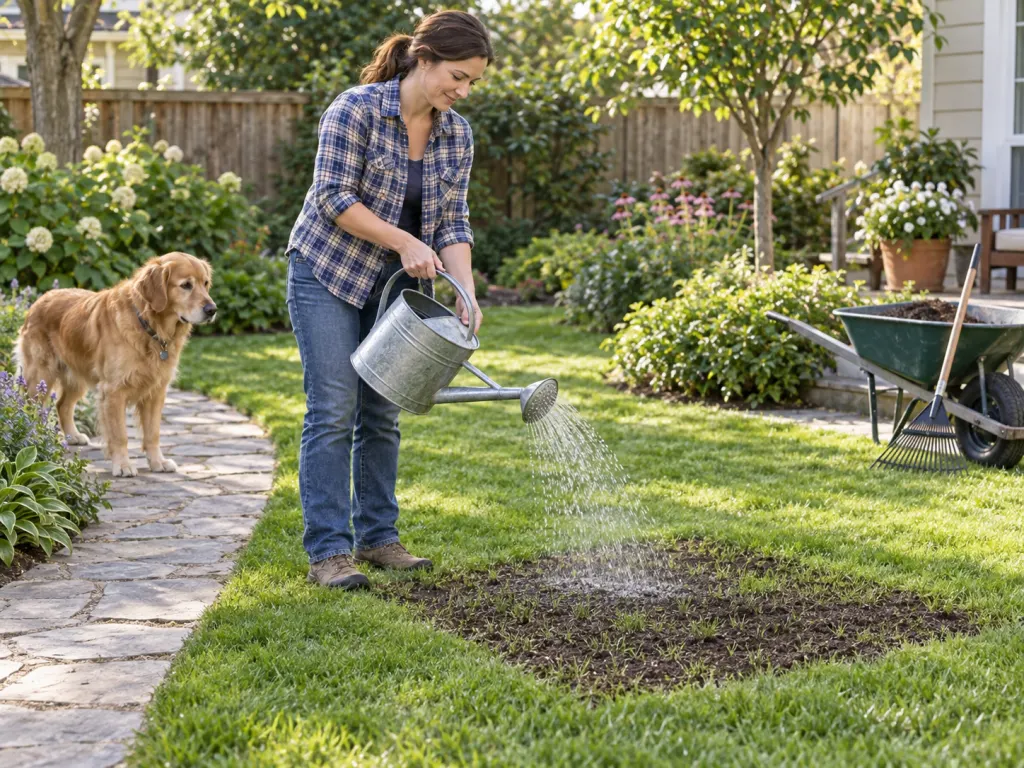
For a fresh urine spot, water is the useful response. Colorado State University Extension calls water the only practical product for neutralizing the negative effects of urine on grass https://extension.colostate.edu/resource/dog-urine-damage-on-lawns-causes-cures-and-prevention/. NC State Extension similarly recommends flushing the spot with plenty of water as soon as possible after urination, ideally immediately, to limit turf death https://content.ces.ncsu.edu/dogs-and-turfgrass-interactions. This does not erase every sign of damage, especially if the grass has already been injured, but it reduces concentration before the spot has time to set in.
A simple routine is enough. Keep a watering can near the door used for yard breaks, or use a hose if the area is close by. Soak the specific area rather than lightly misting the blades. The goal is not to add a product; it is to dilute and move the concentrated urine components away from the crown and upper root zone. This is most useful during hot, dry weather, when turf is already under stress and salts are less likely to be washed through by rainfall.
How to Tell If the Grass Can Recover
If the spot is only greener or slightly yellow, the turf may recover with ordinary watering and time. If the center is brittle, straw-colored, and easy to pull away, some of the grass may be dead. University of Maryland Extension advises raking away matted dead grass so seed or sod can make direct contact with soil when repairing damaged areas https://www.extension.umd.edu/resource/improving-struggling-lawn-and-repairing-damage. That contact is one of the quiet details that determines whether a repair fills in or stays thin.
A Practical Patch Repair Plan
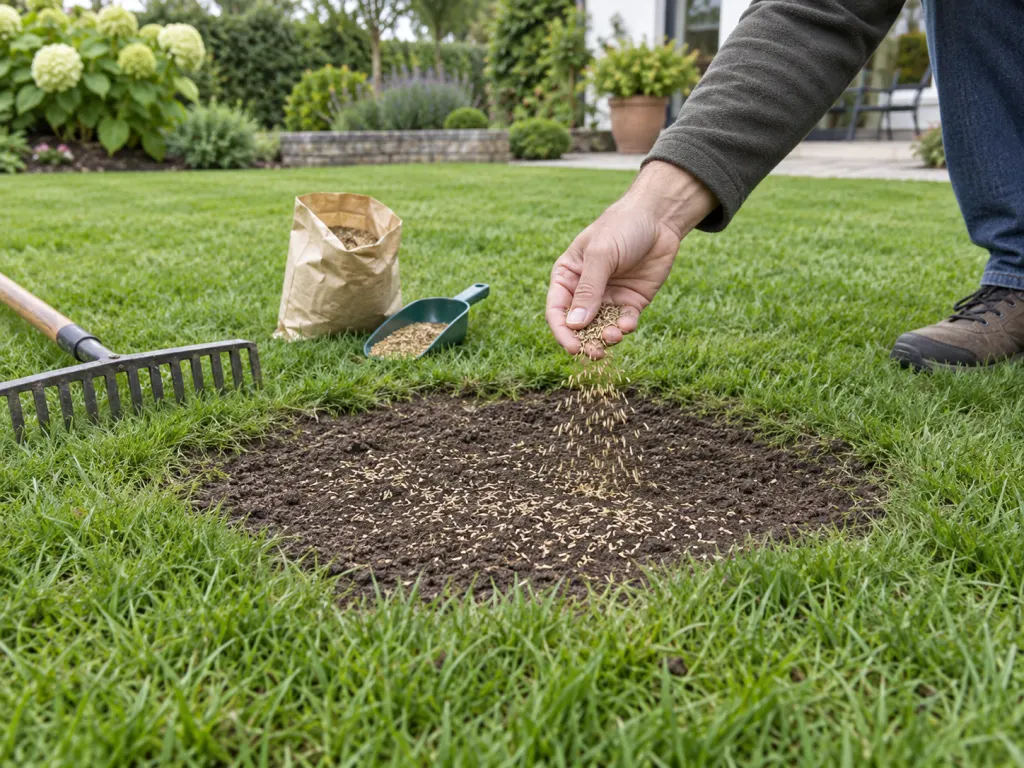
For a dead patch, start by removing loose brown grass and lightly roughening the top of the soil. If the soil surface is crusted, compacted, or lower than the surrounding lawn, correct that before seeding. Use a grass type that matches the surrounding lawn as closely as practical. University of Maryland Extension recommends using the same type of grass that forms the bulk of the existing lawn when overseeding or repairing sparse areas https://www.extension.umd.edu/resource/improving-struggling-lawn-and-repairing-damage. A patch kit that sprouts quickly may still leave an obvious color or texture difference if the seed mix does not match your yard.
After seeding, keep the surface lightly moist without turning it muddy. University of Minnesota Extension recommends keeping the soil surface slightly damp during establishment and avoiding both drying out and overwatering https://extension.umn.edu/garden-and-home/yard-and-garden/lawns-and-landscapes-in-minnesota/renovating-a-lawn-for-quality-and-sustainability. For small patches, hand seeding is usually adequate. For larger damaged zones, core aeration, overseeding, or a broader renovation may be more sensible than chasing spots one by one.
Why Some Lawns Spot More Than Others
Several factors affect how obvious the damage becomes. Large dogs usually deposit more urine volume. Dogs that squat often place urine in a tight area, while dogs that mark vertical objects may spread smaller amounts around edges, posts, or shrubs. Soil moisture matters too: NC State Extension notes that urine damage tends to be worse when soil is dry, when turf is not actively growing, and when air temperatures are high https://content.ces.ncsu.edu/dogs-and-turfgrass-interactions.
Grass type matters as well. NC State Extension reports that bermudagrass and zoysiagrass tolerate urine-related injury better than many cool-season grasses, while among cool-season species, tall fescue is more tolerant than creeping red fescue, perennial ryegrass, and Kentucky bluegrass in the cited research summary https://content.ces.ncsu.edu/dogs-and-turfgrass-interactions. That does not mean every yard should switch grasses. Climate, shade, winter wear, and local recommendations still come first.
Prevention That Fits Real Life
The most reliable prevention is behavioral and design-based: reduce repeated urination on the same patch of turf. A designated potty area can be mulch, pea gravel, or another paw-friendly non-turf surface. Penn State Extension’s petscaping guidance recommends creating a specific elimination area and training the pet to use it when lawn spotting is a recurring issue https://extension.psu.edu/petscaping-creating-a-pet-friendly-garden. A vertical post or stone can help some male dogs use the chosen area, while rewards and consistency help any dog learn the new routine.
Good prevention is not one dramatic fix. It is a set of small habits that lower concentration and repeat stress:
- Water fresh urine spots promptly when it is practical.
- Train your dog toward a low-visibility or non-turf potty area.
- Keep the lawn watered appropriately during dry spells so turf is less stressed.
- Repair dead patches with seed or sod that matches the existing lawn.
- Base fertilizer and lime decisions on soil tests rather than guesses.
- Avoid adding household products, salts, or food additives as lawn shortcuts.
Be Careful With Pet Supplements and Lawn Products
Changing a dog’s food, adding salts, or using supplements to alter urine chemistry is a different kind of decision from watering grass. Colorado State University Extension says no additive or supplement should be fed to a pet for this purpose without consulting a veterinarian, and it warns that some additives can have unintended health consequences https://extension.colostate.edu/resource/dog-urine-damage-on-lawns-causes-cures-and-prevention/. NC State Extension also advises consulting a veterinarian before adjusting a dog’s diet for lawn damage concerns https://content.ces.ncsu.edu/dogs-and-turfgrass-interactions.
Use similar caution with lawn products. University of Maryland Extension recommends basing fertilizer decisions on soil tests, following product labels, applying nutrients during the lawn’s active growth season, and avoiding applications before heavy rain or close to waterways https://extension.umd.edu/resource/lawn-and-yard-management. If a product label has pet or human re-entry directions, follow them exactly. A healthy lawn routine should not create avoidable risks for the people and animals using the yard.
When the Brown Spot May Not Be From Urine
Not every brown patch is a dog urine spot. Drought, dull mower blades, insects, fungal turf problems, compacted soil, grub activity, and heavy traffic can all create browning. University of Illinois Extension notes that pet damage is one possible cause of sporadic brown lawn areas, but it lists several other causes that can look similar at first glance https://extension.illinois.edu/blogs/flowers-fruits-and-frass/2018-08-29-brown-spots-lawn. If spots appear where the dog does not go, if the pattern spreads rapidly, or if roots are missing, take a closer look before assuming urine is responsible.
The Bottom Line
Baking soda belongs in the kitchen, not on a dog urine patch. For fresh spots, use water. For dead spots, remove the dead material, restore seed-to-soil contact, and reseed or patch with compatible turf. For recurring spots, redesign the routine so your dog has an acceptable non-turf area or so fresh spots are diluted quickly. The answer is less exciting than an internet hack, but it is more consistent with how grass, salts, soil, and dog urine actually interact.
Wrap-Up
Baking soda is not a dependable fix for dog urine spots, and extension sources caution that it can add salt to an already stressed area. The most useful immediate step is to soak fresh urine spots with water. Once grass is dead, repair depends on raking out the patch, preparing the soil surface, and reseeding or sodding with grass that matches the lawn. Longer term, a designated potty area, steady watering practices, soil-test-based lawn care, and veterinary guidance before any diet changes are the practical path.
Frequently Asked Questions
- → Can I sprinkle baking soda on an old dog urine spot?
It is better to skip baking soda. Extension guidance identifies baking soda as a salt, and salts can add stress to turf and soil. For an old dead patch, rake away dead grass, loosen the surface, and reseed or patch with matching sod.
- → How soon should I water a fresh urine spot?
As soon as practical. Water is most useful before the urine components concentrate in the grass and upper soil. A watering can near the door can make this easier for routine yard breaks.
- → Will the grass come back on its own?
Sometimes. Mild yellowing or extra green growth may improve with time and good watering. A straw-brown patch that pulls away easily usually needs repair, especially in clump-forming grasses that do not spread quickly into bare areas.
- → Are female dogs the only cause of lawn spots?
No. The pattern has more to do with where and how concentrated the urine is. Dogs that squat often deposit more urine in one small area, but any dog can create lawn spots if the same turf is used repeatedly.
- → Should I change my dog’s food to protect the lawn?
Do not change food or add supplements just for lawn appearance without veterinary guidance. A lawn problem is usually better handled with water, patch repair, and a designated potty area than with changes to a dog’s diet.
References
This content was developed and refined using reliable sources.
- https://extension.colostate.edu/resource/dog-urine-damage-on-lawns-causes-cures-and-prevention
- https://content.ces.ncsu.edu/dogs-and-turfgrass-interactions
- https://www.extension.umd.edu/resource/improving-struggling-lawn-and-repairing-damage
- https://ipm.ucanr.edu/home-and-landscape/nutrient-and-mineral-excesses-salinity-and-salt-toxicity
- https://extension.umn.edu/garden-and-home/yard-and-garden/lawns-and-landscapes-in-minnesota/renovating-a-lawn-for-quality-and-sustainability
- https://extension.umd.edu/resource/lawn-and-yard-management
- https://extension.psu.edu/petscaping-creating-a-pet-friendly-garden
- https://extension.illinois.edu/blogs/flowers-fruits-and-frass/2018-08-29-brown-spots-lawn