 Save
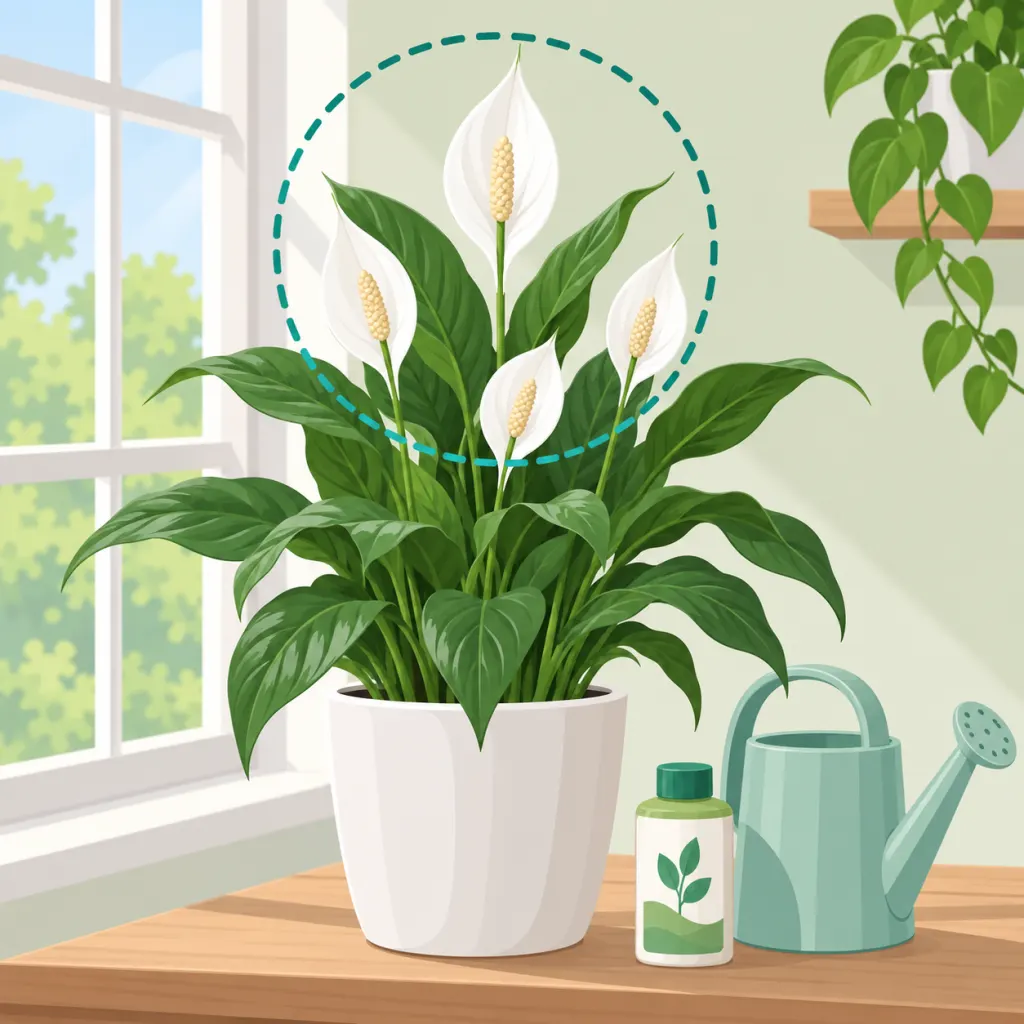
Peace lilies bloom best when their everyday care matches what the plant needs: bright filtered light, steady moisture, warmth, and gentle feeding. The white showy part is a spathe around the true flowers, and healthy plants usually bloom most readily in the brighter growing season. This guide explains how to adjust care without relying on harsh tricks or overfeeding.
Step 1: Move it into bright indirect light
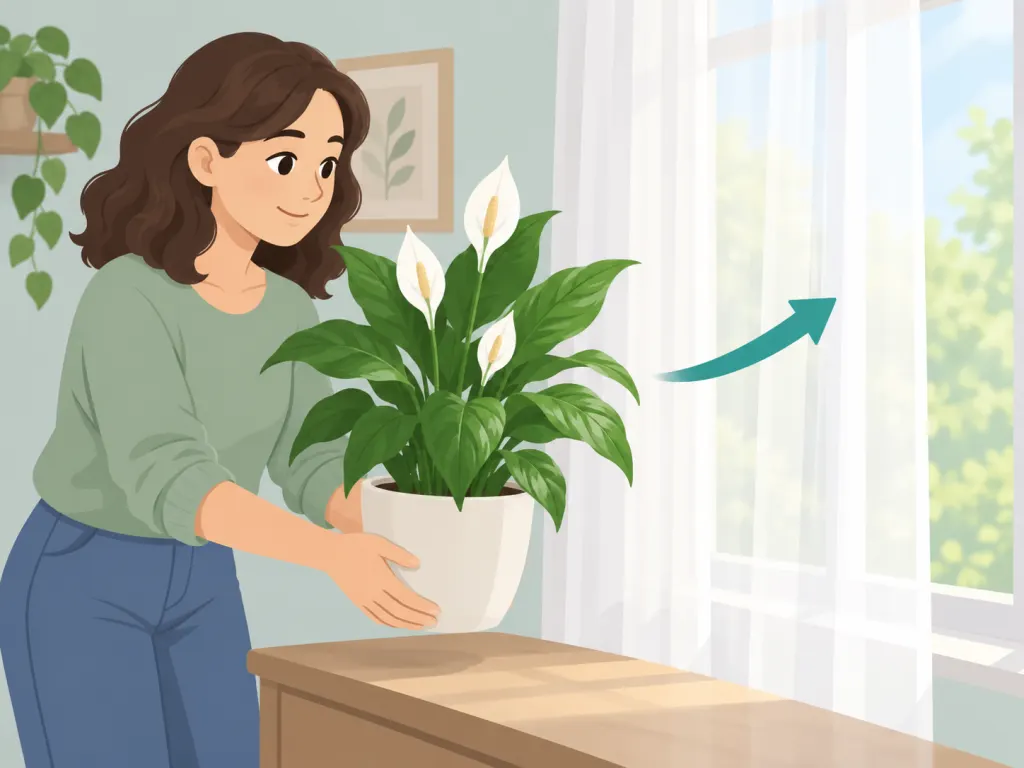
Place the peace lily near a bright window where it gets plenty of light without strong direct sun on the leaves. RHS says peace lilies need bright indirect light for strong growth and flowering, while plants kept in deeper shade rarely flower. An east-facing window or a spot a few feet from a brighter window often works well.
Step 2: Keep the temperature steady
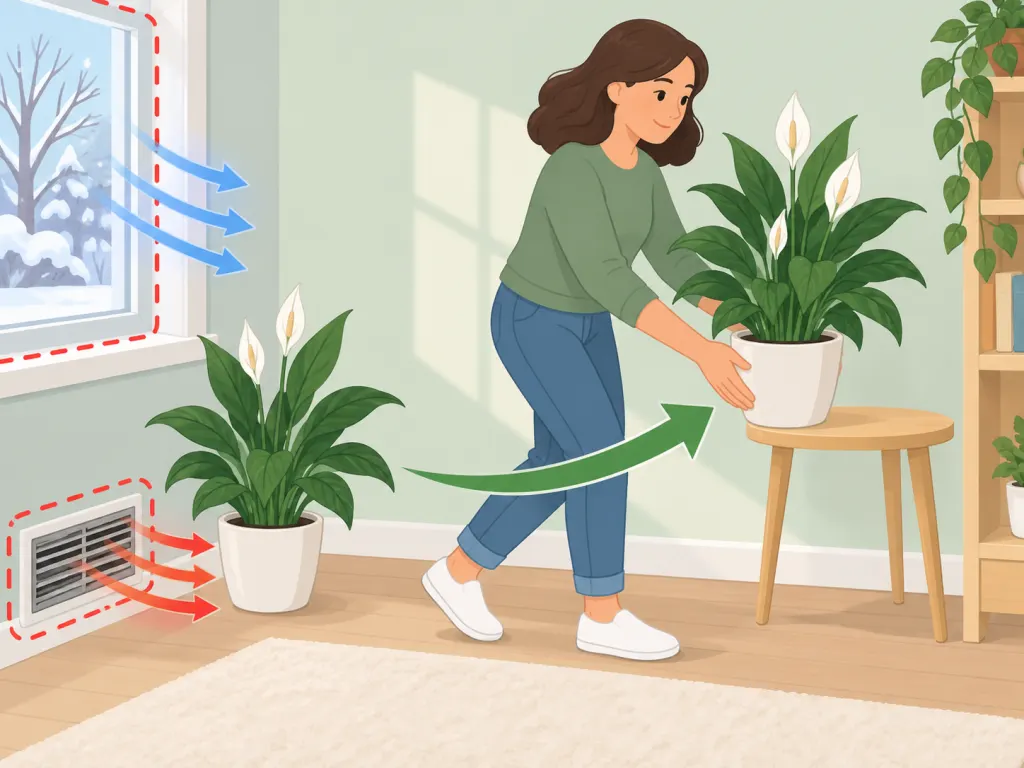
Choose a warm, sheltered spot away from cold drafts, heaters, radiators, and air-conditioning vents. RHS gives an indoor range of about 12 to 24 C (55 to 75 F), and Illinois Extension warns that extreme temperature changes can damage foliage. Stable conditions help the plant keep producing healthy new growth, which is what supports later blooms.
Step 3: Water when the top layer feels dry
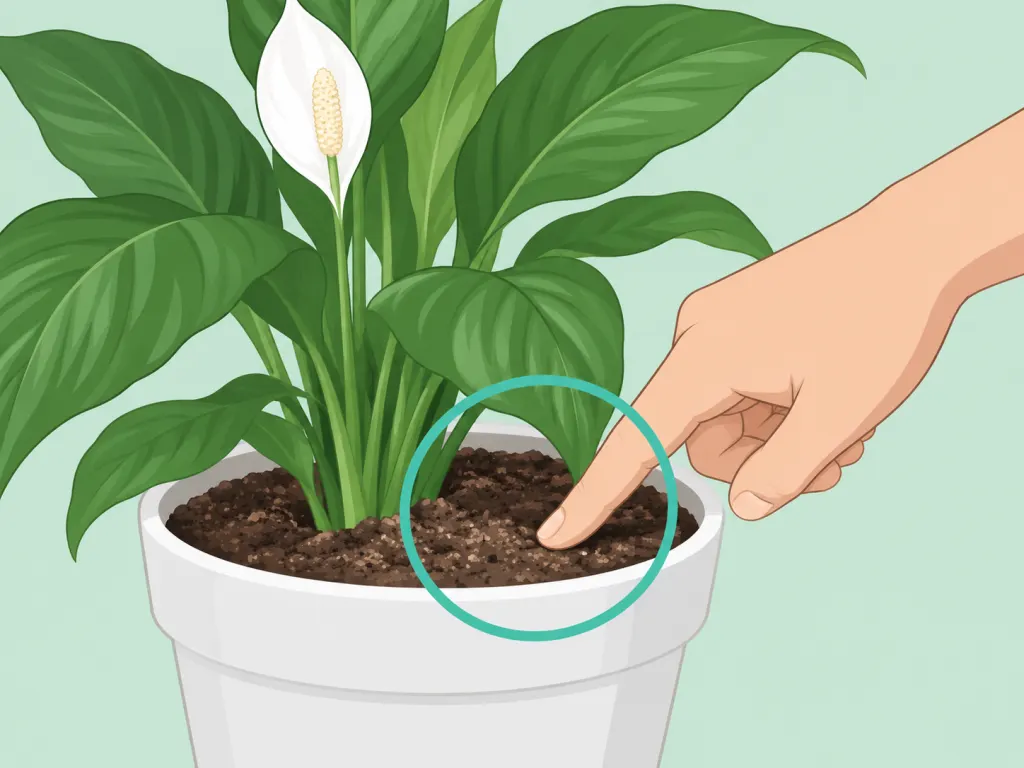
Check the potting mix with your finger before watering instead of using a fixed calendar. During active growth, RHS recommends watering once the top few centimetres of compost have dried, then watering less in winter. Empty any saucer after watering so the roots are moist but not sitting in water.
Step 4: Raise humidity around the plant
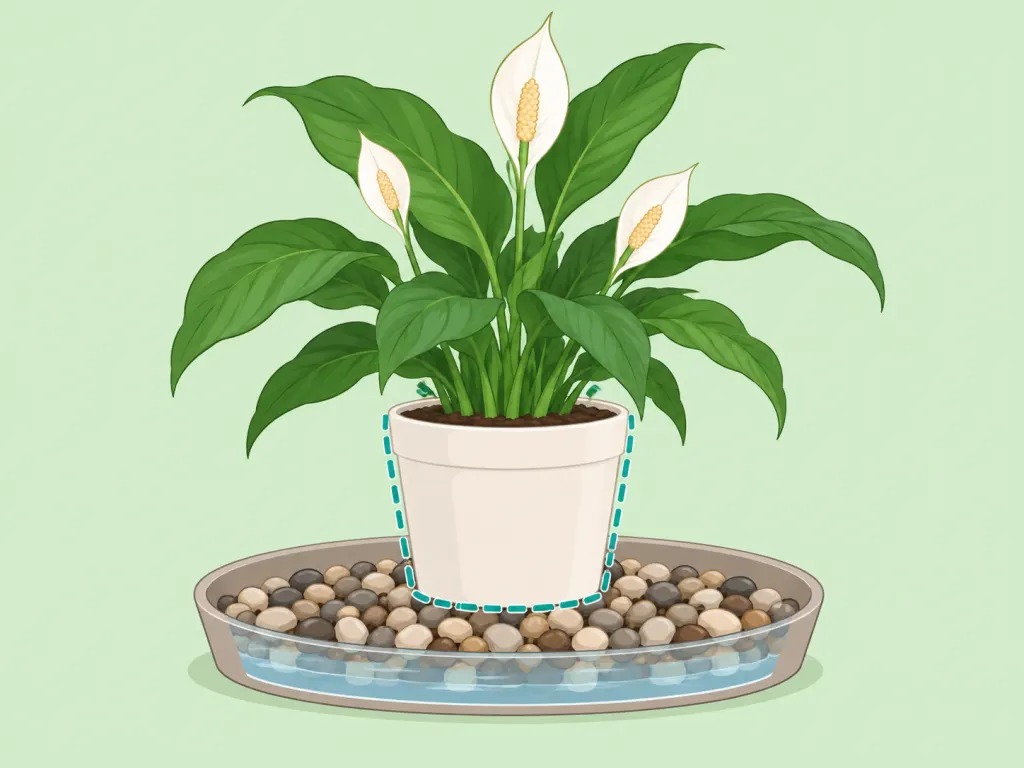
Peace lilies prefer moderate humidity, and dry indoor air can lead to brown leaf edges. Set the pot on a pebble tray with water below the pot base, group it with other houseplants, or use a room humidifier; Illinois Extension explains that pebble trays and humidifiers can raise humidity around houseplants. Keep the pot above the waterline so the roots are not constantly wet.
Use a balanced liquid houseplant fertilizer only while the plant is actively growing, usually spring through early fall. RHS lists monthly balanced liquid fertilizer during growth for Spathiphyllum, while Illinois Extension cautions that many houseplants need little or no fertilizer in the short days of winter. Always dilute according to the label, because stronger feeding can injure roots instead of encouraging blooms.
Step 6: Clean the leaves so they can use light
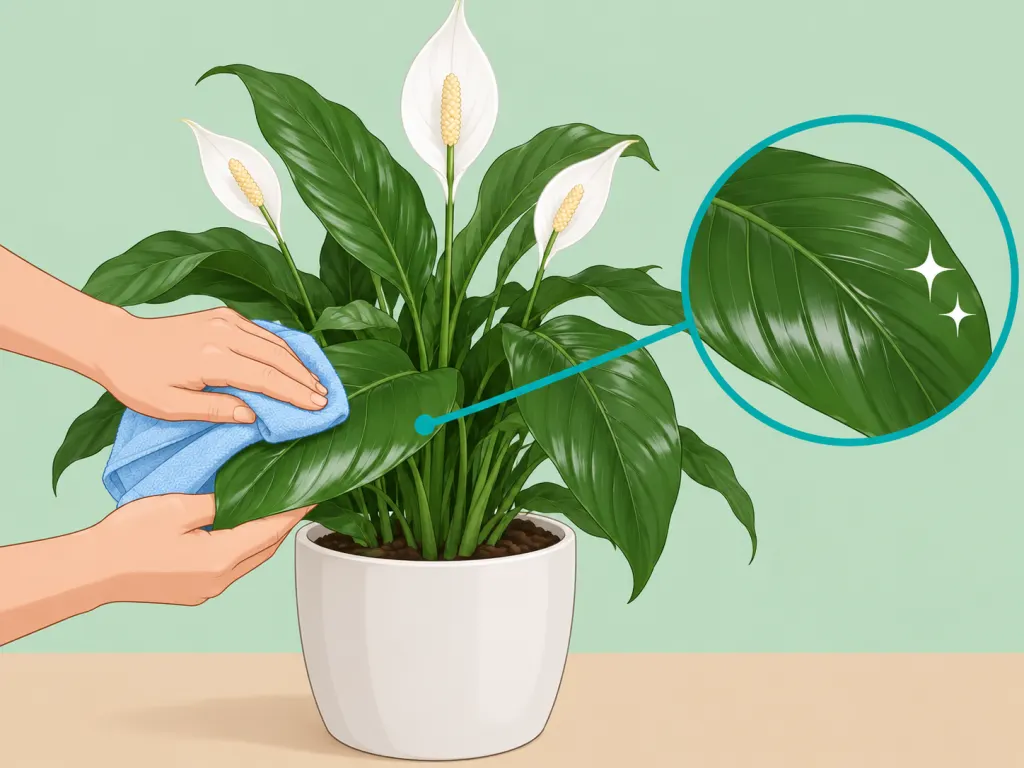
Wipe the broad leaves with a soft damp cloth every few weeks, especially if dust has built up. University of Georgia Extension notes that dust can shade leaf surfaces and recommends cleaning peace lily leaves with a damp sponge. Turn the pot a quarter turn after watering so the plant grows evenly toward the light.
Step 7: Cut spent flowers at the base
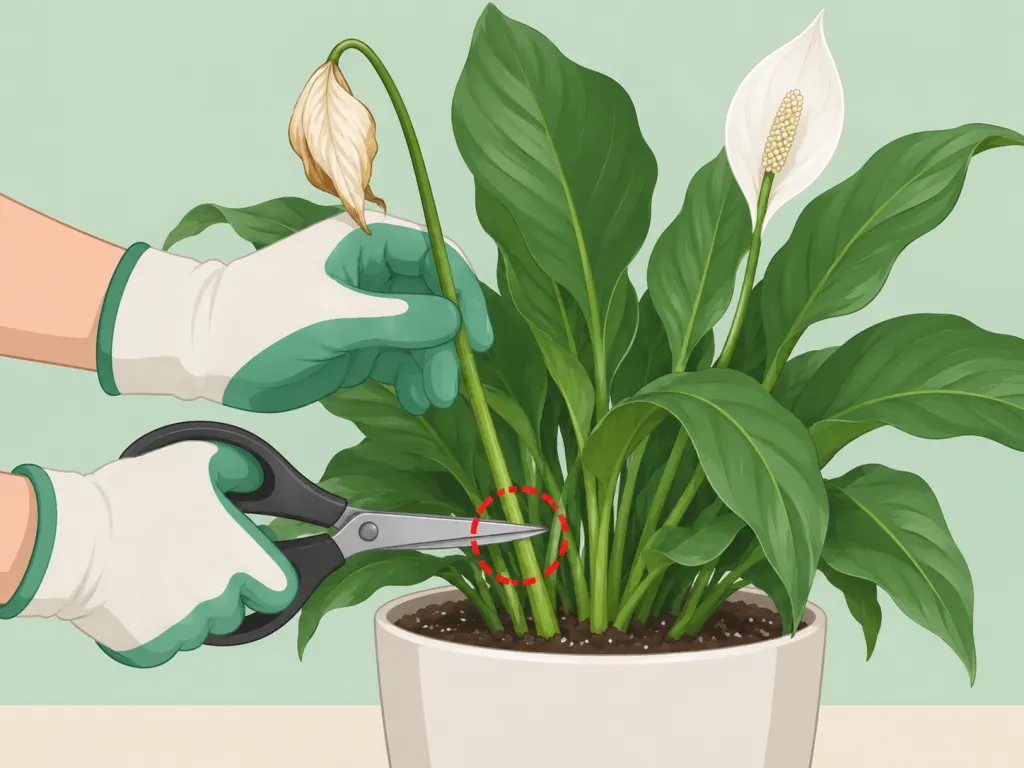
When a flower stalk fades, browns, or no longer looks fresh, snip it close to the base with clean scissors. RHS recommends removing spent peace lily flowers at the base of the stem. Removing old stalks does not force instant blooms, but it keeps the plant tidy and focused on healthy new growth.
Step 8: Repot only when the roots are crowded
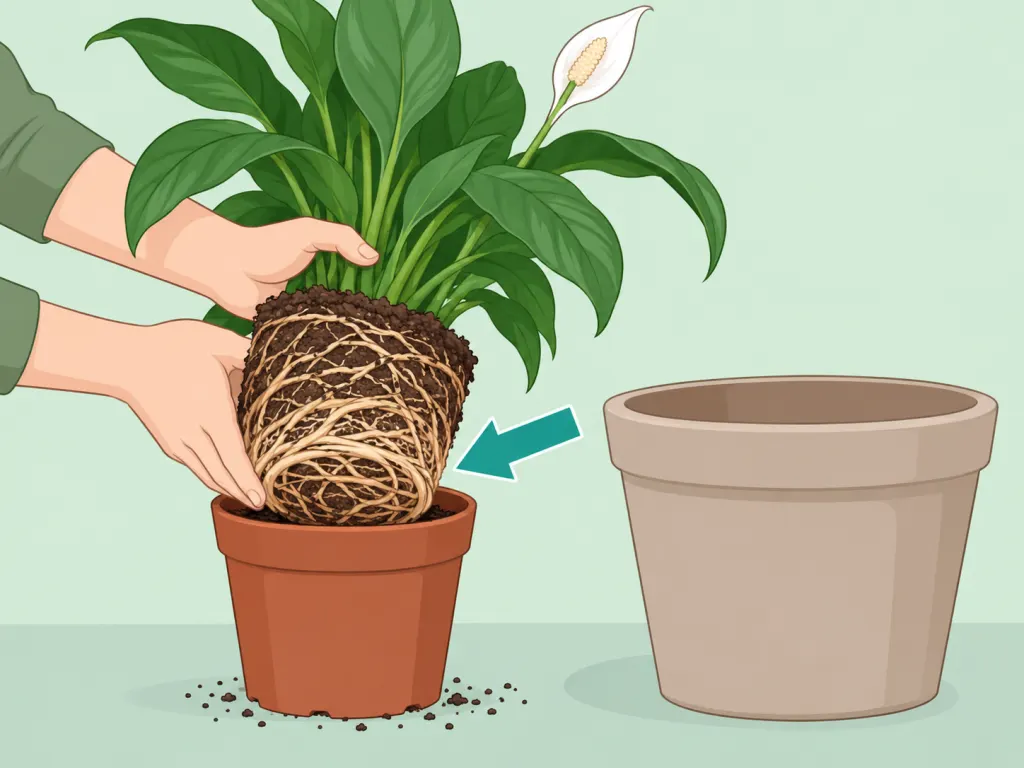
Check for roots circling tightly in the pot, roots growing through drainage holes, or soil that dries unusually fast. University of Minnesota Extension recommends repotting houseplants in spring only when they need it and choosing a pot just one size larger. A much larger pot can hold extra moisture, which can stress roots and slow recovery.
Step 9: Handle it safely and seek help after exposure
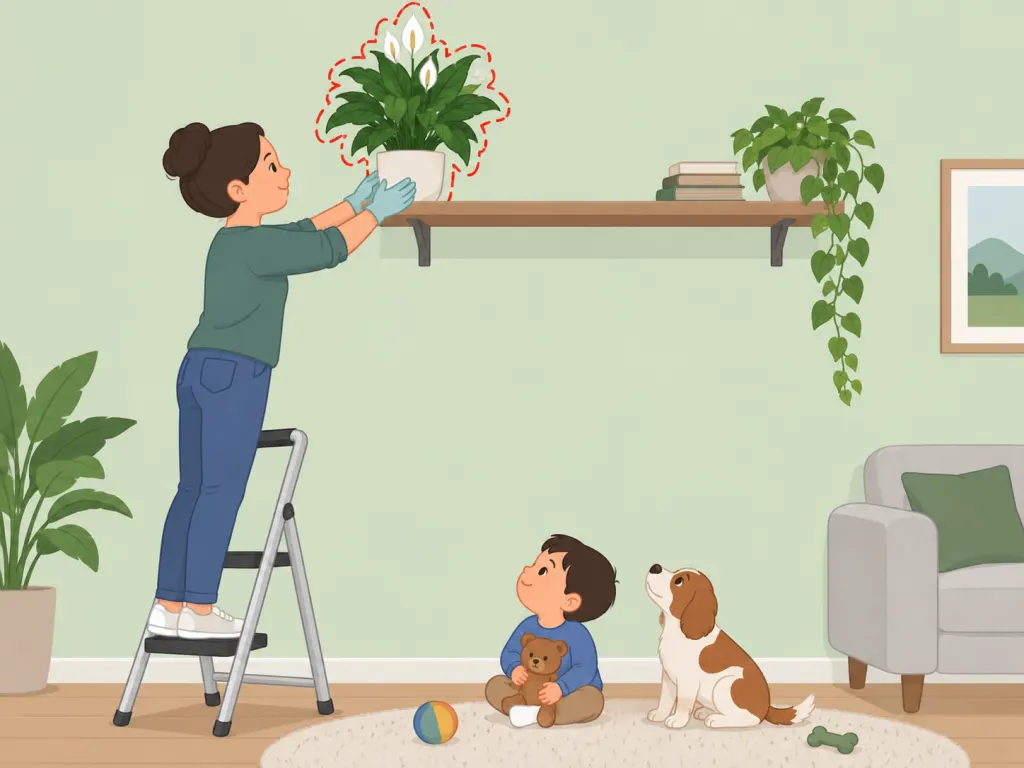
Wear gloves when pruning or repotting, and keep the plant out of reach of children and pets. RHS lists peace lily as harmful if eaten and a skin or eye irritant, and a PubMed-indexed review identifies Spathiphyllum among common plant poisoning exposures. If a person may have chewed or swallowed any part of the plant, MedlinePlus advises calling poison control right away when poisoning is suspected.
Wrap-Up
The bottom line: a peace lily blooms when it has enough bright indirect light, even moisture, comfortable warmth, moderate humidity, and gentle feeding while it is actively growing. If the plant is healthy but not flowering, light is usually the first condition to improve.
Frequently Asked Questions
- → Why is my peace lily healthy but not blooming?
The most common reason is too little usable light. Peace lilies tolerate low light, but RHS notes that deep shade often prevents flowering, so move the plant to bright indirect light and watch new growth over the next few months.
- → How long does it take for a peace lily to bloom after changing care?
Expect a gradual response rather than an instant one. New blooms usually depend on new growth, so improvements in light, watering, and feeding may take several weeks to months to show.
- → Should I use a bloom booster fertilizer?
A regular houseplant fertilizer is usually enough when the plant is actively growing. Illinois Extension advises following label directions and avoiding stronger mixtures because excess fertilizer can damage roots.
- → Do peace lilies bloom all year indoors?
They can flower indoors more than once, but their strongest bloom period is often tied to brighter seasonal growth. RHS describes peace lily spathes as mainly produced in spring and summer.
- → Should I cut off green or fading peace lily flowers?
Yes. Once a spathe has faded or turned green and you no longer like its look, cut the flower stalk near the base so the plant stays tidy and can direct energy into fresh growth.
- → Can a peace lily bloom in a windowless room?
It is unlikely to bloom well without a reliable light source. If a room has little or no natural light, use a suitable grow light or move the plant to a brighter spot with indirect light.
References
This content was developed and refined using reliable sources.
- https://www.rhs.org.uk/plants/peace-lilies/how-to-grow-peace-lilies
- https://www.rhs.org.uk/plants/17623/spathiphyllum-wallisii/details
- https://extension.illinois.edu/houseplants/care
- https://extension.umn.edu/garden-and-home/yard-and-garden/gardening-in-minnesota/houseplants/spring-houseplant-care
- https://extension.uga.edu/publications/detail.html?number=B1318
- https://www.medlineplus.gov/poisoning.html
- https://pubmed.ncbi.nlm.nih.gov/21034756