 Save
Natural homemade weed control is most useful when you match the method to the place: pull or mulch weeds in garden beds, use careful scraping or boiling-water-style heat only where it can be done safely, and reserve vinegar-based spot spraying for small weeds in pavement cracks or gravel where nearby plants will not be hit. The big caution is salt. It may brown unwanted growth, but salts can also build up in soil and make it harder for desirable plants to take up water, so salt-based mixes are a poor fit for lawns, vegetable beds, flower borders, and tree root zones.
Start With The Site, Not The Spray
A useful weed plan begins by asking where the weed is growing. A dandelion in a lawn, grass in a driveway crack, seedlings in a vegetable bed, and bindweed climbing through shrubs are different problems. University of California IPM describes weed management as a combination of prevention, physical removal, mulch, and, when justified, carefully used herbicides, with home gardeners often able to rely on hand-weeding and mulch in established landscapes https://ipm.ucanr.edu/home-and-landscape/weed-management-in-landscapes/. That is the most practical way to think about homemade options too. They are tools, not a complete system.
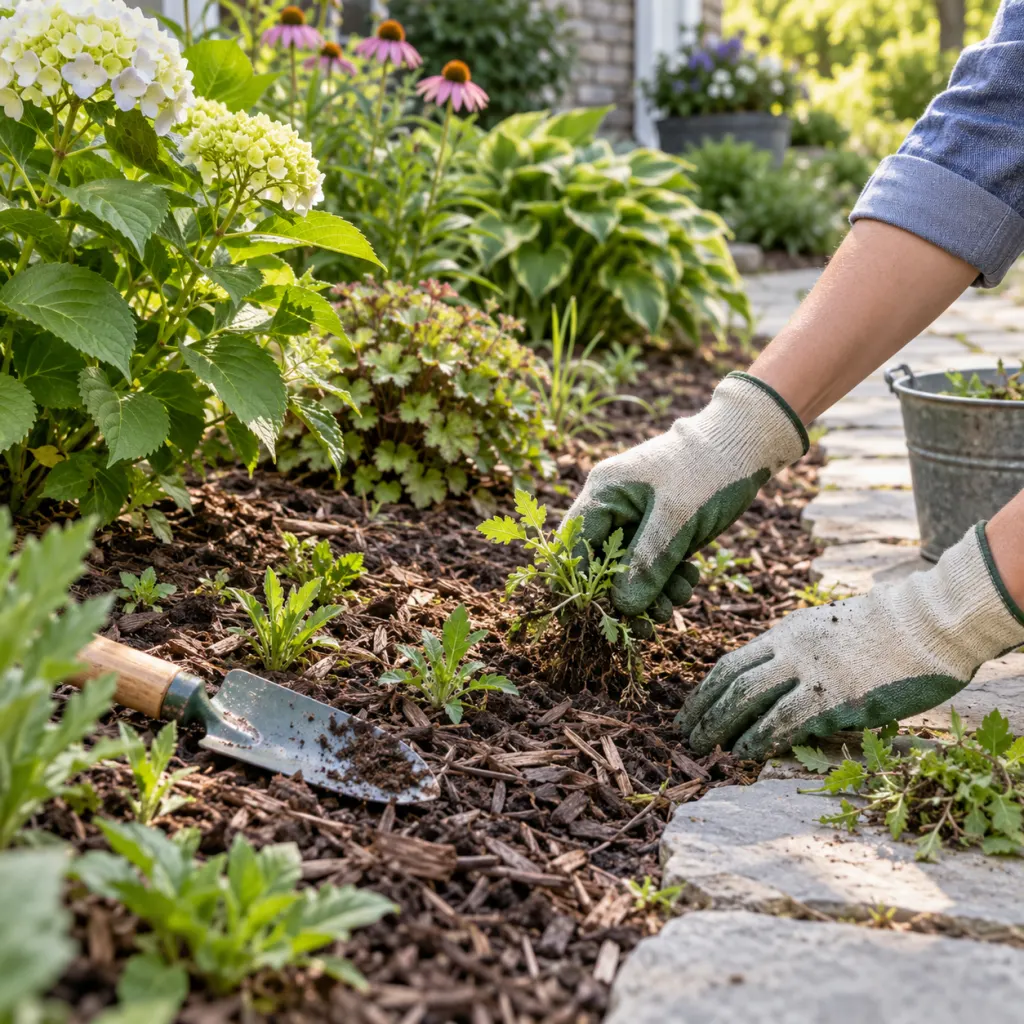
For planted spaces, the best natural control is usually prevention. Bare soil is an invitation for annual weed seeds to germinate, especially after digging, foot traffic, or irrigation brings light and moisture to the surface. Mulch blocks light, moderates soil temperature, reduces evaporation, and makes it easier to remove seedlings while they are still small. UC IPM notes that organic mulches such as wood chips and bark are commonly used and that prompt mulching after site preparation can make occasional hand-pulling or shallow hoeing the main follow-up task https://ipm.ucanr.edu/home-and-landscape/mulches/.
What Vinegar Sprays Can And Cannot Do
Household vinegar contains acetic acid, and acetic acid can injure green plant tissue on contact. University of Maryland Extension explains that acetic acid products are contact herbicides: they damage the foliage they touch, work best on small young weeds, have no lasting soil activity, and usually do not kill the roots of larger or perennial weeds https://www.extension.umd.edu/resource/vinegar-alternative-glyphosate. That means a browned weed top does not always mean the plant is gone. A perennial with a taproot or creeping rhizome may send up new leaves after the top growth has been burned back.
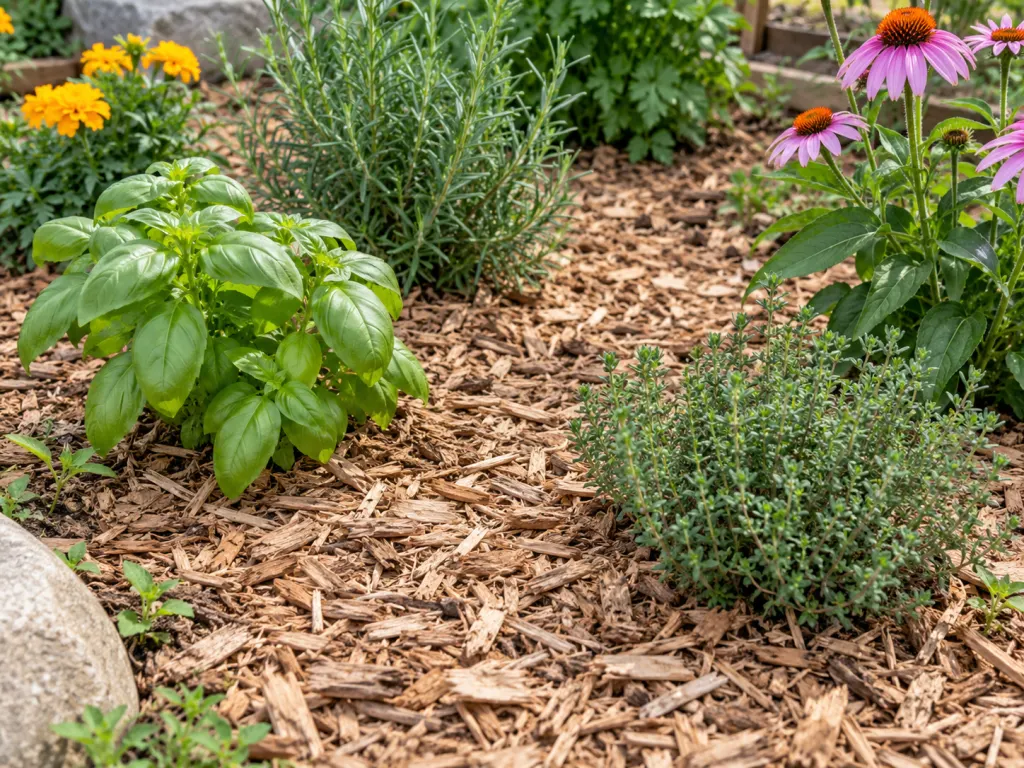
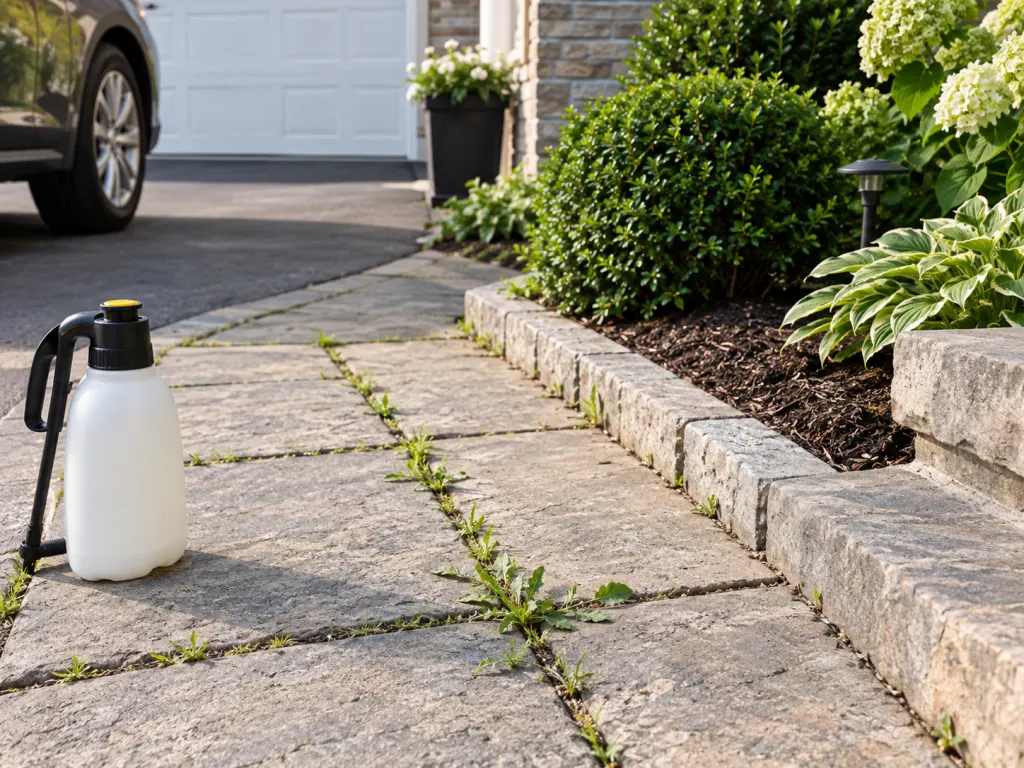
This distinction matters because many homemade recipes sound more permanent than they are. A vinegar spray may be reasonable for tiny seedlings in sidewalk joints on a dry, calm day, but it is a poor choice where drift could touch herbs, vegetables, flowers, turf, or shrub leaves. It is nonselective at the point of contact. It does not know the difference between a weed leaf and a basil leaf. Higher-strength horticultural vinegar is also much more hazardous than pantry vinegar; Maryland Extension warns that stronger acetic acid products can cause serious eye and skin injury, so homeowners should not treat stronger concentrations as ordinary kitchen ingredients.
Why Salt Is The Ingredient To Treat With The Most Caution
Salt is the reason many homemade weed mixtures can create long-lasting trouble. Sodium chloride can interfere with water uptake and soil structure. Utah State University Extension explains that as soluble salts increase, plants have a harder time extracting water from soil; salt-affected plants can look drought-stressed even when moisture is present https://extension.usu.edu/yardandgarden/research/solutions-to-soil-problems-i-high-salinity-soluble-salts. University of Minnesota Extension similarly notes that sodium chloride can damage plants through burning and dehydration and can affect waterways when salts move off paved areas https://extension.umn.edu/garden-and-home/yard-and-garden/lawns-and-landscapes-in-minnesota/the-effects-of-deicing-salts-on-landscapes.
In plain terms, salt may seem attractive for a driveway crack where you never want plants, but it is risky anywhere water can carry it toward soil you care about. Runoff from a patio, slope, curb, or gravel edge can move dissolved salts into turf, ornamental beds, vegetable plots, or tree root zones. Once a salt problem is in soil, fixing it is not as simple as adding compost. USU Extension explains that soluble salts can be leached only when there is adequate drainage and clean water, and compacted or poorly drained soil may need improvement before leaching can work. That is a lot of repair for a shortcut spray.
The Better Natural Plan For Garden Beds
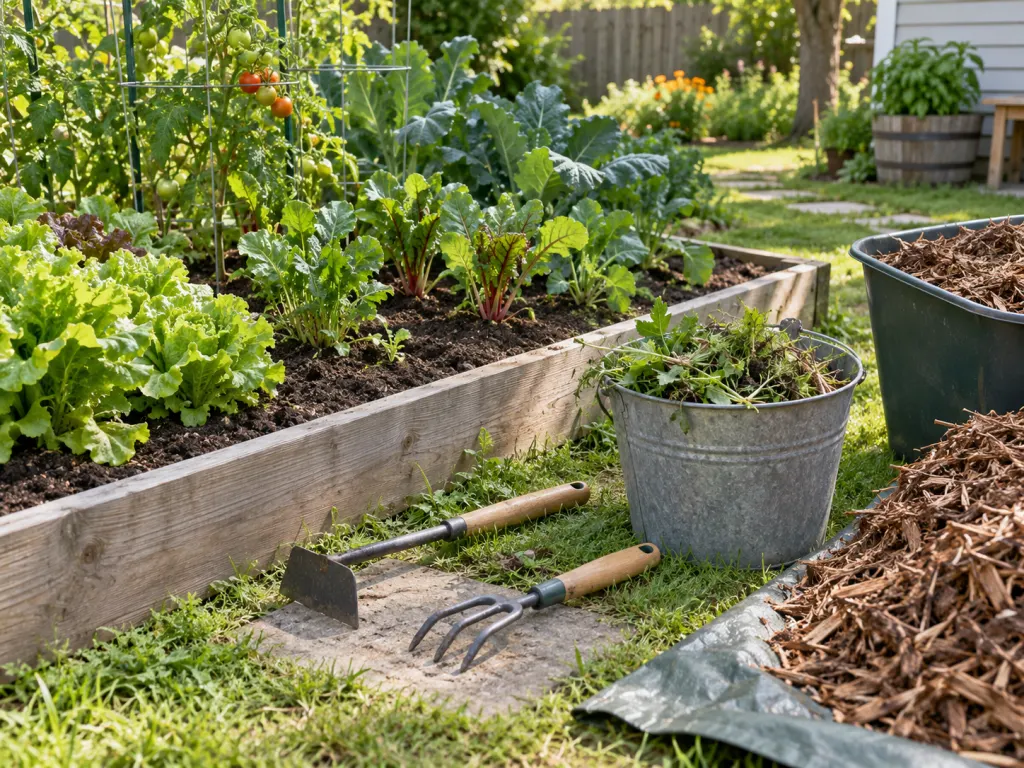
In beds where you want flowers, herbs, vegetables, or shrubs to thrive, the most reliable approach is low-drama and repeatable: remove weeds early, cover soil, and reduce the chances that new seeds get light. UC IPM recommends removing young weeds before they flower and set seed, digging out perennial roots where possible, using shallow cultivation for annual seedlings, and applying mulch to weed-free areas https://ipm.ucanr.edu/home-and-landscape/handweeding-and-cultivation/. University of Maryland Extension also emphasizes hand-pulling or shallow cultivation while weeds are young and the soil is slightly moist https://extension.umd.edu/resource/manage-weeds-without-chemicals-maryland.
Use this simple decision list before reaching for a spray:
- Small annual seedlings: hoe lightly, pull by hand, then mulch the open soil.
- Taproot weeds: use a weeding knife or fork to remove as much root as possible.
- Creeping perennial weeds: loosen soil and remove visible roots or rhizomes carefully, repeating as regrowth appears.
- Driveway or patio cracks: scrape, pull after rain, or consider a tightly targeted contact spray only when no wanted plants are nearby.
- Open bare beds: plant densely enough for mature plants to shade the soil, then maintain mulch between them.
How To Use Mulch Without Creating New Problems
Mulch is not simply a decorative topping. It is one of the strongest natural weed-control tools because it changes the conditions weed seeds need. UC IPM recommends maintaining enough mulch to block sunlight, and it notes that organic mulch often works well at about 3 to 4 inches while overly deep layers can create overly wet, low-oxygen conditions around roots. Keep mulch pulled back from plant stems and tree trunks, refresh it as it breaks down, and remove weeds that root into the mulch layer before they become established.
Landscape fabric can help in some shrub beds and under gravel paths, but it is not a permanent solution. Soil and organic debris eventually collect on top, and weeds can root into that new layer. If fabric is used, overlap seams, pin it securely, cover it as recommended for the site, and inspect gaps. For vegetable beds and annual flower beds, organic mulches are usually easier to adjust, renew, and work around than permanent fabric.
When A Labeled Product May Be Safer Than A Homemade Mix
It may sound surprising, but a registered, labeled herbicide can be more predictable than an improvised mixture because the label gives directions, use sites, storage rules, precautions, and first-aid information. The U.S. Environmental Protection Agency says pesticide labels explain how to use products safely and effectively, how to store them, and where to find first-aid instructions https://www.epa.gov/pesticide-labels/keep-safe-read-label-first. EPA also explains that pesticide registration includes review of ingredients, use sites, application amount, timing, storage, disposal, and potential human-health and environmental effects https://www.epa.gov/pesticide-registration/about-pesticide-registration.
This does not mean every garden needs herbicide. It means homemade does not automatically mean lower risk. Dish detergents, salt, concentrated acids, and poorly labeled containers can create problems of their own. If a weed problem is too large for hand removal and mulch, identify the weed first, consider nonchemical options, and, if using a product, use one labeled for that exact site and plant situation. Follow the label rather than online mixing ratios.
A Calm Routine That Actually Reduces Weeds
The most effective natural weed control is usually a routine, not a one-time event. Walk the garden once a week during active growth. Pull small weeds after rain or irrigation, when roots release more easily. Cut annual weeds before they flower. Add mulch where soil has opened up. Keep lawn edges dense and healthy so weeds have fewer gaps to colonize. In paved areas, scrape cracks before plants develop deep roots. These small passes take less effort than waiting until weeds are tall, seeding, and tangled through wanted plants.
For stubborn perennial weeds, expect repeated work. Contact sprays may remove visible leaves, but regrowth tells you stored energy remains below ground. Repeatedly removing top growth can weaken some plants over time, but digging, smothering, dense replanting, or a labeled product may be more appropriate depending on the species and location. The decision should be based on the weed, the site, nearby plants, and where water will move after rain.
Bottom Line
Natural homemade weed control can be helpful, but the safest answer is rarely a stronger mixture. Use vinegar-style contact sprays only with realistic expectations and careful targeting. Avoid salt where soil, trees, lawns, or future planting matter. Build your main plan around early removal, mulch, healthy plant cover, and routine monitoring. That approach is slower than a dramatic spray video, but it protects the parts of the garden you actually want to keep.
Wrap-Up
Homemade weed control is best used with restraint. Vinegar-based sprays can burn small weed leaves on contact, especially in hardscape cracks, but they usually do not solve deep-rooted perennial weeds. Salt is the bigger long-term risk because it can move into soil and interfere with plant water uptake. For garden beds and lawns, hand-pulling, shallow hoeing, mulch, dense planting, and regular monitoring are the more dependable natural foundation.
Frequently Asked Questions
- → Is vinegar a good natural weed control?
Vinegar can damage the leaves of small, young weeds it directly touches, especially on warm, dry days. It is less reliable on larger weeds and perennials because roots may survive and send up new growth. Use it only as a careful spot treatment away from desirable plants.
- → Should I add salt to a homemade weed spray?
Salt is not a good choice for lawns, gardens, flower beds, vegetable plots, or tree root zones. It can build up or move with runoff and make it harder for desirable plants to take up water. If used at all, it should be limited to isolated hardscape cracks where no planting is planned.
- → What is the safest natural weed control for garden beds?
For planted beds, the best starting plan is early hand-pulling, shallow hoeing for tiny annual weeds, mulch over bare soil, and dense planting that shades open ground. These methods reduce new weed growth without adding salt or acids to soil.
- → Will homemade weed control kill roots?
Most homemade contact sprays damage the plant parts they touch. Deep taproots, bulbs, rhizomes, and creeping roots may survive, so regrowth is common. Digging out as much root as possible or repeatedly removing regrowth is often more effective for perennial weeds.
- → Can I use homemade weed spray near vegetables or herbs?
It is better not to spray homemade weed mixtures near edible garden plants. Drift, runoff, or accidental contact can injure wanted plants, and salt can affect soil. Hand-pulling, mulch, and careful cultivation are better choices around vegetables and herbs.
References
This content was developed and refined using reliable sources.
- https://ipm.ucanr.edu/home-and-landscape/weed-management-in-landscapes
- https://ipm.ucanr.edu/home-and-landscape/mulches
- https://www.extension.umd.edu/resource/vinegar-alternative-glyphosate
- https://extension.usu.edu/yardandgarden/research/solutions-to-soil-problems-i-high-salinity-soluble-salts
- https://extension.umn.edu/garden-and-home/yard-and-garden/lawns-and-landscapes-in-minnesota/the-effects-of-deicing-salts-on-landscapes
- https://ipm.ucanr.edu/home-and-landscape/handweeding-and-cultivation
- https://extension.umd.edu/resource/manage-weeds-without-chemicals-maryland
- https://www.epa.gov/pesticide-labels/keep-safe-read-label-first
- https://www.epa.gov/pesticide-registration/about-pesticide-registration