 Save
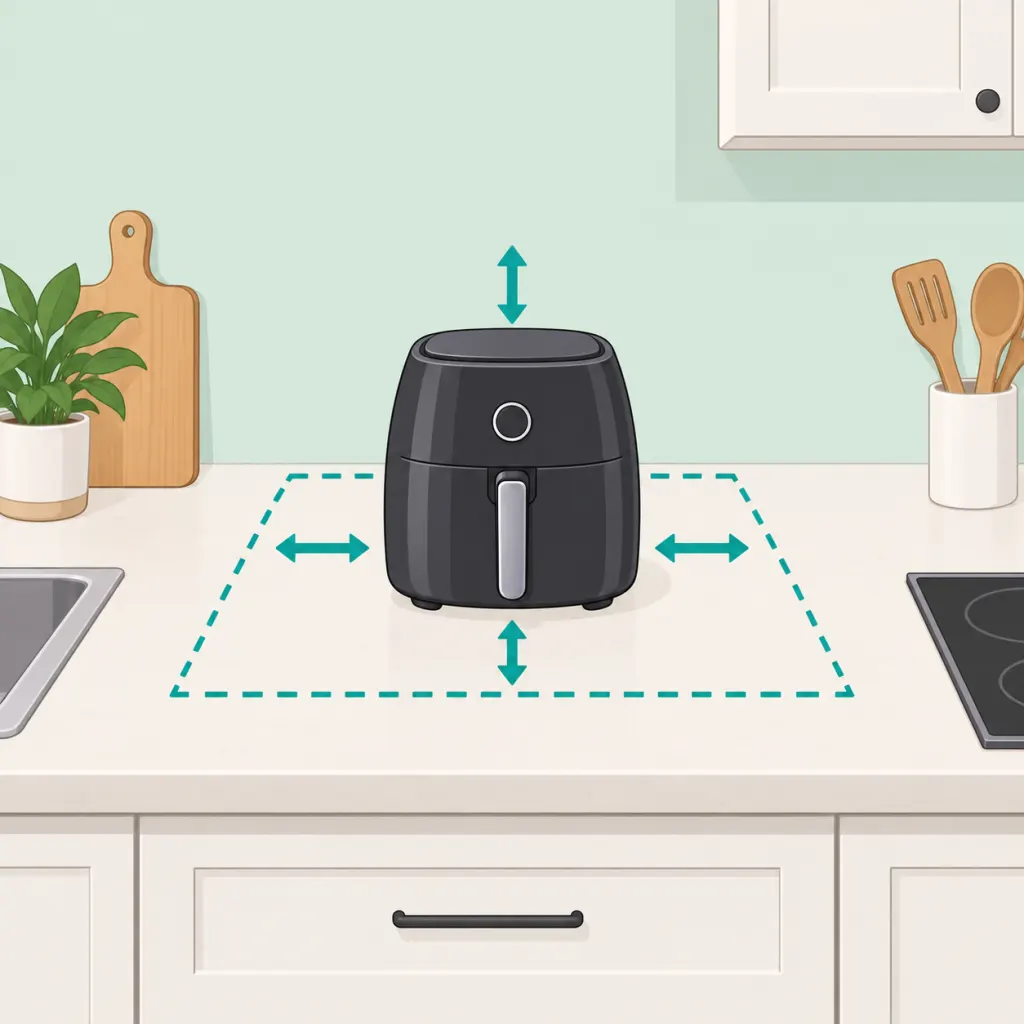
An air fryer gets hot and moves hot air while it cooks, so the place you choose matters. Cooking is a leading cause of home fires, and unattended equipment is a major factor in nonconfined cooking fires, according to the U.S. Fire Administration. Use this guide to spot unsafe indoor locations and move your air fryer to a safer setup before you cook.
Step 1: Read the manual before choosing a spot
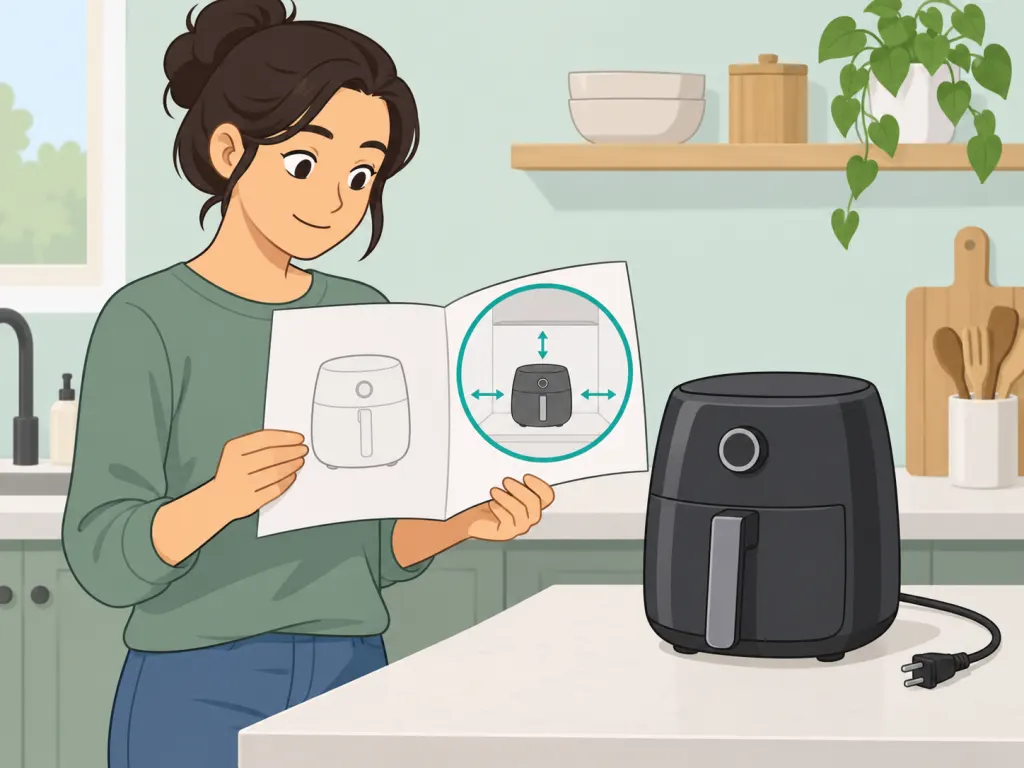
Start with your air fryer's own placement instructions, especially the required clearance around vents and the cord. Fire service guidance also says to follow the manufacturer's instructions and allow enough space around the appliance to help prevent overheating.
Step 2: Use an open, stable, heat-resistant counter
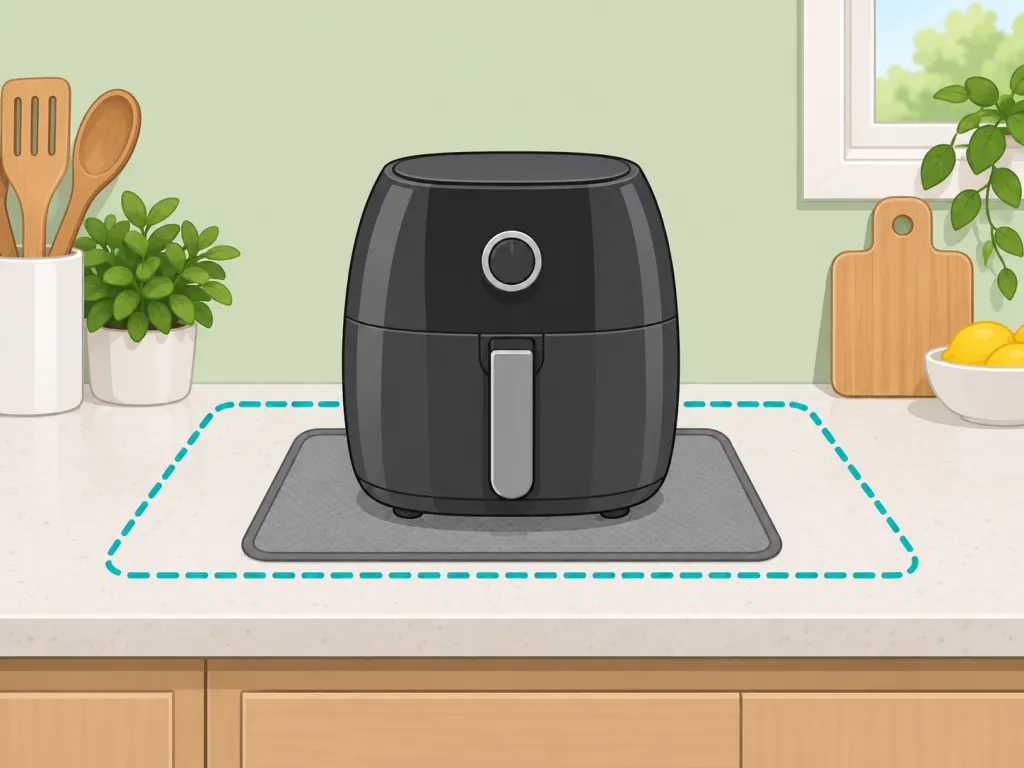
Place the air fryer on a level counter where it will not wobble, tip, or sit close to the edge. Buckinghamshire Fire and Rescue Service advises placing air fryers on stable, heat-resistant surfaces, which also helps protect the countertop from hot baskets and appliance heat.
Step 3: Move it out from under cupboards and shelves
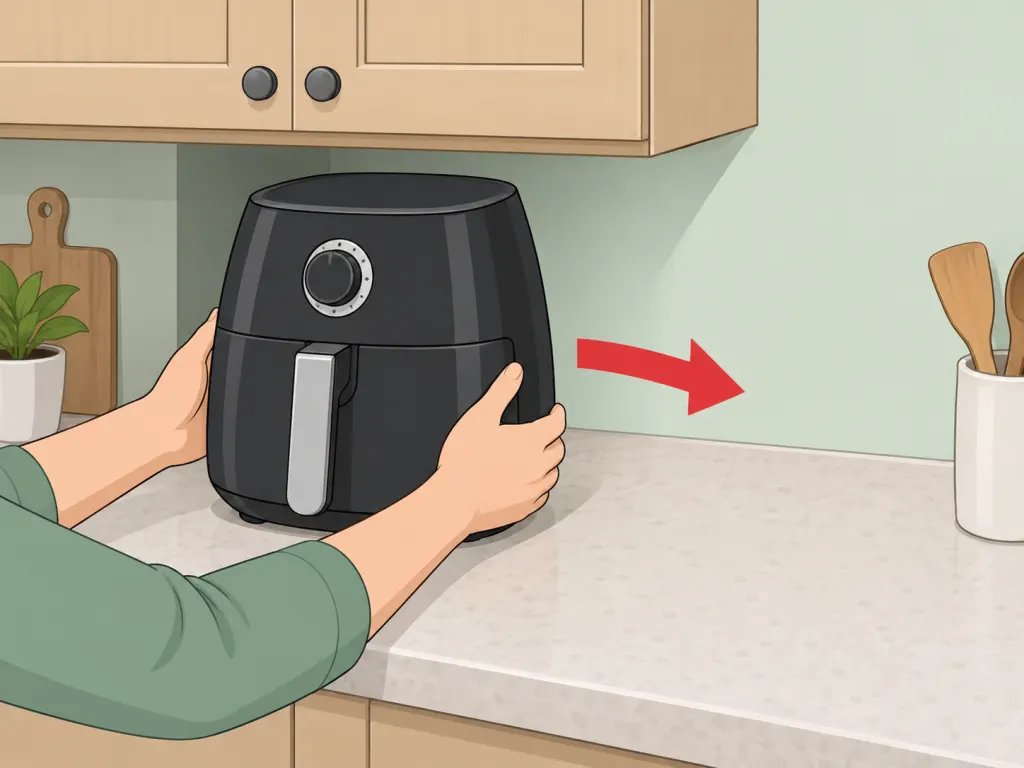
Do not run the air fryer directly below low cabinets, shelves, or over-counter storage. South Yorkshire Fire and Rescue Service says not to cook with an air fryer under over-counter cupboards, because the appliance needs ventilation and releases hot air while cooking.
Step 4: Pull the vents away from walls and backsplashes
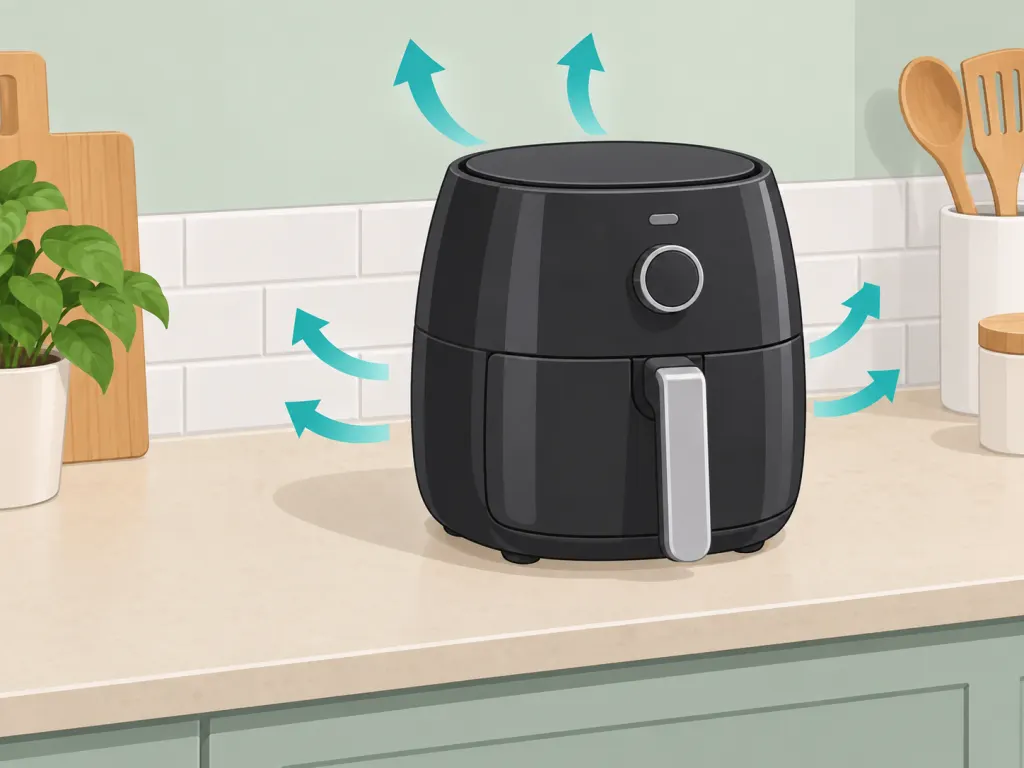
Slide the air fryer forward so rear and side vents are not pressed against a wall, backsplash, curtain, or nearby object. Hot air needs room to circulate, and blocked vents can make the appliance run hotter than intended.
Check the direction of the exhaust before you start cooking. Fire service guidance specifically warns not to let hot air ventilation openings blow into electrical outlets, and it also recommends keeping power cords away from hot surfaces.
Step 6: Keep it off the stovetop and away from burners
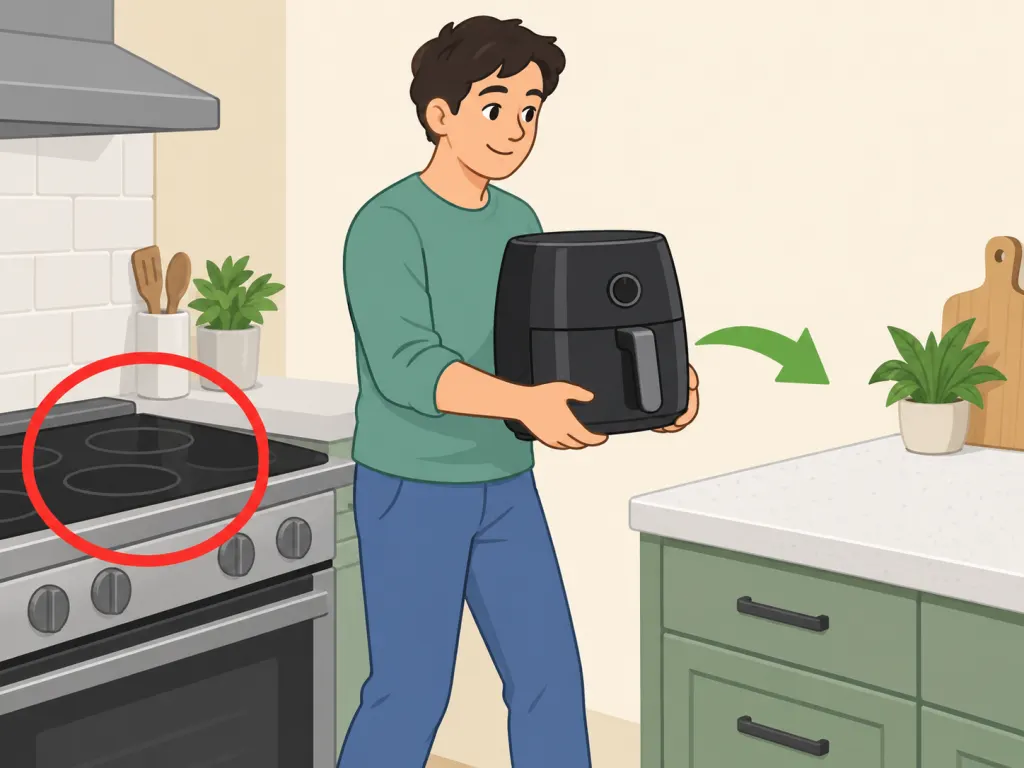
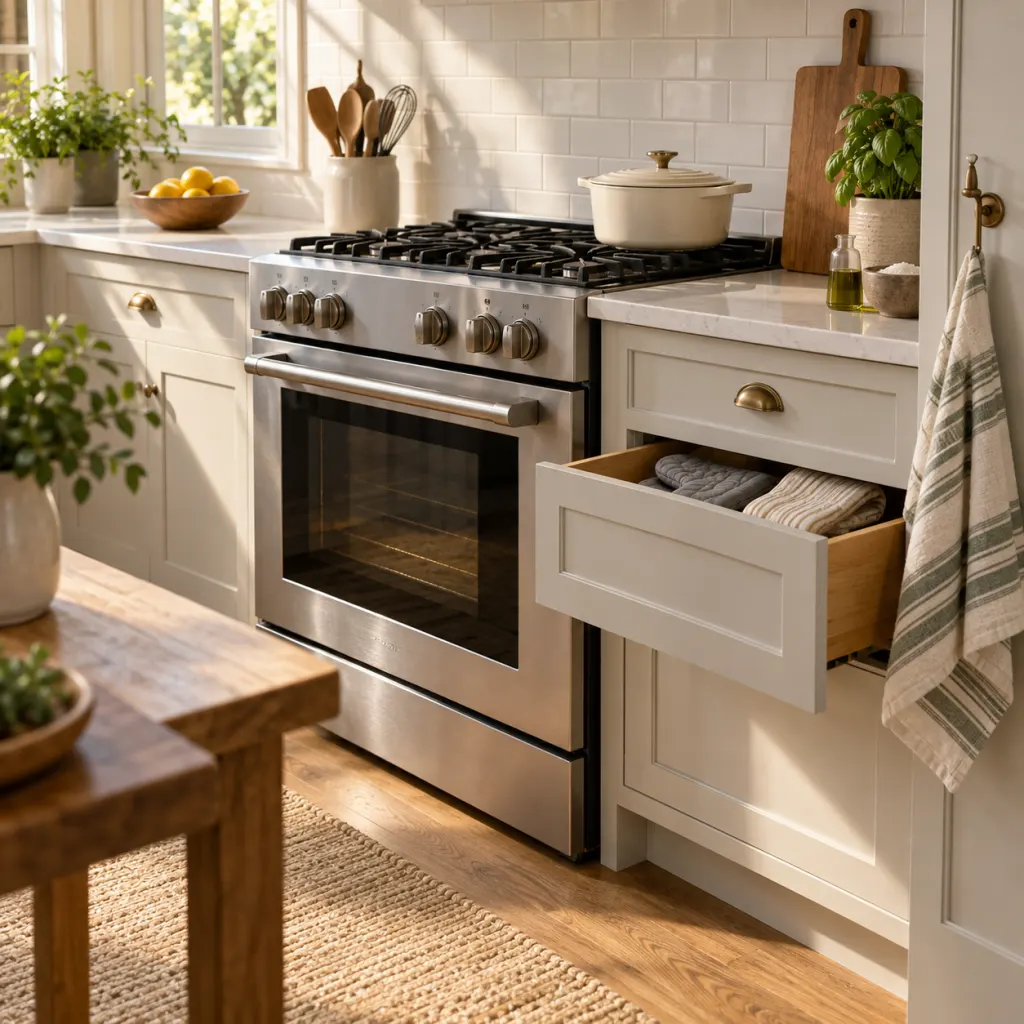
Never use or store the air fryer on a hob, range, oven top, or any other direct heat source. Kitchen safety guidance says to keep appliances away from the hob and direct heat, and the U.S. Fire Administration reminds readers to keep items that can catch fire away from stovetop areas.
Step 7: Avoid cupboards, pantry shelves, and appliance garages
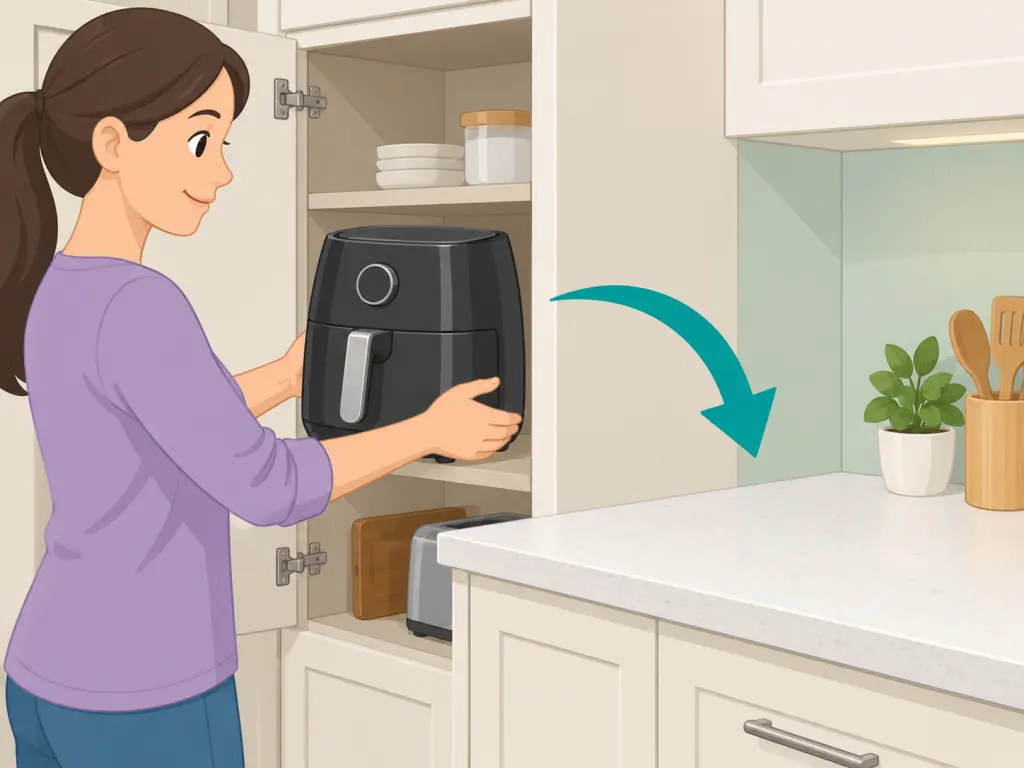
Do not operate the air fryer inside a cupboard, pantry shelf, tight corner, or appliance garage. Fire safety guidance says many kitchen appliances need ventilation and should not be placed in tight or enclosed areas.
Step 8: Place it away from sinks and wet prep areas
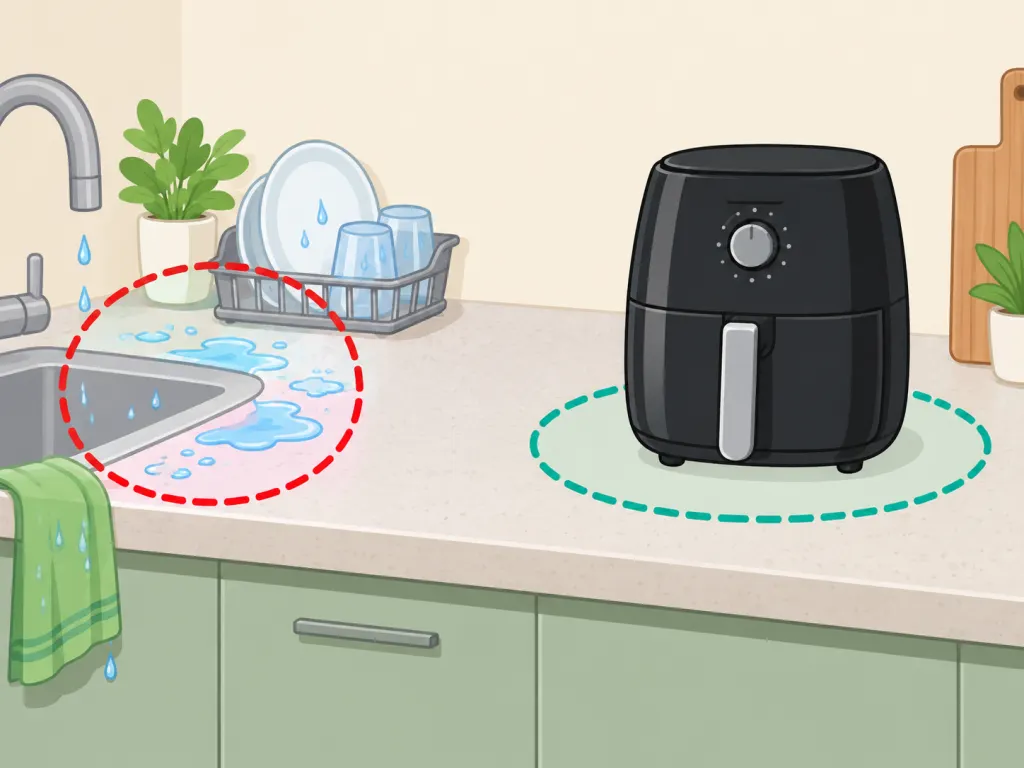
Choose a dry section of counter where splashes cannot reach the appliance, plug, or cord. Cheshire Fire and Rescue Service warns that liquids can create electrical or fire hazards, and Buckinghamshire guidance says to keep cables clear of water.
Step 9: Stay nearby and unplug it after cooking
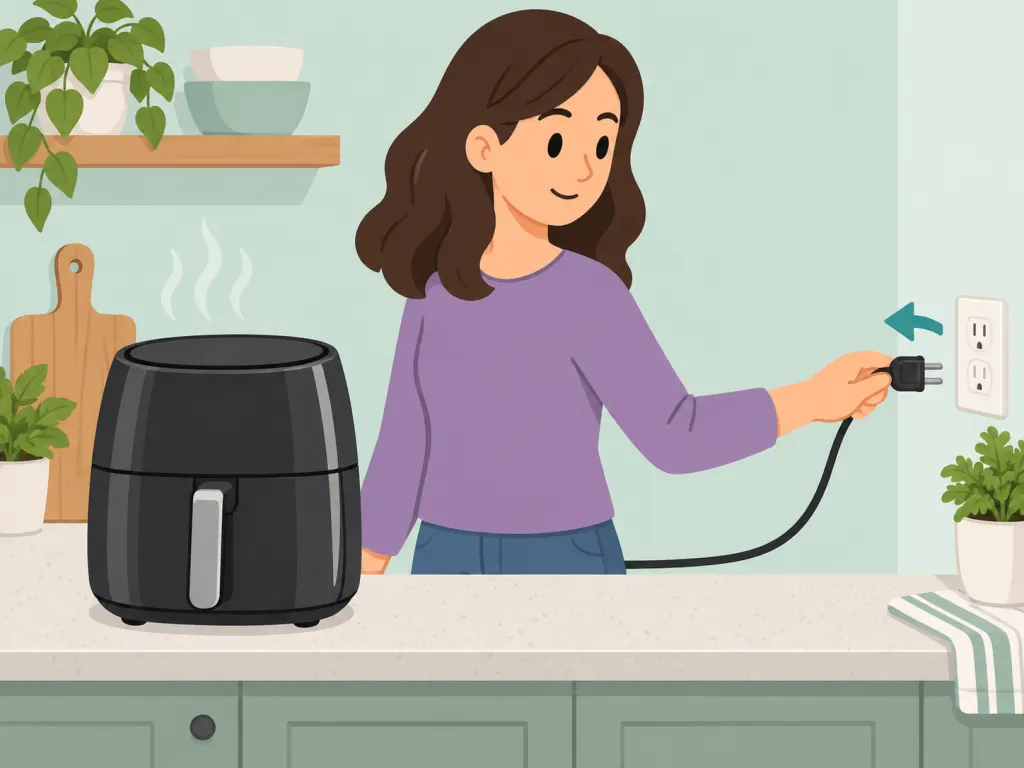
Stay in the kitchen while the air fryer is running, especially when cooking fatty foods or anything that could smoke. The U.S. Fire Administration advises people to stay in the kitchen when frying, boiling, grilling, or broiling, and air fryer safety guidance recommends unplugging the appliance when it is not in use.
Wrap-Up
The bottom line: use your air fryer in the open, on a stable heat-resistant counter, with vents and cords clear. Avoid tight spaces, overhead cabinets, walls, stovetops, sinks, overloaded outlets, and clutter so heat and air can move safely.
Frequently Asked Questions
- → Can I use an air fryer under a cabinet?
It is safer to move it into open space before cooking. Fire service guidance warns against using an air fryer under over-counter cupboards because the appliance needs ventilation and releases hot air.
- → How much space does an air fryer need around it?
Follow the clearance listed in your own manual. If you are unsure, leave open space around the appliance, keep every vent unblocked, and avoid aiming hot exhaust at walls, outlets, cords, curtains, or cabinets.
- → Is it safe to put an air fryer on a stovetop?
No. Keep the air fryer off hobs, burners, oven tops, and other heat sources because a surface can still be hot or a burner can be switched on by mistake.
- → Can I plug an air fryer into an extension cord?
Use a suitable wall outlet whenever possible. Fire safety guidance for cooking appliances advises plugging them directly into a wall outlet and avoiding overloaded extension leads.
- → Can I keep an air fryer in an appliance garage if the door is open?
Do not run it in a tight or enclosed space. Move it to an open counter first, because enclosed shelves and appliance garages can restrict airflow and trap heat.
- → What should I do if the air fryer smells like burning?
Turn it off and unplug it if you can do so safely. If you see flames, heavy smoke, or feel unsafe, leave the area and call your local emergency number.
References
This content was developed and refined using reliable sources.
- https://www.usfa.fema.gov/prevention/home-fires/prevent-fires/cooking
- https://www.usfa.fema.gov/gallery/pictographs/cooking.html
- https://www.cheshirefire.gov.uk/your-safety/home-safety/fire-safety-in-the-home/kitchen-fire-safety/air-fyers
- https://www.syfire.gov.uk/safety-advice/kitchen-hazards
- https://bucksfire.gov.uk/safety-hub/kitchen-safety
- https://www.london-fire.gov.uk/safety/the-home/electrical-items/cables-fuses-and-leads