 Save
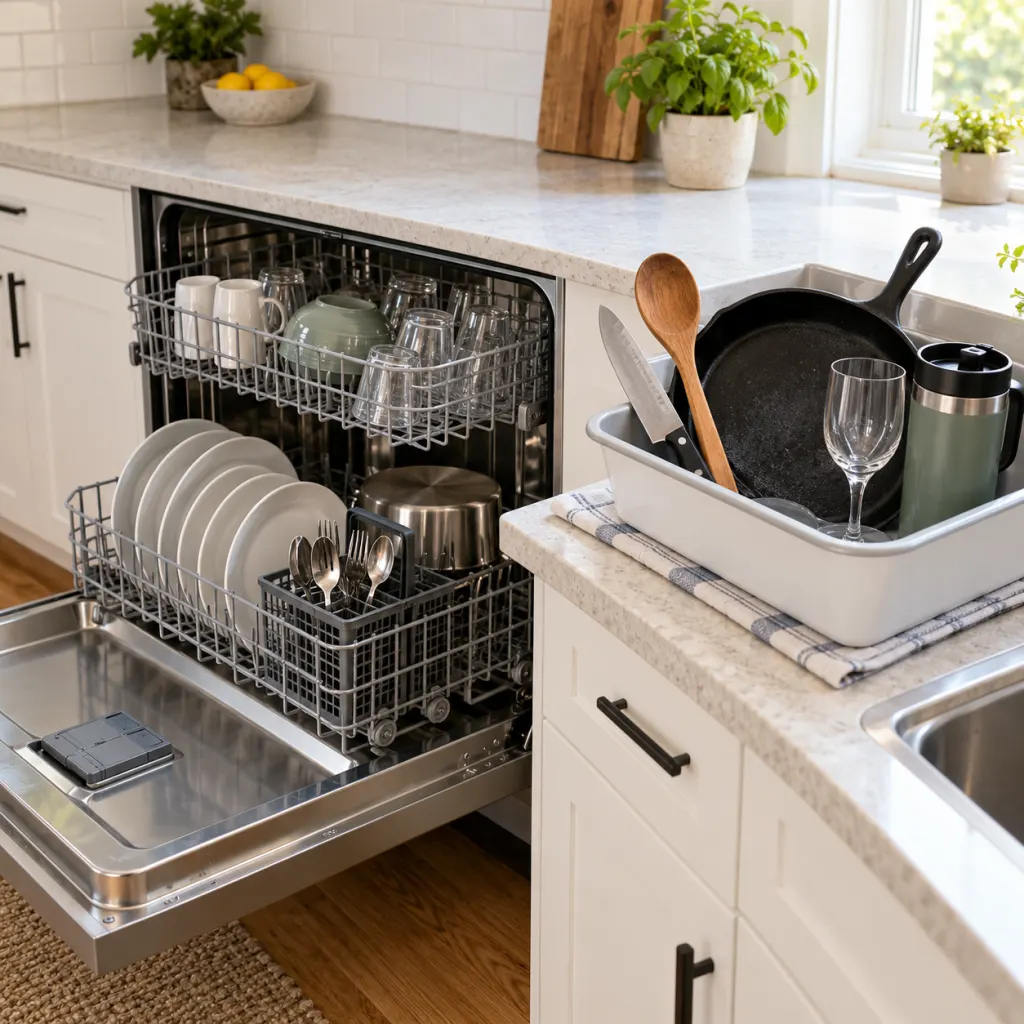
The safest rule is simple: use the dishwasher for sturdy items that are clearly dishwasher-safe, and hand-wash anything that is wooden, sharp, seasoned, coated, delicate, decorated, insulated, or made from reactive soft metal. A dishwasher is useful because it combines detergent, spray force, hot water, and drying heat, but those same strengths can shorten the life of certain kitchen tools. The U.S. Department of Energy notes that dishwashers commonly require very hot water, typically 135 to 140 Fahrenheit, and many models add heat during the cycle. That environment is helpful for ordinary plates and utensils, but it is harsh on glued joints, natural materials, fine edges, metallic finishes, and plastics not designed for that use. The list below explains the 18 items to set aside before you load the racks, plus the practical reason each one deserves a gentler sink routine.
Why Some Items Do Poorly in the Dishwasher
A dishwasher does more than rinse. It exposes items to repeated wetting, alkaline detergent, strong spray, rack contact, and a heated drying period. ENERGY STAR describes modern dishwashers as using improved jets, filtration, rack designs, and heat-boosting features for cleaning performance, and it also recommends scraping rather than pre-rinsing ordinary dishwasher-safe dishes to save water and energy. That is good guidance for plates, bowls, glasses, and flatware that are built for the appliance. It does not mean every kitchen item benefits from the same treatment.
Before relying on any general list, check the maker's care instructions. A modern glass mixing bowl marked dishwasher-safe is different from a thin inherited goblet. A composite cutting board labeled dishwasher-safe is different from a glued wood board. When the label is missing, damaged, or vague, the lower-risk choice is hand-washing with warm water, dish soap, a soft cloth or brush, and prompt drying.
- Best dishwasher candidates: sturdy everyday dishes, dishwasher-safe glass, stainless flatware without special finishes, and hard plastic containers marked for dishwasher use.
- Best hand-wash candidates: items that can warp, rust, dull, separate, discolor, lose seasoning, lose insulation, or carry decorative finishes.
- Best habit: make a small hand-wash zone beside the sink before loading the machine so fragile pieces do not slip into a normal cycle by accident.
Wood, Bamboo, and Other Natural Materials
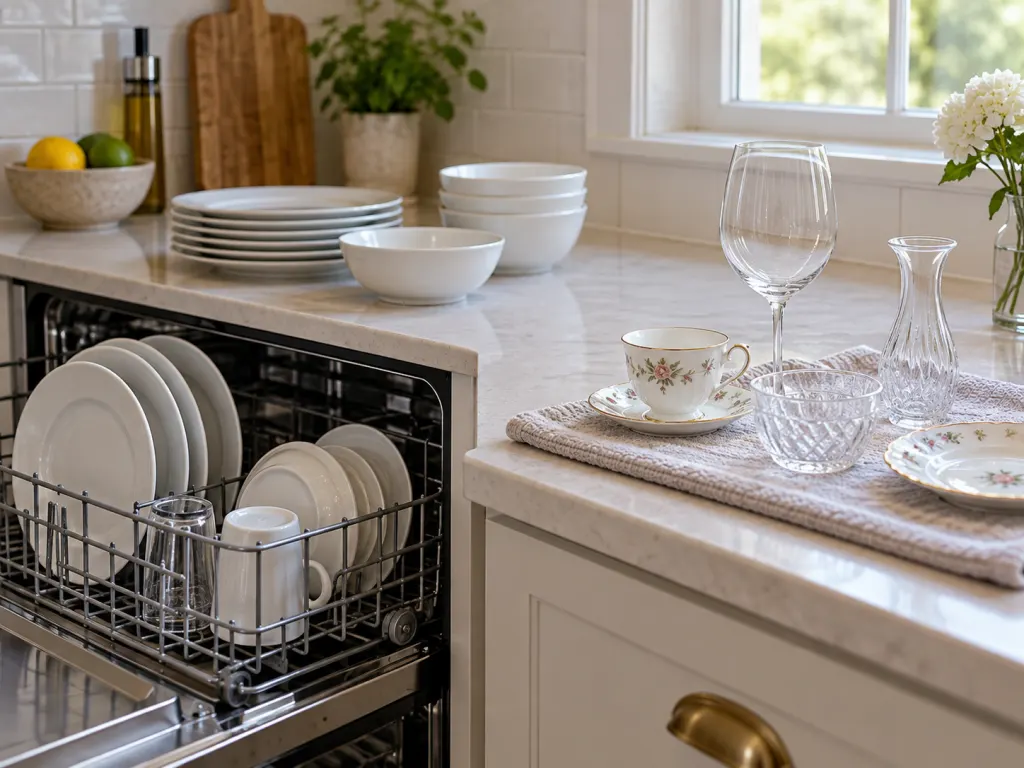
1. Wooden cutting boards. Wood can absorb moisture, and repeated cycles of heat and drying can stress the board. The University of Maine Cooperative Extension advises that some solid wood boards may tolerate dishwashers, but boards with inlays or glued slabs are prone to warping, cracking, or separation, and the manufacturer guidance should control. For most home kitchens, hand-washing is the more protective default: scrub with soapy water, rinse, dry with a clean towel, and stand the board upright so air can reach both sides.
2. Wooden spoons, spatulas, servers, and bowls. Wooden utensils are often thinner than cutting boards and may have end grain, carved details, or small cracks that take up water. Dishwasher detergent and long damp cycles can make the surface rough, raised, or split. A wooden salad bowl can also lose its smooth finish. Wash these pieces quickly by hand, avoid soaking, and let them dry completely before putting them back in a drawer or cabinet.
3. Bamboo boards and utensils. Bamboo is often marketed as tough, but it is still a natural material that can react poorly to repeated dishwasher heat. The University of Maine guidance specifically notes that bamboo boards may warp or be damaged in dishwashers. Treat bamboo like wood unless its care label clearly says otherwise. A quick wash and full dry protects the surface far better than leaving it in a steamy closed machine at the end of a cycle.
Sharp Tools and Knife Handles
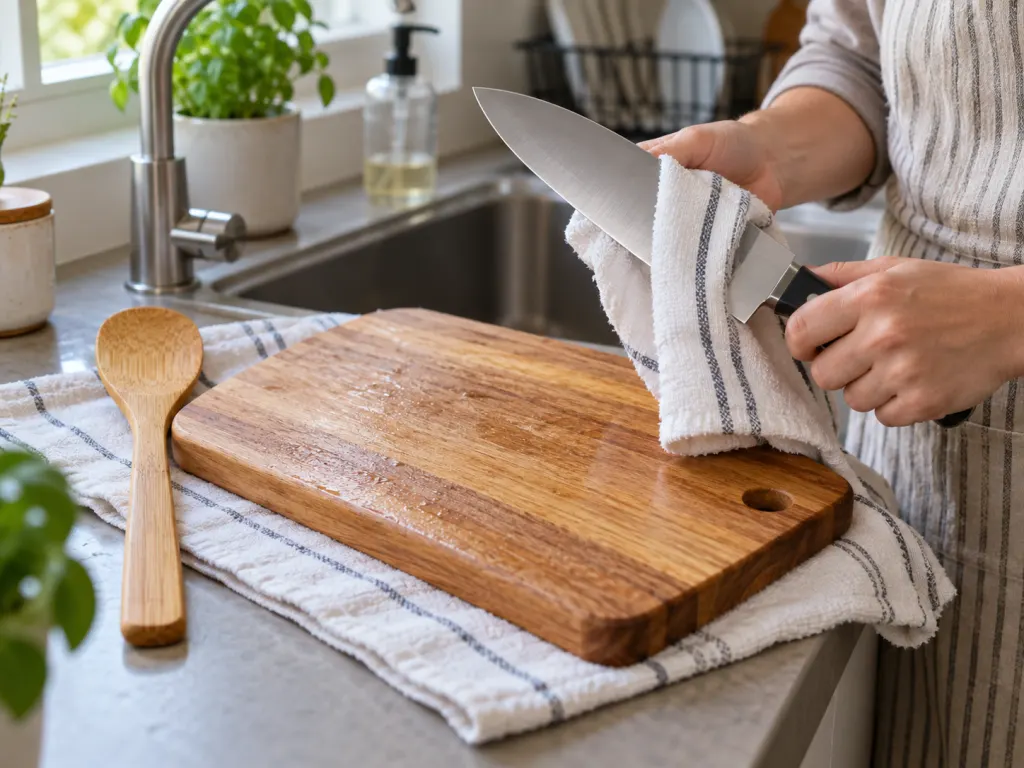
4. Chef's knives, paring knives, and serrated knives. Quality knives are worth hand-washing because the dishwasher is rough on edges. A blade can knock against other utensils, scrape a rack, or sit with food residue during a delayed cycle. The American Heart Association's kitchen equipment guidance emphasizes that good knives can last a lifetime when cared for well. Preserve that edge by washing one knife at a time, keeping the blade visible, drying it immediately, and storing it in a block, guard, strip, or tray instead of loose in a drawer.
5. Hollow-handled knives. Some knives have handles made from separate pieces joined around a hollow space. Heat and moisture can loosen joints or allow water to collect where it is difficult to dry. Even when the blade itself is stainless steel, the handle construction may be the weak point. If you are unsure how the handle is built, wash the knife by hand and dry around the handle seams before storage.
Seasoned and Coated Cookware
6. Cast iron pans. A cast iron skillet depends on a maintained cooking surface. Dishwasher detergent, soaking, and heated drying can strip or roughen that surface and leave the pan vulnerable to rust. Hand-wash cast iron promptly, use a brush or non-scratch pad as needed, dry it thoroughly, and follow the pan maker's instructions for light oiling or seasoning. The extra minute at the sink usually costs less time than restoring a neglected pan later.
7. Carbon steel pans. Carbon steel behaves much like cast iron in this respect. It develops a seasoned surface with use, and that finish is not improved by dishwasher detergent or prolonged moisture. Wash carbon steel by hand, dry it over gentle residual heat or with a towel, and protect the surface according to the manufacturer's directions. If food is stuck, loosen it with warm water and a scraper suited to the pan rather than sending it through a heavy cycle.
8. Nonstick skillets and pans. Some newer nonstick cookware is labeled dishwasher-safe, but hand-washing is still gentler. The American Heart Association advises using non-metal utensils on nonstick cookware because metal can damage the surface; the same logic applies to abrasive rack contact and harsh cleaning over time. Use a soft sponge or cloth, avoid stacking rough items against the coating, and replace a pan when the surface is badly worn or flaking.
Soft Metals and Reactive Finishes
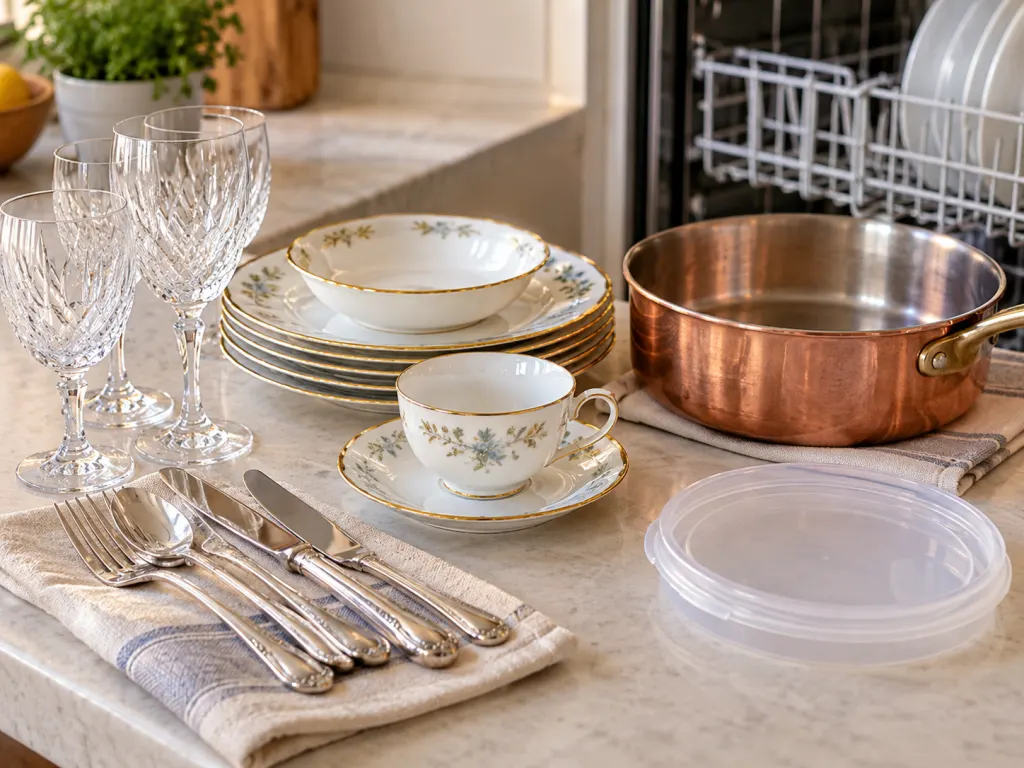
9. Copper cookware. Copper is prized because it conducts heat well and looks beautiful, but dishwashers can dull, spot, or discolor its surface. Copper pieces may also have linings, rivets, or decorative finishes that need special care. Wash copper with mild soap, rinse well, and dry immediately. If polishing is needed, use a cleaner appropriate for the particular finish rather than relying on the dishwasher to remove tarnish.
10. Disposable aluminum pans. Thin aluminum pans are not designed as durable dishwasher items. They can bend, oxidize, discolor, or leave dark marks on nearby pieces. If a disposable pan truly needs reuse, hand-wash it gently and inspect it for damage. Otherwise, use it for its intended single-use purpose and recycle or discard according to your local rules.
11. Tin items. Tin can corrode or rust in the damp, detergent-heavy dishwasher environment. That matters for old molds, decorative containers, and vintage kitchen pieces. Many tin items were never meant for modern machine washing, and some are more decorative than functional. Clean them gently by hand and dry every seam before storage.
12. Pewter. Pewter is a soft metal alloy, and dishwasher heat and detergent can darken, pit, or distort its finish. Older pewter may be especially vulnerable. Wash pewter separately from tougher dishes, avoid abrasive pads, and dry it with a soft towel. If the piece is antique, sentimental, or unlabeled, treat it as hand-wash-only.
More Metals, Glass, China, and Plastic to Set Aside
13. Brass and bronze. Brass and bronze pieces can lose their finish or develop spots when exposed to dishwasher detergent. Many kitchen pieces made from these metals are decorative hardware, serving pieces, or vintage items rather than everyday dishwasher ware. Hand-washing gives you more control and helps preserve patina, lacquer, or polish.
14. Sterling silver and silver-plated pieces. Silver deserves a separate, gentle wash. Dishwasher cycles may encourage tarnish or spotting, and silver can be damaged when it rubs against harder utensils. Silver-plated items add another concern: once the thin surface layer is worn, the base metal may show through. Wash silver by hand, keep it away from stainless steel during cleaning, and dry it fully before putting it away.
15. Crystal. Crystal glasses, bowls, and decanters can be more delicate than everyday glass. Heat, detergent, and vibration may cloud, etch, chip, or crack pieces, especially if they are thin or older. Use a padded sink or basin, wash one or two pieces at a time, and dry with a lint-free towel. Avoid twisting stems or forcing a cloth deep into a narrow bowl.
16. Delicate, hand-blown, painted, or milk glass. Not every fragile glass item is crystal. Hand-blown glass can have uneven thickness, painted glass can lose decoration, and milk glass can yellow or dull with harsh treatment. If a glass feels light, thin, handmade, painted, or irreplaceable, keep it out of the machine. This is especially important for inherited glassware and pieces used only for special occasions.
17. Antique china, hand-painted china, and metal-rimmed dishes. Modern plain china may be dishwasher-safe, but antique, hand-painted, over-glaze, or metal-trimmed pieces are a different category. Hot water and detergent can fade decoration or damage metallic rims. When in doubt, assume the decoration sits on the surface and wash by hand. Use a soft cloth, avoid crowding the sink, and dry promptly so water does not sit along rims or foot rings.
18. Thin plastics and insulated travel cups or food containers. A plastic container should be used only in conditions it was designed to handle. The FDA explains that food-contact substances, including materials used in packaging, cookware, and food preparation surfaces, are reviewed for intended uses and conditions. That is why a flimsy takeout lid, disposable cup, or repurposed tub should not be treated like a sturdy dishwasher-safe storage container. Insulated travel mugs and food jars add another issue: water and heat can compromise seals, trapped air spaces, adhesives, or vacuum insulation. Hand-wash insulated items unless the manufacturer specifically marks them dishwasher-safe.
How to Decide When the Label Is Missing
When a label is gone, look at construction. Glued layers, hollow spaces, rivets, soft metal, painted decoration, gold or silver trim, sharp edges, natural grain, thin plastic, and sentimental value all point toward hand-washing. Also think about replacement cost. A basic dishwasher-safe plate is easy to replace; a favorite knife, inherited serving bowl, or well-seasoned skillet is not. If you cannot confidently identify the material or care instructions, hand-washing is the conservative choice.
A good sink routine does not need to be complicated. Wash hand-wash items before greasy pans if they are delicate. Use mild dish soap, warm water, and a non-abrasive cloth or brush. Rinse well, then dry right away. Do not leave wood, carbon steel, cast iron, knives, silver, or decorated china sitting in a wet pile. The longer moisture sits in seams, edges, grain, and handles, the more opportunity it has to cause swelling, spotting, dulling, or rust.
What Can Usually Go In Instead
The dishwasher still earns its space. For ordinary loads, use it confidently with items that are designed for it: everyday ceramic plates, plain bowls, standard mugs, dishwasher-safe glass, durable stainless flatware, and rigid containers marked dishwasher-safe. ENERGY STAR recommends scraping food rather than rinsing dishes before loading and running full loads because dishwashers use about the same amount of water and energy regardless of how many dishes are inside. Put the sturdy items in the machine and reserve hand-washing for the pieces that truly need protection.
The Simple Sorting Rule
If you remember only one habit, sort by material before you sort by size. Plates and bowls can wait while you pull out the wood, knives, seasoned pans, coated cookware, soft metals, delicate glass, decorated china, thin plastic, and insulated cups. That small pause keeps the dishwasher doing what it does best without asking it to do jobs that are better handled at the sink.
Wrap-Up
The dishwasher is excellent for sturdy, labeled dishwasher-safe items, but it is too harsh for many kitchen tools. Hand-wash wooden and bamboo pieces, sharp or hollow-handled knives, cast iron, carbon steel, most nonstick pans, copper, soft metals, silver, crystal, delicate glass, decorated china, thin plastics, and insulated containers. Heat, detergent, spray force, and long moisture exposure are useful for everyday dishes, but they can warp, dull, crack, discolor, loosen, or strip items that need gentler care.
Frequently Asked Questions
- → Is it ever okay to put wood in the dishwasher?
Some solid wood pieces may be labeled dishwasher-safe, but many wood boards and utensils can warp, crack, or separate with repeated heat and moisture. If the maker's instructions are missing, hand-washing and prompt drying are the safer default.
- → Why do knives get singled out if they are stainless steel?
The blade metal may tolerate water, but the edge and handle still need protection. Knives can bang against other utensils, become dull, or collect moisture around handle seams. Washing one knife at a time by hand preserves the edge and makes storage easier.
- → Can I put nonstick pans in the dishwasher if the box says dishwasher-safe?
You can follow the manufacturer's label, but hand-washing is usually gentler. Nonstick surfaces last longer when they are cleaned with soft tools, kept away from abrasive contact, and stored without rough items scraping the coating.
- → What plastics are okay in the dishwasher?
Use the dishwasher only for rigid containers marked dishwasher-safe, and place them where the manufacturer recommends. Thin takeout containers, disposable lids, and repurposed tubs are not the same as containers designed for dishwasher conditions.
- → What should I do if an item accidentally went through the dishwasher?
Let it cool and dry completely, then inspect it. Look for cracks, loose handles, cloudy glass, peeling coating, rust, warping, failed seals, or changed finishes. If the item still looks sound, switch to hand-washing in the future; if it is damaged, stop using it for demanding kitchen tasks.
References
This content was developed and refined using reliable sources.
- https://www.energy.gov/cmei/femp/purchasing-energy-efficient-residential-dishwashers
- https://www.energystar.gov/products/dishwashers
- https://extension.umaine.edu/publications/3108e
- https://www.heart.org/en/healthy-living/healthy-eating/cooking-skills/meal-planning/essential-kitchen-equipment-and-utensils
- https://www.fda.gov/food/food-ingredients-packaging/food-packaging-other-substances-come-contact-food-information-consumers?trk=public_post_comment-text