 Save
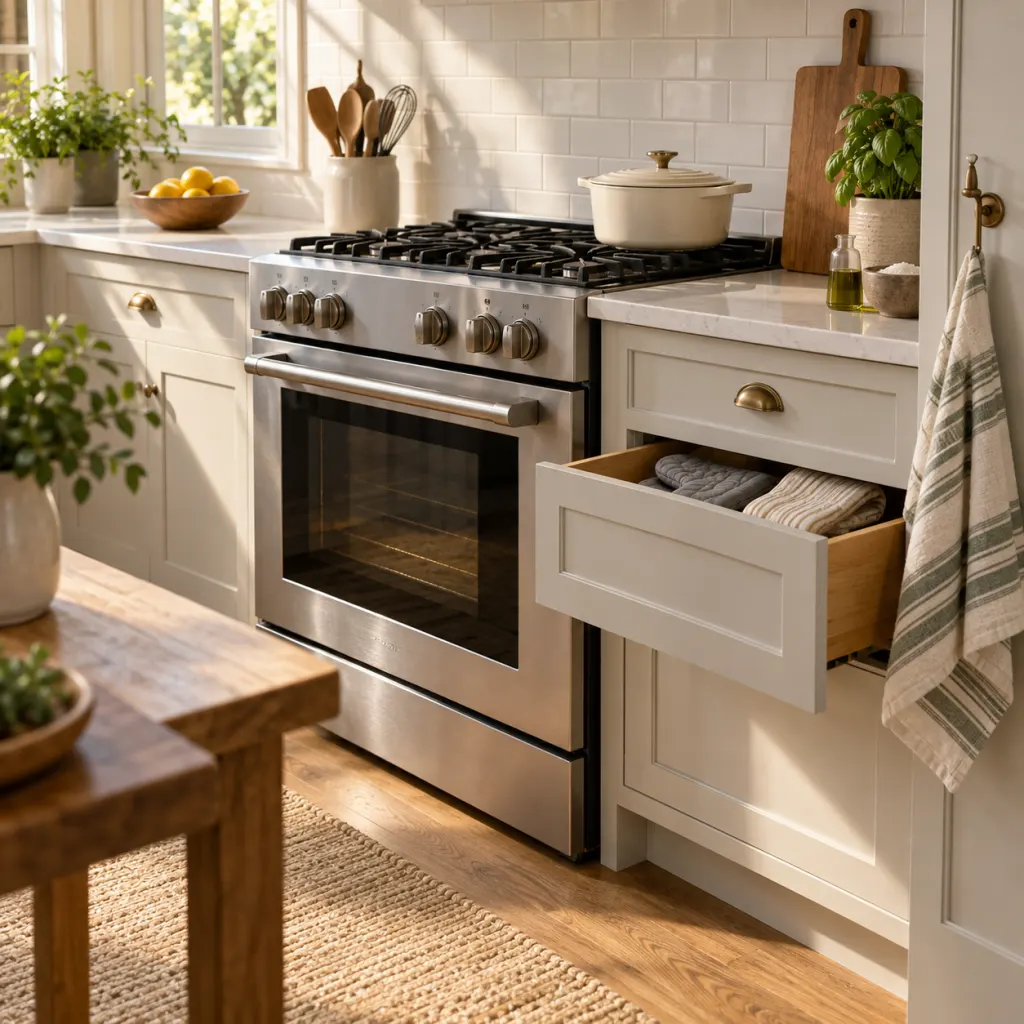
You should avoid hanging a tea towel on your oven door because it places loose fabric in one of the busiest, hottest parts of the kitchen. The towel may swing toward a burner, catch on cookware or clothing, pick up splashes from hands and counters, or tempt you to grab it instead of a proper dry mitt. U.S. fire-safety guidance consistently tells home cooks to keep towels and other items that can catch fire away from stovetops and hot surfaces, and the same habit also makes kitchen hygiene easier to manage.
The Habit Looks Harmless Because the Handle Feels Convenient
The oven door handle seems made for a towel: it is horizontal, visible, and often near the sink, counter, and cooktop. That convenience is exactly why the habit becomes automatic. In a quiet kitchen, a neatly folded towel on a cool oven may not look risky. During real cooking, though, the handle sits at the center of traffic. People open the oven, pull out heavy pans, lean around burners, reach for utensils, wipe wet hands, check simmering pots, and sometimes move quickly because something is boiling over.
The issue is not that every oven handle becomes dangerously hot. Many modern handles are designed to be touched. The practical risk is the whole environment around the handle: nearby flames or electric elements, hot sheet pans, steam, grease, children passing through, pets underfoot, and the towel itself moving whenever the oven door opens. A safer kitchen usually comes from removing small obstacles before they matter. A loose towel is one of those small obstacles.
Cooking Fires Start in Ordinary Moments
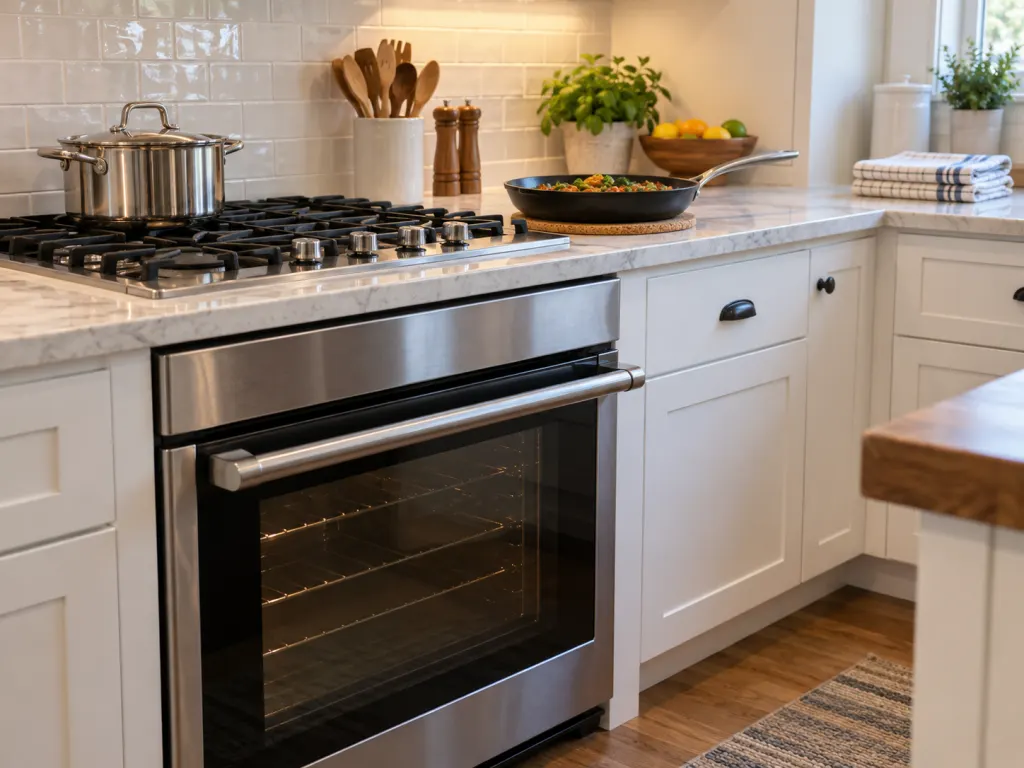
Cooking is a major home fire setting, which is why small fabric-placement habits deserve attention. The U.S. Fire Administration says cooking is the leading cause of home fires and home fire injuries, and its 2023 estimates list 167,800 residential building cooking fires, 125 deaths, and 2,500 injuries in the United States according to its cooking fire trend data. Those figures do not mean a towel on an oven door will start a fire by itself. They do show why the area around stoves and ovens should stay simple, clear, and watched.
The Fire Risk Is Really About Drift and Contact
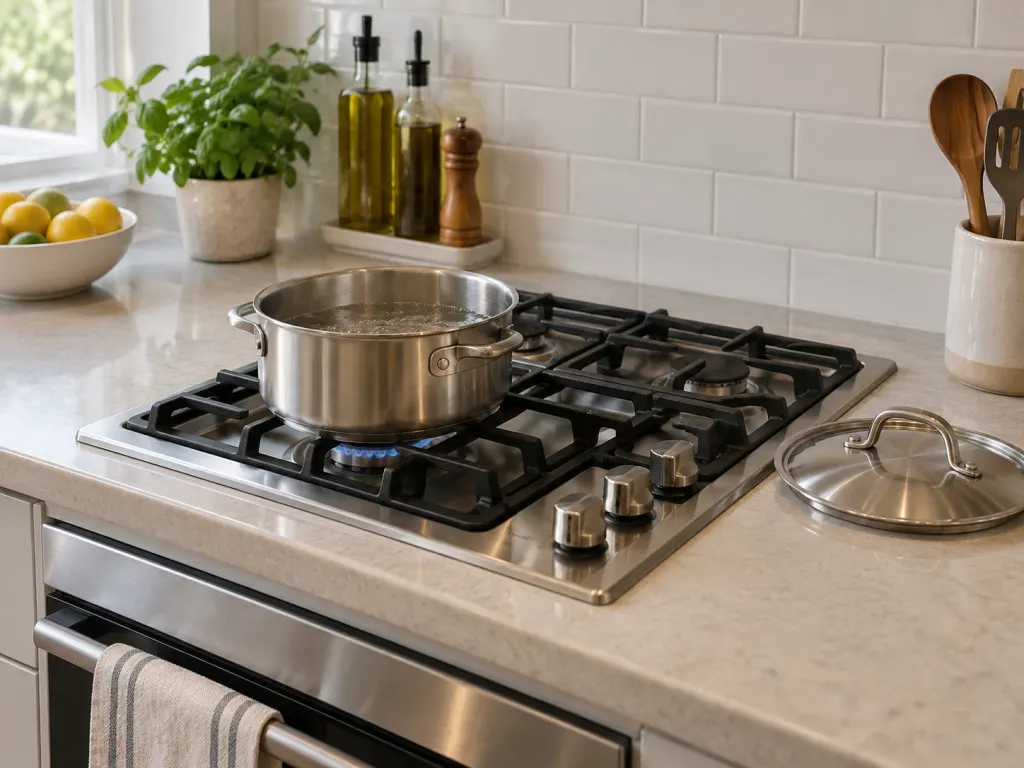
A towel hanging on the oven door can shift more than people expect. It can slide to one side when brushed by a hip, swing outward as the oven opens, or dangle close to a front burner if the oven sits beneath the cooktop. The U.S. Fire Administration’s cooking pictographs advise keeping items that can catch fire, including towels, away from the stovetop as part of cooking fire safety messaging. The U.S. Consumer Product Safety Commission gives similar kitchen guidance, telling cooks to keep towels, pot holders, and curtains away from hot surfaces in its safer cooking recommendations.
That guidance matters most when the kitchen layout is tight. In some homes, the oven handle is only inches below the front burners. In others, the handle is near a warming drawer, a toaster oven, a wall oven vent, or a path where a hot roasting pan is carried to the counter. Cotton and linen are useful kitchen fabrics, but they are still fabrics. The sensible rule is simple: if an item can burn, keep it away from active heat and from places where it can be pulled into active heat.
- Remove decorative towels from the oven before turning on the stovetop or oven.
- Keep the cooktop zone clear of cloth, paper packaging, food wrappers, and wooden utensils.
- Store pot holders and mitts where they are reachable but not hanging over heat.
- Check that pan handles turn inward and do not point into walkways.
- Keep a lid or baking sheet nearby when cooking on the stovetop, as fire-safety agencies recommend for small pan fires.
A Towel Can Snag at the Worst Time
Fire is not the only concern. A towel on the oven door can also interfere with movement. When you open the door with one hand and support a hot dish with the other, the handle area becomes a narrow workspace. A loose towel may catch on a pan corner, cabinet pull, apron tie, sleeve, or the edge of the oven rack. Even a small snag can matter when you are balancing a heavy casserole, a roasting pan with hot juices, or a baking sheet that has started to warp slightly from heat.
Kitchen burns often come from ordinary heat contact, steam, scalding liquids, or hot objects. MedlinePlus notes that burns can result from fire, steam or hot liquids, and touching hot objects, and it lists kitchen accidents among possible causes in its burn overview. That is enough reason to reduce preventable distractions around the oven door. You want your hand, mitt, pan, rack, and landing spot to be the only things competing for attention.
Damp Towels Are Poor Heat Tools
Another common shortcut is grabbing the towel from the oven handle to lift a hot lid or pan. That is risky if the towel is damp. Moisture conducts heat quickly, and steam can move through cloth faster than a cook expects. A towel used for drying hands may feel only slightly wet, but that can be enough to make it unreliable as a barrier. Use purpose-made, dry oven mitts or pot holders for hot cookware, and replace them when they are thin, torn, stiff, or scorched.
It also helps to separate the jobs clearly in your kitchen. A towel is for drying clean hands or dishes. A cleaning cloth is for spills and counters. An oven mitt or pot holder is for heat. When those roles blur, the towel on the handle becomes a catch-all: it dries hands, wipes sauce, protects fingers from a lid, cleans a drip, and then touches a plate. That kind of convenience is not worth much if it makes the kitchen harder to control.
The Hygiene Problem Is Quieter Than the Fire Risk
A tea towel on the oven handle is also easy for everyone to touch. It may be brushed by clothing, grabbed after handling raw ingredients, used to dry hands, or used to wipe a countertop. CDC food-safety guidance emphasizes clean hands and clean surfaces because germs can spread around the kitchen, especially when raw meat, poultry, seafood, flour, or eggs are handled in its food poisoning prevention guidance. CDC also advises washing hands before, during, and after preparing food, and after key tasks such as handling uncooked foods or touching garbage in its kitchen handwashing guidance.
This does not mean every towel is dangerous. It means shared towels need boundaries. A towel that lives on the oven door tends to become the default towel, and default towels get used for too many things. USDA’s National Agricultural Library summarizes research on tea towels and cloths noting their role in kitchen cross-contamination and their reuse for tasks such as wiping surfaces, drying plates, and wiping hands in a food-safety research entry. The simplest fix is to keep fewer mystery towels in circulation.
A Better Towel System Is Boring in the Best Way
A safer system does not need fancy organizers. It needs one clean towel for clean hands, one clean towel or drying rack for dishes, and separate washable cloths or paper towels for messy cleanup. CDC’s home cleaning guidance says laundry items such as towels should be laundered according to manufacturer instructions and dried completely, and it cautions that using a dish towel to rub or pat sanitized items dry can transfer germs in its cleaning and disinfecting guidance. Letting dishes air dry on a clean rack is often the easier choice.
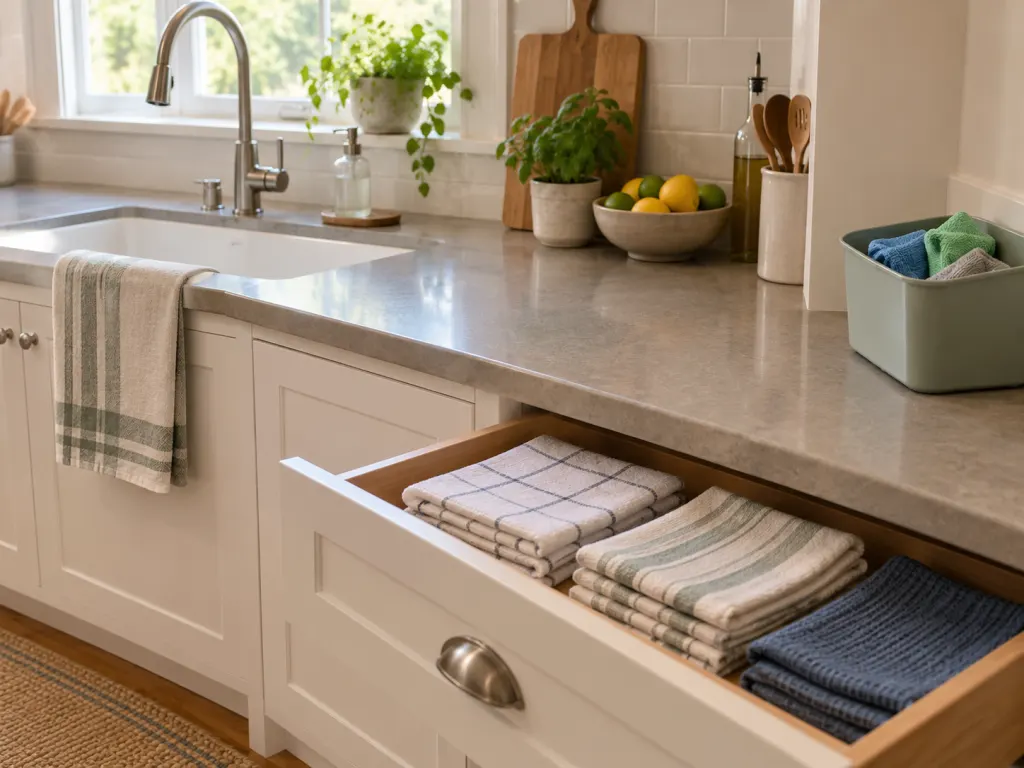
Try this setup: put a clean hand towel on a hook near the sink, but away from the stove. Keep a second clean dish towel folded in a drawer for drying only when needed. Store cleaning cloths under the sink or in a small basket, and toss used cloths into a laundry bin at the end of cooking. Put dry oven mitts in a drawer beside the oven, on a wall hook to the side, or in a heat-safe spot that does not hang over a burner. The goal is not perfection. It is reducing the number of decisions you have to make while food is hot.
Where to Put Towels Instead
The best towel location depends on your kitchen, but it should meet three tests: it is reachable, it is away from active heat, and it does not swing into a walkway. Good options include a side-of-cabinet hook, a towel bar on the end of an island, a rail inside a lower cabinet door, a magnetic hook on the refrigerator if it is away from the range, or an apron loop while actively cooking. If you use an apron, tucking a clean hand towel at your waist can be practical because it moves with you and stays away from burners.
For very small kitchens, choose vertical storage. A slim adhesive hook on a cabinet side can hold a towel without claiming counter space. A small wall rail can hold two labeled towels, one for hands and one for dishes. If renters cannot drill holes, removable hooks can work if they are placed away from steam and heat and checked regularly for grip. Avoid placing any towel directly above a toaster, range, warming drawer, or countertop oven.
When the Oven Door May Be Low Risk
If the oven is off, cool, and the stovetop is not in use, a towel on the handle may be a low-risk temporary spot. The problem is that temporary storage has a way of staying put. If you like the look of a decorative towel on the oven, treat it as decor only when the appliance is cool, and move it before cooking begins. This is especially important in homes with children, guests, older adults with balance concerns, or anyone who may not know your usual kitchen layout.
The same applies to holidays and batch-cooking days. Crowded kitchens are more unpredictable. A towel that normally hangs flat may be brushed by serving platters, baking sheets, or extra helpers. When the oven and stovetop are both working, clear the front of the appliance entirely. Create a landing zone for hot cookware before you open the oven door, and say it out loud if other people are nearby. A clear path is part of cooking safely.
What to Do If a Towel Scorches or Catches Fire
If you notice scorch marks, hardened fibers, or a burned smell on a towel, take it out of kitchen rotation. Damaged cloth is less dependable, and the smell can linger even after washing. If a towel actually catches fire, prioritize people over property. If flames are small and contained on a pan, U.S. fire-safety guidance commonly recommends turning off the heat and covering the pan with a lid or baking sheet if you can do so safely. If fire spreads, smoke builds, flames escape the oven, or you are unsure, leave the home and call emergency services.
A Practical Reset for Tonight’s Cooking
Before the next meal, remove the towel from the oven door and give it a permanent home away from heat. Put dry mitts where your hand naturally reaches before opening the oven. Clear the stovetop of cloth, packaging, and utensils that are not being used. Set one clean towel near the sink for hands, and send damp or messy towels to the laundry. This small reset makes the kitchen calmer: fewer swinging fabrics, fewer mystery cloths, and fewer obstacles when a hot pan needs your full attention.
Wrap-Up
Hanging a tea towel on the oven door is popular because it is convenient, but convenience is not the same as good placement. The handle sits in a heat-heavy, high-traffic work zone where fabric can drift toward burners, snag on cookware, become damp, or turn into a shared cloth for too many tasks. A better habit is simple: keep towels away from the stove and oven while cooking, use dry mitts or pot holders for hot cookware, wash and fully dry towels often, and give each towel a clear job.
Frequently Asked Questions
- → Is it ever okay to hang a tea towel on the oven door?
It may be low risk when the oven and stovetop are completely cool and no one is cooking. The safer routine is to remove the towel before any burner, oven, toaster oven, or warming area is used, because loose fabric can move into the heat zone or become an obstacle while hot cookware is being handled.
- → What is the safest place for a kitchen towel while cooking?
Use a hook, rail, or cabinet-side bar away from the stove, oven vent, toaster, and other heat sources. The towel should be reachable from the sink or prep area without dangling into a walkway or brushing against cookware. In a small kitchen, a side-of-cabinet hook often works better than the oven handle.
- → Can I use a tea towel instead of an oven mitt?
A dry, thick towel may seem useful in a pinch, but a proper dry oven mitt or pot holder is the better tool for hot cookware. Do not rely on a damp towel for heat protection. Moisture can move heat quickly through fabric, and a towel used for hands or spills may not be clean or dry enough for safe handling.
- → How often should kitchen towels be washed?
Wash kitchen towels frequently, and sooner if they are damp, visibly soiled, used after raw-food prep, or used to wipe counters or spills. Dry them completely before reuse. Keeping separate towels for clean hands, dishes, and cleanup makes it easier to know when each towel should go to the laundry.
- → What should I do with a scorched tea towel?
Remove it from regular kitchen use. Scorching can leave brittle fibers, a lingering odor, or weak spots. If the towel was near active flame or a hot element, use that as a cue to change the storage setup so cloth is kept away from the oven and stovetop during cooking.
References
This content was developed and refined using reliable sources.
- https://www.usfa.fema.gov/statistics/residential-fires/cooking.html
- https://www.usfa.fema.gov/prevention/home-fires/prevent-fires/cooking
- https://www.usfa.fema.gov/gallery/pictographs/cooking.html
- https://www.cpsc.gov/safety-education/safety-guides/home-fire/recipe-safer-cooking
- https://www.cdc.gov/food-safety/prevention
- https://www.cdc.gov/clean-hands/prevention/about-handwashing-a-healthy-habit-in-the-kitchen.html
- https://www.cdc.gov/hygiene/about/when-and-how-to-clean-and-disinfect-your-home.html?CDC_AAref_Val=https://www.cdc.gov/hygiene/cleaning/cleaning-your-home.html
- https://www.medlineplus.gov/ency/article/000030.htm
- https://www.nal.usda.gov/research-tools/food-safety-research-projects/reusing-tea-towel-or-cloth-multiple-purposes