 Save
A glass stove looks sleek, but crumbs, grease, and burnt-on splatters show quickly. The safest approach is gentle: cool the surface, soften residue, avoid anything abrasive, and remove all cleaner before the next use. This guide walks you through a practical clean without overworking the glass.
Step 1: Let the surface cool completely
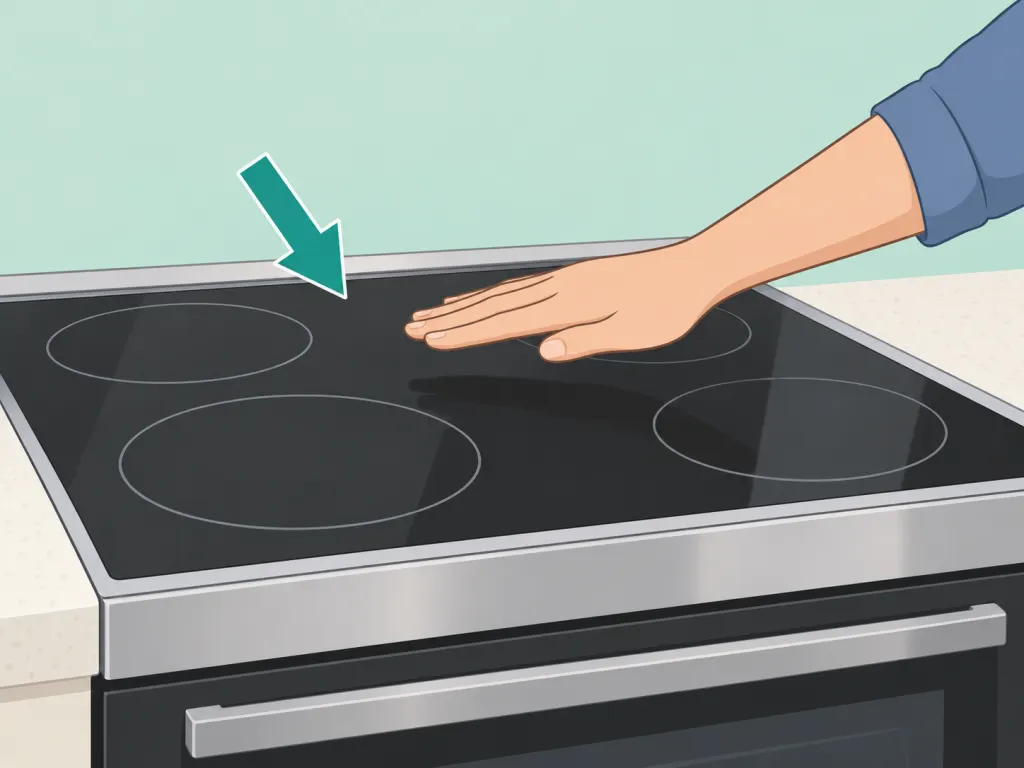
Turn all burners off and wait until the cooktop is cool before you start. Glass and ceramic cooktops are smooth but more vulnerable to scratches and cracks than they may look, and Illinois Extension explains that residue and heat stress can damage the surface.
Step 2: Brush away loose crumbs
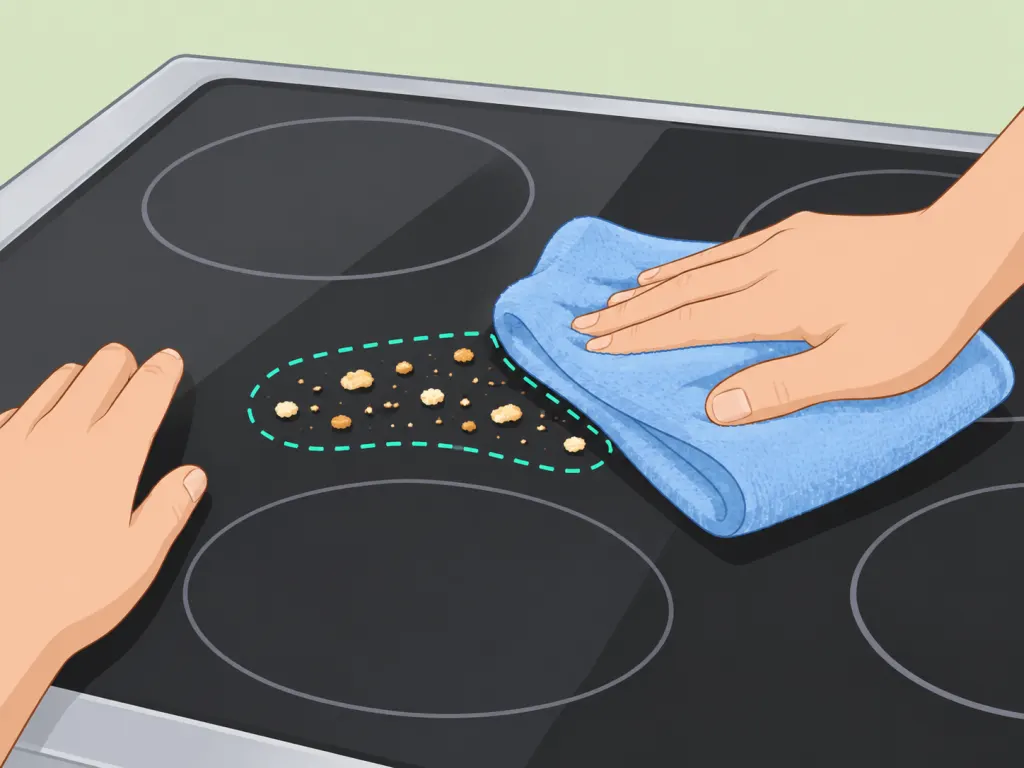
Use a dry microfiber cloth or paper towel to sweep loose crumbs and grit off the glass. University of Minnesota Extension describes dry cleaning as removing crumbs and debris before wet cleaning, which keeps loose particles from being dragged across the surface.
Step 3: Wipe the stove with warm soapy water
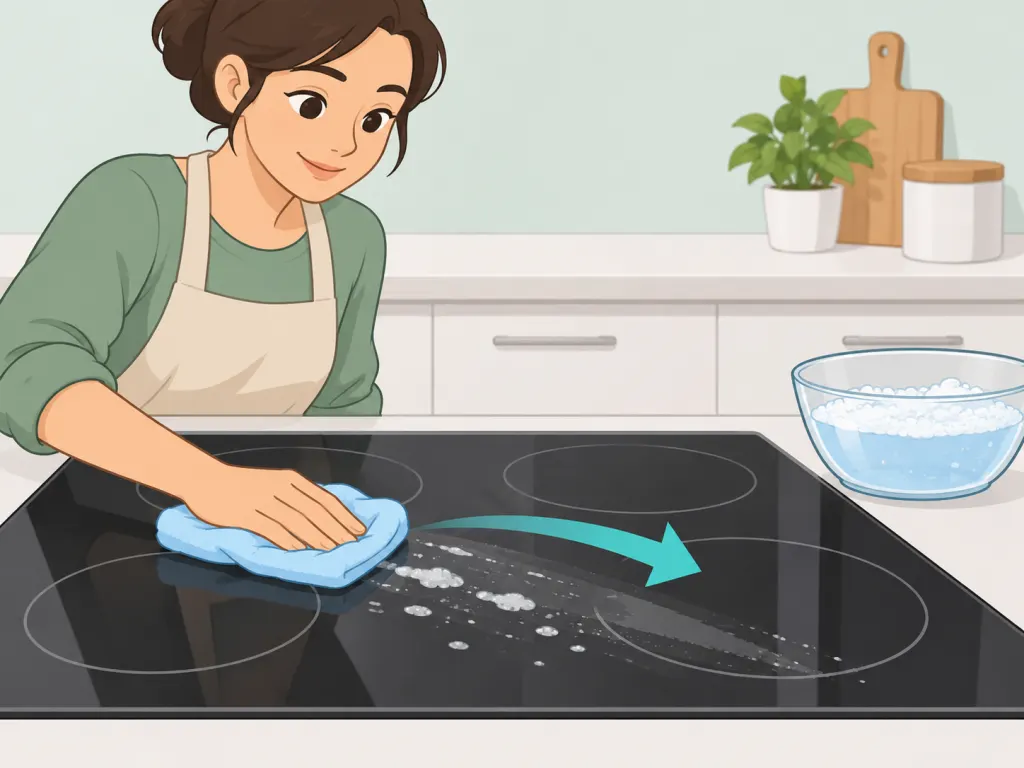
Dampen a soft cloth with warm water and a small amount of dish soap, then wipe the whole cooktop in overlapping passes. Warm soapy water is a good first pass for kitchen surfaces, and UF/IFAS Extension recommends checking manufacturer directions for smooth-top stoves.
Step 4: Soften stuck-on food with baking soda
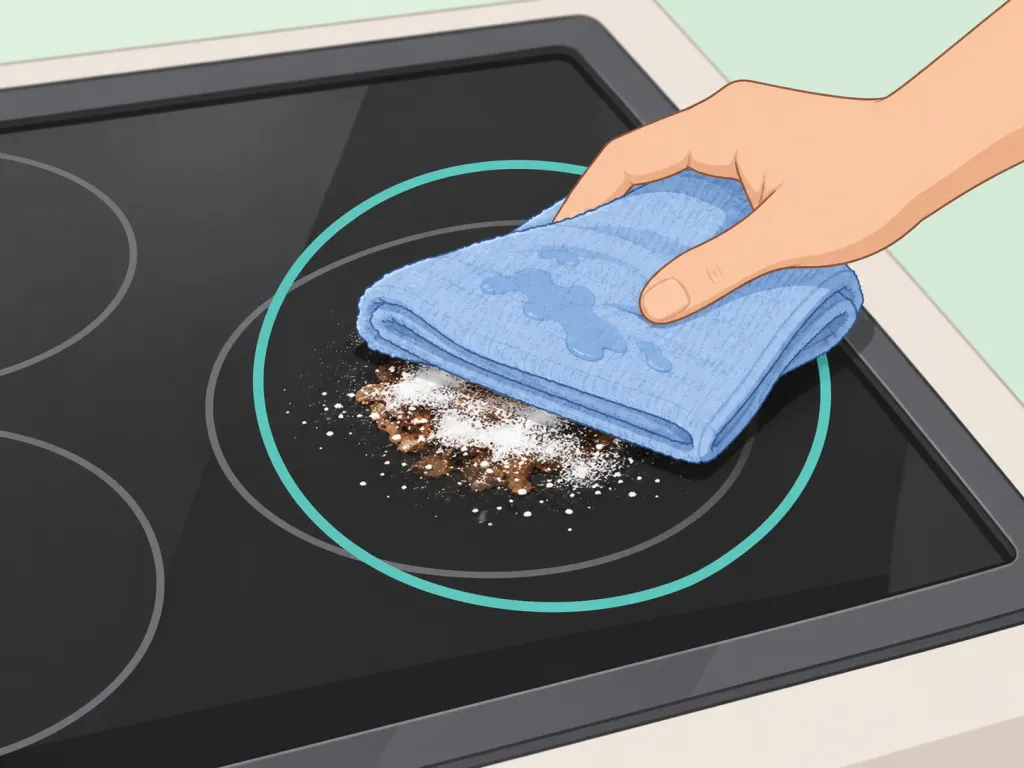
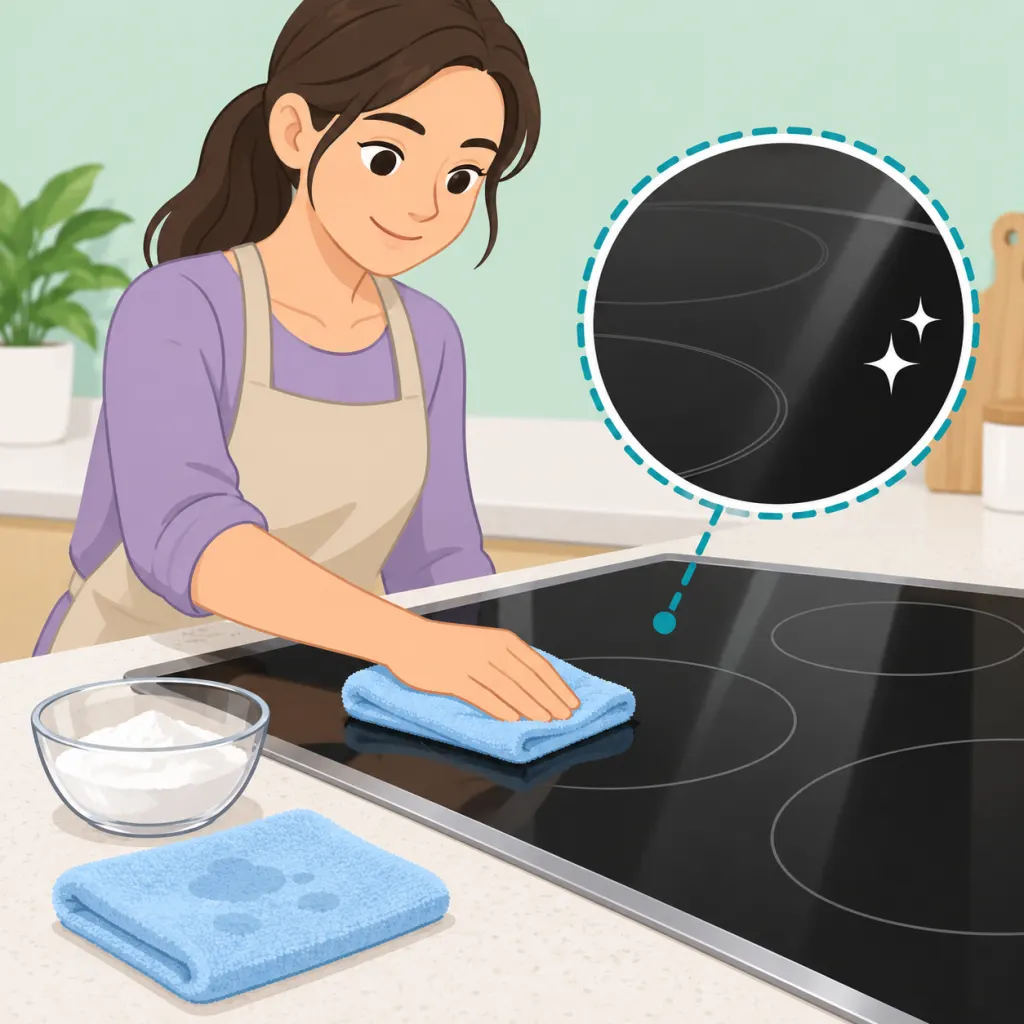
For cooked-on spots, wet the area with hot soapy water, sprinkle on baking soda, and cover it with a damp towel for about 30 minutes. Anoka County gives this method for glass or ceramic stovetop residue, followed by wiping with a clean damp cloth.
Lift softened residue with a soft cloth, a non-scratch sponge, or a scraper only if your stove manual says it is suitable for your model. The goal is to move slowly and keep the tool flat, because abrasive contact can mark ceramic glass.
Step 6: Rinse away every trace of cleaner
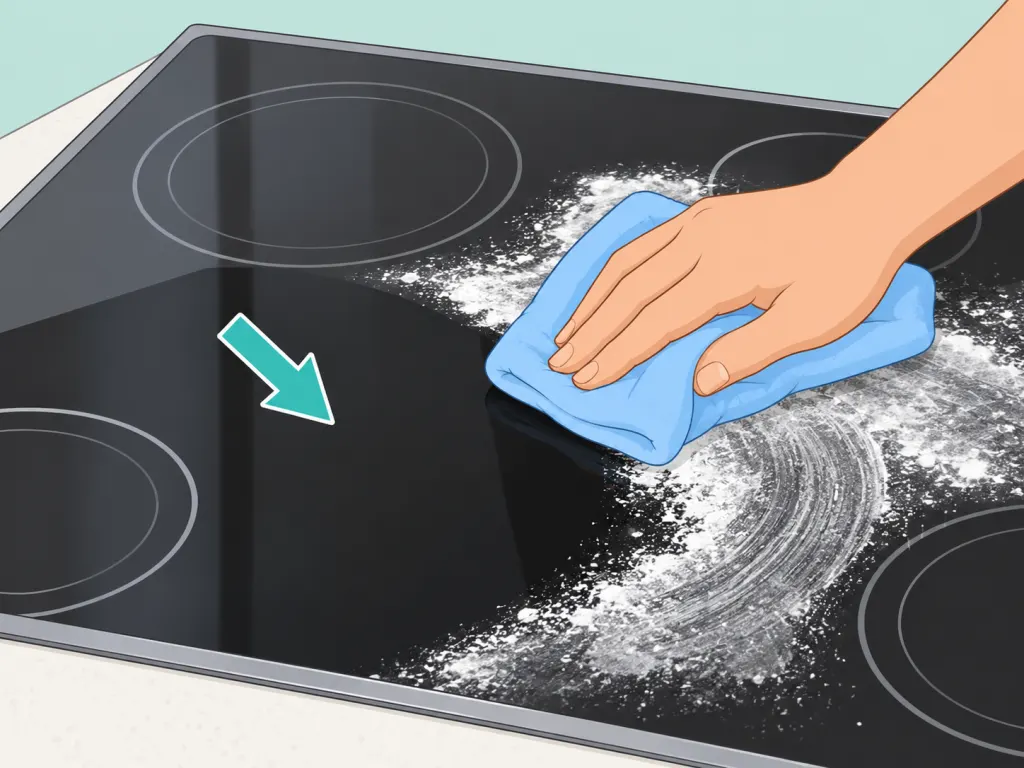
Wipe the cooktop with a fresh cloth dampened with clean water until no soap film or baking soda remains. University of Georgia Extension advises rinsing ceramic glass well after washing or using baking soda.
Step 7: Buff the glass dry
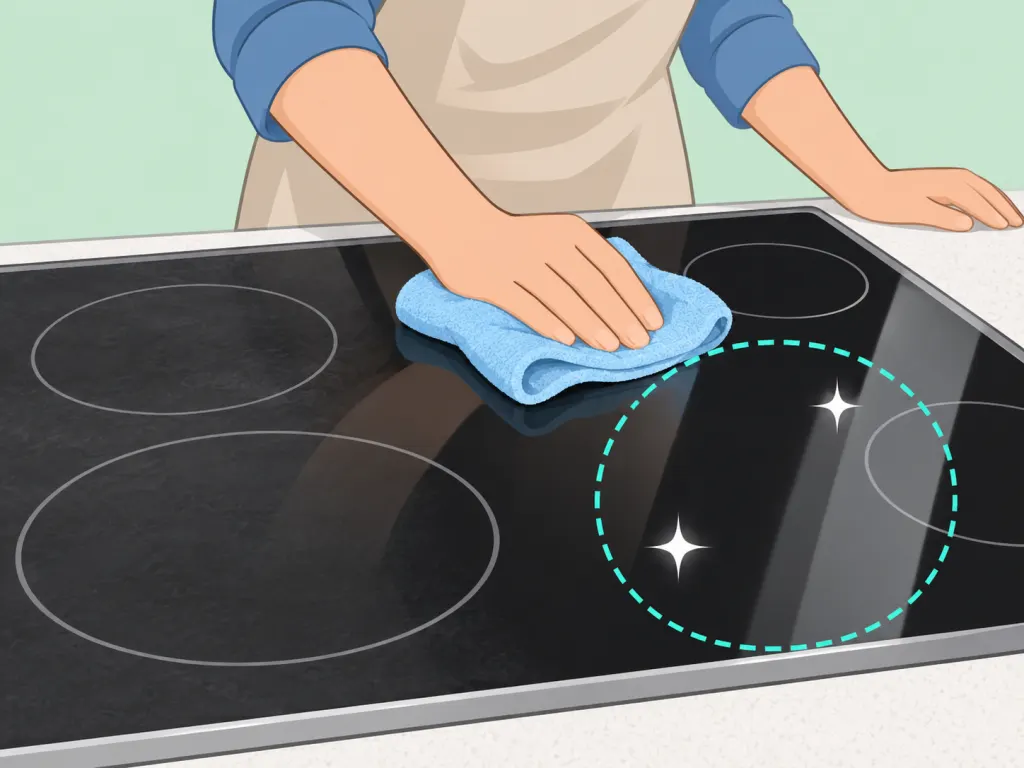
Dry the surface with a clean microfiber cloth, using small circular motions until the glass looks clear. Drying after rinsing helps prevent streaks, and University of Minnesota Extension includes drying as the final part of a thorough surface-cleaning routine.
Wrap-Up
The bottom line: clean a glass stove after it cools, use gentle moisture and baking soda for stuck-on spots, skip rough scrubbers, rinse thoroughly, and buff the surface dry.
Frequently Asked Questions
- → Can I clean a glass stove with vinegar?
Yes, for light daily cleaning. Anoka County lists simple soap and water or vinegar spray for day-to-day glass or ceramic stovetop cleaning.
- → Is baking soda safe for a glass stove?
Baking soda can be useful on stuck-on spots when used gently with moisture and rinsed away. The University of Georgia Extension describes using a soft damp cloth with baking soda on ceramic glass, followed by rinsing and drying.
- → How often should I clean a glass stove?
Wipe light spills after cooking once the surface has cooled, and do a deeper clean when residue remains. Illinois Extension notes that food residue on ceramic glass can contribute to hot spots, so prompt cleanup helps protect the surface.
- → What should I avoid using on a glass stove?
Avoid steel wool, rough scouring pads, and gritty pressure. Glass and ceramic cooktops are more vulnerable to scratching and cracking than many other cooking surfaces, according to Illinois Extension.
- → Why does my glass stove look streaky after cleaning?
Streaks usually come from leftover soap, baking soda, or water minerals drying on the glass. Rinse with a clean damp cloth, then dry with a separate soft cloth as part of the rinse-and-dry routine described by University of Minnesota Extension.
- → What if burnt food will not come off?
Repeat the damp-towel soak instead of scrubbing harder. For stubborn residue, check your appliance manual before using any cooktop scraper or specialty cleaner, since smooth-top stove directions can vary by model.
References
This content was developed and refined using reliable sources.
- https://www.anokacountymn.gov/4080/Toxicity-Reduction
- https://extension.illinois.edu/blogs/live-well-eat-well/2023-06-30-should-i-use-my-ceramic-cooktop-when-canning
- https://extension.umn.edu/food/preparing/cooking-at-home/sanitizing-equipment-and-food-contact-surfaces
- https://site.extension.uga.edu/textiles/care/stain-removal/remove-stains-from-coffee-tea
- https://blogs.ifas.ufl.edu/escambiaco/2020/08/22/11-super-simple-kitchen-cleanups